Healthcare Insights from Christopher Lis, Managing Director, Global Healthcare Intelligence at JD Power
As the U.S. labor market remains competitive in 2025, employers are focused on how to differentiate themselves to attract and retain top talent. Considering 90% of commercial health plan members have private health insurance offered through an employer or union,[1] it’s no surprise that workplace benefits, like commercial health plans, can be a central part of employers’ value proposition in the pursuit of great hires.
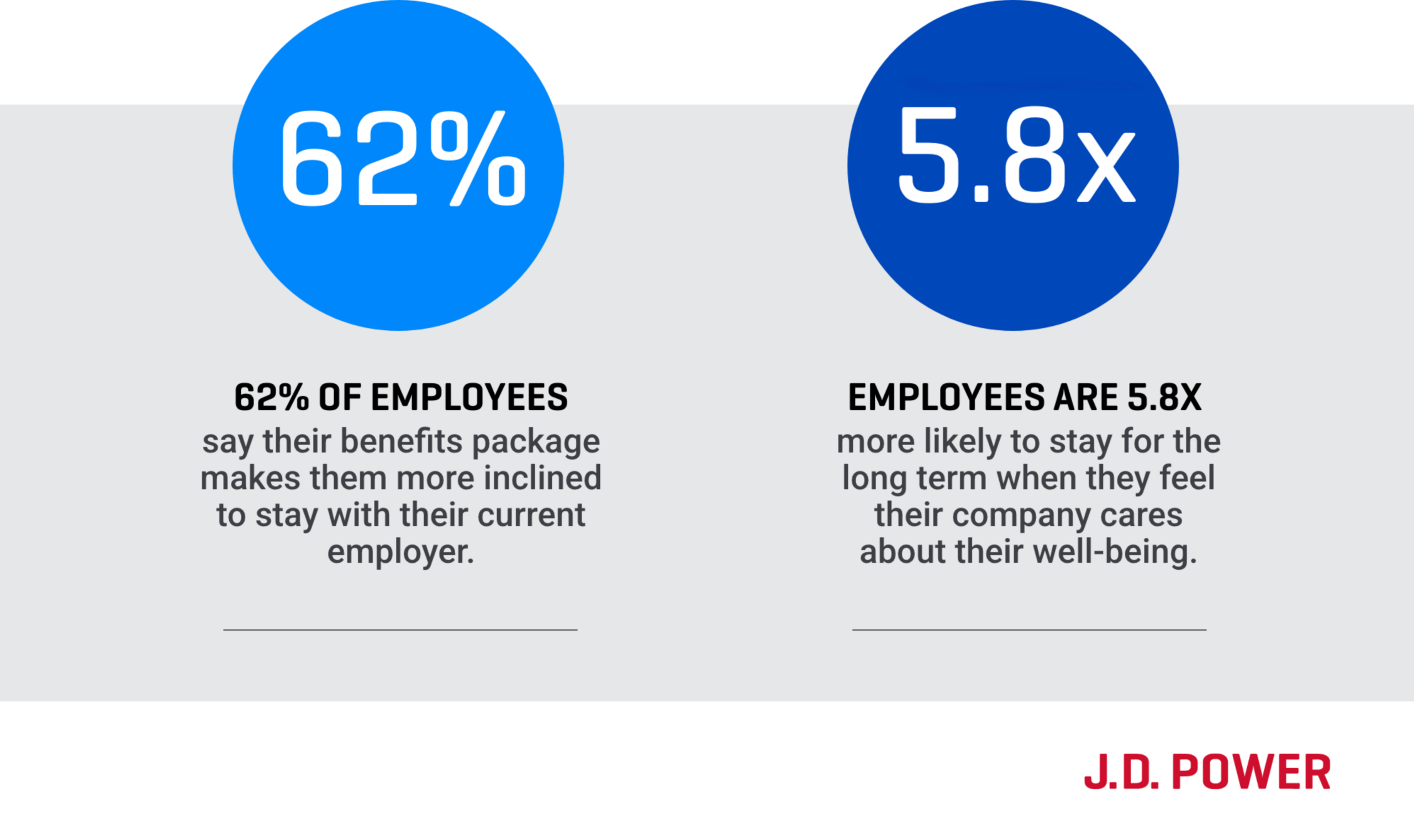
Health insurance is a cornerstone of the employer value proposition and offering health coverage from a trusted, reputable insurer can significantly affect employee satisfaction and retention. In fact, 62% of employees say their benefits package makes them more inclined to stay with their current employer. Moreover, employees who feel their company genuinely cares about their well-being are 5.8 times more likely to stay for the long term.[2]
Given the importance of benefits to employees, it is imperative that plan sponsors look for commercial health plan providers that are committed to member satisfaction.
This also presents a key opportunity for commercial health plan marketers tasked with growing an insurance company’s membership through plan sponsors.
Key Opportunities for Health Plan Marketers
Since members typically obtain commercial health insurance plans through employers or unions, it’s essential for marketers to engage plan sponsors by demonstrating their commitment to member satisfaction and drive positive brand perceptions by leveraging third-party credibility-building content.
In recent years, news headlines have frequently focused on rising insurance premiums and additional concerns such as claim denials and access to care, creating an opportunity for health plan providers to stand out by proactively messaging their strong commitment to member satisfaction. Building this positive perception with employers and prospective members helps counter any possible negative narratives.
Attract and Retain Business
- Differentiation: Marketers should highlight what distinguishes their plan from competitors’ and the specific offerings it can provide both employers and their employees. Define what sets the plan apart, whether it’s a robust provider network, competitive pricing, superior customer service, or an innovative wellness program. Highlight these strengths with specific messaging that provides concrete examples that demonstrate their impact. Use data, testimonials, and case studies to show how the plan has already delivered value to employers and their employees.
- Credibility: Leveraging credibility-boosting content in marketing messages and campaigns, such as third-party awards, ratings, and testimonials, can inspire trust, improve brand perceptions, and demonstrate a strong dedication to member satisfaction, ultimately driving member loyalty and retention.
Showcase a Strong Reputation
Understanding why members choose a health plan is imperative to commercial health plan marketers as they craft campaigns, messaging, and strategies. The JD Power 2025 U.S. Commercial Member Health Plan Study℠ reveals that a health insurance company’s good reputation is a top reason for plan selection.
Health plan marketers should include reputation-enhancing content in marketing materials and presentations rather than leave it up to an employer or prospective member to research an insurance company’s standing. Highlighting credibility-boosting assets such as awards and recognitions from reputable third parties throughout the insurance company’s brochures, website, and other content is a great way to stand out from the competition and inspire consideration.
Thoughtful integration of content that demonstrates the company’s commitment to member satisfaction throughout marketing campaigns delivers a positive experience for prospective members to be motivated to act on the opportunity to enroll for coverage.
Utilize Regional Excellence
Many health insurers serve specific regions or states, and some nationwide insurance companies have a larger presence in some areas more than others. To make commercial health plan marketing more relevant to prospective plan sponsors and their members, consider incorporating location-specific awards, positive reviews, and other recognitions.
Beyond formal recognitions, building a strong local reputation through positive earned media, community sponsorships, community engagements, and local testimonials can significantly enhance perceptions among potential employer partners and their employees. Incorporating this relevant local content into the marketing mix can foster stronger connections within specific geographic markets.
Final Thoughts
For commercial health plans seeking growth, establishing strong relationships with employers is crucial. Marketers can facilitate these conversations with plan sponsors by equipping brokers and sales staff with strategic materials that include credibility-boosting content, talking points that showcase a commitment to satisfaction, along with a regional focus. These well-prepared teams can then cultivate new partnerships with employers with these compelling deliverables.
Stay tuned to learn which commercial health plan provider ranks highest in each region, as the results of the JD Power 2025 U.S. Commercial Member Health Plan Study℠ will be released on May 28, 2025.
[1] JD Power 2024 U.S. Commercial Member Health Plan StudySM