Which macroeconomic factors influenced European used-car markets in 2025? What is the 2026 residual value (RV) outlook? How are trends developing in Eastern Europe? A new Autovista Group webinar answers these questions.
RVs presented as a percentage of retained new-car list price (%RV) continued to fall through 2025. This followed a normalisation trend observed in the years after the COVID-19 pandemic, when values were greatly inflated.
But what other influencing factors have been at play, and will they persist this year? How will this shape value retention over the rest of 2026? Will Central and Eastern Europe (CEE) see different %RV developments compared to Western Europe?
This included Ana Azofra, regional head of valuations for Southwest Europe, Robert Madas, regional head of valuations for Central and Eastern Europe, and Ulmis Horchidan, cluster head of valuations for Romania, Slovenia, Croatia, Slovakia, Czechia and Hungary.
Macroeconomic outlook
According to the OECD’s December outlook, global GDP growth has been resilient, up 3.2% in 2025. However, this is expected to slow to 2.9% in 2026 before improving again in 2027, up to 3.1%. China is the key contributor to growth, ahead of the US and the Euro area.
Inflation in the EU is coming down slowly but remains above pre-COVID-19 pandemic levels. From a point of 2.1% in 2025, headline inflation is expected to fall to 1.9% in 2026 and 1.8% in 2027.
This left the consumer price index to reach an all-time high in October last year. Households had to spend more money, which effectively limits larger purchasing decisions. All of this means continued pressure on the automotive market.
This is despite some cautious stabilisation, with demand showing positive signs. Used-car demand has also stabilised with no significant changes recorded in 2025 or expected in 2026.
‘If we look at new-car registrations, we had a slight increase compared to 2024 of approximately 1.5% overall. So, the steep declines of the post-COVID years are over, but it is not a spectacular recovery,’ Madas said.
Meanwhile, tariff risks have eased in some areas, while becoming more challenging in others. For example, negotiations between China and Europe could result in minimum import prices for battery-electric vehicles (BEVs).
Increased emission target flexibility is expected in Europe from the Automotive Package, while electrification continues to progress. But new brands, regulations, and rising costs have increased profitability pressures.
Residual value outlook
RVs continued to fall in 2025. However, this was at a slower pace than in 2024. Only France and the UK saw marginal increases in the final quarter of last year, but values remain under pressure. The market has been undergoing normalisation following the RV inflation between 2021 and 2023.
With used vehicles spending an increasing number of days in stock before sales, there are signs of market saturation. For two-to-four-year-old vehicles, this trend is observed across all powertrains. BEVs still take the longest amount of time to sell, followed by plug-in hybrids (PHEVs).
Price change development reveals price management and the desirability of vehicles. Electric vehicles (EVs), including BEVs and PHEVs, require more price management from dealers than other powertrains. So, what does all this mean for RVs in 2026?
‘Forecasts remain stable and on a path towards normalisation,’ said Azofra.’ This is because the most significant adjustments have already taken place over the past two years. This is the good news.’
RV outlooks for vehicles at 36 months and 60,000km have been maintained for 2026, with only minor adjustments. Spain is the only market which has seen forecasts improve thanks to its greater resilience in 2025.
Austria, France, Spain and the UK can all be expected to see %RVs decline by 1% at most by the end of 2026. While Germany is not far off with a 1.4% decline forecast, Italy’s outlook is the most negative. The market saw a severe downturn in 2025 and is predicted to see a 5.2% decline this year.
Understanding Eastern Europe
Most economies in the CEE region have been growing more quickly than their Western counterparts. GDP has been elevated by integration in the single market, foreign direct investment, supply-chain participation, rising wages and EU funds. This catch-up effect will continue, just at a slower pace than in the 2000’s.
There is reliance on used-car imports across the region, with Germany a primary source for the markets. This influences local pricing and RVs, but has a direct effect on older cars, aged 10 years and older. So, how have %RVs evolved?
‘We see different behaviour when analysing each country from the CEE region. For example, Poland had ample room for adjustments coming from the high values in 2022 caused by the supply crisis,’ said Horchidan.
‘Hungary and Slovakia recorded a steeper depreciation in the last two years, while Romania and the Czechia recovered quite fast after the peak in the pandemic once supply started to catch up with demand,’ he added.
This year, the CEE %RV outlook is unchanged. Declines are expected to continue, just at a slightly more moderate pace. Croatia, Czechia, Slovenia and Romania are forecast to see %RVs fall by between 2% to 2.3%. Meanwhile, Poland, Hungary and Slovakia will see a lower impact, not exceeding 1.6%.
Enjoyed 2026 residual value outlook: Regional shifts and trends? Then register for Autovista Group’s next webinar, Europe’s auto forecast 2026: Technology, policy, and EV adoption. It will take place on 1 April 2026 at 09:30 GMT, so make sure you sign up now.
Across most of 2025, Tesla and Skoda topped Europe’s monthly battery-electric vehicle (BEV) standings. In November, a new leader emerged in the region. Autovista24 journalist Tom Hooker reveals the results.
While Europe’s electric vehicle (EV) market had a new leader in November, the continent’s growth trajectory remained unchanged.
EV sales, including BEVs and plug-in hybrids (PHEVs), enjoyed year-on-year growth of 29.3% from January to November 2025. A total of 3,442,316 new models were delivered in this timeframe, according to EV Volumes.
In November alone, sales were up 36.3% to 367,617 units. This was nearly identical to October’s year-on-year improvement of 36.6%. This relatively stable period for EV demand helped propel the market further forward.
Deliveries were up 23.8% across the first half of 2025. However, the same consistency cannot be seen when looking at BEV and PHEV performances separately.
Contrasting EV momentum
In November, BEVs enjoyed their biggest monthly sales increase since January 2025, with volumes surging by 37% to 253,865 units. The powertrain’s cumulative figure sat at 2,286,225 deliveries, up 27.3% compared to the same period in 2024. This represented a gradual rise from its growth of 24.9% during the first half of 2025.
On the other hand, the extraordinary PHEV growth seemed to slow. Sales improved by 34.9% in November to 113,752 units, the powertrain’s lowest monthly growth rate since April. This was above PHEVs’ cumulative increase of 33.6% from January to November, with 1,156,091 deliveries.
Europe’s new EV leader
Combined deliveries of the Renault 5 and Alpine A290 claimed Europe’s monthly EV best-sellers title in November. This was despite stiff competition from Tesla and Skoda, which dominated in 2025.
Deliveries soared by 169.1%, with 11,338 new models sold in the month, the duo’s highest-ever monthly sales total.
The Renault 5 and Alpine A290 narrowly bested a resurgent Tesla Model 3, which landed just 130 units behind. The more affordable version of the sedan, called the Model 3 Standard, was recently introduced to Europe. This may help to boost demand in the coming months.
A further 55 units back was the Skoda Elroq, which topped Europe’s EV market in October. With 12 months of recorded sales, the compact SUV’s delivery ramp-up appears to have plateaued. From September to November, its monthly sales figures did not exceed 11,395.
Fourth was the Tesla Model Y. This marked the first time since October 2022 that the crossover finished behind its smaller sibling. While the Model 3 enjoyed a double-digit improvement year-on-year, its big brother suffered a 38.1% drop to 10,989 units.
Even so, the Model Y was still not far from victory. Just 349 units separated first and fourth place in November’s best-selling BEV table.
VW Group’s BEV competition
Some distance behind, the Volkswagen (VW) ID.7 was embroiled in its own battle. It posted a 41.1% improvement to 7,343 sales, the all-electric models’ highest monthly total since March 2025. A further 227 units behind was the Skoda Enyaq in sixth. Unlike its fellow VW Group model, the SUV endured a 30.2% drop to 7,116 units.
The VW ID.4 placed seventh, with a 6.6% increase to 6,483 sales. Hot on its tail was its sibling, the ID.3. The hatchback posted 6,312 deliveries in November, translating to a 35.3% improvement year-on-year.
This meant that half of November’s top 10 was filled by VW Group models. Covering a variety of segments and body types, just under 5,000 units separated the BEVs.
Dolphin diving into the top 10
BMW’s iX1 claimed ninth, only 15 units behind the VW ID.3. However, it saw even greater growth compared to 12 months prior, with volumes up 41.9%.
Rounding out the top 10 was the BYD Dolphin Surf, with 5,972 units. This was the first time the hatchback featured in Europe’s monthly BEV top 10, after deliveries began in May 2025.
The Dolphin Surf’s volumes took a significant step up in November, meaning it may not have reached its full potential in Europe. If the model’s sales continue to rise, it could feature in the continent’s top 10 bestseller list by the end of 2026.
Yet, with November’s performance, the hatchback has established itself as a strong contender as a small BEV in Europe. It faces plenty of competition, including the Renault 5 and the Alpine A290. The Kia EV3, the Citroën ë-C3 and the Volvo EX30 are also popular small BEVs.
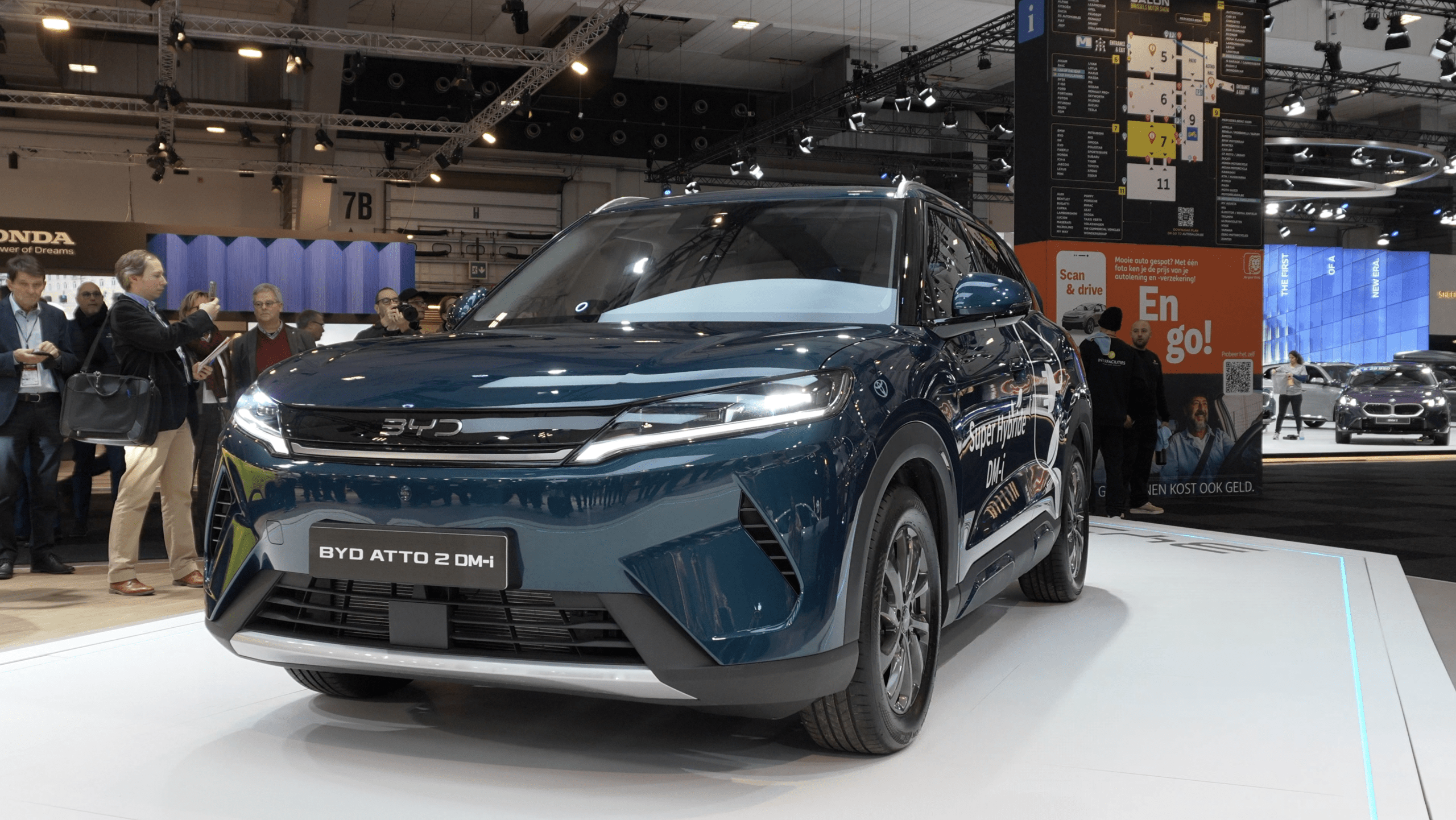
Additionally, more new models will enter the fray in 2026. This includes the Kia EV2 and BYD Atto 2 DM-i, which were presented at the Brussels Motor Show.
Tesla remains in control
After 11 months of 2025, the Tesla Model Y looked assured to win the title of Europe’s best-selling EV. The crossover’s 126,702 sales were 45,093 units ahead of its closest rival, the Skoda Elroq. This gap is likely to grow, with the Model Y expected to experience its usual end-of-quarter delivery peak in December.
Meanwhile, the second-place SUV was relatively safe from the chasing pack, with 81,609 sales between January and November.
However, the Renault 5 and the Alpine A290 could potentially benefit from a last-minute slip-up, presuming their momentum is maintained. The duo sat third with a combined total of 78,787 units.
Moving up the table
Moving up two places to fourth was the Tesla Model 3, after a strong November. With 74,974 sales, it could challenge for third, considering its quarterly delivery cycle.
Fifth was occupied by the Skoda Enyaq. The SUV recorded 70,985 sales in the first 11 months of 2025. Just 481 units behind was the VW ID.3, which fell two positions to sixth. Its sibling, the ID.4, claimed seventh with 69,426 units, after finishing ahead of the ID.3 in November.
The VW ID.7 landed in eighth thanks to 68,080 sales. It placed ahead of the ID.3 and ID.4 in November, meaning these three positions could change in the full-year standings. Kia’s EV3 secured ninth with 61,197 units, while the BMW iX1 landed 10th, posting 59,091 deliveries.
BYD’s PHEV success
BYD’s European PHEV success continued in November. The carmaker’s Seal U topped the standings during the month, with 5,682 new models delivered. This represented a 263.5% volume increase compared to 12 months prior.
Two other SUVs followed behind: the VW Tiguan and the Volvo XC60. Both models are competing against the Seal U for the 2025 PHEV best-seller title. The former recorded 4,927 sales in November, up 27% year on year. Conversely, the XC60 endured a 23.6% delivery decline, with 4,312 new models taking to European roads.
The Mercedes-Benz GLC was just 54 units behind in fourth. The SUV enjoyed a sales boost of 25.9% compared to November 2024. Then came the MG eHS with 3,607 deliveries, equating a year-on-year surge of 100.5%. Sixth was taken by the Ford Kuga, however, it faced a 1.5% drop in sales to 3,457 units.
The first non-SUV in November’s PHEV top 10 was the Audi A3. The model posted its highest monthly delivery figure since March 2024, with 3,271 deliveries. Compared to November 2024, this was a jump of 938.4%.
The Jaecoo J7 made its third consecutive top 10 appearance after only beginning to record significant volumes in February 2025. During November, the SUV posted 2,976 sales, putting it in eighth.
BMW’s X3 trailed the Jaecoo J7 by just 87 units. The German model recorded 2,889 deliveries in the month. This brought the total of SUVs featured in the month’s top 10 best-selling models to eight. The VW Golf finished in 10th. The hatchback recorded 2,858 sales, up 121% year-on-year.
All set for PHEV glory?
From January to November, the BYD Seal U sat at the top of the European PHEV market. With its November triumph, the model extended its lead, bringing its cumulative total to 57,949 units.
Its closest challenger was the VW Tiguan. The PHEV trailed the top spot by 2,271 units. This left the Tiguan with a mountain to climb to take full-year victory. The Volvo XC60 was third with 53,057 sales. Despite being in the fight for the title throughout the year, its chance of victory heading into December appears slim.
Fourth went to the Ford Kuga, which has remained consistent in 2025. Its 41,818-unit total was comfortably ahead of the BMW X1 in fifth. After narrowly missing out on November’s top 10, it recorded 36,257 units after 11 months of the year. The Mercedes-Benz GLC followed in sixth, with 34,839 deliveries.
MG’s eHS secured seventh in the cumulative standings, thanks to 33,383 sales. Not far behind was the Toyota C-HR, taking eighth with 32,149 units.
Fighting for a top 10 finish
Multiple models are fighting for a 2025 top 10 finish in the PHEV table. At the end of November, the Cupra Formentor held ninth with 26,695 deliveries. Just 99 units behind was the VW Golf, which entered the top 10.
However, both models are far from safe. The two most likely candidates to cause a last-minute shock are the BMW 5-Series and the Jaecoo J7. The models posted 26,588 and 26,194 units between January and November, respectively. In particular, the Jaecoo J7 was well positioned to enter the top 10 after a strong run of monthly results.
The Toyota RAV4, BMW X3, and Hyundai Tucson also have an outside chance of squeezing in. The three SUVs recorded 25,880, 25,550 and 25,116 units, respectively.
The global electric vehicle (EV) market will crown two models as 2025 market leaders. While a Tesla battery-electric vehicle (BEV) charged ahead, BYD led the plug-in hybrid (PHEV) race. Tom Geggus, Autovista24 editor, unpacks the latest data from EV Volumes.
November saw overall new EV sales slow dramatically. Deliveries of BEVs and PHEVs recorded their lowest monthly year-on-year growth rates in 2025 so far.
In total, 1,338,699 all-electric vehicles were delivered, up by 11.8%. This is a far cry from the 56.5% increase recorded in February. It also marked the slowest BEV growth since August 2024, when the market improved by 5.1%. November’s result brought the 2025 cumulative increase to 30.1%, with 12,468,696 units sold.
PHEVs, including extended-range electric vehicles, saw growth slow even more severely, with volumes up by 1.5% to 705,624 units.
The market has been slowing from a high point in May 2025, when sales grew by 44.3%. November’s figures meant 6,901,957 PHEVs have been delivered globally in the first 11 months of the year, up by 20%.
Tesla Model Y leads again
The Tesla Model Y reclaimed the monthly BEV lead in November. However, its total of 97,667 units was down by 10.5% year on year. This meant its market share fell by 1.8 percentage points (pp) to 7.3%.
Meanwhile, the Wuling Mini continued to see growth in second place, with its sales up by 63.2% to 56,785 units. This meant it represented 4.2% of all BEV shares, up from 2.9% in November 2024.
Third went to the Tesla Model 3, which saw a 7.7% dip in deliveries to 51,211 units. Its share dropped by 0.8pp to 3.8%. Fourth went to the Geely Geome Xingyuan, also known as the EX2 in some markets. It recorded the greatest volume growth in the top 10 at 114%. The BEV’s 42,873 sales equated to 3.2% of the market, up from its 1.7% share recorded 12 months ago.
The BYD seagull, also known as the Dolphin Surf, came in fifth. Its sales dropped by 31.3% to 40,746 units, taking its share down by 2pp to 3%. Sixth went to the Xiaomi YU7, which first recorded sales in June 2025. It recorded 33,778 deliveries, taking 2.5% of the global BEV market.
The BYD Yuan Up, also known as the Atto 2, landed seventh. It recorded sales growth of 8.7% to 23,889 units, keeping its share at 1.8%. Eighth went to the BYD Sea Lion 06, even though it only began posting significant sales midway through 2025. It captured 1.7% of the market in November with 22,093 sales.
Due to strong competition, the BYD Dolphin placed ninth as its market share slipped by 0.2pp to 1.6%. This was the result of 21,491 deliveries, up by 0.9%. The Wuling Bingo S secured 10th in only its second month on sale. It managed 17,959 deliveries for a 1.3% market share.
Tesla Model Y safe at the top
The Tesla Model Y appeared safe at the top of the global BEV leaderboard 11 months into 2025. Between January and November, the crossover saw 959,904 sales and made up for 7.7% of overall volumes. This put it 4.1pp ahead of its sibling, the Model 3, which captured a 3.6% share thanks to 443,125 deliveries.
The Geely Geome Xingyuan was close behind. The BEV achieved a 3.5% share between January and November and moved 430,676 units. The Wuling Mini came fourth with a volume of 405,006 units, capturing a 3.2% share. Only 0.1pp behind was the BYD Seagull, recording 386,400 sales.
With a 2% market share and 247,614 deliveries, the Xiaomi SU7 came sixth. It was followed by the BYD Yuan Up, which moved up a place to seventh. It accounted for 1.8% of all BEVs sold in the first 11 months of 2025, with 220,590 sales.
This meant it knocked its sibling, the BYD Yuan Plus, also known as the Atto 3, down a place to eighth. The all-electric model took a 1.7% share with 211,421 deliveries. Hot on its tail was the BYD Dolphin, with 206,703 units and a 1.7% share. Then came the Xpeng M03, representing 1.3% of the overall market and recording 163,082 deliveries.
BYD PHEV gains ground in November
November saw BYD gain ground in the global PHEV market. The brand occupied seven of the 10 top slots, up from five in October. The BYD Qin Plus led the way with 33,800 units sold, up by 21.9%, pushing its market share up by 0.8pp to 4.8%.
BYD’s Fang Cheng Bao Tai 7 came second after its sales kicked off in August. Its 24,019 deliveries gave it a share of 3.4%. This was 0.2pp ahead of the Aito M7 in third, which saw sales rocket by 70.6% to 22,892 units.
Meanwhile, the BYD Song Plus, also known as the Seal U, recorded a delivery drop of 40.1% to 21,858 units. This meant it claimed 3.1% of the market, down 2.2pp. With 21,002 deliveries, the BYD Seal 5 came fifth in its first month on the market, securing a 3% share.
The BYD Seal 6 saw its sales decline by 45.2% to 16,627 units. Its grip on the market weakened form 4.4% in November 2024 to 2.4% a year later. The BYD Song Pro finished in seventh, following a delivery decline of 35.8% to 16,416 units. This meant its share slid by 1.4pp to 2.3%.
The Galaxy Starship 7, also known as the Starray, came eighth with 13,593 deliveries. It accounted for a 1.9% of all PHEV sales. The Galaxy A7 was ninth after first recording sales in June. It claimed a 1.8% share with 12,899 sales. The BYD Song L was 10th as its sales fell by 54.1% to 11,092 units. This meant its share hit 1.6%, down by 1.9pp.
BYD at the top
With no signs of movement, BYD took seven of the 10 top spots in the first 11 months of 2025. Even with its monthly decline in November, the BYD Song Plus looked set to hold on to first place. The PHEV recorded 317,180 sales and a 4.6% market share between January and November.
This put it 0.8pp ahead of its second-place stablemate, the BYD Qin Plus, with 3.8% of the market. It recorded 262,315 sales between January and November. Third went to the BYD Song Pro with 210,961sales and a 3.1% share.
Not far behind was the BYD Seal with 3% and 205,251 deliveries. The BYD Qin L finished fifth with a 2.3% grip on the market and 158,380 sales. The Li Auto L6 was the first non-BYD model in the table. It was only 0.1pp behind in sixth, with 2.2% a share and 154,489 sales.
The close race continued with just 0.2pp separating seventh from 10th. The BYD Destroyer 05 came seventh with a 2% hold on the market and 137,930 units moved. The BYD Song L was eighth with a 1.9% share and 133,622 sales.
The Aito M8 saw 131,811 sales, meaning a 1.9% grip on the market. Then came the Galaxy Starship 7 in 10th, accounting for 1.8% of all PHEV sales and 124,291 units moved.
Concept cars remain a unique way to peek into future design languages and technological trends. But how has the premise surrounding them changed? Autovista24 special content editor Phil Curry examined the new ideas on display at the Brussels Motor Show.
The concept car is not a new idea, but in recent years, examples have been sparse. However, carmakers are bringing these standout designs back, with some basing their stands at motoring events around them.
The Brussels Motor Show saw the return of the concept car as a key focal point on some stands. But just how important are these models, and why are carmakers returning to the concept design philosophy?
An adaptable concept car
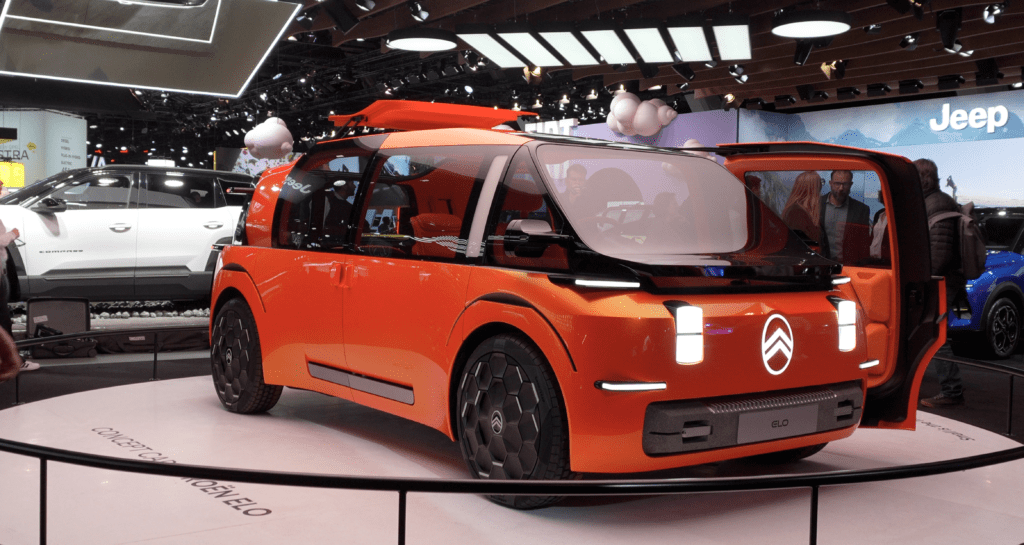
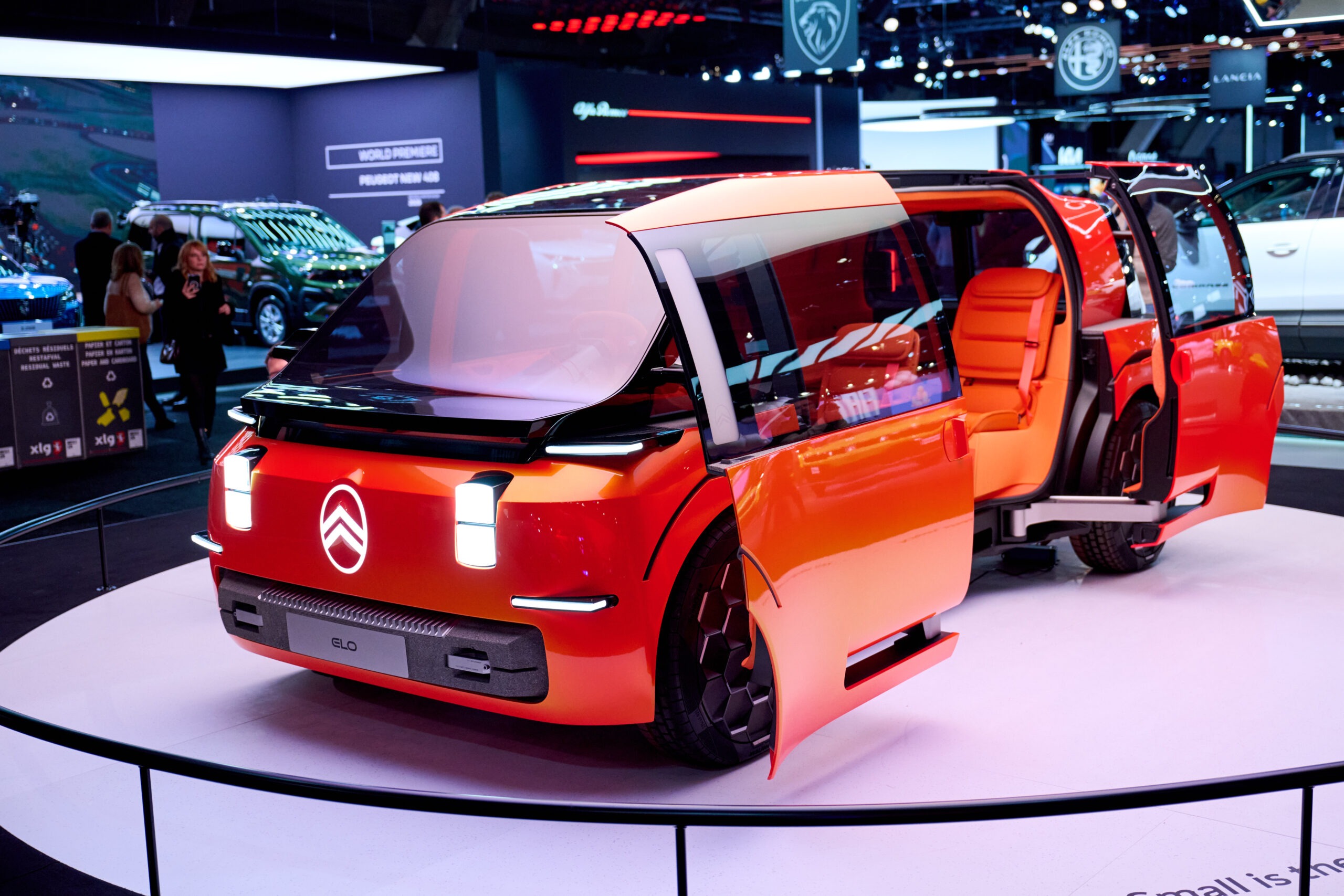
Citroën debuted its ELO concept car at the Brussels Motor Show. The model generated a lot of interest, especially with its prominent placement at the front of the brand’s stand.
Visitors were treated to a vibrant coloured car that matched its surroundings, as Citroën focused on the future. The brand has worked with Goodyear and Decathlon on the model. It integrated new technologies and designs to make the concept as practical as possible.
This means the ELO is not as far removed from reality as some concept cars of the past. It featured no autonomous driving functionality and steered away from impractical design elements. Instead, the 4.1-metre model brought practicality, both in its usefulness and build.
Citroën said: ‘fully in tune with the times, ELO is more than just a means of transport.’ It facilitates all aspects of life on the move, with work, leisure and relaxation its core themes.
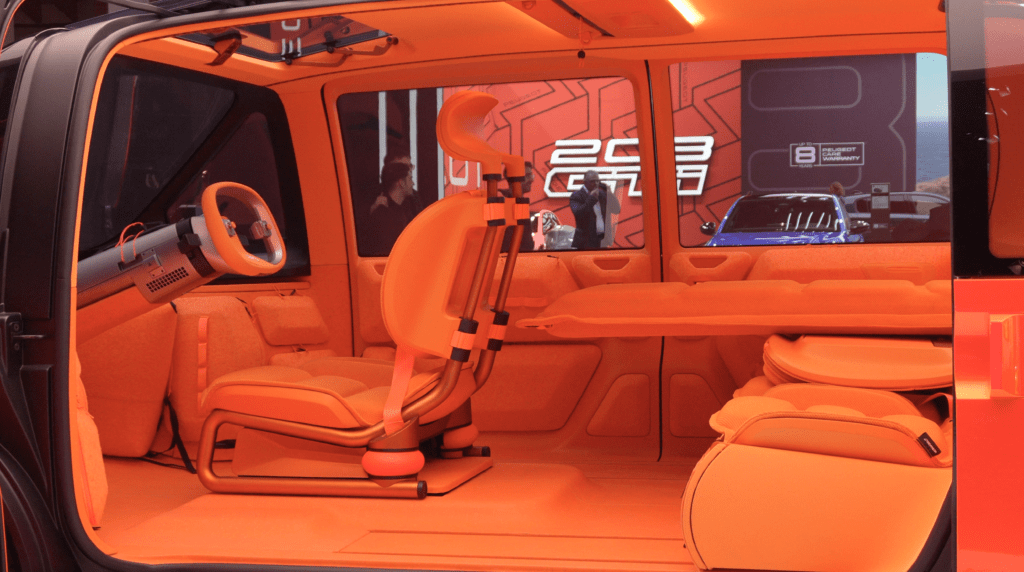
The interior’s bold design may divide opinion, but behind the central driving position is a cabin that is highly adaptable. By positioning the driver in the middle of the cockpit, the ELO is ideal for both left and right-hand drive markets, while also freeing up space in the rest of the car.
The driver’s seat can be rotated to allow for interaction with passengers when parked. Additional seating can be deployed to transport up to six people. These seats can be transformed into a sleeping space for two as well. Plus, a power supply allows the ELO to be used as a home away from home.
Sustainability at the core
The ELO also features a sustainable element. Citroën has changed the treatment process for materials such as polypropylene, boosting recyclability. By reimagining components already in use by Decathlon, Citroën further cut the ELO’s production costs and reduced its overall carbon footprint.
Furthermore, the model also allows drivers to save money on parts, with identical front and rear bumpers. This results in fewer new parts being manufactured, helping cut insurance costs and potentially lowering the total cost of ownership.
From concept car to reality
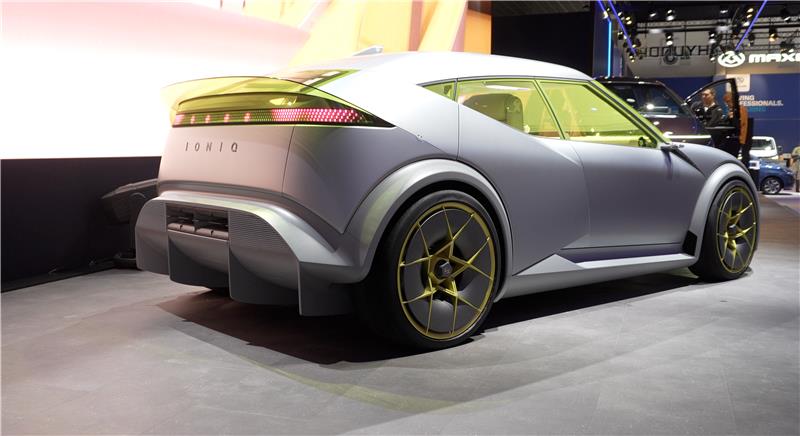
Hyundai unveiled its Concept Three at the IAA Mobility in 2025. At the Brussels Motor Show, the brand announced that the concept would become reality. It will form the basis of the new Ioniq 3, scheduled for launch later in 2026.
The new model is unlikely to carry over all of the features of the Concept Three. Its front grill and tinted windows will likely change, while its interior lacks real-world practicality. However, there are elements and designs that could be included.
The shape and size of the model will translate into the Ioniq 3. It features several ideas that make it stand out to the next generation of drivers. Its Parametric Pixel lighting is expressive, with its Mr Pix character integrated throughout to offer ‘playful storytelling’ and interactive elements.
Powerful stance
Among the many models from Volkswagen (VW) Group at the Brussels Motor Show was the Audi Concept C. This all-electric two-seater sports highlights the brand’s new design philosophy. This is another important area that concept cars help to envisage.
The simplistic looks, wide stance, and front end that points to the grill, help it stand out. The light signature is expected to carry over into future Audi designs. The model’s stance and titanium colour present strength and power.
The Concept C comes at an important time for Audi. With the marque entering Formula 1 in 2026 as a constructor and engine builder, it is pushing its performance credentials.
Small but functional
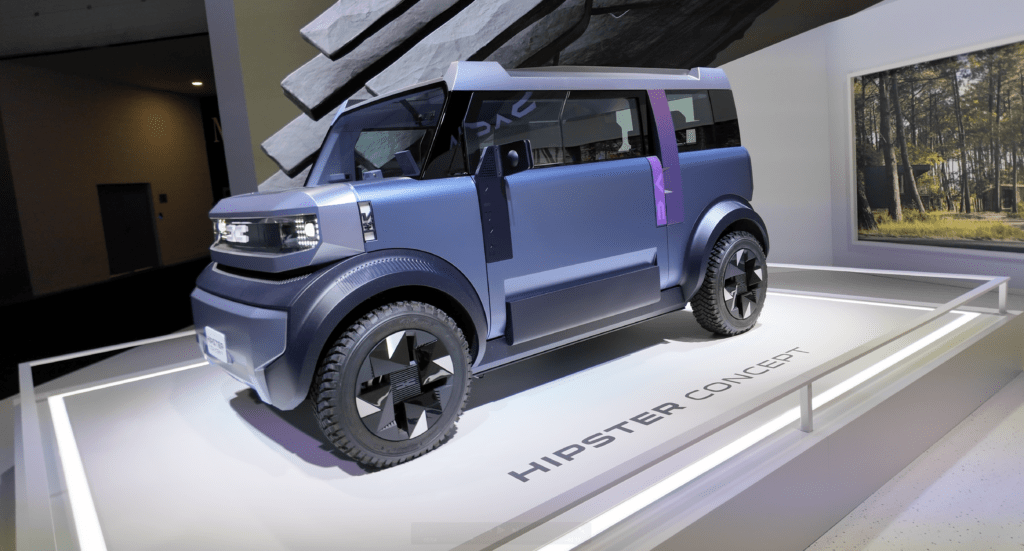
Dacia brought its Hipster Concept to the halls of the Brussels Motor Show. The concept was another to be afforded a prominent placement on the brand’s stand. It attracted attention for its practicality and functionality.
Measuring just three metres in length, the small car looks as though it could soon go into production. It uses a seating layout that is already on offer in the Dacia Sandero. The concept has been designed to reduce both weight and costs.
The interior can be customised with owners purchasing add-on items, with YouClip anchor points allowing for additions.
The Hipster is a simplistic model that can be styled to the driver’s preference. Rather than a built-in infotainment system, a smartphone dock allows users to rely on their own devices. Audio is played through a portable Bluetooth speaker that is compatible with the YouClip system.
A different concept
The Citroën ELO, Hyundai Concept Three, Audi Concept C and Dacia Hipster Concept encapsulate the philosophy of today’s concept car. No longer is the future a standout design, which is impractical for everyday life. Today, concepts could easily go into production with a few amendments.
This may make them more attractive to motor show visitors. There is no thought of what could be, but instead a feeling of what they could own. The Concept Three, for example, joins the Renault 5 in moving from a design vision into reality. It draws potential buyers in by revealing what the finished product will likely resemble.
The gaming aspect
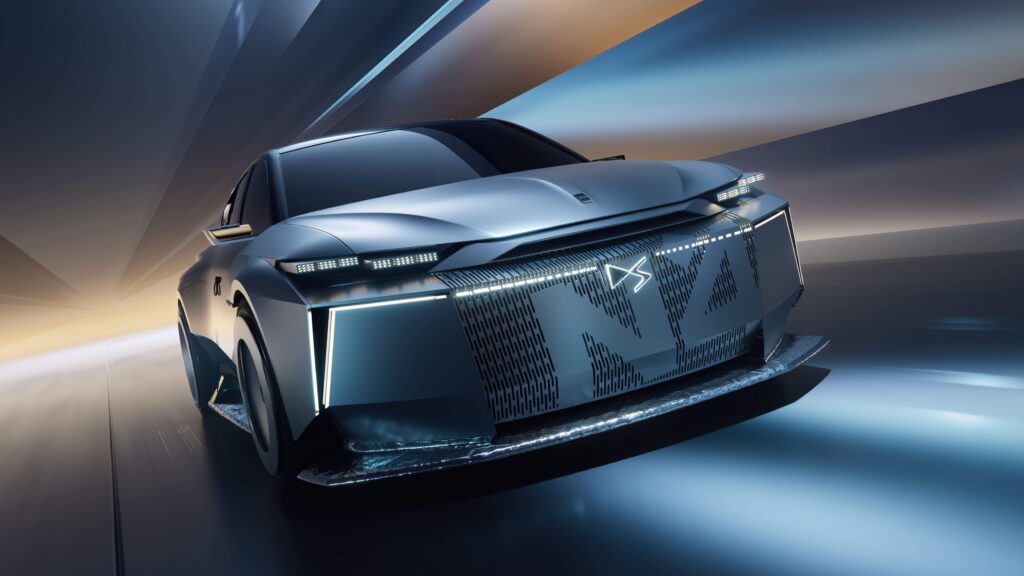
DS Automobiles presented the Taylor made No.4 Concept at the Brussels Motor Show. Its name is a nod to Formula E driver Taylor Barnard, who joined the DS Penske team for the 2025-2026 season.
Source: DS Automobiles
The concept is based on the No.4 model and was created to showcase the DS Performance Line. The model is inspired by Barnard’s preferences, with the colour, materials and finish modelled through his input. Inspired by gaming, with its contrasting shades and widebody stance, it created an imposing presence on the stand.
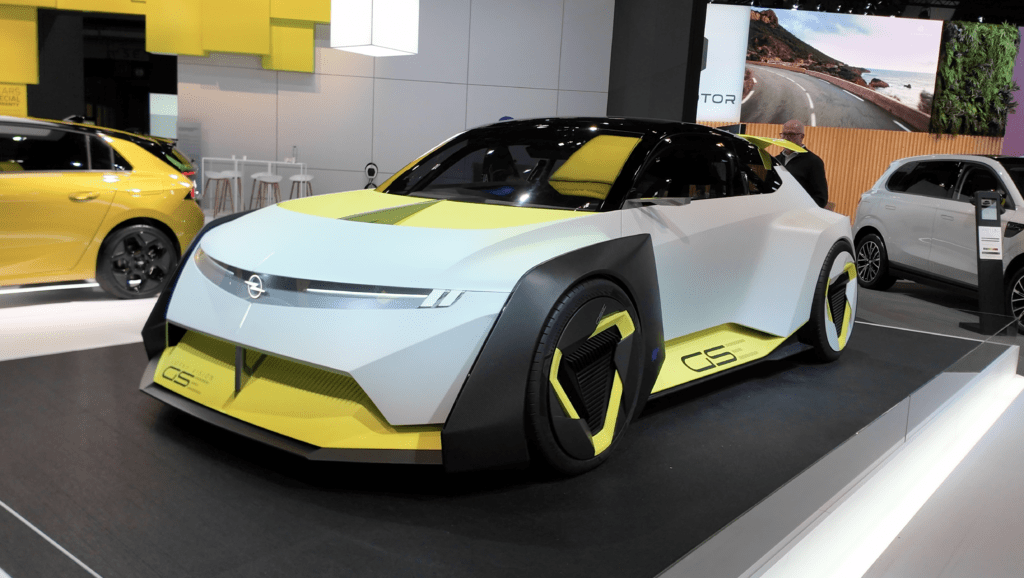
Opel brought its Corsa GSE Vision Gran Turismo concept to the show. This is not a new model, but it held a significant place on the carmaker’s stand. Elements of the design made their way to the new Opel Astra, which was unveiled in Brussels.
Opel states that the concept represents the future of the GSE high-performance label. It also signifies the brand’s commitment to the small car sector, which is growing in popularity once again.
Merging the physical and gaming worlds, the model’s name is a nod to its inclusion in Gran Turismo 7. Players can experience the GSE Vision in the racing simulator, increasing the carmaker’s exposure.
The Brussels Motor Show highlighted that the experience of the concept car is continuing to change. No longer do they show what might be in the future. Now they present the potential of models today, either in the real world or in video games.
What were the standout premieres at the 2026 Brussels Motor Show? Which model won the Car of the Year award? Autovista24 journalist Tom Hooker explores the show’s highlights with editor Tom Geggus in The Automotive Update podcast.
Many new models premiered at the Brussels Motor Show. Meanwhile, one of the automotive industry’s biggest accolades went to a historic carmaker. Additionally, Autovista24 explores the show’s importance for Belgium’s new-car market.
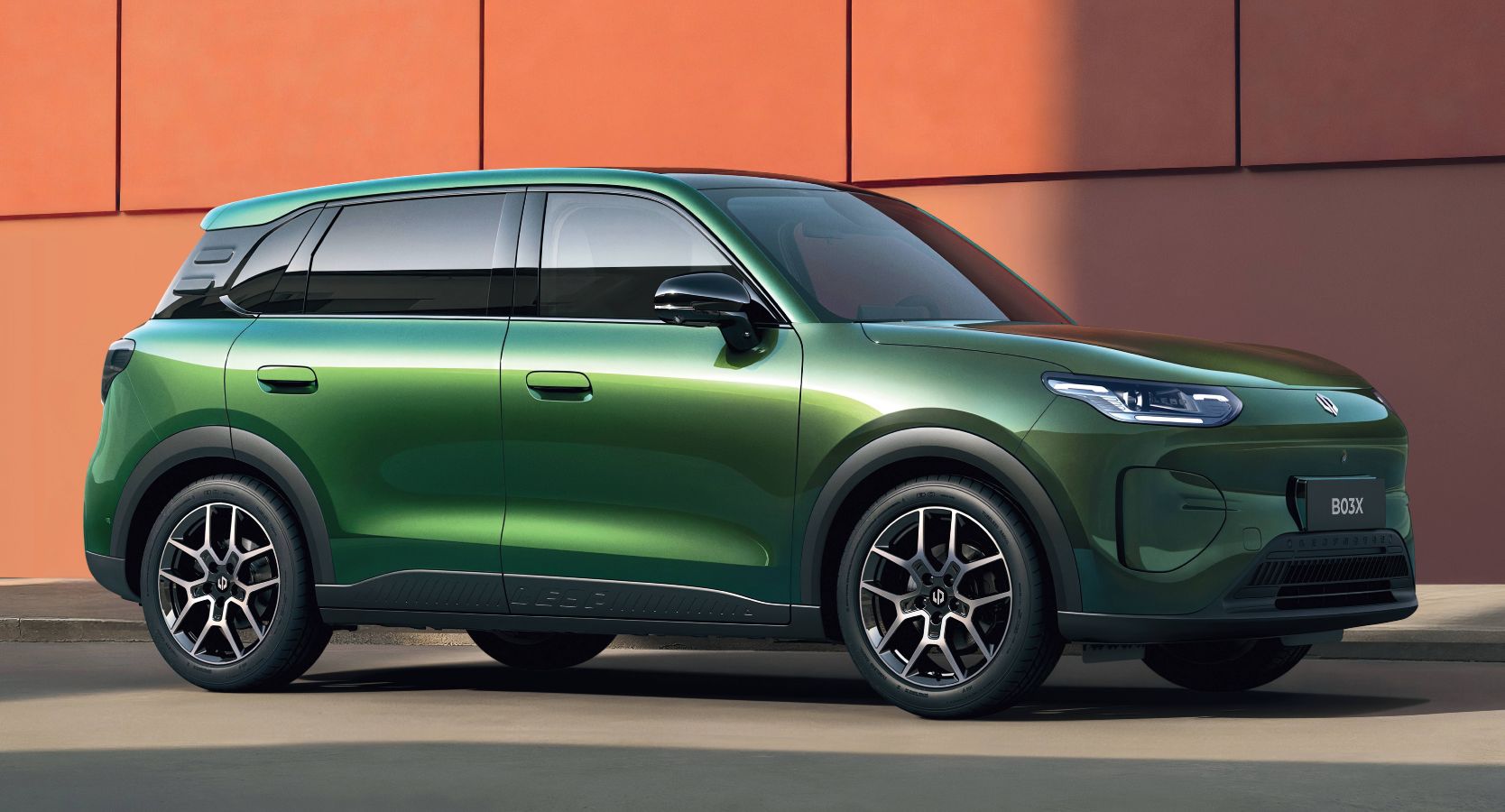
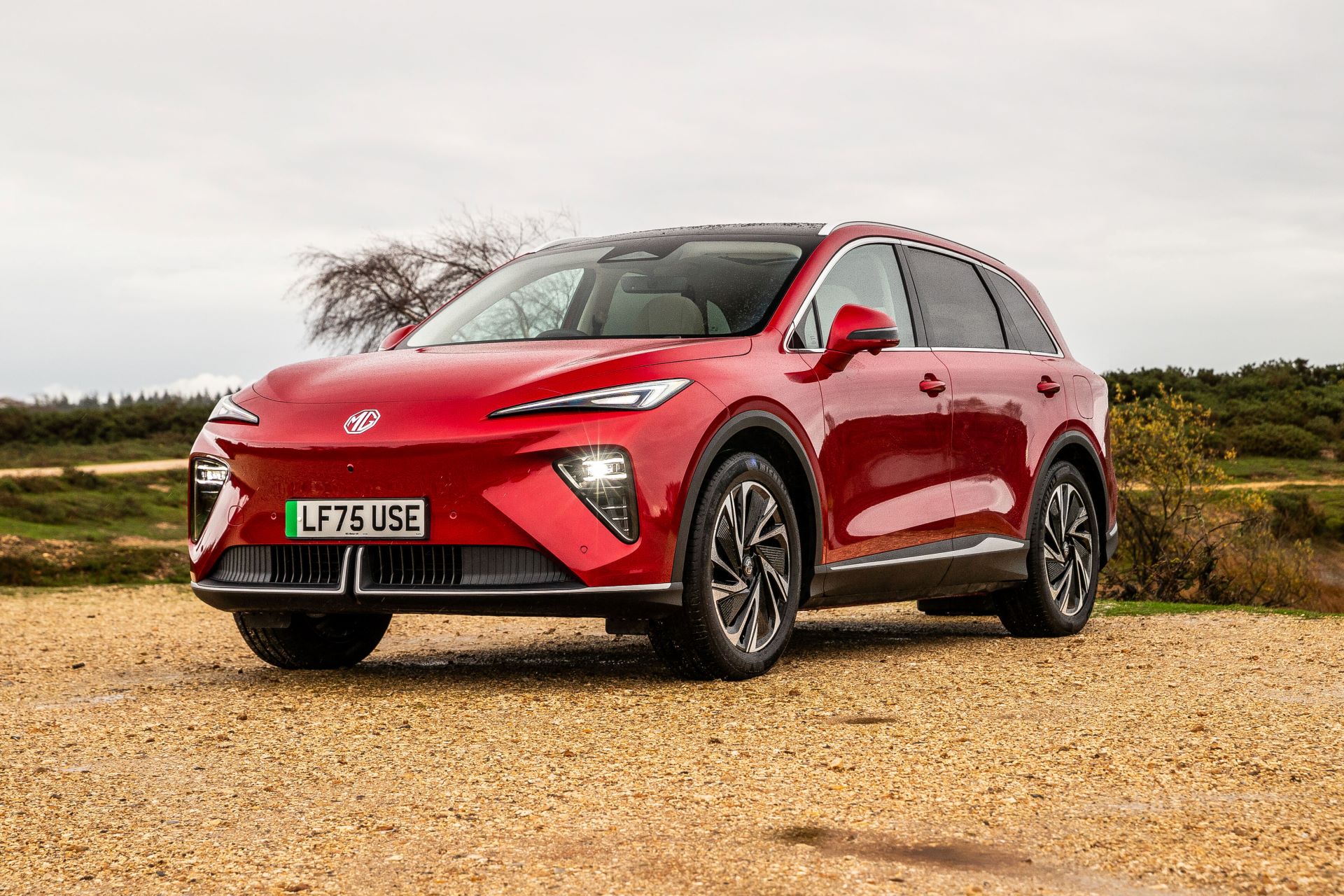
The Tesla Model 3 Standard was one of many European premieres. Following suit were the BYD Atto 2 DM-i, the MG S6 and the Leapmotor B03X. Numerous concept cars were also displayed at the Brussels Motor Show. This included the Citroën ELO and Hyundai Concept Three, which the carmaker confirmed would become the Ioniq 3.
A historic victory
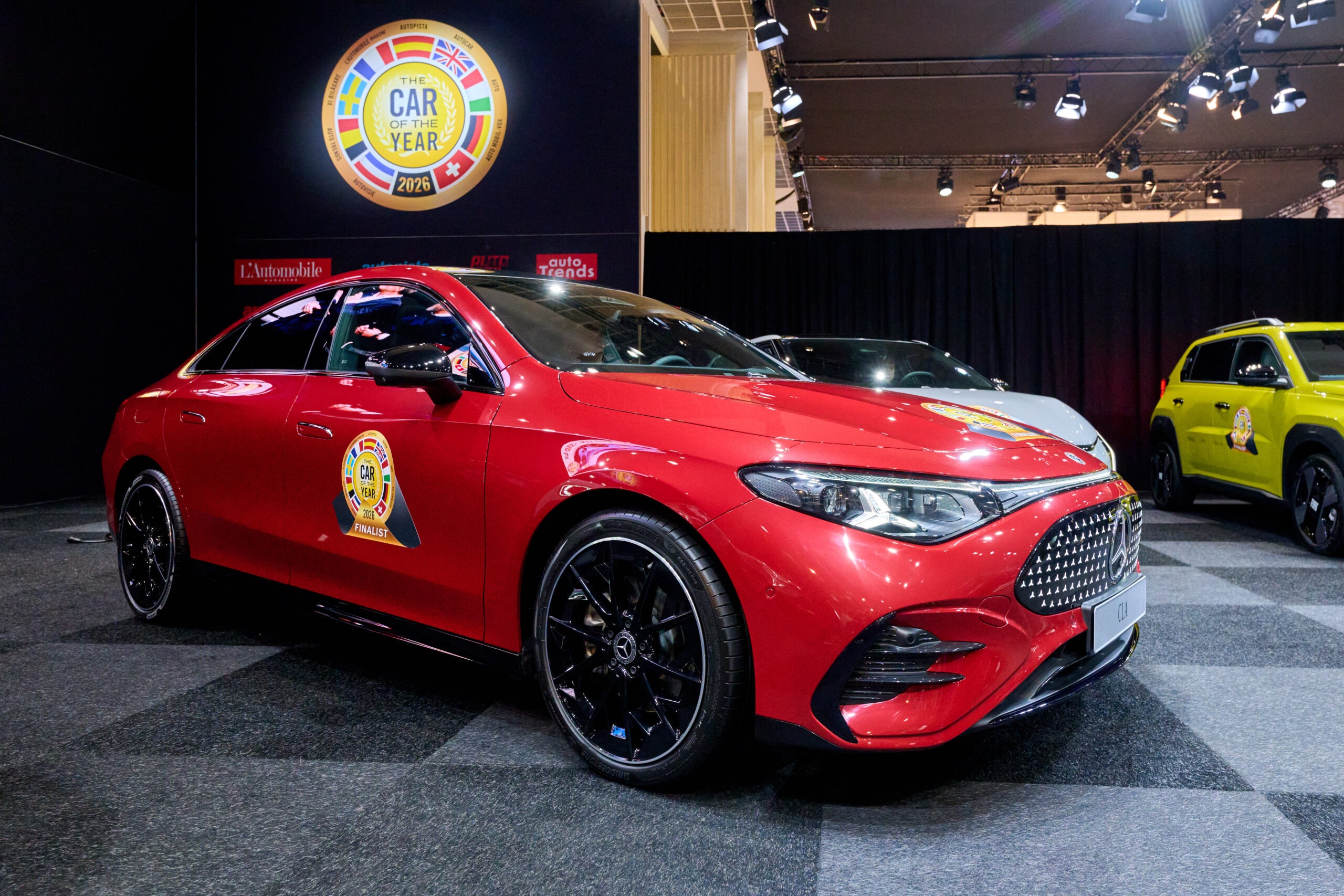
One of the highlights from the Brussels Motor Show was the European Car of the Year award. This year’s winner was the Mercedes-Benz CLA. It was only the second time the brand had been presented with the accolade in the awards’ 62-year history.
The panel of 59 senior motoring journalists across 23 countries made their votes based on various criteria. Aspects such as design, comfort, safety and economy were considered. In the judging process, technical innovation and value for money are particularly important factors.
A shortlist of seven models is created from the year’s new arrivals. Jury members are allotted 25 points to apportion to at least five cars, with up to 10 points for each.
The Mercedes-Benz CLA came first with 320 points. The Skoda Elroq came second with 220, followed by the Kia EV4 with 208. The Citroën C5 Aircross came fourth with 207, and fifth was the Fiat Grande Panda with 200. Rounding out the finalists was the Dacia Bigster in sixth with 170, and the Renault 4 in seventh with 150.
Brussels Motor Show drives sales
The Brussels Motor Show has gained increased international attention over the last few years. However, it remains a significant sales event for Belgium’s new-car market. January and February, which are commonly lower-volume months in Europe’s other new-car markets, see high sales activity in Belgium.
During this period, leads are generated from the event, which are passed on to local dealers. Meanwhile, customers can browse models at the show without feeling the commercial pressure of having to buy a car immediately. Prospective buyers can also benefit from seasonal discounts and promotions around the motor show period.
The fleet channel holds a majority share of the Belgian new-car market. Yet, most sales that follow the event are from the private channel. In this segment, there remains a healthy appetite for petrol and diesel-powered models, as well as full and mild-hybrids. This means carmakers are heavily incentivised to show a wide range of models and powertrains at the show.
December delivered a much-needed boost to the Italian new-car market. However, despite an eye-catching electric vehicle (EV) uplift, this did little to revive a stagnant 12 months. Following a year of inertia, what state is the sector in? Autovista24 web editor James Roberts examines the data.
Italy’s new-car market ended 2025 in decline. Across the year, 1,524,843 new vehicles took to the country’s roads, 33,228 fewer than 12 months prior. Compared to 2024 figures, this marked a 2.1% year-on-year dip, according to the latest data from ANFIA.
Conversely, December witnessed a year-on-year improvement in fortunes. The final month of the year saw 108,075 new vehicles join Italy’s car parc. This was an upswing of 2.3% and 2,390 units, according to Autovista24 calculations of ANFIA data.
However, this was the second-lowest monthly registration total of the year after August. Following a blunt 0% growth in November, December did signal a welcome positive rebound for the first time since September.
In terms of electrification, Italy’s EV uptake conundrum was laid bare. Throughout the year, battery-electric vehicle (BEV) and plug-in hybrid (PHEV) registrations have increased. This was boosted in November and December by quickly exhausted incentives. Despite this flash of prosperity, across the whole year, the plug-in market share has struggled to make a meaningful impact.
Hybrid powertrains, including full and mild versions, accounted for the highest volumes in 2025. This was reflected in the end-of-year deliveries and market share. Meanwhile, petrol and diesel continued a pattern of decline.
High EV sales too little too late?
In total, 21,925 new EVs were registered in December, including BEVs and PHEVs. This was the second-highest monthly total of 2025. The powertrain group saw a 130.3% year-on-year uptick, to the sum of 12,406 additional vehicles.
PHEVs had a particularly good December, with 9,851 registrations. The powertrain established a 165.4% year-on-year volume gain, plus a 9.1% market share, up 5.6 percentage points (PP). This was the fourth consecutive month of triple-digit increases for PHEVs.
Meanwhile, BEVs scored a second month of triple-digit increases. In total, 12,074 new all-electric vehicles reached customers in Italy. This propelled the monthly BEV market share to 11.2%, a significant 5.7pp increase compared with December 2024.
On the one hand, this December EV result is cause for celebration. Building on November’s peak EV volumes, it seems some momentum could be carried forward into 2026. However, November and December’s PHEV and BEV upswings were fueled by fleeting national incentives.
This is not unusual, and countries such as Spain have harnessed EV incentives effectively in 2025 to boost adoption. However, in Italy, the new-car market has been punctuated by short-lived and inconsistent policies. This uncertainty has stunted EV adoption.
EV momentum likely to fade
In late October, the Italian Ministry of the Environment and Energy Security (MASE) confirmed new EV incentives.
Under Italy’s National Recovery and Resilience Plan (PNRR), private buyers could receive up to €11,000 toward a new EV. This was subject to household income and the scrapping of a Euro 5 or older internal-combustion engine (ICE) car. Small businesses could claim up to €20,000 for an electric light- commercial vehicle (LCV).
The scheme had a total budget of more than €597 million, with a view to replace about 39,000 ICE vehicles. However, the incentives were fully claimed for use within 24 hours of launch, MASE confirmed.
In the short term, this had the desired impact. Immediately following the incentive launch, plug-in registrations breached 20,000 in November. This momentum prevailed into December, helping to ensure a monthly share high of 20.3%, a sizeable 11.3pp surge.
‘What really stands out is the market share of BEVs, which reached 11.2% in December,’ affirmed Marco Pasquetti, Autovista Group’s cluster head of forecasting for Spain and Italy. ‘This is remarkable considering that for most of the year the share hovered around 5%.
‘This increase was expected and is largely the result of the incentive scheme launched in October, which generated some 55,700 vouchers for the purchase of an equal number of vehicles. Since the bonus is no longer available, this positive momentum is likely to gradually fade in the coming months,’ he added.
Poor PHEV and BEV market share
Assessing 2025 as a whole, the EV market share in Italy has increased significantly. However, as ANFIA outlined, growth remains ‘very slow.’ When isolating BEV and PHEV powertrains, the relative lack of impact in the overall market is apparent.
In all, 192,964 EVs took to Italian roads in 2025, according to ANFIA. This proved to be 74,652 more than the previous year, a 63.1% increase. EVs secured a 12.7% share, one of the lowest of the major European new-car markets.
98,340 PHEVs left Italy’s forecourts in 2025. While this signalled a satisfying 86.6% year-on-year volume increase, the overall market share stood at 6.4%. This was the second lowest of Italy’s six propulsion categories, according to Autovista24 analysis of ANFIA data.
Just 3,716 units behind, BEVs ended the year with 94,624 registrations, up 44.2% on 2024 totals. Despite the clear gains, the powertrain made up the lowest share of Italy’s new-car market at 6.2%. This was an increase of just 2pp year on year.
Hybrid decline on the horizon?
Across the whole of 2025, hybrid power proved the most popular choice for Italy’s new-car buyers. Amid stop-start and sluggish EV inroads, the thirst for this powertrain remained strong. However, despite this apparent Europe-wide trend, are things changing?
Complete ANFIA data for 2025 revealed that 671,923 hybrid vehicles were sold in Italy last year. This secured the largest portion of the country’s new-car market at 44.1%, up 4.1pp year on year. Aside from the holiday month of August, December returned the second-lowest hybrid volume of 2025. 46,048 units were delivered in the month, carving out 42.6% of the market.
While dominant, the hybrid share fell throughout the year. Compared with January, hybrid’s hold was down by 2pp in December. Although relatively small, it could suggest buyers could be turning towards alternative powertrain options.
Electrification creeping up
One thing was certain across Italy’s new-car market in 2025. When it comes to electrified vehicle registrations, hybrids provided the backbone.
Adding hybrid figures to EV volumes, these powertrains accounted for 56.7% of the Italian new-car market in 2025. In total, 864,887 units heralded a 16.7% year-on-year volume increase.
Removing hybrid totals drops the market share to just 22.6%. In many ways, this illustrates the double-edged sword of hybrid success. The powertrain could be a gateway from ICE to fully-electric cars. However, its enduring appeal amid overall low sales totals is stunting the EV transition.
The European Commission’s recent Automotive Package could see Italy standing at a crossroads. With the sale of new ICE vehicles, including mild hybrids, potentially extended beyond 2035 in the EU, questions have emerged domestically.
These changes could dent EV uptake, further hindering growth and market diversity in Italy. This is amid already uneven incentive frameworks. Industry bodies such as UNRAE have cited the Commission’s proposal as a ‘starting point, but not yet satisfactory.’
‘Critical issues remain and aspects to be clarified and improved to avoid negative effects on the market, consumers and industrial competitiveness,’ elaborated UNRAE president, Roberto Pietrantonio. ‘The transition must be effective and practicable, not just ambitious, and to become so it needs realism and listening. Adequate tools are needed, such as a review of the taxation of company cars, widespread development of electric charging infrastructure, and affordable charging tariffs.’
Decline for petrol and diesel?
While it may go against the grain of green targets, Italy’s ICE sector proved resilient amid a trend of decline. ICE totals, including petrol, diesel and bio diesel variants, accounted for 519,563 registrations in 2025. This meant a market share of 34.1%, down from 43% in 2024.
The continued decline of ICE demand in Italy is not in doubt and is reflected across most of Europe. The powertrains have been able to maintain a strong grasp on the overall new-car market. However, examining petrol and diesel registrations in isolation reveals significant drops.
Petrol ended the year 18.2% down on 2024, while diesel underwent a drastic 31.6% slide. However, both these fuel types held higher respective market shares than individual PHEV and BEV variants. After hybrid powertrain volumes, petrol clearly remains the second most popular new-car choice with 24.4% of the overall market.
Made up of liquified petroleum gas, compressed natural gas and hydrogen fuel-cell vehicles, the ‘other’ category ended 2025 strongly. It held a 9.2% market share, down just 0.2pp. It ended the year as the fourth most popular fuel type grouping, and another thorn in the side of EV uptake.
Unseating ICE resilience, as well as hybrid dominance, will be key to boosting the relatively scant EV market share in Italy. New incentive packages will be central to increased EV market share in 2026, which UNREA highlights as a ‘key year for the future of the sector.’
The Brussels Motor Show is intrinsically linked to the Belgian new-car market. But with the event now gaining international attention, can it continue to drive leads and sales? Autovista24 journalist Tom Hooker discusses the topic.
Over its 102 editions, the Brussels Motor Show has remained a hotbed of sales activity for local dealers. As a result, every year the Belgian new-car market experiences a unique seasonal effect in January and February. According to Autovista24 calculations of FEBIAC data, registrations peaked in the first quarter of 2025.
‘The Brussels Motor Show is always very important for the Belgian market. This is where more than one-third of the sales in the full year are made. So, you must start well at the Brussels Motor Show if you want to have a great year in Belgium,’ Stéphane Cesareo, communications director for Stellantis Europe, USA and China, told Autovista24.
Stéphane Cesareo, communications director for Stellantis Europe, USA and China. Source: Autovista24.
In turn, this performance helps carmakers justify their attendance from a financial viewpoint, instead of a standalone marketing exercise.
‘Brussels traditionally was a sales show. That is something we want to keep. It pays off for the importers of the brands to be here. It is not just investing money, it is also a return,’ FEBIAC CEO Frank van Gool told Autovista24.
Providing sales reach
This seasonal sales spike is not just caused by the Brussels Motor Show. Brands use the period of heightened activity to present attractive discounts and promotions. In turn, it has influenced a local car-buying mindset.
‘It is the only time of the year when you can reach most of the Belgian people looking for a new car. Everyone has been waiting since the summer for the Brussels Motor Show to find a good deal,’ Julien Libioul, communication and public affairs manager at Ford Motor Company Belux, told Autovista24 at this year’s event.
Julien Libioul, communication and public affairs manager at Ford Motor Company Belux. Source: Autovista24.
‘It is known in the Belgian culture that if you want to buy a new car, wait for the Brussels Motor Show. You will have an extra incentive to find a good price,’ he highlighted.
New international focus
Overshadowed by international events such as Geneva, Detroit and CES, the Brussels Motor Show used to hold a lower profile.
Speaking to Autovista24, Raf Van Nuffel, vice president of product at Hyundai Motor Europe, commented: ‘In the end, you still find many customers who really like to see cars physically.
‘But some other motor shows are not what they used to be. So, the Brussels Motor Show is benefiting from that and getting a bit more international attention,’ he commented.
Source: FEBIAC
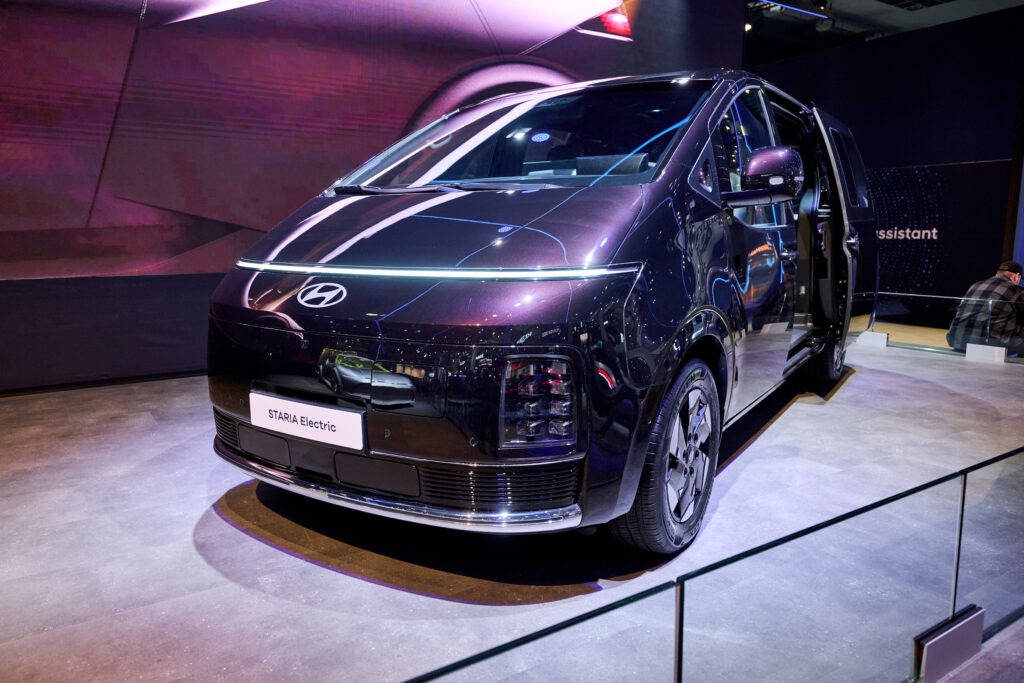
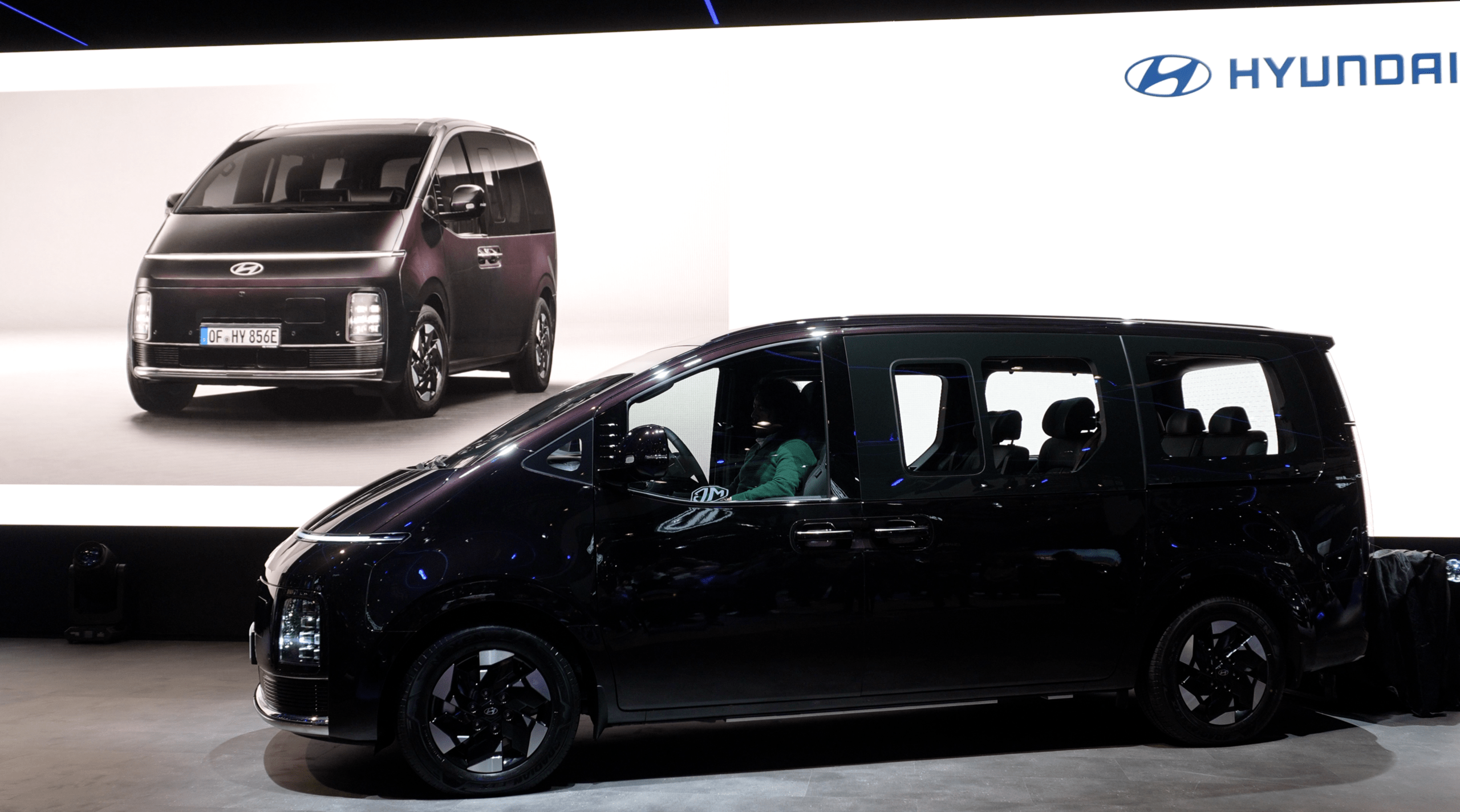
Hyundai held the world premiere of its Staria electric vehicle (EV) at the event. The model formed part of a long list of global, European and Belgian debuts at the Brussels Expo.
‘We really reinforced the international flavour this year. That is important because the local sales companies or importers do not always have the financial means to fully support these shows. They also need some support from their headquarters,’ noted van Gool.
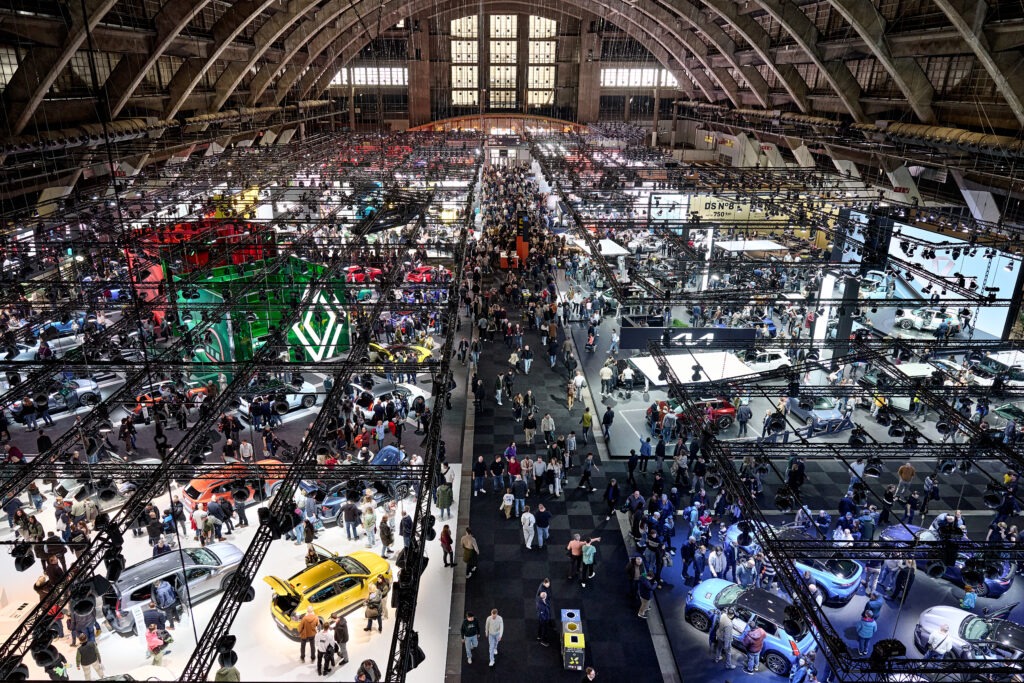
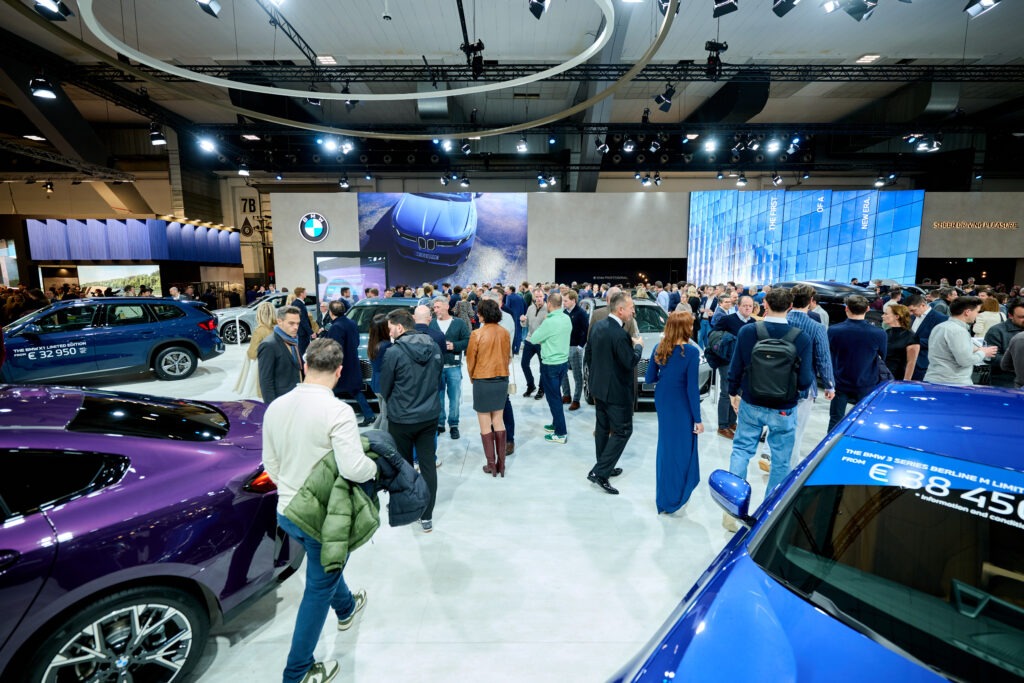
‘We have never had so many brands at the show as we have today. We have 67 different brands and over 400 models on display. Almost all the brands that are commercialised here in Belgium and Europe are present at the show. Last year we had 300,000 visitors, and we are aiming for almost 350,000 visitors this year,’ he outlined.
A bigger sales opportunity?
While the event has enjoyed record attendance, the Belgian new-car market suffered a decline from January to December. According to FEBIAC, deliveries dropped by 7.5% year on year to 414,770 units. So, could the show’s international traction help the market to bounce back, or cause more struggles in 2026?
Source: FEBIAC
‘I do not think both aspects are threatening each other. I think we can keep up that approach without the risk that the local sales aspect would disappear,’ stated van Gool.
Kristof Winckelmans, PR manager at Astara Western Europe, added: ‘The importance of the Brussels Motor Show on the calendar is growing, not only because there are sales behind it, but also because there are not many shows left. That is beneficial for us as an importer and for the Belgian automotive industry as a whole.’
Private sales focus
Despite the fleet channel driving the Belgian new-car market, the event typically generates more sales from the private channel.
‘Belgium is quite an atypical market. We have approximately 60% of professional fleet customers and 40% approximately private customers. Within these private customers, we have to do 50% of our yearly volume during January and February,’ commented Olivier Van Hoorebeke, PR manager at Audi, Seat and Cupra, when speaking to Autovista24.
Olivier Van Hoorebeke, PR Manager at Audi, Seat and Cupra. Source: Autovista24.
Yet, the nature of this sales process has changed along with the growth of the show. In the past, visitors could buy their new car directly at the event. Now, Brussels provides a chance to generate highly detailed leads, which are passed on to the relevant dealership. In turn, this presents an interesting benefit.
‘You could say people inform themselves on the internet, and they will go to their local dealership. But a lot of people are under pressure when they go into a showroom, and they do not feel at ease. Here at the motor show, customers can freely compare things without this commercial pressure of having to buy a car immediately,’ stated van Gool.
Private buyer preferences
As emissions standards tighten in the EU, carmakers are increasingly directing their focus to electric vehicles (EVs). Consequently, this is reflected in some of their show displays.
Source: FEBIAC
However, with Brussels’ unique position as a centre for private sales, carmakers are incentivised to show their full model range. This includes full and mild hybrids as well as internal-combustion engine (ICE) models, alongside the latest EVs. For example, Alpine presented its full range for the first time at the event.
‘The visitors, in general, are private consumers. So, it is vital that brands do not just show fleet cars. In Belgium, the fleet market is largely EVs. However, our hybrid model range is particularly important here,’ Ellen De Wilde, PR manager at Toyota and Lexus BeLux, told Autovista24.
Are sales the new success formula?
With its 2026 edition, it is safe to say that Brussels now carries an international stature. Its size could be compared to the Paris Motor Show and the IAA Munich.
New-car registrations declined heavily in France, even after the Paris event in 2024. Meanwhile, Germany saw marginal growth after being rooted in a decline for the majority of 2025. So, could Brussels’ mix of commercial and international flavour be a recipe for future motor show and new-car market success?
Source: FEBIAC
‘I do not know if it is a copy and paste to do this in other countries. I think it is also a very Belgian thing to have this show at the beginning of the year and the commercial aspect that goes with it,’ commented van Gool.
‘If there are dramatic changes in the way we use cars or if autonomous driving is really moving forward, then we will have to see if the concept of this motor show is still relevant or if we have to change or if it will disappear,’ he concluded.
Is China’s lead insurmountable? Could Northern America make a comeback? What does the Automotive Package mean for Europe? How are the non-Triad markets faring? EV Volumes’ head of forecasting, Neil King, unpacks the latest predictions with Autovista24 editor Tom Geggus.
Covering passenger cars and light-commercial vehicles (LCVs), EV Volumes has stepped up its global light-vehicle market forecast. Data for 2025 is expected to confirm 92.7-million-unit sales, up by 4% year on year. This is compared with the 3.6% growth outlined in September’s forecast.
EVs, including battery-electric vehicles (BEVs) and plug-in hybrids (PHEVs), are predicted to make up 25.5% of these sales. This means approximately 23.7 million new plug-in vehicles will hit roads worldwide. Moving forward, improved outlooks in China, the non-Triad markets, and Europe offset the downgrade to Northern America.
The global electric vehicle (EV) share is forecast to reach 27.5% in 2026, 43.2% in 2030, 64.6% in 2035, and 83.2% in 2040. That said, budget pressures and policy shifts may threaten investment in incentives and charging infrastructure. Various legacy vehicle makers are reducing their EV targets. This has further weakened the outlook for EV adoption in Northern America.
China’s booming EV market
The EV boom has continued in China, with the plug-in share rising from 13.9% in 2021 to 44.3% in 2024. The market’s strength is supported by favourable total cost of ownership and increasingly competitive pricing.
Given economic headwinds, the Chinese government has focused on boosting domestic consumption, with additional support directed toward state-owned OEMs. The economic situation appears positive, with the OECD upgrading the 2025 GDP growth outlook for China to 5%.
Vehicle demand also remains resilient. EV Volumes has slightly upgraded its 2025 light-vehicle sales forecast to 27.8 million units, up 7.1% year on year. A scrappage programme was extended beyond the original January 2025 deadline. However, it has been suspended in several cities, which could disproportionately reduce demand for EVs given their higher bonus levels.
Additionally, in October 2025, China ended its national EV subsidy programme, as reported by Reuters. It also excluded new-energy vehicles (NEVs) from the list of strategic emerging industries in its latest five-year development plan. This includes EVs, extended-range electric vehicles (EREVs) and fuel cell electric vehicles (FCEVs).
While direct subsidies are gone, purchase tax exemptions remain in place, although they are expected to phase out by 2027. Also, some local governments still offer targeted incentives.
Targets to hit
In 2025, China set a target of approximately 15.5 million total NEV sales. The country also pledged to reduce its greenhouse gas emissions by 7% to 10% by 2035. This marked the nation’s first commitment to absolute emissions cuts.
PHEVs have taken an increasing share of the EV market. This rose from 18.3% in 2021 to 42.3% in 2024 and was largely due to strong sales of BYD and Li Auto EREVs.
While Chinese OEMs continue launching new PHEVs and EREVs, BEVs are regaining momentum, bolstered by aggressive discounting initiated by BYD. As such, BEVs are forecast to account for 61.2% of EV sales in 2025 and about two-thirds by 2031.
In China, EVs are forecast to represent 56.4% of all light-vehicle sales in 2025. This is set to increase to 76.4% in 2030, 89.7% in 2035, and 96.1% in 2040.
Forecast volumes are based on retail sales (not wholesales), excluding exports and inventory build-up. This explains the difference from the typically higher wholesale-based figures published by other agencies.
Barriers in Northern America
In Northern America, including the US and Canada, light-vehicle sales rose by 2.9% in 2024, following 12.4% growth in 2023. The EV share increased from 9.4% in 2023 to 10.2% in 2024. In contrast to China, the region’s electrification looks to have lost a lot of energy.
Last year saw multiple major influencing factors hit the region’s light-vehicle market. Canada saw funding for the iZEV programme run out in January, with BEV uptake falling and no replacement scheme announced. In March, the US government announced 25% import duties on vehicles. Then the ‘One Big Beautiful Bill’ act ended EV tax credits in September.
Ford dropped plans for several all-electric models in the US and is replacing the all-electric F-150 Lightning with an EREV version. It was not alone, with Stellantis making similar strategic shifts, TechCrunch reported. This points to a greater share of PHEVs and EREVs as manufacturers balance electrification with customer preferences and profitability pressures.
EV Volumes has slightly increased the 2025 light-vehicle sales forecast for Northern America to 18.2 million units. This is up 2% year on year. The EV share is now expected to reach 9.9% in 2025 and rise only modestly to 10.1% in 2026.
These small gains will be primarily supported by Canada and the rollout of more affordable models. This includes the standard versions of the Tesla Model 3 and Model Y. EV shares are then expected to climb to 20.9% in 2030, 39.3% in 2035, and 58.6% in 2040. This is well below the predicted global EV share of over 83.2% in 2040.
European market uncertainty
Western and Central Europe’s light-vehicle market grew by 1.7% year-on-year in 2024, following 14% growth in registrations in 2023. Changing goods tariffs, developments in Ukraine, and ongoing tensions in the Middle East have all created regional sales uncertainty. The possibility of higher inflation, oil prices, and energy costs could also lead to weaker private consumption.
However, the OECD‘s December 2025 economic outlook predicts that GDP in the Euro area will gain 1.3% in 2025. This is slightly higher than the September outlook, which anticipated 1.2% growth.
The EU proposed tariff reductions in August, enabling the EU-US trade agreement. This lowered duties on the automotive sector from 27.5% to 15%. The recently ratified EU-Mercosur and EU-Mexico free-trade agreements have also boosted the region’s automotive competitiveness.
Low rate of growth
EV Volumes forecasts that light-vehicle sales in Western and Central Europe will grow by 0.3% year-on-year in 2025. This is higher than in the September 2025 forecast, which projected a 1% decline. At 15 million units, this is far below the 18 million light vehicles registered in 2019.
EV Volumes does not expect the European market to return to 2019 levels within the current forecast horizon, up to 2040. A slight dip in demand is also expected in 2030 and 2035. Demand will likely be pulled forward into 2029 and 2034, triggered by the stricter EU emissions targets.
Stagnation in 2040 reflects the underlying cycle effect. Earlier peaks in replacement demand and fleet renewals unwind, and the market normalises after several years of elevated recovery volumes. Light-vehicle sales are expected to grow by 1.7% in 2026, hinging on a complex interplay of regulatory and economic factors.
EV Volumes forecasts that European EV sales will grow 30.2% year on year in 2025 to 3.99 million units. This means they will represent 26.6% of all light-vehicle sales.
BEV volumes are forecast to grow 28% year-on-year, accounting for 67.5% of all EV deliveries in 2025. PHEV sales are expected to increase by 35.1%. EVs will reach a 31.1% share of European light-vehicle sales in 2026 and 36.6% in 2027. This will be driven by new model launches, lower prices, and stricter emissions targets.
EU Automotive Package
In December 2025, the European Commission unveiled its Automotive Package. It introduced a revised CO2 reduction pathway and compliance mechanisms between 2030 and 2035.
Previously, carmakers had to cut tailpipe CO2 emissions of passenger vehicles by 100% by 2035. Under the proposal, they will instead need to reach a 90% reduction compared with 2021 levels. The remaining 10% will be offset through low-carbon steel, e-fuels, and biofuels. So, PHEVs, EREVs, FHEVs, mild hybrids, and even pure internal-combustion vehicles (ICE) could remain available beyond 2035.
The package also suggests greater flexibility for the 2030 target. Manufacturers could get a three-year compliance period between 2030 and 2032 to achieve the 55% emissions reduction. For LCVs, the 2030 CO2 reduction target would be eased from 50% to 40%, acknowledging slower electrification progress.
Additional proposed measures include mandatory zero and low-emission fleet share targets at the member-state level. There could also be updated labelling rules for EV range and energy consumption. ‘Super credits’ for small, affordable EVs produced in the EU are on the table too. A €1.8 billion battery support package is proposed to accelerate the European battery value chain as well.
The proposal remains subject to approval by both the EU Parliament and the EU Council. This means it is not reflected in EV Volumes forecast. However, if adopted as outlined, EVs may only account for between 55% and 60% of European light-vehicle sales by 2030. This would increase to between 80% and 85% by 2035. By 2040, this may hit between 90% and 95%.
These projections assume emissions balancing between 2030 and 2032 and continued alignment of national policies. Several markets, such as Norway, Sweden, and the Netherlands, are likely to maintain stricter targets. While currently committed to a 2030 ICE ban, the UK is expected to follow the EU’s revised framework.
Non-Triad measures
In non-Triad markets, EV volumes rose for the fourth consecutive year in 2024. This was thanks to greater product availability, stronger incentives, and lower import duties in selected countries. Combined EV sales reached 1.36 million units in 2024, up 34.2% year-on-year.
Light-vehicle sales managed the economic impact from US trade tariffs better than expected in 2025. However, EV Volumes has slightly decreased the 2025 light-vehicle sales growth forecast to 4.4%.
Indonesia introduced VAT exemption for low-emission vehicles in January and a reduced VAT rate thereafter. Japan increased the budget for EV subsidies under the Clean Vehicle Energy Subsidy Programme. India cut import duties for premium EVs as part of a new manufacturing programme in June.
Thailand revised its EV policy to encourage exports and prevent domestic oversupply. Each EV produced for export now counts as 1.5 units toward local production obligations.
In response to US tariffs, South Korea launched temporary stimulus measures. This includes financing support and higher EV subsidies. It is also planning additional tax exemptions for EVs. Accordingly, the EV share in non-Triad countries is forecast to reach 6.9% in 2025, hitting around 2.2 million units.
However, budget constraints driven by economic concerns may limit future incentive schemes. Several countries have introduced new tariffs on imported vehicles. This includes a 50% tariff in Mexico and up to 30% duties in Turkey. There will also be an end to incentives for imported, completely built-up BEVs in Indonesia.
The EV share is projected to reach 17% in 2030, 41.8% in 2035, and 76.8% in 2040. This generally lags the global adoption curve by about five years until 2035.
In the absence of the Geneva International Motor Show, carmaker and consumer attention has shifted to Brussels. With a fresh international focus, many brands used the event to premiere upcoming models. Autovista24 journalist Tom Hooker reviews the main talking points from the Brussels Motor Show.
With 67 brands and many global premieres, the Brussels Motor Show’s presence on the international stage is growing. It also plays host to the Car of the Year award, one of the industry’s most well-recognised accolades.
Despite its increasing stature, the Brussels Motor Show remains close to its roots. Historically a sales-focused event, it carries a heavy importance for the Belgian new-car market. Additionally, plenty of commercial vehicles and motorbikes are on display. This domestic and international proposition makes it stand out as an automotive event.
Premieres at Brussels Motor Show
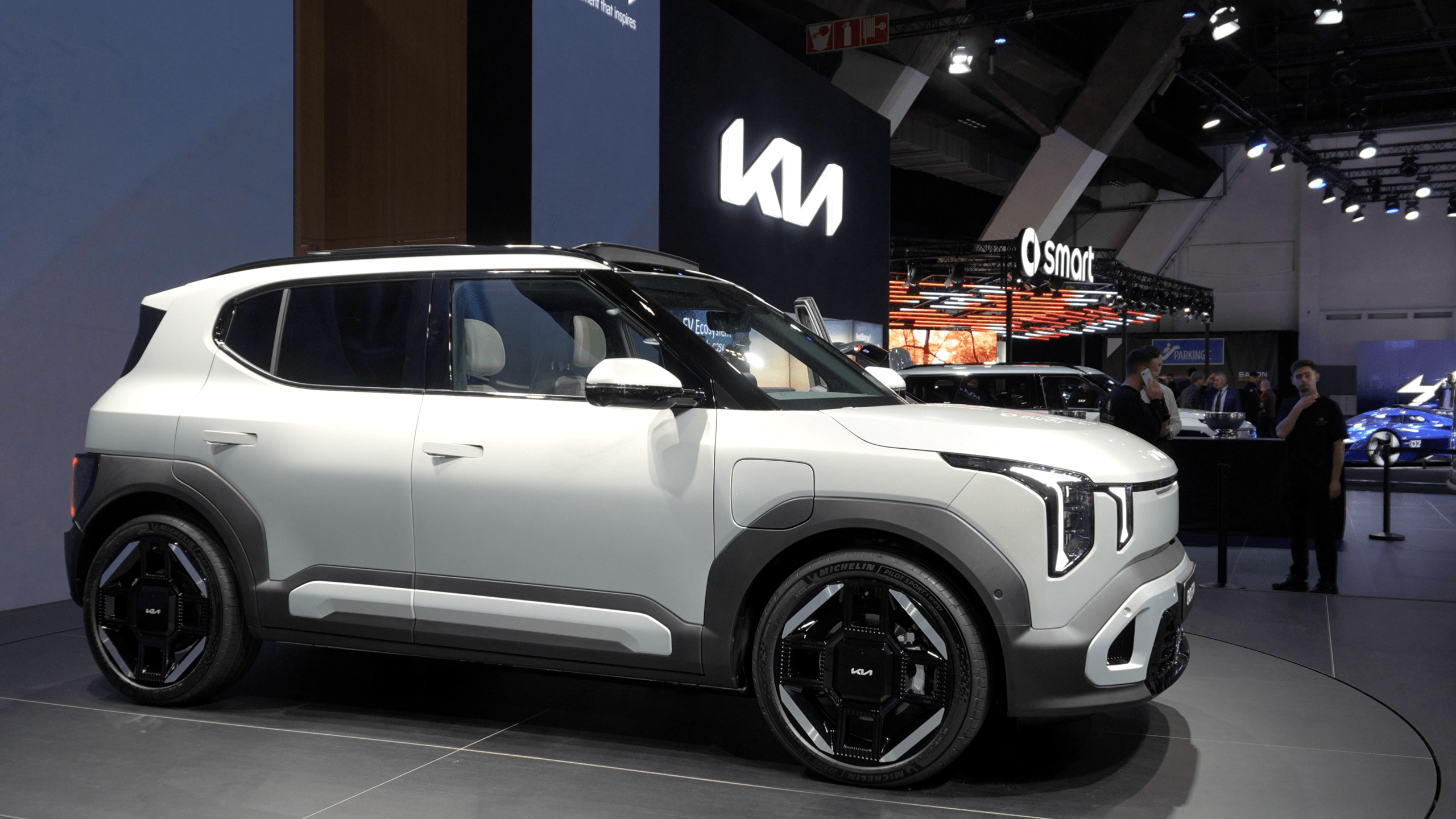
Kia showed off four models at the Brussels Motor Show. One of these was the EV2, a B-segment crossover SUV. Positioned as the brand’s smallest and most affordable battery-electric vehicle (BEV) in Europe. It has an estimated WLTP driving range of up to 448km and will offer bi-directional vehicle-to-load (V2L) charging.
Production of the BEV will begin in the first quarter of 2026, with the standard-range model. This will be followed by a long-range version and a ‘GT Line’ variant, with market launches due to be announced closer to the start of sales.
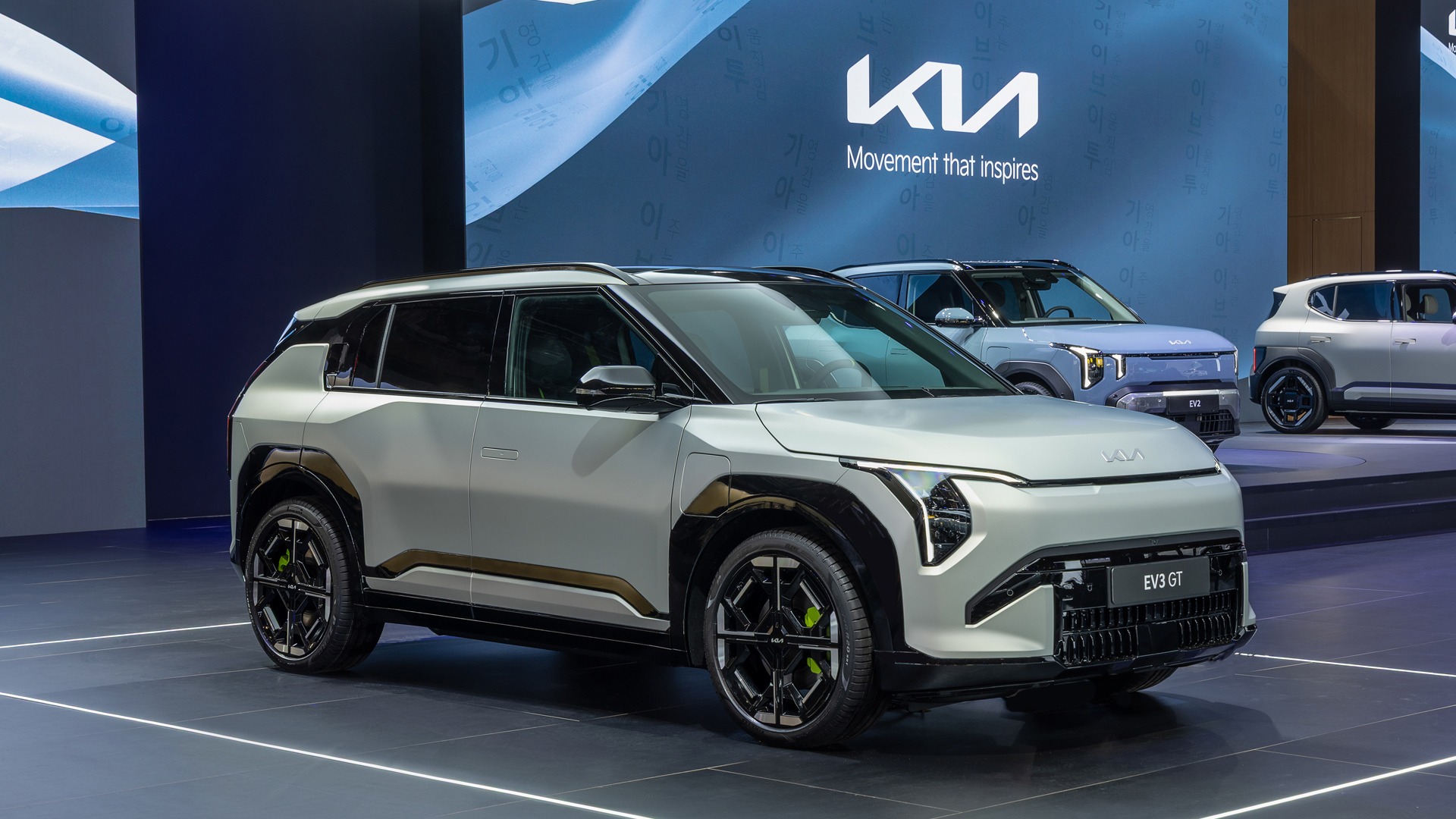
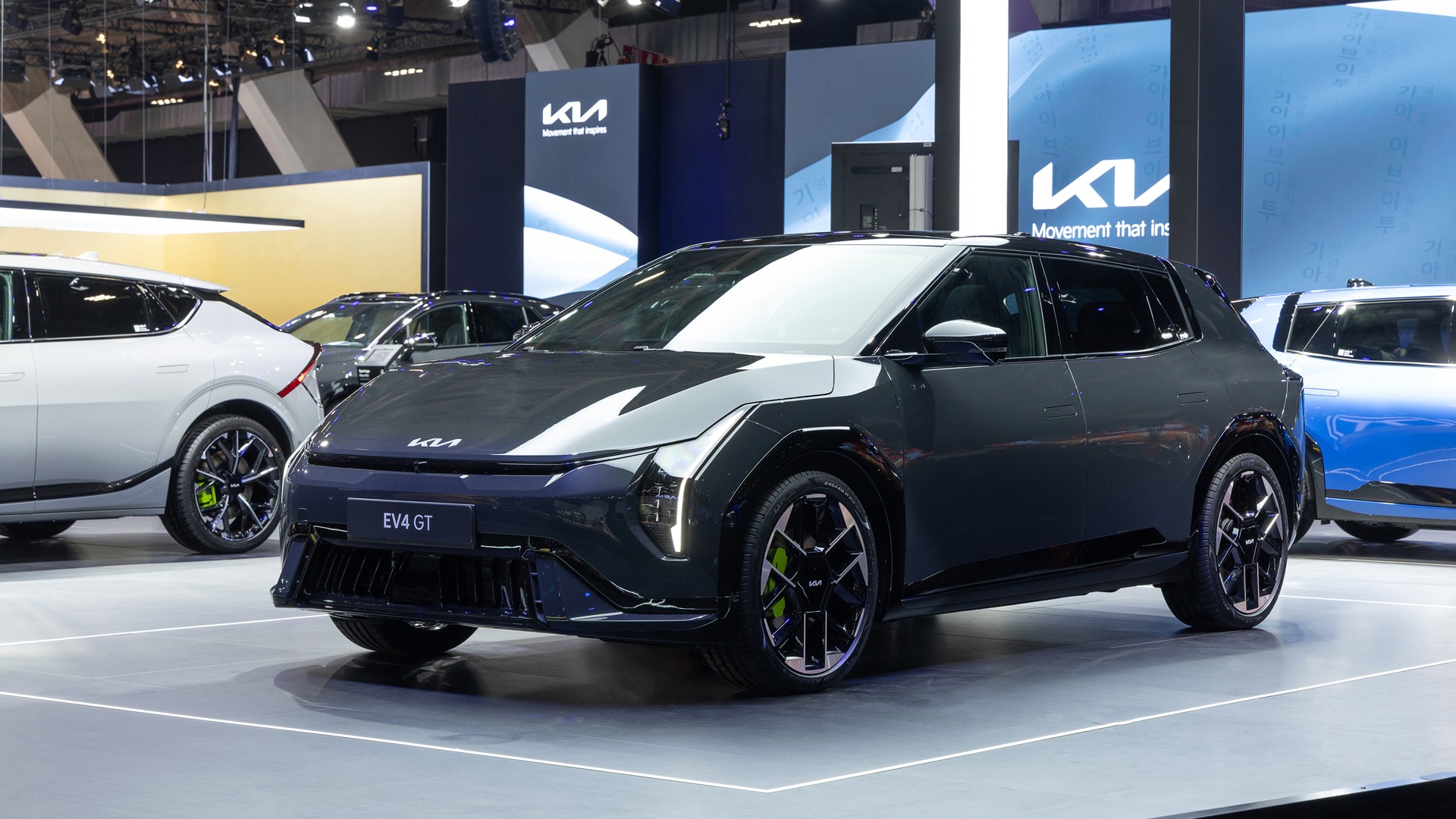
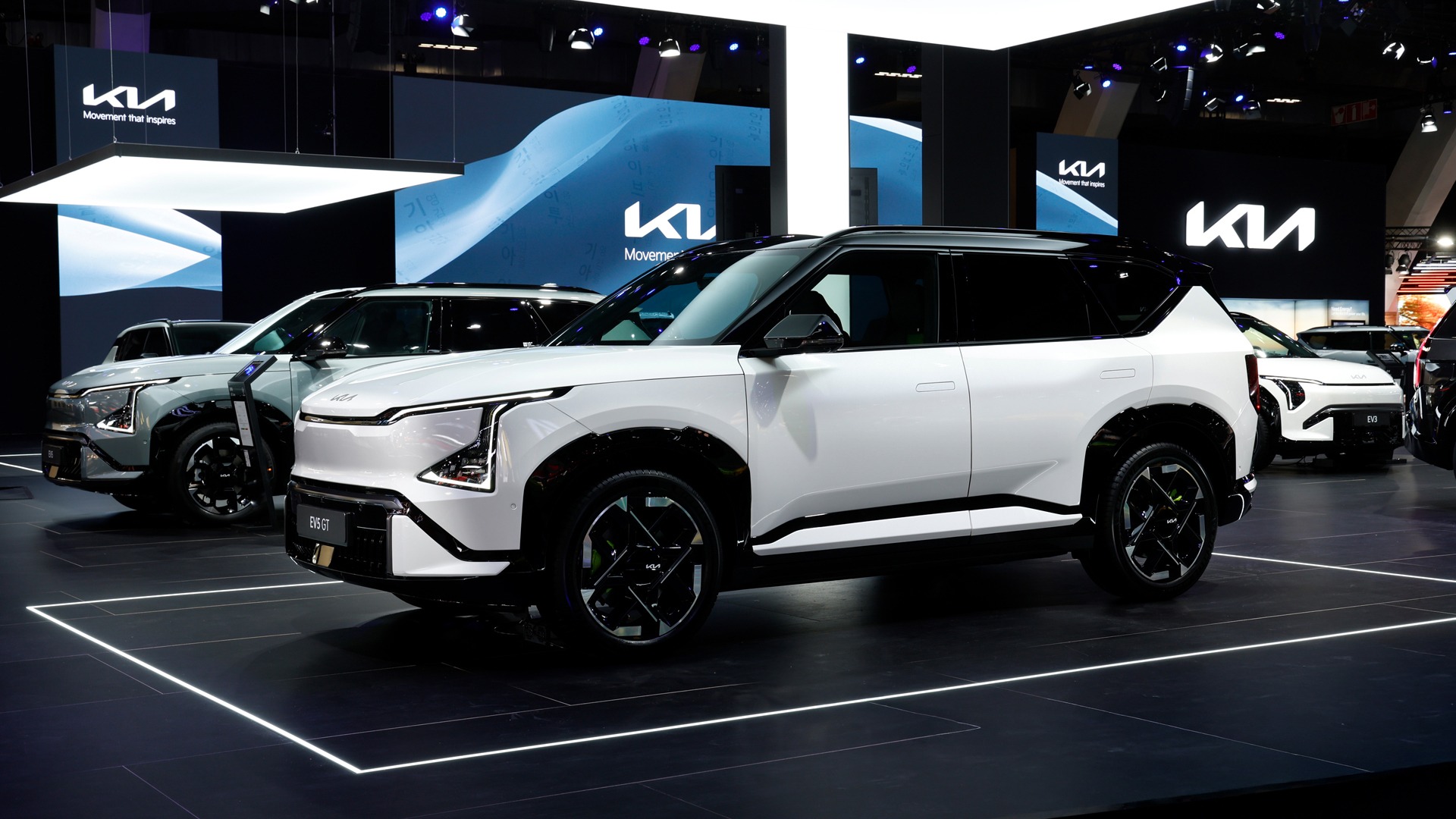
The manufacturer’s other three reveals also derived from its GT model range. This included the EV3 GT, EV4 Hatchback GT and EV5 GT. Production of these three models will start in the second half of 2026.
Meanwhile, Hyundai presented the world premiere of the Hyundai Staria Electric, a BEV multi-purpose vehicle (MPV) with an 800-volt architecture. It will go on sale in Europe and Korea in the first half of 2026.
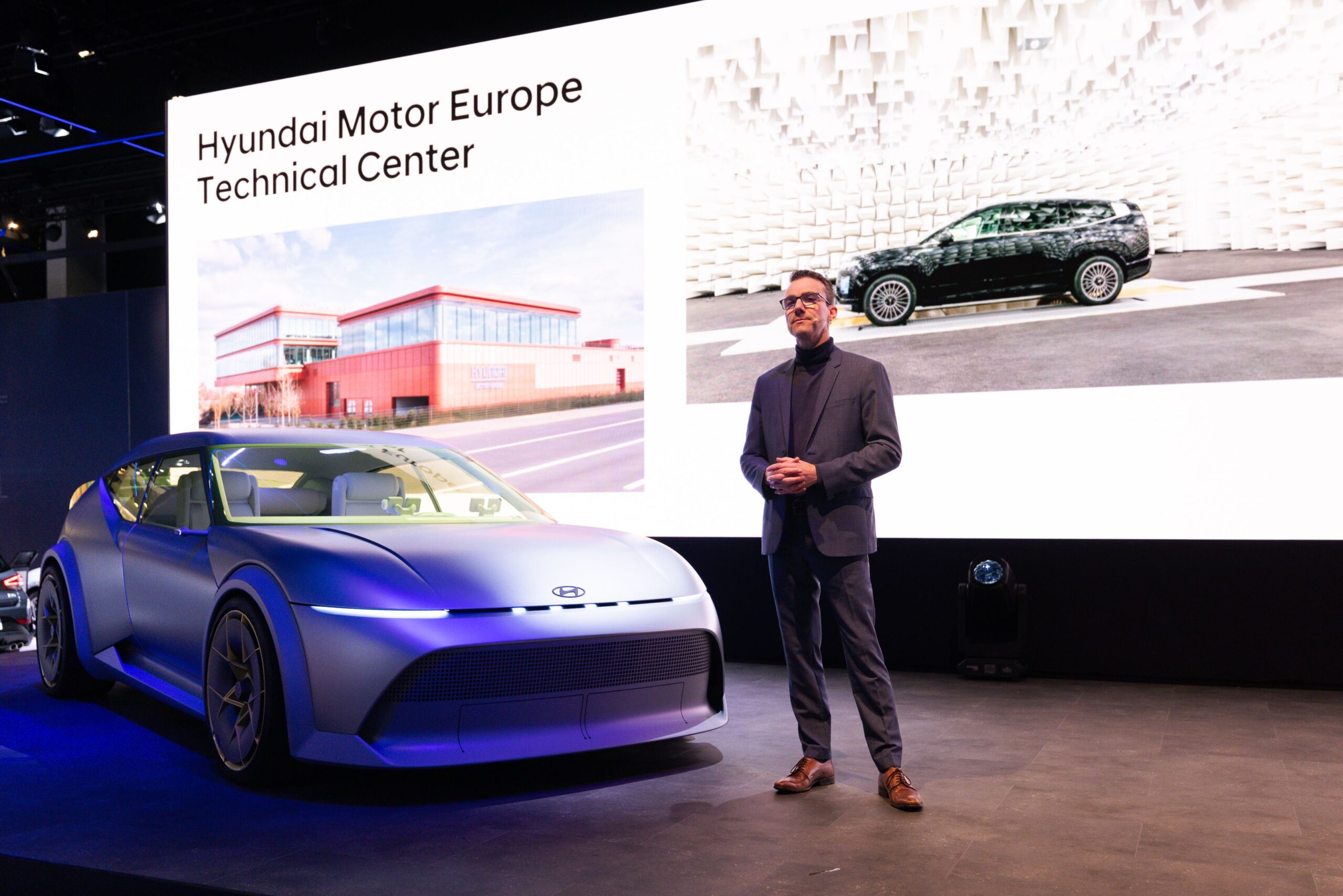
The MPV was joined by the Concept Three, which was confirmed as the precursor to the Ioniq 3. The model will be a compact BEV designed and produced in Europe. Elsewhere, the updated Ioniq 6, a mid-size BEV sedan, made its first European motor show appearance.
Mazda’s new BEV
Mazda unveiled the CX-6e at the Brussels Motor Show, a crossover BEV SUV. Claiming a WLTP range of up to 300 miles (482km), it is scheduled to launch in the UK this summer. Mazda also premiered its new CX-5, the third generation of the brand’s best-selling model.
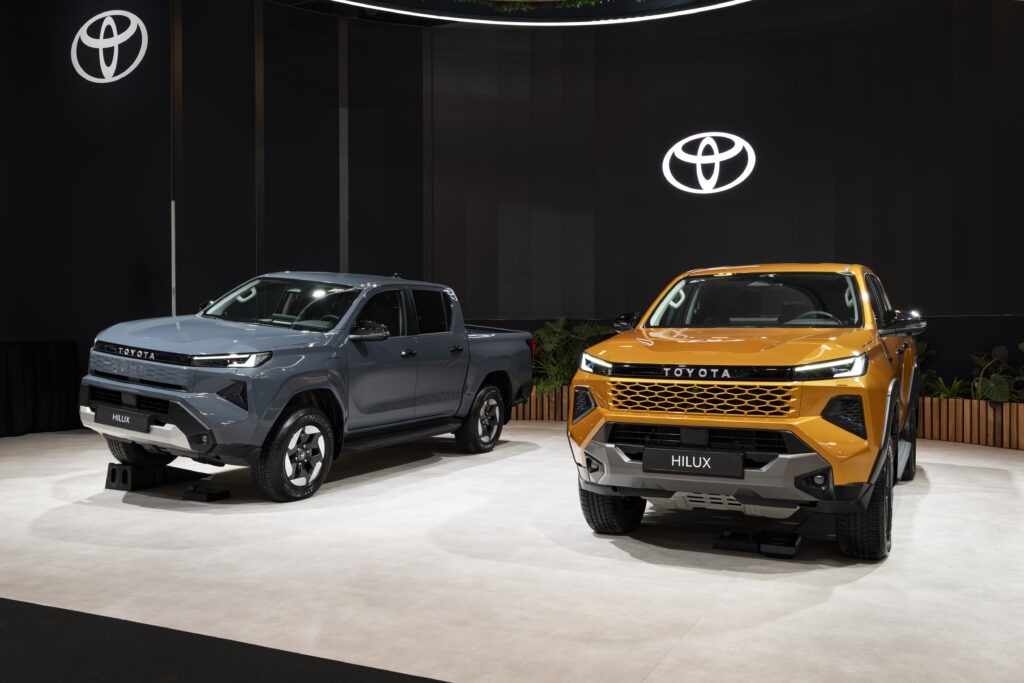
Elsewhere, the Toyota Hilux marked its European debut at the show. The ninth generation of the model will be offered for the first time as a BEV from April 2026.
It will also be available as a hybrid from July 2026, which Toyota claims will be the volume-selling model. Additionally, petrol and diesel versions will be offered in selected markets.
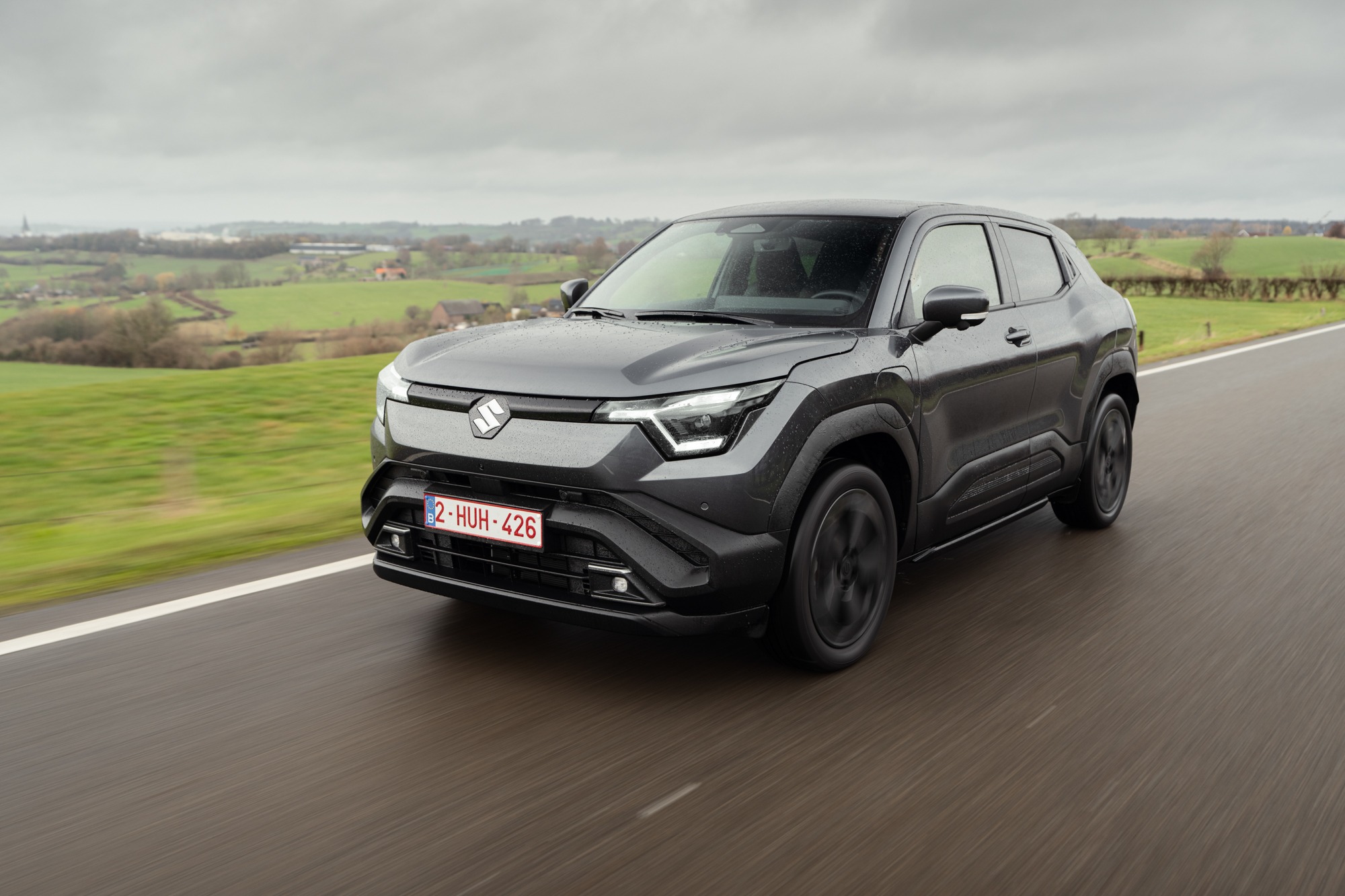
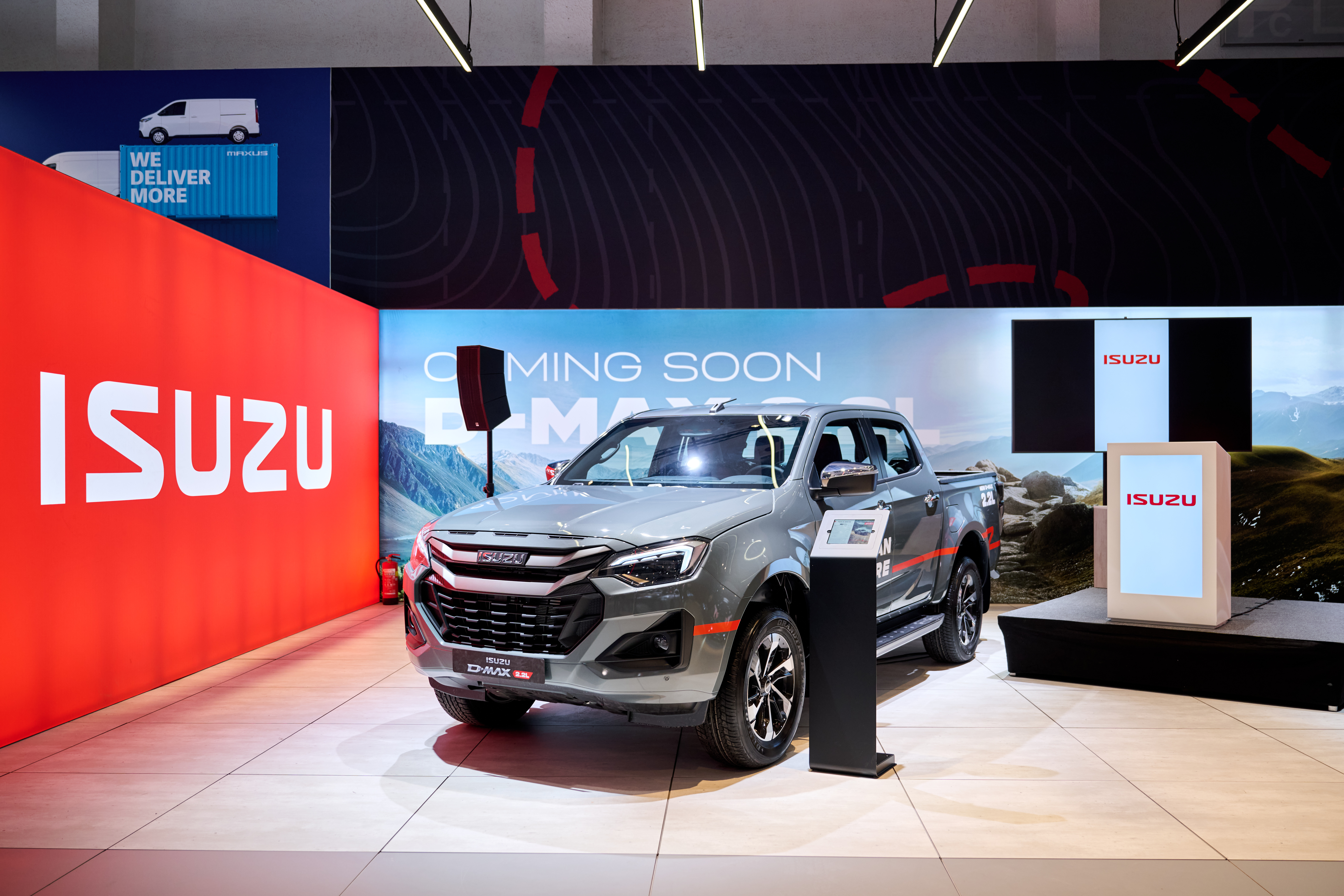
Meanwhile, Suzuki’s E-Vitara enjoyed its European premiere. The SUV is the carmaker’s first BEV, which it hopes will be a brand turning point. Meanwhile, Isuzu hosted the European premiere of the new D-Max pick-up, fitted with a newly developed diesel engine.
Subaru held the European premiere of the e-Outback and Uncharted. The latter is the brand’s first compact BEV SUV. It will be available in both all-wheel drive and front-wheel drive, with a range of up to 600km for the long-range version.
Chinese premieres at Brussels Motor Show
BYD showcased the Atto 2 DM-i at the Brussels Motor Show. The compact plug-in hybrid (PHEV) SUV offers a WLTP combined range of up to 1,000km. First deliveries of the model are expected early this year.
Leapmotor unveiled the B03X for the first time in Europe, a B-segment BEV SUV. It is the carmaker’s first model to be developed on a new global platform. It also showcased the B05, a C-segment hatchback, featuring a WLTP range of 460km.
The marque also expanded its B10 powertrain to include an extended-range electric vehicle (EREV), capable of a 900km combined range. SAIC-owned MG held the European Premiere of its S6. The electric C-segment SUV is available with a single or dual motor, offering a WLTP range of up to 301 miles (529km).
More market entrants
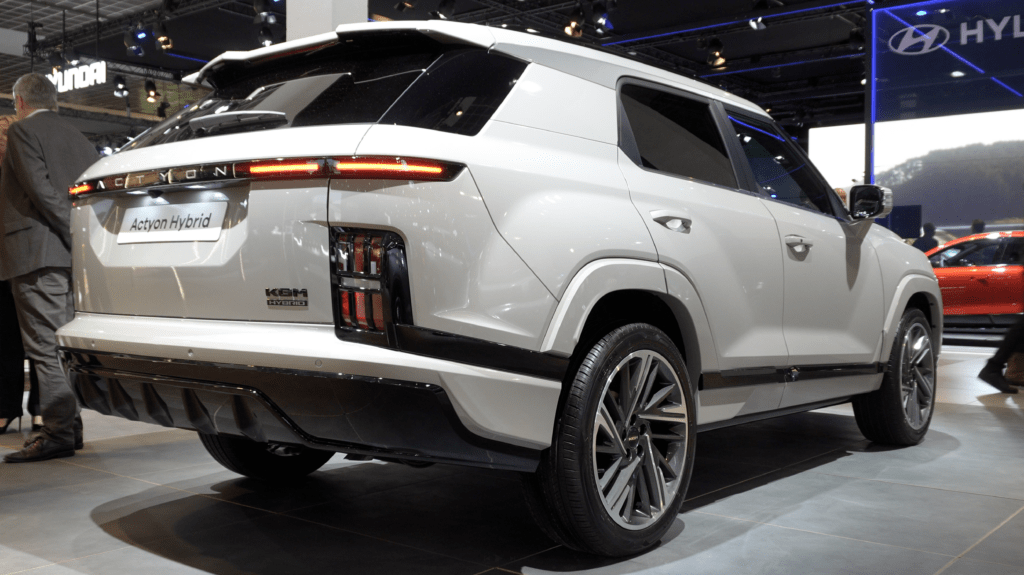
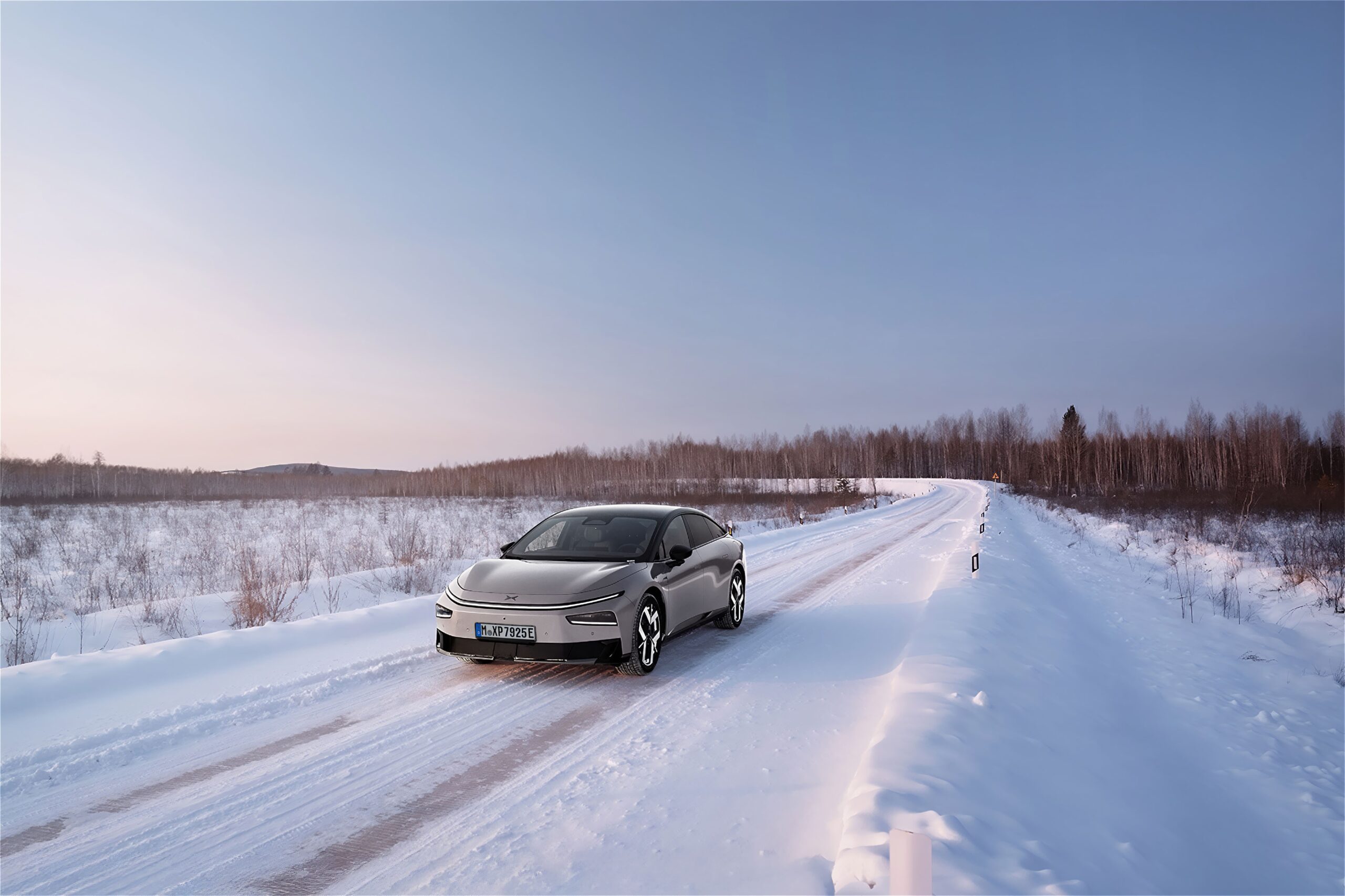
Also enjoying a European premiere was KGM’s Actyon Hybrid, a D-segment SUV. Xpeng also celebrated a continental debut with the P7+, the brand’s first AI-defined vehicle. The 800-volt BEV fastback with a WLTP range of 530km will be produced by Magna Steyr in Austria.
Source: Autovista24Source: Xpeng
Zeekr arrived with the 7GT, a D-segment BEV. The station wagon boasts an electric range of up to 655km in the long-range rear-wheel drive version. Meanwhile, the all-wheel drive variant accelerates from 0-100kph in 3.3 seconds.
Nio used the Brussels Motor Show to announce its Belgian market entrance with the ET5 Touring and EL6 First Editions. Livan presented the X6 Pro, a petrol-powered SUV.
European premieres at Brussels Motor Show
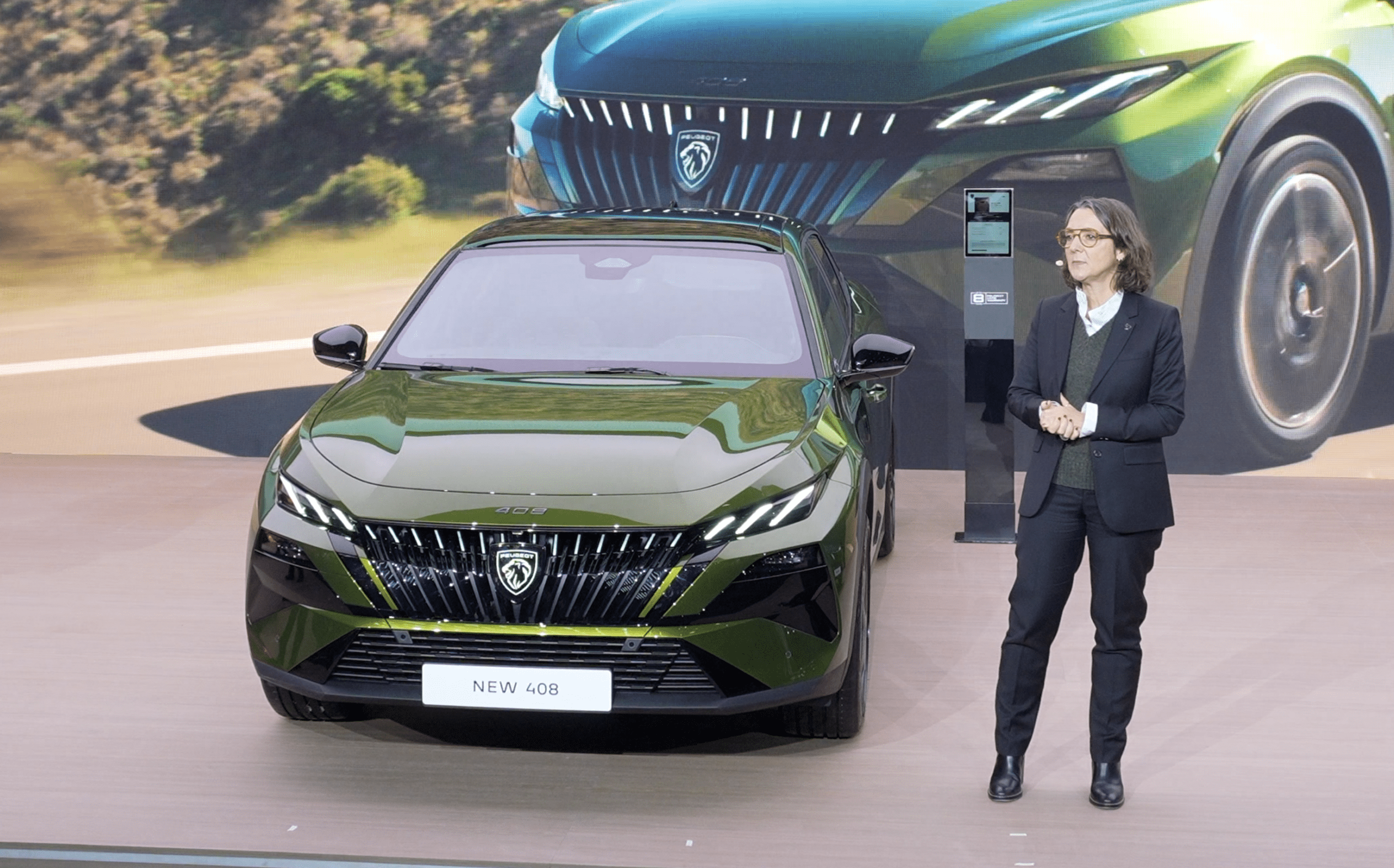
Peugeot chose the Brussels Motor Show as the place to host the world premiere of the new 408. The C-segment sedan is available as a BEV, PHEV and mild hybrid. The all-electric version offers V2L capabilities and a WLTP range of 456km.
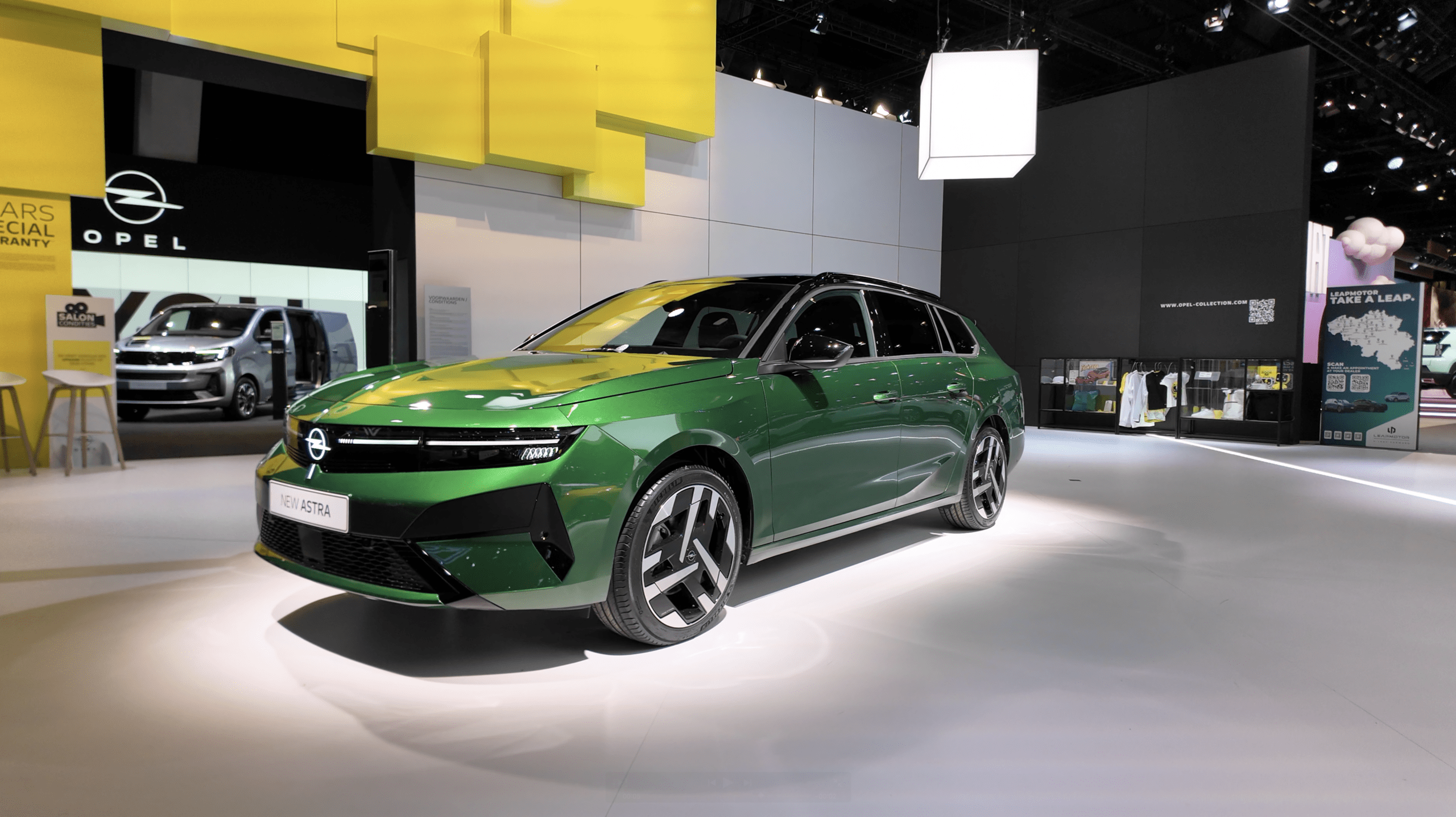
Fellow Stellantis brand Opel held a world premiere for the new generation of the Opel Astra and Astra Sports Tourer. The former will be available as a combustion engine, a hybrid, a PHEV and a BEV. The all-electric version of the Astra boasts a WLTP range of 454km.
Citroën’s centrepiece was the premiere of the ELO concept car. The model is built on an electric architecture and can seat up to six people. The interior can be turned into a sleeping space for two people, a home cinema, or a power supply.
DS Automobiles threw the covers off the N°4 Concept. The model was designed by the DS Design Studio and DS Penske Formula E Team driver Taylor Barnard.
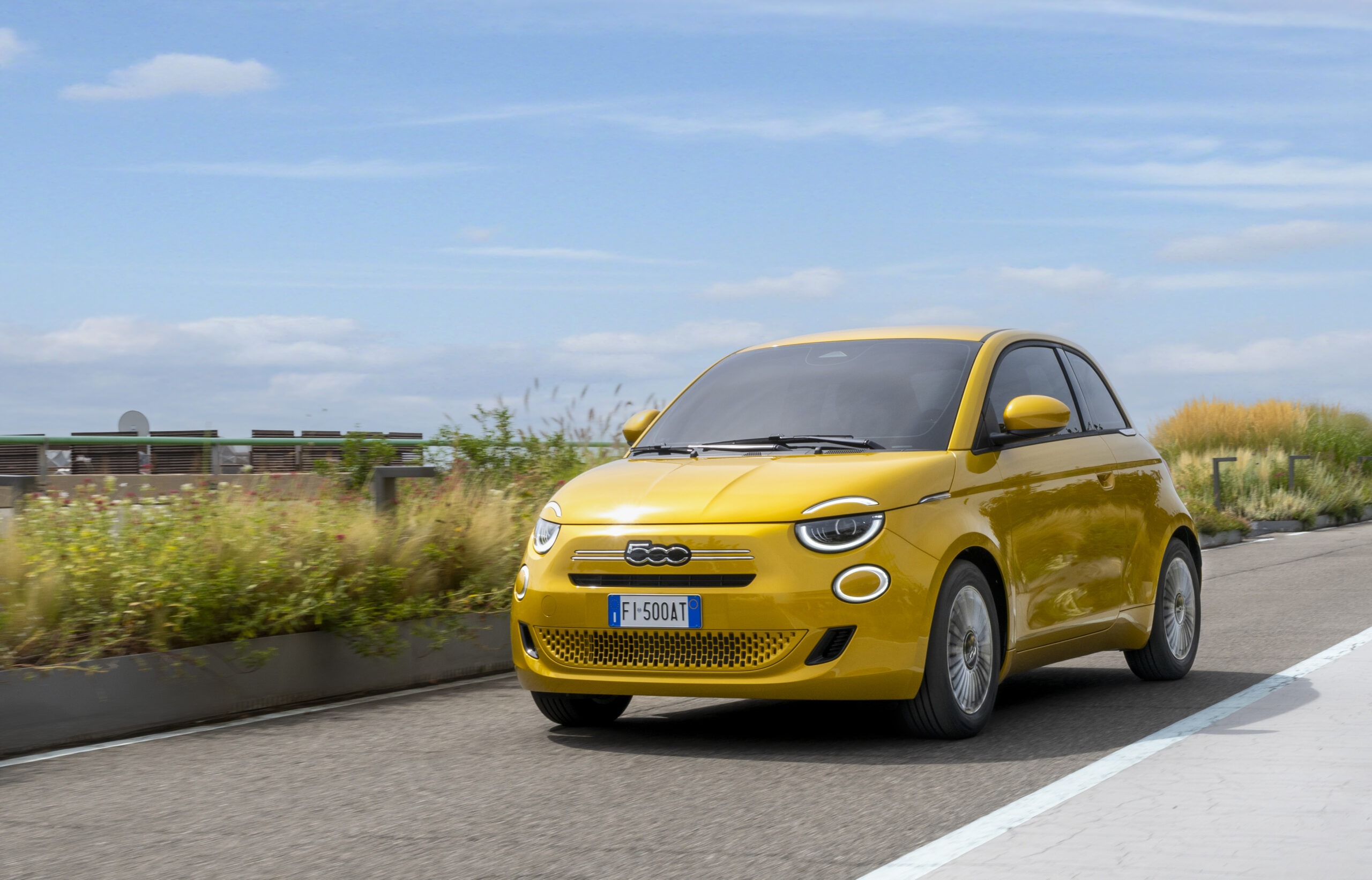
Lancia used the Brussels Motor Show as a chance to outline the main projects behind the brand’s relaunch strategy. The carmaker has a particular focus on product and commercial development across European markets. Additionally, the Fiat 500 Hybrid made its international debut in Brussels.
Award winners
One of the highlights of the Brussels Motor Show was the Car of the Year award. A panel of senior motoring journalists across 23 countries voted between seven new models. The winner was the Mercedes-Benz CLA, followed by the Skoda Elroq and Kia EV4.
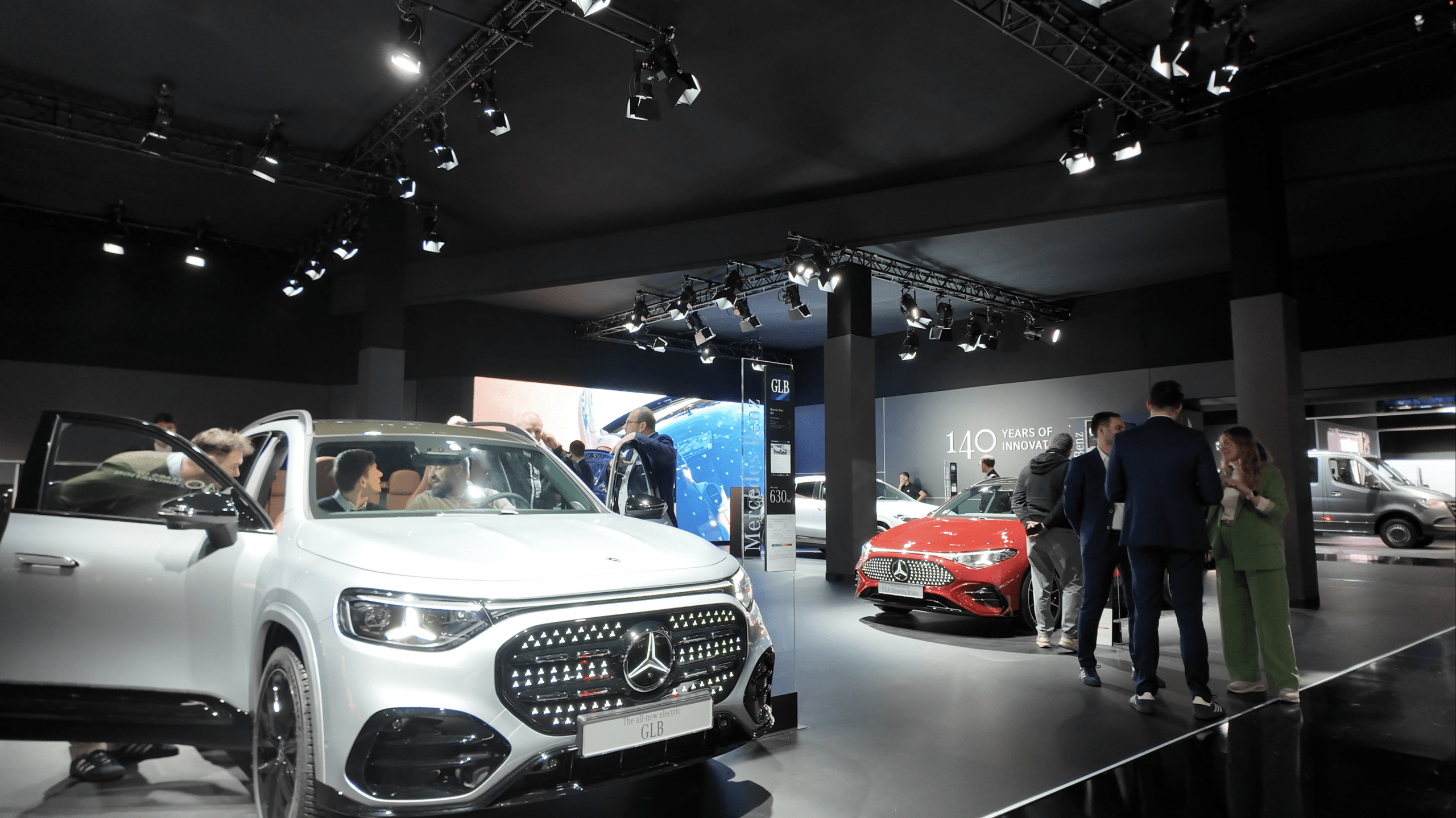
Mercedes-Benz also held the world premiere of the GLB at the event. The SUV launched with two BEV variants that feature 800-volt technology and a WLTP range of up to 631km. The GLB also has vehicle-to-grid (V2G) and vehicle-to-home (V2H) charging capabilities. An entry-level model is planned, as well as a hybrid version.
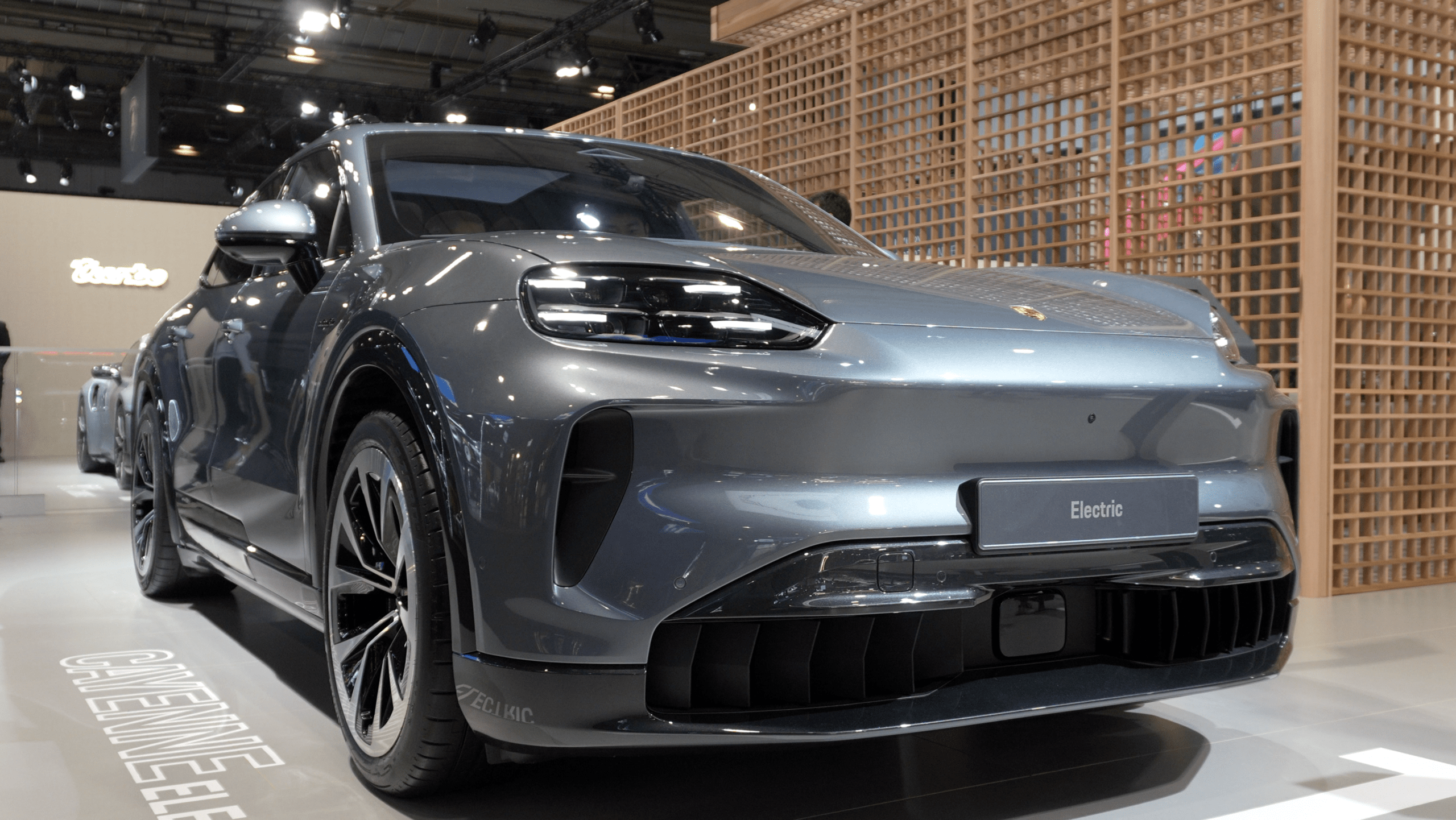
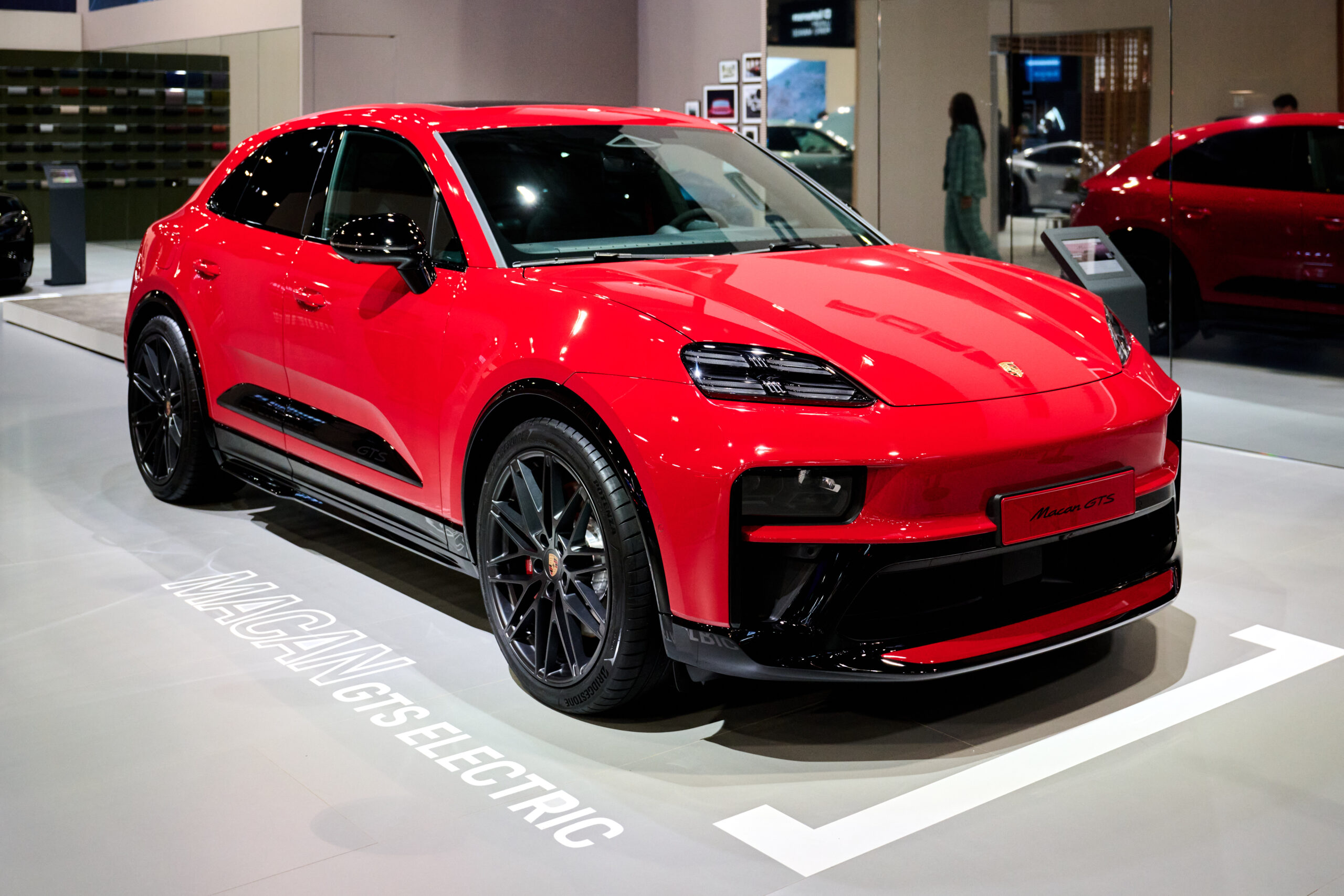
Porsche revealed two European premieres, the Cayenne Electric and the Macan GTS. The former is the most powerful Porsche ever, reaching 0-100kph in 2.4 seconds.
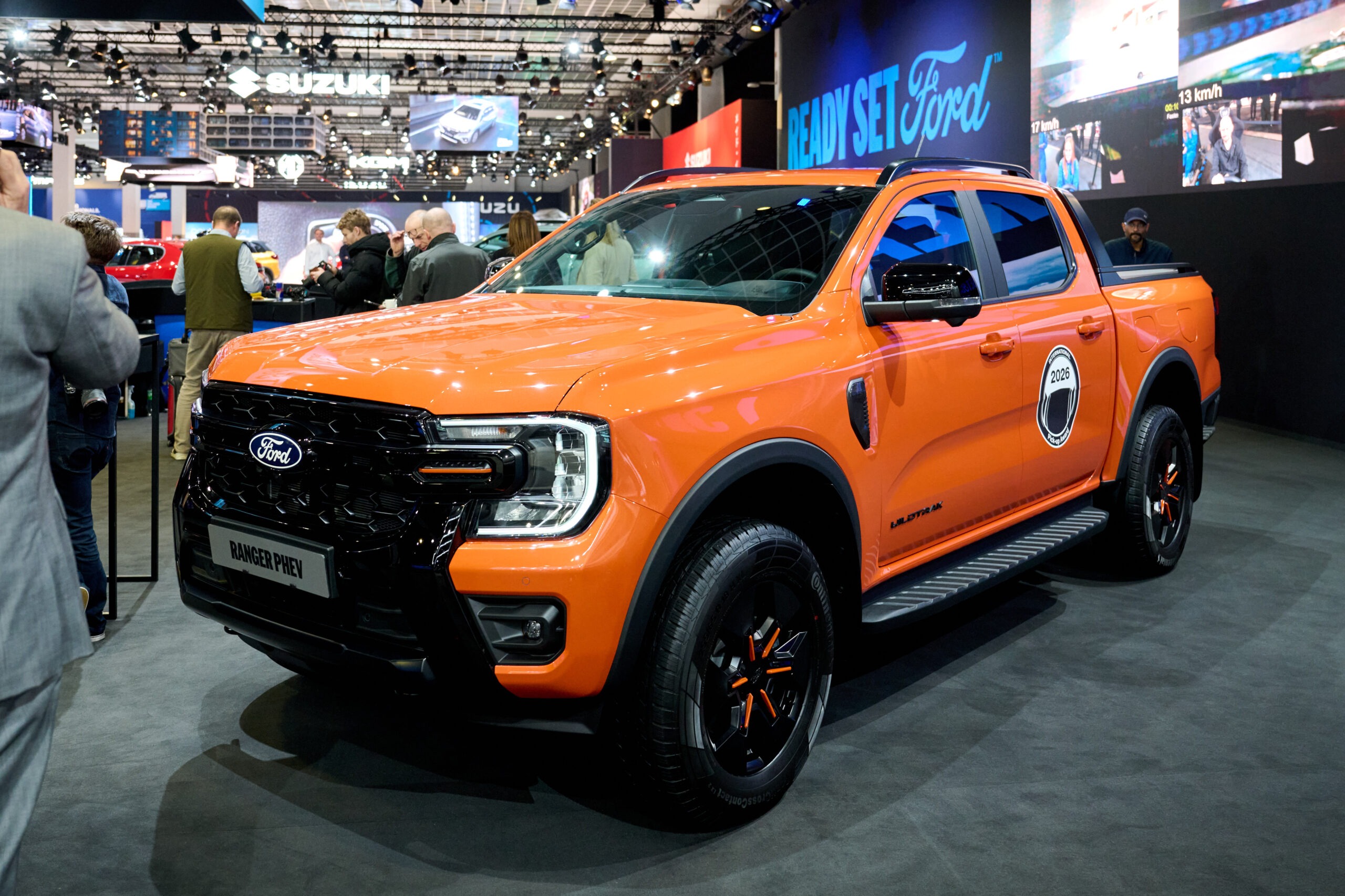
Ford held the world premiere of its facelifted Ranger pick-up truck at the Brussels Motor Show. The brand’s BlueCruise’ hands-free autonomous driving feature has been added to the model. The updated Ranger is scheduled to begin deliveries in May 2026.
Source: FEBIACSource: Tesla
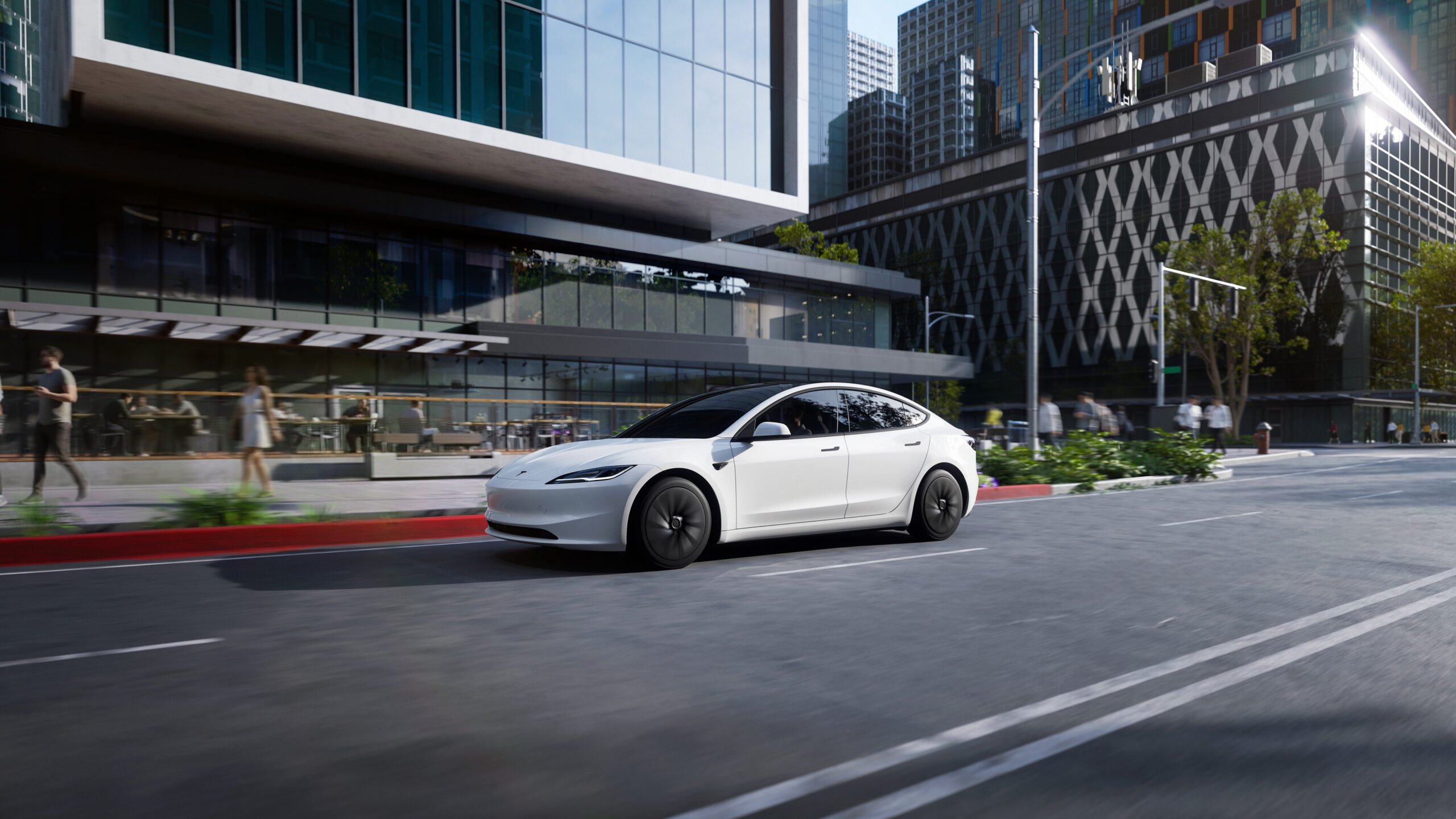
Meanwhile, Tesla hosted the European premiere of the Model 3 Standard. The BEV is the carmaker’s affordable model to date, with a WLTP range of 534km.
December marked the only month of decline for Spain’s new-car market in 2025. However, this did little to dampen what has been a strong year, buoyed by headline-grabbing electric vehicle (EV) sales. But is this strength reflected in the wider market shares, and can 2025’s success continue? Autovista24 web editor James Roberts investigates.
For the second consecutive year since the COVID-19 pandemic, Spain’s new-car market recorded year-on-year growth. According to Autovista24 calculations of ANFAC data, 1,148,650 new vehicles were delivered in Spain across 2025. This equated to a near 13% year-on-year increase.
‘This figure places our market almost at the level of what is considered “our natural market”,’ stated Ana Azofra, regional head of valuation and insights at Autovista Group. ‘Furthermore, this positive trend has remained consistent throughout the year, so the outlook for 2026 continues to point to a solid market with slight growth.’
‘Private buyers have driven this growth, closing 18% above 2024. Although it is true that part of these sales come from the support plan following the floods in the Mediterranean area, throughout the year, this channel has continued to increase demand. The fleet and leasing channel has also grown by 10% in the year to date,’ added Azofra.
An end to growth?
Looking solely at December’s figures, a year-on-year decline ended 15 months of consecutive improvements. Autovista24 analysis of ANFAC data revealed that in the final month of the year, 103,012 new vehicles took to Spanish roads. This meant a 2.2% drop, compared with December 2024.
Industry bodies have attributed this to the ‘DANA effect’ of increased new-vehicle demand following serious flooding in Spain during 2024. The figures for December that year were subsequently higher than usual.
Despite this, last month’s totals proved strong. Not only did they exceed 100,000 units, but also returned the fourth-highest monthly total of 2025, according to Autovista24 calculations.
‘It has been a very positive year because individuals and companies have also increased their demand for new cars, pulling the market,’ outlined Félix García, director of communication and marketing at ANFAC. ‘It is true that we are still far from the 1,259,000 units sold in 2019, but the truth is that the market is gradually recovering, and we hope that in 2026 we will be close to the level reached before the pandemic.’
EV incentives moving on
Key to Spain’s new-car market prosperity in 2025 has been a healthy uptake in EVs, including battery-electric vehicles (BEVs), and plug-in hybrid vehicles (PHEVs). Integral to this trend has been a long-standing set of regional incentives available throughout Spain’s autonomous communities.
Since 2019, the MOVES plan has provided financial incentives for EV purchases, plus the installation of charging infrastructure. Its various iterations have helped foster healthy and consistent electrification, especially relative to other major European markets.
In April, the MOVES III purchase incentive scheme was implemented, backed by €400 million. This turned out to be the final chapter of the MOVES plan. As of January 2026, it has been replaced by a centralised incentive framework labelled Auto Plan 2030.
Despite well-documented problems such as delays in payments, red tape and regional disparities, the MOVES plan helped EV sales in 2025. Autovista24 analysis of ANFAC data reveals that December saw 23,858 EVs registered in Spain. This was the second-highest monthly total and a 57.7% year-on-year gain.
Breaking down the EV powertrains, PHEVs enjoyed an eighth consecutive month of triple-digit growth. The plug-in technology improved by 101.1% and claimed a fairly consistent 12.3% of the monthly market share in December.
Meanwhile, BEVs captured 10.8% of the monthly new-car market, up 2.4 percentage points (pp) on 12 months prior. In terms of units, December saw 11,177 all-electric cars delivered, up by 26.7%.
EVs power towards 20% market share
Assessing 2025 as a whole, there was plenty to cheer in terms of electrification in Spain’s new-car market. Almost one in five new cars registered in Spain last year was an EV. In all, 225,608 plug-in vehicles joined Spain’s car parc, according to Autovista24 calculations.
As well as marking a 94.6% year-on-year upswing, the powertrain grouping established a high share of 19.6%. Compared with 2024, these gains amounted to a sizeable 8.2pp increase.
‘The automotive market in 2025 has performed much better than expected and is already bringing us closer to the sales figures we had before the pandemic,’ stated Raúl Morales, communication director of Faonauto. ‘This has been largely due to the good performance of electrified vehicle registrations, thanks to the fact that the MOVES plans have worked.’
Of the two EV powertrains, PHEVs have proved the most popular choice among customers in Spain. Across the year, 123,986 units left the nation’s forecourts, a huge 111.7% year-on-year volume surge. This secured a 10.8% market share, up 5pp from the previous year’s totals.
December’s bumper BEV performance, coupled with continued plug-in hybrid prowess, helped push up annual EV totals. However, in isolation, the PHEV market hold ended up a significant 18.9pp behind petrol’s share.
However, at the conclusion of 2025, BEVs did hit a new high point, with a share of 8.8%. Back in January, the powertrain held the same market share as the palpably unpopular diesel. Fast forward 12 months, and the BEV share pulled clear of the fuel type to the tune of 3.3pp.
2025 year of EV take-off in Spain
For industry observers like Azofra, the months ahead look positive. It is hoped that the momentum gained in 2025, plus the new Auto Plan 2030, can only help electrify the Spanish market.
‘2025 has been the year of the take-off for electric mobility in Spain, reaching a market share of almost 20%, and exceeding 200,000 units of BEV and PHEV sales for the first time,’ confirmed Azofra.
‘The outlook in this regard is positive, thanks to the recently approved Auto Plan 2030, which will consolidate the drive towards electrification,’ she added.
Hybrids help electrify Spain
Mirroring an established European new-car trend, Spain saw hybrid sales dominate its new-car market in 2025.
These registrations, encompassing both full and mild-hybrid technologies, accounted for 42% of the overall new-car market in 2025, a 3.4pp leap. In all, 482,874 vehicles made their way to customers over the year, according to Autovista24 calculations. This proved to be a 23.1% uptick from 2024’s annual figures.
Additionally, a prosperous month for the powertrain helped electrified models end the year brightly. Adding EVs to hybrid volumes, this grouping hit a new market-share peak of 61.7% in 2025.
At the end of 2024, new electrified vehicle figures breached the 50% mark for the first time. One year later, the gains amounted to 11.7pp. Hybrids contributed the most to this success. It remains to be seen whether new domestic incentives wean Spanish drivers away from hybrids and towards EVs in 2026.
Petrol and diesel’s demise exaggerated?
If hybrid popularity prevailed across European new-car markets in 2025, so did the decline of internal-combustion engines (ICEs). Spain was no exception. However, despite monthly year-on-year drops for both petrol and diesel registrations, the reality is more nuanced.
In total, 380,898 new ICE vehicles were registered in Spain during 2025. This 19.8% fall in sales resulted in a 33.2% market share, a stark 13.5pp nosedive. Despite this, ICE has not crashed into the ground in Spain just yet.
Petrol ended the year as the second most popular powertrain in terms of market share. A total of 318,216 units secured a 27.7% hold, albeit 9.5pp down on 2024’s figures. However, since January, petrol’s grip on the market only slipped 1.8pp.
While petrol power remains a declining, but not unappealing proposition in Spain’s new-car market, diesel dipped considerably in 2025. Despite relatively modest year-on-year sales drops in October and November, it saw 62,681 deliveries across the year, down 35%.
The fuel type closed the year with a 5.5% share of the overall market. This was down 4pp year on year, just 0.3pp above the ‘other’ category.
This grouping, encompassing liquid-petroleum gas and natural gas, ended the year strongly. Volumes increased 76.8% year on year to 59,271, increasing its share by 1.9pp. This served to add another layer to Spain’s intriguing new-car market, as it looks to further electrify in 2026.
Europe’s biggest used-car markets faced many external factors last year. This included an unstable economic environment, affordability issues, regulatory changes and technological challenges. So, how did used-car markets close out an eventful 2025? Autovista24 journalist Tom Hooker delves into the data with regional experts.
Used-car markets in Austria, France, Germany, Italy, Spain, Switzerland and the UK experienced one consistent trend last year. Residual values (RVs), expressed as a percentage of retained new-car list price (%RV) after 36 months and 60,000km, fell.
However, this was not the only trend that saw significant changes. List prices and supply also saw noticeable increases across most major European markets. Meanwhile, used cars between two and four years old sold more quickly on average.
Varied used-car values
Compared to December 2024, %RVs slumped across Europe’s biggest used-car markets last month. The largest drop was suffered in Italy, recording a 4.6 percentage point (pp) downturn. Switzerland also endured a steep slump of 4pp, while Spain posted a 3.8pp decrease in %RVs year on year.
While %RVs show value retention in percentage terms, absolute trade RVs display values in currency terms. When benchmarked against December 2024, nearly every observed market saw this metric rise. Italy and Switzerland were the exceptions, suffering 10.3% and 3.1% declines, respectively.
Conversely, Austria witnessed the highest RV growth of 6.7% in December. This was followed by the UK, which recorded a 4% increase.
Europe’s soaring list prices
Another recurring pattern in 2025 has been rising new-car list prices. Almost every observed market saw this metric increase in December. This was apart from Italy, which posted a 0.9% year-on-year fall.
List prices saw the biggest increase in Spain, up by 10.5%. France and the UK also saw significant surges of 7.4% and 7.1%, respectively.
The demand for two-to-four-year-old cars rose year on year in most of these markets. The UK and Spain saw the sales-volume index (SVI) in this age bracket soar by 30.7% and 30.6%, respectively. Germany also saw a strong increase of 16.1%. However, Italy and Switzerland recorded a drop in this metric. The former posted a 3.2% slide, while Switzerland witnessed a marginal 0.2% decrease.
Two-to-four-year-old cars sold faster across most of Europe’s major used-car markets compared to 12 months prior, except for France. Models left forecourts 6.3 days sooner on average in Italy, as Austria shifted stock 5.6 days faster year on year.
Market headwinds in Austria
‘Austria’s SVI for two-to-four-year-old passenger cars fell by 3.9% in December compared to November. Year on year, the SVI declined by 3.6%, reflecting continued market headwinds and somewhat weaker demand,’ noted Robert Madas, Autovista Group’s regional head of valuations.
The active-market volume index (AMVI) remained stable, showing no month-on-month change. Compared to December 2024, supply was up slightly by 0.9%. This indicated a modest recovery in available stock within this age bracket.
The average time needed to sell a used car in December was 65.9 days, up by 0.9 days compared to November. Year on year, this metric improved significantly by 5.6 days, suggesting faster turnover despite seasonal challenges.
Diesel leads the way
Among powertrains, used diesel-powered continued to lead in turnover speed, taking an average of 60.7 days to sell.
This was followed by petrol-powered models at 64.8 days. Then came full hybrids (HEVs) at 67.6 and plug-in hybrids (PHEVs) at 73.3 days. Battery-electric vehicles (BEVs) again showed significantly improved turnover speed but continued to take the longest time to sell at 77.5 days.
%RVs stood at 47.3% in December. This represented a 0.1pp increase month on month but a slight 0.1pp fall year on year. In absolute terms, the trade RV was €22,176.5. This figure was virtually unchanged from November but 6.7% higher year on year.
HEVs retained the highest trade value at 49.8%, followed by petrol cars at 49.3%. Then came diesel models with 48.2% and PHEVs with 44.9%. BEVs held the lowest %RV once again, at 38.5%. However, this was an improvement of 0.9pp month on month.
‘Looking ahead, %RVs are expected to decline slightly in the next few years. In December 2026, a 0.7% decline compared to December 2025 is forecasted. A 0.6% decrease in 2027 is expected to follow,’ forecasted Madas.
Used-car stability in France
Overall, RVs remained quite stable in France during December. The difference observed was linked to the absence of many Peugeot models in the comparison.
‘This was due to a significant list price increase 36 months ago. Therefore, both RVs and %RVs for PHEVs, diesel-powered models, and BEVs became artificially inflated in the results,’ explained Ludovic Percier, Autovista Group’s senior RV analyst for France.
Comparing December to the beginning of 2025, increasing list prices have not helped %RVs. The latter metric decreased by 2.4pp year on year, as list prices rose by 7.4%. This resulted in an absolute RV increase of 2.6%. Even in November, with all Peugeot models available, this metric still saw a 1% year-on-year growth.
‘Customers drive the used-car market. This means that increasing list prices are not going to help grow RVs significantly in the sector,’ Percier highlighted.
Mixed powertrain performances
Petrol followed the overall used-car market trend. Meanwhile, diesel fared better thanks to a lower supply on the new-car market. It also benefited from strong demand in the used-car market relative to other powertrains.
‘Hybrids %RVs saw a drop compared to December 2024. This was because more models are now available from mass-market brands, albeit with a lower RV performance. In comparison, Toyota was one of the only big hybrid carmakers in the past,’ said Percier.
PHEVs were stable in terms of absolute RVs compared with 12 months prior. This is even though more premium vehicles are now available with better ranges. The used-car market is crowded with PHEV offers, and the current number of buyers cannot compensate for this.
This is mainly due to the return of leased vehicles to the market. These models were taken by companies in 2022 due to fiscal advantages.
BEVs followed the general market trend, with higher list prices and greater ranges. The technology’s absolute RVs increased slightly in December. Conversely, BEV %RVs fell by 1.5pp year on year.
Germany’s used-car stock recovery
Following a strong November, used-car demand in Germany softened slightly in December. The SVI fell by 0.8% month on month. Compared to December 2024, the SVI declined by 3.5%, indicating persistent pressure on demand.
‘Meanwhile, the AMVI continued to increase. The metric rose by 3.9% compared to November, which suggested a notable improvement in supply. Year on year, the AMVI surged by 16.1%, confirming a strong recovery in stock availability within this age bracket,’ commented Madas.
The average number of days needed to sell a used car in December was 61 days. Compared to November, this was down by 1.4 days, while it marked a decrease of one day year on year. This implied a faster turnover compared to previous months.
The average turnover speed of BEVs increased month on month. The technology was the fastest-selling of any powertrain at 55.3 days. Then came HEVs at 57.9 days. PHEVs followed closely at around 58.7 days, while diesel-powered cars took 61.5 days to sell. Petrol-powered cars sold the slowest, at 63.4 days.
Declining residual values
‘%RVs stood at 48.1% in December, down 0.1pp month on month and 1.5pp year on year. In absolute terms, the trade RV was €21,585.2. This translated to a 0.7% increase month on month and a 2.4% rise year on year,’ outlined Madas.
Petrol cars led the market with a %RV of 49.9%. Then came diesel cars and HEVs, both at 49.2%, followed by PHEVs at 44.2%. BEVs decreased slightly and again retained the lowest level of value at 36.9%.
Looking ahead, RVs are expected to remain under pressure. By the end of 2026, %RVs are forecast to decrease by 1.4% compared with December 2025. Pressure will likely ease in 2027, with a smaller decline of 0.7%.
Italy’s downward used-car trend
December ended largely in line with the trend that has consolidated throughout 2025, without any last-minute surprises. On average, the RV of used cars at 36 months and 60,000 km dropped by nearly €2,000 year on year. This corresponded to a 4.6pp %RV decrease.
‘Looking ahead, we expect this downward trend to continue over the next two years, albeit at a slower pace, reaching a point of stabilisation around 2028,’ forecasted Marco Pasquetti, Autovista Group’s cluster head of forecasting for Spain and Italy.
Out of all powertrains, PHEVs lost the most ground compared to last year. %RVs fell from 44.2% to 36.9%. Meanwhile, BEVs saw the lowest value retention, holding only 26.2% of their original value after 36 months.
Conversely, diesel-powered models and HEVs held better %RVs, at 47.9% and 47.3% respectively. However, these two powertrains also saw significant year-on-year declines.
The SVI was up slightly by 3.5% year on year, while the AMVI showed a moderate decrease of 3.2%. However, these variations were not substantial enough to suggest any abrupt market shifts.
It is too early to assess the impact of potential emission target revisions by the European Commission on used cars. However, developments are being closely monitored.
‘It is reasonable to expect that automakers will adjust their industrial strategies to meet the new objectives, and governments will likely revise incentive plans for adoption. Therefore, it will be crucial to follow the next steps of all stakeholders to fully understand the implications,’ noted Pasquetti.
Positivity in Spain
‘Spain approached the end of 2025 bolstered by strong macroeconomics and generally positive projections. GDP growth sat close to 3%, leading the Eurozone in this regard,’ explained Ana Azofra, Autovista Group’s head of valuations and insights, Spain.
‘Spain also benefited from an increasingly robust labour market and strong domestic demand. This demand has also been reflected in strong new-car sales figures. Although the final results are not yet known, it will be close to pre-pandemic levels, exceeding one million units,’ she stated.
All sectors contributed to this growth. The car-rental channel provided a boost in the first half of the year. Then the private market saw strong growth in the second half. This was accompanied by more moderate but steady increases in the business channel throughout 2025.
This positive market behaviour was not only reflected in the volume of new car sales. It was also displayed in the shift towards more sustainable vehicles. From January to November, electric vehicles (EVs), including BEVs and PHEVs, have increased their market share by more than 8pp year on year.
Furthermore, the recently published Auto Plan 2030 will incentivise the purchase of EVs and expand charging infrastructure. The scheme will help reinforce this positive trend towards electrification.
Low pressure on transaction values
‘This positivity was reflected in the used-car market. Not so much in terms of volume, where growth has been more moderate, but in terms of the low pressure on transaction values,’ said Azofra.
The average price of a three-year-old car with 60,000km in December was €20,032.1, 3.5% higher than in December 2024. The outlook for 2026 is also moderately positive.
In general, the data in the report shows a market that is far from saturated, with very limited stock. The most striking case is that of BEVs.
‘In December 2024, pressure from manufacturers to meet CAFÉ targets increased pressure on BEV sales, which largely ended up swelling stocks in the second-hand market. During this period, the technology was difficult to sell,’ she highlighted.
On average, a BEV took 129 days to sell in December 2024, almost 50 days longer than it takes today. In December 2025, a BEV was the second fastest-selling model in Spain, namely the Tesla Model Y.
This was unusual, as the ranking is usually dominated by hybrid vehicles, which continue to see high demand. First place went to the Yaris Cross, which had already been posting record figures for several months. The MG ZS took third.
Switzerland’s ongoing used-car pressure
After a slight fall in October and November, used-car demand in Switzerland showed further weakness in December. The SVI slipped by 0.3% month on month and was 0.8% lower year on year. This signalled ongoing pressure in the market.
‘The AMVI edged up by 1.1% compared to November. However, it fell slightly by 0.2% year on year. This confirmed that supply remains tight despite a small monthly improvement,’ commented Madas.
%RVs held steady at 42.4% in December, with no month-on-month change. Compared to December 2024, this represents a 4pp decline, underlining significant depreciation pressures. In absolute terms, trade RVs rose marginally to CHF 26,369.6 (€28,392), up 0.2% month on month but down 3.1% year on year.
HEVs retained the most value of any powertrain in November by far at 46.9%. Then came petrol-powered cars at 43.9%, diesel-powered models at 42.3% and PHEVs at 40.1%. BEVs continued to be the worst-performing powertrain, holding only 35.8% of their original list price.
Faster turnover speeds
The average amount of time needed to sell a used car in December was 77.7 days, up 0.6 days from November. Year on year, this metric improved by 5.3 days, indicating faster turnover compared to last year despite a seasonal slowdown.
Petrol-powered models sold fastest at 74 days, followed by HEVs at 74.2 days and diesel cars at 81.5 days. BEVs improved significantly year on year, with an average turnaround time of 78.3 days. This meant they sold slightly faster than diesel cars and significantly faster than PHEVs, which took 90.3 days to leave forecourts.
Looking ahead, %RVs are forecast to decrease further in the coming years, but at a slower pace. By the end of 2026, %RVs are expected to fall by 1.7% compared to December 2025. A further 0.4% drop is anticipated in 2027.
BEV RVs settle in UK
In December, the average %RV of a three-year-old car stood at 49.5% of its original cost-new price. This marked a 0.8pp increase compared to November. However, when measured against December 2024, RVs were down by 1.5pp. This aligned with the expectations outlined in the RV Outlook.
Powertrain performance varied. Petrol model %RVs fell by 2.3pp year on year, while PHEVs dropped 2.4pp. Hybrids were more resilient, declining only 0.2pp compared to 12 months prior.
‘Conversely, diesel-powered models defied the downward trend, rising by 2.8pp. This was likely supported by reduced availability following the ongoing shift away from diesel in the new car market,’ noted Jayson Whittington, Autovista Group’s regional head of valuations, UK.
‘BEV %RVs fell by 1.3pp as they continue to settle into a sustainable price point. This was despite being the fastest-selling powertrain throughout 2025,’ he highlighted.
Sales activity slowed toward the end of the quarter. The SVI reported an 11.8% drop in cars sold compared to November. This seasonal dip is typical and even represented an improvement over the same period last year.
Meanwhile, the AMVI recorded a 13.7% month-on-month increase. This rise is unlikely to concern dealers, as January traditionally brings a surge in used-car demand.
‘Looking ahead to 2026, RVs are expected to depreciate at a slower pace, averaging a 1% decline. With wholesale supply remaining steady and retail demand healthy, there is currently a good balance between supply and demand. This should support a stable outlook for RVs in the year ahead,’ forecasted Whittington.
Which carmakers and technology companies are betting big on artificial intelligence (AI), and how do they plan to use it? Autovista24 editor Tom Geggus picks out key talking points from this year’s CES in The Automotive Update podcast.
Major automotive companies are integrating AI into their vehicles. This means technology companies such as Nvidia are becoming integral partners in this seismic industry shift. However, they are not alone, as automotive suppliers are looking to keep up.
Mercedes-Benz used CES 2026 to confirm that the new CLA will feature the AI-powered Mercedes-Benz Operating System (MB.OS). This advanced driver-assistance(ADAS) technology is powered by Nvidia’s full-stack drive software, AI infrastructure and compute power.
This could assist over-the-air updates (OTA), including planned upgrades to the MB.Drive drive-assistance technology. This is aimed at enabling advanced SAE Level 2 capabilities in complex urban settings.
Mercedes-Benz confirmed its electric GLC will utilise MB.OS, as well as AI from Microsoft and Google in its infotainment system. The model is set to arrive in the US in the second half of this year.
‘As the automotive industry embraces physical AI, Nvidia is the intelligence backbone that makes every vehicle programmable, updatable and perpetually improving through data and software,’ said Ali Kani, vice president of automotive at Nvidia.
Nvidia is also working on a collection of open-source AI models called Alpamayo family, designed to accelerate autonomous vehicle development. Plus, the company announced that its Drive Hyperion ecosystem will expand to include more automotive companies. This comes as it embraces advanced SAE Level 4 and full self-driving technology.
Afeela and AI assistants
Sony Honda Mobility brought a new vehicle to CES 2026, the Afeela Prototype 2026. A production version of the model could launch in the US in 2028. Its predecessor, the Afeela 1, has been available for reservations in California since January 2025.
https://www.youtube.com/watch?v=tMkmiZS0brQ
Delivery hubs are set to open this spring in the US state. Arizona will see sales in 2027, with Japan due to see deliveries in the first half of that year. Sony Honda Mobility also unveiled the Afeela personal agent, an interactive, conversational AI. It will use Microsoft Azure OpenAI to provide personalised dialogue.
BMW gave a demo of its AI-powered personal assistant. Built on Amazon’s Alexa+ technology, the assistant was presented within the Neue Klasse debut model, the BMW iX3.
Users can interact with the car’s large language model to control in-vehicle operations. The assistant also has access to information beyond the car, allowing it to answer a broad range of questions. This technology will be gradually rolled out in Germany and the US in the second half of 2026.
Ford also announced it will roll out an intelligent assistant. It will be available on users’ phones before it reaches their cars. The Ford and Lincoln apps will support the technology beginning in the first half of this year. The carmaker said it plans to reach up to eight million customers.
The Ford AI Assistant promises to be capable of providing contextually useful information, such as vehicle storage capacity. This technology looks set to arrive in Ford and Lincoln vehicles by 2027.
Source: Ford
Architecture and autonomy
Geely brought its full-domain AI 2.0 to CES 2026. This unified vehicle-wide architecture utilises a central intelligence engine, capable of operating all vehicle functions. The autonomous driving system, Geely Afari Smart Driving, uses AI and large-scale real-world driving data. It features high-performance sensors, plus hardware for confident and safe driving.
‘AI is reshaping the automotive industry in many ways, from powertrains and components to a systematic reconstruction of mobility ecosystems and lifestyles,’ said Jerry Gan, CEO of Geely Auto Group.
Lucid confirmed a union with Uber and physical-AI company Nuro to produce vehicles for a global robotaxi service. Autonomous on-road testing began in December, ahead of an expected launch in the San Francisco Bay Area later this year.
Source: Lucid
Suppliers starring at CES
Bosch showcased an all-in-one, personalised, AI-based cockpit. Life-like communication appears possible via large language model. Meanwhile, a visual language model can interpret what is happening inside and outside the vehicle.
Qualcomm confirmed it is working with ZF to deliver scalable ADAS solutions. Leapmotor’s D19 will use Qualcomm’s Snapdragon Elite platform. It combines cockpit, driver assistance, body control and connectivity into one system. The supplier also plans to expand its collaboration with Google to develop software-defined vehicles while accelerating in-vehicle, agentic AI technology.
‘As the automotive industry rapidly evolves into an AI-powered, software-defined future, our continued collaboration is more critical than ever,’ said Patrick Brady, vice president, engineering at Google.
LG’s Mobility Display Solution turns the windshield into an intelligent interface. The Automotive Vision Solution enhances safety and delivers context-aware information via Vision AI. The In-Vehicle Entertainment Solution provides personalised content recommendations, memory-based media, plusreal-time translation.
‘We are bringing our future mobility vision to life by embedding AI across our solutions – many of which, including in-cabin sensing, are already in production with global OEMs,’ said Eun Seok-hyun, president of the LG Vehicle Solution Company. ‘By accelerating these innovations to market, we aim to pioneer the era of AI-driven vehicles in the years ahead.’