Banking and Payments Intelligence Report
August 2022

Americans’ Financial Condition Continues to Deteriorate as Inflation Persists

As Americans enter the dog days of summer, they’re not just trying to beat the heat. Inflation has been an ever-present obstacle this year for most American banking customers’ financial health, and that trend persisted according to the latest JD Power data. Now, even financially healthy customers are feeling the sting; a disquieting trend as a potential recession looms.

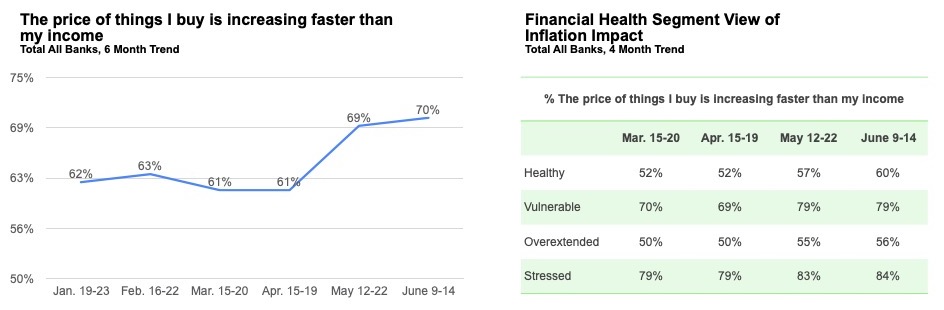
According to the data, the proportion of those affected by inflation remains high, increasing to 70% of all retail bank customers. Somewhat surprisingly, the largest month-over-month increase is among Americans that are classified as financially healthy (3%).

What’s more, amid high inflation, Americans have begun to turn to credit cards to help shoulder their monthly burden. Unfortunately, it seems that some banking customers have chosen to carry higher credit card balances without knowing the extent to which that will affect their credit score: a sign that the after-effects of inflation may be felt by Americans for years to come.

Even the Healthy Hurt

Recognition of inflation among Americans once again increased, but with a surprising twist: Customers whose financial situations are classified as healthy have the highest increase. It’s a sobering realization that the negative effects of inflation are mounting for all Americans.
 

JD Power US Polaris Pulse June 20221.0(dragged)


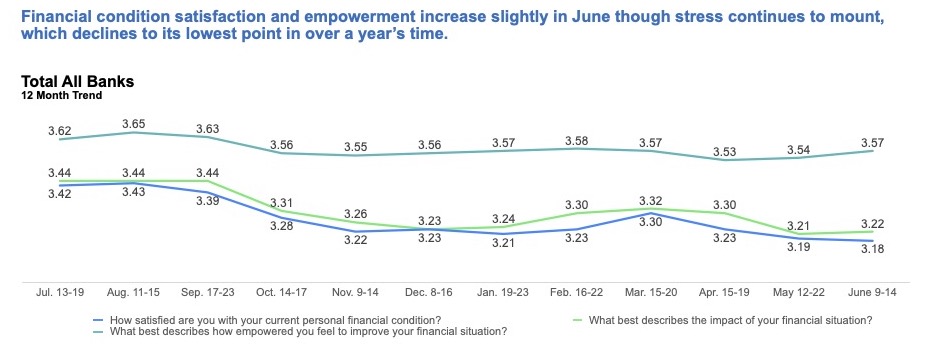
As a result, customers indicate low levels of confidence in their ability to handle inflation, alongside sagging overall satisfaction with their financial conditions, which—for the second consecutive report—is at the lowest level since JD Power began tracking the metric. Despite these troublesome data points, however, the ratio of healthy to unhealthy customers remains relatively unchanged.
 

JD Power US Polaris Pulse June 2022 (dragged)2.0


The Credit Score Mystery

One tactic that many bank customers have tried to combat inflation is leaning more heavily on credit cards. The mileage a customer may get out of that strategy varies, based on several factors that include card APRs, existing balances and an ability to make monthly payments. But one thing is certain: Carrying a higher balance on a card will affect a customer’s credit score.

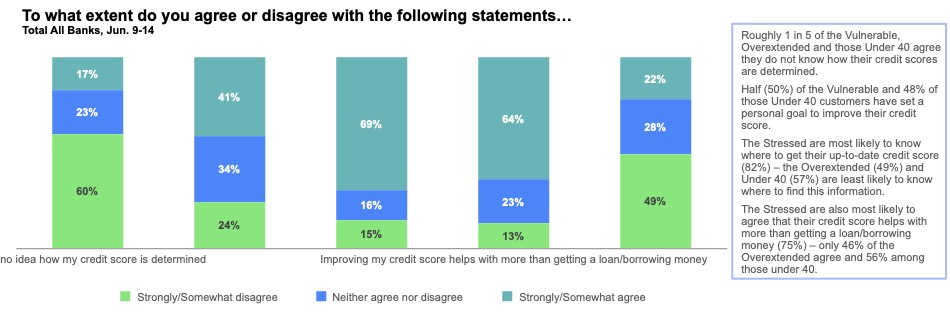
Alarmingly, a portion of customers are not aware of that equation. In fact, nearly one in five customers are unaware how their credit score is determined. The highest rate of respondents that are unsure are the vulnerable and under-40 populations.
 

JD Power US Polaris Pulse June 2022 (dragged) 3


While they may not exactly know how to do it, most customers know their credit score is important and are making improving it a priority. Customers whose financial health is stressed are most likely to agree that their credit score helps with more than getting a loan/borrowing money (75%) and, to that end, 41% of customers have a personal goal to improve their credit score in the next 12 months. That includes half of the vulnerable population and 48% of those under age 40.  It’s an admirable goal, but it begs the question: What are banks doing to help their customers achieve it?

A Missed Opportunity

As we have seen time and time again, banks are offering budgeting and debt assistance, but customers just aren’t taking advantage of them. This month’s data illustrates the golden opportunity for banks to finally get that advice formula right.

One of the most challenging feats to accomplish in business is changing customer behavior. But in this instance, customers are ready to change. The problem is that they’re rudderless and unable to define where to direct their efforts. Banks need to be able to effectively steer customers into programs that can help with each unique individual financial situation.

While improving credit scores may be a short-term goal, it’s usually in the pursuit of a loftier one, whether that’s to qualify for a loan, purchase a home or grow a family. Banks need to understand customers’ motivation to find their best path forward. Those that do will be rewarded for their effort in the form of customers that are both more financially healthy and more likely to engage with that bank in the future.

Find out More

This Banking and Payments Intelligence Report is based on responses from 4,000 retail bank customers nationwide and was fielded in June 2022. It was authored by Jennifer White, senior director of banking and payments intelligence at JD Power. Please contact us at the numbers below to connect with Ms. White or to learn more about the underlying research.

Media Contacts
Brian Jaklitsch; East Coast; 631-584-2200; [email protected]
Geno Effler, JD Power; West Coast; 714-621-6224; [email protected]

[1] JD Power measures the financial health of any consumer as a metric combining their spending/savings ratio, creditworthiness, and safety net items like insurance coverage. Consumers are placed on a continuum from healthy to vulnerable.
 

Join our list!

To get the latest insights, announcements, and industry intelligence from our JD Power experts delivered right to your inbox, we invite you to sign up for the mailing lists that are critical to your role:

Banking and Payments Intelligence Report
July 2022

Americans Start to Feel Squeeze of Inflation

The specter of inflation has loomed over every facet of the economic landscape this year, and virtually all Americans are suffering some level of fatigue from the rising cost of goods and services. But for the first time since February 2020, when JD Power began tracking the financial health of American consumers, it seems inflation is finally starting to affect financial wellbeing.

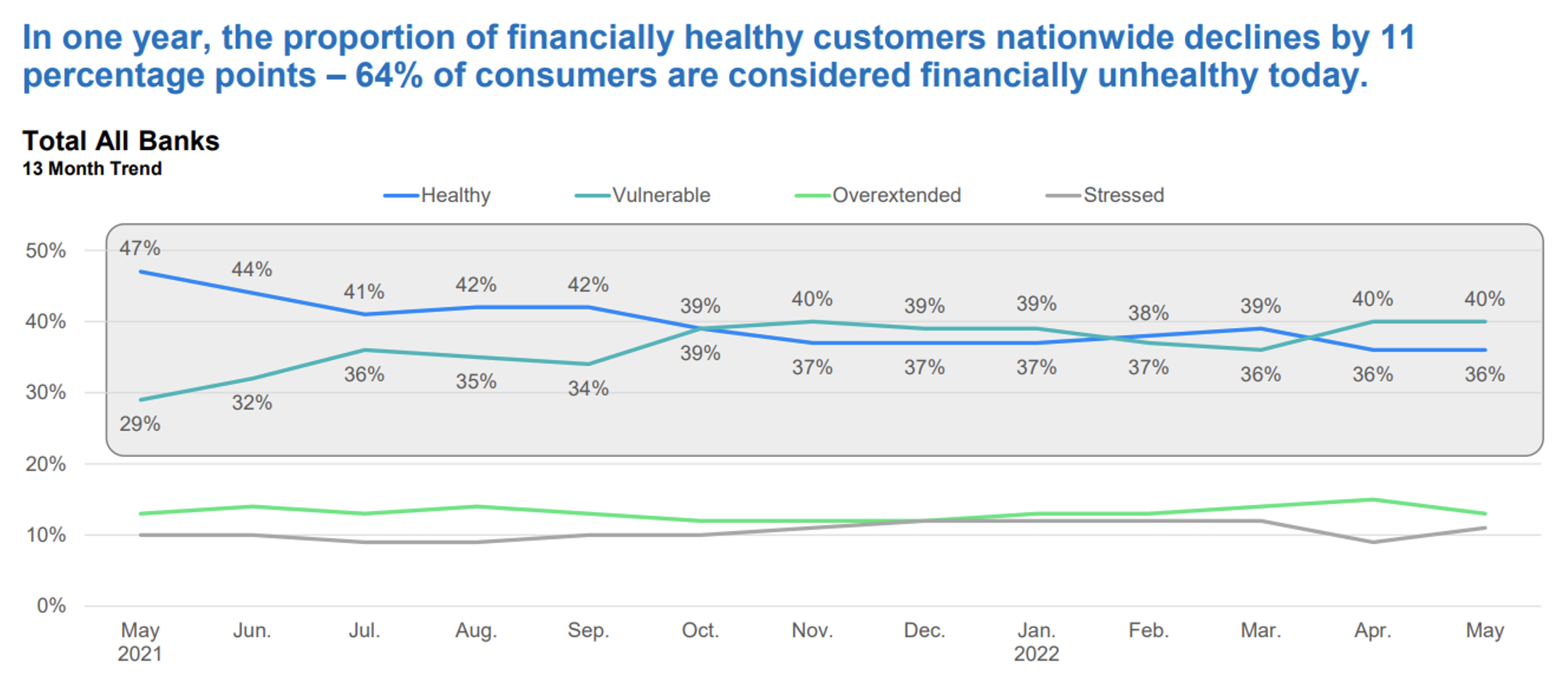
According to JD Power data, U.S. banking customer’s overall satisfaction with their financial condition is at its lowest point in 12 months, while stress levels are mounting.  In one year, the proportion of financially healthy[1] customers nationwide has plummeted, and it seems inflation is at the heart of the precipitous drop.

As inflation begins to catch up with Americans, banks are faced with a foreboding trend: Customers are exploring new ways to bridge their financial gaps, and many are either unaware of budgeting and debt assistance problems that banks offer, or they are eschewing their banks altogether in favor of private personal loans and debt management apps.

Feeling the Pain

Even after months of Americans dealing with higher prices everywhere, banking customers were slow to acknowledge that inflation was causing any substantive change in their financial situations. Now, that sentiment is changing.

Bank customers’ overall satisfaction with their current financial condition is at its lowest point in 12 months and the proportion of bank customers classified as financially healthy has fallen 11 percentage points during that same period. Now, nearly two-thirds (64%)of bank customers are classified as financially unhealthy to varying degrees.

graph showing proportions

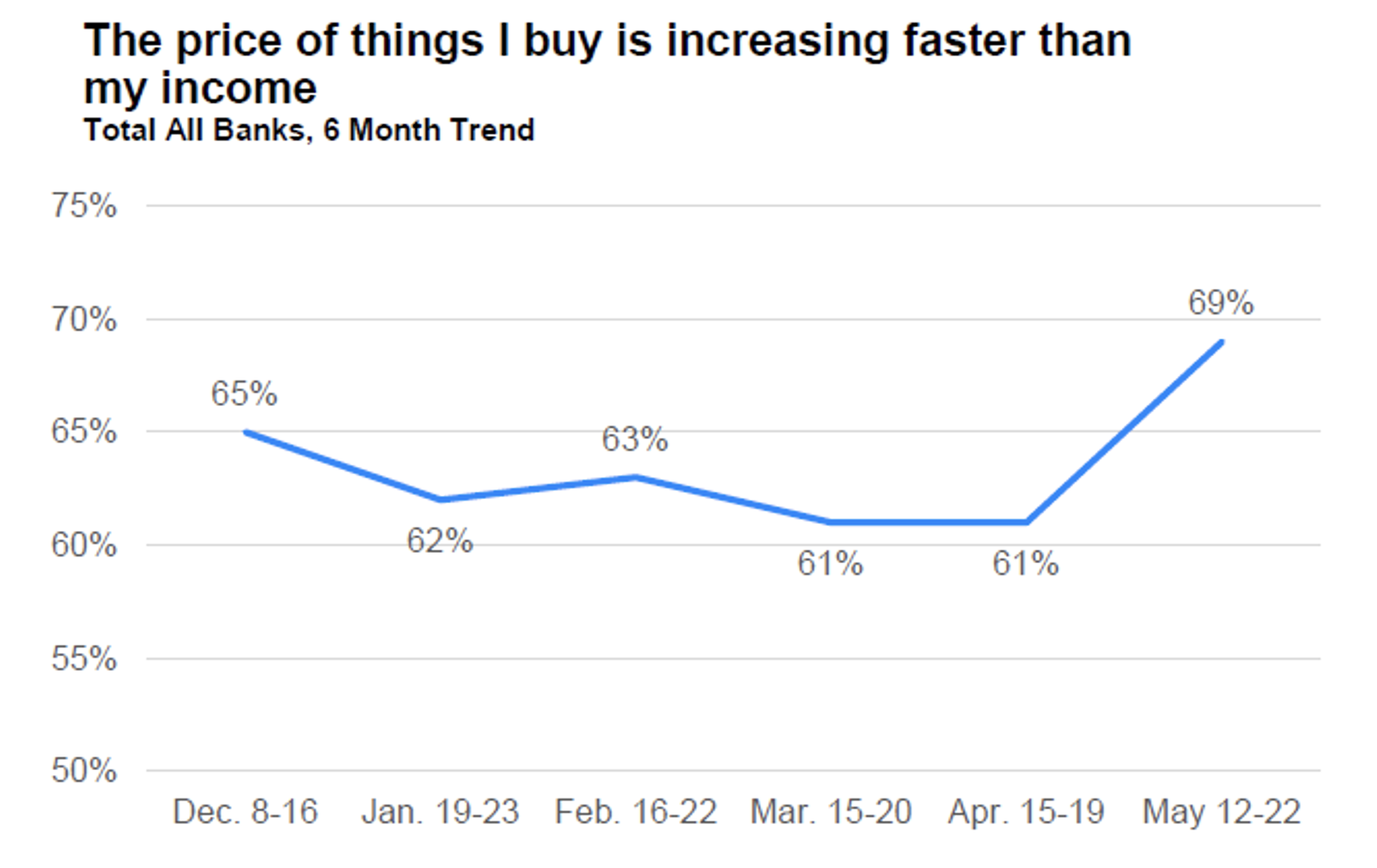
That drop in overall financial health is largely attributable to an 8-percentage-point increase in the recognition of inflation among consumers.

graph showing inflation increase

Lost Wages Drive a Jump in Personal Loans

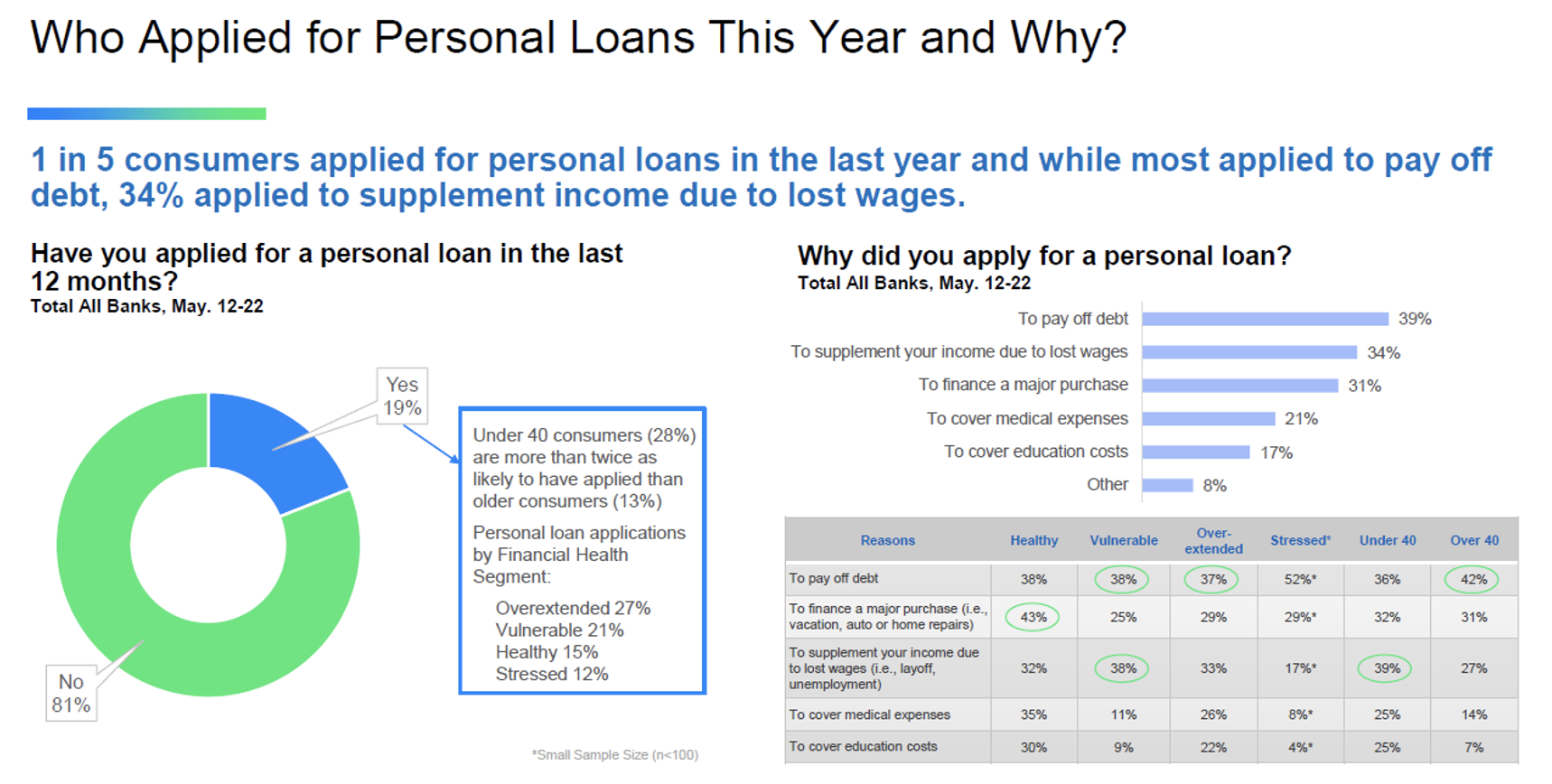
As a result, banking customers need a lifeline, and they’re willing to go explore new avenues to get it. Overall, 19% of customers applied for personal loans in the past year, with Americans under 40 years old more than twice as likely than older customers to have applied for a loan.

chart of personal loan applications

Customers whose financial situations are classified as overextended were the most common applicants (27%). By contrast, 15% of personal loan applicants were customers with healthy financial situations.  Reasons for theses loan applications varied. Most often, customers said they applied for the loan to help pay off existing debt (39%). However, 34% said they applied for a personal loan to supplement their income due to lost wages. That answer was most common for customers under the age of 40 (39%).

The Awareness Gap

The financial health of their customers is discouraging enough, but banks are also being forced to wrestle with this sobering reality: More and more, Americans are looking elsewhere for their financial assistance. And it’s often because they’re completely unaware of assistance programs that banks offer.

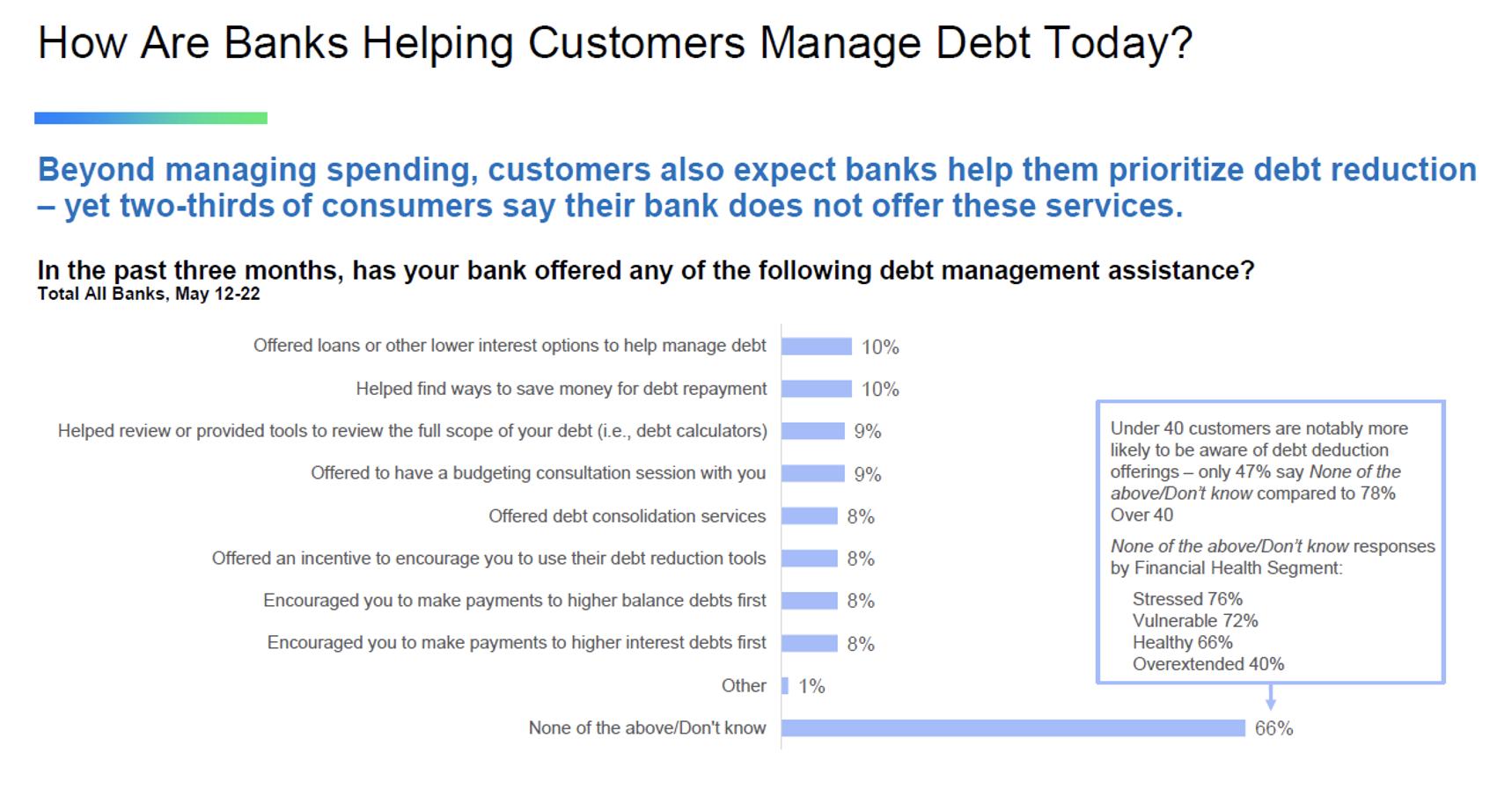
Overall, 66% of banking customers said they were unaware of any debt management assistance offered by their bank. That number swells to 78% of customers over the age of 40, 76% of customers whose financial health is stressed and 72% whose situations are vulnerable.

Bank offerings of debt services in a chart

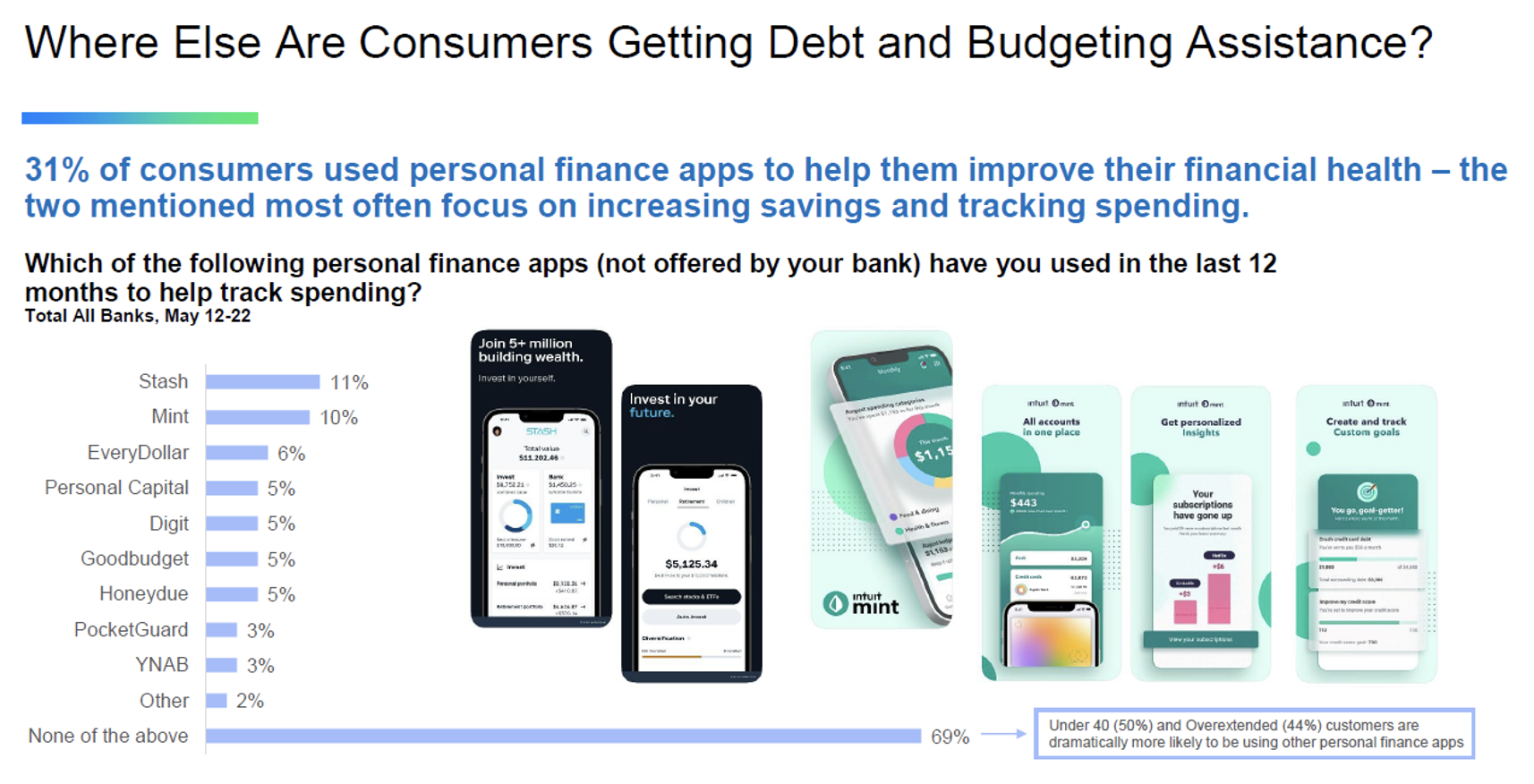
But that’s not where the problem ends for banks. Of the customers who are getting debt and budgeting assistance, 31% are relying on personal finance apps like Stash, Mint and others, instead of their banks. 

Personal finance apps are used for debt tracking

While budgeting and debt assistance that banks do offer may not have all the answers, it is there. Unfortunately, awareness among customers is woefully low, and that could create challenges in the future of large American banking institutions.

As we reported in the JD Power 2022 Consumer Lending Satisfaction Study, personal loans tend to act as a gateway to other financial products. Overall customer loyalty with personal loan products is high, with 61% of loan customers indicating that they are likely to use their lender again. This could create expanded opportunities for lenders that historically only offered loans as these companies expand their product offerings with checking, savings, credit card and investment options.

If banks are going to play a key role in helping their customers confront the rising burden of inflation, and, as a result, garner the kind of goodwill that builds customer retention and advocacy, they’ll need to lead targeted, personalized and proactive efforts to help customers find the right products and services. Without doing so, they run the risk of leaving their customers adrift at a very turbulent time, which could leave banks vulnerable in inflation’s wake.

Find out More

This Banking and Payments Intelligence Report is based on responses from 4,000 retail bank customers nationwide and was fielded in May 2022. It was authored by Jennifer White, senior consultant of banking and payments intelligence at JD Power. Please contact us at the numbers below to connect with Ms. White or to learn more about the underlying research.

Media Contacts

Brian Jaklitsch; East Coast; 631-584-2200; [email protected]

Geno Effler, JD Power; West Coast; 714-621-6224; [email protected]


[1] JD Power measures the financial health of any consumer as a metric combining their spending/savings ratio, creditworthiness, and safety net items like insurance coverage. Consumers are placed on a continuum from healthy to vulnerable.
Join our list!

To get the latest insights, announcements, and industry intelligence from our JD Power experts delivered right to your inbox, we invite you to sign up for the mailing lists that are critical to your role:

Banking and Payments Intelligence Report
June 2022

Inflation is Causing Americans to Make Trade-Offs, Both Large and Small

For decades, social commentators have been discussing “The Two Americas.” The divide can be represented by conflicting ideologies, race or religion. As wealth disparity has grown over time, the term has also been used to describe the discrepancies between the lives of those with means and those without.

According to JD Power data, it’s clear the country is indeed split into two very different worlds when it comes Americans’ financial health and their attitudes to the current economic landscape.

As inflation continues to be a persistent problem, the high price of consumer goods has been a thorn in the side of Americans everywhere. But when asked what worries them the most, responses from banking customers vary widely, based on the financial health[1] of each individual customer.

Concerns Mount Over Product Availability and Cost

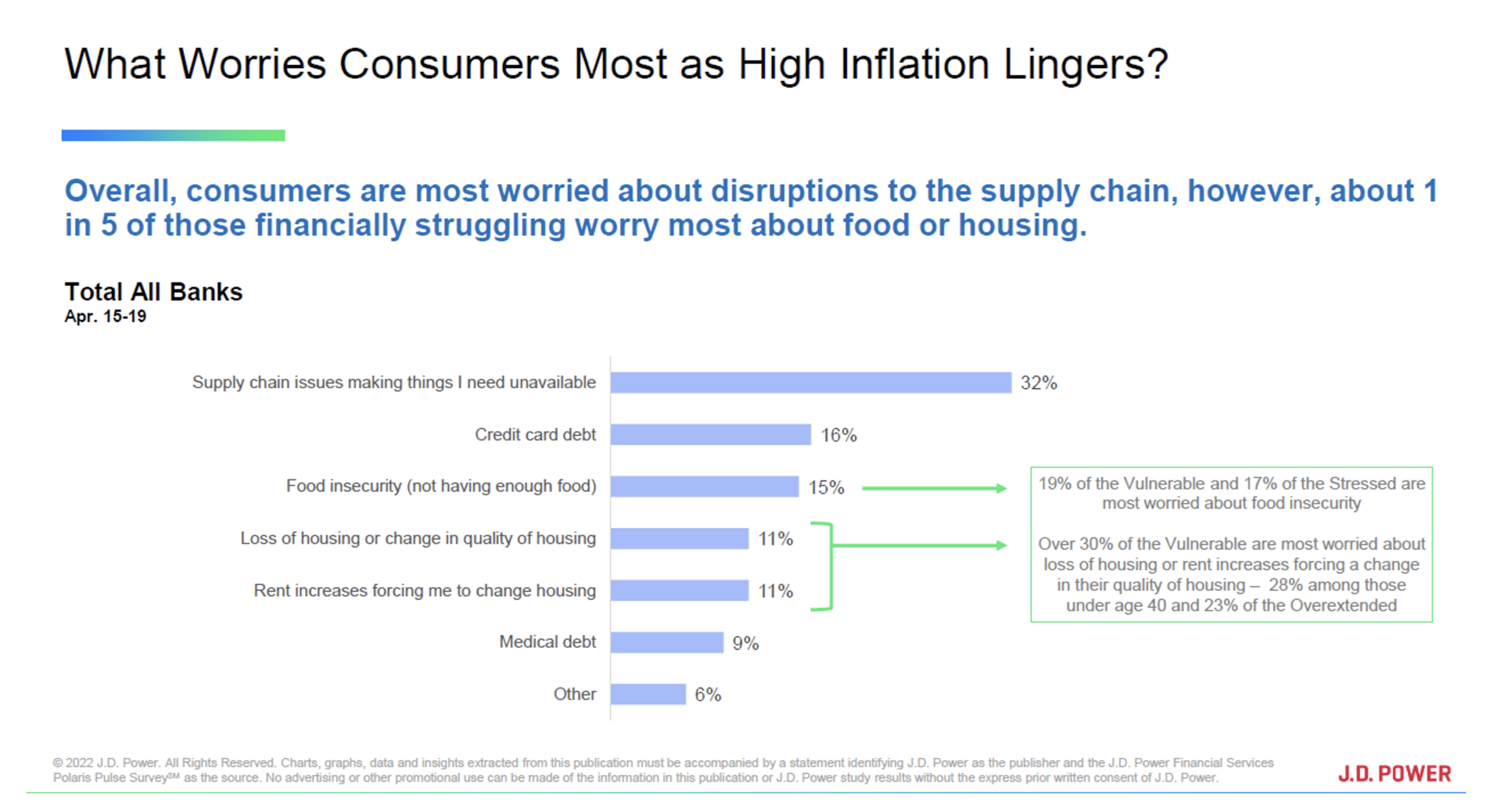
The bifurcation is most evident in how customers describe their biggest financial concern. While many Americans are concerned about the rising costs of essential goods, many others appear to be more concerned about the availability of them. In fact, disruptions to the supply chain that would prevent access to the products consumers need and want most is currently the top worry of American banking customers.

Graph 1

However, for those in more precarious states of financial health, the worries are decidedly more significant. Among those categorized as financially vulnerable, a group that accounts for roughly 40% American banking customers, nearly 1 in 5 bank customers indicate food insecurity is their greatest concern. What’s more, 31% of vulnerable and 23% of overextended customers say their greatest worry is a loss or change in quality of housing. Consumers aged 40 and older are more likely to list housing as a significant worry than those under age 40. Overall, 28% of consumers spend time worrying about whether they have enough food, and this worry distracts employees an average of 15 hours a week.

Financially Vulnerable Americans Start Making Meaningful Changes

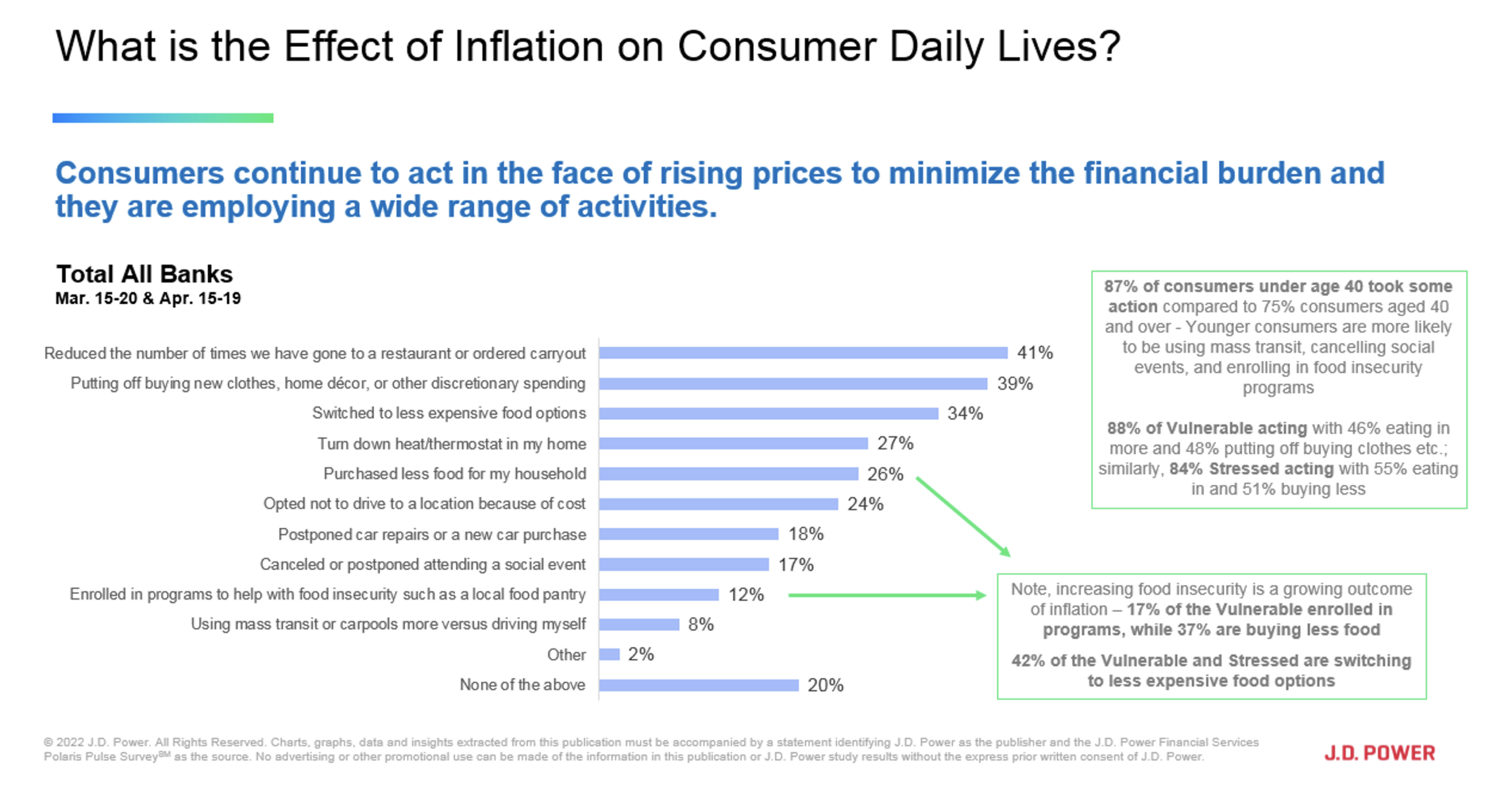
Against this backdrop of mounting financial concern, many Americans are taking measures to curb spending. The most common measure taken by customers to combat the rising cost of goods is reducing the amount of times they visit a restaurant or order take-out (41%).

Graph 2

Putting off buying new clothes (39%), switching to less expensive food option (34%), and turning down the thermostat in their home (27%) are the next-most common responses. This suggests that a large swath of Americans aren’t necessarily doing without some of their luxury items; rather, they’re just partaking in them less—a fact that could account for credit card debt ranking so high on the list of customer concerns.

Still, there are enough Americans that have been forced to make major sacrifices—like buying less food for their home (26%) and enrolling in local food pantry programs (12%)—that it is clear many customers are teetering on the edge. As banks begin to appraise this shaky financial terrain, they need to achieve a level of understanding to help see their customers through to the other side.

Banks and Employers in Position to Help

As we reported in the JD Power 2022 U.S. Retail Banking Satisfaction Study,SM  the one factor that does heavily influence bank customer experience in this environment is the bank’s ability to “support the customer during challenging times.” We found that customer satisfaction with retail banks rises 155 points (on a 1,000-point scale) when customers indicate that their bank supports them during challenging economic times.

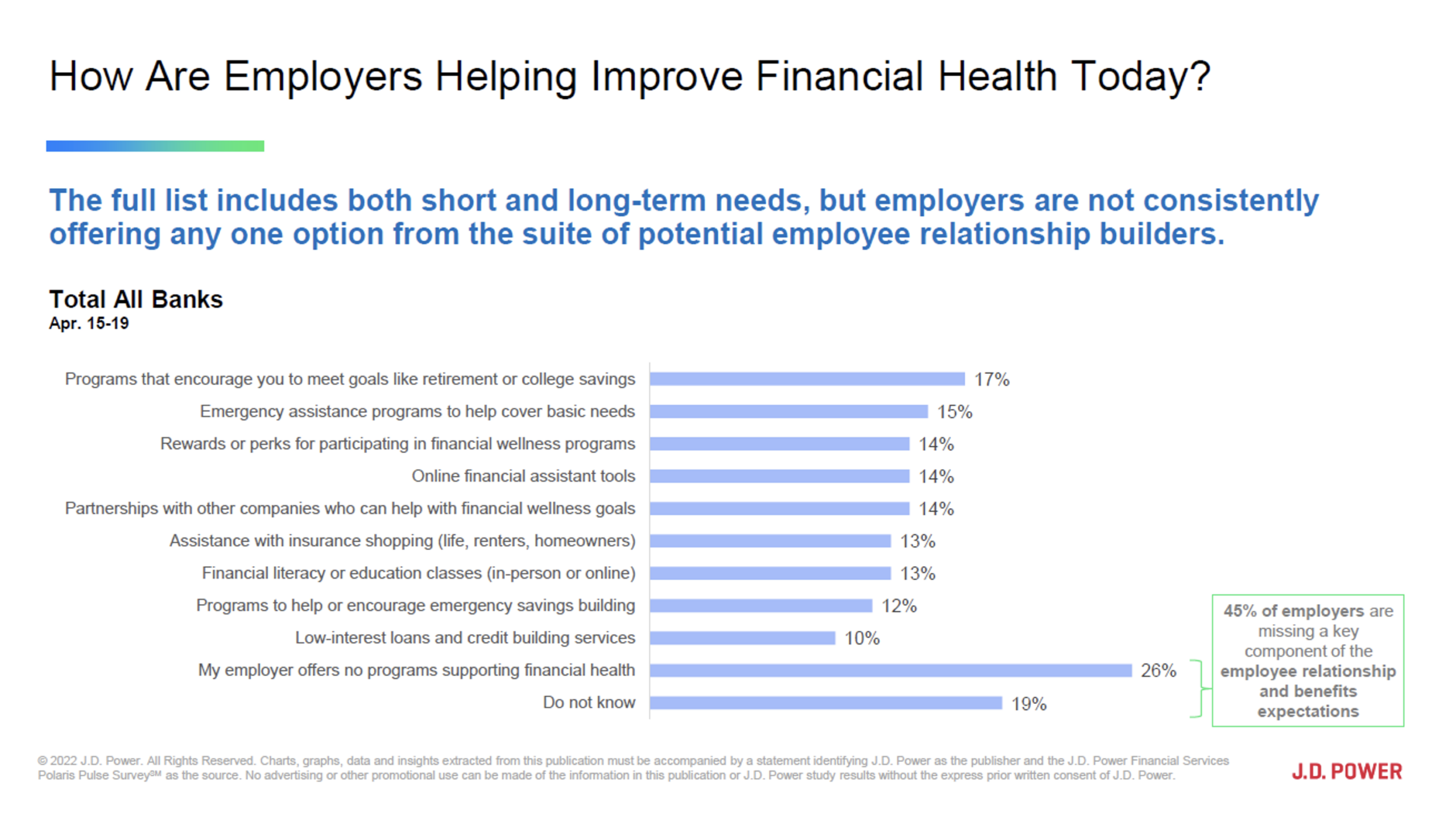
As banks make a concerted push on customer retention, they need to find ways to tailor their communications and services to reflect a level of understanding of where their customers are on the financial spectrum. That includes partnering with employers, who are currently positioned as one of the most integral and involved entities in a customer’s life. Americans are craving employer intervention, yet 45% of all large employers do not do anything to support their employees’ financial health.

Graph 3

For banks to earn the kind of loyalty that they hope to receive from their customers, they must meet Americans where they are. That includes getting employers involved, connecting with customers and delivering the right combination of financial incentives, personalized financial advice, hands-on help with problem resolution and guidance on how to grow their money.

Find out More

This Banking and Payments Intelligence Report is based on responses from 4,000 retail bank customers nationwide and was fielded in April 2022. It was authored by Jennifer White, senior consultant of banking and payments intelligence at JD Power. Please contact us at the numbers below to connect with Ms. White or to learn more about the underlying research.

Media Contacts

Brian Jaklitsch; East Coast; 631-584-2200; [email protected]

Geno Effler, JD Power; West Coast; 714-621-6224; [email protected]


[1] JD Power measures the financial health of any consumer as a metric combining their spending/savings ratio, credit worthiness and safety net items like insurance coverage. Consumers are placed on a continuum from healthy to vulnerable.
Join our list!

To get the latest insights, announcements, and industry intelligence from our JD Power experts delivered right to your inbox, we invite you to sign up for the mailing lists that are critical to your role:

Banking and Payments Intelligence Report

As Americans wrestle with persistent inflation and skyrocketing gas prices, parents say they are feeling the squeeze when it comes to childcare.

JD Power finds that rising costs have become the leading reason that nearly three-fourths of American parents say they are experiencing some degree of interruption to their childcare.

No Child Left Behind

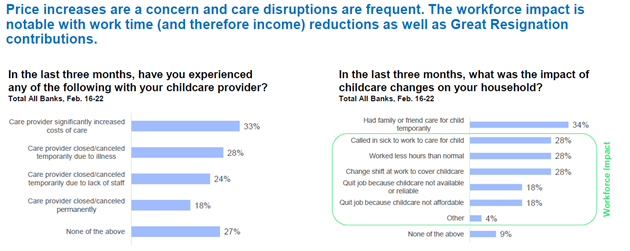
Overall, 73% of American primary caregivers experienced some degree of interruption to their childcare in the past three months. Two reasons for the disruption included a care provider closing or canceling service due to staff shortages (28%) or sickness (24%). But the most common reason given for interrupted childcare was rising costs (33%).

Child Care Graph

As a result, ripple effects have been felt in the workplace. One in five (20%) of Americans left their job because childcare was not affordable, while 28% say they worked less than normal. Nearly one-third (28%) of American parents say they called in sick to care for a child. 


Inflation Nation

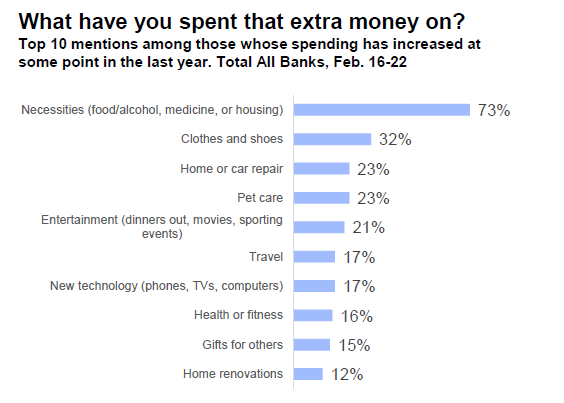
Meanwhile, while Americans might not necessarily be citing worsening inflation, it seems clear that the prolonged period of higher costs of consumer goods is starting to affect family finances. Across the board, Americans say they are spending extra money on everything from clothing, pet care, travel and gifts. The most common increase, however, is for necessities (73%).

Extra Expenses

Because of these trends on consumer spending, Americans say they have tightened their purse strings. The rising cost of necessities ranks as the biggest reason (48%), while worries about inflation (37%), loss of income (33%) and the pandemic (30%) are also significant factors. 

That said, some Americans—particularly those in better financial health—have gotten proactive about paying down existing debts and increased their savings or investments. Twenty-eight percent of Americans whose financial situation was classified as healthy say they’ve begun reducing their debt, which is 5% higher than the general response rate.

Spending Increase Staff


A Lifeline Unanswered

Meanwhile, banks have tried to head off some of the pressure on customers by eliminating or reducing overdraft fees, but it seems to be for naught, as many Americans are still unaware of this development. 

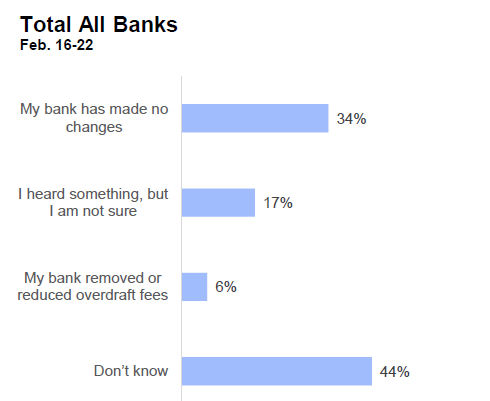
Nearly half (44%) of consumers have no idea if their bank made a change to their overdraft fees, while another 17% say they had heard something to that effect but are unsure if it applies to their account.

Total All Banks Graph

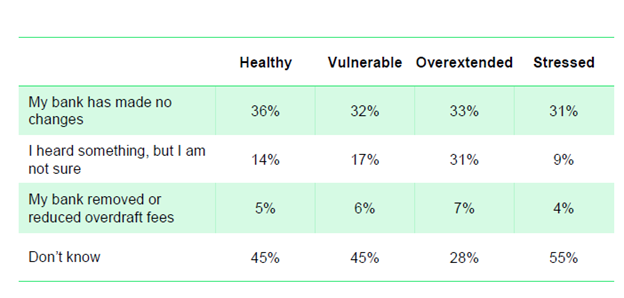
Particularly troubling is the demographic breakdown of this awareness. More than half (55%) of Americans whose financial health is stressed did not know if their bank had made a change to their account, by far the highest rate of the four financial health classifications. 

Bank Health

Americans are undoubtedly feeling a price crunch, from the cost of childcare to the price of necessities, the lack of awareness of the elimination of fees show that banks have room for improvement in how they communicate their new initiatives. Global unrest seems poised to remain the status quo, at least for the foreseeable future. If banks want to be part of the solution, they’ll have to find a way to get their message out to a broader audience.

Find Out More

To learn more about the underlying research behind this industry briefing or schedule an interview with Jennifer White, please contact the numbers below.

Media Contacts

Brian Jaklitsch; East Coast; 631-584-2200; [email protected]

Geno Effler, JD Power; West Coast; 714-621-6224; [email protected]


Join our list!

To get the latest insights, announcements, and industry intelligence from our JD Power experts delivered right to your inbox, we invite you to sign up for the mailing lists that are critical to your role: