E-Vision Intelligence Report
January 2024
Mass Market Distribution Strategies and Infrastructure Capacity to Define EV Adoption Trends in 2024
Key Findings
- Interest in EVs Surges as Vehicles Become More Affordable and More Widely Available: The proportion of consumers who say they are “very likely” to consider an electric vehicle (EV) for their next vehicle purchase or lease is now 29%, the highest rate in 16 months. The surge in interest is accompanied by significant improvements in affordability and availability, driven by a combination of Tesla price cuts and increased production of lower-price trims of Ford F-150 Lightning pickup.
- Honda Prologue Launch Underscores Distribution Strategy Challenges: The Honda Prologue, among the most hotly anticipated mid-size SUVs, will debut in 2024 with 5% of new-vehicle shoppers already indicating that they are “very likely” to consider it for their next purchase. Honda’s distribution strategy for the new vehicle will be an important indicator of the influence that Zero Emission Vehicle (ZEV) regulations, which have been adopted in 15 states, will have on new inventory rollout and pricing. The ZEV regulations require manufacturers to hit steadily increasing EV sales milestones to continue selling vehicles in that state. In many cases, however, the 15 states participating in the program are not Honda’s largest sales markets.
- Tesla’s Supercharger Network to be Put to the Test: As of November 2023, 23 automotive brands have committed to adopting Tesla’s North American Charging Standard (NACS), which will make 2024 a make-or-break year for the Tesla supercharger network. All told, 2.71 million EVs will soon be able to access Tesla’s 35,700 DC fast chargers, which is likely to exacerbate the strain on public charging infrastructure. Through Q3 2023, 17% of EV drivers indicated an inability to charge because a public charger was not available or was too crowded. That number is up from 9% in Q3 2021.
Executive Summary
Consumer interest in EVs is surging as attention turns to the new year, and the success of the next phase of EV adoption—when EVs move from early adopter novelty to mass market commodity—will largely be determined by the industry’s ability to navigate this complicated new marketplace.
This E-Vision Intelligence Report dives into key data points trending in each monthly EV Index update, along with other data points gathered from JD Power studies and pulse surveys, to spotlight emerging trends and important shifts in EV consumer sentiment.
Consumer Interest, Availability and Affordability at Peak Levels
There is no shortage of challenges confronting the auto industry right now. Uncertainty about the future of the economy, labor issues, lingering supply chain difficulties and a labyrinth of state and federal regulatory requirements mandating a transition to EVs are just a few of the top concerns. When it comes to the basic math of the EV transition, however, the industry is in a very strong position to seize the day.
According to the JD Power EV Index, consumer interest, availability and affordability are all hitting the highest levels we’ve seen this year. Nearly one-third (29%) of consumers now say they are “very likely” to consider an EV for their next vehicle—the highest rate in 16 months. Meanwhile, overall EV affordability has now reached parity with gas-powered vehicles, driven largely by state and federal tax incentives and significant price reductions in Tesla’s high-volume Model Y and Model 3.
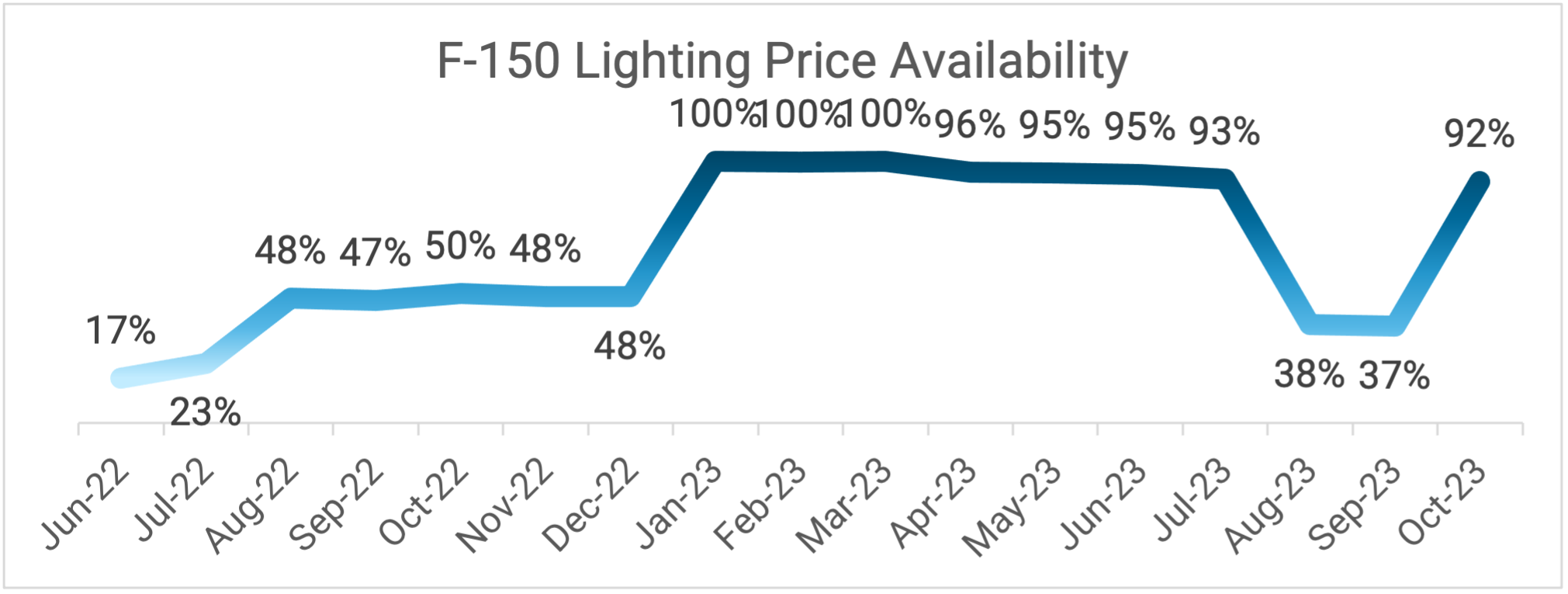
Vehicle availability has also increased significantly, driven largely by new models coming to market and increased production of the Ford F-150 Lightning following a plant shutdown in June and July 2023. Lower-priced trims of the F-150 Lightning are now returning to dealer lots, helping overall price availability of the vehicle rebound 55 percentage points in this month’s report, boosting availability back to July 2023 levels.
ZEV Regulation to Weigh Heavily on Mass Market EV Distribution Strategy
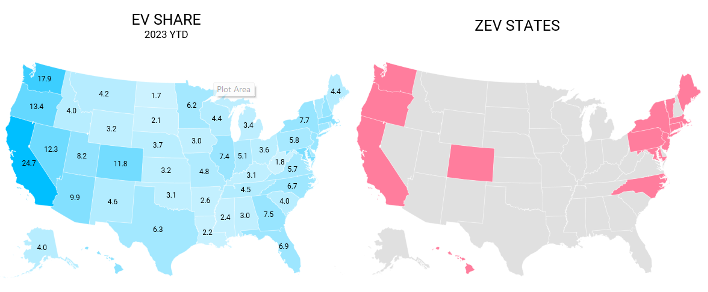
One of the major challenges manufacturers will face as they start refining their 2024 EV distribution strategies will be navigating the ZEV regulation landscape. The rules, which build on California’s Zero-Emissions Vehicle Regulation, require manufacturers that sell more than 4,500 light- and medium-duty vehicles per year to hit certain sales thresholds for the sale of zero-emission vehicles and plug-in hybrid electric vehicles (PHEVs). By 2035, 100% of all new vehicle sales will need to be either ZEVs or PHEVs. To date, 15 states (California, Colorado, Connecticut, Hawaii, Maine, Maryland, Massachusetts, New Jersey, New York, North Carolina, Oregon, Pennsylvania, Rhode Island, Vermont and Washington)—plus the District of Columbia—have adopted the rules.
Here’s where things get complicated for manufacturers strategizing vehicle launches. The current list of ZEV states does not necessarily match up with their largest sales markets. Additionally, consumer interest in EVs in some non-ZEV states is even higher than the levels of demand we see in some ZEV states. That leaves manufacturers weighing EV allocation plans, particularly as production capacity ramps up and inventory naturally builds.
For example, the Honda Prologue, which is currently the most anticipated EV SUV in terms of upper-funnel consideration, with a total of 5% of new-vehicle shoppers nationwide saying they are “very likely” to consider it for their next vehicle, is slated to launch in 2024. Honda has already indicated its plans to initially target ZEV states at launch. However, some non-ZEV states such as Florida—where Honda currently has 11% market share of all SUVs sold and where the brand has already sold 47,000 mainstream SUVs so far in 2023—pose interesting opportunities in terms of distribution strategy moving forward.
A Line Forms at the Neighborhood Supercharger
The other major challenge that will test the resolve of EV owners and manufacturers will be strain on the existing public charging infrastructure. Public charging has been a pain point since the first EVs came to market and the issue has only gotten worse as more consumers purchase EVs, with one notable exception: Tesla. According to JD Power data, Tesla earns significantly higher customer satisfaction scores than rival EV manufacturers when it comes to owners using public charging networks. Overall satisfaction with DC fast charging (Level 3) among Tesla vehicle owners is 736 (on a 1,000-point scale), while General Motors is 594 and Ford is 560. The average for all other manufacturers is 560.
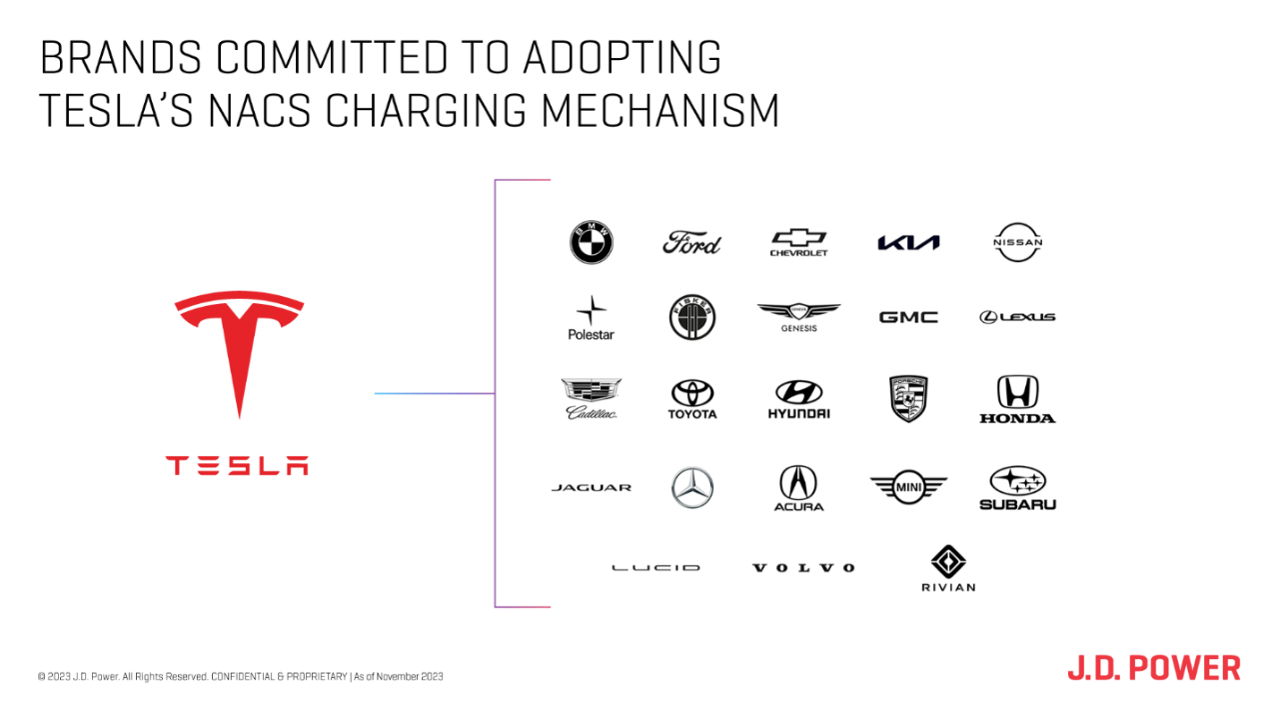
This reputation for reliability and availability is going to be put to the test in 2024, as 23 automotive brands are added to Tesla’s NACS network. While Tesla has committed to ramping up production of new chargers quickly, the current calculus of charger supply and demand does not paint a pretty picture. Soon, some 2.71 million EVs will be able to access Tesla’s 35,700 DC fast chargers, which is likely to exacerbate the strain on the current public charging infrastructure. During Q3 2023, 17% of EV drivers who cited an inability to charge say it was because a public charger was not available or that station was too crowded. That number is up from 9% in Q3 2021.
Methodology
This JD Power E-Vision Intelligence Report is based on data and insights from the JD Power EV Index, the JD Power EV Retail Share Forecast, the JD Power 2023 U.S. Electric Vehicle Experience (EVX) Public Charging Study and the JD Power U.S. Electric Vehicle Consideration (EVC) Study. The JD Power EV Index is an analytics tool to benchmark the growing EV market in the United States. It tracks millions of data points aggregated into six categories—interest, availability, adoption, affordability, infrastructure and experience—to evaluate the progress to parity of EVs with ICE vehicles in the U.S. Each month, the JD Power electric vehicle practice will analyze these data points, and others to spotlight emerging trends and important shifts in consumer sentiment that are helping to define the fast-moving EV marketplace.
Find out More
This report was authored by Elizabeth Krear, vice president, electric vehicle practice; Brent Gruber, executive director, electric vehicle practice; Stewart Stropp, executive director, electric vehicle practice; and Kristen Richter, senior manager, electric vehicle practice. The JD Power E-Vision initiative is a company-wide program focused on maximizing JD Power industry-leading EV data, analytics, insights and solutions. Please contact us at the numbers below to connect with the authors or to learn more about the underlying research.
Media Contacts
Shane Smith; East Coast; 424-903-3665; [email protected]
Geno Effler, JD Power; West Coast; 714-621-6224; [email protected]