Utilities Intelligence Report
January 2025
It’s been impossible to escape the headlines about stratospheric electricity bills. According to JD Power data, the average residential electric bill increased to $182 per month in 2024, a record high. It’s the latest in a steady incline that has seen prices surge 27% since 2021. Accordingly, the level of customer satisfaction for utility customers has fallen precipitously during that same period.
As utilities bear the brunt of these disgruntled customer bases, they need to find ways to ensure their relationship with their customers is deeper than the cost of their monthly meter reading. Unfortunately, utilities’ communication strategies seem to be focused on the wrong issues, and many continue to miss the mark on what issues truly move the needle on customer satisfaction.
Prices Continue to Climb
In light of record high prices, it shouldn’t come as much of a surprise that just 31% of electric utilities have either improved their customer satisfaction or held steady; the rest have all declined.
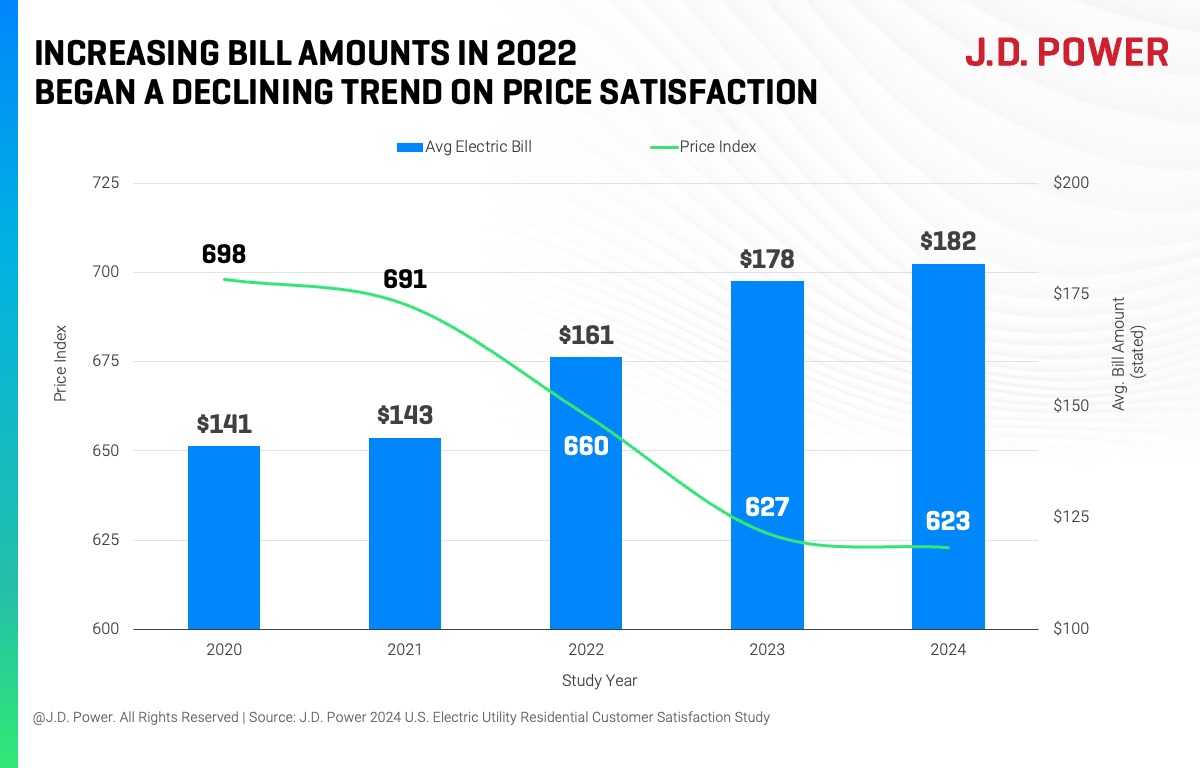
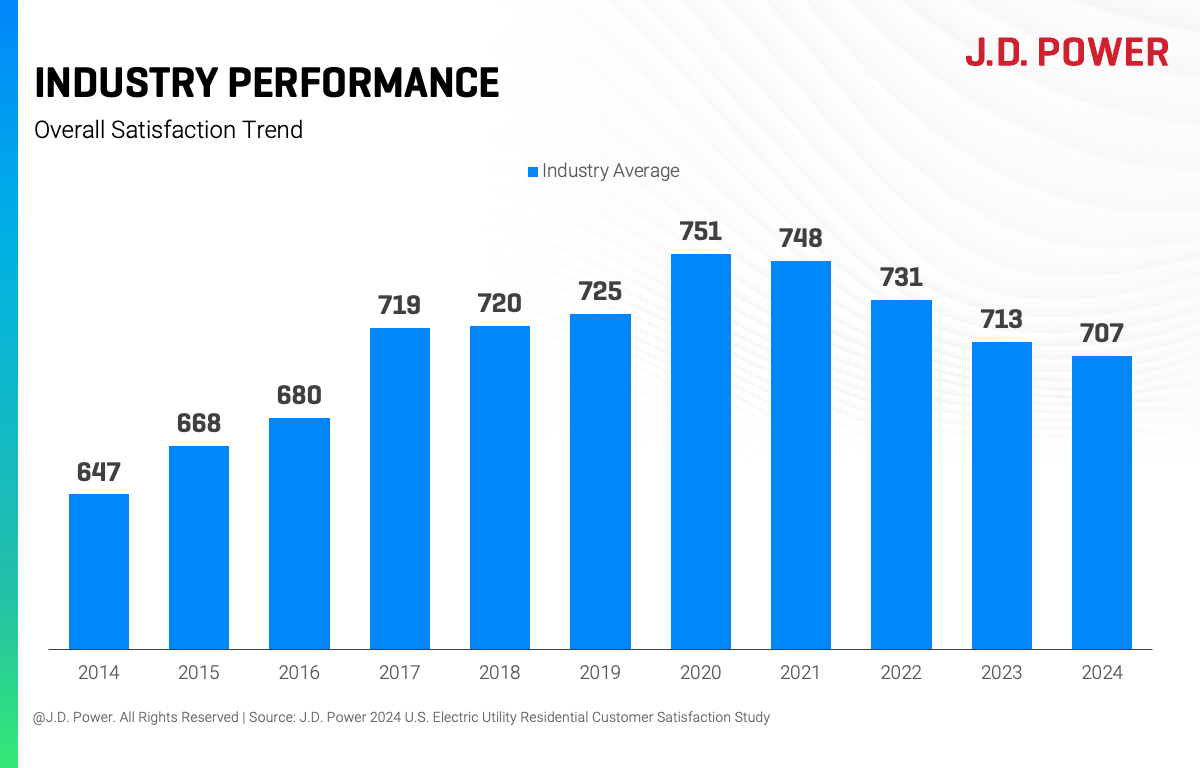
The slump in satisfaction clearly correlates with the gradual rise in prices. The industry average for customer satisfaction has declined consistently since prices began to rise. Average customer satisfaction was as high as 751 (on a 1,000-point scale) as recently as 2020. In 2024, that number dipped to 708.
The Communication Conundrum
For utilities to stave off the negative effects of rate increases, they need to create avenues for open dialogue, particularly around key, hot-button issues that are proven differentiators.
For example, customers in California must to grapple with planned power grid shutoffs to conserve energy. And in a world that is increasingly polarized about energy consumption and conservation issues, it would be logical to assume that hearing more about utility sustainability initiatives would not improve customer attitudes. But surprisingly, customers who are aware of their utility’s efforts to use clean energy had a customer satisfaction score of 780, compared with 682 for those who were unaware (on a 1,000-point scale).
That doesn’t mean that utilities can quell angry customer concerns with investment in green initiatives. But it does illustrate the need for utilities to learn what issues they need to put at the center of their communication plan.
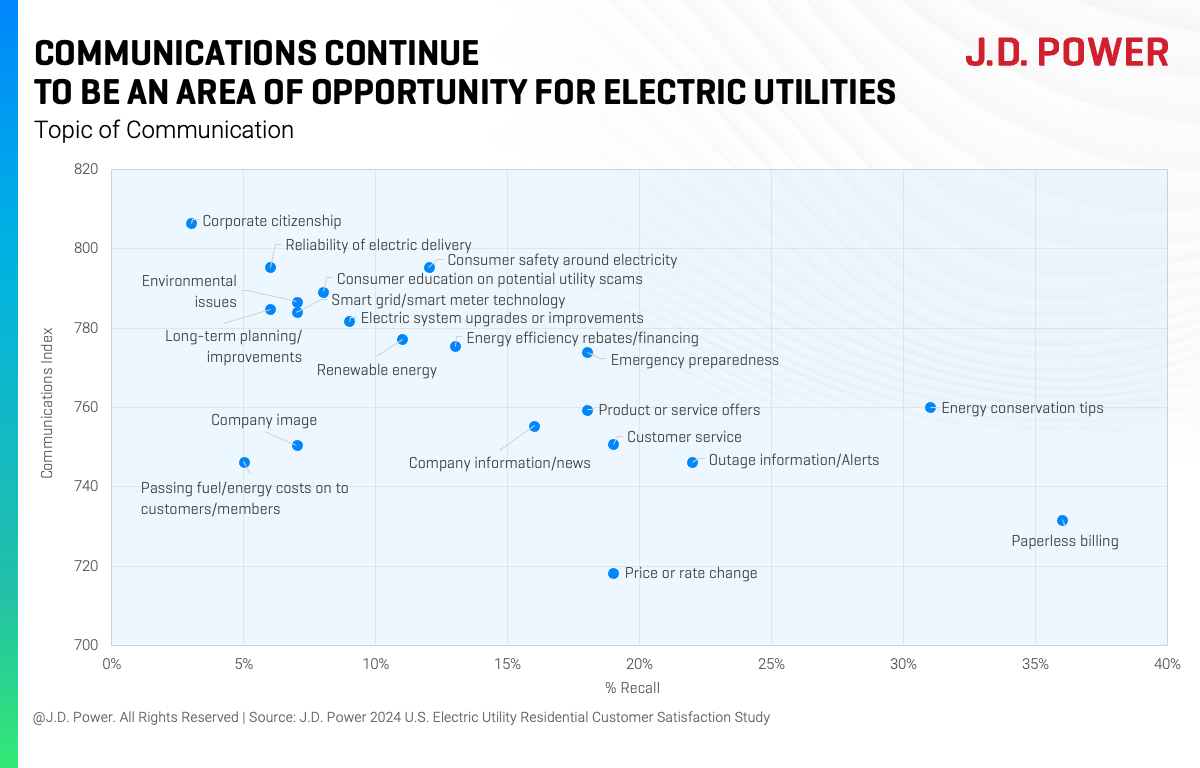
For example, customers clearly recalled messaging on paperless billing, but it is not increasing their overall satisfaction. Meanwhile, when customers can recall utility messaging on corporate citizenship or environmental issues, they do show an ability to make inroads on satisfaction, even more so than emergency preparedness alerts. The problem is that there is limited recall on these issues.
Strategies that Work
Many utilities need to get rate hikes cleared by their customers, which makes communication around these issues vital to their operations. Utilities need to foster strong bonds that will keep customers on board with their plans.
Those that can effectively walk the line with their customers between energy chaperone and engaged partner will meet far less resistance to their rate hikes and will create better bonds in their community that will come in handy, whether that’s in the face of the next rate increase or in the aftermath of natural disaster. The key is to effectively message the right points.
Find out More
This Utilities Intelligence Report is based on responses from U.S. Electric Residential utility customers nationwide and was fielded from January through November 2024. It was authored by Mark Spalinger, director of utilities intelligence at JD Power. Please contact us at the numbers below to connect with Mr. Spalinger or to learn more about the underlying research.
Media Contacts
Brian Jaklitsch; East Coast; 631-584-2200; [email protected]
Geno Effler, JD Power; West Coast; 714-621-6224; [email protected]