Banking and Payments Intelligence Report
May 2023
With Bank Customers Still in a Tenuous Financial Position, Fraud Takes Centerstage
Even after inflation eased to 4.9% in April, there is still plenty to go around and plenty of other issues to keep bank customers in the United States up at night, including the early May collapse of yet another bank. If that wasn’t enough, customers say that incidences of fraud are also on the rise.
According to the latest JD Power data, 36% of all banking customers in the United States say they have experienced some kind of financial fraud in the past 12 months. These incidents include unauthorized credit or debit card usage, a P2P scam, or sending money to someone posing as someone else. Overall, customers with lower financial health scores[1] experienced fraud more often than customers with higher scores.
Somewhat surprisingly, 50% of customers under age 40 have experienced fraud in the past year, as these customers are more likely to engage in electronic transfers and, thus, are more likely to trust online requests for payments. That has left many customers eager for answers from their bank, hoping for a quick resolution to the fraud in question.
Overall Financial Health Holds Steady
For a fourth consecutive month, there has been no noteworthy change in overall financial health. More than one-third (34%) of respondents are financially healthy, while 41% are vulnerable.

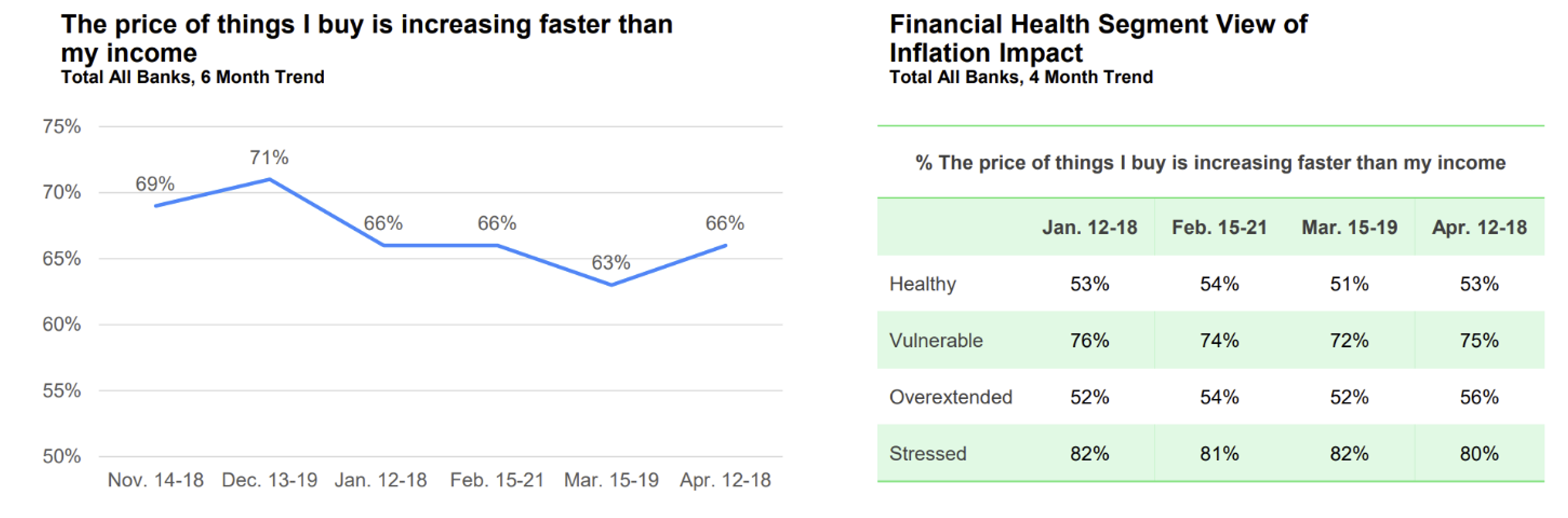
The overall level of inflation recognition rose slightly to 66%: a mark it has hit three of the past four months. The percentage of customers who said the price of goods is increasing faster than their income also rose slightly for most customer segment groups but was largely in line with the previous months.
The Fraud Problem
Overall, 36% of banking customers say they have experienced at least one type of fraud in the past 12 months. That number increased to 50% for customers under age 40, and 51% of customers that are classified as financially overextended.
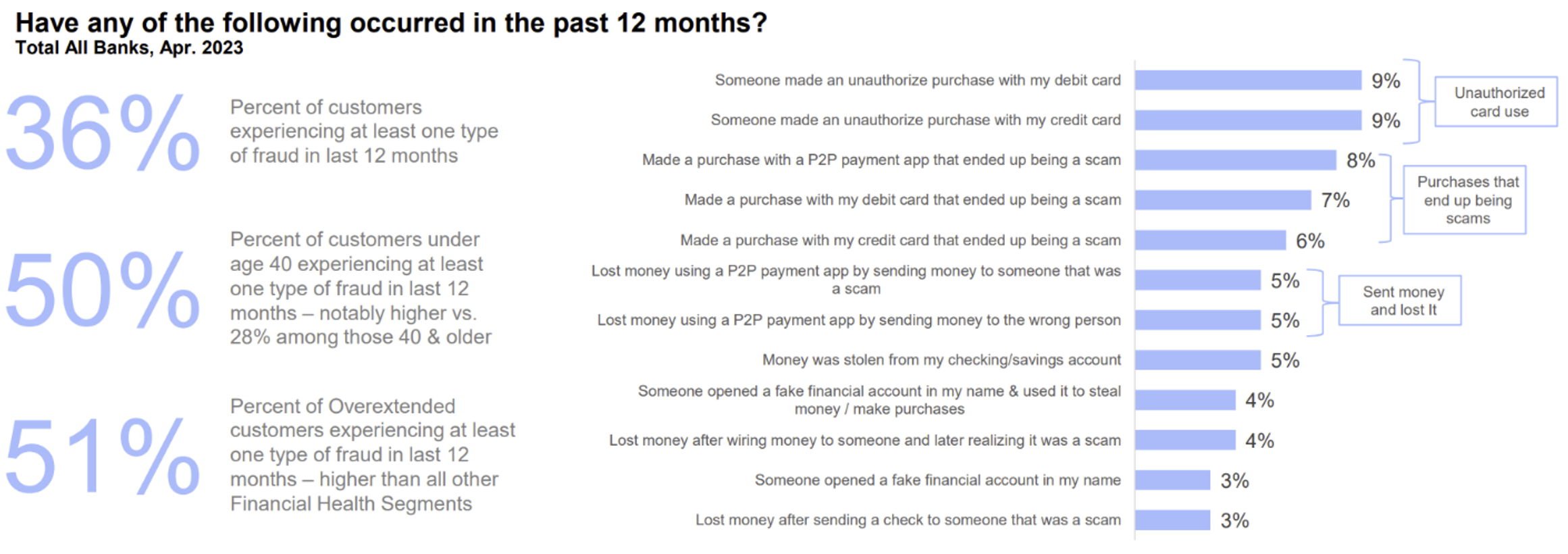
The most common occurrences of fraud were someone making an unauthorized purchase with a customer’s credit (9%) or debit card (9%), making a purchase with a P2P payment app that ended up being a scam (8%), and customers that made a purchase with their debit card that ended up being a scam (7%).
Conflict Resolution
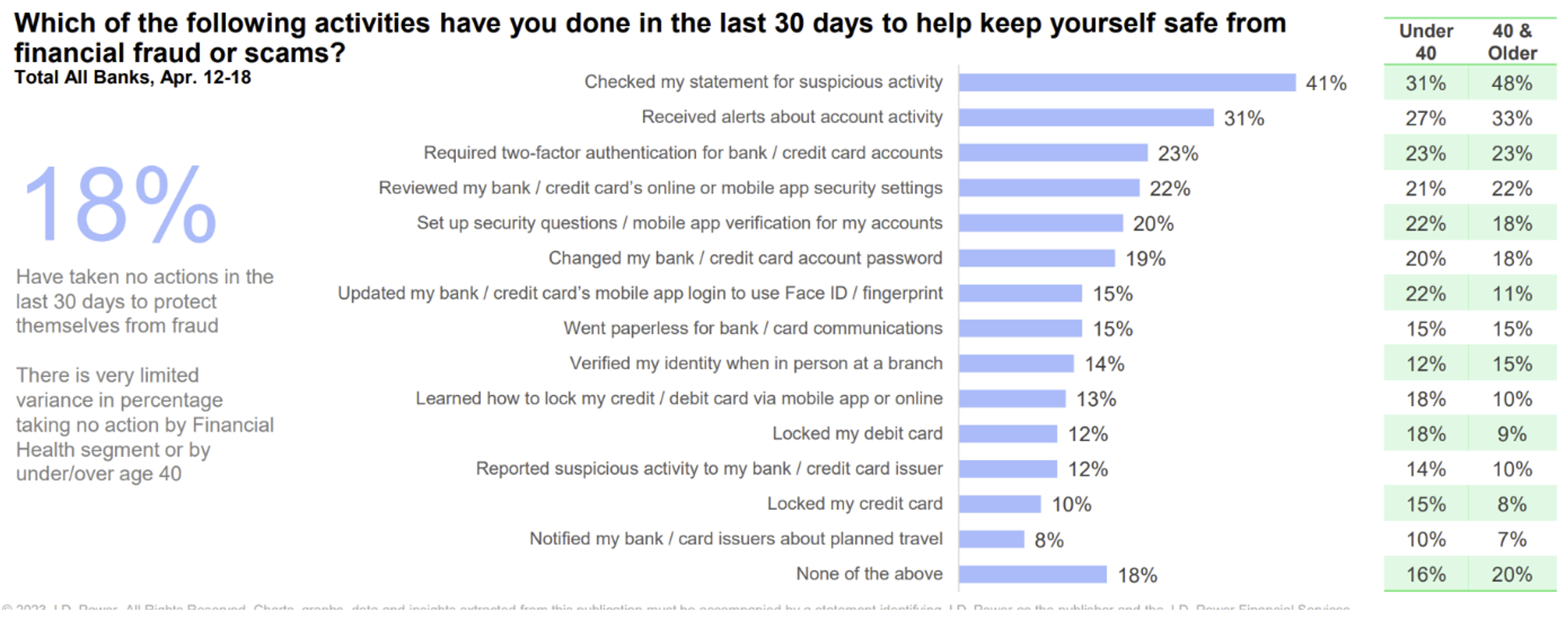
When asked how the fraud was discovered, 41% of bank customers said they checked their statement for suspicious activity, while 31% said they received alerts about their account activity. Interestingly, the rates for both categories are higher for customers over age 40 than customers under age 40.
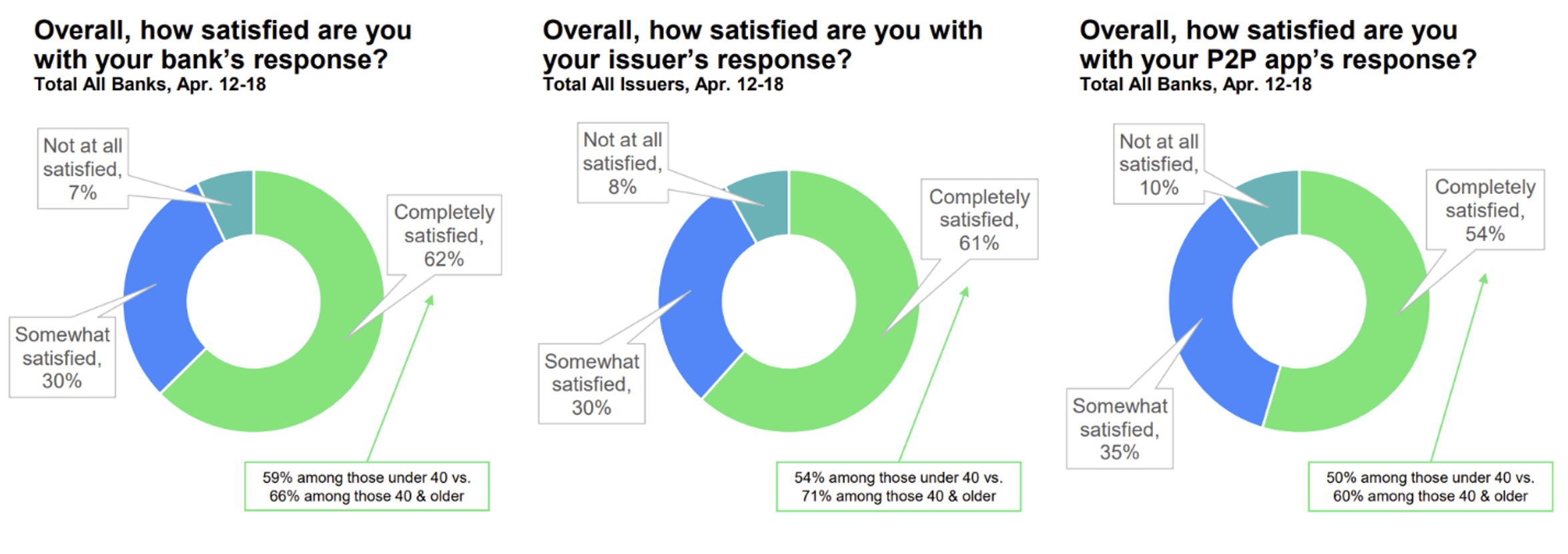
The survey also uncovers some brewing dissatisfaction with bank responses to fraud. The rate of customers that were “not at all satisfied” with the response to their experience with fraud was highest for P2P apps (10%), followed by card issuer (8%) and banks (7%). It’s worth noting that 30% of customers for each entity were “somewhat satisfied,” and customers under 40 that experienced fraud more often were less satisfied with their bank, an indication that there is room for improve across the board in fraud resolution.
A Call for Fraud-Focused Customer Education
While there have been some underlying hopes for economic optimism of late, bank customers are still in a tenuous position. An occurrence of fraudulent activity without a positive resolution could certainly push a stressed or overextended customer over the edge, making fraud prevention a key area of interest.
Banks that are not helping their customers prevent fraud by optimizing security settings; encouraging their customers to use tools that allow them to intervene over time, such as alert settings and credit score monitoring; and helping with resolution when fraud does occur, are at risk of alienating a large swath of their clientele. But financial institutions that do execute this three-pronged fraud strategy can build an increased trust in their customer bases. At a time where customers are considering rate-chasing from bank to bank, financial institutions could use all the loyalty and goodwill that they can get.
Find out More
This Banking and Payments Intelligence Report is based on responses from 4,000 retail bank customers nationwide and was fielded in April 2023. It was authored by Jennifer White, senior director of banking and payments intelligence at JD Power. Please contact us at the numbers below to connect with Ms. White or to learn more about the underlying research.
Media Contacts
Brian Jaklitsch; East Coast; 631-584-2200; [email protected]
Geno Effler, JD Power; West Coast; 714-621-6224; [email protected]
[1] JD Power measures the financial health of any consumer as a metric combining their spending/savings ratio, creditworthiness, and safety net items like insurance coverage. Consumers are placed on a continuum from healthy to vulnerable.