Insights

Tagged:
Clear filters
Industry
Topic
Segment

News

As Black Friday Approaches, Consumers Prepare to Increase Holiday Spending

Home & Retail Intelligence ReportNovember 2024 This holiday season, it seems Santa has delivered a financial paradox. As consumers prepare to be inundated with Black Friday, Cyber Monday and Green Tuesday sales and promotions, economic indicators are sending analysts conflicting signals. Inflation is down from last holiday season, but consumer prices remain stubbornly high. It begs the question: what are consumers ready to spend on themselves and their loved ones this holiday?According to recent JD Power data, bank customers in the United States are ready to open the purse strings to make the holidays merry and bright. Overall, 59% of customers say they are prepared to spend the same or more this holiday season than they did a year ago.Still, that jolly news isn’t without its caveats. Most notably, customers are leaning on credit, such as cards, loans or Buy Now Pay Later plans, as much as they did last year. That reflects customers’ precarious overall financial health,1 which is largely unchanged since 2023. Only33% of customers are considered financially healthy compared to 30% a year ago.Holiday Spending Trends UpNearly 1 in 5 (19%) customers say they plan to spend more this holiday season than they did a year ago. That is up from 17% in 2023 and 13% in 2022. That number is highest among customers that are financially healthy and customers under the age of 40.Customers’ willingness to spend may reflect enhanced financial preparedness. Overall, 31% of customers say that they budget for holiday spending with specific holiday savings, up from 27% a year ago. Another 41% say that they budget for general purchases. Only 28% say they do not budget, down from 31% a year ago. The rate of those who say they do not budget at all is highest among vulnerable customers, stressed customers and those 40 years old and older. Customer Still Lean on CreditWhile customers may rely on savings to help pay for holiday gifts, credit will play a major role in decking the halls. When asked how their use of credit has changed compared with a year ago, 19% say they are using more credit cards, loans or Buy Now Pay Later options. That rate is unchanged from each of the previous two shopping seasons, when inflation was far worse. In fact, the rate has remained relatively unchanged for all metrics (about the same credit usage, using less credit and unsure).When asked if they plan to make a major purchase for their home (e.g., an appliance, furniture, etc.), customers are expressing a more conservative approach. Only 21% say they plan to make a major purchase during the holiday season, with the highest rate among those that have healthy finances and are under the age of 40.Among customers that do plan to make these purchases, 40% say they are influenced by seasonal sales and discounts. That’s not surprising, as 76% of all customers say price is the biggest influence in their purchasing decision, with sales and promotions being the next largest driver (50%).Interestingly, customers intend to shop across a variety of channels without one option dominating. In fact, just as many customers say they prefer in-store shopping to online shopping (47% for in-store vs. 48% for online). That is largely driven by customers’ interest in ease of returns and exchanges, extended store hours, in-store and drive-up pickup options. Holiday HelpersAs analysts examine the data, a concerning trend emerges: many customers will be spending as if their finances have fully recovered, even if their overall financial health is unsteady. This potentially risky behavior could lead consumers to surpass their budgetary limits and rely on already strained lines of credit, placing them in a vulnerable financial position.For retailers, this spending trend could present a seasonal sales boost, but they should brace for the potential post-holiday spending slowdown once customers start getting the bills.Find out MoreThis Home & Retail Intelligence Report is based on responses from 4,000 retail bank customers nationwide and was fielded in October 2024. It was authored by Andrea Lau, home and retail practice lead at JD Power. Please contact us at the numbers below to connect with Ms. Lau or to learn more about the underlying research.Media ContactsBrian Jaklitsch; East Coast; 631-584-2200; [email protected] Effler, JD Power; West Coast; 714-621-6224; [email protected] 1JD Power measures the financial health of any consumer as a metric combining their spending/savings ratio, creditworthiness, and safety net items like insurance coverage. Consumers are placed on a continuum from healthy to vulnerable.
Couple preparing food in kitchen|Gas_Electric

News

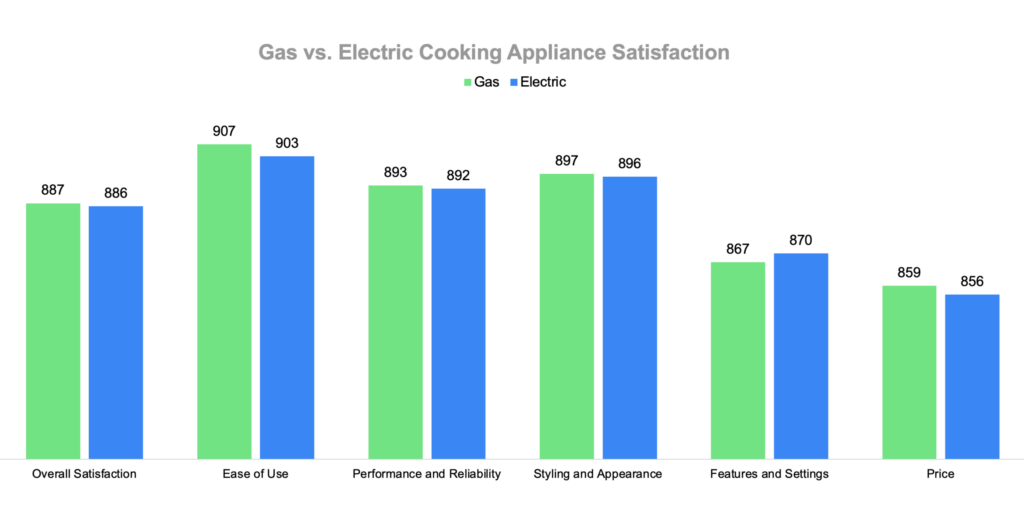
As Federal and Local Governments Weigh Gas Appliance Legislation, Do Consumers Have a Strong Preference for Gas over Electric? 

Gas stoves have emerged as a hot button issue in political circles following a recent announcement by the U.S. Department of Energy’s Consumer Product Safety Commission, which discussed possible regulation of gas stoves, and moves by state legislators, such as those in California, Colorado, New York and Washington, to restrict the use of gas appliances in all new home construction.
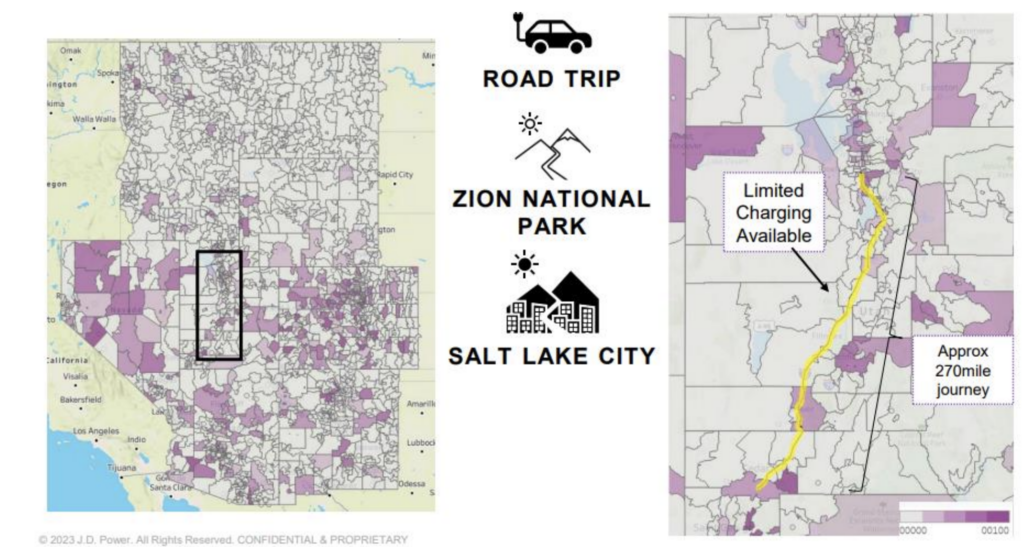
Desert Highway|a graph |zip code level infrastructure highlights charging gaps|Graph showing limited EV charging options in Utah

News

Is U.S. EV Infrastructure Ready for the Great American Summer Road Trip? It Depends on Where You Want to Go.

Some 43.2 million people jumped in their cars for a summer road trip this July 4 weekend, according to AAA data, an increase of 2.4% during the past year and 4% higher than 2019. With record crowds continuing to swarm the nation’s national parks, hot spots like Zion, Yellowstone, Arches and others have made the western U.S. the ultimate destination for the Great American Road Trip. Which begs the question: Can you conquer the epic Western journey in an electric vehicle (EV)?
ev image|rejection chart|graph2|graph3|chart four

News

EV Divide Grows in U.S. as More New-Vehicle Shoppers Dig in Their Heels on Internal Combustion

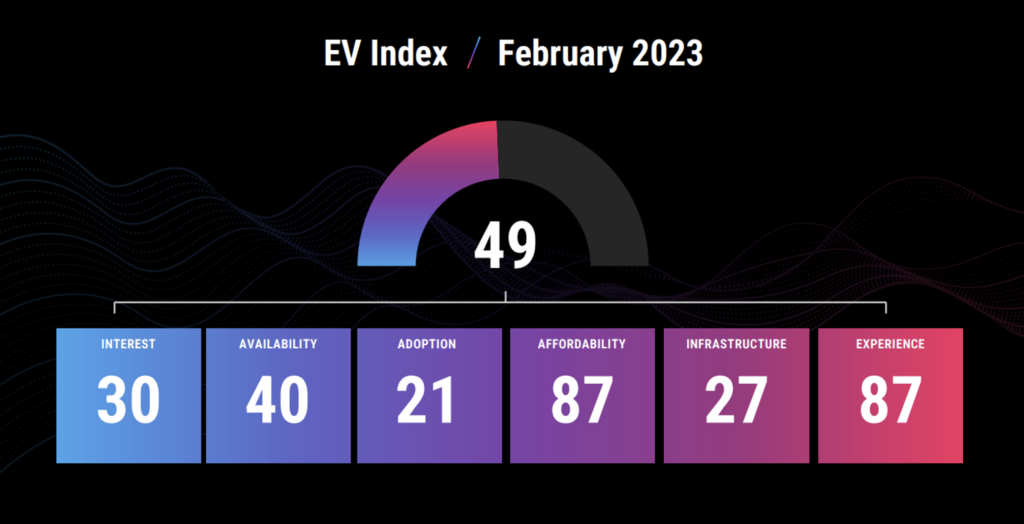
E-Vision Intelligence ReportApril 2023EV Divide Grows in U.S. as More New-Vehicle Shoppers Dig in Their Heels on Internal CombustionKey FindingsEV Holdouts Become More Resolute: Despite recent growth in electric vehicle (EV) market share, the percentage of U.S. consumers who say they are “very unlikely” to consider an EV for their next vehicle purchase has been growing steadily for the past three months, reaching 21% in March.Charging Infrastructure and Purchase Price Remain Biggest Barriers to Adoption: The top five reasons vehicle shoppers give for not considering an EV are all focused on public charging infrastructure and vehicle pricing.Ambiguity on Incentives Creates Challenges: New criteria introduced by the Internal Revenue Service (IRS), which limit tax credits on the sale of new EVs based on details of the chemical composition of their batteries, will reduce the affordability of EVs, potentially limiting future sales.Executive SummaryIt’s not all sunshine smooth sailing on the road to the EV future. While the long-term trend in EV market share has grown significantly from 2.6% of all new-vehicle sales in February 2020 to 8.5% in February 2023, sales hit a speed bump in March, with monthly market share falling to 7.3%. Although some month-to-month volatility is to be expected, a closer look at the barriers to EV adoption shows that many new vehicle shoppers are becoming more adamant about their decision to not consider an EV for their next purchase.According to new data from JD Power, this steady increase in the percentage of consumers who say they are “very unlikely” to consider an EV for their next vehicle purchase reflects persistent concerns about charging infrastructure and vehicle pricing.This E-Vision Intelligence Report dives into key data points trending in each monthly EV Index update, along with other data points gathered from JD Power studies and pulse surveys, to spotlight emerging trends and important shifts in EV consumer sentiment.Rise of the EV HoldoutsTop-line metrics on overall EV market share, availability and affordability have been on a long-term upward trend, but beneath those headline numbers we are starting to see some consumer behaviors that suggest a possible bifurcation of the automotive marketplace. Notably, when it comes to the percentage of new-vehicle shoppers who say they are “very likely” and “very unlikely” to consider an EV, the number of EV holdouts is growing more. As of this month’s report, 21% of new-vehicle shoppers say they are “very unlikely” to consider an EV, up from 18.9% in February and 17.8% in January. Meanwhile, the percentage of auto shoppers who say they are “very likely” to consider an EV is 26.9% and has been largely flat for the past three months.Charging Infrastructure, Price and Demographics All Play a RoleDigging deeper into the primary barriers to EV purchase consideration, we find remarkable stability in the top reasons consumers provide for sticking with internal combustion engine (ICE) vehicles. Lack of public charging infrastructure and price have been the top two concerns for the past 10 months, along with related issues involving range anxiety, time required to charge and power outage and grid concerns. Recent high profile infrastructure initiatives, such as Walmart’s plan to dramatically expand its charging network and Tesla’s announcement that would open some of its supercharger network to non-Tesla vehicles have apparently had little effect on these consumer concerns, at least so far. Demographics are also playing a role in these results. While it may not be surprising that the majority of Boomers[1] and Pre-Boomers aren’t considering EVs, fully one-third (33%) of Gen Z shoppers—the future of the marketplace—say they’re “somewhat unlikely” or “very unlikely.” It is clear in the data that price and charging infrastructure are significant obstacles for a wide spectrum of potential customers.New Tax Credit Rules Create ConfusionConsumer interest in EVs is heavily swayed by price, with our data consistently showing a clear correlation between consumer demand and government incentives, lease deals and manufacturer price cuts. Recently, that relationship has driven a surge in interest in vehicles like the Ford Mustang Mach-E and Tesla Model Y, which were reclassified as SUVs and became eligible for $7,500 federal tax credits under the Inflation Reduction Act (IRA).In mid-April, the IRS and the U.S. Treasury Department issued new guidance on specific vehicle requirements that need to be met before EVs can be eligible for these tax credits. These include the location where the vehicle is assembled and details on the sourcing of critical minerals used in the construction of vehicle batteries. On this last point, batteries and components must originate in the United States or come from countries with which there is a free trade agreement for the vehicle to qualify. This new hurdle will affect the affordability of several EV models, while also likely introducing more confusion among buyers. While we cannot yet forecast the exact effect this new guidance will have on EV adoption, our data suggest that higher prices will negatively affect EV sales. MethodologyThis JD Power E-Vision Intelligence Report is based on data and insights from the JD Power EV Index and the JD Power EV Consideration pulse survey. The JD Power EV Index is an analytics tool to benchmark the growing EV market in the United States. It tracks millions of data points aggregated into six categories—interest, availability, adoption, affordability, infrastructure and experience—to evaluate the progress to parity of EVs with ICE vehicles in the U.S. Each month, JD Power’s electric vehicle practice will analyze these data points, and others to spotlight emerging trends and important shifts in consumer sentiment that are helping to define the fast-moving EV marketplace. Find out MoreThis report was authored by Elizabeth Krear, vice president, electric vehicle practice; Brent Gruber, executive director, electric vehicle practice; Stewart Stropp, executive director, electric vehicle practice; Kristen Richter, senior manager, electric vehicle practice; and Karlo Vukobratovic, analyst, electric vehicle practice, JD Power. The JD Power E-Vision initiative is a company-wide program focused on maximizing JD Power industry-leading EV data, analytics, insights and solutions. Please contact us at the numbers below to connect with the authors or to learn more about the underlying research. Media ContactsShane Smith; East Coast; 424-903-3665; [email protected] Effler, JD Power; West Coast; 714-621-6224; [email protected] [1] JD Power defines generational groups as Pre-Boomers (born before 1946); Boomers (1946-1964); Gen X (1965-1976); Gen Y (1977-1994); and Gen Z (1995-2004). Millennials (1982-1994) are a subset of Gen Y.
painting

News

Do-It-Yourself Nation: How Inflation is Influencing Home Improvement and Retail Spending

Inflation may turn all of us into followers of Bob Villa, the famous home improvement do-it-yourselfer. The persistent high cost of goods has everyone thinking about how they can tighten their belts. It turns out that for some, according to the latest JD Power data, that might mean adjusting their tool belts, as they get set to paint their walls or install their cabinets to save some cash.
Government

News

What Will Customer Service Look Like in a Clinton or Trump Administration?

Amid the reality-TV style coverage of the presidential election this year, it’s easy to forget that, at the end of these campaigns, Hillary Clinton or Donald Trump will have a government to run. Although President Obama’s Executive Order 13571 is aimed at improving the customer experience, there is still important work to do in order to give constituents the service they deserve from Federal agencies.

Displaying 12 of 12 insights