What percentage of Europe’s new light vehicle market will electric vehicles (EVs) account for this year? Autovista24 editor Tom Geggus and special content editor Phil Curry discuss EV Volumes’ forecast in the Automotive Update podcast.

This episode unpacks the latest update from EV Volumes’ forecasting team. Listen now for key insights into new EV sales in Europe, alongside projections for the region’s big five markets. Which factors could most affect sales of electric models in the future?

Subscribe to the Autovista24 podcast and listen to previous episodes on SpotifyApple and Amazon Music.

Growth forecast for Europe

The light-vehicle market, made up of passenger cars and light-commercial vehicles (LCVs), increased by a modest 0.9% in Europe during 2025. However, several factors have recently affected forecasts for the years ahead.

EV Volumes forecasts that light-vehicle sales in Western and Central Europe will grow by 2.6% year on year in 2026. This is higher than in its March 2026 forecast, which projected a 0.1% increase.

Yet at 15.5 million units, this is far below the 18 million light vehicles registered in 2019. Moreover, it is not expected that volumes will return to that level within the current forecast horizon to 2040.

Light-vehicle sales are then projected to increase in 2027. However, this hinges on a complex interplay of regulatory and economic factors. Additionally, slight dips in demand are expected in 2030 and 2035. This will come as demand is pulled forward into 2029 and 2034, triggered by stricter EU emissions targets.

Policy push for EVs in Europe

A number of new policies have been proposed or passed in recent months, which could impact European light-vehicle markets. These may apply especially to EVs, made up of battery-electric vehicles (BEVs) and plug-in hybrids (PHEVs).

In February 2026, the EU Commission approved the new End‑of‑Life Vehicles Regulation (ELVR). This requires manufacturers to use more recyclable or reusable materials in new cars and vans.

Work also continues on European-first regulation. This could allow only EVs manufactured in Europe, consisting of at least 70% locally-sourced components, to qualify for subsidies and public procurement.

Meeting emissions targets and circularity requirements will require a major increase in EV sales, according to EV Volumes’ forecasting team. This could trigger competitive pricing cuts, supported by lower lithium costs. Carmakers may also restrict the supply of internal-combustion engine (ICE) vehicles to avoid costly emissions fines.

Impact of the Automotive package

On 16 December 2025, the European Commission unveiled its Automotive Package. This introduced a revised CO2 reduction pathway and compliance mechanisms for the 2030 to 2035 period.

If passed, from 2035, carmakers will need to cut tailpipe CO2 emissions of passenger vehicles by 90% against 2021 levels. This is instead of the original 100% planned cut. The remaining 10% could be offset through low-carbon steel, e-fuels, or biofuels.

This means PHEVs, extended-range electric vehicles, hybrids, and even traditional ICE models, could be bought new beyond 2035. This would be alongside BEVs and hydrogen fuel-cell vehicles.

The package also suggests greater flexibility for the 2030 target. Manufacturers would have a three-year compliance period between 2030 and 2032 to achieve the 55% reduction compared to 2021.

Additional proposed measures include updated labelling rules covering EV range and energy consumption. There may also be ‘super credits’ for small, affordable EVs produced in the EU. Additionally, a €1.8 billion battery support package is proposed to accelerate the European battery value chain.

Further EV growth forecast

Assuming measures are adopted as outlined, EV Volumes forecasts that EVs will account for 56.7% of European light-vehicle sales by 2030. This will increase to 83% by 2035, and 95.1% by 2040.

These projections assume emissions balancing between 2030 and 2032 and continued alignment of national policies. Some markets, such as Norway, Denmark, and the Netherlands, are likely to maintain stricter targets.

The UK is not subject to the EU’s automotive package. It currently plans for an effective ban on new petrol and diesel passenger cars by 2030.

However, the country’s zero-emission vehicle (ZEV) mandate has been under pressure in recent months, due to missed overall targets. There are calls for the legislation to undergo an urgent review, ahead of a planned consultation next year. Yet no official announcement has been made.

Europe’s big five expect growth

Europe’s largest five markets have all seen differing performances across their new light-vehicle markets in recent years. This is likely to continue, according to EV Volumes’ latest forecast.

France experienced a 5.1% drop in combined sales of passenger cars and LCVs in 2025. This is set to turn around in 2027 with a 1.1% rise. Volumes will continue to improve until 2030, when the market is forecast to experience a 0.8% decline.

However, after three years of marginal share improvement, EVs will see their hold of the overall market in France leap. The technology is forecast to achieve a 31.3% share this year, up from 23.8% in 2025.

This share will continue to rise, reaching 55% by 2030, and 83.7% by 2035. EVs are then expected to make up 95.4% of new-vehicle sales by 2040.

Meanwhile, Germany’s light-vehicle market will only see marginal gains until 2030, including a 1% increase in sales this year. At the start of the next decade, volumes will fall 1.3% but will then continue to improve until 2035.

The country saw a dip in the market share of EVs in both 2023 and 2024, as incentive schemes came to an end. However, the powertrain group picked up in 2025, although still below the 29.2% share recorded in 2022.

This will change in 2026, with EV Volumes forecasting a share of 35.8%, rising to 60.4% by 2030. This EV hold will continue to increase, hitting 89.2% by 2035, before levelling out to 96.7% in 2040.

Italy and Spain embrace EVs

Italy’s new light-vehicle market saw a decline in 2025, but can expect a 6.1% increase in volumes this year. Like other markets, volumes will continue to improve for the rest of this decade, before dipping in 2030.

But the country has been the slowest adopter of EVs among the EU’s big five. Like Germany, the country experienced a dip in market share during 2024. But it bounced back in 2025, and is forecast to reach 17% of the overall market in 2026.

This trend should continue, hitting 40.1% in 2030. This is the lowest market share amongst Europe’s major markets, however. The theme continues, with a hold of 65.8% in 2035, before EVs take 90.3% of new light-vehicle sales in 2040.

Spain’s new light-vehicle market has been the most stable of Europe’s big five in recent years. The market is forecast to improve by 6% this year, with growth continuing until a marginal 0.4% decline in 2030.

Spain has begun to embrace EVs, although its shares are still below those of France, Germany and the UK. Like other continental markets, its shares dipped in 2024. The country bounced back last year, and for 2026, a hold of 22.1% is forecast. This should improve to 47.9% by 2030, before reaching 78.8% in 2035, and achieving a hold of 93.5% by 2040.

UK growth will miss target

New light-vehicle sales in the UK should jump by 4% this year. Like other markets in Europe’s big five, it is expected to grow further until a 1.1% decline in 2030.

The country has a ZEV mandate in place, with target market shares for BEVs and fuel-cell vehicles. However, EV Volumes forecasts a 0% share for hydrogen models through to 2040, placing the mandate responsibility on BEVs alone.

Different shares are targeted for passenger cars and LCVs. In the first two years since the legislation was adopted, the market has failed to meet targets on either vehicle type. This has led to calls for an earlier consultation on the mandate.

The UK is expected to hit a combined light-vehicle EV share of 38.3% this year. The hold is expected to increase to 69.5% by 2030, reaching 94.4% in 2035. The market should see 98% of sales coming from EVs by 2040.

However, in isolation, the BEV passenger car market is forecast to continue falling short of ZEV mandate targets. All-electric models are forecast to account for 27.4% of the market this year, below the 33% requirement.

EV Volumes forecasts a 32.3% hold in 2027, lower than the mandated 38%. In 2030, when the UK government requires 80% of new-car sales to be zero-emission, 60.7% of the total is forecast to come from BEVs.

The LCV sector will fare even worse. EV Volumes forecasts an 11.6% share this year, well below the expected 24% in the ZEV mandate. By 2030, when a 70% hold is required, the latest data suggests just 35.7% of all new van sales will be zero-emission.


The EU new-car market was boosted by a mix of established and new brands in May. But how important is the role of these newcomers in sustaining growth in 2026? Autovista24 special content editor, Phil Curry, explores the figures.

The EU recorded registration growth of 3.2% in May, which was helped by newer groups and brands entering the market. Data from industry association ACEA revealed that while leading marques lost volume, these drops were stabilised by results elsewhere.

This indicates that the increasing brand diversity in the EU is helping, rather than hindering the market. Providing more choice to buyers is facilitating change, rather than hesitancy or brand fatigue.

Yet while emerging carmakers continue to grow in the EU, it is the more established players that led the market in May. Despite declines or stagnation, it could be some time before competition from new players can truly be seen.

Volkswagen Group tops EU market

Volkswagen (VW) Group once again topped the sales chart, as its dominance of the EU automotive market continued in May. With 254,011 deliveries in the month, its 26.6% market share continued to lead. However, the group suffered a 3.6% fall in volumes year on year. This also meant its share of overall registrations dipped by 1.9 percentage points (pp).

After five months of 2026, VW Group led the way with 1,267,224 units. It was the only manufacturer group to break the one million registrations barrier. This was a 1.5% increase year on year, although its 26.7% market share was down 0.7pp.

Stellantis also struggled in May, as volumes decreased 2.6%, to 146,381 deliveries. The carmaker held 15.3% of total registrations in the month, a fall of 0.9pp.

The decline was driven by losses from its Peugeot and Citroen brands, which saw volumes dip 12.5% and 4.4% respectively. A strong result for Fiat, which saw a 22.9% increase, helped to offset further losses.

Between January and May, Stellantis saw its new-car deliveries improve by 5.7%, with 794,708 registrations. The marque was the only established group to experience a market share boost in the period, with its 16.7% hold up 0.2pp.

Renault Group saw a slight decline of 1.3% in May, with 100,507 registrations recorded. This result led to a 0.5pp decrease in market share. After five months of 2026, the group’s deliveries were 6.2% down, with results earlier in the year hampering its performance. This led to a 1.1pp drop in share, to 10.2%.

Overseas establishment struggles

Hyundai Motor Group was the fourth-best manufacturing conglomerate in May, with 69,204 deliveries. This was a 1.3% decline compared to May 2025, while its 7.2% market share was down 0.4pp.

Between January and May, the group saw a 2.7% drop in registrations, as it reached 334,422 units. While the Korean group held 7% of the market after five months, this was still a decline of 0.5pp.

Toyota Group saw 67,162 registrations in May, a small drop of just 0.7%. Despite having the second-best-selling brand in the EU with Toyota, its overall deliveries were not enough to lift it higher in the table. After five months, Toyota Group saw registrations drop 2%, with 335,973 units, and a 7.1% share.

Newer brands play their part in EU figures

Geely Group, including Volvo, Polestar, Smart, LEVC and Lotus, as well as Geely, Geely-Emgrand, Lynk & Co and Zeekr, improved in May. Deliveries rose by 9.9%, totalling 27,801 units. This was enough for a 2.9% market share, up by 0.2pp.

However, after five months, the group only saw a 2.7% improvement year on year. This meant its share of the market dropped by 0.1pp, as it held 2.6%.

Meanwhile, Chery Automobile, made up of Chery, Jaecoo, Omoda and Jetour, experienced a big jump in registrations. With 16,282 deliveries in May, it saw a 239.6% spike as its brands grew in popularity. This provided a 1.7% market share, up 1.2pp.

Chery saw a 265.2% improvement in registrations between January and May. With 65,621 units delivered, its 1.4% share was up by 1pp compared to the same period in 2025.

VW dominates again

Once again, the best-selling brand in the EU was VW. With 103,124 registrations in May, it experienced a 6% decline but still held a market share of 10.8%. This was a drop of 1pp, as competition elsewhere continued to dilute the market.

Toyota came in second with 62,592 deliveries, down 0.3% decline compared to May 2025. It also experienced a market share drop of 0.2pp, as it held 6.6% of the EU total.

Skoda also underwent a 0.3% fall in the month, as 62,343 units took to the EU’s roads. This was good enough for a 6.5% share, down 0.3pp. Meanwhile, BMW placed fourth, with 54,788 registrations. This was a 0.2% increase, although its 5.7% weakened by 0.2pp.

While Renault also struggled, the brand did round out the top five in May. In total, 54,460 models were delivered to customers, a 1% decline year on year. This led to a 0.2pp fall in market share, with the carmaker securing 5.7% of total registrations.

A leap in popularity

The two biggest jumps in registrations came from emerging brands. Leading the way was Leapmotor, which saw its volumes rise 447.3%. The result equated to 8,856 units being delivered to customers.

Although only holding 0.9% of the overall market, this was up by 0.7pp. Leapmotor’s performance in May meant it took a greater share than the likes of Porsche, Lexus, Honda and Alfa Romeo.

Meanwhile, BYD placed higher, although its volume growth was less than that of Leapmotor. With 26,017 units, the brand saw an improvement of 158.8%. This was good enough for 2.7% of the overall market, a 1.6pp rise year on year. This put the carmaker ahead of Ford, Nissan and Mini.

No change at the top

After five months of 2026, VW continued in its role as the best-selling EU brand. With 500,494 deliveries, it dominated thanks to a 10.5% market share. However, this equated to a volume decrease of 3.8% compared to the same period last year.

Skoda was second, with an 11.9% boost in deliveries despite its May result. Its 322,142 registrations were good enough for 6.8% of the overall total. Toyota placed third with 313,282 registrations, slightly closing the gap to Skoda following May’s deliveries. It held 6.6% of the market overall.

May delivered another month of growth for the EU new-car market. But while electric vehicle (EV) sales remained strong, some larger markets saw weaker results. Autovista24 content specialist James Roberts assesses the latest data.

In May, 955,013 new cars were registered in the EU, according to the latest ACEA data. This equated to a 3.2% year-on-year increase in volumes. The month saw 20 of the 27 EU member states record overall market growth. However, while some of the bloc’s larger markets saw a welcome boost, others faltered.

May’s strong result helped facilitate a generally positive performance for the EU new-car market in the year to date. Five months into 2026, 4,748,801 new vehicles were sold. This ensured a 4% year-on-year lift.

Mixed EU market fortunes in May

Despite a fourth consecutive month of increased registrations, Germany, the bloc’s largest market, underperformed in May. With fewer working days than in May 2025, the country’s new-car market recorded just 0.1% growth. This followed the official rollout of new EV incentives.

Spain encountered a rare monthly decline in May. Increasingly recording positive results, the country’s new-car market dipped by 0.8%. Thanks to earlier results, it saw registration growth of 5.8% across the first five months of the year.

As Spain faltered, the previously stuttering French new-car market returned from the doldrums in May. Recording a second consecutive month of growth, registrations rose 3.7%, as battery-electric vehicle (BEV) sales in particular, provided a boost.

Similarly, Italy enjoyed BEV uptake in May. The country’s overall new-car market saw a 7.6% lift. Following a difficult 2025, this helped support a year-on-year volume increase of 9.4% in the year to date.

BEVs closing the gap

May saw 203,417 new BEVs join EU roads. This marked a unit increase of 42.9% year on year. It also helped the powertrain capture 21.3% of the market, just 0.7 percentage points (pp) behind petrol‘s share. As ACEA noted, this reflects the positive effect of the region’s patchwork of tax benefits and new EV purchase incentives.

After five months of the year, BEV volumes stood at 950,521. This 35.7% upswing helped carve out a market share of 20%, the highest so far in 2026, up 4.7pp year on year.

Of the EU’s larger markets, France witnessed a 92.7% spike, as 37,412 new all-electric vehicles joined the country’s roads. The powertrain was also integral to growth in Italy, with an 86.5% year-on-year improvement.

Meanwhile, the Netherlands’ BEV sector received a jolt. Volumes increased 22.4% year on year, up from 10,103 units to 12,363. However, after five months of the year, the Dutch BEV market was down 9.7%, compared with 12 months prior.

Amid recently announced EV incentives, Ireland enjoyed a BEV registration uplift. In May 2,328 new all-electric cars took to the nation’s roads. This marked a 114.4% year-on-year lift, aiding a 53.8% rise in the year to date. Croatia continued its impressive BEV market growth. May ensured a bumper 494.5% year-on-year increase, underpinning a small but vibrant marketplace.

A notable contrast to trending BEV growth was seen in Poland. May marked a rare and sizeable year-on-year drop in volumes. A total of 2,015 deliveries was down 28.5%, however, after five months of the year, BEV registrations were up 28.2%.

Steady EU PHEV demand

A total of 98,553 plug-in hybrid vehicles (PHEVs) joined EU roads in May. This ensured a 12.2% year-on-year increase, plus a 10.3% market share, up 0.8pp compared with 12 months prior. Spanning the opening five months of the year, PHEV popularity remained sturdy. A total of 460,217 registrations returned a 9.7% market share, up 1.4pp.

Combining strong BEV figures with steady PHEV volumes once again ensured the combined EVs outperformed internal-combustion engine (ICE) sales. May saw 301,970 new EVs reach EU customers, outselling a combination of petrol and diesel vehicles, which totalled 279,865. This meant EVs took a 31.6% market share, 2.3pp ahead of ICE models.

After five months of 2026, the ICE share in the EU’s new-car market remained just 0.4pp ahead of EV totals. June’s new-car market figures could show plug-in vehicles surpassing ICE models.

Hybrids on top but levelling out

Long established as the EU’s new-car powertrain of choice, hybrids, including mild and full-hybrid versions, led the way in May. However, marginal declines in its overall new-car market share continued as EV uptake increased.

May saw 345,427 new hybrids take to the EU’s roads. This ensured a 9.7% year-on-year increase, maintaining its position as the bloc’s dominant powertrain with a 36.2% hold, up 2.2pp. However, since February, the presence of hybrids in the EU market has followed a downward trend.

Between February and May, hybrid’s EU new-car market share slipped from 38.7% to 36.2%. The big question is how much further it could slide throughout the remainder of 2026.

ICE falls amid petrol resilience

The decline of ICE powertrains, made up of petrol and diesel-powered cars, has become an established EU new-car market trend.

In May, just four of the 27 EU member states saw petrol registration growth. Overall, 210,383 new vehicles were powered by the fuel in the month, a 20.1% year-on-year fall. Despite this, petrol still achieved a relatively strong 22% market share, 0.7pp above BEVs, albeit down 6.4pp year on year.

Between January and May, 1,065,071 new petrol vehicles were registered in the EU, a year-on-year fall of 18.2%. Despite a market share decline of 6.1pp to 22.4%, it remained the EU’s second most popular new-car option.

Diesel’s decline continued in May. 69,482 new cars left the EU’s forecourts, marking a 19% year-on-year volume drop and returning a market share of 7.3%.

Across the first five months of the year, diesel sales reached 361,971, down 16.6%, dropping its market share 1.9pp to 7.6%. In this period, just Bulgaria, Czechia, Estonia and Malta recorded year-on-year improvements.

New-car ICE totals, combining petrol and diesel registrations, amounted to 1,427,042 between January and May. This equated to a 17.8% slide, and just 16,304 units above EV volumes. So, new ICE vehicles took a 30.1% market share in the year to date, just 0.4pp above new EV sales. The coming months are likely to see a further shift in this crucial EU new-car market dynamic.

Austria’s new electric vehicle (EV) market was previously supported by purchase subsidies. But without their help in 2026, are other incentives sustaining demand? Tom Hooker, Autovista24 journalist, reviews the market.

Purchase subsidies can be a major driver in boosting EV sales. This is especially true within the private sector. Austria’s EV market has previously benefited from such a scheme.

However, the federal government ended EV subsidies in February 2025 due to budget exhaustion, the European Alternative Fuels Observatory reports. The body also states that from 1 April 2025, battery-electric vehicles (BEVs) were no longer exempt from motor-related insurance tax.

Additionally, the rate of public EV charging infrastructure installation in Austria has slowed, as confirmed by EV Volumes. Their data reveals the number of locations a connector type can be found, reflecting charger variety.

By this metric, there were 20,723 public EV charging locations recorded in the country in May this year. This was equated to year-on-year growth of 14.3%. Meanwhile, May 2025 recorded an increase of 24%.

Prevailing EV growth

Despite these factors, EV sales, including BEVs and plug-in hybrids (PHEVs), grew across the first four months of 2026.

According to the latest EV Volumes’ data, deliveries in Austria increased by 27.3% year-on-year from January to April. In total, 35,604 units were sold.

This outpaced the overall new-car market, which recorded a 15.3% improvement in the first four months of the year, as reported by Statistik Austria.

Broken down, PHEVs saw a greater improvement than BEVs from January to April. The hybrid technology enjoyed a 37.6% year-on-year rise in volumes to 11,190 units. Meanwhile, all-electric models managed a 23% increase to 24,414 deliveries.

However, the opposite trend occurred in April. BEVs benefited from a 24.8% growth year on year, ahead of the 17.7% gain by PHEVs. Together, overall EV sales growth sat at 22.6% in April, ahead of the overall market’s 10.7% increase.

Attractive EV benefits

One reason for this growth may be other ongoing financial incentives, such as BEVs’ exemption from registration tax.

There are also significant benefits for companies. This includes immunity from ownership and pollution taxes for zero-emission vehicles. Additionally, companies may fully deduct VAT for BEVs priced up to €40,000. Partial deductions are available for vehicles where prices range between €40,000 and €80,000.

Alongside this, while Austria’s government no longer offers purchase subsidies, it is investing in charging infrastructure.

A programme from the Federal Ministry of Innovation, Mobility and Infrastructure, eMove Austria, has allocated around €220 million to e-mobility in 2026. Furthermore, the ministry will invest €30 million in constructing fast-charging stations in rural, underserved areas this year.

In the future, the funding structure will focus on the expansion of charging locations. Ultimately, with these investments, the number of charge points in Austria could see significant growth. In turn, this may convince more buyers to switch to EVs.

Tesla Model Y leads the way

The Tesla Model Y was the most popular option over the first four months of 2026. The crossover recorded 2,047 sales between January and April. It comfortably led the BEV market and held more than double the deliveries of Austria’s leading PHEV.

The Model Y accounted for 5.7% of all new EV sales in the country. Meanwhile, its sibling, the Tesla Model 3 made up 1.5%. The sedan placed ninth in the cumulative table with 538 units, although it did not make April’s top 10.

Meanwhile, the BYD Atto 3 enjoyed the best year-on-year growth of any BEV in April’s top 10. With 241 sales, this represented an increase of 1,105%. While the model placed outside the cumulative top 10, its sibling, the Sealion 7, sat seventh with 775 sales.

Skoda’s high-volume SUVs

The second-best-selling BEV in Austria between January and April was the Skoda Elroq. The SUV recorded 1,493 deliveries, followed by its bigger sibling, the Enyaq, which managed 1,268 sales. The duo were also the top two best-selling BEVs in April, helped by double-digit year-on-year growth.

Four more models from the Volkswagen (VW) Group appeared in the cumulative table. The VW ID.3 finished fourth, with 866 units, as the VW ID.7 secured sixth with 789 sales.

Further down the table, the VW ID.4 landed in eighth with 664 units, while the Audi Q6 e-tron rounded out the table in 10th. The SUV recorded 531 sales between January and April.

The BMW iX1 posted 806 sales between January and April. This helped its rise to fifth position, splitting the two most-popular VW models.

A turbulent PHEV market

The VW Golf was Austria’s best-selling PHEV between January and April. However, this year has not been straightforward for the hatchback. While its 839-unit total translated into a leading 7.5% market share, just 115 of these sales occurred in April. This was only enough to put it 10th in the month’s best-sellers table.

Its closest competition came from within the VW Group stable, namely the Cupra Terramar. The SUV posted 685 deliveries in the first four months of the year, while it led April’s monthly standings. The VW Multivan came second in the month, bringing its sales total to 511 from January to April. This was enough for fifth in the cumulative chart.

It was the BYD Seal U that followed the VW Group models after four months of 2026, with 563 units. However, like the VW Golf, the SUV also struggled in April, placing outside the top 10. Yet BYD still secured fifth and eighth in the month, courtesy of the Seal 6 and the Atto 2, respectively.

The Jaecoo J7 was the fourth best-selling PHEV from January to April, thanks to 520 sales. This was helped by a strong monthly result, where the model took third.

Between January and April, the Ford Kuga came sixth with 497 units. The Mercedes-Benz GLC claimed seventh, reaching 450 deliveries, just 10 units ahead of the MG eHS. Rounding out the top 10 were the Volvo XC60 and the BMW X3, with 428 and 411 sales, respectively.

 New electric vehicle (EV) sales in the Netherlands grew year on year in April. However, while plug-in-hybrids (PHEVs) proved popular, battery-electric vehicles (BEVs) sales struggled. Autovista24 content specialist James Roberts reports on a market facing challenges in 2026.

In April, a total of 15,826 new EVs, made up of BEVs and PHEVs, were sold in the Netherlands, according to the latest data from EV Volumes. This marked a 5.2% year-on-year increase, up from 15,040 units 12 months prior.

Despite this apparently positive trend, the country’s EV powertrain breakdown unearthed a stagnant marketplace. Between January and April, a total of 61,549 new EVs were sold in the Netherlands. This was down 3.1%, compared with the 63,513 sales recorded in the same period last year.

Sluggish BEV demand

Across Europe, many larger markets have seen a significant increase in BEV deliveries. In the Netherlands, however, April’s year-on-year improvement amounted to just 0.9%. This was achieved with 9,628 new sales, according to EV Volumes.

The first four months of the year confirmed the weakness of the country’s BEV market. In this period, 34,657 new all-electric models made their way onto the road, an 18.5% year-on-year slide.

Despite a smaller volume, PHEV sales rose 12.8% year on year in April. In total, 6,198 units were delivered, up from the 5,495 12 months prior. Four months into 2026, PHEV volumes were up year on year. A total of 26,892 sales provided a 28.1% lift.

Dutch EV drop part of bigger picture

The Netherlands’ wider new passenger car market is being impacted by broader economic factors. This includes rising new vehicle costs, as revealed by RAI Vereniging and BOVAG in their 2025 to 2026 report. They state that: ‘the average purchase price has risen to €50,110 due to the rise of larger and electric models.’

The market is also influenced by its fleet and company car channel, which accounts for a sizeable share of sales. Therefore, leasing dynamics and changes in taxation have a considerable impact on market behaviour compared with some other European markets.

‘For company cars, the reduced benefit-in-kind rate for BEVs remains supportive, especially given the importance of the fleet market in the Netherlands,’ stated Joanna Fabiszewska-Solares, market analyst at EV Volumes.

Across the first four months of 2026, BEV sales were down year on year in the Netherlands. This followed the phasing out of private EV subsidies, coupled with the removal of key tax incentives. This has increased EV ownership costs. Meanwhile, a pull forward of demand into late 2025, exacerbated by expiring tax benefits, weakened the base comparison in 2026.

‘From an EV perspective, BEVs continue to benefit from a reduced motor vehicle tax (MRB),’ added Fabiszewska-Solares. ‘Although the advantage is gradually being phased down until the full rate applies from 2030. PHEVs have already lost most of their tax benefits and are subject to the full MRB rate from 2025 onwards.’

In April, electrive reported on Dutch government plans to introduce a scrappage scheme. It looks to offer around €3,500 to low and middleincome buyers of used EVs who trade in older internal-combustion engine vehicles. Expected to launch in late 2026, the measure aims to boost EV uptake and affordability while accelerating the removal of higheremission cars.

Skoda on top in April

A total of 690 sales slotted the Skoda Elroq at the top of April’s best-selling BEV chart. This was the best result of 2026 so far for a model which led the Netherlands’ BEV market in 2025. It landed above the second-place Kia EV3, which also posted a volume high for the year with 527 sales.

Indicative of the Netherlands’ wider BEV market, both models witnessed year-on-year volume and market share declines in April.

The Elroq experienced a volume drop of 18.2% in the month. This eroded its overall monthly market share to 7.2%, down 1.6 percentage points (pp). Similarly, the EV3 witnessed a 39.6% slide in volumes. In turn, this resulted in a 5.5% share of the BEV market, falling 3.6pp.

Despite this stutter in April, both models sat well in the cumulative BEV top 10. Between January and April, the Elroq moved 1,687 units, placing it third with a 4.9% market share. The EV3 matched this market share, albeit with 1,705 sales, pipping the Czech car to second place.

Tesla leading the EV market

The Tesla Model Y ended 2025 as the third most popular BEV in the Netherlands, behind the Elroq and EV3. In April 2026, it saw 357 sales, taking fifth. However, more telling was its cumulative place in the rankings.

Between January and April, the US model shifted 1,979 units. This put it at the top of the all-electric sales charts with a 5.7% market share. It was joined in the cumulative top 10 by the Tesla Model 3, which sat sixth after four months of the year, tallying 1,111 sales.

Best of the rest

Market newcomer, the Toyota C-HR+ emerged as the Netherlands’ third best-selling BEV in April. In its third month recording deliveries, the compact SUV reached 390 sales, emerging as a potential disruptor.

The Volvo EX40’s pan-European appeal was reflected in the Netherlands. A 57.2% year-on-year volume lift equated to 360 units and a 3.7% market share, up 1.3pp. The Swedish BEV claimed seventh in the cumulative rankings, ahead of the Volvo EX30.

The combined total of the Renault 5 and Alpine A290 took seventh in April. Despite a 17.1% year-on-year drop, it continued a 17th consecutive month of triple-digit sales volumes. Four months into 2026, it took fourth with 1,267 units and a 3.7% market share.

April saw the Hyundai Inster claim eighth with 278 sales, followed by the Audi Q4 e-tron with 234 units. The latter underwent a 20.9% year-on-year drop in deliveries, whereas the Volkswagen (VW) ID.3 saw a 175.3% upswing to 223 sales, taking 10th.

Ford forges ahead with PHEV

The Ford Kuga led the Dutch new PHEV market in April. The venerable PHEV saw a 44.1% year-on-year volume increase in the month, its 448 sales carving out a 7.2% market share, up 1.5pp.

As a result, the Kuga was the best-selling PHEV after four months of 2026. It stayed ahead of the second-place Skoda Kodiaq iV. The Czech model chalked up 1,679 sales between January and April, despite a 23.5% drop in deliveries during April.

The VW Tiguan also underwent a double-digit year-on-year sales slide in the month. Its 309 sales were down by 18.5%, putting it third in April. It took the same position in the cumulative table, with 1,126 units and a 4.2% market share.

While one VW PHEV struggled in April, another made waves. The VW Tayron managed 279 sales with a 156.6% year-on-year uplift, putting it in fifth. It was followed by the Audi Q3 in sixth.

PHEV market newcomers make impact

In unison with many European PHEV markets, offerings from Chinese carmakers are emerging as major players in the Dutch sector. After four months of 2026, both BYD and Jaecoo models ranked higher than BMW and Mercedes-Benz PHEVs in the Netherlands.

April saw a monthly high for the BYD Seal U. Its 230 units marked a 75.6% year-on-year unit upswing. More significantly, it resulted in the mid-sized SUV claiming fourth in the Dutch PHEV rankings after four months of the year. Cumulative sales hit 1,060, ensuring a 3.9% market share.

Meanwhile, despite only moving 70 sales in April, the Jaecoo J7 ended up seventh in the cumulative order. It saw 906 sales and a 3.4% market share. Omoda is also starting to gain a presence in the Netherlands’ PHEV market. Four months into the year, the Omoda 9 saw 226 sales

Event Webinar

Residual Value Outlook 2026: What’s Next for Europe’s Used Vehicle Markets?

For the last few years, used-car markets across Europe have been under pressure, and the second half of 2026 is shaping up to be just as unpredictable. However, in this webinar, you’ll get a clear, data-backed view of where residual values are heading, and why.

What’s Driving Europe’s Residual Value Movements in the Second Half of the Year?

Behind every shift in used-car pricing is a web of macroeconomic pressures, supply-demand imbalances, and powertrain-level dynamics that are constantly evolving. In 2026, that complexity has only deepened. 

Meanwhile, the UK used-car market, one of Europe’s largest and most distinctive, is following its own trajectory. 

In this session, our valuations experts will walk you through the latest residual value forecasts, the macro forces behind the numbers, and what it all means for vehicle value retention across the markets you operate in. 

Register for the webinar 

Join us on 16 July at 10:30 BST / 11:30 CEST,  for a live session covering the latest used-car market forecasts, depreciation trends, and key industry questions for the second half of 2026.

SIGN UP NOW

Questions we will answer 

  • How are macroeconomic trends influencing the automotive market right now? 
  • What is happening in used-car markets as we head into the second half of 2026? 
  • What do the latest forecasts reveal, and what should you prepare for today? 

Meet our experts

Hear directly from our specialists with hands-on experience across European used-car markets, residual value modelling, and automotive pricing forecasts

Robert MadasRobert Madas
Director, Valuations Europe  
Ana Azofra Ana Azofra
Regional Head of Valuations, Southwest Europe   
Jayson WhittingtonJayson Whittington
Regional Head of Valuations, UK, Nordics & Australia
Tom HookerTom Hooker
 Journalist, Autovista24  

Who This Webinar Is For

This session is designed for automotive industry professionals whose work is directly shaped by used-car values, vehicle depreciation, and market pricing dynamics:

  • Finance, insurance, and risk analysts      
  • Fleet, leasing, and residual value managers  
  • OEMs 
  • Pricing and product managers    
  • Portfolio and remarketing managers    
  • Industry executives and business analysts    

What You Will Gain

  • A clear view of the European used-car market conditions: Understand depreciation pressures, supply dynamics, and demand signals determining vehicle value retention across key European markets. 
  • The latest residual value forecasts, straight from the source: Get the most up-to-date RV projections and used-car pricing outlook, explained by the experts. 
  • A focused look at the UK used-car market: Dig into one of Europe’s largest and most unique automotive markets, its depreciation trends, pricing dynamics, and what they signal for the broader region. 

The market will remain uncertain for some. Yet, by attending this webinar, you can gain a sharper understanding of the forces shaping residual values and used-car price movements in the second half of 2026, and what they mean for the decisions you’re making right now. 

Got questions? We’ll answer them live

Submit your questions to  [email protected],  and if we don’t get to them on the day, one of our experts will follow up directly.

Register now, and if you miss the live session, a recording of the webinar will be available.    

Ready to power what’s next?

Whether you’re launching a new model, optimizing your dealer network, or rethinking lending and insurance, we’ll help you turn customer truth into performance.

Let’s Connect

What does EV Volumes’ latest data reveal about the world’s new electric vehicle (EV) market? Will mandated targets play a part? Autovista24 editor Tom Geggus discusses the data in the Automotive Update podcast.

Are global sales of new battery-electric vehicles (BEVs) and plug-in hybrids (PHEVs) growing at the same rate? How are the biggest EV markets affecting worldwide figures? Find out in this new podcast episode featuring Autovista24 special content editor Phil Curry and Autovista24 journalist Tom Hooker.

Subscribe to the Autovista24 podcast and listen to previous episodes on SpotifyApple and Amazon Music.

Global PHEV decline driven by China

BEVs and PHEVs have seen contrasting performances in the global market across the first four months of this year. EV Volumes data reveals sales of PHEVs fell by 18.4% year on year across the first four months of 2026. Meanwhile, deliveries of all-electric models grew by 2.5% compared to the same period in 2025.

A slump in China was a primary driver of the global PHEV market’s decline. The country accounted for over half of all new PHEV deliveries in the first four months of 2026. However, sales dropped by more than a third year on year in the country.

‘PHEVs have been in decline in China since July 2025, according to the latest EV Volumes data. So, the struggle is not a new one, but it really is having an impact on the global market,’ Curry explained.

The country’s significant share meant that the poor results overpowered growth recorded in other high-volume PHEV countries. Many of these were in Europe, including Germany, the world’s second-largest market for PHEVs. It saw an 18% sales surge, representing 6.3% of the technology’s global volumes.

‘The UK recorded an increase of nearly 50% year-on-year. Sales more than doubled in Italy, and Spain saw a significant growth of 68.4%,’ Hooker outlined.

BEV sales drop in the US

China also played a major role in the global BEV results. The country suffered an 18.1% year-on-year sales decline between January and April, as it made up 45.6% of all deliveries. However, it was not the only major all-electric market to endure a fall.

‘The world’s second-biggest BEV market also recorded a drop, and a more severe one at that. The US saw deliveries of new all-electric cars fall by more than a quarter in the first four months of 2026. However, it only made up 7.1% of global sales, compared to China’s much larger share,’ Geggus highlighted.

Growth from other high-volume BEV countries compensated for these two declines. France and Germany enjoyed a year-on-year growth of 47.1% and 42.1% between January and April, respectively. The UK also saw a double-digit improvement, with BEV sales up 21.9%.

This comes as the UK’s zero-emission vehicle (ZEV) mandate faces possible amendment, according to the BBC. Current targets require 80% of all new cars sold to be ZEVs in 2030. This includes BEVs and fuel cell electric vehicles. The target for 2030 could change to anywhere between 50% and 70%.

Yet current reports only indicate that the government will consult on the ZEV mandate. It will be some time before this consultation delivers an outcome for the automotive industry.

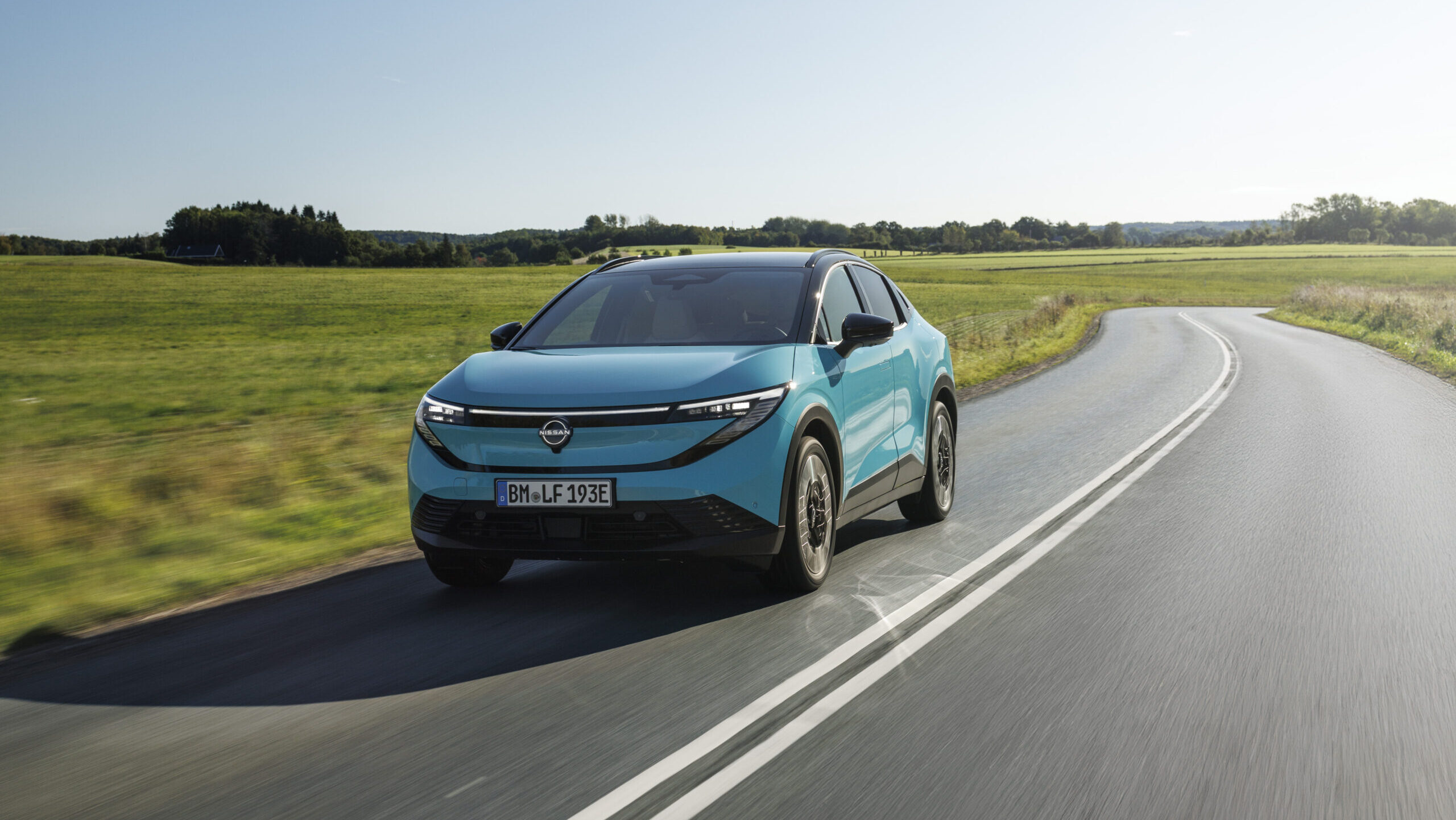
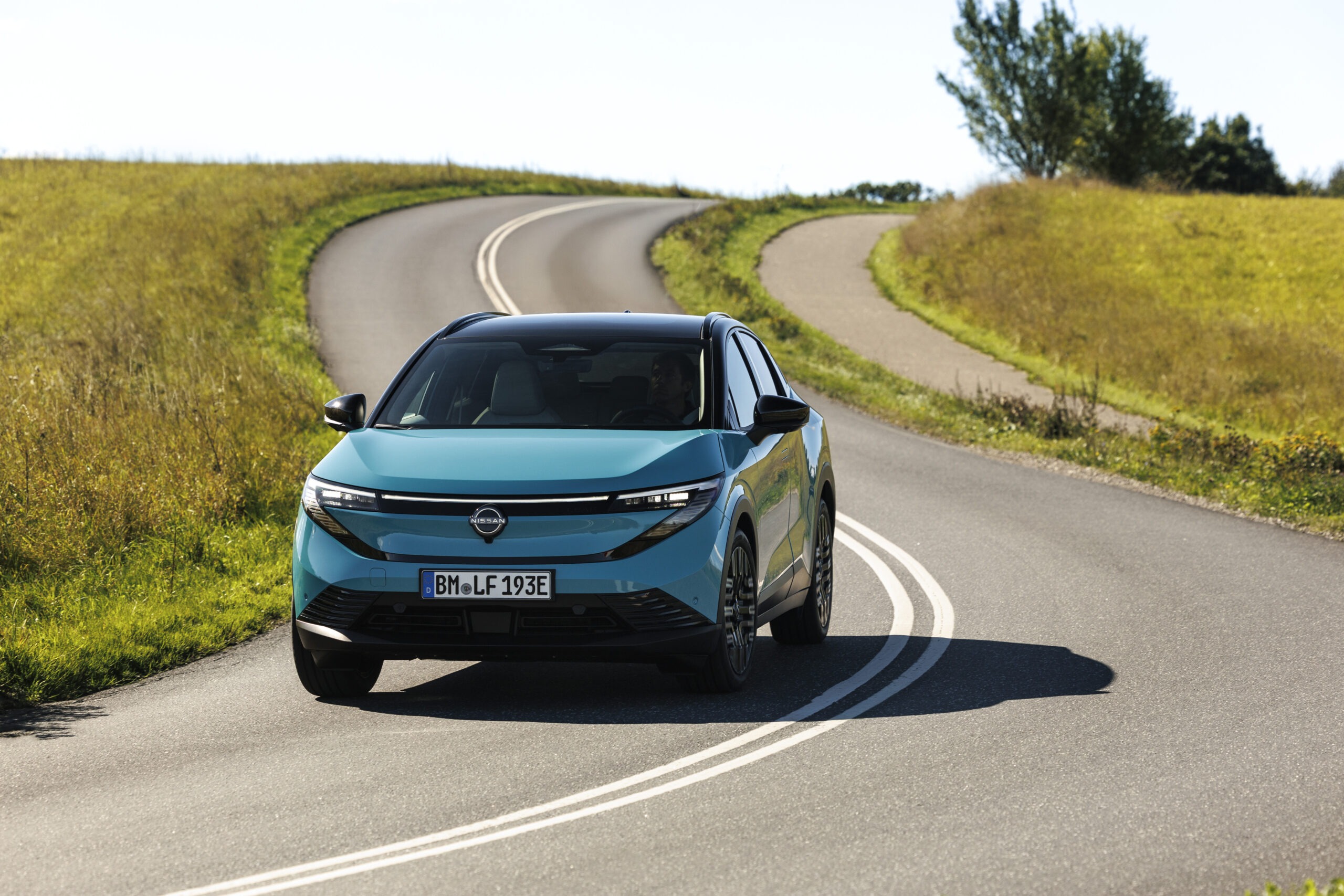
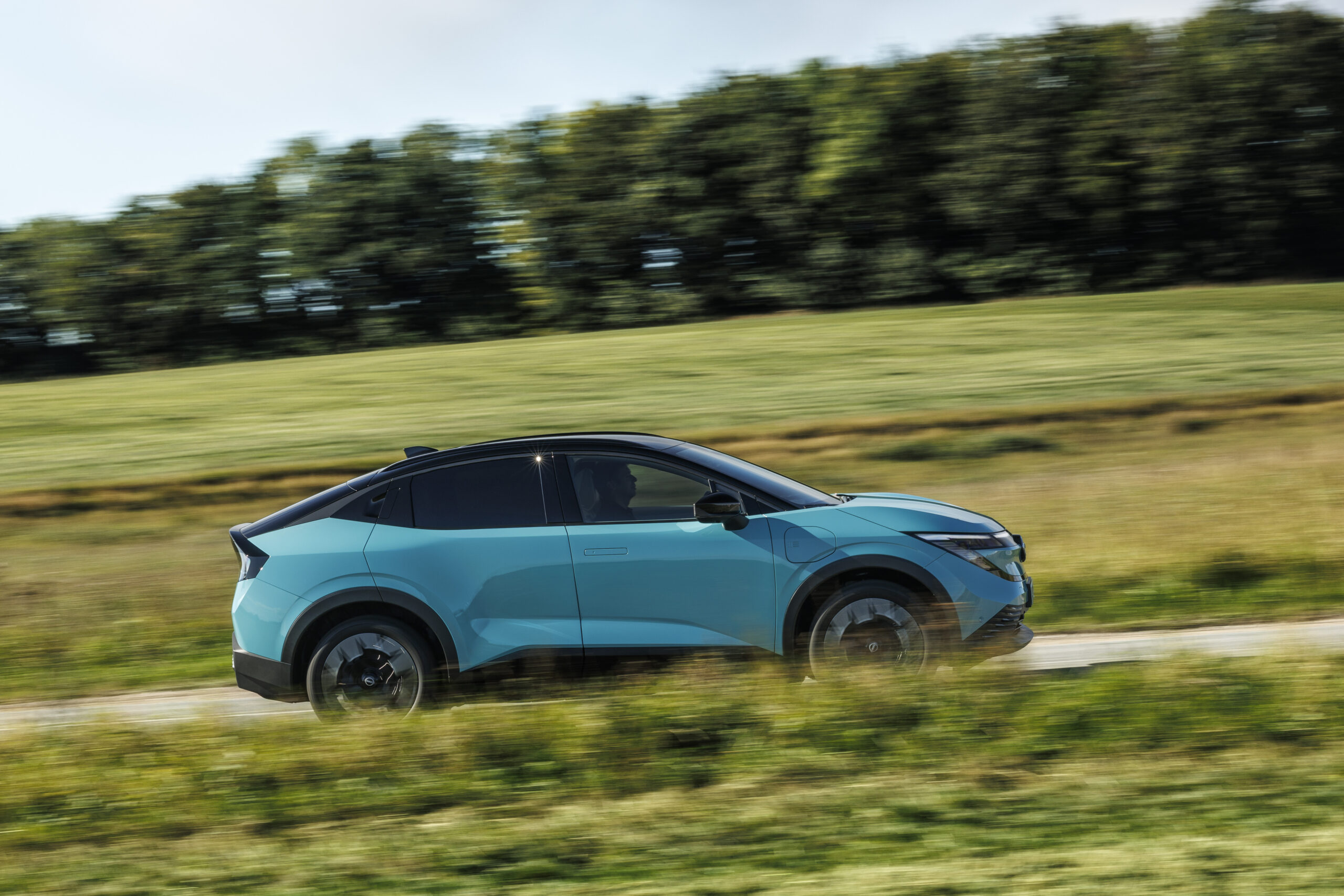
The third-generation Nissan Leaf takes a bold direction. Repurposed as a crossover with coupé styling, can this new philosophy appeal to buyers? Autovista24 special content editor Phil Curry reviews the model alongside regional experts.

The Nissan Leaf has already carved out a legacy in Europe’s automotive market. As one of the first mass-produced battery-electric vehicles (BEVs), it became a launchpad and an early symbol for the technology.

However, with increasing competition, the Japanese carmaker has taken a new direction, hoping to carve out a new legacy. As a result, the latest Nissan Leaf is a far cry from the one that landed in the C-segment in 2010.

No longer a simple hatchback, the BEV has been repositioned as a crossover with a coupé-like body design. This re-imagining has helped to refresh the model’s appeal, moving it into a world of sleek and modern styling.

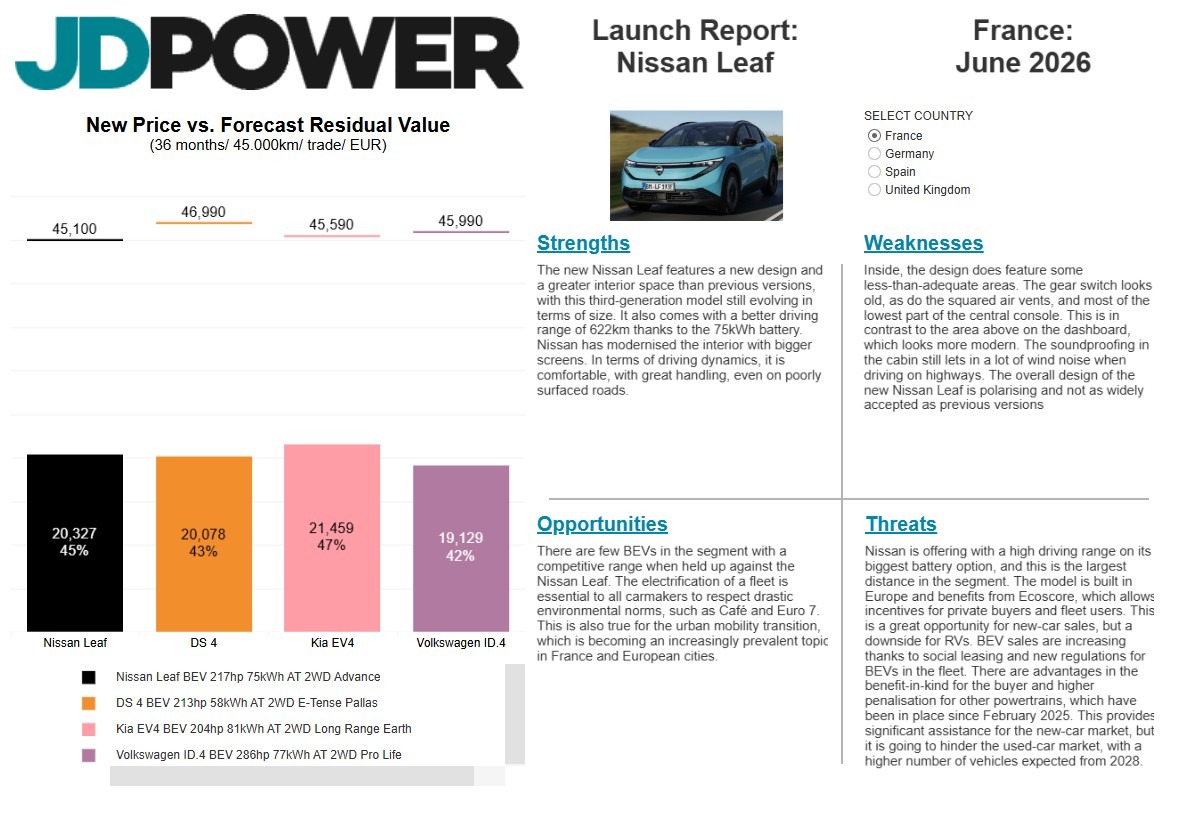
Autovista24’s latest Launch Report benchmarks the Nissan Leaf against its key competitors in France, Germany, Spain and the UK. Regional experts also provide a breakdown of the car’s strengths, weaknesses, opportunities and threats.

A bold design for the Nissan Leaf

Measuring 4.35 metres long, the new car is shorter than its predecessor. However, the change in body design comes as the Japanese carmaker revives the smaller Micra. For those looking for a larger, coupé-styled BEV, the Leaf offers some familiar design touches.

The design philosophy is similar to that of the Nissan Ariya. A long LED-bar lighting profile sweeps down each side of the ‘grill’ to provide a distinctive silhouette. The large, illuminated manufacturer’s badge breaks up what is otherwise a minimalist front end.

The new model manages to blend both sharp angles and curves with ease. The lower part of the front end forgoes any colour coding, which does stand out with lighter colour choices. Blending the coloured section in at the front wheels adds to the sharp look of the car.

The rounded roof is designed to help reduce drag as it slants towards the rear. It feels almost familiar, considering Nissan’s curvy design philosophy of the early 2000s.

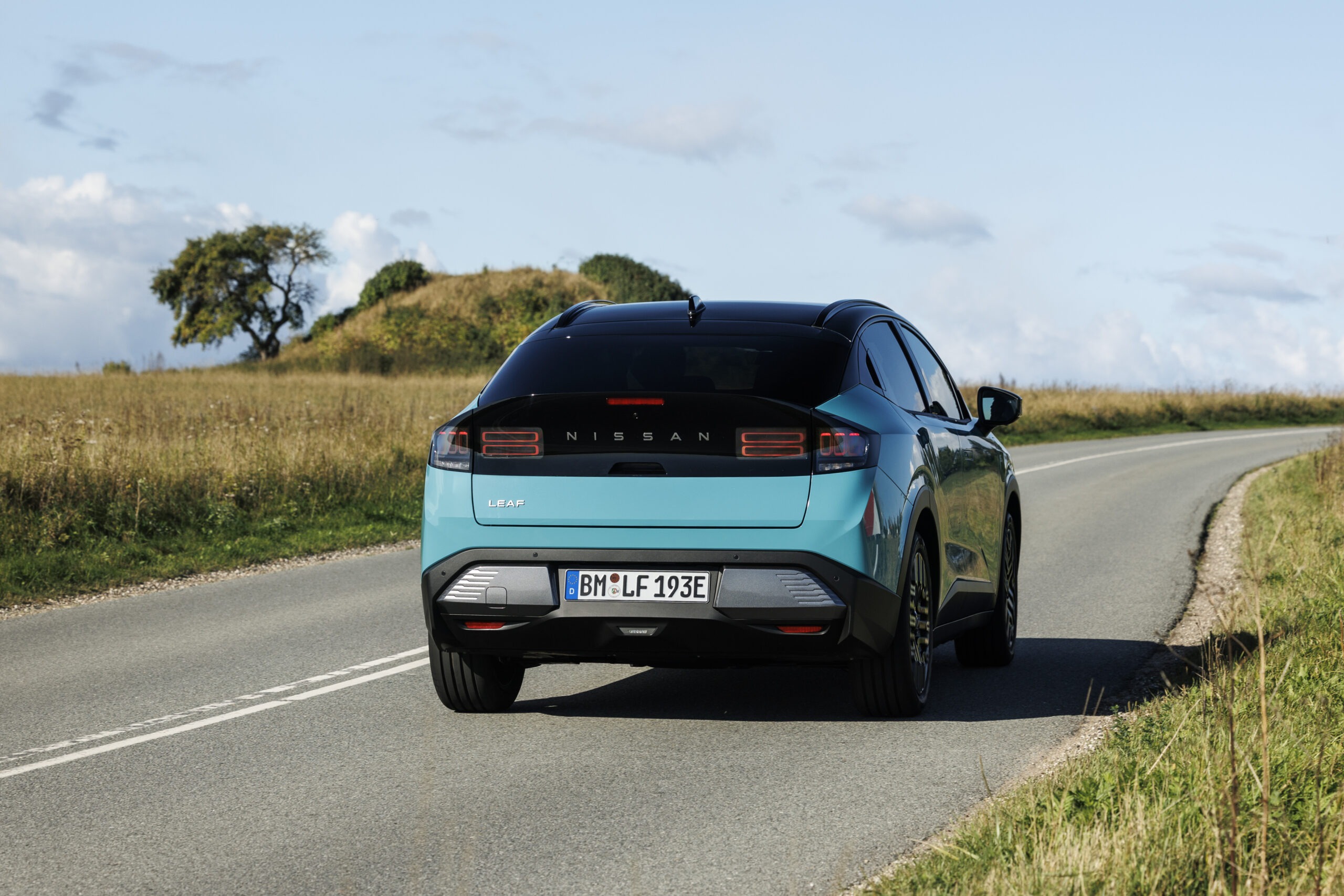
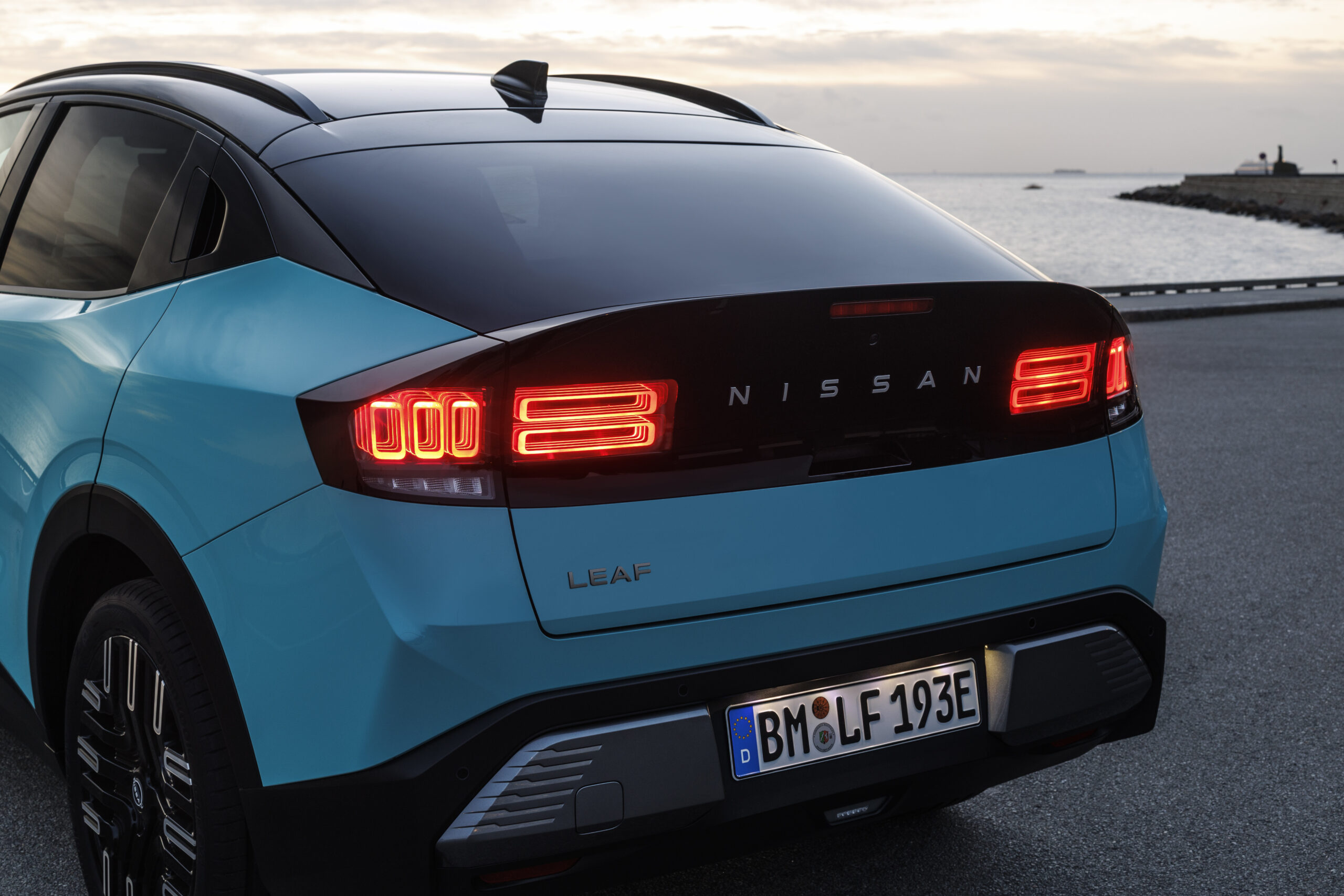
At the rear, the coupé lines end in an upward flick, as the 3D lights add another smart design touch. The lack of a rear LED bar does, however, remove any symmetry between the front and back of the car.

Mixed messages

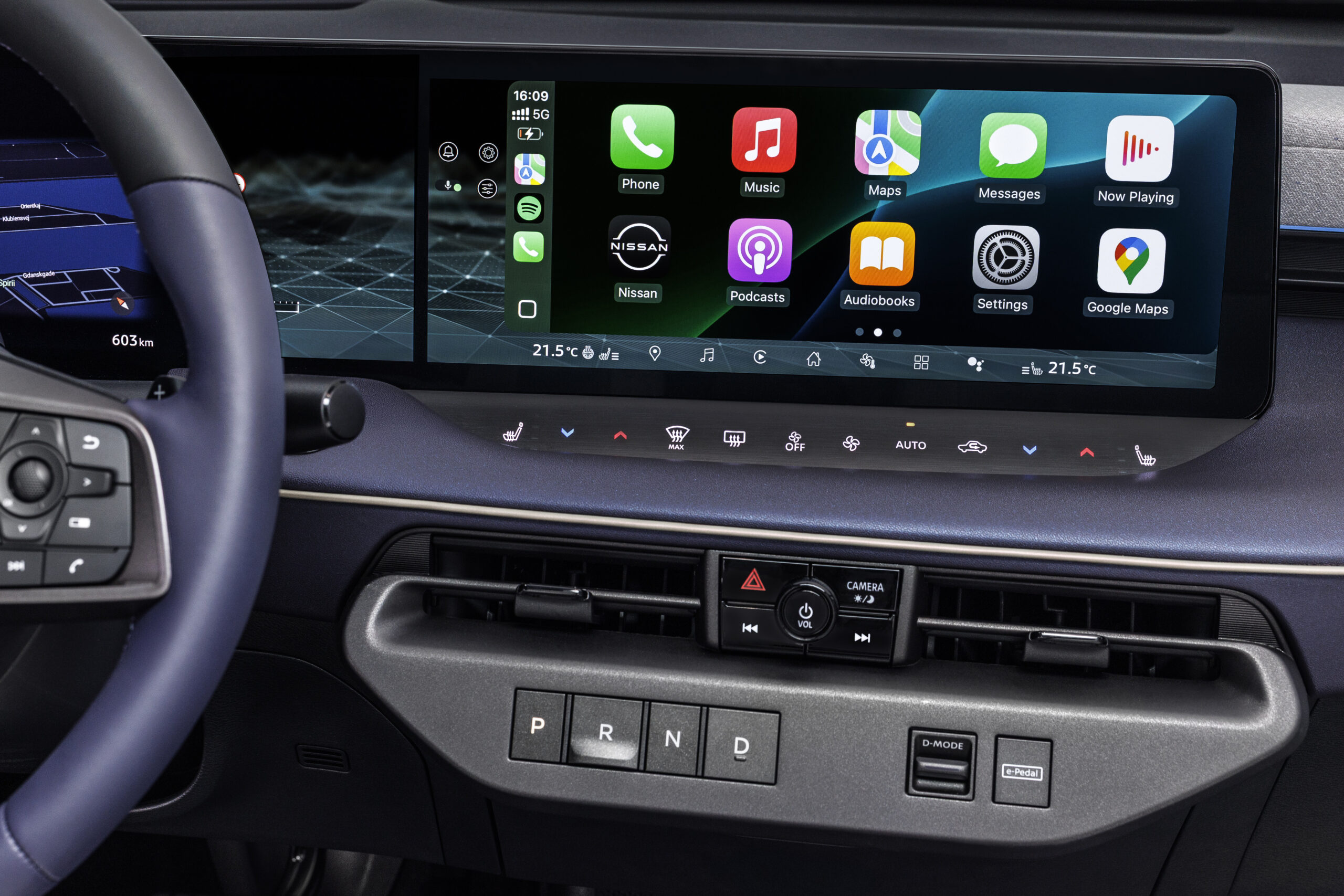
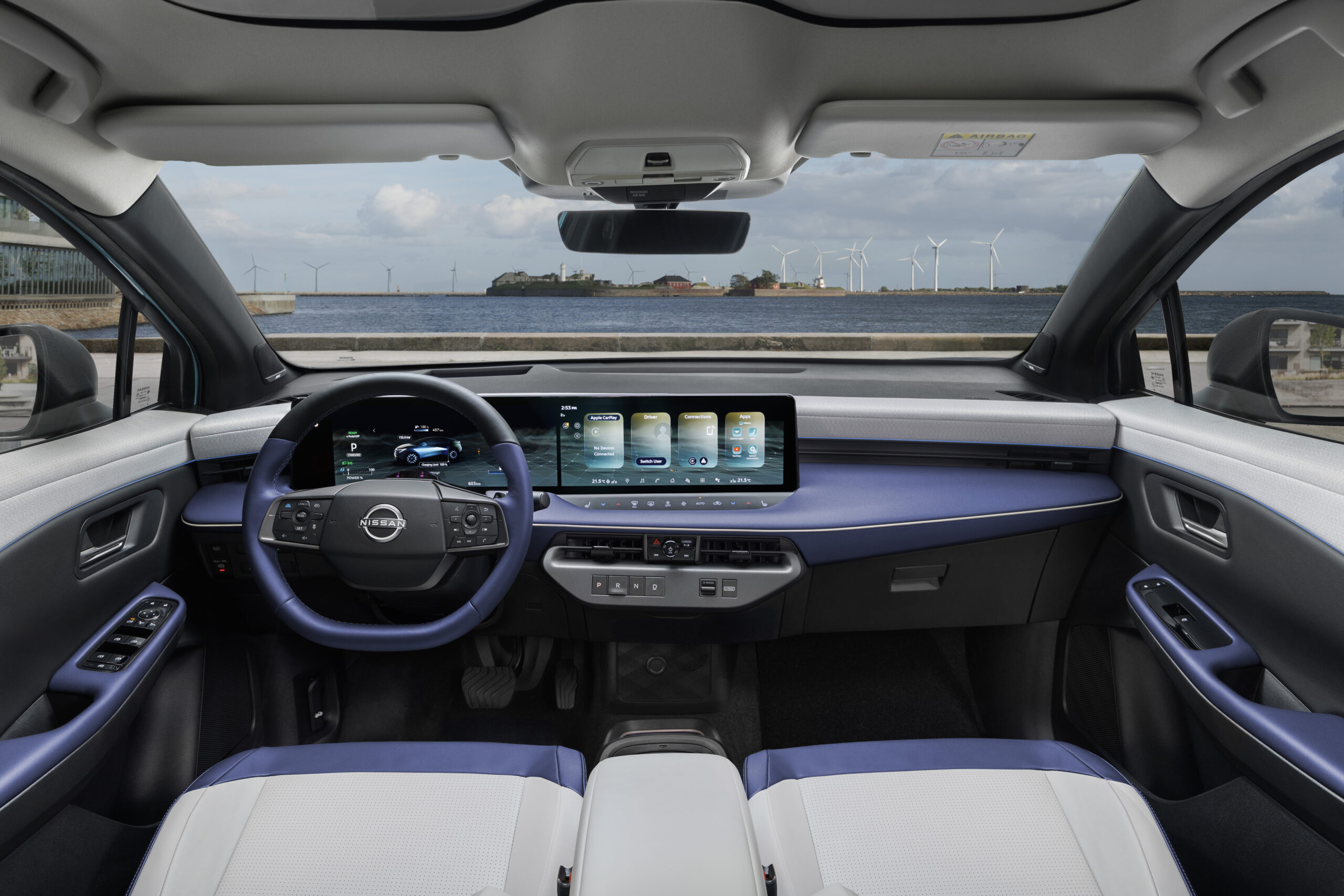
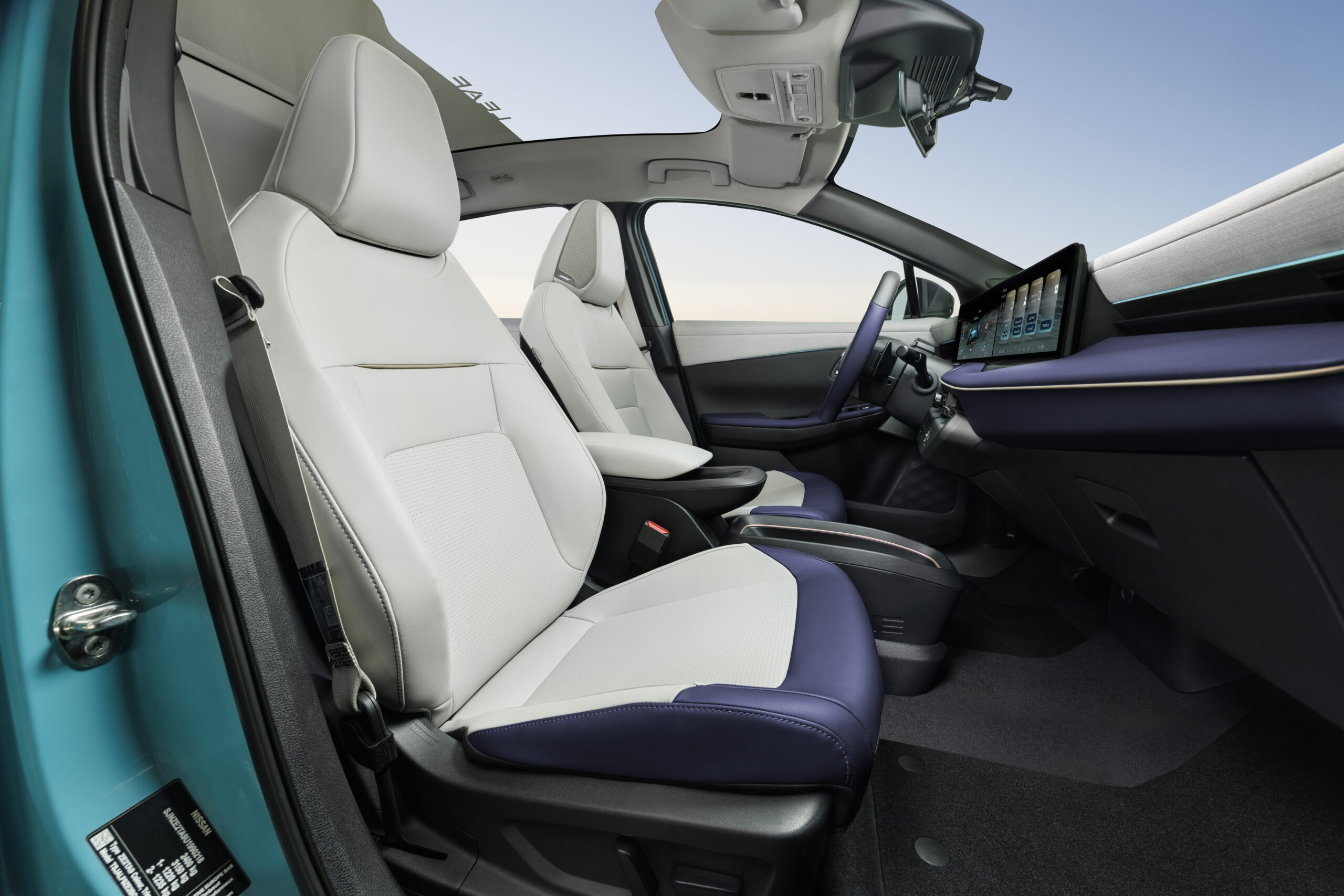
The Nissan Leaf’s minimalistic approach continues inside the cabin. Two 14.3-inch touchscreens relay information, with Google integration built in for more efficient mapping and software access.

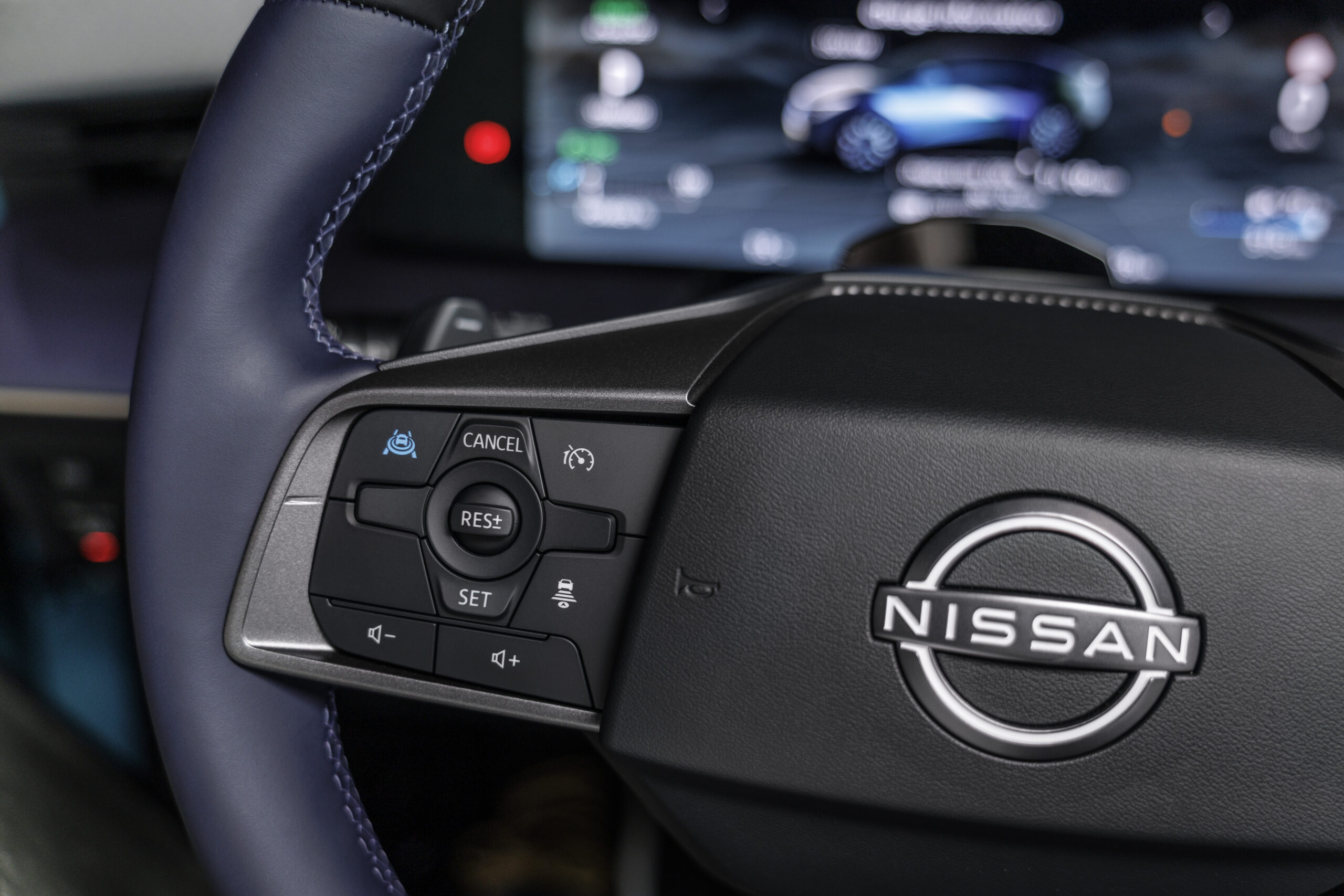
There is also an array of physical buttons, mixed with touch-sensitive controls and touchscreen options. This may be refreshing compared to models which rely on a central touchscreen, but the approach does cause issues.

The automatic gear selection is made using buttons rather than a dedicated lever or switch. Their positioning on a separate console below the dashboard seems like an afterthought. It appears out of place compared to the sleek wraparound design of the upper portion of the dashboard.

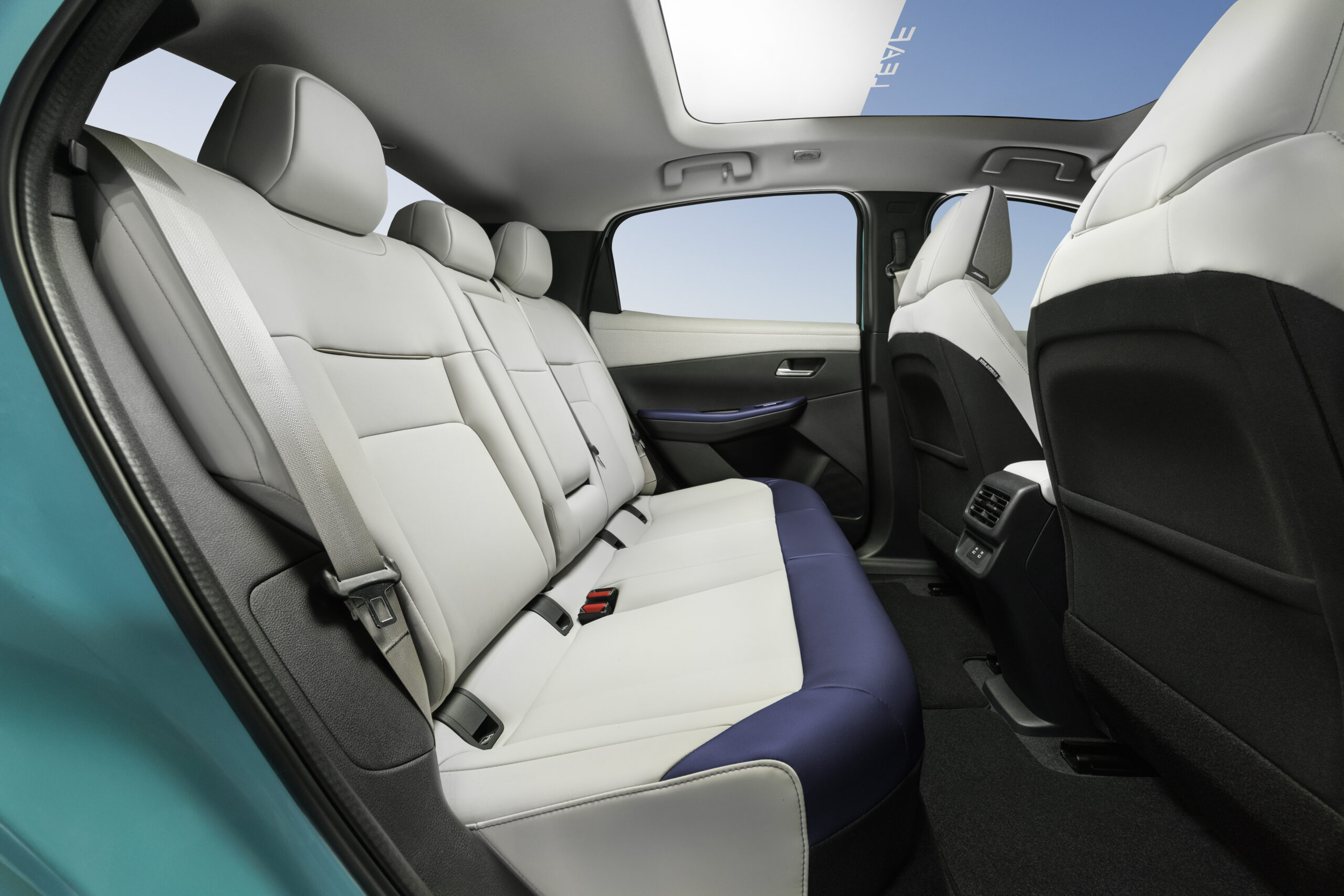
For taller passengers in the rear of the car, the sweeping roofline does cause some issues. Headroom is limited, while legroom is slightly cramped. The panoramic roof does add some extra space up top, but its main job is amplifying the light coming into the cabin. It does this well, giving the Nissan Leaf an airy feel inside.

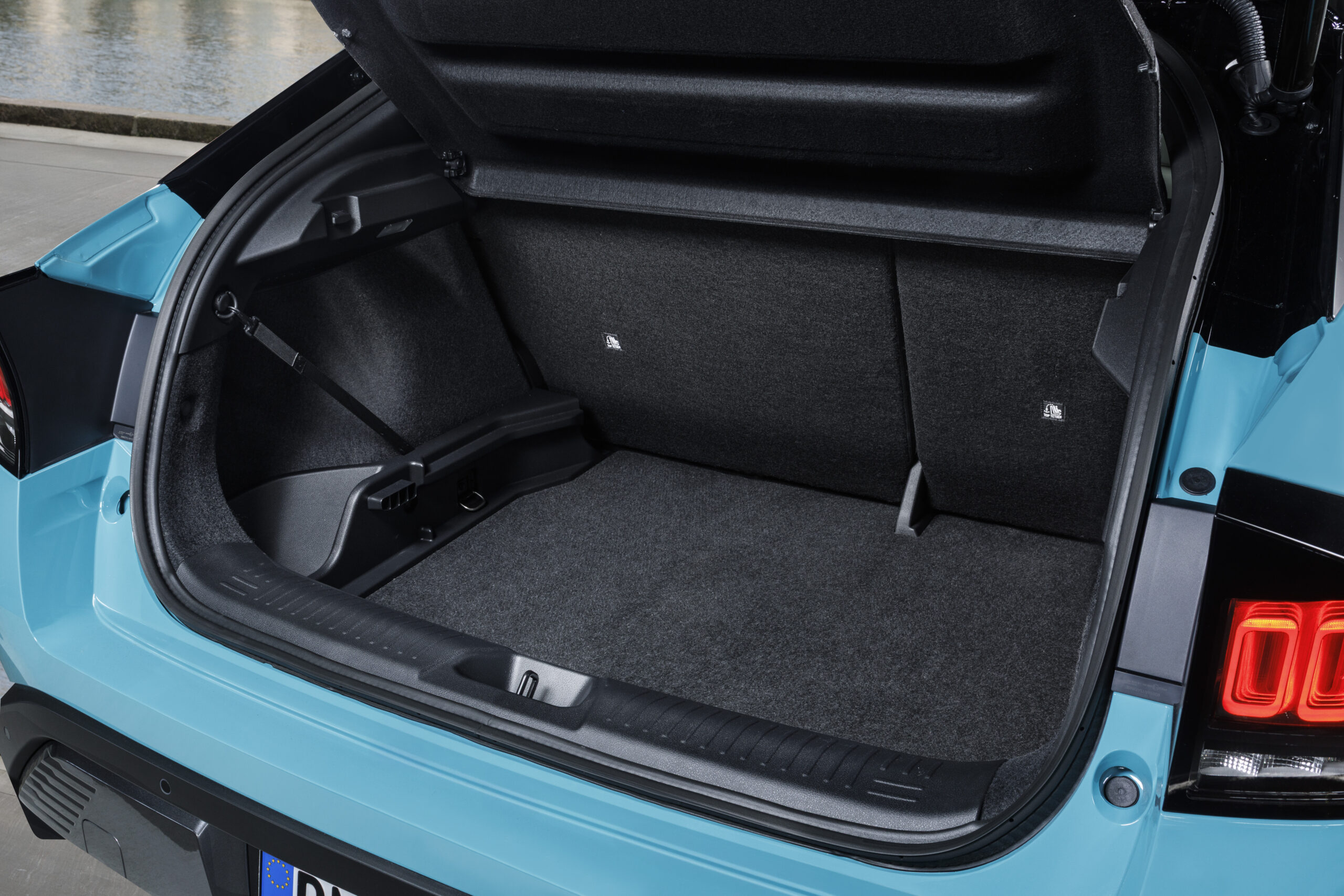
At 437 litres, the boot provides ample storage, although it does fall short of some competitors. The Leaf does have a split floor, meaning cables can be tucked away with ease. This is essential, as there is no frunk included.

The Nissan Leaf on the road

The Nissan Leaf is offered with two battery options: a 52kWh or a 75kWh unit. The smaller unit offers a range of over 440km, while the larger one can go up to 622km, based on WLTP figures. In addition, the larger battery supports up to 150kW DC fast charging.

At the same time, the new Leaf is equipped with vehicle-to-load capability. It can provide up to 3.6kW output for connecting small devices like laptops or cooking gear when out camping.

On the road, the model handles well. It is set up for comfort and provides a smooth ride, especially across poorly surfaced roads. However, this does lead to some body roll in the corners. There is also an unwelcome amount of wind noise entering the cabin when driving on motorways.

Acceleration is steady and adequate for both urban and motorway use. The Leaf also features an e-pedal function, allowing one-pedal driving. There is also the ability to use regenerative braking. However, coming to a stop from speed is compromised by a soft feeling from the pedal when pressed.

Overall, the new Nissan Leaf is a capable car, providing comfort and practicality. Its bold design and crossover transformation will ensure that the model can appeal to new customers in its third generation. Nissan’s efforts have highlighted that rather than looking to its past, the Leaf is now positioned for the future.

View the interactive dashboard, which benchmarks the Nissan Leaf in France, Germany, Spain and the UK. The interactive dashboard presents new prices, forecast residual values, and SWOT (strengths, weaknesses, opportunities, and threats) analysis.

Plug-in hybrids (PHEVs) have endured a tough start to 2026. Sales of new models fell year on year in January, February, March and April. But how have individual models fared? Autovista24 editor Tom Geggus explores data from EV Volumes.

In total, 445,290 new PHEVs were sold globally in April, an 18.7% year-on-year drop, illustrating a difficult start to 2026. The powertrain recorded an 18.4% drop across the first four months of 2026, with 1,647,988 deliveries made.

This contrasts with battery-electric vehicle (BEV) sales, which have rebounded after declines in January and February. In April, 1,145,015 BEVs were sold, up 13.6% on the same month in 2025. That lifted the cumulative all-electric result into positive territory, rising 2.5% to 3,843,575 units.

China weighs on PHEV market

The Chinese new-car market was once again the major driver of the global PHEV market. Between January and April, 53.5% of all new PHEV sales took place in the country. But deliveries in China dropped by 35.5% compared with the first four months of 2025.

For a sense of perspective, Germany saw the second-largest volume of PHEV sales, accounting for 6.3% of the powertrain’s deliveries. So, while deliveries of the powertrain increased by 18% in the country, this did little to make up for the drop in China.

Table: Autovista24Source: EV Volumes
Created with Datawrapper

Even PHEV sales growth of 49.8%, 106.6% and 68.4% in the UK, Italy and Spain, respectively, could not compensate for the loss recorded in China. However, it appears the global new BEV market was not impacted in the same way.

While China still accounted for most sales, with a share of 45.6%, its 18.1% downturn was somewhat offset. The likes of Germany, the UK and France recorded strong growth in new BEV sales. More positive results like these even made up for a 25.5% sales decline in the US.

PHEV trend persists

The declining sales trend echoed among the world’s best-selling PHEVs. The BYD Song Pro took a market share of 3.7% in the first four months of the year with 60,249 deliveries. However, it experienced a 10.8% decline in sales in April, down to 17,185 units.

The BYD Song Plus, also known as the Seal U, saw a steeper decline of 57.8% in the month, down to 15,267 units. It followed closely behind the Song Pro in the cumulative table, with a 3.6% share and 58,649 sales.

Across the first four months of 2026, the Fang Cheng Bao Tai 7 ranked third with a 3.4% share and 55,605 units sold. It also held this position in April, with 12,916 deliveries accounting for 2.9% of the market.

Two more BYD models followed in both the monthly and cumulative tables. The BYD Seal 6 took fourth with 35,605 deliveries, while the BYD Qin Plus came fifth with 33,039 units. Both saw sizeable sales slumps in April. The Seal 6 was down by 30%, while the Qin Plus dropped by 48.8%.

Not all doom and gloom

First seeing sales in September last year, the Zeekr 9X moved 9,314 units in April. This put it in sixth with a 2.1% share. Meanwhile, across the first four months of 2026, it took eighth with 1.9%.

The Galaxy Starship 7, also known as the Starray, saw its deliveries drop by 34.2% in April. Its 7,316 units equated to a share of 1.6%. This result means it was 10th in the cumulative table with a 1.5% share and 24,590 sales.

The Aito M7 was ahead of it in seventh with 31,539 sales and a 1.9% slice of the market. This was bolstered by 6,549 deliveries in April, up 62.7% year on year.

This growth was only surpassed in the top 10 by the Jaecoo J7. Taking ninth in April, its sales grew by 97.3% to 6,250 units. With strong results so far this year, it came sixth in the cumulative table with 32,170 sales.

Following behind it in April was the BYD Yuan Up, also known as the Atto 2. However, its 5,888 sales could not help it break into the top 10 across the first four months of 2026. Instead, the Li Auto L6 took ninth in the cumulative ranking with 24,895 deliveries.

Unshakable Tesla?

Taking first place in both the BEV monthly and cumulative tables was the Tesla Model Y. It enjoyed a 29.6% increase in deliveries in April and a 6.2% share of the market. The 70,607 units contributed to the 311,184 sales recorded across the first four months of 2026 and an 8.1% share.

Its sibling, the Tesla Model 3, followed some way behind with a 3.3% hold on the market and 125,168 sales. It was further down the monthly table, suffering a 4.6% delivery decline in fifth. These 23,516 sales gave it a 2.1% market share in April.

Its closest rival, the Geely Geome Xingyuan, also known as the EX2, came second in the monthly table. Sales rose 17.2% to 42,495 units, meaning 3.7% of the market. This bolstered its cumulative result of a 2.8% share and 107,275 units, putting it third.

In third during the month was the Xiaomi SU7. Its 26,826 new sales were down 6.3% year on year as it took 2.3% of the global BEV market. However, it did not appear in the cumulative top 10.

Coming fourth in April and across the first four months of the year was the BYD Seagull, also known as the Dolphin Surf. However, it saw its sales fall by 37.9% to 23,642 units, giving it a 2.1% share. This fell below its cumulative share of 2.4% with 90,905 units sold.

Newer arrivals claim positions

Not far behind was the Xiaomi YU7 with a 2.1% share and 81,803 deliveries. With 2% grip on the market and 77,907 sales, the Li Auto I6 was sixth cumulatively. It took eighth in the month with 20,986 sales, capturing a 1.8% share.

Taking seventh in the monthly and cumulative table with a 1.9% share was the BYD Yuan Up. Its deliveries jumped by 20.9% year on year to 21,473 units in April, pushing its tally to 71,973.

Claiming 1.8% of the global BEV market between January and April was the BYD Dolphin in eighth. In April it reached sixth with 21,643 sales, up 49.8%, and taking a 1.9% share.

Behind it was the BYD Sealion 06 with 17,438 sales and 1.5% of the market. Then, in 10th was the Qiyuan Q05 with 13,763 units moved, capturing a 1.2% share. Despite these performances, neither model was able to break into the cumulative table.

Instead, the Nio ES8, also known as the EL8, took ninth between January and April. It recorded 61,098 sales and a 1.6% share. Then came the Toyota bZ4X with 1.2% and 44,957 deliveries. It will need a positive result in the coming months to stay ahead of the BYD Yuan Plus with 40,121 units sold.

A Skoda model topped the charts in Europe’s new battery-electric vehicle (BEV) market during April. This came as all-electric cars once again outperformed plug-in hybrids (PHEVs). Tom Hooker, Autovista24 journalist, reviews the figures.

In April, BEVs recorded a second consecutive month of greater year-on-year growth than PHEVs in Europe’s new-car market.

Sales of BEVs reached 256,825 units in April, up 37.8%, according to the latest EV Volumes data. PHEVs also posted an improvement, as volumes rose by 22.7% to 120,601 sales. Combining both technologies, deliveries of EVs increased by 32.6% in April.

Between January and April, BEV sales climbed by 28.5% year on year to 982,913 units. This was below PHEVs’ 30.7% delivery surge to 478,564 units. Combining BEV and PHEV volumes, EV sales grew by 29.2% between January and April.

Market-leading growth

The Elroq led the way for BEVs in April. The model recorded a year-on-year volume rise of 31.5%, enough for it to take first. The SUV was the only BEV able to post five-digit sales in April, with 10,597 deliveries. The Skoda Enyaq also posted a strong year-on-year growth of 52.7% to 8,598 units in third.

Between January and April, the Skoda Elroq was the closest competitor to the market-leading Tesla Model Y. However, it was some distance behind with a 20,788-unit gap. The Enyaq was the fourth best-selling EV between January and April.

Sandwiched between the two Skodas in April was the combined total of the Renault 5 and Alpine A290. The hatchbacks’ volumes increased by 37.4% year on year to 9,318 sales. It landed between the two Skoda BEVs in the cumulative figures as well, taking third.

The Tesla Model Y also recorded double-digit growth in fifth, with sales soaring by 78% year on year. This helped it to maintain its lead in the cumulative ranking between January and April.

However, out of its 59,578 sales in the first four months of 2026, April accounted for just 8,131 of them. This was only enough for fourth in the monthly table. Yet this does follow Tesla’s usual delivery pattern, with volumes typically spiking at the end of the quarter.

The Volkswagen (VW) ID.3 saw deliveries improve by 9.9% in April to 7,618 units. However, the ID.4 was able to record double-digit growth, up 14.1% to 7,061 sales. The VW ID.3 and VW ID.4 sat sixth and seventh between January and April, respectively.

Strong German BEV presence

The Mercedes-Benz CLA saw 6,528 sales in April, making it the seventh best-selling all-electric model. It was 10th in the cumulative standings, just 61 units behind the ID.7.

In ninth, the Leapmotor T03 enjoyed significant growth. The city car achieved a 387.5% improvement to 5,606 sales. Its delivery total between January and April stood at 20,562 units, enough to claim eighth place.

Conversely, the BMW iX1 recorded much shallower growth in April. The SUV’s volumes were up by 9.6% to 5,743 units. Audi’s Q4 e-tron was the fifth German model in April’s top 10, with a 16.6% year-on-year rise to 5,385 deliveries.

BYD dominates PHEV market

Four German models featured in April’s PHEV top-10-best-sellers list, a trend mirrored in the cumulative standings. The VW Tiguan took third in both charts. In April, it recorded a 0.5% increase to 4,866 sales. This was not enough to topple BYD, which secured the top two positions.

The BYD Atto 2 was just 74 units ahead of the VW Tiguan. After posting just 106 units between January 2025 and January 2026, volumes accelerated in February. This put it in eighth position across the first four months of 2026.

Meanwhile, the Seal U led the way in April. The PHEV posted a 41.6% year-on-year growth to 7,024 deliveries, giving it a lead of 2,084 units over second. This gap extended to 7,466 units in the cumulative chart, with the Jaecoo J7 the closest competitor.

The latter, also a Chinese SUV, claimed fifth in the monthly table, with a 177.1% improvement to 4,192 sales. This was the best year-on-year growth in the PHEV top 10.

BMW’s mixed bag

With a 109.5% surge to 2,768 units, the only other model to achieve a triple-digit increase was the BMW X3 in ninth. However, the BMW X1 did not enjoy the same result, with a 9.8% decline to 3,095 deliveries in seventh. Both German SUVs held the same positions respectively in the cumulative chart.

The Ford Kuga suffered a sales decline of 2% to 2,825 sales in April. The PHEV placed sixth across the first four months of the year.

The Volvo XC60 in fourth witnessed the sharpest decline. The SUV endured a 14.8% fall to 4,336 units. Even so, it kept the same position in the cumulative table.

Behind it, the Mercedes-Benz GLC claimed fifth. This followed a 40.8% sales surge for the SUV, with 3,610 new models delivered in April.

Finally, in 10th place, the MG eHS also enjoyed double-digit growth, with a 25.9% rise to 2,753 units in the month.

New light-commercial vehicle (LCV) registrations in the UK recorded a second consecutive month of growth in May. This was supported by strong demand for electric vans. Andy Picton, specialist residual value analyst at Glass’s, examines the data with Autovista24 content specialist James Roberts.

The UK’s new LCV market recorded growth in May 2026, with registrations rising 3.6% to 23,620 units, SMMT data reveals. This marked the second consecutive month of improvement; the first time this has occurred since October 2024.

However, despite this increase, the performance across the first five months of the year remains slightly behind 2025. A total of 127,046 LCVs were registered between January and May. This was down 0.6%, compared with the 127,875 units recorded over the same period last year.

Market performance in May remained uneven across the different LCV segments. Pickup registrations continued to decline sharply, falling 57.7% to just 1,138 units. This reduced their market share to 4.8%, down from 11.8% a year prior.

Vans under 2 tonnes gross vehicle weight (GVW) saw registrations drop by 24.5%. Meanwhile, those weighing between 2 and 2.5 tonnes GVW recorded a delivery decline of 7.5%.

In contrast, the large-van segment, weighing between 2.5 and 3.5 tonnes GVW, recorded robust growth of 18.6%, reaching 17,380 units. These accounted for 73.6% of all registrations in May. Meanwhile, 4×4 registrations rose 16.2% year on year to 832 units.

Ford models retain LCV dominance

Ford remained dominant in the UK LCV market, with the Transit Custom and Transit securing the top two in May.

The Peugeot Partner claimed third, followed by the Volkswagen (VW) Transporter in fourth. The Maxus Deliver 9 completed the top five.

Further down the top 10, the Renault Trafic and Mercedes-Benz Sprinter took sixth and seventh, respectively. The Land Rover Defender ranked eighth, ahead of the Vauxhall Vivaro and VW Crafter in ninth and 10th places.

Spanning January to May, the Ford Transit Custom continued to lead with 19,570 units registered. It was followed by the Ford Transit with 9,679 units.

Electric van uptake grows but remains below targets

Battery-electric van registrations up to 4.25 tonnes GVW saw solid growth in May, rising 35.5% to 2,345 units. This equated to a market share of 9.8%, up from 7.6% in the same month of 2025.

Despite this progress, diesel still dominated the sector, accounting for 83.9% of all new deliveries. This underlines the enormity of the task ahead in transitioning to zero-emission vehicles (ZEVs).

Over the first five months of 2026, battery-electric LCV registrations reached 12,180 units, an increase of 15.9% year on year. This carved out an overall market share of 9.5%, an improvement on the 8.2% achieved in 2025. Yet the result was still significantly below the UK’s 24% ZEV mandate target for LCVs in 2026.

High upfront vehicle costs, rising energy prices and ongoing charging infrastructure challenges continue to limit faster adoption. This is despite an increasingly broad range of electric LCVs available.

Volkswagen leads electric LCV segment

VW headed the battery-electric LCV market in May, accounting for 35.3% of the registrations. Ford followed with a 25.6% share, while Kia placed third with 13.6%. Maxus and Renault completed the top five manufacturers for the month with 5% and 3.6%, respectively.

Between January and May, VW emerged as the leading battery-electric LCV brand, with a 27.2% share. Ford followed with a 25.6% hold of the market, while Kia took 17.6%.

By model, the VW ID.Buzz Cargo led the way, followed by the VW e-Transporter and Ford E-Transit Custom. The Kia PV5 and Ford E-Transit rounded out the top five.

Lower down the rankings, the Ford E-Transit took fifth with a 7.8% share of registrations. The Maxus eDeliver 9 followed in sixth with a 4.1% share. This was ahead of the Ford E-Transit Courier in seventh with 2.7%.

The Toyota Proace Electric ranked eighth with a 2% share, while the Mercedes-Benz e-Citan finished ninth with a 1.7% share. The Renault Master E-Tech completed the top 10, representing 1.6% of the market.

After five months, the Kia PV5 topped the electric van market, taking a 17.6% share. The Ford E-Transit Custom sat in second with 16.2%, closely followed by the VW ID.Buzz Cargo in third with 16.1%. The VW e-Transporter ranked fourth with an 11.1% share. The Ford E-Transit Courier completed the top five with 5.2%.

Hybrid segment expands rapidly

The plug-in hybrid (PHEV) segment also continued to grow. A total of 1,108 LCVs powered by the technology were registered in May, driven largely by Ford.

The manufacturer dominated this category, with the Transit Custom PHEV leading, alongside the Ranger and Transit Connect variants. VW and Toyota also contributed, with the Caddy PHEV and Corolla Commercial, respectively.

Between January and May, hybrid registrations reached 7,296 units, up 41.9% compared to the same point in 2025. Ford accounted for over 80% of this market, underlining its strong position in electrified LCVs.

Used market remains resilient

In the used LCV market, demand remained strong overall, supported by high buyer engagement at auction. Well-maintained, low-mileage vehicles with a full-service history continue to command the greatest interest and strongest prices.

However, a clear two-tier market is emerging. Older, high-mileage vehicles, particularly those in poorer condition, are proving harder to sell. This is unless priced competitively or improved through refurbishment.

Retail demand showed some softness in May. The influence of bank holidays, school half-term periods, favourable weather and wider economic uncertainty all likely played a part.

Auction activity increases in May

Auction activity strengthened notably in May, with volumes rising by 31.3% compared with April. Average vehicle age fell by 2.2 months to 69.9 months, while mileage declined to 76,583 miles from over 82,500 miles a month earlier.

Average sale prices increased by 6.3% to £8,278 (€9,594). However, first-time conversion rates softened, slipping 2.4 percentage points (pp), to 74%, leaving them 5.7pp below the level recorded a year ago.

Euro 6 vehicles continued to dominate auction sales, accounting for 87.2% of transactions. Meanwhile, Euro 5 models made up 9.5% of the total, down from April.

Medium vans remained the most in demand with a 37.8% share, followed by large vans at 29.1%, and small vans at 21.1%. Pickups and 4x4s accounted for 12% of sales, gaining 0.8pp month on month, and achieved the highest average values at just over £13,550, around £2,300 higher than in April.

Large vans continued to cover the greatest distances, averaging 89,089 miles, up by more than 4,300 miles month on month. This segment also achieved the strongest first-time conversion rate at 77.8%, in contrast to the 4×4 category, which recorded the lowest at 67.7%.

Demand rises for used electric vans

Interest in used battery-electric LCVs at auction is increasing. This looks to be supported by improved market understanding and greater transparency around battery condition. The inclusion of battery health data is helping buyers make more informed purchasing decisions.

This growing confidence translated into a 37% rise in used sales during May. The average age of vehicles sold increased slightly to 38 months, while mileage rose to 21,917 miles. Despite this marginally older and higher-mileage profile, demand for well-presented stock remained strong.

Average sale prices climbed by 3.8% in May to just under £10,300. First-time conversion rates improved sharply to 87%, up from 84.1% in April.

Medium-sized battery-electric vans dominated proceedings, accounting for more than two-thirds of all sales, with small vans taking a further 29%. Small vans also recorded the highest average mileage at close to 23,450 miles, while medium vans delivered the strongest values at just under £11,400. Large battery-electric vans achieved a perfect first-time conversion rate of 100%.

Only 3% of all-electric models sold during the month were older than six years. This highlights the relatively young profile of stock entering the used market.

Retail supply stable but under pressure

The number of used LCVs available in the retail market remained broadly unchanged in May at just under 42,300 units. However, supply was down significantly year on year, falling by nearly 12.7%.

Diesel models continued to dominate listings, accounting for 90.3% of all vehicles on sale. Battery-electric vans represented 5.8% of the market, ahead of PHEVs at 2.2% and petrol models at 1.7%. Manual transmissions remained the preferred choice, featuring in 66% of listings.

Panel vans made up the majority of available stock at 56.9%, while 4×4 vans and pickups accounted for 16.8%. Crew vans represented 9% of listings, followed by minibuses at 3.7%, with dropsides, Lutons and tippers each making up smaller shares.

Meanwhile, 41.1% of vehicles had covered 30,000 miles or less, while 29.2% fell between 30,000 and 70,000 miles. At the higher end, 13.3% had exceeded 100,000 miles.

Pricing remained weighted towards the upper brackets, with 43.1% of vehicles listed at £20,000 or more. A further 38.4% were priced between £10,000 and £20,000, while 15% sat in the £5,000 to £10,000 range. Only 3.5% were listed below £5,000. In total, 74.2% of adverts displayed prices excluding VAT.

White continued to dominate as the most popular used LCV colour, accounting for 47.6% of listings. Grey followed at 18.6%, with black taking 11%, and silver following with 9.6%. Then came blue at 6.4%, and red with 2.1%.

The average vehicle age in the retail market edged up to 56 months. Meanwhile, average mileage fell slightly to just over 55,650 miles. This reflects the underlying demand for younger, lower-mileage stock.

As Europe’s major new-car markets approach the second half of 2026, how did they fare in May? Which ones are on track for success in 2026? Autovista24 editor Tom Geggus reveals all in the Automotive Update podcast.

Is the French new-car market becoming reliant on one powertrain? Will the UK meet its zero-emission vehicle (ZEV) targets? Plus, in the wake of new incentives, is a registration spike expected in Germany? Find out in this latest episode.

Subscribe to the Autovista24 podcast and listen to previous episodes on SpotifyApple and Amazon Music.

French new-car market bouncing back?

According to the latest data from PFA and AAA Data, the French new-car market saw a 3.7% lift in volumes in May. This marked the second monthly increase, following a minimal loss in April.

For the second consecutive month, battery-electric vehicle (BEV) volumes grew. Deliveries were up 92.7% in May, equating to 18,001 extra BEVs joining French roads. This helped offset losses across petrol, diesel, hybrids, including both full and mild variants, and plug-in hybrids (PHEVs).

Aided by incentives and a round of social leasing, between January and May BEV registrations were up 55.4%. This equated to an extra 66,239 units, based on Autovista24 calculations. Recent trends suggest that BEV adoption can offset losses elsewhere, guiding the overall market towards sustained growth. However, pinning hopes on one powertrain does bring risks.

UK new-car targets

The UK new-car market witnessed a 7.1% registration increase in May. This extended its run of year-on-year improvements into six successive months. Between January and May, deliveries increased by 8.7%.

BEVs achieved a 34.2% year-on-year registrations lift, carving out a 27.3% share of the market. Despite consistent increases, the current all-electric market share of 23.9% remains below the ZEV mandate target of 33% for 2026.

Germany’s new EV incentives kick off

Germany’s new-car market grew just 0.1% in May. In total, 239,448 new vehicles took to the country’s roads, according to the latest KBA data.

Electric vehicle (EV) registrations, including BEVs and PHEVs, increased by 28.8%, reaching 87,890 units. All-electric cars led this uplift, rising 39.3%, and pushing the overall EV market share to a healthy 36.7%.

The German government’s new EV incentive scheme offers income-based grants for private buyers and is retroactive to January. Amid building EV sales growth, early signs suggest incentives are reinforcing rather than driving the trend.

With €3 billion in funding targeting 800,000 vehicles by 2029, the scheme is aimed at fostering stability, rather than a short-term spike. Its retroactive structure should help prevent delays in consumer purchases, supporting consistent growth.

Meanwhile, petrol and diesel registrations witnessed steep declines and hybrids slowed, mirroring wider EU trends.