Insights

Tagged:
Clear filters
Content Type
Topic
Industry
Segment
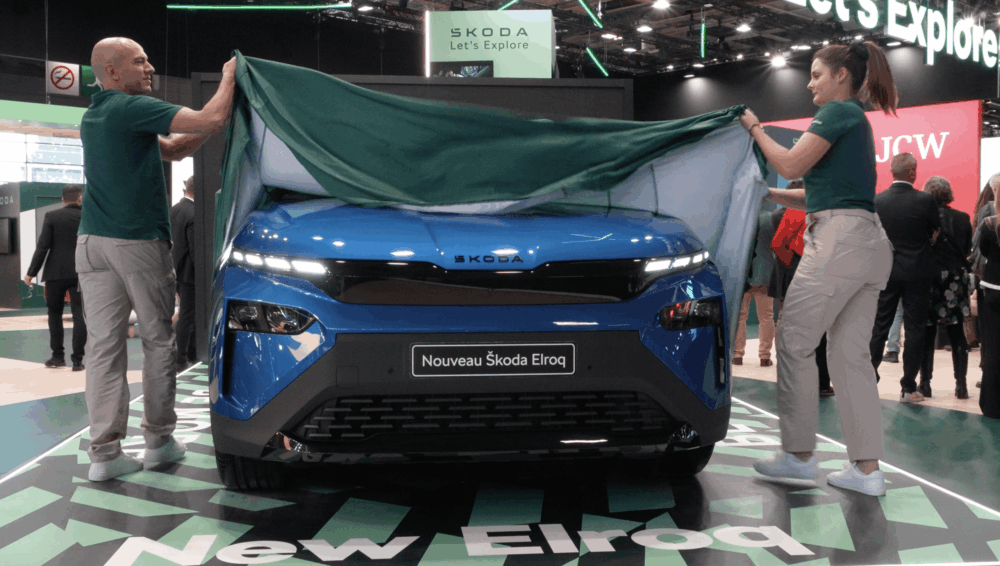
Skoda vehicle being unveiled at a motor show by two people

Insights

What is an Autovista24 Launch Report?

Every year, dozens of new cars are launched across Europe. Each bring their own benefits to buyers and the wider automotive market. Autovista24 analyses many of these vehicles in the monthly Launch Report series. Special content editor Phil Curry explains the valuable insights on offer. Carmakers are constantly developing vehicles for the automotive market. This results in either brand-new nameplates or next-generation versions of existing models. These new cars each aim to offer drivers something different in an increasingly crowded market. This could be through their design, interior options, technological advances or driving characteristics. While many vehicle reviews will focus on these traits, the Autovista24 Launch Report offers something unique. These monthly vehicle overviews combine a standard review of the car alongside detailed expert analysis and residual value (RV) forecasts. These combined insights elevate the Launch Report to a key piece of information for automotive industry decision makers. https://youtu.be/ZP3RBB0_jfk Launch Report breakdown Each Launch Report features an interactive dashboard that provides analysis and RV comparisons against three competitors. This information is compiled by experts from key European markets, including Austria, France, Germany, Italy, Spain and the UK. The Dashboard features an overview of a vehicle’s strengths, weaknesses, opportunities and threats. These areas of examination provide a balanced analysis. The strengths segment will look at the best elements of a car, while the weaknesses will point out areas that could be improved. The opportunities section looks at the potential of the model in the automotive market. For threats, the experts look at possible competition, and market conditions that could impede success. Examining residual values Autovista Group experts will also benchmark RV performance against three direct market competitors. These forecast values are determined after 36 months, and market-specific mileages. The study shows the recommended retail price for the model and trim level in question. It also provides the expected value after the time and mileage conditions. This is presented together with the RV, expressed as a percentage of the retained original price. This allows buyers to understand the vehicle’s potential future value. They can then factor this into their purchase decision. This is especially important for fleet buyers, who can understand the financial potential of new models, especially around the average de-fleeting period. This RV information is provided by each market participating in the Launch Report feature. The data is specific to that country, allowing for a more precise and region-specific understanding of vehicle performance. Providing the review Alongside the interactive dashboard, each Launch Report also includes a detailed review of the model itself. This summarises the comments and thoughts of Autovista Group editors, along with Autovista24’s research and experience. The review provides an analysis of the vehicle and adds more context for the dashboard analysis. They are written by experienced motoring journalists and provide a balanced view of each model. This includes more information on design, practicality and driving characteristics. Overall, the Launch Report provides buyers with the complete picture of a vehicle. Alongside the written article, Autovista24 also produces a number of Launch Report videos. These give a visual overview and a detailed look at new models. Alongside this, there is also a breakdown of forecast residual values in select European markets.
Wooden car with protective shield o protect from accident and damage

Insights

What should automotive remarketing and aftersales companies focus on in 2026?

What trends have defined 2025 for automotive remarketing and aftersales companies, and what lies ahead? Paul Marklew, enterprise sales director at Autovista Group, speaks with Tom Geggus, editor of Autovista24. How has 2025 been for remarketers? What trends have defined this year for them? Remarketers, such as dealers, auctions and advertising portals, have seen a slow 2025 that has made trading conditions challenging. With current economic uncertainties, including reduced consumer sentiment, there are fewer cars being bought and sold. Profit margins are being squeezed significantly as dealers compete for the buyers that are in the market. This trend is reflected when looking at residual values (RVs) across the vehicles. Since the COVID-19 pandemic, most markets across Europe have seen a pretty dramatic increase in RVs. Dealers have also enjoyed increased profit margins. Now we are seeing a rationalisation of the market. Values are dropping towards pre-pandemic levels, at quite a fast rate in some cases. This has resulted in lower profit margins when the vehicles finally go into stock. Additionally, consumers are holding on to their cars for a little bit longer. This has reduced the amount of stock in the market. How does this compare to the year the aftermarket has had? Aftersales, like part suppliers for example, are still some of the more profitable parts of dealer businesses. The margins in the car are a bit more difficult, but servicing and maintenance continue to be profitable. The businesses dealing with aftermarket parts, which are normally more affordable than OEM parts, are seeing an increase in business. This comes as they move towards increased digitalisation and an improved buyer experience. So, aftersales and remarketing are really experiencing the same meta trends in different ways. Remarketing and consumers As you mentioned, RVs did soar during the COVID-19 pandemic, and now we are seeing a normalisation. How have remarketing companies dealt with this change? For starters, there has been a focus on cost and buyer experience. AI and digital car-buying journeys are coming into the mix a lot more. There is also a focus on the consumer experience, and there is a lot of competition in this area. This is because you can only compete so far on price and remain profitable. Consumers are spending less time in the dealership and more time online. Consequently, some of these online advertising portals, for example, are becoming increasingly important to the journey. So, dealers are trying to capture people online a lot more now, and they are trying to give consumers choice. Previously, we saw businesses introduce online-only models, particularly during COVID-19. Those models had mixed success and varied longevity. But in the end, the businesses that were more successful with this, created choice for customers. These buyers can complete as much of the buying journey online as they would like. Then, if they would like to come into a dealership to complete the transaction, that is available to them. Closed remarketing ecosystem So how do these digital systems lock in buyers? Information is king in this area. Dealers are looking at new ways of providing information to consumers, including agentic AI on their websites. This helps customers do the research in the dealer ecosystem, keeping them on their website. Then they are more likely to convert that into a sale in the end. We are seeing this in the wholesale environment as well. Traditionally, in places like the UK, physical auctions were the way to buy cars. But since COVID-19, the digital acquisition of stock is becoming more common. Platforms that allow dealer-to-dealer customers to purchase stock digitally, either from other dealers, OEMs, or fleet companies, are becoming more common. The key factors in that are going to be getting the pricing right and accurately describing the vehicle condition. Electric vehicle remarketing Another hurdle for remarketing and aftersales is electric vehicles (EVs). How can the relatively low RVs of these vehicles be managed? The depreciation happens, at scale, in the first life of the vehicle. A lot of first-life EVs go into fleets and leasing. Realistically, that loss is being handled by the businesses that are then remarketing the cars. But EVs do remain a point of uncertainty. In some markets, they are difficult to insure. In others, they are difficult to source parts for. In some countries, they do not have the best charging infrastructure. Some of the markets, like the UK, are bucking these trends. RVs are low, but this is mainly due to the fast development of EV technology. There is also a knowledge gap to overcome, with dealers looking to upskill themselves. Yet, EVs are selling pretty well in the UK, even used models. As long as the dealers buy at the right price, they are not having much difficulty selling them. There are always going to be deviations from that trend, but overall, the UK EV market is pretty strong. What about in other countries? What we are seeing a lot of in mainland Europe is the shifting from one country to another. Many used EVs have low RVs within one country, like Germany, for example. But the vehicles are moved to the Nordics, for example, where the used EV market is strong and RVs are less disrupted. So, if you remarket your vehicle in a country with a low RVs, that is what you will experience. However, if you move it to a country with a stronger used EV market, you avoid absorbing those financial outcomes. Creaking supply chains One problem the industry has dealt with this year is disrupted supply chains. How have aftersales businesses managed? This seems to be a problem more for vehicle manufacturers. For non-OEM parts, business is actually looking pretty good. There are several factors at play. More insurance companies are looking to control costs. Before, they may have had policies that focused on like-for-like replacements. Those become difficult policies to manage during supply chain disruption as the costs of these parts rise. Increasingly, they are looking at viable aftermarket alternatives and, in some cases, recycled parts. When we look at OEM parts and how businesses are trying to adapt to this, digitalisation is a key trend. We are seeing more e-commerce journeys at play. There is also an increase in purchase channels. Dealers are looking at how they can sell parts directly to consumers online. Again, having the right data to facilitate picking the right part for the right car is key. Opportunities and challenges So, moving into 2026, where do you see the biggest opportunities and challenges for remarketing and aftersales companies? I am sure we will see more overseas investment resulting in the consolidation of dealerships. When the top line is pressured, reducing costs is key. So, dealers are going to do that by investing in growing their businesses through acquisition. There is going to be investment in digitalisation to reduce costs. They are going to make sure they have good quality data to make sure that they are making the right purchasing and selling decisions. We will also keep seeing vehicles moving around countries in mainland Europe, ensuring businesses get the best possible price. This is because the desirability and profitability of certain vehicles are different from country to country. The aftermarket will see something quite similar. Digitalisation, consolidation, and the reduction of costs to ensure profitability. For example, we are seeing a lot of parts wholesalers grouping together to share costs. This is not necessarily acquisition, but the forming of powerful buying groups to create economies of scale. So, both sides of the market will need to manage the bottom line, where there is less flexibility in the top line. This means AI, digitalisation, and economies of scale.
|||||

Insights

How is used-vehicle retail changing?

Residual value (RV) pressure, emerging Chinese brands, growing profitability and the importance of battery-electric vehicle (BEV) sales. Autovista24 journalist Tom Hooker analyses how and why the landscape of used-vehicle retail is changing. Industry associations, automotive experts, and carmaker representatives gathered in Frankfurt for the Used Vehicle Retail Summit. The event covered various used-car market topics, including current RV trends, building consumer trust and the sale of BEVs. Europe’s residual value development EV Volumes director of content, Christian Schneider, explained how RVs have changed in Europe over the last few years. ‘During the pandemic, because of all the supply shortages, a lot of people were happy that RVs were growing through the roof,’ he explained. ‘But over the last two years, we have seen that across all fuel types, across most countries in Europe, RVs are dropping. They are coming back slightly to a pre-pandemic level, but we still see RVs across various parts of Europe that are above pre-pandemic levels. ‘We see supply and demand balancing a little bit more at the moment. We also see that there is a lot of economic pressure and economies are struggling. So, of course, that has an impact on RVs. For 2025 and 2026, we do not expect the pressure on RVs to get better,’ stated Schneider. Increased prices He also noted the impact US tariffs could have on the European used-car market. ‘What we are expecting, if the 25% automotive tariffs stay in place after July, is that the prices for European cars in the US will grow. That also will mean that European export volume to the US will shrink.’ EV Volumes director of content, Christian Schneider ‘But for OEMs, they are producing cars, and they must be sold somewhere. So that means in Europe, you will see increasing volume in our European brands over the next months and maybe even years. This is not a big thing for electric vehicles (EVs), because electrification in the US is not advanced.’ He highlighted that the bigger impact will be on internal-combustion engine (ICE) vehicles. Overall, if higher US tariffs remain after July, there will be additional risk to RVs. EV Volumes is also observing an increasing number of used BEV sales. However, RVs are dropping at an even steeper rate than the overall market. This is because more BEVs are entering the market than before. However, most of this volume is not coming from private buyers. Instead, it is being pushed through fleet channels. Furthermore, a lot of the incentives offered in European countries are only offered on the new-car market. These factors are generating an artificial oversupply for used-car markets. China’s growing influence Chinese BEV volumes are forecast to continue to grow in Europe over the next few years. Carmakers from China held a 7% share of the European new-car market in 2024. EV Volumes expects this to grow to 10% this year. Despite this, RVs of these models still trail behind BEVs originating from other regions. ‘In Germany, Chinese brands are performing nine percentage points (pp) lower than those from established Asian, European or US brands,’ highlighted Schneider. EV Volumes director of content, Christian Schneider ‘But we saw over time that this is getting smaller. Around one year ago, there was approximately a 14pp or 15pp difference between the brands. So, they are closing the gap, but we still see that the brand reputation takes significant time to fill up, especially for used-car buyers.’ In Spain, this gap is smaller, as the country’s domestic brands are not as strong compared to those in Germany. Used-car retail With overall BEV RVs struggling compared to other powertrains, and an increasing number of all-electric models entering the used-car market, how can dealerships survive? As AECDR secretary general Friedrich Trosse explained, a more effective dealership and communication strategy is needed to keep used-car buyers engaged. ‘The used-car market is going to be the low-income segment of BEVs, because we are never going to have something like a Volkswagen Beetle ever again that is affordable and has modern technology,’ he commented. For retailers, planning their overall used-car market strategy is also becoming more important, especially when compared to their new-car business. Left to right: Johan Verbois, Co-founder MA5 Used Vehicle Consulting group. Friedrich Trosse, Secretary General AECDR. Luis-Maria Perez-Serano, Chairman of the Board at CARA. Rodrigo Ferreira da Silva, Vice President and Chairman of CECRA ‘I think that used cars, for retailers and dealers, are an amazing opportunity. In some mature markets, the used-car business is double the size of the new-car business,’ outlined CARA board chairman Luis-Maria Perez-Serano. ‘You can achieve more money and higher margins. Many retailers are now earning more money from used cars than new cars. What is maybe even more important is that used cars are essential for customer retention. They play a major role as the first entry point for buyers,’ he said. However, Serano added that the used-car market is a complex business. Having a good digital interface is essential for dealers, and he believes more can be done to make the customer’s digital journey easier. This includes showing EV battery health checks online. Serano also discussed cross-border sales in Europe, and that despite the EU being considered as a single economic market, this is not yet the case for the used-car market. However, improving the facilitation of these sales could create opportunities for retailers who could maximise revenue by moving vehicles to other countries. Additionally, he stated that there is still a lot to do in terms of educating and training staff in used-car sales and remarketing. Missed opportunities in retail ‘I still see a lot of missed opportunities in every country. I know most markets have evolved into a more balanced ratio between using new and used cars, but the profitability has not been in the new cars as it has been over the past years,’ explained vice president and chairman of CECRA, Rodrigo Ferreira da Silva. He also highlighted the importance of the customer having access to accurate in-vehicle data. He advocated for the implementation of a car pass at a European level. This is a vehicle diagnostic report that provides a certificate to buyers at the time of sale, verifying the vehicle's mileage accuracy. It has been designed to fight against odometer tampering in the used car market. However, the service is currently only offered in Belgium and the Netherlands.

Displaying 3 of 3 insights