
Insights

Tagged:
Clear filters
Industry
Topic
Segment
Agent signs a contract for the purchase or Leasing of a new car. New car keys in the foreground. Dealers

News

What is car financing?

Car financing is key to the automotive ecosystem. It can heavily influence how cars are bought and sold, plus, it provides consumers with multiple purchasing options. But what exactly is it? Tom Hooker, Autovista24 journalist, explains how the process works from start to finish. Finding a vehicle purchase can be difficult for buyers. Car financing allows customers to possess a vehicle without paying for its full value upfront. It converts a large, one-off purchase into a series of predictable payments. In turn, it plays a vital role in how cars are priced, sold, and managed across the automotive industry. https://www.youtube.com/watch?v=wZqEZdeIVUk Car financing simultaneously prices the value of the vehicle today and its forecast residual value (RV). It also determines the cost and risk of lending money over time. The payment method links the car itself to an agreement. This sets how the car is paid for, who takes on the financial risk and who earns money from the deal. Furthermore, it establishes when the value of the car is recovered. This could be retrieved upfront, gradually through monthly payments, or at the end of the contract. Why does car financing exist? For many consumers, tying up money in a depreciating asset may not be a desirable financial decision. Car financing solves this by spreading the cost over time. It aligns payments with consumer income, usage, and expected vehicle depreciation. Meanwhile, for manufacturers and dealers, it can support consistent demand. Customers may be more willing to buy when monthly payments feel manageable, instead of paying one lump sum. This can allow dealers to sell higher-value vehicles and avoid sales declines. It can also enable them to have more influence over what models customers choose through finance offers. From a commercial standpoint, car financing is a framework made up of different structures that allocate risk in different ways. Some finance products prioritise ownership, while others prioritise usage. Sometimes, RV risk sits with the lender, and in other cases, it remains with the customer. These RVs directly influence pricing competitiveness, profitability, and used-car market performance. Accurate RV forecasting can support lower monthly payments and healthier margins. Conversely, poor forecasting could lead to stock imbalances or value erosion later in the vehicle lifecycle. Where do finance and insurance fit in? In most retail transactions, the finance product is sold by the dealer on behalf of a finance provider. Some finance providers are captives, and others are independent finance houses. These providers supply the funding that allows dealers to present finance agreements to customers. Once a customer has chosen a vehicle, the focus shifts to the design of the finance agreement. This turns the vehicle price into a specific, personalised offer. This stage aims to bring everything together into a single agreement. The contract must meet lender requirements and comply with regulations. Clarity is particularly important, as this part of the process is often unfamiliar to customers. Ultimately, car financing can influence which vehicles sell and how often customers return to dealerships. It also plays a vital role in residual value management and how risk is distributed across the automotive ecosystem. As vehicle prices rise, financing could play an increasingly important role in shaping the automotive industry.
Dealer

News

Discussing design at the 2024 Paris Motor Show

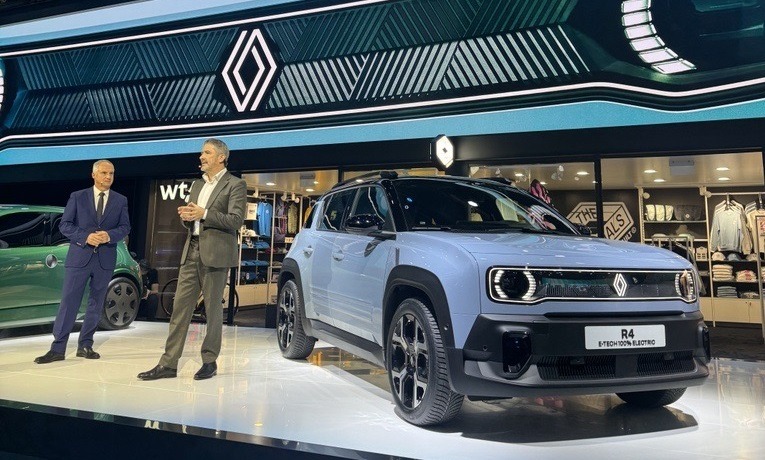
This year’s Paris Motor Show had plenty of world premieres and European debuts. But what did carmakers attending the event have to say? In the latest Autovista24 podcast, journalist Tom Hooker speaks with industry leaders about their design languages. The 90th anniversary of the Paris Motor Show attracted carmakers from across the globe. Speaking with Autovista24, industry experts gave exclusive insights into the design, technology and ambitions behind their newest vehicles. Subscribe to the Autovista24 podcast and listen to previous episodes on Spotify, Apple and Amazon Music. Show Notes Highlights from the 2024 Paris Motor Show What to look out for at the 2024 Paris Motor Show French brands fascinate One brand with a large presence at the event was Renault, as it revealed the new Renault 4. The highly anticipated B-segment battery-electric vehicle (BEV) takes strong design cues from its 1960s predecessor. The brand also unveiled the Renault Emblème, a concept car aiming to tackle carbon emissions throughout its lifecycle. The model features a dual-energy electric powertrain, combining a rechargeable battery for everyday use with a hydrogen fuel cell for longer journeys. Renault’s domestic rival, Citroën, had a large presence at the event too. The manufacturer premiered its C5 Aircross Concept. The model showcases a future C-segment SUV, which will be built on the Stellantis STLA Medium platform. Also on the brand’s stand was the newly revealed C4 and C4 X, with both vehicles due to arrive in dealerships early next year. Leaping into Europe After forming a joint venture with Stellantis and recently launching operations in Europe, Leapmotor was also at the event. The carmaker attracted a large crowd during its press conference, which included Stellantis CEO Carlos Tavares. The brand hosted the global debut of the B10, a C-segment SUV and the first model in its B-series. Other Leapmotor models on display included the C16 mid-size SUV and T03 city car. Peugeot showcased its new e-408. The C-segment BEV follows the release of a plug-in hybrid version in 2022. The new long-range e-3008 and e-5008 models were also on show, offering an electric range of 435 miles (700km) and 415 miles (668km) respectively. BYD made headlines with its new Sealion 7. This Tesla Model Y rival is the eighth electric vehicle (EV) to be launched by the manufacturer in Europe. Additionally, BYD said it is still committed to building two local production facilities in Europe as tariff talks continue. Dacia’s big surprise Dacia revealed the new Bigster. This is yet another C-segment SUV, with three mild-hybrid powertrains and one full-hybrid option on offer. Kia used the event to display its EV3, a compact electric B-segment SUV with high-tech features. It has a range of 375 miles (604km) when opting for its bigger battery. One of its competitors will be the Skoda Elroq. The EV has a 560km range and prices start at around €33,000. It marks the beginning of six BEV Skoda model launches over the coming years. Meanwhile, the Volkswagen Tayron made its public debut. The model is a seven-seat SUV that sits above the Tiguan. Cadillac also made waves, with its new Lyriq and Optiq electric SUVs. One stand that drew a lot of attention was Xpeng, with the unveiling of the P7+. The fastback sedan’s advanced driver-assistance systems feature as standard. More reveals Mini had two global debuts at the event, the John Cooper Works Electric and the John Cooper Works Aceman. The latter provides a range of 355km while the former can reach 371km on one charge. Another world premiere was the Audi Q6 Sportback e-Tron. The midsize SUV has a range of 656km and is built on the premium platform electric or PPE. Alpine also had a sporty reveal for visitors at the show. The A390_β is a precursor to the brand’s future BEV fastback sportscar. BMW showcased its Neue Klasse and Neue Klasse X in Paris. Both provide an outlook on the brand’s future model portfolio, with the former a sporty electric sedan while the Neue Klasse X is an electric SUV.

Displaying 2 of 2 insights