Insights

Tagged:
Clear filters
Industry
Topic
Segment
Aerial view of stockpiled used cars.||| Aftermarket

News

Cross-border used-car remarketing: From opportunity to execution in Europe

Price differences between European used-car markets are creating cross-border sales opportunities for dealers, especially for electric vehicles (EVs). However, after identifying these opportunities, utilising them efficiently and at scale can present a challenge. Tom Hooker, Autovista24 journalist, explores the topic at this year’s Used Vehicle Retail Summit. Different European used-car markets can see varied metrics in terms of pricing, stock days and residual values (RVs). This regional difference also applies to EV demand, which is seeing variable adoption rates across the continent. For example, the average trade RV of 36-month-old battery-electric vehicles (BEVs) at 60,000km diverged between neighbouring countries in March. According to Autovista24's Monthly Market Update, this value sat at €16,371 in France, while in Spain, BEV RVs stood at €24,553. The average number of days needed to sell a two-to-four-year-old BEV also experienced contrasting results across Europe in the month. The turnover rate was 84.2 days in France, compared to an average of 58.8 days in Germany. In this context, cross-border remarketing can unlock potentially untapped value. It allows sellers to capitalise on locations where EV demand is greater, prices are higher, and stock days are lower. It also presents an opportunity to move models away from a market experiencing stagnating demand or oversupply. Cross-border opportunities ‘Supply and demand levels in every single market are continuously evolving and changing. It is simply impossible to manually monitor supply and demand for each market continuously. You need technology,’ outlined Jan-Willem Seeder, founder and CEO of JP.Cars, in his presentation. ‘If you are not using technology, you are always reacting to the market. The concept of supply, demand and marketability is not so complex. The complexity is seeing and monitoring it in real time,’ he noted. Continuously evolving supply and demand can cause different outcomes in each country, even for the same model. Seeder stated that in Germany, all the signals clearly show that [EV] demand significantly outpaced supply. Turnover rates increased, stock indexes dropped, selling indexes rose significantly, and prices went up as well,’ stated Seeder. Jan Willem Seeder, founder and CEO of JP.Cars. ‘If you must buy a BEV in Germany, given these signals, I can imagine it is a very tight market today,’ he said. ‘The question might be, where can I source these cars? Maybe there are markets with other supply and demand ratios across Europe where you could potentially buy similar cars.’ He recognised that there are markets in Europe where supply and demand ratios are different from those in Germany. There could be buying opportunities in numerous markets where buyers could source vehicles. ‘If you have purchased cars for 100 years from a single source in Germany, and that source is providing you with EVs, you will have a very hard time. The market is not local anymore; the market is international,’ he commented. Optimising cross-border adverts Rolf Westgeest, founder of Eurostocks, focused on how cross-border transactions operate on classified marketplace portals. These online platforms allow buyers to search listings and contact sellers directly, rather than purchasing through the platform. ‘There are two things in cross-border trade you can do as a car dealer or retailer. You can go on the auction side with lower prices and fast sales. Or you can go to the classified marketplace portals. It is a higher price, but it could be slower sales of 30 days, 90 days or one year.’ So, if dealers want to benefit from these higher prices, they will need to navigate potentially slower sales. Westgeest highlighted multiple areas where dealers can improve. From left to right: Rolf Westgeest, founder of Eurostocks. Michel van Roon, founder and co-owner of Novatrade24. Westgeest explained that having adverts appear at the top of search queries can help tackle delays. Photo quality and selection can make a big difference in achieving a high search ranking. The number of reviews under a dealer's profile is also important. Using analytics provided by the portals can help optimise every advert, too. Despite all this, lead response times can often be the deciding factor. ‘After one hour, 50% of the leads are lost because they are already in a conversation with somebody else. In these portals, people send multiple emails to different dealerships selling the same cars. The first one to respond can make the appointment and win the sale,’ Westgeest told the audience. Overall, Westgeest highlighted that cross-border sales do not need to be difficult, especially when using marketplace portals. Dealers will see the best results if they choose the right cars, tools, and strategies for online advertising. Cross-border risks Alongside benefits, cross-border used-vehicle sales can also come with some legal risks. This can include unintentional participation in value-added tax (VAT) fraud schemes or money laundering ploys. Michel van Roon, founder and co-owner of Novatrade24, explained that this possibility has caused dealerships to hold back. ‘By not participating [in cross-border sales] dealerships leave money on the table, because they are afraid of getting trapped into these schemes. If you want to step into that game, you need to know the rules. You must keep in mind that the tax authorities will have one question. Did you know or could you have known that your buyer was a criminal?’ outlined van Roon. From left to right: Michel van Roon, founder and co-owner of Novatrade24. Rolf Westgeest, founder of Eurostocks. Van Roon then outlined the evidence dealers must provide to apply the 0% VAT rate when exporting vehicles. The information and research required is extensive. He also noted that the person responsible for this in a dealership is usually a salesperson. ‘If you look at how much time you take in getting leads, a salesperson should not chase documents. They should chase leads. That is their job. So, if you look at this cross-border trade process, it is full of friction,’ he commented. Is cooperation the key? Van Roon suggested that dealerships in the automotive industry cooperate on this issue. To solve it, digital platforms can be used to simplify cross-border vehicle trading. These platforms manage the legal, administrative, and transaction processes between buyers and sellers in different countries. This can make dealers more confident when participating in cross-border sales. It can also increase trust between dealers, tax authorities and banks. ‘Cross-border compliance does not need to hold you back from doing the trades you need to do to get the best results. But beware of the consequences and requirements,’ warned van Roon. Together, these sessions highlighted a clear opportunity in the European used-car market. Price fragmentation, especially among EVs, is creating significant opportunity for sellers. However, only those with the right tools and processes to act across borders stand to benefit.
| Aftermarket

News

The Automotive Update: Hope for Europe’s new and used-car markets?

How will new-car markets transform over the course of 2026? Plus, what is happening with used-car supply and demand in Europe? Autovista24 editor Tom Geggus finds out in the latest Automotive Update podcast. In this episode, Autovista24 reviews the latest JD Power webinar, which explored Europe’s new-car outlook. Plus, a look into the latest residual value (RV) trends in the continent’s used-car market. Subscribe to the Autovista24 podcast and listen to previous episodes on Spotify, Apple and Amazon Music. Outlook for European automotive markets This week, JD Power hosted its latest webinar: Europe’s Auto Forecast 2026: Technology, Policy, and EV Adoption. The session covered Europe’s new-car market outlook from 2026 to 2040 across multiple powertrains. Panellists also delved into the bloc’s diverging electric vehicle (EV) adoption and the factors behind it. Plus, the webinar reviewed upcoming technologies and emerging brands expanding across the continent. Attendees were asked how much they thought Europe’s new-car market would grow, or shrink, by the end of this year. 40% of respondents expected a year-on-year improvement between 0% and 2% compared to 2025. This matched the latest EV Volumes forecast, which projected a 0.2% increase in its March update. However, this was reduced from the 1.5% growth forecast in its December report. The March update also projected overall growth for European light-vehicle sales, which includes new cars and light-commercial vehicles. In 2026, a year-on-year increase of 0.1% is forecast, down from 1.7% in the previous report. The panel also discussed varying EV adoption rates in the bloc. They identified key structural differences that are either limiting or assisting plug-in uptake. Furthermore, the experts showed how, in some instances, EVs are closing the price gap to internal-combustion engine models. This comes as the choice of small EVs on the new-car market continues to widen. Positivity for used-car markets? JD Power experts forecast year-on-year RV declines across European used-car markets in the latest Monthly Market Update. In Austria, France, Germany, Italy, Spain, Switzerland and the UK, values are expected to decline by the end of 2026. However, these drops are expected to be slight. A drop is also projected across all observed markets in 2027. This is the case in 2028 as well, except for Italy, with marginal growth forecasted. RVs became inflated during the COVID-19 pandemic when supply was low, but demand was high. As these drivers balanced out, values underwent a period of normalisation. In March 2026, the active-market volume index (AMVI) for 24-to-48-month-old used cars showed year-on-year growth in every observed market. When compared to February 2026, only the UK suffered a marginal downturn, with a slight 1.1% dip in supply. The sales-volume index (SVI) of 24-to-48-month-old cars also increased compared with March 2025. This trend occurred in six of the seven observed markets, except for Italy, which recorded a 1.1% decline. Month-on-month results were more mixed, as single-digit drops were recorded in France, Italy and the UK. If supply continues to outpace demand, RVs will face increased pressure, with more units available and fewer potential buyers.
| Aftermarket

News

Monthly Market Update: Balanced used car supply and demand in Europe?

Are levels of supply and demand balanced across major European used-car markets? Alongside regional experts, Autovista24 editor Tom Geggus explores the data from March in the latest Monthly Market Update. There were positive developments in both supply and demand across many major European used-car markets during March. Key performance indicators, including the sales-volume index (SVI) and the active-market volume index (AMVI) in many countries, reveal an emerging balance. Cars 24 to 48 months old saw dealership sales increase compared to February in four of the seven observed markets. While changes in France and Italy were marginally negative, the UK saw a double-digit decline. However, the country also saw one of the biggest stock day improvements, with cars taking less time to sell. Changes in the SVI were more uniform across markets when compared with March 2025. Only Italy saw the indicator drop, with a small 1.1% fall. Meanwhile, Germany, the UK and Spain all recorded double-digit increases. Five of the seven observed markets saw year-on-year AMVI growth, exceeding the SVI performance as more used-car adverts appeared. This reveals a normalisation in supply, which was mirrored in the month-on-month results. Only the UK saw a downturn within this comparison. So, many major used-car markets are seeing greater balance in the supply and demand of used cars. However, if supply outpaces demand, residual values (RVs) will feel greater pressure as stock levels exceed the number of buyers. Austria sees stronger turnover Austria’s SVI for two‑to‑four‑year‑old passenger cars continued to improve in March. After a strong rebound in February, the metric increased by 7.1% month on month. Compared with March 2025, the SVI was 3.2% higher, marking an improvement from the year‑on‑year decline reported in February. The AMVI also edged slightly higher. It recorded a 1.7% month‑on‑month increase and a 3.7% year-on-year rise. This confirmed that stock was above last year’s levels. ‘Turnover strengthened noticeably in March,’ highlighted Robert Madas, regional head of valuations. ‘The average time needed to sell a car dropped to 69.7 days, a significant seven‑day month-on-month improvement. Compared to March 2025, days to sell were broadly stable.’ Diesel models took the lead in turnover speed again, with an average of 65.2 days to sell. This was followed by petrol cars taking an average of 70.6 days to sell. Then came plug-in hybrids (PHEVs) at 73.5 days, followed by battery-electric vehicles (BEVs) at 75.7 days. This was a significant improvement of 13.1 days from last month. Full hybrids (HEVs) took the longest time to sell at 79.4 days. Pricing dynamics showed slightly increasing developments. The average trade RV of 36‑month‑old cars at 60,000km increased to €23,070, up 2.1% month on month and 7.8% year on year. Structural depreciation pressures RVs as a percentage of retained list price (%RV) improved to 47.3%, up 0.2 percentage points (pp) compared to February. Year on year, %RVs decreased by 0.7pp, pointing to ongoing structural depreciation pressure amid rising supply and normalising demand. List prices remained at elevated levels, climbing to an average of €48,765, an increase of 1.8% month on month and 9.3% higher year on year. HEVs retained the highest trade value at 50.5%, followed by petrol cars at 49.4%. Then came diesel models with 48.2% and PHEVs with 45.4%. BEVs held the lowest %RV once again, at 37.7%. ‘The RV outlook remained broadly unchanged. %RVs are forecast to decline gradually over the coming years as supply normalises further,’ Madas said. In December 2026, a 0.5% year-on-year decline is forecast. This decline is expected to accelerate to 0.7% in 2027, indicating a slow but steady downward trajectory in retained values. This is consistent with a market that is more balanced and less supply-constrained than in recent years. France sees RV bounce ‘RVs fell slightly in France during March, compensating for the slight increases recorded in previous months,’ explained Ludovic Percier, senior RV analyst for France. ‘This brought the overall RV trend back to levels seen in November 2025.’ Petrol-powered car values decreased marginally but were stable compared with November 2025. Overall, the fuel type has seen a level RV performance, while other powertrains experienced larger decreases. Additionally, petrol is still offered by many manufacturers while diesel models are getting rarer. Diesel recorded a slight RV fall in March but still did better than at the end of 2025. The fuel type continues to see demand in the used-car market. Fleets are also not buying as many new diesel-powered cars as they have previously. HEVs saw a small value drop last month. The powertrain has been gaining popularity among manufacturers as they offer more models with the technology. This means more HEVs on the used-car market, with most of these new entrants being from established brands. Toyota continues to lead the way on the used HEV market. In recent months, three Toyota models have appeared in the top five fastest-selling ranking for the powertrain. Overall, used HEVs are still in demand in France, but carmakers cannot risk adding big price premiums to these models. This would jeopardise their value retention. PHEV supply and demand imbalance The supply and demand for PHEVs remains imbalanced. In previous years, many vehicles were sold to fleets on the back of fiscal advantages, with a high list price on the new-car market. This strategy explains such low RVs. Vehicles offering an electric-only range of below 60km have been most affected. PHEVs were once again among the slower-selling used cars in France. There was a decline in average days to sell in March as more of these models came back from leasing. Compared with newer PHEVs, the electric range of these older units is not as substantial. Larger electric ranges have supported the value retention of more recent plug-in hybrids. BEV values were stable after months of declines. Three years ago, models were being launched with greater ranges. The impact of this can now be seen on the used-car market, with these cars retaining slightly more value. BEVs from lower segments with smaller list prices and lower ranges have been impacted more by the environmental bonus and the social leasing scheme. Upper segments have not yet been affected by the fiscal advantages for fleets. Those vehicles will come to the used-car market in early 2028. ‘BEVs continued to struggle, spending 84 days on average in stock, compared with the overall market average of 66. The powertrain also retained 35.6% of its new car list price after 36 months and 60,000km in March. This was compared to the overall market’s 50.7%,’ Percier outlined. Increased used-car demand in Germany Used‑car demand in Germany increased again in March following a strong rebound in February. The SVI rose by 28.8% month on month. Demand remained well above last year’s level, with the SVI 32.4% higher year on year, indicating a stronger market than in early 2025. ‘Supply conditions also continued to stabilise,’ said Madas. ‘The AMVI was up slightly by 0.9% month on month and 21.2% higher year on year. This confirms a further expansion of available stock and ongoing normalisation of used‑car supply.’ The average number of days needed to sell a used car hit 65.5 days, a 2.8‑day improvement month on month. However, this was 3.9 days longer than a year ago, signalling that despite improved turnover, the market remains slower. Looking at powertrain performance, BEVs were the fastest-selling technology, taking 58.8 days to leave forecourts. Then came PHEVs at 62.4 days. Diesel cars followed at 64.5 days, while HEVs took 66.4 days. Petrol-powered cars sold the slowest, at 68.6 days. RVs still under pressure RVs remained under pressure in the country, as %RVs fell to 46.5%. This was down 0.3pp month on month and 1.1pp year on year. Absolute trade RVs also decreased to €21,532, a 1.4% decline month on month, though still 1.1% higher year on year. ‘Meanwhile, list prices dipped to €46,345, down 0.6% from February, but remained 3.6% higher compared to a year ago. This continued a long‑term upward trend in new‑car pricing,’ Madas commented. By fuel type, petrol-powered cars continued to lead with a %RV of 48%, followed closely by diesel at 47.8% and HEVs at 47.2%. PHEVs held on to 43.1% of their value, while BEVs remained the lowest at 37.1%, maintaining the powertrain gap observed throughout 2025. Looking ahead, gradual downward pressure on %RVs is still expected as supply normalises further. By the end of 2026, %RVs are projected to decline by 1.6% compared with December 2025. Pressure is predicted to ease somewhat in 2027, with a smaller decline of 0.9% expected. This indicates ongoing RV strain, driven by recovering supply, normalising demand, and elevated list prices. Weaker Italian market? ‘The Italian used-car market continued to show signs of weakness in March. This confirmed a negative trend which has been persistent for several months,’ explained Marco Pasquetti, cluster head of forecasting for Spain and Italy. The SVI indicates overall demand stability. Levels were slightly lower than both February 2026 and March 2025, but the drops cannot be considered particularly significant. As for sales pace, the average days to sell stood at 59.1 days. This marks an increase of 1.7 days compared to the previous month, yet still 6.4 days fewer than in March 2025. Based on the latest figures, the outlook for the end of 2026 remains negative. Compared with 12 months ago %RVs were down. Levels fell from 48.8% in March 2025 to 45% a year later. PHEVs saw the most pronounced %RV drop, down 5.2pp to 39.1%. BEVs also saw value retention fall, down 2.7pp to 28.3%, confirming a general cooling in demand for electric powertrains. Spain regains momentum ‘After a more subdued January, the Spanish new-car market appears to have regained the momentum it ended 2025 with,’ said Ana Azofra, regional head of valuations and insights. ‘In February, 97,082 units were registered, representing a 7.5% year-on-year increase, confirming the market’s positive trend.’ Electric vehicles (EVs) continued to be the main driver of sales, with registrations increasing by 21.6% year on year. This meant BEVs and PHEVs took a 21.6% market share in February. This momentum is expected to increase once the regulatory framework of the new Auto+ Plan is announced. It will not only incentivise the purchase of BEVs and PHEVs but also the installation of home charging points. In addition, rising fuel prices are likely to further increase interest in EVs. Stable used-car market ‘Used‑car sales have not followed the same trend in the first few months of the year. The market currently appears more stable,’ said Azofra. ‘Transaction prices have remained broadly stable, having changed by approximately €10 since February’s report.’ Specifically, the average price of a typical three-year-old used car at 60,000km, traded between professionals, is just under €20,342. This resilience means prices remain 2.4% above the level recorded in March 2025. As recorded by the AMVI, a 6.8% increase in supply is helping support price stability. However, performance varied by powertrain. Petrol, diesel and HEV models have seen positive value retention, while BEVs and PHEVs recorded marginally negative adjustments. Month on month, the absolute RVs of PHEVs dipped by 0.6%, while BEVs experienced a larger fall of 2.4%. However, both powertrains saw levels remain well above those recorded in March 2025. Despite these minor adjustments, significant declines are not expected. This follows the improvement of a key-performance indicator in March: the number of days needed to sell a used car. The current average time stands at 78.8 days, ranging from 86.2 days for BEVs to just 69 days for full hybrids. As a result, the ranking of the fastest‑selling models in March was led by the Toyota RAV4. Leading the HEV category, it took only 13.2 days to sell. It was followed by the Hyundai Ioniq and Hyundai Kona, with 41.2 and 42.8 days, respectively. Switzerland sees demand improvement Used‑car demand in Switzerland continued to improve in March following a recovery in February. The SVI rose by 1.3% month on month. Compared with March 2025, this key-performance indicator for demand was 2.4% higher. This confirmed a growing trend after the disruption seen at the start of the year. Supply conditions also improved slightly. The AMVI was up 0.8% month on month and 3% year on year. This indicates that stock remains above last year’s levels, supporting broader market stability. Madas confirmed that: ‘%RVs continued to decline in March. The average %RV for a 36‑month‑old car at 60,000km dropped to 41.5%, representing a 0.2pp decline month on month and a 2.6pp decline year on year. There is persistent depreciation pressure in Switzerland, driven by rising list prices and more balanced supply and demand.’ HEVs retained the most value of any powertrain in March by far at 46.7%. Then came petrol-powered cars at 42.9%, diesel-powered models at 41.3% and PHEVs at 39.4%. BEVs continued to be the worst-performing powertrain, holding only 35.5% of their original list price. Slower value descent forecast Absolute trade RVs increased slightly to CHF 26,716 (€29,036). This was up 0.9% compared with February, and 2.4% higher than a year ago. Rising list prices continue to support absolute used‑car values despite the downward movement in %RVs. List prices climbed to CHF 64,368, a 1.3% month‑on‑month increase and a strong 9% rise year on year. The average time needed to sell a used car stood at 77.8 days. This was a marginal improvement of 0.1 days month on month and a stronger 0.5‑day improvement year on year. This indicates that turnover is holding up reasonably well despite ongoing value pressure. BEVs sold fastest at 73.4 days, followed by petrol cars at 76.4 days and by HEVs at 78.2 days. This was followed by diesel cars at 79.7 days. PHEVs took the longest to leave forecourts at 88.8 days. ‘Looking ahead, %RVs are forecast to decrease further in the coming years, but at a slower pace,’ Madas outlined. ‘By the end of 2026, %RVs are expected to fall by 1.5% compared to December 2025. A further 0.5% drop is anticipated in 2027.’ UK feels plate-change effect ‘RVs in the UK continued to trend downwards in March, albeit marginally,’ said Jayson Whittington, regional head of valuations for the UK. ‘RVs presented as a percentage of retained list price after 36 months and 60,000km declined by 0.7pp compared with February.’ Petrol and PHEV values saw the biggest declines in the country, down by 0.6pp and 0.7pp, respectively. Meanwhile, BEVs bucked the downward trend with a 1.1pp rise. However, it is important to remember that the month’s plate-change effect can mask true market performance. In March, a car registered three years ago will display a 23 plate, yet in February, a three-year-old car would show a 72 plate. This plate distinction commands a higher value in the region of 3pp. So, without the plate-change effect, there would have been a greater decline compared to February. A direct comparison with March 2025 shows market-wide %RVs fell by 2.8pp. Across all powertrains, vehicles averaged 39.5 days to sell, improving by 6.5 days month on month. BEVs once again recorded the fastest turnaround at 33.9 days. Sales activity softened. The SVI dropped by 11.3% compared to February. Most fuel types experienced a significant reduction, except for BEVs, which recorded a 3.6% increase. The overall AMVI showed a marginal advert reduction of 1.1%, which indicates reasonable supply stability. The volume of BEVs increased this month by 13.6%, as dealers took advantage of the increasing popularity of the powertrain. Overall, March brought improved stock turnover but weaker RV performance in the UK. It will be interesting to monitor vehicle supply in the coming weeks. Part exchanges and lease de-fleets generated by March’s plate change will begin hitting retail forecourts.
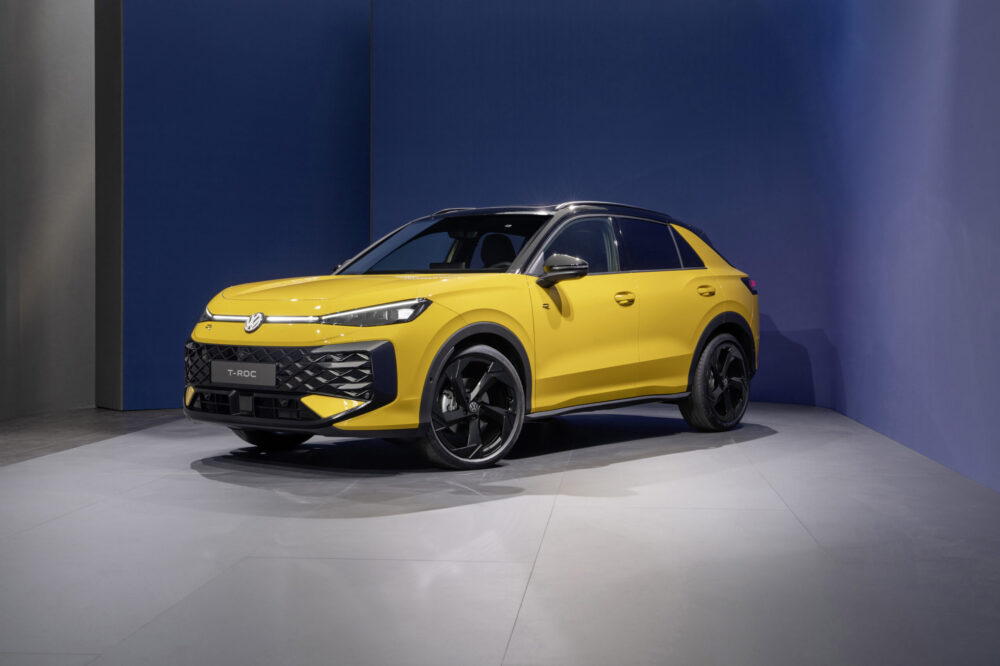
Image of a yellow Volkswagen T-Roc|||||||||| Dealer

News

Launch Report: Latest VW T-Roc provides a new yet familiar feel

The second generation of the Volkswagen (VW) T-Roc has been long-awaited. But do improvements to the SUV make it more appealing? Autovista24 special content editor Phil Curry reviews the model alongside regional experts. The VW T-Roc sits between the Tiguan and the T-Cross in the carmaker’s SUV lineup. Now the second generation aims to maintain the momentum of the first. To do this, the manufacturer appears to have listened to drivers. VW has updated what already worked and changed what did not in the first generation. In doing this, they have created a new model that is expected to appeal instantly. Click here to open the interactive dashboard Autovista24’s latest Launch Report benchmarks the VW T-Roc against its key competitors in Austria, France, Germany, Spain and the UK. Regional experts also provide a breakdown of the car’s strengths, weaknesses, opportunities and threats. Evolution of the T-Roc VW has adopted an evolutionary design philosophy for the new T-Roc. However, it is bold enough to work. Sometimes transitional styling options can make a new model feel old or unappealing. Yet the carmaker has created something which stands out, making it attractive to new and old buyers. The new T-Roc links into VW’s current design language. It features a lower grill and a sweeping LED light bar across the front end, between the narrow headlights. There is also an illuminated badge to show the branding even at night. This does make it look reminiscent of the ID. range, but with no battery-electric option, this could prove polarising. Source: VW Press UK Source: VW Press UK Source: VW Press UK The rear also features a full-length light bar and an illuminated badge. With a sweeping diffuser, its angular look provides a dynamic profile. The R-Line model leans into its sporty design credentials, with bigger wheels and a bigger grill. It also gets a floating roof, to add to the dynamism. But the new design also provides the new VW T-Roc with larger dimensions than its predecessor. On the outside, this makes it look bigger and safer, giving it a larger stance. Inside, this means more room for occupants. A quality interior While the exterior styling is evolutionary, VW has taken the interior to another level. Inside, the previous generation was rather safe and unassuming. In the new generation, a lot of thought has gone into providing a comfortable, high-quality feel. Yet it is also not a bold design. A large centre console runs down the middle, separating the driver and passenger while giving a sense of comfortable confinement. The steering wheel is practical, with numerous physical buttons for various vehicle systems. VW has moved away from the ‘slider’ buttons, which proved divisive on other models. Source: VW Press UK Source: VW Press UK Source: VW Press UK A display behind the steering wheel provides plenty of driver information, while the 12.9-inch infotainment screen is responsive and clear. The lowest-trim model has a 10.3-inch screen, but it is still a decent size. The dashboard is large, but the materials used provide a sense of quality. This does not feel like a cheap car. Instead, it feels more premium moving through VW’s SUV range to the top-level Tiguan. Rear-seat passengers also get plenty of legroom, and headroom is good too. There are plenty of storage areas, while the 475-litre boot provides ample space. T-Roc on the road The new T-Roc comes with a complement of 1.5-litre petrol mild-hybrid powertrains, in either 110hp or 150hp offerings. Further engine specs are planned for a future launch, as well as hybrid options. However, there is no pure battery-electric variant currently available. The carmaker has developed the T-Roc well. It provides a smooth driving experience, with precise steering and effective brakes. However, the ride can get a little bumpy on more imperfect roads. This is particularly pronounced in models with the larger specification alloy wheels. Source: VW Press UK Acceleration is effortless and is aided by a dual-clutch system, allowing the seven-speed automatic gearbox to change seamlessly. It all adds up to make driving the T-Roc easy, despite its size. Overall, VW has re-engineered the T-Roc into a car that drivers want. It provides a quality feel and a better design than its predecessor. However, it has not strayed too far from the popular first model. In a continually growing automotive segment, with many new players appearing, the T-Roc achieves something different. It does not stand out because it is new, but because it is familiar. View the interactive dashboard, which benchmarks the VW T-Roc in Austria, France, Germany, Spain and the UK. The interactive dashboard presents new prices, forecast RVs, and SWOT (strengths, weaknesses, opportunities, and threats) analysis.
Aftermarket

News

Monthly Market Update: Are RVs still vulnerable in 2026?

Residual values (RVs), presented as a percentage of retained new-car list price (%RV), kept sliding in Europe during February. But is this descent slowing, and what comes next? Autovista24 editor Tom Geggus unpacks the data with regional experts. The average retained value of a 36-month-old car at 60,000km dipped again across many European used-car markets. In February, Austria, Germany and Switzerland saw new lows compared with the last 12 months. Meanwhile, France and Spain saw lower value retention rates in January. At the start of 2026, Italy and the UK saw %RVs above rates recorded in December and August 2025, respectively. Both France and Spain saw a marginal month-on-month %RV improvement. Meanwhile, Austria, Germany, Italy, Switzerland and the UK recorded declines compared with January 2026. The downward trend is much more visible when comparing February 2026 with February 2025. All markets saw %RVs decline, with Italy performing the worst. Values dropped to 45.5%, down by 4.1 percentage points (pp) in the country. While this appears drastic, trade values are still undergoing a process of normalisation following inflation during the COVID-19 pandemic. Compared with 2021, all markets continue to see higher levels of value retention. Switzerland was the closest to its position five years ago, with values only 1.1pp higher. Three-year-old used cars in Germany continue to see higher levels, 4.5pp above where they were in 2021. %RVs are expected to keep falling across these markets in the next three years. Italy is the only exception, which is forecast to see a marginal increase by the end of 2028. By the same point, France and the UK are expected to see the largest %RV declines of the seven markets. Austria’s subdued market Austria’s sales‑volume index (SVI) for two‑to‑four‑year‑old passenger cars recovered significantly in February. After a traditionally weak January, the SVI increased by 52.9% month on month. However, the SVI remained down compared to February 2025, with the index dropping 7.6% year on year. The active‑market volume index (AMVI) also witnessed a slight bounce back. It rose by 1.4% month on month, while stock levels were 4% higher year on year. This indicates a well‑supplied market and a modest build‑up compared to 2025. ‘Turnover slowed again in February,’ stated Robert Madas, regional head of valuations. ‘The average time needed to sell a used car increased to 76.7 days. This marks a three‑day deterioration compared with January and a year-on-year increase of 1.5 days. This underlined subdued retail activity, despite improved sales volumes.’ Diesel models took the lead in turnover speed, taking an average of 71.5 days to sell. This was followed by petrol cars taking an average of 74.4 days to sell. Then came full hybrids (HEVs) at 78.3 and plug-in hybrids (PHEVs) at 87.9 days. Battery-electric vehicles (BEVs) continued to take the longest time to sell at 88.7 days. RVs soften in February Looking at pricing, the average RV of a 36‑month‑old car at 60,000km softened in February. The average trade RV reached €22,623, down 0.6% month on month. %RVs in Austria declined to 47.1%, down 0.7 percentage points (pp) compared to January. Year on year, %RVs decreased by 1.4pp, reflecting continued downward pressure on used‑car values amid rising supply and normalising demand. List prices remained high, averaging €47,987 in February, a slight 0.8% increase month on month. HEVs retained the highest trade value at 50.2%, followed by petrol cars at 49.3%. Then came diesel models with 48% and PHEVs with 43.9%. BEVs held the lowest %RV once again, at 38.8%. However, this was a slight improvement of 0.2pp month on month. ‘Looking ahead, %RVs are expected to decline slightly in the next few years,’ said Madas. ‘In December 2026, a 0.6% year-on-year decline is forecast. A 0.7% decrease in 2027 is expected to follow. ‘This points to a slow but persistent downward %RV trend in the coming years. This is consistent with a rebalancing market environment and ongoing supply normalisation,’ he highlighted. France sees stability RVs continued to be stable in France during February. Some powertrains saw slight month-on-month increases, although this was mainly due to a value drop in January. However, February’s results were stable compared with December 2025. Petrol saw %RVs after 36 months and 60,000km increase compared with January. Yet they fell compared with December. Recent %RV declines for petrol have been minor as the fuel type holds its value better than other powertrains. ‘Many manufacturers offer petrol variants while diesel has become rarer,’ commented Ludovic Percier, senior RV analyst for France. ‘However, diesel has seen less impact, even managing to record %RV increases compared with January.’ HEVs saw stability in February, but their %RVs were below December’s results. This continues a declining value retention trend seen in recent months. This can be attributed to the increasing number of HEVs offered in France, most of which are from mainstream brands. These models do hold value as well as Toyota’s HEVs. Three of the top five fastest-selling HEVs came from the Japanese brand. Used HEVs are in demand, but carmakers cannot risk adding big price premiums at the expense of RVs. Supporting EV RVs Used BEVs and PHEVs took the longest time to sell in France. However, RVs can be supported by newer models with increased ranges. While %RVs increased month on month for both powertrains, they fell compared with December. PHEV demand and supply remain imbalanced. In previous years, many of these vehicles were sold to fleets on the back of fiscal advantages. They came with excessive new-car market list prices, explaining the lower RVs. Models offering an electric-only range of below 60km have been the most affected. Higher-priced BEVs with longer driving range have seen larger absolute RVs and more stable %RVs. Lower segments with lower list prices and smaller ranges have been impacted by the environmental bonus and social leasing scheme. ‘Meanwhile, upper segments have not yet been impacted by fiscal fleet advantages,’ Percier added. ‘Those vehicles will come to the used-car market in early 2028.’ BEVs spent 85.5 days in stock on average, compared with the market average of 67.2, which is also high. The Tesla Model 3 was still the quickest to sell, while the Model Y was the third-fastest-selling used BEV. They remain in demand as their new prices drop once again. Demand rebounds in Germany Used‑car demand in Germany rebounded significantly in February after the seasonal downturn seen at the start of the year. The SVI jumped to 143, representing a 43% month‑on‑month increase. Despite this strong recovery, the SVI was down 13.7% year-on-year, as demand remained below last year’s level. Supply conditions also improved. The AMVI rose slightly by 1.1% from January. Year on year, stock availability was 22.6% higher, confirming a continued and substantial rebuild of used‑car supply. ‘The average number of days needed to sell a used car increased to 68.3 days. This was a noticeable deterioration of 3.3 days month on month and year on year,’ highlighted Madas. Looking at powertrain performance, BEVs were the fastest-selling technology, taking 61.6 days to leave forecourts. Then came PHEVs at 62.4 days. HEVs followed at 63.2 days, while diesel-powered vehicles took 69.9 days to sell. Petrol-powered cars sold the slowest, at 70.9 days. Renewed pressure on RVs RVs came under renewed pressure in February. The average %RV of 36‑month‑old cars at 60,000km declined slightly to 46.8%. This was down 0.1pp month on month and 0.9pp year on year. In contrast, absolute trade values increased slightly to €21,855, a 1% improvement from January. This was supported by the continued rise in list prices, which climbed to €46,664. This was up 1.1% compared to January and up 4.2% year on year. By powertrain, petrol-powered cars continued to lead with a %RV of 48.3%, followed closely by diesel at 48.2% and HEVs at 47.5%. PHEVs held on to 44.1% of their value, while BEVs remained the lowest at 37.1%, maintaining the gap observed throughout 2025. Looking ahead, RVs are expected to remain under pressure, in line with previous forecasts. By the end of 2026, %RVs are projected to decline by 1.4% compared with December 2025. ‘Pressure is predicted to ease somewhat in 2027, with a smaller decline of 0.9% expected. This indicates ongoing RV strain, driven by recovering supply, normalising demand, and elevated list prices,’ Madas outlined. Values fall in Italy ‘As expected, RVs continued to decline in Italy during February, in line with the trend observed in 2025,’ said Marco Pasquetti, cluster head of forecasting for Spain and Italy. %RVs after 36 months and 60,000km stood at 45.5%. This corresponds to a decrease of 0.7pp compared to January and a drop of 4.1pp year on year. There are no signs of this trend reversing, with the downward trajectory likely to persist throughout 2026. By December, %RVs can be expected to decline by 6.2% overall. There were no surprises across the various powertrains. All of them saw proportionally consistent declines in line with the overall market trend. Diesel, although declining, remained the technology with the best retention of list price value at 50.1%. In terms of volume, it also continues to be in high demand on the used‑car market. This is likely due to signals from some manufacturers that they are considering reinvesting in these engines, including Stellantis. The average time required to sell a used vehicle on major online marketplaces improved compared to January 2026 and February 2025. In particular, the year-on-year improvement is notably positive for BEV and PHEV vehicles. If this trend continues, it could indicate a slowdown in the decline of RVs for these powertrains. Bad start for Spain’s used-car market New-car sales in Spain began 2026 with a slight increase of 1% compared to January 2025. Electric vehicles (EVs), including BEVs and PHEVs, showed strong momentum. Sales of these powertrains increased by nearly 50% as they represented over a fifth of the new-car market. By channel, private buyers and companies recorded significant declines. Only rental companies saw their registrations increase, up by 63.5%. These rent-a-car renewals have returned a significant volume of young used vehicles to the market. This made it the only channel to record positive results compared with January 2025. ‘Overall, the start of the year has not been good for used-car sales, which fell by 9%,’ noted Ana Azofra, head of valuations and insights for Spain. ‘BEVs and PHEVs continue to gain share, benefitting from growing demand for electrified alternatives,’ she added. ‘This increased interest is reflected in the evolution of average transaction prices, with increases across all electrified powertrains.’ Average absolute RVs of 36-month-old BEVs and PHEVs at 60,000km saw month-on-month increases of 5.3% and 8%, respectively. Only petrol vehicles suffered a slight month-on-month decrease in their average absolute RV, down 0.5%. Although the overall situation is positive, used cars saw a longer turnover rate compared with January 2026 and February 2025. The only exception was BEVs, which sold 13.3 days faster than 12 months ago. Despite this, the powertrain still took the longest time to sell. The model with the best rotation times in February was the Dacia Sandero, with an average rotation of 42.4 days. Then came the Volkswagen T-Roc with 51.2 days, and the Toyota Corolla with 53.5 days. Switzerland sees weaker RVs Used‑car demand in Switzerland made a good recovery in February. The SVI surged by 48.5% month on month. Despite this rebound, demand remained 2.1% lower year on year, indicating continued pressure compared to early 2025. Supply conditions softened slightly. The AMVI fell by 2.3% month on month but remained 5% above last year’s level. This confirms that stock availability is still higher than in early 2025 despite the temporary dip. ‘%RVs weakened in February,’ Madas commented. ‘The average %RV of a 36‑month‑old car at 60,000km dropped to 41.7%, down 0.8pp month on month and 2.9pp year on year. This underlines the ongoing depreciation pressure in the Swiss used‑car market.’ In absolute terms, trade RVs decreased slightly to CHF 26,501 (€29,062), a 0.9% month‑on‑month decline. Yet, this was still 0.9% higher year on year. List prices continued to rise, averaging CHF 63,610, representing a 1.2% increase month on month and an 8.1% rise year on year. This ongoing inflation in list prices helps support absolute used‑car values, even with falling %RVs. HEVs still on a high HEVs retained the most value of any powertrain in February by far at 46.7%. Then came petrol-powered cars at 43.2%, diesel-powered models at 41.5% and PHEVs at 39.7%. BEVs continued to be the worst-performing technology, holding only 35.5% of their original list price. The average time to sell a used car increased marginally in February, rising to 77.9 days. This was 0.4 days slower month on month, but still a strong 4.3‑day improvement year on year. This reflects better turnover conditions than in early 2025. HEVs sold fastest at 69.4 days, followed by BEVs at 75 days. This was followed by diesel cars at 77.2 days and petrol-powered models at 78.6 days. PHEVs which took 82 days to leave forecourts. Looking ahead, %RVs are forecast to decrease further in the coming years, but at a slower pace. By the end of 2026, %RVs are expected to fall by 1.4% compared to December 2025. A further 0.5% drop is anticipated in 2027. UK sees strong growth ‘The UK’s used-car market recorded strong growth in February 2026,’ commented Jayson Whittington, regional head of valuations for the UK. ‘Overall, there was a clear upswing in sales momentum, led by electrified powertrains. However, pricing pressures remained evident across most fuel types.’ All fuel types posted positive month-on-month SVI gains. On average, the metric was up by 25% across all powertrains, highlighting broad demand. BEVs led the market with a 29.8% rise, closely followed by PHEVs at 29.6%. HEVs recorded a 26.3% increase, reflecting strong consumer interest in electrified choices. Petrol models performed well with a 24.8% month-on-month increase, driven by continued affordability and availability. Diesel, while posting the lowest rise at 16.1%, still demonstrated strong growth for a fuel type facing long-term declines. Despite the uplift in retail activity, the overall time taken to sell a used vehicle increased by 2.7 days to 46 days. BEVs once again led the way, taking an average of 37.4 days to sell. They were supported by fast-turning models, including the Tesla Model Y at 22.6 days and the Volvo C40 at 23.7 days. %RVs of 36-month-old cars at 60,000km were more mixed. Month on month, the overall %RVs slipped 0.8pp to 49.1%. The value retention of petrol-powered cars fell by 0.8pp as well, to 50.5%. Meanwhile, PHEV %RVs softened by 1.1pp to 46.2%. HEVs declined marginally by 0.2pp to 53.2%. BEVs saw the steepest drop, by 1.6pp to 35.2%. Diesel was the only segment to improve, rising by 1.7pp to 57.4%.
The all-new Mercedes-Benz CLA: exterior: AMG Line Dealer

News

Launch Report: Award-winning Mercedes-Benz CLA impresses with range

As an award-winning car, the Mercedes-Benz CLA is already proving itself on the European stage. But how does this translate into expected residual value (RV) performance? Autovista24 special content editor, Phil Curry, reviews the model alongside regional experts. The new Mercedes-Benz CLA battery-electric vehicle (BEV) is providing the German carmaker with headlines. At the Brussels Motor Show, the model was presented with the European Car of the Year title for 2026. The success of the model, voted for by motoring journalists across Europe, highlights the prowess of the CLA. With an impressive design, comfortable handling and strong driving range, it offers much to buyers. Click here to open the interactive dashboard Autovista24’s latest Launch Report benchmarks the Mercedes-Benz CLA against its key competitors in Austria, France, Germany, Italy, Spain and the UK. Regional experts also provide a breakdown of the car’s strengths, weaknesses, opportunities and threats. A bright start for design The new model cuts an impressive figure in either a coupé or shooting-brake body style. This gives the CLA sleek lines and a low profile that provides a premium look. Although this comes at the cost of practicality. Source: Mercedes-Benz At the front, the false grill features 142 stars, which illuminate at night, providing a striking visual component. This is not the only use of the three-pointed star. Alongside the traditional Mercedes-Benz logo, the pattern is used in the headlights. The LED light bar extends across the front above the grill, continuing a trend seen on other Mercedes-Benz electric models. However, it looks slightly out of place, sitting high up above the grill, impacting the clean lines. On the plus side, the bar does provide increased visibility at night. The sweeping side profile and simple rear styling provide a sporty look but remain reminiscent of internal-combustion engine (ICE) models. Carmakers can develop BEVs with an outlandish design, but this runs the risk of alienating some buyers. In this guise, the CLA will appeal to a broader range of drivers. Inside the Mercedes-Benz CLA Inside, the Mercedes-Benz CLA is comfortable, with a low seating position up front contributing to the sporty feeling. For the most part, material quality is good, although some hard plastics point away from the overall premium feel. The new CLA utilises the Mercedes-Benz Operating System (MB.OS). This provides an AI-enhanced experience, capable of adapting to the driver’s mood and providing quicker responses to queries. The infotainment system is also quick and intuitive. On-board navigation uses Google data, providing accurate information on travel and road conditions. Source: Mercedes-Benz Sweeping around the dashboard are a pair of screens, including the central 14-inch touchscreen, which houses the infotainment system. Behind the steering wheel is a 10.25-inch driver display. The carmaker offers the MBUX Superscreen setup, which places a third, 14-inch screen in front of the passenger. This allows them to stream videos and have their own display separate from the driver. Questionable controls The German carmaker has embraced the touchscreen control culture that others are starting to pedal back on. Many of the basic controls in the CLA are found within the infotainment system’s menus, rather than on physical buttons. These are easier to find than in some other models, but could prove distracting. This includes the window demisters and heated seating controls. Drivers will also have to find the option to switch the window buttons from front to rear, with only two physical controls for these. Source: Mercedes-Benz Additionally, while the steering wheel is high quality, the touch-sensitive buttons can prove troublesome. These have been switched for physical components in other vehicles, but Mercedes-Benz has stayed the course. Another questionable control option is the location of the regenerative braking settings. The CLA does not feature paddles behind the steering wheel. Instead, the driver flicks the gear selector lever located behind the steering wheel, making the control more awkward. Source: Mercedes-Benz The new CLA also struggles with practicality. While there is plenty of space in the front, rear-seat passengers are affected by the coupé-style roofline and high floor. Boot space is also at a premium, with just 405 litres available. However, the CLA does offer a 101-litre frunk, providing an alternative storage location. Impressive range from Mercedes-Benz CLA The new CLA features an 85kWh battery and a single 272hp electric motor. This provides an impressive 483-mile (777km) range. While the BMW iX3 offers 500 miles, it has a much larger battery. Built on the new Mercedes-Benz Modular Architecture (MMA) platform, designed for both BEV and hybrid powertrains. The CLA also uses an 800-volt system. This allows the battery to charge at up to 320kW. This allows for over 190 miles of range to be added in 10 minutes. However, the current system requires either rapid chargers or DC charging at home, and will not work with other charging systems. An optional convertor is planned for future models, according to Auto Express. In terms of driving, the suspension is smooth and soaks up road imperfections. Braking is also precise, with the regenerative braking and one-pedal driving working well to put energy back into the battery. The steering is light enough to make the CLA easy to use in town, but also holds its own on motorways. All of this combines to make the model fun to drive over its long range. The Mercedes-Benz CLA has some small failings. Yet the impressive range, together with clear and smooth styling, comfort and premium feel, takes the focus away from these. Overall, the car offers plenty for the driver, and those who aspire to the German brand will not be disappointed. The car is worthy of its European Car of the Year title. View the interactive dashboard, which benchmarks the Mercedes-Benz CLA in Austria, France, Germany, Italy, Spain and the UK. The interactive dashboard presents new prices, forecast RVs, and SWOT (strengths, weaknesses, opportunities, and threats) analysis.
Car tires closeup on asphalt road on summer day at park. Vehicle outdoors in nature with beautiful sunlight. Aftermarket

News

Monthly Market Update: Which used cars are selling quickly across Europe?

In Europe, new-car list prices continued to rise as consumer price indices (CPIs) stuck close to record levels. As affordability pressures increase, used-car demand could grow in 2026. Against this backdrop, which models are already selling quickly this year? Tom Hooker, Autovista24 journalist, investigates. Major European automotive markets entered 2026 following elevated CPI results in 2025. In December, the EU was 12 basis points (one basis point equals 0.01%) off a record high, Trading Economics reports. The UK’s Office for National Statistics saw its CPI index continue to climb compared with 2015. Switzerland stood out as an exception, with inflation remaining stable year-on-year in December, according to Trading Economics. Meanwhile, new-car list prices continued to climb compared to 12 months ago across all observed markets. Austria, France, Germany, Italy, Spain, Switzerland and the UK all recorded year-on-year increases in January. Spain saw the biggest new-car list price increase with 8.9%, followed by Austria at 8.4%. At the same time, major used-car markets have recorded growing sales volumes. As new-car prices and CPIs climb upwards, the used-car market may present a more affordable option for consumers. With this in mind, what used models are already selling quickly this year? Fastest-selling used cars in 2026 Across observed markets in January, the fastest-selling two-to-four-year-old used car was seen in Austria. The Audi Q3 took an average of just 27.7 days to leave forecourts. However, the average was recorded across just 15 units in the month. In the UK, the Tesla Model Y led the fastest-sellers chart. It posted an average turnover rate of 29.6 days from 458 units. The battery-electric vehicle (BEV) placed ahead of the MG ZS, which was the country’s fastest-selling used petrol car. The Tesla Model Y was also Switzerland’s fastest-selling two-to-four-year-old used car, taking 34.4 days to change hands. Yet, this was based on a much lower sales total of 25 units. In Italy, the Dacia Sandero topped the chart, shifting 229 units in an average of 33.3 days. It was also the country’s fastest-selling compressed natural gas (CNG) model. Its sibling, the Dacia Duster, secured second place overall while leading the diesel chart. Toyota Yaris’ speedy turnover Roughly half a day separated the top two fastest-selling models in France during January. The Toyota Yaris led the leaderboard, moving 1,360 units in an average of 38 days. The Hyundai Tucson trailed with a much smaller transaction total of 288 units, recording a turnaround rate of 38.6 days. Volvo’s XC40 was the fastest-selling model in Germany. The SUV took 39.6 days to leave dealer forecourts, with 242 sales recorded. Close behind was the Mercedes-Benz EQA with a 40.2-day turnover rate on average. In Spain, Toyota took four of the five fastest-selling model positions. The Corolla led the pack, moving 63 units in an average of 42.3 days. The C-HR came second, while the Yaris took third. This meant that out of all observed markets, the hatchback appeared in the top five fastest sellers table in three different countries. The only non-Toyota in Spain’s fastest-sellers list was the Peugeot 5008 in fourth. The model also topped the standalone diesel standings. Fifth went to the Toyota Yaris Cross. Seasonal effects in Austria ‘Austria’s sales-volume index (SVI) for two-to-four-year-old passenger cars weakened sharply in January due to seasonal effects. Compared to December, the SVI dropped by 28.7%, reflecting a pronounced seasonal slowdown at the start of the year,’ outlined Robert Madas, regional head of valuations. ‘Yet, the index declined only by 5.5% year on year. This underlined that demand was just a bit softer than a year ago, despite some stabilisation in prices,’ he commented. The active-market volume index (AMVI) also eased slightly month on month, falling by 1.2% compared to December. However, supply was 1.1% higher year on year. This indicated that stock levels remain relatively well balanced and slightly above last year’s level. The average time needed to sell a used car increased further in January, rising to 69.6 days. This represented an increase of around one day compared to December and a nearly three-day deterioration year on year. Compared to the beginning of 2025, this signalled slower turnover and weaker buyer activity. Among powertrains, full hybrids (HEVs) took the lead in turnover speed, taking an average of 62.7 days to sell. This was followed by diesel-powered cars, which took an average of 63.2 days to sell. Then came petrol-powered models at 69.6 days and plug-in hybrids (PHEVs) at 71.8 days. BEVs showed significantly worse turnover speed compared to the previous month and one year prior. The technology continued to take the longest time to sell at 89.8 days. Short-term price support The residual value (RV) of 36-month-old cars at 60,000km, expressed as a percentage of original list price (%RV), was 47.8% in January. ‘This marked a 0.5 percentage-point (pp) increase compared to December. However, it also equated to a 0.4pp decline year on year. This suggests short-term price support despite a structurally softer market,’ highlighted Madas. In absolute terms, the absolute trade RV rose to €22,742.9. This was up 2.5% month on month and 7.4% higher than a year earlier. The increase was partly driven by higher list prices, which climbed to an average of €47,573. This was up 8.4% year on year. HEVs retained the highest trade value at 50.2%, followed by petrol cars at 49.9%. Then came diesel models with 48.6% and PHEVs with 45.4%. BEVs held the lowest %RV once again, at 38.6%. However, this was a slight improvement of 0.1pp month on month. Looking ahead, %RVs are expected to decline slightly in the next few years. In December 2026, a 0.7% decline compared to December 2025 is forecasted. A 0.6% decrease is expected to follow in 2027. Declining residual values in France %RVs decreased slightly in France during January, while list prices remained stable. Overall, used-car volumes are always lower in January than in December, with the former being a historically quiet month. Compared to December 2025, all powertrains took longer to sell on average. This was except for BEVs, which already took 90 days on average. Petrol-powered cars followed the general trend of the month, while the RVs of diesel-powered vehicles were slightly less impacted. Used diesel models are still in demand in France as the volume of new internal-combustion engine (ICE) cars shrinks. ‘HEV %RVs decreased year-on-year. This marked a departure from the recent trend over the last few months, where the technology held value relatively well. This is also linked to the increasing number of HEV models offered in France. Most of these new entrants are from mainstream brands,’ said Ludovic Percier, senior RV analyst for France. ‘These cars do not hold RVs as well as Toyota’s HEVs, with the carmaker being the pioneer of this technology. In fact, three of the top five fastest-selling HEVs came from Toyota,’ he noted. Overall, used HEVs are in demand in France, but carmakers cannot risk adding big price premiums to these models. This would jeopardise the powertrain’s RVs. Are used PHEVs struggling? PHEVs saw some worse results, with used-car buyers not accepting the powertrain’s higher prices. As a result, stock days increased compared to last year, reaching 71.2 days on average. ‘Many brands have seen list prices increase, as some PHEVs now feature longer ranges. In turn, this has impacted all PHEVs, with vehicles offering an electric-only range of below 60km most affected. PHEV demand and supply remain unbalanced. In previous years, many vehicles were sold to fleets on the back of fiscal advantages,’ said Percier. ‘However, private used-car buyers have no interest in paying such a high price for the technology. Year on year, the powertrain saw the SVI fall by 10%. Smaller and cheaper PHEVs in the C-SUV segment were the easiest to sell,’ he highlighted. At 35.4%, BEVs retained the lowest percentage of their original list price after 36 months and 60,000km. Fleet users have seen high tax rate increases for all vehicles except for BEVs. These models only experienced a very slight increase, provided that they met France’s environmental score criteria. This is helping keep the technology’s new-car volumes stable compared to last year, when social leasing was supporting volumes. This scheme will increase BEV volumes on the used car market in the future. Reinforced fiscal BEV advantages for fleets will also help to push registrations forward. Overall, the new and used BEV markets continue to be crowded. Conversely, ICE-powered models have faced heavier penalties and declining registrations since the beginning of 2025 in the new-car market. Alongside increasing all-electric volumes, these two trends will likely accelerate the flow of BEVs into an already oversupplied used-car market. Social leasing will only exacerbate this situation when it is reintroduced. Germany’s weakening used car demand Following a solid end to 2025, used-car demand in Germany weakened noticeably in January. This reflected a seasonal slowdown at the start of the year. The SVI fell sharply to 71.6, down 28.4% month on month. Yet, on a year-on-year basis, demand only declined by 1%. ‘In contrast, supply conditions continued to improve, with the AMVI rising by 2% month on month. Compared to January last year, the AMVI surged by 18.8%. This confirmed a sustained recovery in used-car stock availability, particularly within the core age brackets,’ stated Madas. The average number of days needed to sell a used car increased to 61.7 days in January. This marked around a one-day rise month on month and an increase of two days year on year. Benchmarked against the end of 2025, this signalled a slight slowdown in market liquidity. Tesla and Volvo’s fast-selling BEVs The average turnover speed of BEVs decreased slightly month on month. However, the technology was again the fastest-selling of any powertrain, taking just 55.3 days to leave forecourts. This was driven in part by bestsellers like the Tesla Model Y and the Volvo XC40. Then came PHEVs at 56.1 days. Diesel-powered cars followed at 61.9 days, while HEVs took 63.6 days to sell. Petrol-powered cars sold the slowest, at 64.7 days.  Elsewhere, RVs came under renewed pressure. %RVs declined to 46.9% on average, down 1.2pp month on month and 0.8pp year on year. However, in absolute terms, trade RVs increased marginally to €21,617.6, supported by rising list prices. This translated to a 0.2% rise month on month and a 2.3% uptick year on year. Petrol-powered cars led the market with a %RV of 48.3%, closely followed by diesel-powered models at 48.2%. HEVs were also not far behind, holding an average %RV of 47.9%. Meanwhile, PHEVs were a bit further back at 44%. BEV values decreased slightly and again retained the lowest %RVs at 36.8%. ‘Looking ahead, RVs are expected to remain under pressure, in line with previous forecasts. By the end of 2026, %RVs are projected to decline by 1.4% compared with December 2025 levels. Pressure is predicted to ease somewhat in 2027, with a smaller decline of 0.7% expected,’ forecasted Madas. Italy’s continued residual value drops In January, the dashboard displayed an increase in some metrics compared to December. Despite this, 2026 clearly carried on an RV trend observed at the end of 2025. 'The rise recorded in January is a recurring pattern in the Italian market. This should be interpreted mainly as a seasonal effect. For an accurate reading, it is essential to compare RVs with those of last January,’ outlined Marco Pasquetti, cluster head of forecasting for Spain and Italy. %RVs declined by 4pp year-on-year, corresponding to absolute values falling by €1,405 year on year. At this stage, the market moved exactly as expected, following a trajectory of progressive RV declines that are expected to continue throughout 2026. Current forecasts for the end of the year point to a decrease of around 5.2%. This trend is likely to persist into 2027 before stabilising by 2028. ‘January’s %RV decline was broadly uniform across all powertrains. This was except for HEVs and PHEVs, which both showed a more pronounced contraction of 5.2pp. In contrast, LPG‑powered vehicles displayed remarkable stability, with a very modest reduction of just 0.6pp,’ noted Pasquetti. BEVs continue to retain the lowest %RV of all powertrains. After three years and 60,000km, the powertrain retained only 29.5% of its original list price. This confirmed that the technology remains the most affected by current market dynamics. Used cars show strength in Spain Even in a month when operations tend to slow down, Spain started 2026 showing the same strength observed throughout 2025. After intense activity at the end of 2025, promotional pressure eased in January as prices continued to rise. This was especially true for diesel-powered models, which saw absolute RVs increase by 1.9% compared to December and 9.7% year on year. Overall, used-car demand remains high. HEVs were the only powertrain to not experience an increase in absolute trade RVs during January. Compared to December, this metric dropped by 0.5%. Used hybrids in high demand ‘However, this effect is more closely linked to changes in the data basket. It should not be seen as a genuine deterioration of HEVs in the used-car market. Instead, the decline was more of a representation of new brands and models entering the mix with weaker RV performance,’ explained Ana Azofra, head of valuations and insights for Spain. ‘In fact, HEVs remained the most in-demand technology in Spain, with a positive RV outlook in the years ahead. The powertrain’s average turnover rate was just under 55 days in January, around 19 days faster than the market average,’ she stated. Moreover, the average HEV selling pace was almost half the time it takes to sell a BEV. The all-electric technology experienced slightly higher sales and RV pressure at the start of the year. In line with current trends, three Toyota models topped the January ranking for the fastest turnover performance. This was the Toyota Corolla, the Toyota C-HR and the Toyota Yaris. Switzerland’s seasonal slowdown After a lacklustre finish to 2025, used-car demand in Switzerland weakened further in January. The SVI fell sharply by 33.3% month on month, reflecting a pronounced seasonal slowdown at the start of the year. Compared to January 2025, the SVI was 5.4% lower. This confirmed that demand remained under pressure despite some stabilisation seen late last year. In contrast, the AMVI improved in January. Supply increased by 4.6% compared to December, while the AMVI rose by 6.1% year on year. This indicated that stock availability improved notably and was clearly above last year’s level. ‘Meanwhile, %RVs showed a modest recovery month on month. The average %RV of 36-month-old cars at 60,000km stood at 42.5%. This was up 0.1pp compared to December,’ said Madas. ‘However, compared to January 2025, %RVs were 3.4pp lower, underlining the ongoing depreciation pressure in the Swiss used car market,’ he commented. Weaker used car pricing power In absolute terms, trade RVs increased to CHF 26,736, rising by 1.4% month on month. Year on year, however, values were 1.1% lower, reflecting weaker pricing power despite higher list prices. HEVs retained the most value of any powertrain in November by far at 47.1%. Then came petrol-powered cars at 44%, diesel-powered models at 42.3% and PHEVs at 40.2%. BEVs continued to be the worst-performing powertrain. Despite a slight month-on-month recovery, the powertrain retained 36.2% of its original list price. The average number of days to sell a used car improved slightly in January. At 76.7 days, turnaround times shortened by around one day compared to December and improved significantly by nearly five days year on year. BEVs continued to improve and sold fastest at 69.8 days, driven by bestsellers like the Polestar 2 and Tesla Model Y. This was followed by petrol-powered models at 74.9 days and HEVs at 75 days. Then came PHEVs, which took 81.8 days to leave forecourts, followed by diesel-powered models at 84.2 days. Looking ahead, %RVs are forecast to decrease further in the coming years, but at a slower pace. By the end of 2026, %RVs are expected to fall by 1.3% compared to December 2025. A further 0.4% drop is anticipated in 2027. UK’s deceptive residual value result ‘The average three-year-old car in the UK retained 49.9% of its original cost-new price in January 2026. This represented a slight month-on-month uplift of 0.4pp,’ highlighted Jayson Whittington, regional head of valuations for the UK. ‘However, this was the result of a new plate effect. A like-for-like comparison with January 2025 shows that values have declined by 2.8pp,’ he explained. All powertrains recorded modest increases over December. This was except for PHEVs, which saw a marginal decline of 0.2pp. Petrol-powered cars and HEVs both rose by 0.4pp, as values of diesel-powered vehicles increased by 1pp. Meanwhile, BEVs led the market with a notable 1.9-point improvement. Retail dynamics in January’s dashboard reflected typical seasonal trends. The average number of days it took dealers to sell a used car increased by nearly five days compared with December’s dashboard. ‘This is not unusual, as the 30 days measured in this report cover the festive period, where demand usually slows. However, a comparison with a year earlier shows that cars were sold around three days faster,’ stated Whittington. Used car sales volumes slip Sales volumes also slowed, with 10.7% fewer used cars sold. Diesel demand dropped by 8.1% while petrol-powered cars suffered a 11.2% fall. PHEVs saw the SVI decline by 12.6% and HEVs by 18.5%. BEVs were the only powertrain to record growth, albeit marginally, rising by 0.2%. ‘Overall, used-car supply is not expected to exceed demand throughout 2026. Consequently, RVs should remain broadly stable. A slight decline in average RVs of around 1% is forecast in December 2026 compared to 12 months prior,’ projected Whittington. ‘Meanwhile, BEVs continue to differ from the general market. Undoubtedly, used BEVs are increasing in popularity. They continue to be the fastest-selling powertrain, and quite clearly, dealers are feeling more comfortable stocking them,’ he commented. Compared to twelve months ago, the AMVI rose by 38.8%. However, BEV RVs are expected to fall slightly more than other powertrains. By the end of 2026, a year-on-year drop of 2% is forecasted.

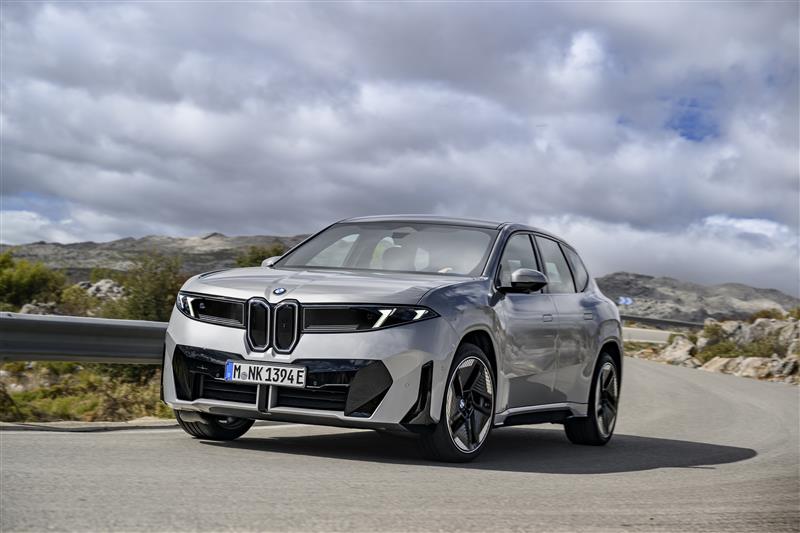
The BMW iX3 in silver||| Dealer

News

Launch Report: BMW iX3 brings the Neue Klasse platform to the road

BMW’s Neue Klasse platform is finally here, as the new iX3 goes on sale. But will the model prove to be a hit, and establish a good grounding for the much-anticipated technology? Autovista24 special content editor, Phil Curry, reviews the model alongside regional experts. With bold new designs and cutting-edge technology, the new BMW iX3 is the first of the brand’s Neue Klasse platform. It is the first in a new family of battery-electric vehicles (BEVs) built around the philosophy, pioneering the concept on the road. The iX3 is, therefore, one of the most important models the carmaker has ever launched. With effectively a blank canvas, defying other BMW brand styling designs and philosophies, the new iX3 can forge its own path. The good news for the carmaker is that it seems to have succeeded, providing a good base for the Neue Klasse to grow from. Click here to open the interactive dashboard Autovista24’s latest Launch Report benchmarks the BMW iX3 against its key competitors in Austria, France, Germany and the UK. Regional experts also provide a breakdown of the car’s strengths, weaknesses, opportunities and threats. Bold design for new iX3 BMW has kept some of its design cues from its Neue Klasse concepts on the new iX3. This includes the illuminated kidney grill, which is smaller, features more angles, but still sits proudly in the centre of the car. These angles translate across the front, with an upward sweeping grill into the LED lighting, symbolising movement. Source: BMW These angles continue across the car, giving it a boxy, yet dynamic look. The rear features large LED lights that echo the layout at the front. This helps provide a sense of symmetry.   The design also gives a sense of size. The iX3 looks like a large SUV, when in reality, it is similar in length to the BMW 3-series. Technology rich Stepping into the BMW iX3 feels like a departure from the brand’s other models. It has been completely redesigned, providing a feeling of space. The incorporated technology helps make the driving experiencve much easier. BMW has incorporated its new Panoramic iDrive system, with a glass screen stretching below the windscreen. This projects all driver instruments, and places them in the eyeline, making it easier to focus on the information provided. Source: BMW This screen is also customisable, with the central and passenger side elements able to house various apps. This can also be used to extend the driver information. Below this, a 17.9-inch infotainment screen sits with and angled look, again embracing the futuristic designs that are integral to the Neue Klasse concept. This houses many of the vehicle’s systems, with few physical controls inside. It does, however, provide a number of shortcuts to get to certain vehicle-critical areas. The Panoramic iDrive has allowed BMW to modify the steering wheel design, and the carmaker has landed on a four-spoke look, incorporating the angles featured throughout the interior. It houses several buttons, although the placing of these does make them difficult to reach, especially for those with smaller hands. Practically perfect BMW has used a number of recycled and sustainable materials in the new iX3. For example, the carmaker states that 30% of the secondary raw material used for the engine compartment cover and the frunk is recycled maritime plastic. Secondary aluminium accounts for 80% of the wheel carriers and swivel bearings, as well as 70% of the cast aluminium wheels. There are some recycled materials inside as well. Together with hard plastics around some surfaces, this belies the high-quality feel that is expected from BMW models. However, this is not to say the interior feels substandard, with a modern look and comfortable surroundings for both front and rear passengers. Source: BMW The flat floor helps with rear legroom, while a central passenger can be carried with ease. Thanks to the high roofline, headroom is good, even without the optional panoramic sunroof. There are plenty of storage options inside as well. The boot space is also very generous, at 510-litres. The iX3 also features a 58-litre frunk for additional load carrying or cable storage. Driving dynamics for new iX3 One area where BMW models traditionally stand out is their driving dynamics. This is a key test for the Neue Klasse, with a new battery and electric motor layout which could impact the feel on the road. Thankfully, it does not. The new iX3 feels balanced on the road, even with its two-tonne weight. There is little body roll, with the suspension absorbing most of the movement. Steering is precise, and agile in urban environments. Source: BMW BMW has also incorporated Soft Stop, which removes the hard and sharp stopping motion when braking is applied. This works whether it is the driver, or onboard systems, that have slowed the car. The iX3 also features regenerative braking to feed energy into the battery, although this is controlled via touchscreen, with no physical buttons or paddles. The carmaker states the new iX3 will achieve 500 miles (804km) of range, according to WLTP testing. The model comes with a 112kWh battery, powering a dual motor layout. It comes complete with an 800-volt electric system, that allows for ultra-rapid chargers up to 400kW to feed energy into the storage unit. It is also smart-energy ready, allowing it to support bi-directional charging. Overall, the new BMW iX3 sets a good course for the Neue Klasse. It is well designed with some clever technological advances. Additionally, it provides good driver and passenger comfort, strong driving dynamics, and effortless practicality. View the interactive dashboard, which benchmarks the BMW iX3 in Austria, France, Germany and the UK. The interactive dashboard presents new prices, forecast residual values, and SWOT (strengths, weaknesses, opportunities, and threats) analysis.
Dark graphic of a silhouette car and headlights Aftermarket

News

2026 residual value outlook: Regional shifts and trends

Which macroeconomic factors influenced European used-car markets in 2025? What is the 2026 residual value (RV) outlook? How are trends developing in Eastern Europe? A new Autovista Group webinar answers these questions. RVs presented as a percentage of retained new-car list price (%RV) continued to fall through 2025. This followed a normalisation trend observed in the years after the COVID-19 pandemic, when values were greatly inflated. But what other influencing factors have been at play, and will they persist this year? How will this shape value retention over the rest of 2026? Will Central and Eastern Europe (CEE) see different %RV developments compared to Western Europe? These questions were answered in the live webinar, 2026 residual value outlook: Regional shifts and trends. During this session, Autovista24 editor Tom Geggus spoke with a panel of Autovista Group experts. This included Ana Azofra, regional head of valuations for Southwest Europe, Robert Madas, regional head of valuations for Central and Eastern Europe, and Ulmis Horchidan, cluster head of valuations for Romania, Slovenia, Croatia, Slovakia, Czechia and Hungary. https://youtu.be/9qo7FdYPxnE?si=ANq2SauZtvtI6CYY&t=15 Macroeconomic outlook According to the OECD’s December outlook, global GDP growth has been resilient, up 3.2% in 2025. However, this is expected to slow to 2.9% in 2026 before improving again in 2027, up to 3.1%. China is the key contributor to growth, ahead of the US and the Euro area. Inflation in the EU is coming down slowly but remains above pre-COVID-19 pandemic levels. From a point of 2.1% in 2025, headline inflation is expected to fall to 1.9% in 2026 and 1.8% in 2027. This left the consumer price index to reach an all-time high in October last year. Households had to spend more money, which effectively limits larger purchasing decisions. All of this means continued pressure on the automotive market. This is despite some cautious stabilisation, with demand showing positive signs. Used-car demand has also stabilised with no significant changes recorded in 2025 or expected in 2026. ‘If we look at new-car registrations, we had a slight increase compared to 2024 of approximately 1.5% overall. So, the steep declines of the post-COVID years are over, but it is not a spectacular recovery,’ Madas said. Meanwhile, tariff risks have eased in some areas, while becoming more challenging in others. For example, negotiations between China and Europe could result in minimum import prices for battery-electric vehicles (BEVs). Increased emission target flexibility is expected in Europe from the Automotive Package, while electrification continues to progress. But new brands, regulations, and rising costs have increased profitability pressures. Residual value outlook RVs continued to fall in 2025. However, this was at a slower pace than in 2024. Only France and the UK saw marginal increases in the final quarter of last year, but values remain under pressure. The market has been undergoing normalisation following the RV inflation between 2021 and 2023. With used vehicles spending an increasing number of days in stock before sales, there are signs of market saturation. For two-to-four-year-old vehicles, this trend is observed across all powertrains. BEVs still take the longest amount of time to sell, followed by plug-in hybrids (PHEVs). Price change development reveals price management and the desirability of vehicles. Electric vehicles (EVs), including BEVs and PHEVs, require more price management from dealers than other powertrains. So, what does all this mean for RVs in 2026? ‘Forecasts remain stable and on a path towards normalisation,’ said Azofra.’ This is because the most significant adjustments have already taken place over the past two years. This is the good news.’ RV outlooks for vehicles at 36 months and 60,000km have been maintained for 2026, with only minor adjustments. Spain is the only market which has seen forecasts improve thanks to its greater resilience in 2025. Austria, France, Spain and the UK can all be expected to see %RVs decline by 1% at most by the end of 2026. While Germany is not far off with a 1.4% decline forecast, Italy’s outlook is the most negative. The market saw a severe downturn in 2025 and is predicted to see a 5.2% decline this year. Understanding Eastern Europe Most economies in the CEE region have been growing more quickly than their Western counterparts. GDP has been elevated by integration in the single market, foreign direct investment, supply-chain participation, rising wages and EU funds. This catch-up effect will continue, just at a slower pace than in the 2000’s. There is reliance on used-car imports across the region, with Germany a primary source for the markets. This influences local pricing and RVs, but has a direct effect on older cars, aged 10 years and older. So, how have %RVs evolved? ‘We see different behaviour when analysing each country from the CEE region. For example, Poland had ample room for adjustments coming from the high values in 2022 caused by the supply crisis,’ said Horchidan. ‘Hungary and Slovakia recorded a steeper depreciation in the last two years, while Romania and the Czechia recovered quite fast after the peak in the pandemic once supply started to catch up with demand,’ he added. This year, the CEE %RV outlook is unchanged. Declines are expected to continue, just at a slightly more moderate pace. Croatia, Czechia, Slovenia and Romania are forecast to see %RVs fall by between 2% to 2.3%. Meanwhile, Poland, Hungary and Slovakia will see a lower impact, not exceeding 1.6%. Enjoyed 2026 residual value outlook: Regional shifts and trends? Then register for Autovista Group’s next webinar, Europe’s auto forecast 2026: Technology, policy, and EV adoption. It will take place on 1 April 2026 at 09:30 GMT, so make sure you sign up now.
Car light trails on highway at night Aftermarket

News

Monthly Market Update: How did Europe’s major used-car markets perform in 2025?

Europe’s biggest used-car markets faced many external factors last year. This included an unstable economic environment, affordability issues, regulatory changes and technological challenges. So, how did used-car markets close out an eventful 2025? Autovista24 journalist Tom Hooker delves into the data with regional experts. Used-car markets in Austria, France, Germany, Italy, Spain, Switzerland and the UK experienced one consistent trend last year. Residual values (RVs), expressed as a percentage of retained new-car list price (%RV) after 36 months and 60,000km, fell. However, this was not the only trend that saw significant changes. List prices and supply also saw noticeable increases across most major European markets. Meanwhile, used cars between two and four years old sold more quickly on average. Varied used-car values Compared to December 2024, %RVs slumped across Europe’s biggest used-car markets last month. The largest drop was suffered in Italy, recording a 4.6 percentage point (pp) downturn. Switzerland also endured a steep slump of 4pp, while Spain posted a 3.8pp decrease in %RVs year on year. While %RVs show value retention in percentage terms, absolute trade RVs display values in currency terms. When benchmarked against December 2024, nearly every observed market saw this metric rise. Italy and Switzerland were the exceptions, suffering 10.3% and 3.1% declines, respectively. Conversely, Austria witnessed the highest RV growth of 6.7% in December. This was followed by the UK, which recorded a 4% increase. Europe’s soaring list prices Another recurring pattern in 2025 has been rising new-car list prices. Almost every observed market saw this metric increase in December. This was apart from Italy, which posted a 0.9% year-on-year fall. List prices saw the biggest increase in Spain, up by 10.5%. France and the UK also saw significant surges of 7.4% and 7.1%, respectively. The demand for two-to-four-year-old cars rose year on year in most of these markets. The UK and Spain saw the sales-volume index (SVI) in this age bracket soar by 30.7% and 30.6%, respectively. Germany also saw a strong increase of 16.1%. However, Italy and Switzerland recorded a drop in this metric. The former posted a 3.2% slide, while Switzerland witnessed a marginal 0.2% decrease. Two-to-four-year-old cars sold faster across most of Europe’s major used-car markets compared to 12 months prior, except for France. Models left forecourts 6.3 days sooner on average in Italy, as Austria shifted stock 5.6 days faster year on year. Market headwinds in Austria ‘Austria’s SVI for two-to-four-year-old passenger cars fell by 3.9% in December compared to November. Year on year, the SVI declined by 3.6%, reflecting continued market headwinds and somewhat weaker demand,’ noted Robert Madas, Autovista Group’s regional head of valuations. The active-market volume index (AMVI) remained stable, showing no month-on-month change. Compared to December 2024, supply was up slightly by 0.9%. This indicated a modest recovery in available stock within this age bracket. The average time needed to sell a used car in December was 65.9 days, up by 0.9 days compared to November. Year on year, this metric improved significantly by 5.6 days, suggesting faster turnover despite seasonal challenges. Diesel leads the way Among powertrains, used diesel-powered continued to lead in turnover speed, taking an average of 60.7 days to sell. This was followed by petrol-powered models at 64.8 days. Then came full hybrids (HEVs) at 67.6 and plug-in hybrids (PHEVs) at 73.3 days. Battery-electric vehicles (BEVs) again showed significantly improved turnover speed but continued to take the longest time to sell at 77.5 days. %RVs stood at 47.3% in December. This represented a 0.1pp increase month on month but a slight 0.1pp fall year on year. In absolute terms, the trade RV was €22,176.5. This figure was virtually unchanged from November but 6.7% higher year on year. HEVs retained the highest trade value at 49.8%, followed by petrol cars at 49.3%. Then came diesel models with 48.2% and PHEVs with 44.9%. BEVs held the lowest %RV once again, at 38.5%. However, this was an improvement of 0.9pp month on month. ‘Looking ahead, %RVs are expected to decline slightly in the next few years. In December 2026, a 0.7% decline compared to December 2025 is forecasted. A 0.6% decrease in 2027 is expected to follow,’ forecasted Madas. Used-car stability in France Overall, RVs remained quite stable in France during December. The difference observed was linked to the absence of many Peugeot models in the comparison. ‘This was due to a significant list price increase 36 months ago. Therefore, both RVs and %RVs for PHEVs, diesel-powered models, and BEVs became artificially inflated in the results,’ explained Ludovic Percier, Autovista Group’s senior RV analyst for France. Comparing December to the beginning of 2025, increasing list prices have not helped %RVs. The latter metric decreased by 2.4pp year on year, as list prices rose by 7.4%. This resulted in an absolute RV increase of 2.6%. Even in November, with all Peugeot models available, this metric still saw a 1% year-on-year growth. ‘Customers drive the used-car market. This means that increasing list prices are not going to help grow RVs significantly in the sector,’ Percier highlighted. Mixed powertrain performances Petrol followed the overall used-car market trend. Meanwhile, diesel fared better thanks to a lower supply on the new-car market. It also benefited from strong demand in the used-car market relative to other powertrains. ‘Hybrids %RVs saw a drop compared to December 2024. This was because more models are now available from mass-market brands, albeit with a lower RV performance. In comparison, Toyota was one of the only big hybrid carmakers in the past,’ said Percier. PHEVs were stable in terms of absolute RVs compared with 12 months prior. This is even though more premium vehicles are now available with better ranges. The used-car market is crowded with PHEV offers, and the current number of buyers cannot compensate for this. This is mainly due to the return of leased vehicles to the market. These models were taken by companies in 2022 due to fiscal advantages. BEVs followed the general market trend, with higher list prices and greater ranges. The technology’s absolute RVs increased slightly in December. Conversely, BEV %RVs fell by 1.5pp year on year. Germany’s used-car stock recovery Following a strong November, used-car demand in Germany softened slightly in December. The SVI fell by 0.8% month on month. Compared to December 2024, the SVI declined by 3.5%, indicating persistent pressure on demand. ‘Meanwhile, the AMVI continued to increase. The metric rose by 3.9% compared to November, which suggested a notable improvement in supply. Year on year, the AMVI surged by 16.1%, confirming a strong recovery in stock availability within this age bracket,’ commented Madas. The average number of days needed to sell a used car in December was 61 days. Compared to November, this was down by 1.4 days, while it marked a decrease of one day year on year. This implied a faster turnover compared to previous months. The average turnover speed of BEVs increased month on month. The technology was the fastest-selling of any powertrain at 55.3 days. Then came HEVs at 57.9 days. PHEVs followed closely at around 58.7 days, while diesel-powered cars took 61.5 days to sell. Petrol-powered cars sold the slowest, at 63.4 days. Declining residual values ‘%RVs stood at 48.1% in December, down 0.1pp month on month and 1.5pp year on year. In absolute terms, the trade RV was €21,585.2. This translated to a 0.7% increase month on month and a 2.4% rise year on year,’ outlined Madas. Petrol cars led the market with a %RV of 49.9%. Then came diesel cars and HEVs, both at 49.2%, followed by PHEVs at 44.2%. BEVs decreased slightly and again retained the lowest level of value at 36.9%. Looking ahead, RVs are expected to remain under pressure. By the end of 2026, %RVs are forecast to decrease by 1.4% compared with December 2025. Pressure will likely ease in 2027, with a smaller decline of 0.7%. Italy’s downward used-car trend December ended largely in line with the trend that has consolidated throughout 2025, without any last-minute surprises. On average, the RV of used cars at 36 months and 60,000 km dropped by nearly €2,000 year on year. This corresponded to a 4.6pp %RV decrease. ‘Looking ahead, we expect this downward trend to continue over the next two years, albeit at a slower pace, reaching a point of stabilisation around 2028,’ forecasted Marco Pasquetti, Autovista Group’s cluster head of forecasting for Spain and Italy. Out of all powertrains, PHEVs lost the most ground compared to last year. %RVs fell from 44.2% to 36.9%. Meanwhile, BEVs saw the lowest value retention, holding only 26.2% of their original value after 36 months. Conversely, diesel-powered models and HEVs held better %RVs, at 47.9% and 47.3% respectively. However, these two powertrains also saw significant year-on-year declines. The SVI was up slightly by 3.5% year on year, while the AMVI showed a moderate decrease of 3.2%. However, these variations were not substantial enough to suggest any abrupt market shifts. It is too early to assess the impact of potential emission target revisions by the European Commission on used cars. However, developments are being closely monitored. ‘It is reasonable to expect that automakers will adjust their industrial strategies to meet the new objectives, and governments will likely revise incentive plans for adoption. Therefore, it will be crucial to follow the next steps of all stakeholders to fully understand the implications,’ noted Pasquetti. Positivity in Spain ‘Spain approached the end of 2025 bolstered by strong macroeconomics and generally positive projections. GDP growth sat close to 3%, leading the Eurozone in this regard,’ explained Ana Azofra, Autovista Group’s head of valuations and insights, Spain. ‘Spain also benefited from an increasingly robust labour market and strong domestic demand. This demand has also been reflected in strong new-car sales figures. Although the final results are not yet known, it will be close to pre-pandemic levels, exceeding one million units,’ she stated. All sectors contributed to this growth. The car-rental channel provided a boost in the first half of the year. Then the private market saw strong growth in the second half. This was accompanied by more moderate but steady increases in the business channel throughout 2025. This positive market behaviour was not only reflected in the volume of new car sales. It was also displayed in the shift towards more sustainable vehicles. From January to November, electric vehicles (EVs), including BEVs and PHEVs, have increased their market share by more than 8pp year on year. Furthermore, the recently published Auto Plan 2030 will incentivise the purchase of EVs and expand charging infrastructure. The scheme will help reinforce this positive trend towards electrification. Low pressure on transaction values ‘This positivity was reflected in the used-car market. Not so much in terms of volume, where growth has been more moderate, but in terms of the low pressure on transaction values,’ said Azofra. The average price of a three-year-old car with 60,000km in December was €20,032.1, 3.5% higher than in December 2024. The outlook for 2026 is also moderately positive. In general, the data in the report shows a market that is far from saturated, with very limited stock. The most striking case is that of BEVs. ‘In December 2024, pressure from manufacturers to meet CAFÉ targets increased pressure on BEV sales, which largely ended up swelling stocks in the second-hand market. During this period, the technology was difficult to sell,’ she highlighted. On average, a BEV took 129 days to sell in December 2024, almost 50 days longer than it takes today. In December 2025, a BEV was the second fastest-selling model in Spain, namely the Tesla Model Y. This was unusual, as the ranking is usually dominated by hybrid vehicles, which continue to see high demand. First place went to the Yaris Cross, which had already been posting record figures for several months. The MG ZS took third. Switzerland’s ongoing used-car pressure After a slight fall in October and November, used-car demand in Switzerland showed further weakness in December. The SVI slipped by 0.3% month on month and was 0.8% lower year on year. This signalled ongoing pressure in the market. ‘The AMVI edged up by 1.1% compared to November. However, it fell slightly by 0.2% year on year. This confirmed that supply remains tight despite a small monthly improvement,’ commented Madas. %RVs held steady at 42.4% in December, with no month-on-month change. Compared to December 2024, this represents a 4pp decline, underlining significant depreciation pressures. In absolute terms, trade RVs rose marginally to CHF 26,369.6 (€28,392), up 0.2% month on month but down 3.1% year on year. HEVs retained the most value of any powertrain in November by far at 46.9%. Then came petrol-powered cars at 43.9%, diesel-powered models at 42.3% and PHEVs at 40.1%. BEVs continued to be the worst-performing powertrain, holding only 35.8% of their original list price. Faster turnover speeds The average amount of time needed to sell a used car in December was 77.7 days, up 0.6 days from November. Year on year, this metric improved by 5.3 days, indicating faster turnover compared to last year despite a seasonal slowdown. Petrol-powered models sold fastest at 74 days, followed by HEVs at 74.2 days and diesel cars at 81.5 days. BEVs improved significantly year on year, with an average turnaround time of 78.3 days. This meant they sold slightly faster than diesel cars and significantly faster than PHEVs, which took 90.3 days to leave forecourts. Looking ahead, %RVs are forecast to decrease further in the coming years, but at a slower pace. By the end of 2026, %RVs are expected to fall by 1.7% compared to December 2025. A further 0.4% drop is anticipated in 2027. BEV RVs settle in UK In December, the average %RV of a three-year-old car stood at 49.5% of its original cost-new price. This marked a 0.8pp increase compared to November. However, when measured against December 2024, RVs were down by 1.5pp. This aligned with the expectations outlined in the RV Outlook. Powertrain performance varied. Petrol model %RVs fell by 2.3pp year on year, while PHEVs dropped 2.4pp. Hybrids were more resilient, declining only 0.2pp compared to 12 months prior. ‘Conversely, diesel-powered models defied the downward trend, rising by 2.8pp. This was likely supported by reduced availability following the ongoing shift away from diesel in the new car market,’ noted Jayson Whittington, Autovista Group’s regional head of valuations, UK. ‘BEV %RVs fell by 1.3pp as they continue to settle into a sustainable price point. This was despite being the fastest-selling powertrain throughout 2025,’ he highlighted. Sales activity slowed toward the end of the quarter. The SVI reported an 11.8% drop in cars sold compared to November. This seasonal dip is typical and even represented an improvement over the same period last year. Meanwhile, the AMVI recorded a 13.7% month-on-month increase. This rise is unlikely to concern dealers, as January traditionally brings a surge in used-car demand. ‘Looking ahead to 2026, RVs are expected to depreciate at a slower pace, averaging a 1% decline. With wholesale supply remaining steady and retail demand healthy, there is currently a good balance between supply and demand. This should support a stable outlook for RVs in the year ahead,’ forecasted Whittington.
Image of a red Renault Clio E-tech on a road|||||||||||||||||||||| Dealer

News

Launch Report: New Renault Clio looks to forge its own path

The new Renault Clio is not just fighting the competition for buyers, but also other models in the carmaker’s portfolio. Does it have what it takes to enhance the reputation of the Clio name? Autovista24 special content editor, Phil Curry, reviews the model alongside regional experts. The Renault Clio has been a mainstay of the automotive market for decades. It has built a reputation as a fun and reliable hatchback, which has stood the test of time while others have faded from view. With the European small-car market growing once again, Renault recently unveiled its sixth-generation Clio. The new model offers more than just a facelift,  complete with a refreshed design philosophy,  and backed up by a new powertrain lineup. However, with competition coming from the all-electric Renault 5 and Renault 4, can the Clio utilise its previous success to draw in buyers? Autovista24’s latest Launch Report benchmarks the Renault Clio against its key competitors in Austria, France, Germany and Spain. Regional experts also provide a breakdown of the car’s strengths, weaknesses, opportunities and threats. Click here to open the interactive dashboard Renault Clio goes bold Renault is not playing it safe with its sixth-generation of the Clio. This new model possesses a whole new exterior design, with a bold look that differs from the ‘retro’ philosophy of the Renault 5 and Renault 4. Instead, the Clio features a drooping front end, with a pronounced central bonnet section flowing down into the front grill. The narrow headlights are subtly blended within the design, while the big, angular running lights provide a strong visual impact. Source: Clément CHOULOT/DPPI Source: Clément CHOULOT/DPPI Source: Clément CHOULOT/DPPI Source: Clément CHOULOT/DPPI The rest of the car is more conservative, a sloping roofline flows into a lipped rear end, while the split light profile sits in a recess that comes out to highlight the Renault badge. Overall, the design is sporty and modern, but perhaps not as clean as its predecessors, or plug-in stablemates. Familiar feel Inside, however, the carmaker has kept things in the family. The new Clio features the same dual-screen and a similar two-level dashboard layout as the Renault 5. The pair of 10-inch screens sit in a V shape, with one displaying driver information, and the other for the infotainment system. This system features Google integration, with Google Maps built in, and Google Assistant. It will also integrate Gemini AI via an update, which will provide many more capabilities. For front occupants, the longer dimensions of the new Clio provide ample room. However, with no addition made to the width of the car, it can still feel cramped. This is especially noticeable for rear-seat passengers, with no dividing central tunnel to buffer against. Rear headroom is also limited, although this is to be expected in a small hatchback. Source: Clément CHOULOT/DPPI Source: Clément CHOULOT/DPPI Source: Clément CHOULOT/DPPI Source: Clément CHOULOT/DPPI There are plenty of storage options in the centre console and door pockets, which make the new Renault Clio very practical. This is also backed up by the boot space. The petrol version gets 391-litres of capacity, while the  full-hybrid (HEV) model gets 309, due to the space needed for the battery. However, the boot does not feature a flat floor. The loading bay lip could, therefore, make it difficult when loading large or heavy items. Differentiation for the Renault Clio Some may question the relevance of the Clio, especially as the Renault 5, is proving popular in the same segment. However, the carmaker has chosen to diversify its powertrain portfolio between the two cars, a move that could pay dividends for both. The new Clio is offered with either a 1.2-litre petrol, or a 1.8-litre HEV powertrain. There is no battery-electric version, meaning the Renault 5 maintains its position for electric-vehicle buyers, while the Clio offers an internal-combustion engine (ICE) alternative. With UK sales expected to start in 2027, this choice is a reason for the new model’s delay into that market. The EU ban on new petrol, diesel and hybrid models was due to begin in 2035, although this has now shifted to 2040. However, the UK is starting its internal-combustion engine phase out in 2030. The carmaker is waiting to see how the political landscape around the motoring market in the UK changes, leading to the delay. On the road While the petrol-only version produces around 114hp, the HEV model features 158hp, up by 15hp on the current Renault E-Tech HEV powertrain. This gives a 0.62mph time of 8.3 seconds, and provides smooth power delivery, with smooth automatic gear chances from the four-speed box. Source: Clément CHOULOT/DPPI Source: Clément CHOULOT/DPPI Source: Clément CHOULOT/DPPI The Renault Clio offers a comfortable ride. Power delivery in the HEV model is adequate, if a little sedentary. The model features an intuitive B-mode that increases the regenerative energy from braking back into the battery. While not providing the ‘one-pedal’ feel of battery-electric vehicles, it does add to the braking, while increasing electrical assistance. There is also a ‘Smart’ drive mode, which can automatically change from Eco, Comfort or Sport depending on how the vehicle is being driven, improving efficiency without input from the driver. Overall, the new Renault Clio offers something different from its stablemates. While the Renault 5 has attracted attention with its retro characteristics and funky design, the Clio provides a nameplate that can be relied upon. By setting it out to cover the petrol and HEV markets, the carmaker is spreading its powertrain potential. The familiar Clio name will have to ensure it can hold the demand for ICE-based models in the B-segment. View the interactive dashboard, which benchmarks the Renault Clio in Austria, France, Germany and Spain. The interactive dashboard presents new prices, forecast residual values, and SWOT (strengths, weaknesses, opportunities, and threats) analysis.
Dynamic light trails illuminate a highway at dusk Aftermarket

News

Monthly Market Update: Used-car residual value pitfall continues

Amid varying scenarios across Europe’s major used-car markets, one trend remains consistent: falling residual values (RVs). But how notable was November’s performance compared to recent months? Tom Hooker, Autovista24 journalist, unpacks the data. RVs as a percentage of retained new-car list price (%RV) after 36 months and 60,000km continued to decline across Europe. Observed used-car markets included Austria, France, Germany, Italy, Spain, Switzerland, and the UK. These seven countries have suffered year-on-year %RV drops in every single month so far in 2025. This excludes France from January to April. Yet, November’s performance still stood out, for all the wrong reasons. It marked just the third time this year that all seven markets also posted a month-on-month %RV decline. This unwanted feat was also recorded in April and October. Used-car values saw the steepest year-on-year fall in Italy, dropping 4.6 percentage points (pp) to 44.8%. The country also posted the biggest month-on-month %RV decline of 1.3pp. This was followed by Switzerland, which saw a year-on-year fall of 4.4pp to 42.4%. Conversely, used-car values in Austria held up the best compared to November 2024. %RVs fell by 0.5pp year-on-year to 47.2%. Germany saw a slightly poorer performance relative to 12 months prior, suffering a 1.8pp %RV decline to 48.2%. However, this equated to just a 0.1pp fall from October, the lowest month-on-month decline of all used-car markets observed. Lower used-car activity in Austria ‘Austria’s sales-volume index (SVI) for two-to-four-year-old passenger cars rose by 2.7% in November compared to October. However, year on year, the SVI declined by 6.4%, reflecting lower market activity and headwinds,’ stated Robert Madas, Autovista Group’s regional head of valuations. The active-market volume index (AMVI) also increased month on month by 1.9%. Compared to November 2024, the supply was up by 1.2%. This indicates a slight recovery in supply within this age bracket. The average time needed to sell a used car in November was 65 days, up marginally by 0.4 days compared to October. Year on year, this metric improved significantly by 4.4 days, suggesting an acceleration in turnover. Diesel-powered used cars were the fastest-selling of any powertrain, taking an average of 59.5 days to sell. This was closely followed by petrol-powered models at 62 days. Then came plug-in hybrids (PHEVs) at 70.9 days and full hybrids (HEVs) at 71.9 days. Battery-electric vehicles (BEVs) showed significantly improved turnover speed but continued to take the longest time to sell at 80.6 days. Mixed residual value result %RVs declined to 47.2% in Austria during November. This marked a 0.3pp drop from October and a 0.5pp year-on-year decrease. In absolute terms, RVs rose slightly month on month and year on year. Compared to October, this translated to a 0.2% rise and a 7.1% increase set against November 2024. HEVs retained the highest trade %RV at 49.8%, followed by petrol cars at 49.2%. Then came diesel models with 48% and PHEVs with 45.1%. BEVs held the lowest %RV once again, at 37.6%. However, this was an improvement of 0.9pp month on month. ‘Looking ahead, %RVs are expected to remain stable until the end of the year. Forecasts suggest the same level by the end of 2025 compared to December 2024. A 0.7% decline is then expected in 2026, followed by a 0.6% decrease in 2027,’ noted Madas. Used-car values fall in France %RVs fell slightly in France during November. Both petrol and diesel-powered cars, as well as PHEVs, recorded marginal decreases. For the former two internal-combustion engine (ICE) powertrains, this does not signify a recurring trend. ‘Values of petrol and diesel-powered cars have not been heavily impacted by the overall market’s slumping %RV trend, which began at the start of 2023. Meanwhile, November’s PHEV result marked a continuation of its decline,’ explained Ludovic Percier, Autovista Group’s senior RV analyst for France. The decrease in petrol and diesel %RVs was limited. This was because drivers are waiting to replace their current car. Furthermore, fewer new ICE-powered cars are entering the used-car market. ‘Petrol and diesel-powered used cars followed the month’s general trend. Even though strong demand remains for both fuel types in France, potential buyers have less money to spend on these vehicles due to a weakened global economy. Combined with this, their prices are still too high on the used-car market,’ he highlighted. As many used-car buyers still do not accept the higher prices of PHEVs, the powertrain remained in a %RV decline. However, models with a range above 60km are less impacted by the downward pressure on %RVs. The average days to sell a PHEV fell slightly last month. Yet, a turnover average of 70 days is still too long for dealers, even with transaction prices continuing to decrease. PHEV demand and supply remain unbalanced. In previous years, many vehicles were sold to fleets due to fiscal advantages. However, private used-car buyers have no interest in paying such a high transaction price for PHEVs. The powertrain endured a 3.3% fall in the SVI. Smaller and cheaper PHEVs were the easiest to sell. Hybrid demand increases HEVs suffered a marginal decrease in November. The technology was once again the fastest-selling powertrain on average. Moreover, it took around five days less to leave forecourts compared to the previous month. ‘Used HEV demand is increasing in France. However, carmakers cannot risk adding big price premiums to these models. This would jeopardise the powertrain’s RVs,’ said Percier. Three of the five fastest-selling HEVs came from Toyota. The RAV4 took the shortest time to sell of any HEV, while the Yaris and the Corolla also saw quick turnaround speeds. The other top spots were filled by the Hyundai Tucson and the Kia Niro. %RVs of all-electric models saw a slight increase month on month. The technology also witnessed a rise in list prices, compared to October and 12 months ago. This was due to more premium vehicles appearing in the data. For example, the Audi e-tron GT was the fifth-fastest-selling BEV in November. Out of all powertrains, BEVs retained the lowest percentage of their original list price after 36 months and 60,000km. The technology recorded a %RV of 35.3%, down 2.1pp year on year. ‘BEVs are being pushed on the new-car market by incentives. However, the current purchase incentive scheme is set to expire at the end of this year. Instead, social leasing is taking the lead with new fiscal advantages for BEV company cars,’ he commented. Yet, this once again creates an unbalanced demand between the new and used-car markets. In turn, this can impact RVs. Germany’s increasing used-car demand Following a modest increase in September and a stable trend in October, used-car demand in Germany strengthened in November. The SVI rose by 4.6% month on month, marking a notable improvement. Year on year, the SVI was stable, indicating that demand was at the same level compared to November 2024. ‘The AMVI climbed by 6.1% compared to October. The used-car market witnessed an even stronger 17.3% increase year on year. This suggests a significant recovery in supply within this age bracket,’ noted Madas. The average number of days needed to sell a used car in November was 62.4 days. This was one day longer than October and 1.3 days slower than November 2024. The average turnover speed of BEVs slowed month on month. However, the technology was the fastest selling of any powertrain at 60 days. Then came HEVs at 61.2 days. Diesel-powered cars followed closely at around 62.2 days, while PHEVs took 62.8 days to sell. Petrol-powered cars sold the slowest, at 63.3 days. Petrol leads used-car market %RVs declined slightly to 48.2% in November. This was down 0.1pp from October and 1.8pp year on year. In absolute terms, the trade RV fell to €21,438. The result marked a 0.8% month-on-month decrease, but a 2.1% increase compared to November 2024. Petrol cars led the market with a %RV of 50%. Then came diesel cars at 49.3% and HEVs at 49.1%, followed by PHEVs at 44.1%. BEVs increased slightly but again retained the lowest level of value at 37%. ‘RVs have stabilised recently in Germany. However, the level remains significantly lower than in previous years, and demand is still subdued. Therefore, RVs can be expected to remain under pressure,’ he outlined. By the end of 2025, %RVs are forecast to decrease by 2.7% compared with December 2024. Pressure will probably ease in 2026, with RVs forecasted to suffer a smaller decline of 1.4%. This is projected to further soften to a 0.7% drop in 2027. Italy’s weakened outlook During November, RVs declined more sharply than expected in Italy. Values dropped from 46.1% in October to 44.8%, causing a downward revision of the 2025 RV outlook. ‘A year-end decrease of 9.2% compared to 2024 is now projected. Given that this trend shows no signs of slowing, further declines are anticipated in 2026. However, this is expected to be at a more moderate pace,’ forecasted Marco Pasquetti, Autovista Group’s cluster head of forecasting for Spain and Italy. ‘Despite these figures, the used-car market should not be considered in a crisis when we look at volumes. Analysing adverts from major online used cars portals indicates that stock levels are only marginally lower than last year, with the AMVI falling by 4.6% year on year,’ he outlined. Meanwhile, sales remained broadly stable, with a 0.7% uptick in the SVI compared to 12 months prior. This trend was confirmed by change of ownership data. Additionally, the average time to sell a vehicle has improved significantly, dropping by eight days compared to October. Diesel-powered cars and liquified petroleum gas (LPG) models recorded steeper-than-expected month-on-month %RV declines, at 1.5pp and 1.9pp respectively. These fuel types had previously shown resilience against the overall declining trend in RVs, making this result noteworthy. BEVs and PHEVs also saw substantial drops of 1.2pp and 2pp, respectively. However, this comes as less of a surprise given their overall performance throughout 2025. The two technologies have consistently lagged behind the market average. All-electric models trailed the market average by 17.9pp in November. Spain’s new-car market aids supply ‘Spain’s new-car registration figures in October provided three important conclusions. Firstly, monthly deliveries exceeded pre-pandemic levels for the first time,’ commented Ana Azofra, Autovista Group’s head of valuations and insights, Spain. ‘Secondly, we are seeing a clear dominance of hybrid vehicles, which accounted for 43.2% of all registrations.’ ‘Thirdly, Spain continues to make steady progress towards electrification. PHEVs and BEVs achieved a market share of 22.4% in October. This was to the detriment of internal combustion engines. For example, diesel vehicles accounted for only 5.6% of sales,’ she explained. Meanwhile, Spain’s current electric vehicle (EV) incentive scheme, the MOVES III Plan, is being revised. The new scheme will be titled Auto Plan 2030. Further details of the plan will be announced in December, as reported by El Independiente. The system looks to revitalise the industry, infrastructure and consumer demand. This could help maintain the current pace of growth in the market share of EVs. Longer used-car selling times This demand is also evident in the second-hand market where sales of BEVs and PHEVs have grown at a steady pace. This was aided by increased supply and more affordable transaction prices. This was particularly evident for PHEVs. After 36 months and 60,000km, the technology saw trade residual values on the second-hand market fall by an average of around €400. Average prices for other powertrains, including petrol and hybrid models, fell slightly. Meanwhile, absolute RVs for diesel-powered cars rose marginally. The fuel type still accounts for half of all used car sales. ‘However, it is important to monitor metrics that show some wear and tear, in what has been such a positive year,’ said Azofra. For example, it took 12 more days to sell a 24-to-48-month-old used car in Spain compared to the previous month. The current average is 77.5 days, a figure that was comfortably improved upon by the month's fastest-selling models. The Toyota Yaris Cross, the Kia Rio and the MG ZS all took around 47 days to leave forecourts on average. Switzerland’s used-car market pressure ‘After a slight decline in October, used-car demand in Switzerland softened further in November. The SVI edged down by 0.6% month on month and was 2.1% lower year on year. These two results signal that pressure remains on the market,’ stated Madas. ‘The AMVI also slipped by 0.5% compared to October. Year on year, supply fell sharply by 7.8%. This confirmed a continued tight supply of used cars in this age bracket,’ he noted. %RVs declined to 42.4% in November. This represented a 0.3pp drop from October and a 4.4pp decrease compared to November 2024. In absolute terms, the trade RV rose slightly to CHF 26,320. Compared to the previous month, this was a rise of 0.3% month on month but down 4.5% year on year. HEVs retained the most value of any powertrain in November by far at 47%. Then came petrol-powered cars at 43.8%, diesel-powered models at 42.1% and PHEVs at 40%. BEVs continued to be the worst-performing powertrain, holding only 35.8% of their original list price. BEVs improved turnover rates The average number of days to sell a used car in November was 77.1 days, up 0.5 days compared to October. Year on year, this metric improved significantly by 6.6 days, indicating faster turnover. Petrol models sold fastest at 73 days, followed by HEVs at 77.6 days and diesel cars at 79.5 days. BEVs improved significantly year on year, with an average turnaround time of 82.1 days. This meant they sold faster than PHEVs, which took 87.5 days to leave forecourts. %RVs are forecast to decrease in the coming years, but at a slower pace. By the end of 2025, %RVs are expected to fall by 7.8% compared to December 2024. A further 1.7% decline is anticipated in 2026, with a 0.4% drop projected in 2027. UK’s cautious used-car dealers ‘November’s used-car market showed steady activity with some notable shifts. At first glance, the average time to sell a 24-48-month-old used car rose to 37.1 days. This was an increase of 3.2 days compared to October, which might suggest a slowdown,’ outlined Jayson Whittington, Autovista Group’s regional head of valuations, UK. ‘However, the SVI tells a different story, showing sales activity actually strengthened, with 8.5% more cars leaving forecourts during the month. Conversely, the AMVI reported 4.7% fewer cars advertised for sale. This indicates dealers are not replenishing stock at the same pace they are selling.’ ‘This could point to demand outstripping supply. However, it is more likely that dealers are exercising caution as the year-end approaches. They may be becoming more selective in their acquisition strategies during what is traditionally a quieter period,’ he commented. Stock moving quickly Despite the longer selling time in the UK, the country’s performance remains strong compared to other European markets. At 37.1 days, UK dealers sold cars 40 days quicker than in Spain or Switzerland. Its turnaround rate was nearly 29 days faster than France, 28 days ahead of Austria, and over 25 days quicker than Germany. The UK’s average was also more than 23 days ahead of Italy, the closest market in comparison. %RVs softened slightly in November, averaging 48.7% of the original cost new price. This equated to a decline of just 0.2pp from October and 2.4pp lower than November last year. ‘Overall, used-car market activity appears fairly busy for the time of year. Dealers seem to be selling well, while keeping a closer eye on what stock they buy as the year comes to an end,’ concluded Whittington.

Displaying 12 of 32 insights