Insights

Tagged:
Clear filters
Industry
Topic
Segment
Electric car charging Dealer

News

Is China’s appetite for new EVs starting to wane?

Both battery-electric vehicle (BEV) and plug-in hybrid (PHEV) markets saw volumes plummet in China during February. But what is driving these declines, and which models came out on top? Autovista24 special content editor Phil Curry explores the figures. Following a difficult January, BEV and PHEV markets in China plummeted for a second month, according to EV Volumes’ data. BEV deliveries declined by 39.2%, with 262,698 sales in the month. Meanwhile, PHEV registrations fell 40.5%, with just 169,699 units leaving showrooms. As a result, BEV sales were down by 29.7%, with 609,513 deliveries after two months of 2026. PHEV volumes suffered more, as the 390,576 tally was 37.9% down compared with the same period last year. Increased model diversity has impacted the popularity of 2025’s best-selling options so far this year. This also suggests the appetite for new EVs in China is starting to wane. Tesla leads the way in China The Tesla Model Y led China’s BEV market in February, with 25,136 sales in the month. The crossover SUV struggled in the second month of 2025, but bounced back this year, increasing 214% year on year. Tesla often prospers in the end-of-quarter months due to its reporting patterns. This result in February highlights the turbulence of the Chinese market. The Model Y accounted for 9.6% of all local BEV sales in the month, up by 7.7 percentage points (pp). Second was the Xiaomi YU7, which only began recording domestic sales in June 2025. The model was the most popular in China during January. However, its 20,086-unit tally in February was markedly down on this performance. It accounted for 7.6% of total BEV deliveries. The Li Auto I6 rounded out the top three. Another relative newcomer, it saw sales begin in September 2025. A total of 15,997 units made their way onto Chinese roads in February. China’s top three BEVs were split by an even amount of almost 5,000 units between each position. This contrasted with the dominance of the Xiaomi YU7 in January. The result suggests buyers may be looking around in a more diverse market. Last year’s leading models appear to be struggling, as the country’s market faces headwinds. Popular models struggle Tesla saw its Model 3 place in the Chinese top 10, taking fourth in the month. With 12,758 units sold, this was a 32% year-on-year slide. The US BEV was responsible for 4.9% of deliveries, and due to competitor declines, this was an increase of 0.6pp. Last year’s best-seller, the Geely Geome Xingyuan, only managed fifth in February, with its 11,906-unit total down by 58.4%. The model has seen a slower start to 2026, suggesting it may not be able to live up to its performance last year. Sixth was the Nio ES8, which saw volumes increase dramatically since September last year. Its 11,779 units marked a 2,359.1% increase compared to February 2025, while a 4.5% market share was up 4.4pp. A pair of BYDs followed, with the Dolphin seeing stable results in seventh. A total of 6,006 units represented a decline of 0.1%. In eighth was the BYD Seagull, which saw numbers plummet by 78.6%, as just 5,779 units were sold. Next came another pair of models, with the Wuling Bingo Plus seeing 5,263 sales, a 45.3% rise compared to the same point last year. Rounding out the top 10 was the Wuling Mini, the second-best-selling BEV in China last year. With 5,230 deliveries, volumes were down 76.3%. This was only good enough for a 2% market share, a drop of 3.1pp. Xiaomi proves popular February’s top three all featured in the top cumulative positions spanning the first two months of 2026. Thanks to its strong result in January, the Xiaomi YU7 led the way. With 58,010 sales, it held 9.5% of the market, a sizeable 14,802 units ahead of its nearest challenger. This was the Tesla Model Y, which started 2026 much stronger than last year. With 43,208 units, it represented 7.1% of BEV sales and ended the two-month period 10,335 deliveries ahead of third place. This position was taken by the Li Auto I6, recording 32,873 sales. It took a 5.4% share of the country’s BEV market between January and February. While these BEVs soared, both the Geely Geome Xingyuan and the Wuling Mini struggled. The Geely model took fifth after two months with 26,793 sales. Meanwhile, the Wuling Mini did not feature in the top 10, sitting 13th after two months of 2026. Fang Cheng Bao up top in China China’s PHEV market has been struggling for some time. However, while volumes were down year-on-year, there was some stability in model choice. For the second successive month, the Fang Cheng Bao Tai 7 led the way. The BYD subsidiary brand saw 11,078 units sold in February. It represented 6.5% of China’s PHEV volumes in the month. The BYD Song Pro took second, although its 9,307-unit total was 37.9% down year on year. While the domestic brand placed five models in the top 10 during the month, none of them managed to see volume increases. As a popular PHEV brand in recent years, this decline is likely contributing to the market’s struggles. Third went to the Aito M7, with the PHEV variant responsible for 3.8% of all deliveries, a 2pp rise. Its 6,479 sales were an increase of 24.5% compared to February 2025. BYD volumes plummet Both of last year’s top two models struggled in February. The BYD Qin Plus saw sales plummet 66.9% as just 5,252 units left forecourts. This was enough for a 3.1% market share, down 2.5pp. It was followed by the BYD Seal 6 with 5,159 deliveries, down 59.1%. A 3% hold of the PHEV total was down 1.4pp compared to 12 months prior. Sixth was the Zeekr 9X with 5,082 units sold, having only entered the market in September 2025. It also held a 3% market share. The Li Auto L6 was next. The medium SUV struggled in February, with its 4,746 sales down by 63.9% year on year. It claimed 2.8% of the market, a 1.8pp drop. Following it in eighth was the Wey Gaoshan. First recording sales in September 2023, its numbers started ramping up in the middle of 2025. Its 4,133-unit total was a jump of 1,105% compared to February 2025. Rounding out the table was another pair of BYD vehicles. The Song L suffered a 59.5% fall as 3,724 units were sold in the month. The BYD Qin L took 10th, with 3,603 units, a 77.8% fall in volumes. This was the biggest decline in the top 10. Close battle for PHEV models After leading the sales in both January and February, the Fang Chen Bao Tai 7 led the cumulative table. With 28,631 units delivered, it held 7.3% of the market, 10,251 units ahead of its nearest competitor. In second, after two months of 2026, was the Aito M7. It saw 18,380 units delivered in the period, taking a 4.7% market share. After a strong result in January, it slipped back towards the BYD Song Pro, which held third, but was only 423 units behind. The BYD model accounted for 17,957 units between January and February. This resulted in a 4.6% share of the market.
An electric car that is currently charging.| Dealer

News

What drove unusual Chinese EV results in January?

Electric vehicle (EV) sales in China dropped dramatically in January, as the market started 2026 with a struggle. But how did different brands influence this result? Autovista24 special content editor Phil Curry examines the numbers. China’s EV market started 2026 in disarray. Battery-electric vehicle (BEV) and plug-in hybrid (PHEV) sales were down compared to January 2025, according to EV Volumes’ latest data. Additionally, the top 10 best-selling models for both markets were mixed, with newcomers spread throughout. BEV deliveries fell by 20.4% in January, with 346,798 units reaching customers. This was the lowest total for the technology since February 2024. Meanwhile, PHEVs suffered an even steeper drop of 35.6% to 220,867 sales. The country’s PHEV decline was a recurring theme throughout the last half of 2025. However, the drop in BEV volumes is new. This comes after sales growth slowed towards the end of 2025. The country’s market will be hoping January’s drop is not the start of an ongoing trend. Mixed BEV results The top 10 best-selling BEVs in China included five models that were not on sale in January 2025. To highlight the diverse mix, only one model from Tesla and BYD featured, respectively. Both brands appeared to struggle at the start of the year. Even last year’s best-selling BEV in China, the Geely Geome Xingyuan, dropped deliveries compared to 12 months prior. Instead, a slew of newer models took advantage of the BEV market’s slowdown, entering the top 10. The Xiaomi YU7 headed the Chinese BEV table in January. This model began recording sales volumes in June 2025. It achieved 37,924 deliveries in the month and gained a 10.9% market share. The YU7’s delivery figure was a record for a single BEV in January. Although the model itself achieved higher sales in December 2025. The Nio ES8 achieved second with 18,513 units sold. The carmaker has ramped up deliveries, and January represented its third consecutive month of five-digit figures. Its market share jumped to 5.3%, up from just 0.1% a year prior. Rounding out the top three was the Tesla Model Y. With 18,072 units, its sales declined by 29.7% compared to January 2025. This was also reflected in its market share, which dropped 0.7 percentage points (pp) to 5.2%. Newcomers storm BEV chart Since first recording sales in September 2025, the Li Auto I6 ended January in fourth with 16,876 sales. This equated to a 4.9% market share, a positive performance for a newcomer. Last year’s best-selling Chinese BEV, the Geely Geome Xingyuan, ended January in fifth, with 14,887 deliveries. This was a 47.1% year-on-year decline, and the model’s lowest monthly sales since it started recording sales in September 2024. Sixth went to the Aito M7, with 13,129 sales. This was a record amount and the model’s first foray into five digits since its launch in September last year. With 6,772 deliveries, the combined total of the MG4 and MG4 Urban took seventh. These models were relaunched in the second half of 205 in China and achieved a 2% market share in January. The only BYD model in the top 10 was the Dolphin, which saw sales increase by 25.9% to 5,859 units. Its 1.7% market share was up 0.6pp. Eighth went to the Wuling Bingo Plus with 5,632 deliveries, a 103.5% rise compared to January 2025. It achieved a 1.6% hold of the market, a full percentage point increase. Rounding out the top 10 was the Toyota bZ3X. The Japanese model made its top 10 debut, just nine units behind the Wuling BEV. With 5,623 deliveries, it achieved an equal 1.6% market share. Struggles for BYD and Tesla Both Tesla and BYD have been staples of China’s BEV market, but January’s figures could suggest a difficult year ahead. Although the Tesla Model Y placed well, its sales decline was the second successive January drop. Meanwhile, the US brand’s Model 3 ended the first month of 2026 in 43rd place, with just 2,030 units making their way to customers. For BYD, its Seagull model, a constant BEV top 10 finisher last year, ended January 2026 in 11th. With just 5,525 sales, this was its worst monthly total since its first appearance in the Chinese market in April 2023. Meanwhile, the Yuan Up was 14th with 5,495 units. This also marked its worst volume since debuting in March 2024. Looking at both brands’ EV sales, January was a poor month. BYD saw a 61.6% decline to 77,209 plug-in units, compared to 201,017 deliveries a year prior. Tesla saw 20,116 deliveries, all of which took place in the BEV market. This was a drop of 40.4% compared to the same period in 2025. Fang Cheng Bao leads the way BYD’s woes continued in the PHEV market, a sector it dominated in 2025. Last year, seven of the best-selling top 10 came from the Chinese carmaker. In January, however, just three made it to the chart, and none saw sales growth. Instead, it was the carmaker’s sub-brand, Fang Cheng Bao, that took the top spot with the Tai 7. The SUV, which began mass deliveries in September 2025, has been slowly climbing the PHEV table. It dominated January’s chart with 17,553 units and a 7.9% market share. Second went to the Aito M7, with 11,901 deliveries, a 41% rise year on year. This meant a 5.4% share of PHEV sales in China, up by 2.9pp. The BYD Song Pro led PHEV sales for the brand in January. Its share sank by 0.7pp to 3.9% as it took third with 8,650 units. This was the model’s worst monthly total since July 2021. The BYD Qin Plus was next, with 7,527 deliveries putting it fourth, with volumes down 49.8% year on year. This too was a new low, with deliveries not hitting these depths since January 2023. Another new model, the Zeekr 9X, took fifth with 6,594 units and a 3% market share. The model started deliveries in September 2025. Mixed results for PHEVs The Aito M8 was the sixth-best-selling PHEV in China during January, with 5,316 units delivered. The model first recorded sales in April 2025. Coming in behind was the Li Auto L6, with 5,030 sales. This was a year-on-year drop of 64%. The figure was the model’s lowest since it hit the market in April 2024. It was good enough for a 2.3% market share, down by 1.8pp compared to the same point last year. The Aito M9 took eighth, the brand’s second appearance in the January top 10. However, its 4,821-unit tally was 47.5% down compared to January 2025. This meant its market share slipped by 0.5pp, to end the month at 2.2%. The Wey Gaoshan came ninth. Having previously moved lower numbers, the model had a stronger end to 2025. It appears to have continued this run into 2026. With 4,813 sales, it managed a market share of 2.2%, up by 2.1pp. Rounding out the top 10 was the BYD Seal 6 with 4,666 sales. This was a drop of 67.8% and was the model’s second consecutive month of four-digit deliveries. It was also its lowest volume since it first recorded sales in May 2024. Compared to 12 months prior, its share of the market was cut in half to 2.1%.
Curve of the highway to the destination. Concept of enjoying the trip and the beauty of the landscape| Dealer

News

Spain’s new-car market remains strong as new incentives take shape

February provided plenty of positives for Spain’s new-car market. But as the nation’s market continues to grow, is electrification progressing as planned? Autovista24 web editor James Roberts examines the latest numbers.  February saw a second consecutive month of growth for the buoyant Spanish new-car market. In total, 97,082 new vehicles took to the country’s roads, 6,755 more than 12 months prior. This ensured a 7.5% year-on-year increase, according to the latest ANFAC data. With only December 2025 blotting an unbroken streak of year-on-year gains for Spain’s new-car market, February resumed a familiar trend. Industry body ANFAC highlighted that all channels achieved growth in the month, particularly the rental sector, which saw a 22.6% uptick. ‘After a hesitant start in January, February is once again a positive month for vehicle sales,’ stated Félix García, director of communication and marketing at ANFAC.‘Last month, the rental car channel was the one that grew the most, accounting for almost one in five sales of passenger cars. It is a logical increase to renew the fleet for the Easter period. Without these sales, the growth of individuals and companies is flatter compared to February 2025.’ This ‘good pace,’ as highlighted by ANFAC, prevailed when assessing the first two months of 2026. Combined January and February totals amounted to 170,185 passenger cars. This ensured a unit upswing of 7,542 compared with the same period in 2025, a healthy 4.6% boost. Hybrids remain top new-car choice Hybrids, made up of both full and mild hybrid powertrains, remained the top seller in February. In total, 46,592 new hybrids joined Spain’s car parc in the month, according to ANFAC. This robust total returned a 17.1% year-on-year increase and a 48% market share. This was just 0.6 percentage points (pp) down on January’s record, suggesting hybrid popularity is not ebbing. It was even up by 3.9pp year on year. Spanning the opening two months of 2026, hybrid cars held a dominant 48.3% market share, up 3.7pp year on year. Across January and February, 82,189 new hybrids made their way to customers in Spain. Spain’s BEV market share issue Amid this preference for hybrids, ANFAC highlighted that EVs, including battery-electric vehicles (BEVs) and plug-in hybrid vehicles (PHEVs), continue to be a ‘key segment.’ However, is this consistently strong sector in danger of stagnating, especially when it comes to BEV uptake?   February saw 8,889 new BEVs take to Spain’s roads. This equated to a 45.4% volume increase, carving out a 9.2% market share, up 2.4pp. After two months of the year, the BEV market share stood at 9%, 2.2pp up year on year. This comes as volumes reached 15,361 units, establishing a 38.1% year-on-year upswing. One reason for new-BEV buying reticence could be uncertainty. Spain’s relatively successful trend of EV adoption had been enabled by a long-standing incentive framework, the MOVES plan. This was introduced in 2019, funded by the EU’s NextGenerationEU recovery funds, and managed in conjunction with Spain’s regional governments.  The issue with incentives The last iteration, MOVES III, came to an end on 31 December 2025. Its replacement, the Auto 2030 Plan (Auto+), announced at the beginning of December, aims to centralise and simplify EV incentives. It will mobilise up to €400 million in public and private investment between 2026 and 2030 to increase electrification in Spain. It will offer varying discounts on BEVs and PHEVs, spanning direct purchases, leasing and renting arrangements. The subsidies will be applied retroactively to vehicles purchased since 1 January in Spain. However, the government website has not yet confirmed publication. According to Carwow, Full implementation of the Auto 2030 Plan is not expected until at least May this year.  In late January, the Ministry of Economy, Trade and Business proposed amendments to the Auto 2030 Plan, according to La Tribuna. Addressing industry concerns, the change reportedly re-centres the scheme around cars manufactured within the EU. This would make the plan more closely aligned with the system used in France, as reported by electrive. One result of the amendments could be the discouragement of some models made in China from eligibility. This could bring additional uncertainty into the market. An added complication relates to Chinese carmakers investing in Spanish manufacturing, such as Chery and BYD. Spain’s need for clarity ‘Although the Auto+ plan has already been announced, and there are brands that have committed to bringing forward the discounts, there is no doubt that the official publication of clear and agile regulatory bases is essential to increase confidence,’ stated Tania Puche, GANVAM’s director of communication. Raúl Morales, communications director of FACONAUTO, added: ‘For another month, electrification has driven the market, once again exceeding 20% ​​market share in new registrations. This is partly due to the announcement of the retroactive application of the Auto+ Plan, which provides aid to electric vehicles. ‘What we need now is for the regulatory framework for this plan to be published as soon as possible, so that buyers continue to have certainty and electrification can continue to increase its registration numbers,’ he continued. Whatever the outcome, industry bodies are urging further clarity around electrification uptake measures to boost sales in the country. ‘It is urgent to reactivate the tax deduction in personal income tax for the purchase of electric vehicles and the bonus for the installation of charging points, measures that have been overturned in congress for the second time in two months,’ Puche stated. PHEVs still proving popular As BEV uptake looks to push through to new heights, PHEV popularity has helped lift Spain’s overall plug-in sector. Since a notable triple-digit percentage volume surge in May 2025, the powertrain has continued to sell well. In February, 12,092 new PHEVs left forecourts in Spain, equating to a 75.2% year-on-year increase. Across the first two months of this year, PHEVs have seen 20,832 registrations and a 71.6% volume lift. This has ensured a 12.2% market share, up 4.7pp year on year. This strong start to 2026 and the enduring appeal of the powertrain have boosted overall plug-in deliveries. Spanning January and February, combined BEV and PHEV registrations reached 36,193 units. This marked a significant year-on-year climb of 55.6%. This also brought some meaningful market share capture, with the powertrains accounting for 21.3% of overall registrations, up 7.2pp. The combination of electrified registrations, including hybrids, BEVs and PHEVs, took the dominant slice of the Spanish new-car market. Across the opening two months of 2026, a total of 118,382 new electrified vehicles were registered in the country. This 23.7% upswing ensured a market share of 69.6%, a new high, and a 10.7pp increase. Petrol remains a key player With many headlines surrounding EV volume growth, it is easy to ignore the prevailing appeal of petrol within Spain. At first glance, sales have taken a year-on-year nosedive. Fewer new petrol-powered options are available as the industry moves towards net-zero. However, when it comes to market share, the fuel type is clinging on in Spain. In February, 22,534 new petrol vehicles reached customers, a 19.5% year-on-year dip. Although this continued the trend of double-digit monthly declines, the reality is more nuanced. Combining January and February’s new-car registration totals, petrol accounted for 23% of the market, with 39,067 registrations. Although volumes were down 20.8% year on year, the fuel type commanded the second-highest market share after hybrids. Petrol was 14pp higher than BEVs, and 10.8pp above PHEVs. While petrol retained influence in Spain’s new-car market, diesel continued its descent. The fuel type saw just 7,226 new vehicles registered across January and February. This underlined a significant 28.6% year-on-year drop and a meagre 4.2% market share, down 2pp. Total internal-combustion engine (ICE) new-vehicle registrations, including petrol and diesel, totalled 46,293 in January and February. This provided a 27.2% market share, down 9.3pp year on year, but still 5.9pp above EVs. One of the big questions now is whether plug-in sales will overtake ICE volumes in Spain this year.
| Dealer

News

The Automotive Update: What does China’s slowing EV market mean for global sales?

What is happening in China’s electric vehicle (EV) market? How much is Uber investing in autonomous vehicle charging hubs? Can Europe build its own EV batteries? Tom Geggus, Autovista24 editor, discusses these points in The Automotive Update podcast. In this episode, Autovista24 analyses China’s slowing EV market and reveals the best-selling models in the country. Plus, how has Tesla avoided suspension of its dealer and manufacturer licence in the US? Subscribe to the Autovista24 podcast and listen to previous episodes on Spotify, Apple and Amazon Music. China’s slowing EV market Globally, China accounts for 59.1% of battery-electric vehicle (BEV) sales and 70.3% of plug-in hybrid (PHEV) deliveries. But despite dominating the figures, the country saw its total EV numbers struggle in December. Figures rose by just 0.5%, according to the latest data from EV Volumes. Despite total plug-in sales increasing between January and December last year, this was not helped by the country’s PHEV market. It experienced a run of monthly declines from July onwards. One reason for this poor performance was the decline of BYD. The brand accounted for 33.3% of total EV sales in China during 2025 and dominated the PHEV market. Yet its sales were down 9.9% across the year. However, with new players entering the PHEV market, 2026 will see more brand diversification. This could help boost figures, while new BYD models will also help impress buyers. BEV sales rose by just 4% in December 2025 following a run of double-digit improvements. China’s carmakers will be hoping this is not the start of a new trend, especially if the PHEV market continues to struggle. Tesla avoids suspension Tesla has avoided a 30-day suspension of its dealer and manufacturer license in California. This follows the brand halting its use of the term ‘Autopilot’ in its vehicle marketing in the state. The Department of Motor Vehicles adopted a decision that the use of the term is ‘misleading and violates state law’. This is linked to Tesla’s use of Autopilot to describe its advanced driver-assistance systems. Uber invests in autonomous charging Uber Technologies will invest more than $100 million (€84.9 million) into autonomous vehicle charging hubs, according to Reuters. The company will deploy DC fast charging stations at its fleet depots and other locations throughout priority cities. This is expected to begin in the Los Angeles Bay Area as well as Dallas, before hitting other hubs. Uber will also work with charge point operators to establish ‘utilisation guarantee agreements’. This will support the rollout of hundreds of new chargers in cities across the world. EV charging offer in the Netherlands Leasing provider, Ayvens, has launched a new EV charging offering. Ayvens Power promises customers in the Netherlands access to over one million charging points across Europe, spanning different operators. Drivers will get real-time availability and pricing details before arrival. Meanwhile, a fleet portal will provide charging insights, cost visibility and reporting tools. The solution is due to roll out in France, Germany, Italy, Belgium, and the UK later in 2026. Can Europe build EV batteries? Yann Vincent, CEO of the Automotive Cells Company (ACC), has questioned who will make batteries for Europe’s domestic carmakers. ‘One crucial question remains: who will manufacture the batteries for European cars?’ Vincent asked. ‘Asian players, particularly Chinese giants, as is already the case for 99% of them? At the risk of putting the strategic independence of European car manufacturers solely in the hands of BYD, CATL, LG, etc?’. The CEO also confirmed that the ramp-up of ACC’s gigafactory in Hauts-de-France is taking longer and costing more than expected. This is weakening the company’s financial position. He also stated the goal of building the factory was ‘too close to give up on.’
| Dealer

News

Which EVs came out on top in China’s slowing market?

China’s plug-in hybrid (PHEV) market struggled in 2025, but could December’s results suggest a slowing battery-electric vehicle (BEV) market? Autovista24 special content editor Phil Curry examines the market and the best-selling models of 2025. China’s electric vehicle (EV) market ended 2025 with growth. But the BEV and PHEV results in December suggest that 2026 could prove to be a difficult year. In total, 8,097,866 BEVs were sold across 2025, a rise of 27.6% year on year, according to EV Volumes’ latest data. Meanwhile, 5,072,986 PHEVs made their way to customers in China, an increase of 4.2%. A slowdown in the plug-in hybrid market across 2025 altered the powertrain dynamics in the country. During December alone, PHEV sales fell by 4.2%, with 558,513 units leaving dealerships. This was the sixth monthly decline in a row, according to the latest EV Volumes figures. Yet the BEV market also slowed in December. With 788,471 units delivered, volumes increased by 4% year on year. This was the lowest growth since June 2024. This meant the combined EV market recorded 1,346,984 deliveries, a rise of just 0.5% compared to the same month in 2024. So, BEVs accounted for 61.5% of all EV sales last year, an increase of 4.9 percentage points (pp). This meant PHEVs took 38.5% of the market, down from 43.4% a year prior. With PHEV sales in decline, the country’s EV market will be hoping December is not a precursor for what is to come. China’s best-selling PHEV: the BYD Qin Plus BYD dominated China’s slowing PHEV market in 2025. The carmaker placed seven models in the country’s top 10, however, only one of these achieved year-on-year growth. The best-selling PHEV in China last year was the BYD Qin Plus. Having placed second in 2024, it jumped to the top of the chart with 281,413 sales in 2025. However, this was down by 17.6% compared to its volumes in the previous year. The result was good enough for a 5.5% market share, a drop of 1.5pp. In December, the BYD Qin Plus topped the PHEV chart with 40,000 sales in the month. This was an increase of 31.1% compared to December 2024. The result was good enough for the model to achieve a 7.2% market share, up by 2pp. In second place at the end of 2025 was the BYD Seal 6, which achieved 188,525 sales across 12 months. This was a 2.6% decline year on year, while its market share of 3.7% was down 0.3pp. December saw the model suffer its worst volume result since it first recorded sales in May 2024. Just 6,111 units were sold, a 77.1% decline year on year. This left it in 27th position, while the Qin Plus increased its lead in the annual chart. Changing times in China Third in 2025 went to the BYD Song Pro as it recorded 180,661 sales. This was a drop of 28.3% year on year. The model took fourth in December, as 18,373 units made it to Chinese roads, a decline of 27.6%. The Song Pro was helped in the annual chart by a terrible month for the fourth-placed BYD Song Plus. It ended December 44th in the monthly chart, with just 4,000 sales, an 88.3% volume decrease. This was in stark contrast to its performance in Europe. Known in the region as the Seal U, it topped both December’s and the annual best-selling PHEV chart. In China, the Song Plus achieved 166,764 deliveries between January and December. This was a decline of 51.4%, the worst percentage drop recorded in the PHEV top 10. Having won the title in 2024, its market share of 3.3% was down by 3.7pp. The first non-BYD model was the Li Auto L6 in fifth. With 166,174 deliveries, it ended the year just 590 units behind the BYD Song Plus. However, its volumes were down by 13.6%. This gave the model a similar 3.3% market share. The L6 was helped by a ninth-place finish in December’s table, although the 12,334-unit tally was down by 55.6%. Making their mark The BYD Qin L recorded 162,817 sales across 2025. It was another BYD model to see sales drop, down by 29.1% year on year. In December, the model finished 13th with 10,000 sales. The newest model in the 2025 top 10 was the Aito M8 in seventh. With sales first recorded in April 2025, it achieved a total of 148,934 deliveries, to grab a 2.9% market share. It was helped by a sixth-place finish in December, with 17,123 sales. The BYD Song L took eighth. It was the only model from the brand in the top 10 to record growth. Furthermore, it was only one of two PHEVs in this list to see its sales increase at all. With 141,686 deliveries, it achieved a 16.5% improvement year on year. December saw the model finish eighth as well, with 13,000 deliveries, although this was down by 42.1%. The BYD Destroyer 05 jumped to ninth, with 127,509 sales, a 40.5% decline. Having started the year strong, sales slipped from March onwards. Although the 123,137-unit total for 2025 was 496.7% up compared to 2024. The Galaxy Starship 7 was not helped by a 32nd-place finish in December. Just 5,190 units were delivered, the model’s worst volume total since its launch. Having started the year strongly, declining fortunes across 2025 meant it finished 10th in the annual table. New models fight for places Many of the 2025 top 10 secured their place in the chart thanks to strong performances early in the year. But five different models made the table in December alone, suggesting 2026 could see more competition than ever. Finishing second was the Fang Cheng Bao Tai 7, with 34,086 deliveries. It was followed in third by the Aito M7, with 26,468 units delivered, a 97.3% year-on-year increase. Fifth went to the BYD Sea Lion 6, with 17,380 units sold. The BYD Seal 5 was seventh with 16,484 deliveries in just its third month on the market. Rounding out December’s table was the WEY Gaoshan, with 10,846 sales. This was a record result for the model, which has been on the Chinese market since September 2023. It was also the second time it achieved a five-digit volume in its history, following another impressive performance in November. China’s best-selling BEV: The Geely Geome Xingyuan China’s best-selling BEV in 2025 was the Geely Geome Xingyuan. With 471,410 deliveries, it powered to the top spot in its first full year on sale. It comfortably beat 2024’s BEV leader, the Tesla Model Y, taking back the market for domestic brands. It achieved a 5.8% market share across 2025. In December, the Geely Geome Xingyuan placed second with 41,619 deliveries, a rise of 152.4% year on year. This was good enough for a 5.3% market share, up 3.1pp. Taking second in the annual table was the Wuling Mini, with 431,617 sales. This was an increase of 65.3% compared to 2024, while its 5.3% market share was up 1.2pp. The model had a rollercoaster 2025, with strong results in the last months of the year. It topped monthly sales tables in September, October and November, helping it take second in 2025. This run ended in December, as the Mini placed sixth with 19,076 deliveries, down 49.5% year on year. Rounding out the top three last year was the Tesla Model Y. After taking the best-selling BEV title in 2024, it slipped down the rankings with 425,337 sales, a drop of 11.4%. This meant its 5.3% market share was down by 2.3pp compared to 2024. Yet the US BEV did claw back some of its gap to the second-placed Wuling Mini in December. It topped the monthly sales, with 65,874 units, a rise of 6.5%, in line with its usual end-of-quarter delivery peak. However, results earlier in the year left it battling the domestic brands across 2025. BYD Seagull fails to fly The BYD Seagull, which took second in 2024, fell to fourth place last year with 310,956 sales. This was a drop of 29.7%. It was responsible for 3.8% of all BEV deliveries in China last year, down from the 7% achieved in 2024. December was a difficult month for the Seagull, with 18,307 units taking to Chinese roads, a 62.5% decline. The Xiaomi SU7 was the fifth-best-selling BEV in China last year, with 258,065 sales. This was an 85% increase compared to 2024, with a 1pp jump in market share to 3.2%. Its position was not helped by a 16th-place finish in December’s table, with 11,024 deliveries, its worst volume of the year. In sixth was the BYD Yuan Up, with 217,814 deliveries between January and December. This was an increase of 61.5% compared to 12 months prior, bucking the trend of BYD declines. It achieved a 2.7% hold of China’s BEV total, a rise of 0.6pp. December saw the model finish in seventh, with 18,766 deliveries, a 1.2% rise. The Tesla Model 3 ended 2025 in seventh with 200,361 units making their way to customers. This was an increase of 13.3% compared to 2024, although its market share fell 0.3pp to 2.5%. The US BEV was helped by a strong December, where it placed fourth with 27,969 sales. This was a 32.9% improvement on the year prior. Strong positions despite poor results The Xpeng M03 took eighth in 2025 with 177,150 units. This was a 264.7% rise against 2024’s figures. Its 2.2% market share was up from 0.8% the year before. The model had a steady year in 2025, although it placed 12th in December with 14,183 sales. The Geely Panda Mini was the ninth-best-selling model of 2025, with 162,108 deliveries, an improvement of 23.2%. However, with increased competition, the model’s market share fell 0.1pp to 2%. This was despite placing just 54th in December’s sales chart, with 4,373 units, its lowest volume recorded in a month since January 2023. However, this was not enough for the BYD Dolphin to take advantage. The model jumped into the annual top 10 with 160,745 sales, up by just 0.1%. Ones to watch in 2026 Four models made December’s top 10 best-selling BEVs list, while not entering the yearly table. Leading this group was the Xiaomi YU7 in third, with 38,927 sales. The model has proven popular since its launch in June 2025. The Nio ES8 achieved a record result, despite deliveries starting around March 2018. December saw the model record 20,354 sales, a 1,933.4% increase year on year. It was only the second time the ES8 had recorded five-figure deliveries after November’s tally. Having started deliveries in August 2025, the ArcFox T1 made its top 10 debut in December, with 17,170 sales. This was good enough for ninth. Meanwhile, the Li Auto I6 took 10th with 16,080 deliveries in its fourth month on the market.
Sports Car speeding in Urban highway Dealer

News

What was the best-selling EV brand in China in 2025?

New electric vehicle (EV) sales in China continued to grow in 2025. Did a plug-in hybrid (PHEV) slowdown affect the country’s biggest brands? Autovista24 special content editor Phil Curry examines the latest figures. China’s EV market endured a challenging end to 2025, but finished the year with further growth. According to EV Volumes’ data, plug-in sales ended 2025 up by 17.5% year on year. In total, 13,170,852 new battery-electric vehicles (BEVs) and PHEVs were delivered, an increase of 1,960,139 units. However, this was down from the 34.3% growth recorded across the first half of 2025. Since then, China’s PHEV market has slowed, recording its first declines since February 2024. This impacted the share balance between the two electric powertrains. BEVs ended 2025 with a 61.5% hold of the Chinese EV market. This was an improvement of 4.9 percentage points (pp) compared to 2024. Meanwhile, PHEVs fell to a 38.5% share. The PHEV slowdown impacted EV results in the final quarter of the year. While BEV volumes increased by 4% between October and December, PHEV sales declined by 4.2%. This left the overall EV market with a 3.6% increase in the period, as 4,020,708 units made their way to customers. BYD leads despite decline BYD sold the largest volume of EVs in China during 2025. The carmaker achieved 3,170,489 sales across the 12-month period, with the market representing 79.9% of its total global deliveries. This equated to a dominant 24.1% market share in its domestic market. Despite its comfortable lead, BYD had a troubled 2025. Overall sales were down 9.9% compared to the previous year, as the brand increased its focus on global exports. The carmaker’s market share fell by 7.3pp compared to 2024. Yet, BYD’s BEV deliveries grew by 2.8%. This was led by the Seagull with 310,956 deliveries. The model made up 9.8% of BYD’s EV sales and was the carmaker’s most popular. PHEVs made up 52.8% of BYD’s sales in China. However, its deliveries of the technology declined 18.9% year on year, despite the marque’s popularity in the market. The BYD Qin Plus was BYD’s second-best-selling model of the year, and its leading PHEV. It achieved 8.9% of the brand’s sales between January and December. Following this was the Yuan Up BEV, with 6.9% of BYD’s total. The Seal 6 and Song Pro, both PHEVs, accounted for 5.9% and 5.7% of deliveries, respectively. BYD may be hoping for a stronger 2026. Despite its dominant position in the PHEV market, other carmakers saw impressive figures across the year. The carmaker would need a catastrophic period of results to see its 15.2pp market share lead wiped out. Yet competitors are clearly maintaining momentum at present. Geely impresses in China One of the most improved carmakers in China during 2025 was Geely. The marque took second place in China’s EV market, thanks to the performance of its Geely and Galaxy models. In total, 1,177,257 plug-in models made their way to customers across the year, an improvement of 156.8% compared to 2024. The carmaker was the only other brand to sell over one million models. Geely’s market share more than doubled last year, up 4.8pp to reach 8.9%. Geely owes this record-breaking performance to its prowess in the BEV market. All-electric sales accounted for 66.9% of the carmaker’s total. The Geome Xingyuan was comfortably the brand’s best-selling model, making up 40% of Geely’s total sales. With deliveries only starting in September 2024, this was quite an achievement. The brand’s second and third best-selling models were also BEVs. The Geely Panda Mini took 13.8% of the carmaker’s overall total, while the Galaxy E5 held 10.6%. These models helped Geely to increase its BEV volume by 156.8% in the year, directly matching its overall EV improvement. Meanwhile, the marque’s PHEV sales grew by 156.8% compared to 2024. In the last quarter of the year, Geely saw a 63.5% increase in sales, as 340,955 units made it to China’s roads. This was enough for an 8.5% market share, up 3.1pp. Wuling bets on BEVs The third biggest EV seller in China last year was Wuling, incorporating Baojung models. With 897,582 sales, it saw volumes rise by 33.3% year on year. This was good enough for a 6.8% share of China’s EV total, a rise of 0.8pp. Wuling was driven by BEV sales in 2025. The technology represented 93.7% of the manufacturer’s deliveries, while its top seven best-sellers were all-electric models. The brand’s dominant leader was the Wuling Mini, which contributed to 48.1% of sales. The BEV’s 431,617-unit total was almost three times higher than the Wuling Bingo in second, with 147,841 units. This was enough for a 16.5% hold of the carmaker’s total. Wuling’s BEV sales increased 40.7% year-on-year. This came at the expense of its PHEV market, however, which experienced a 25.1% decline. The carmaker’s best-selling PHEV was the Xingguang S, with 18,518 sales, placing eighth in the brand’s best-sellers list. Tesla struggles in China After a third-place finish in 2024, Tesla slipped to fourth in China’s EV top-sellers list, ending the year with 626,498 sales. This was a drop of 4.9% year on year. The US carmaker recorded a 4.8% share of the market, down by 1.1pp compared to 2024. While Tesla suffered declines in both halves of 2025, its second half of the year was stronger. The marque’s 6.5% drop from January to June reduced to a 3.7% dip from July to December. Leapmotor placed fifth, with 530,891 sales. This was an 85.7% increase compared to 2024, and gave the brand a 4% market share, up 1.5pp. The Leapmotor C10 led its sales, with 108,376 units. Aito took sixth, with 453,037 deliveries. This was enough for a 17.1% year-on-year increase, while the marque was responsible for 3.4% of China’s EV sales. However, with increased competition, this was a drop of 0.1pp compared to 2024. Aito’s M8 model led its EV sales, achieving 148,934 deliveries. Impressive results Seventh went to Xiaomi, which saw the biggest year-on-year volume increase out of the top 10 EV sellers. With 411,323 sales, the carmaker achieved an improvement of 194.9% year on year. This was good enough for a 3.1% share of the EV total, up from 1.2%. The result was even more impressive considering Xiaomi only fielded two models, both in the BEV market. The SU7 led the way with 258,065 sales, while the YU7 achieved 153,258 deliveries. Li Auto slipped to eighth in 2025 after placing fourth in 2024. With 408,059 sales, volumes dropped 18.5%. This meant its market share fell by 1.4pp, to 3.1%. Ninth went to Xpeng, with sales jumping 122.5% to 385,529 units. It held 2.9% of the EV total, up 1.4pp. Chery rounded out the top 10, with 313,763 deliveries. This was a 10.3% improvement year on year, and gave the marque a 2.4% share. However, with increased competition, this was 0.1pp down compared to 2024.
Agent signs a contract for the purchase or Leasing of a new car. New car keys in the foreground. Dealers

News

What is car financing?

Car financing is key to the automotive ecosystem. It can heavily influence how cars are bought and sold, plus, it provides consumers with multiple purchasing options. But what exactly is it? Tom Hooker, Autovista24 journalist, explains how the process works from start to finish. Finding a vehicle purchase can be difficult for buyers. Car financing allows customers to possess a vehicle without paying for its full value upfront. It converts a large, one-off purchase into a series of predictable payments. In turn, it plays a vital role in how cars are priced, sold, and managed across the automotive industry. https://www.youtube.com/watch?v=wZqEZdeIVUk Car financing simultaneously prices the value of the vehicle today and its forecast residual value (RV). It also determines the cost and risk of lending money over time. The payment method links the car itself to an agreement. This sets how the car is paid for, who takes on the financial risk and who earns money from the deal. Furthermore, it establishes when the value of the car is recovered. This could be retrieved upfront, gradually through monthly payments, or at the end of the contract. Why does car financing exist? For many consumers, tying up money in a depreciating asset may not be a desirable financial decision. Car financing solves this by spreading the cost over time. It aligns payments with consumer income, usage, and expected vehicle depreciation. Meanwhile, for manufacturers and dealers, it can support consistent demand. Customers may be more willing to buy when monthly payments feel manageable, instead of paying one lump sum. This can allow dealers to sell higher-value vehicles and avoid sales declines. It can also enable them to have more influence over what models customers choose through finance offers. From a commercial standpoint, car financing is a framework made up of different structures that allocate risk in different ways. Some finance products prioritise ownership, while others prioritise usage. Sometimes, RV risk sits with the lender, and in other cases, it remains with the customer. These RVs directly influence pricing competitiveness, profitability, and used-car market performance. Accurate RV forecasting can support lower monthly payments and healthier margins. Conversely, poor forecasting could lead to stock imbalances or value erosion later in the vehicle lifecycle. Where do finance and insurance fit in? In most retail transactions, the finance product is sold by the dealer on behalf of a finance provider. Some finance providers are captives, and others are independent finance houses. These providers supply the funding that allows dealers to present finance agreements to customers. Once a customer has chosen a vehicle, the focus shifts to the design of the finance agreement. This turns the vehicle price into a specific, personalised offer. This stage aims to bring everything together into a single agreement. The contract must meet lender requirements and comply with regulations. Clarity is particularly important, as this part of the process is often unfamiliar to customers. Ultimately, car financing can influence which vehicles sell and how often customers return to dealerships. It also plays a vital role in residual value management and how risk is distributed across the automotive ecosystem. As vehicle prices rise, financing could play an increasingly important role in shaping the automotive industry.
| Dealer

News

China’s PHEV sales drop for the first time since 2020

China’s plug-in hybrid (PHEV) market experienced its first monthly decline for some time as the sector’s slowdown continued. But are battery-electric vehicles (BEVs) also experiencing troubles? Autovista24 special content editor Phil Curry examines the figures. November 2025 saw China’s PHEV market suffer its first decline in monthly sales since June 2020. BEV growth also slowed, although overall volumes remained high, according to the latest data from EV Volumes. PHEV deliveries declined by 3.4% in November, with 527,751 units sold during the month. The country has experienced a dramatic slowdown in deliveries since July. Results are being compared with increased demand in 2024 and a decline in sales of popular BYD models. Meanwhile, BEV sales increased by 11.9% in the month. With 852,945 deliveries, this was the second-highest volume of the year. PHEV slowdown impacting results Between January and November, PHEV deliveries grew by 15.9%. In total, 4,971,816 units were delivered in the timeframe. In the first half of 2025, PHEV sales in China increased by 35.7%. However, in the five months between July and November, deliveries only increased by 1.5%. The PHEV market saw increased competition across the first 11 months of 2025. While BYD continued to dominate, unit totals for a number of its models were down year on year. Meanwhile, other brands, such as Galaxy, Aito and Fang Cheng Bao impressed. This indicated the potential of a more diverse market, albeit one with fewer sales. The BEV market continued its strong growth. It recorded 7,454,241 sales equating to a rise of 33.4% in the 11-month period. BYD leads but others impress The BYD Qin Plus ended November as the best-selling PHEV in China. The model amassed 33,000 sales, equating to a 21.7% year-on-year rise. With a 6% market share, it increased its hold by 0.9 percentage points (pp) on November 2024. Continuing an impressive run in only its fourth month on the market, the Fang Cheng Bao Tai 7 placed second in November. With 24,019 deliveries, it was not far behind the leading BYD model. The PHEV achieved a 4.4% market share in the month. Taking third was the Aito M7, which bounced back with strong results in both October and November. It achieved 22,892 deliveries in the 11th month of the year, an improvement of 70.6%. This total helped the M7 secure 4.2% of total PHEV sales in the month, up by 1.7pp. A dominant run BYD managed to secure fourth, fifth, sixth and ninth spots to keep its top 10 domination intact. The first model in this run was new to the market. The BYD Seal 5 achieved 21,002 sales in its first month, hinting at a strong future for the model. The total was enough for a 3.8% market share. The BYD Seal 6 followed after suffering a 49.4% drop in volumes year on year. Its 14,901-unit total was enough for a 2.7% market share, down 2.9pp. The Seal 06 has struggled in recent months when compared with its initial popularity. Sixth went to the BYD Song Pro. With 12,973 deliveries in November, its sales fell by 37.1% compared to the volume recorded a year prior. This was enough for a 2.4% market share, dropping by 1.5pp year on year. Galaxy’s PHEV making a mark Chinese brand Galaxy secured seventh and eighth in November’s PHEV market. The new Galaxy A7 took the higher of the two positions in its sixth month on the market. With 12,899 units hitting Chinese roads, it held 2.4% of the market and was just 74 units away from the BYD Song Pro. The Galaxy Starship 7, which started the year strongly, ended November in eighth. With 12,001 deliveries, the model achieved a 2.2% market share. The last BYD in the top 10, the Song L, saw a 54.3% drop compared to the previous year, with 11,029 sales. The 2% hold of the PHEV total was down by 2.6pp, highlighting the carmakers' uneven market performance. Galaxy secured the final spot in the top 10 with its M9 model. It achieved 10,639 sales in its fourth month on the market, with a 1.9% share of the total. BYD holds firm The cumulative top 10 table for 2025 remained mostly unchanged between October and November. Despite various models struggling, BYD’s market dominance was still apparent, as it held the top five spots and seven of the 10 placings. Continuing to lead the pack after 11 months was the BYD Qin Plus, with 251,509 units and a 5.1% market share. This was followed by the BYD Seal 06, with 190,478 deliveries and a 3.8% hold of the PHEV total. Following this was the BYD Song Plus, with 177,377 sales and a 3.6% market share. This is thanks to a strong start to 2025, with deliveries stagnating across the year. Between August and November 2025, the model only appeared in the monthly top 10 chart once. Fourth went to the BYD Song Pro with 166,974 units, and a 3.4% share of the PHEV total. Rounding out the top five was the BYD Qin L, with 158,380 sales and a 3.2% hold. This is despite the model not featuring in November’s top 10. Early results matter Another model that relying on earlier 2025 results was the Li Auto L6. After a slower October and November, its 153,840 sales kept it in sixth after 11 months of 2025. This was enough for a 3.1% market share. Seventh went to the BYD Song L, with 133,058 sales between January and November, it took a 2.7% hold. Following it was the Aito M8 which did not feature in November’s charts. With 131,811 sales, it secured a 2.7% share of the PHEV market after 11 months of 2025. The Galaxy Starship 7 jumped one place to ninth after November’s results with 122,156 deliveries and a 2.5% share. This was at the expense of the BYD Destroyer 05, which rounded out the top 10 thanks to 116,767 sales, and a 2.3% hold of total PHEV volumes. Wuling comeback continues For the third month in a row, the Wuling Mini topped the BEV monthly table, continuing a comeback after a period of slower sales. The model achieved 56,756 deliveries in November, a 63.2% year-on-year improvement. Its 6.7% market share in the month was an increase of 2.1pp. For the first time in 2025, the Tesla Model Y experienced growth outside of an ‘end-of-quarter’ month. November saw the US car achieve 47,132 sales, a 5.7% rise. However, with increased competition, its market share declined by 0.3pp. The Geely Geome Xingyuan ended the month in third with 42,038 deliveries. This was a rise of 109.8%, although November 2024 represented the model’s third month on sale. Its market share climbed by 2.3pp to 4.9%. Taking fourth was the Xiaomi YU7. In its sixth month on sale, it achieved 33,729 deliveries. This meant it took a 4% share of the market. Meanwhile, in fifth was the Tesla Model 3. With 26,013 deliveries in China, it saw a 10% decline in volumes compared to November 2024. This was enough for a 3% hold of BEV totals, a drop of 0.8pp compared to 12 months prior. BYD ups its pace BYD’s place in China’s BEV market continued to grow in November. The brand secured four spots in the monthly top 10, with a run between sixth and eighth. Topping the BYD model placings in sixth was the Sea Lion 6 with 22,093 sales. This was good enough for a 2.6% share of total BEV deliveries in November. Following this was the BYD Seagull, with 21,807 deliveries in the month. This was another steep decline for the model, with volumes down by 61.2% compared to the same period in 2024. Its 2.6% share was a drop of 4.8pp, as increased internal competition played a part. In eighth was the BYD Yuan Up, with 20,628 models taking to Chinese roads, a drop of 3.6%. Its market share fell slightly, from 2.8% in November 2024 to 2.4%. The Wuling Bingo S continued an impressive show of form. The model entered the top 10 in October, its first month on sale in China. In November, it remained in the chart, taking ninth with 17,959 sales and a 2.1% market share. Rounding out the top 10 was the BYD Dolphin. It saw 17,320 deliveries, a 3.8% year-on-year rise. However, with increased competition, its 2% share of the BEV total was down by 0.2pp. Geely leads as gap closes After 11 months of 2025, the Geely Geome Xingyuan still held the lead in the cumulative top 10 table. With 429,791 deliveries, it had a market share of 5.8%. However, the competition gained ground. Following its impressive run of results, the Wuling Mini sat second. It recorded 404,876 units and a 5.4% share of the BEV total between January and November. This meant its gap to first place sat at 24,924 units. In third was the Tesla Model Y, with 359,463 sales in the 11-month period. This was good enough for a 4.8% market share. Despite its struggles, the BYD Seagull held fourth place in the cumulative table, with 304,547 deliveries in China. The model took 4.1% of the BEV market. Following in fifth was the Xiaomi SU7, despite not having appeared in monthly charts since September. With 247,041 units taking to Chinese roads, it held 3.3% of the market. Ups and downs The BYD Yuan Up held sixth after 11 months of 2025. It recorded 199,048 deliveries, equating to a 2.7% hold of the BEV total. Taking seventh was the Tesla Model 3, with 172,392 sales and a 2.3% market share between January and November. This was at the cost of the Xpeng M03, which has not made a monthly top 10 chart since August. The Chinese model achieved 163,082 sales in the first 11 months of 2025, equating to a 2.2% hold of the BEV total. Ninth went to the Geely Panda Mini, which leapt one position despite not featuring in November’s top 10. However, 11th place in November was enough to secure a boost over the 10th-place Changan Lumin. The Geely model sold 157,735 units for a 2.1% market share between January and November. Meanwhile, the Lumin saw 153,907 deliveries, and a similar 2.1% share.
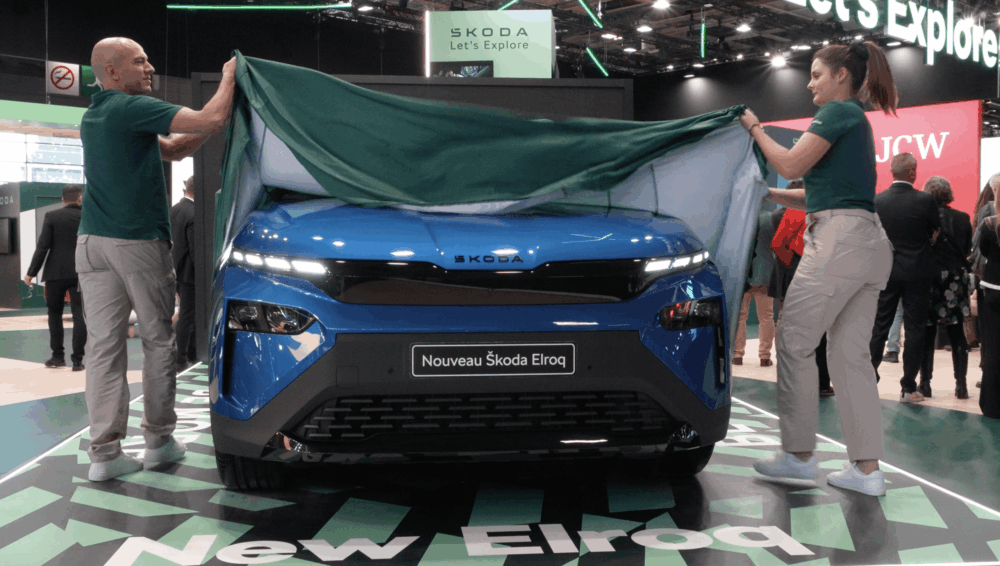
Skoda vehicle being unveiled at a motor show by two people Dealer

News

What is an Autovista24 Launch Report?

Every year, dozens of new cars are launched across Europe. Each bring their own benefits to buyers and the wider automotive market. Autovista24 analyses many of these vehicles in the monthly Launch Report series. Special content editor Phil Curry explains the valuable insights on offer. Carmakers are constantly developing vehicles for the automotive market. This results in either brand-new nameplates or next-generation versions of existing models. These new cars each aim to offer drivers something different in an increasingly crowded market. This could be through their design, interior options, technological advances or driving characteristics. While many vehicle reviews will focus on these traits, the Autovista24 Launch Report offers something unique. These monthly vehicle overviews combine a standard review of the car alongside detailed expert analysis and residual value (RV) forecasts. These combined insights elevate the Launch Report to a key piece of information for automotive industry decision makers. https://youtu.be/ZP3RBB0_jfk Launch Report breakdown Each Launch Report features an interactive dashboard that provides analysis and RV comparisons against three competitors. This information is compiled by experts from key European markets, including Austria, France, Germany, Italy, Spain and the UK. The Dashboard features an overview of a vehicle’s strengths, weaknesses, opportunities and threats. These areas of examination provide a balanced analysis. The strengths segment will look at the best elements of a car, while the weaknesses will point out areas that could be improved. The opportunities section looks at the potential of the model in the automotive market. For threats, the experts look at possible competition, and market conditions that could impede success. Examining residual values Autovista Group experts will also benchmark RV performance against three direct market competitors. These forecast values are determined after 36 months, and market-specific mileages. The study shows the recommended retail price for the model and trim level in question. It also provides the expected value after the time and mileage conditions. This is presented together with the RV, expressed as a percentage of the retained original price. This allows buyers to understand the vehicle’s potential future value. They can then factor this into their purchase decision. This is especially important for fleet buyers, who can understand the financial potential of new models, especially around the average de-fleeting period. This RV information is provided by each market participating in the Launch Report feature. The data is specific to that country, allowing for a more precise and region-specific understanding of vehicle performance. Providing the review Alongside the interactive dashboard, each Launch Report also includes a detailed review of the model itself. This summarises the comments and thoughts of Autovista Group editors, along with Autovista24’s research and experience. The review provides an analysis of the vehicle and adds more context for the dashboard analysis. They are written by experienced motoring journalists and provide a balanced view of each model. This includes more information on design, practicality and driving characteristics. Overall, the Launch Report provides buyers with the complete picture of a vehicle. Alongside the written article, Autovista24 also produces a number of Launch Report videos. These give a visual overview and a detailed look at new models. Alongside this, there is also a breakdown of forecast residual values in select European markets.
Yellow electric car charging close-up Dealer

News

PHEV market slowdown sees new model high in China

China saw another month of low plug-in hybrid (PHEV) improvement, as new models made gains on established players. Moreover, with battery-electric vehicle (BEV) deliveries rising, is the country’s electric vehicle (EV) market becoming more diverse? Autovista24 special content editor Phil Curry investigates. China’s tale of two markets continued in October. BEV deliveries jumped while the PHEV slowdown continued. The month saw 928,863 BEV sales, up 36.6% compared to October 2024, according to the latest figures from EV Volumes. Meanwhile, the 577,940 PHEV volume reflected just a 4.2% increase. EV Volumes does include extended-range electric vehicles in its plug-in hybrid figures. The result means that in October, BEVs made up 61.6% of the total EV market, while PHEVs accounted for 38.4%. Across the first half of 2025, PHEVs enjoyed a double-digit improvement. But since July, the powertrain has struggled to exceed mid-single-digit figures. Across the first 10 months of 2025, 6,620,049 BEVs were sold in China, a 37.2% improvement year on year. However, despite increases, the PHEV market’s growth slowed. The 4,443,977-unit total between January and October was up by 18.7%, but dropped from a much greater cumulative improvement earlier in the year. Wuling dominates BEV sales The Wuling Mini dominated the Chinese BEV market in October. In a rollercoaster year for the model, it took control of the market with 61,119 sales. This was a 78.8% year-on-year improvement, as the model pushed for top spot in the cumulative table. It took a 6.6% market share in the month, up 1.6 percentage points (pp). The Wuling Mini was 16,880 units ahead of its closest rival, the Geely Geome Xingyuan. The Geely model saw 44,239 sales, a 192.4% increase against its first meaningful month on the Chinese market in 2024. This was enough for a 4.8% market share, up 2.6pp compared to 12 months prior. Third went to the BYD Seagull, with 36,604 sales in October. Despite the high placing, this was a drop of 28.6% from October 2024, when it led the monthly standings. The model was a consistent mid-table performer across the first 10 months of the year. Yet, its 3.9% market share in October was 3.6pp down year on year. In just its fifth month on the market, the Xiaomi YU7 took fourth. This was thanks to a record total of 33,662 sales, as the model continues to ramp up deliveries. It accounted for 3.6% of all BEV sales in China in October. It was followed by the BYD Seal Lion 06, with 24,800 units. This was the model’s first placement in China’s top 10 BEV list. Since hitting the market halfway through this year, it took a 2.7% hold of the market in the month. Tesla struggles in China Also making its way into the top 10 for the first time was the Wuling Bingo Plus. Despite seeing its sales begin in March 2024, the model passed the five-digit volume mark for the first time. With 24,448 units, this represented a 382% year-on-year increase and a 2.6% market share.   The BYD Yuan Up took seventh, with 19,813 units representing a 2% decline year on year. Its 2.1% market share was 0.9pp down compared to October 2024. The Tesla Model Y dropped to eighth in October, its worst volume month since February. The result followed its quarterly delivery boost in September. While it performed well in July, its April and October figures suggest a similar trend as seen in Europe. Severe sales drops have followed high periods. It saw 19,488 sales in October and a 46.2% decline compared to the same month last year. This left it with 2.1% of the market, a 3.2pp drop. Ninth went to the Changan Lumin, with 18,755 units equating to a 10.1% increase. However, its 2% market share was 0.5pp down year on year. Rounding out the table was the Deepal S05, with 18,169 units, and a 1,414.1% increase year on year. However, its deliveries were still ramping up 12 months ago. Race to the end After 10 months of 2025, the Geely Geome Xingyuan remained in the lead of the Chinese BEV market. With 387,753 units, it looks set to end the year as the best-selling all-electric model in the country. However, this is not without a challenge. Jumping into second place, after two months of monthly market-leading performances, was the Wuling Mini. With 348,111 units, it held 5.3% of the market. The Mini was only 39,642 units behind the Geely. The gap may seem large, but a slow month from its rival could provide a small chance of victory. The Tesla Model Y dropped to third after its poor October performance. In the first 10 months of 2025, it recorded 312,331 sales. It ended the period with a 4.7% market share and a 35,780-unit gap to the Wuling Mini. With its quarterly reporting pattern, the carmaker could still jump into second with a strong December. New models push forward The following three models remained stable from September. The BYD Seagull was fourth with 282,740 units, followed by the Xiaomi SU7 in fifth, with 234,521 deliveries. Sixth went to the BYD Yuan Up, with 178,420 units and a 2.7% market share. Seventh saw a change, with the Xpeng M03 moving up the table thanks to 148,236 units. It overtook the Tesla Model 3, which dropped to eighth, having not featured in October’s top 10. Between January and October, it achieved 146,379 sales, with a 2.2% share of the overall BEV total. Ninth went to the Changan Lumin thanks to a strong result in October. With 142,163 sales, it took 2.1% of the market. Rounding out the table was the Geely Panda Mini, with 140,434 deliveries in the 10-month period.  New entrant features in PHEV market The BYD Qin Plus once again topped the monthly PHEV chart, with 35,096 units delivered in October. This was a 29.5% increase year on year. The Qin Plus was the first of five BYD models in China’s PHEV top 10 for the month. However, it was the only one to achieve growth. Despite sales dropping 50.1% year on year, the BYD Song Plus took second, with 20,613 units sold. This translated to a 3.6% share of the total PHEV market, a drop of 3.9pp. In third was the Fang Cheng Bao Tai 7, with 20,024 sales. This was just 589 units behind the popular BYD Song Plus. Considering the PHEV began large-volume deliveries in the previous month, this was an impressive performance. The boxy SUV is making its mark in China’s slowing PHEV market, and took 3.5% of total deliveries in the month. Taking fourth was the BYD Seal 6, with 19,355 units. However, this was a big drop for a model, with volumes down 49.2% year on year. It captured 3.3% of overall PHEV sales, down 3.6pp. BYD struggles continue A pair of Aito models came next, with the M7 taking 18,199 sales, a 20.3% rise compared to October 2024. With 3.1% of the market, its share increased by 0.4pp. Following this was the Aito M8, with 17,484 deliveries in its seventh month on the Chinese market. This was enough for a 3% market share. The Galaxy A7, in its fifth month on sale, achieved 15,888 deliveries with a 2.7% hold of total volumes in seventh. Another pair of BYD models followed in eighth and ninth, with the BYD Song Pro and BYD Qin L, respectively. Both saw large sales declines compared to October 2024. The Song Pro achieved 15,758 deliveries, a 50.4% fall, with a 3pp drop in market share to 2.7%. The Qin L fell further, down 60.4% to 15,586 units. This was also a 2.7% hold of the total PHEV market, down from 7.1% a year prior. Closing out the table was the Chery Fengyun A9, in its fifth month on the market. It achieved 13,378 sales and a 2.3% market share. Clear at the PHEV summit The cumulative PHEV top 10 remained fairly static. Despite its struggles, BYD filled the top five places and seven of the top 10 positions. The BYD Qin Plus kept hold of the top spot, with 218,509 units and a 4.9% market share. As the only BYD model in October’s chart to make year-on-year gains, its momentum could carry it forward. The BYD Seal 06 held second with 175,577 sales between January and October. This gave it a 4% share of total PHEV volumes. The model was 42,932 units behind the Qin Plus, a gap that continues to widen. Next was the Song Plus, with 170,377 deliveries in the first 10 months of the year. It closed the gap to second in October, with just 5,200 units between it and the Seal 6. The BYD Song Pro was next, with 154,001 sales and a 3.5% market share. Following this was the BYD Qin L, which jumped a position to fifth with 148,380 deliveries cumulatively. This was good enough for a 3.3% market share. Good results help strugglers Having only placed 18th in October’s sales figures, the Li Auto L6 lost ground to the BYD Qin L, dropping to sixth after 10 months of the year. Its 144,406 total for the period equated to a 3.2% market share. The BYD Song L, which ended October in 11th, followed the L6 in the cumulative table. A total of 122,029 units was good enough for seventh, with a 2.7% market share. Both the L6 and the Song L are holding on thanks to good performances earlier in 2025. However, the Aito M8 continued its rapid approach. Despite having only become available this year, it held eighth with 121,811 units. This was just 218 deliveries behind the BYD model, while it matched its 2.7% market share. The BYD Destroyer 05 was ninth, with 111,617 sales between January and October. The model placed 23rd in the monthly sales figures. Rounding out the cumulative table was the Galaxy Starship 7. Its 110,115-unit tally gave it a 2.5% market share.
Wooden car with protective shield o protect from accident and damage Aftermarket

News

What should automotive remarketing and aftersales companies focus on in 2026?

What trends have defined 2025 for automotive remarketing and aftersales companies, and what lies ahead? Paul Marklew, enterprise sales director at Autovista Group, speaks with Tom Geggus, editor of Autovista24. How has 2025 been for remarketers? What trends have defined this year for them? Remarketers, such as dealers, auctions and advertising portals, have seen a slow 2025 that has made trading conditions challenging. With current economic uncertainties, including reduced consumer sentiment, there are fewer cars being bought and sold. Profit margins are being squeezed significantly as dealers compete for the buyers that are in the market. This trend is reflected when looking at residual values (RVs) across the vehicles. Since the COVID-19 pandemic, most markets across Europe have seen a pretty dramatic increase in RVs. Dealers have also enjoyed increased profit margins. Now we are seeing a rationalisation of the market. Values are dropping towards pre-pandemic levels, at quite a fast rate in some cases. This has resulted in lower profit margins when the vehicles finally go into stock. Additionally, consumers are holding on to their cars for a little bit longer. This has reduced the amount of stock in the market. How does this compare to the year the aftermarket has had? Aftersales, like part suppliers for example, are still some of the more profitable parts of dealer businesses. The margins in the car are a bit more difficult, but servicing and maintenance continue to be profitable. The businesses dealing with aftermarket parts, which are normally more affordable than OEM parts, are seeing an increase in business. This comes as they move towards increased digitalisation and an improved buyer experience. So, aftersales and remarketing are really experiencing the same meta trends in different ways. Remarketing and consumers As you mentioned, RVs did soar during the COVID-19 pandemic, and now we are seeing a normalisation. How have remarketing companies dealt with this change? For starters, there has been a focus on cost and buyer experience. AI and digital car-buying journeys are coming into the mix a lot more. There is also a focus on the consumer experience, and there is a lot of competition in this area. This is because you can only compete so far on price and remain profitable. Consumers are spending less time in the dealership and more time online. Consequently, some of these online advertising portals, for example, are becoming increasingly important to the journey. So, dealers are trying to capture people online a lot more now, and they are trying to give consumers choice. Previously, we saw businesses introduce online-only models, particularly during COVID-19. Those models had mixed success and varied longevity. But in the end, the businesses that were more successful with this, created choice for customers. These buyers can complete as much of the buying journey online as they would like. Then, if they would like to come into a dealership to complete the transaction, that is available to them. Closed remarketing ecosystem So how do these digital systems lock in buyers? Information is king in this area. Dealers are looking at new ways of providing information to consumers, including agentic AI on their websites. This helps customers do the research in the dealer ecosystem, keeping them on their website. Then they are more likely to convert that into a sale in the end. We are seeing this in the wholesale environment as well. Traditionally, in places like the UK, physical auctions were the way to buy cars. But since COVID-19, the digital acquisition of stock is becoming more common. Platforms that allow dealer-to-dealer customers to purchase stock digitally, either from other dealers, OEMs, or fleet companies, are becoming more common. The key factors in that are going to be getting the pricing right and accurately describing the vehicle condition. Electric vehicle remarketing Another hurdle for remarketing and aftersales is electric vehicles (EVs). How can the relatively low RVs of these vehicles be managed? The depreciation happens, at scale, in the first life of the vehicle. A lot of first-life EVs go into fleets and leasing. Realistically, that loss is being handled by the businesses that are then remarketing the cars. But EVs do remain a point of uncertainty. In some markets, they are difficult to insure. In others, they are difficult to source parts for. In some countries, they do not have the best charging infrastructure. Some of the markets, like the UK, are bucking these trends. RVs are low, but this is mainly due to the fast development of EV technology. There is also a knowledge gap to overcome, with dealers looking to upskill themselves. Yet, EVs are selling pretty well in the UK, even used models. As long as the dealers buy at the right price, they are not having much difficulty selling them. There are always going to be deviations from that trend, but overall, the UK EV market is pretty strong. What about in other countries? What we are seeing a lot of in mainland Europe is the shifting from one country to another. Many used EVs have low RVs within one country, like Germany, for example. But the vehicles are moved to the Nordics, for example, where the used EV market is strong and RVs are less disrupted. So, if you remarket your vehicle in a country with a low RVs, that is what you will experience. However, if you move it to a country with a stronger used EV market, you avoid absorbing those financial outcomes. Creaking supply chains One problem the industry has dealt with this year is disrupted supply chains. How have aftersales businesses managed? This seems to be a problem more for vehicle manufacturers. For non-OEM parts, business is actually looking pretty good. There are several factors at play. More insurance companies are looking to control costs. Before, they may have had policies that focused on like-for-like replacements. Those become difficult policies to manage during supply chain disruption as the costs of these parts rise. Increasingly, they are looking at viable aftermarket alternatives and, in some cases, recycled parts. When we look at OEM parts and how businesses are trying to adapt to this, digitalisation is a key trend. We are seeing more e-commerce journeys at play. There is also an increase in purchase channels. Dealers are looking at how they can sell parts directly to consumers online. Again, having the right data to facilitate picking the right part for the right car is key. Opportunities and challenges So, moving into 2026, where do you see the biggest opportunities and challenges for remarketing and aftersales companies? I am sure we will see more overseas investment resulting in the consolidation of dealerships. When the top line is pressured, reducing costs is key. So, dealers are going to do that by investing in growing their businesses through acquisition. There is going to be investment in digitalisation to reduce costs. They are going to make sure they have good quality data to make sure that they are making the right purchasing and selling decisions. We will also keep seeing vehicles moving around countries in mainland Europe, ensuring businesses get the best possible price. This is because the desirability and profitability of certain vehicles are different from country to country. The aftermarket will see something quite similar. Digitalisation, consolidation, and the reduction of costs to ensure profitability. For example, we are seeing a lot of parts wholesalers grouping together to share costs. This is not necessarily acquisition, but the forming of powerful buying groups to create economies of scale. So, both sides of the market will need to manage the bottom line, where there is less flexibility in the top line. This means AI, digitalisation, and economies of scale.
EV charging station for electric car|| Dealer

News

Is China’s new PHEV struggle affecting brands’ EV sales?

China’s plug-in hybrid (PHEV) market appears to be slowing following another month of struggling growth. But how are these performances affecting domestic brands? Autovista24 special content editor Phil Curry examines the data. In September, China’s PHEV market, including range-extended electric vehicles, once again showed signs of a slowdown. Its 0.4% year-on-year improvement was the lowest result since a 51.4% decline in June 2020, according to EV Volumes data. Meanwhile, the BEV market grew once again in September. In total, 836,711 models were sold, which equated to a rise of 26.5%. Between January and September, China’s PHEV market saw 3,859,629 passenger car sales, a 21% increase year on year. At the end of the first half of 2025, this growth was at 35.7%, highlighting the powertrain’s third-quarter struggles. Meanwhile, the BEV market saw an improvement of 37.4% across the first nine months of 2025. The overall Chinese electric vehicle (EV) market rose by 30.3% over the first three quarters of the year. However, this was down by 10.1 percentage points (pp) compared to the growth in the first half of 2025. The PHEV problem Some of the most popular PHEV models in China suffered declines in the third quarter. Combine this with the growth recorded at the end of 2024, and the last quarter of 2025 may prove difficult. The market’s issues have caused problems for some Chinese brands, especially those with a stronger PHEV offering. Both Li Auto and Aito have posted overall declines after three quarters of the year. BYD, which dominates the PHEV market, saw its numbers fall between July and September, coinciding with the PHEV slowdown. For the second consecutive month, the BYD Song Plus did not make the monthly top 10, hampering its sales growth. The PHEV sector could play a crucial role in determining how certain brands perform for the rest of the year. Meanwhile, a strong BEV market is helping some domestic marques go from strength to strength. BYD’s third-quarter PHEV struggles Nine months into 2025, BYD sold the largest volume of EVs of any brand in China. But its growth slowed dramatically in the third quarter. With 52.6% of its sales coming from PHEVs, is it responsible for the sector’s poor form in the same three-month period? Between July and September, the carmaker saw volumes drop by 19.4%. This meant its figures for the nine-month period grew by just 2.5%. In the first half of 2025, the brand’s numbers were up by 19.9% With a 24.9% EV market share in the first three quarters of 2025, it is comfortably the region’s plug-in leader. However, its hold has slipped by 6.8pp compared with the same period last year. It is the PHEV market where BYD has struggled the most. Six of BYD’s PHEVs made the top 10 in September this year. Of these, four models lost volume year on year, while the Qin Plus recorded an improvement of 41%. Meanwhile, the BYD Sea Lion 06 first recorded sales in June this year. But the brand’s problems are not just related to plug-in hybrids. In the BEV market, the BYD Seagull placed fifth in September as its sales shrank by 47.3% year on year. However, this was countered by the BYD Yuan Up in fifth, which enjoyed a 61.8% improvement. Furthermore, the BYD Dolphin saw a 41.7% uptick in demand in eighth. The carmaker is focusing on export markets, while it maintains a diverse portfolio of products in its domestic market. For now, BYD can rest on its laurels, with no real challenger yet in sight. Geely’s standout performance The standout brand so far this year has been Geely, including its Galaxy subsidiary. The carmaker has seen volumes increase by 234.7% in the first nine months of 2025. This equated to an 8.8% market share, up 5.4pp. Geely took a stronger footing in the BEV market, with 69.5% of its EV sales coming from all-electric models. This was thanks to the Geely Geome Xingyuan, which was the best-selling BEV in China between January and September. It made up 59.1% of Geely’s BEV deliveries in the period, and 41.1% of its total sales in the nine months. But Geely has endured PHEV struggles too. The Galaxy Starship 7, which led the market in January, has since slipped down the charts. The model did not place in the top 10 during September and sat in 10th in the cumulative results after nine months. Yet the new Galaxy A7 may offer some hope. It made its way into the top 10 for the first time in August and placed again in September. Still, Geely’s performance after three quarters owes much to the Geome Xingyuan, which is likely to be China’s best-selling BEV at the end of 2025. Wuling and Tesla’s rollercoaster ride Wuling, incorporating its Baojung subsidiary, has seen inconsistent results so far this year. Yet after three quarters of 2025, the carmaker still saw volumes improve by 44.1%. Its market share sat at 5.9%, up by 0.5pp. Like Geely, Wuling’s volumes came mostly from the BEV market. Of its EV sales, 94.1% were all-electric. The Wuling Mini was China’s third-best-selling BEV between January and September. It was helped by its chart-topping performance in September, beating the Tesla Model Y by 570 units. This was an impressive result, considering the US brand’s quarterly push, which often sees it lead in the month. Tesla was the fourth best-selling brand after three quarters of the year. The brand saw its volumes fall by 6.1% year on year between January and September 2025. Meanwhile, market share dropped by 1.8pp. With a 100% focus on the BEV market, Tesla is not affected by the fluctuation in the PHEV sector. Its Model Y has performed well, but it is not leading the market as it has in the past. Additionally, the Model 3 has seen its popularity decline. In September, its deliveries fell by 15.2% year on year, despite the brand’s end-of-quarter push. Leapmotor leaps forward Between January and September, Leapmotor took fifth in the brand table for EV sales, following a strong third quarter. It jumped domestic rival Chery, which took fifth in the first half. Leapmotor’s success was largely thanks to its BEVs. These models accounted for 78.6% of its EV sales, meanwhile Chery’s all-electric cars only accounted for 29.5%. These results are more impressive considering neither brand was present in the BEV or PHEV cumulative model tables. It seems each has a higher volume of models that are popular further down the table. In total, Leapmotor’s sales were up 116% between January and September, with a 3.8% market share. This was up by 1.5pp year on year. Chery, meanwhile, saw growth of 126.6%, with a 3.8% hold of the EV market too. This was up 1.4pp compared to the same period in 2024. Seventh in the brands table went to Li Auto. The carmaker also struggled, with volumes down 12.3% year on year. With 92.2% of its sales coming from PHEVs, it appears the marque has been affected by the powertrain’s slowdown. Xpeng was next, with volumes rising by 213.6% over the first three quarters. This gave the brand a 3% market share, jumping by 1.8pp. Aito was another to struggle, with a 3.6% decline in volumes. The carmaker is another with a majority of its sales coming from PHEVs. This may have led to its overall share falling by 1.1pp, to 2.9%. Xiaomi saw the biggest gain of all carmakers in the top 10 after nine months of 2025. The BEV-focused marque saw volumes grow 281.8%, with its market share up 1.8pp, reaching 2.8%. September surprise China’s BEV market saw a surprising result in September. The Wuling Mini led the way thanks to 51,743 sales, a jump of 78.9% year on year. It led the Tesla Model Y, which saw 51,173 deliveries. The US brand usually leads the end-of-quarter months thanks to its reporting style. The Model Y was able to achieve a 6.2% volume increase. However, this was not enough to top the BEV chart across January to September, symbolising its ongoing struggles. Meanwhile, the Geely Geome Xingyuan placed third in the month. The model saw its first sales take place in the same month of 2024, albeit in small amounts. It achieved a 5.7% share of total BEV sales in September. In the first nine months of 2025, the Geome Xingyuan continued to lead. It was 50,671 units ahead of the Tesla Model Y in second, having lost a little ground in the month. The Wuling Mini closed on the US crossover, trailing by just 5,851 units after nine months. PHEV strength despite struggles Despite the PHEV market’s struggles, the top two models performed well. Leading the pack in September was the BYD Qin Plus, with 28,201 sales. This was a 41% increase compared to the same month in 2024. Following this was the Aito M8. In its sixth month on the market, it achieved 21,000 deliveries, giving it a 4.2% market share. Just 229 units behind in third was the BYD Destroyer 05. It achieved 19,771 sales, although this was a 1.7% year-on-year decline. It still held 4% of the market, a 0.1pp drop. The results meant the BYD Qin Plus extended its lead at the top of the cumulative PHEV chart. However, a strong performance from the BYD Seal 6 in September saw it overtake the struggling BYD Song Plus to sit second. The latter model did not place in September’s PHEV top 10.

Displaying 12 of 21 insights