Insights

Tagged:
Clear filters
Industry
Topic
Segment
Dealer

News

Electrified powertrains make important step in UK registration results

Electrified and internal-combustion engine (ICE) powertrains split the UK new-car market after the first quarter of the year. But after another month of improvement, is the country’s current growth sustainable? Autovista24 special content editor Phil Curry examines the market. The UK’s new-car market posted its strongest March result since 2019, as the country’s plate-change period helped boost overall volumes. According to the latest data from the SMMT, 380,627 new cars made their way to customers last month. This was an increase of 6.6% compared to 2025, equating to an extra 23,524 units, according to Autovista24 analysis. March is one of two important months for the UK market, the other being September. During these times, new registration plates are released, making deliveries more attractive. In March, new ‘26’ plates were released, with ‘76’ plates due in September. In 2025, March was the strongest month of the year, accounting for 17.7% of the annual registrations total. With the SMMT highlighting that current geopolitical changes are likely to impact the market, the same pattern may occur in 2026. Across the first quarter of the year, UK registrations are up by 5.9%, with 614,854 units delivered to customers. This is an improvement of 34,352 passenger cars, according to Autovista24 calculations. Record results in the UK March was the best month on record for electrified vehicles, according to the SMMT. This category includes full hybrids (HEVs), battery-electric vehicles (BEVs) and plug-in hybrids (PHEVs). A total of 196,059 units were delivered in the month, a 23.1% increase year on year. Electrified volumes were also above ICE figures for the first time this year. The UK reports its ICE figures differently from other markets. Mild-hybrid powertrains are merged with their respective petrol and diesel counterparts, rather than being included with HEV figures. The electrified market overtook the petrol and diesel group for the first time in September last year. However, it slipped behind once again at the start of 2026. March’s strong result may be the start of a period of dominance for the powertrain group. After three months of the year, electrified passenger cars had overtaken ICE, thanks to their performance in March. With 307,652 registrations, the group was just 450 units ahead of the combined petrol and diesel performance. This was enough for a 50% market share. BEVs continue to improve BEVs were the second-best-selling powertrain type in the UK last month. With 86,120 deliveries, they made up 22.6% of the market. The figure was a record total for all-electric registrations, with volumes increasing 24.2% compared to March 2025. March also saw the first year-on-year improvement in BEV market share of 2026. The technology’s hold rose by 3.2 percentage points (pp) to 22.6%. However, this was some way behind the required share in the zero-emission vehicle (ZEV) mandate. This is emphasised further by the powertrain’s performance in the first quarter of the year. Deliveries have improved by 14.5%, with 137,614 units taking to the road. However, the market share of 22.4%, while 1.7pp higher year-on-year, is 10.6pp below the mandated target. For 2026, vehicle manufacturers are required to ensure that 33% of their passenger cars registered in the UK are zero-emission models. Yet, the overall market has failed to meet the target in the first two years of the mandate. Calls for review into UK transition At the recent SMMT Electrified conference, chief executive Mike Hawes highlighted how the market had changed since the ZEV mandate was first proposed. At the start of 2026, battery costs were more than 30% higher than expected, according to the SMMT. Furthermore, the industry body said that industrial energy prices are around 80% above 2021 levels. Additionally, it also noted how public charging can cost over 140% more than five years ago.  Moreover, the SMMT has also highlighted that the current geopolitical situation, which is impacting oil prices, may spark interest in electric vehicles (EVs). Yet with a risk of higher energy prices and supply-chain costs, the increased cost of living could undermine consumer confidence. These geopolitical changes have added urgency to the automotive market’s calls for a rapid review of the ZEV transition. The SMMT has pointed to other markets, which have amended their plans to reflect current market realities. While the UK government holds firm, however, carmakers are having to invest heavily in both development and discounting to meet ZEV mandate targets. ‘Delays to a review of the UK transition will put the country in an uncompetitive position, undermining consumer choice, investment and, ultimately, the pace of decarbonisation,’ the industry body said in a statement. PHEV popularity grows While the debate about the electric transition continues, the UK’s PHEV market has been gathering strength. March saw the powertrain continue its run of strong results, with a 46.9% improvement year on year. This equated to 15,856 more units, based on Autovista24 analysis. In total, 49,671 units made it to customers in the month, giving the technology a 13% market share. This is up by 3.5pp compared to a year prior. The PHEV market has been boosted by the popularity of the Jaecoo 7, which hit the country’s market in February 2025. The Chinese brand has been building momentum, and was the most popular model in March. With 10,064 units registered in the plate-change month, it accounted for 20.3% of total PHEV deliveries. In the first quarter, PHEVs have seen volumes increase by 46.5% compared to the same period in 2025. With 78,666 units, this offered the powertrain a 12.8% slice of the market, up 3.6pp. Again, the Jaecoo 7 has helped this growth, with 19.8% of the PHEV market. The SUV held second in the best-seller table, behind the Ford Puma. Combining PHEV and BEV figures, the EV market saw a 31.7% rise in March, with 135,791 units. This was enough for a 35.7% market share, a rise of 6.8pp year on year. After three months, EV figures had improved by 24.4%, with 216,280 deliveries. The powertrain group took a 35.2% hold of total registrations. ICE remains strong While electrified models continue to see volume increases, deliveries of petrol and diesel cars suffered in monthly registration figures. Despite this, petrol remained the dominant force in the UK market during March. The fuel type saw 165,997 units delivered to customers, a drop of 6.1% compared to the same month last year. Having seen a rare increase in volumes during February, this result was a return to a regular trend of decline. Yet the powertrain still held 43.6% of the market. While this was a drop of 5.9pp, petrol remained 21pp ahead of its nearest challenger, BEVs. Registrations of petrol-powered cars declined by 3.5% in the first quarter, with 276,689 units. Despite this, the technology still held 45% of the market, a 4.4pp drop. Diesel popularity continued to wane, with March seeing figures fall by 11.4% to 18,571 units. This was only good enough for a 4.9% share of the market, down from the 5.9% recorded a year prior. Between January and March, diesel deliveries totalled 30,513 units, down 9.8%, equating to a share of just 5%. Combining the powertrains, ICE registrations dropped 6.7% in the month with 184,568 units. This was good enough for a 48.5% share of total deliveries, falling behind the electrified market for the first time in 2026. This means that after the first quarter, both ICE and electrified groups shared a 50% hold of the UK new-car market. With 307,202 registrations, the combined petrol and diesel grouping suffered a 4.2% delivery decline year-on-year. HEV pulls ahead in UK hybrid race HEVs continued to be the third-best powertrain in the UK during March. Its 60,268 registrations were enough for a 7.3% increase compared to the same period last year. However, its 15.8% market share was up just 0.1pp compared to March 2025. After the first quarter, the powertrain has seen a 6.2% rise in volumes, with 91,372 deliveries. This was good enough for a 14.9% slice of overall new-car registrations. Yet with stronger growth for PHEVs and BEVs, the powertrain’s market share only rose by 0.1pp year on year. The unit gap between HEVs and PHEVs has risen, thanks to the better volume total in March for full hybrids. But with plug-in hybrids increasing in popularity, the technology could close the gap in the coming months.

| Dealer

News

What is an infotainment system?

Technological advances have rendered older in-car entertainment systems effectively obsolete. Now, carmakers combine entertainment and information as a central point of interior design. Autovista24 special content editor Phil Curry examines the rise of the infotainment system. The rapid development of technology has replaced in-vehicle cassette and CD players with new systems. While music streaming meant losing bulky radio units, the need to display more driver information required bigger screens.   By combining information and entertainment, the infotainment system has been a step forward for interior vehicle design and functionality. These systems are now a staple of modern cars, but some developments have been a cause for concern.  https://youtu.be/yVLCP0bfm-0 Growth of the infotainment system  With the development of touchscreen technology, integrating displays into vehicles for data and control access is a logical step. These screens provide more than just music playback. They also offer access to a wide range of systems.  These displays can provide navigation, views from external-facing cameras, as well as battery charge and health in electric vehicles (EVs). Many also feature Bluetooth connection for calls and smartphone integration. This allows users to bring their own music, apps and personal settings into the car.   Meanwhile, the infotainment system can act as a control location for certain vehicle functions. Menus and sub-menus provide detailed access to advanced driver-assistance systems (ADAS), vehicle customisation, driver profiles, and more.  Some carmakers have even opted to reduce or remove physical buttons for certain systems. This produces a cleaner and sleeker interior design, but can also lead to potential safety issues.  Are screens a distraction?  The ability of an infotainment system to house various vehicle controls can free up space inside a car. However, with some controls buried in sub-menus, out of easy reach of the driver, there are concerns around distraction.  Climate control, driving profiles, heated seats, and regenerative braking levels in EVs can be reduced from physical to digital buttons. But searching for these settings on a touchscreen can mean less focus on the road.   Research published by  TRL, on behalf of safety charity IAM Roadsmart in 2020, highlighted these concerns. Findings showed that driving performance was more negatively impacted when using touch controls compared with voice control.   Study participants were able to keep their eyes on the road more when using voice control than touch control. They were also more likely to identify stimuli that required attention. Despite this, most participants in the study reported using touch rather than voice control in their real-world driving.  Ensuring infotainment system safety  The concerns over driver distraction have led to Euro NCAP making a button-based request of carmakers for 2026. The safety body is asking manufacturers to either offer physical controls or dedicate a fixed portion of the cabin display to primary driving functions. This includes the horn, indicators, hazard lights, windscreen wipers and headlights.   So, the road ahead looks to be a matter of balance when it comes to infotainment systems. The technology will still need to support an increasing number of vehicle capabilities while also meeting higher consumer expectations. However, this will need to be levelled with control accessibility and driver attention.   
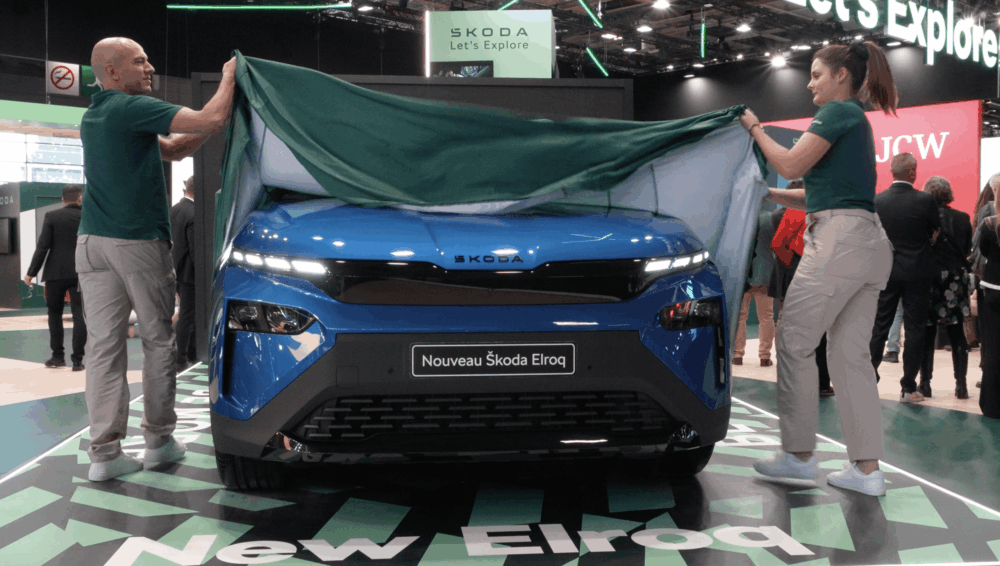
Skoda vehicle being unveiled at a motor show by two people Dealer

News

What is an Autovista24 Launch Report?

Every year, dozens of new cars are launched across Europe. Each bring their own benefits to buyers and the wider automotive market. Autovista24 analyses many of these vehicles in the monthly Launch Report series. Special content editor Phil Curry explains the valuable insights on offer. Carmakers are constantly developing vehicles for the automotive market. This results in either brand-new nameplates or next-generation versions of existing models. These new cars each aim to offer drivers something different in an increasingly crowded market. This could be through their design, interior options, technological advances or driving characteristics. While many vehicle reviews will focus on these traits, the Autovista24 Launch Report offers something unique. These monthly vehicle overviews combine a standard review of the car alongside detailed expert analysis and residual value (RV) forecasts. These combined insights elevate the Launch Report to a key piece of information for automotive industry decision makers. https://youtu.be/ZP3RBB0_jfk Launch Report breakdown Each Launch Report features an interactive dashboard that provides analysis and RV comparisons against three competitors. This information is compiled by experts from key European markets, including Austria, France, Germany, Italy, Spain and the UK. The Dashboard features an overview of a vehicle’s strengths, weaknesses, opportunities and threats. These areas of examination provide a balanced analysis. The strengths segment will look at the best elements of a car, while the weaknesses will point out areas that could be improved. The opportunities section looks at the potential of the model in the automotive market. For threats, the experts look at possible competition, and market conditions that could impede success. Examining residual values Autovista Group experts will also benchmark RV performance against three direct market competitors. These forecast values are determined after 36 months, and market-specific mileages. The study shows the recommended retail price for the model and trim level in question. It also provides the expected value after the time and mileage conditions. This is presented together with the RV, expressed as a percentage of the retained original price. This allows buyers to understand the vehicle’s potential future value. They can then factor this into their purchase decision. This is especially important for fleet buyers, who can understand the financial potential of new models, especially around the average de-fleeting period. This RV information is provided by each market participating in the Launch Report feature. The data is specific to that country, allowing for a more precise and region-specific understanding of vehicle performance. Providing the review Alongside the interactive dashboard, each Launch Report also includes a detailed review of the model itself. This summarises the comments and thoughts of Autovista Group editors, along with Autovista24’s research and experience. The review provides an analysis of the vehicle and adds more context for the dashboard analysis. They are written by experienced motoring journalists and provide a balanced view of each model. This includes more information on design, practicality and driving characteristics. Overall, the Launch Report provides buyers with the complete picture of a vehicle. Alongside the written article, Autovista24 also produces a number of Launch Report videos. These give a visual overview and a detailed look at new models. Alongside this, there is also a breakdown of forecast residual values in select European markets.
An aerial view directly above rows of newly built cars in the automobile industry on a commercial dock ready to be loaded for export and import with VAT and tariffs Dealer

News

Can carmakers steer towards a successful 2026?

What has defined 2025 for carmakers? Will these trends continue into 2026? Enterprise sales director Thomas Luxenburger considers the upsides and downsides with Autovista24 editor Tom Geggus. What do you think the big trends have been for OEMs in 2025? We need to distinguish between the established OEMs and the newer players, including those trying to strengthen their position. Established carmakers are struggling with declining margins as they lose market share, particularly in former emerging markets. In China, there is fierce competition between importers and domestic brands, which means lots of pressure on margins. Established brands have been losing local market share, resulting in smaller margins. This means these companies have less money to invest back into development. The timing could not be worse, as these brands need to put money into the electric vehicle (EV) transition. Carmakers are also at the forefront of more protectionist politics and policies, such as tariffs. There has also been increased supply chain tension this year, impacting chips and rare earth metals. To remain competitive, companies are looking to balance the books elsewhere. This can include experimenting with direct sales models or monetising software and services. They have also looked to cut staffing and production costs, with manufacturing moved to more affordable locations. Carmaker competition So, new-car markets have seen increased competition this year. How has this impacted pricing, operational strategies and future products? In terms of development, established players have historically needed up to seven years to bring a new model to market. Meanwhile, new players can develop their cars much faster. Software-defined vehicles take far less time to launch and often cost less. This is pushing established OEMs to accelerate their development process and bring more affordable vehicles to the market. Think just about earlier generations of battery-electric vehicles (BEVs), established brands offered these at a higher price point. These models have now entered the used-car market and have changed hands once or even twice. But their residual values (RVs) are under pressure from a higher cost-new price. But now, established brands are under more pressure to increase new-car sales volumes, which means investing in more affordable cars. This means a lower list price between €20,000 and €30,000. Direct sales model hype? You mentioned direct sales models earlier. What have carmakers learnt about these systems in 2025? Following the COVID-19 pandemic, there was a lot of hype for carmakers to do everything by themselves. Some set up a flagship store in a big city and thought brand awareness would secure the business. But now perspectives on that approach have changed. Previously, I was surprised that a country like Germany did not see larger dealer groups investing in the market from abroad. However, nowadays there is a very different landscape with much larger groups acquiring medium-sized dealers. Additionally, dealers are quite open to new logos and Chinese brands. This is a totally different situation with larger dealer groups becoming increasingly important and having even greater influence. Meanwhile, new brands are battling each other to acquire their interest. In this landscape with margins under pressure, direct sales are being considered as an opportunity for OEMs. Premium brands could run direct sales models, but mass market ones might struggle more. For these carmakers, having dealer groups in the field and closer to the customer is more advantageous. This is because the risk is carried by the dealer, not the carmaker. If the current socioeconomic situation were more stable, the direct sales model would probably be more advanced. Affordable all-electric cars Carmakers have been looking to affordable BEVs to stay competitive. Do you think this trend will continue? The benefit of my job is getting to see cars at an early stage, so we know what is coming down the pipe. There is obviously an appetite to bring more affordable cars into the market. Also, battery chemistries and technologies are advancing, making it possible to reach target groups at a lower price point. In the coming years, we will see more affordable cars for commuting in urban areas. Even so, carmakers still need to earn money to justify the investment in affordable models, and only volume will cover this. To reach optimum volumes, there must be marketing, with advertising to reveal this new generation of cars. The price point for mobility is the key. Consumers will need to ask themselves what they really need in the day to day. Is a 500km BEV necessary for urban commuting, or would a solar panel and a home charger make more sense? But the used-car market is going to play an important role in the future. In the future, internal-combustion engine cars and affordable BEVs will compete in this space in terms of price attractiveness. I think OEMs need to think about a second or a third used cycle. This means supporting dealerships with the likes of a subscription model for used BEVs. Away from the new car market, this would be a new approach for the powertrain. This would certainly help while registrations continue to recover from a turbulent few years. Commercial vehicle connection What about the light-commercial vehicle (LCV) sector, where the electric transition seems far slower. Could 2026 be the year this changes? I would hope so. You know me, I am LCV addicted. I spoke with some of our colleagues to get their electric LCV adoption forecast, and it will take time. We will not see a significant move in 2026. Change will maybe start in 2027 until the end of the decade. I think it will take much more time beyond 2030 for potential customers to become fully aware of the powertrain. But I do know OEMs that have not previously offered electric LCVs and are now investigating the technology. Elsewhere, the hydrogen discussion has become a bit stuck for LCVs. For heavy trucks, it could be a solution in the future, but I would not expect that personally. I think OEMs will invest in electric LCVs. With the legislation and regulations in the EU, I think this technology will be the way forward. It will take a bit of time, but it will become more important, particularly for the total cost of ownership. Carmakers and supply chains You mentioned advancing automotive technology several times. The need for more advanced parts, like chips, has increased accordingly. But how can OEMs protect themselves when supply chains for these parts become disrupted? It will remain a real challenge. I think OEMs have responded by increasing inventory buffers. We saw this with the disruption of Nexperia chips, where many carmakers tried to fast-track alternatives. It also depends on the contracts and the supply in general. But OEMs are now seeing more reason to spread their risk. Just counting on one supplier can result in quite a mess. Companies may invest in long-term contracts to ensure supply, as well as buffers and alternatives. Some carmakers may even look to get rid of some technology. I think development will now emphasise reducing the number of control units a car needs. Less technology means less reliance on these supply chains. These countermeasures may help OEMs ride the waves of supply chain disruption, but they cannot stop the geopolitical storm. International tensions have a huge impact on the automotive industry, and that is unlikely to change in the short term. The opportunities and challenges With all that in mind, what are the biggest challenges and the greatest opportunities for OEMs in 2026? We can start with opportunities. It is generally hard to say, because I do not have a crystal ball here on my desk. However, I believe that the key lies in the used-car business. This can help support decreasing new-car sales margins. With the right pricing, taking care of RV development could be a pillar for securing the business or covering decreasing margins. A well-established, certified pre-owned programme could also help. It is about developing, coaching, and teaching in the established dealer landscape and taking care of these programmes. They could support a stable value of the cars in the market. Yet, I think the greatest opportunity is to make faster development cycles. The market requires that we move faster technologically. However, this must be done purposefully, not randomly or sporadically. A well-thought-out transition to a new technology will take time. I think 2026 will be another year of transition. Established brands will need to reduce costs, optimise their workflows and strengthen their value chains. Newcomers wanting to make an impact in Europe will look to acquire dealer groups and bring volume into the market. This increased competition will likely be reflected in pricing strategies. New brands will be able to quickly gain ground by utilising customer trust in known dealer groups. So, I am not sure whether all OEMs will survive to the end of the decade. There may be another wave of consolidation on the horizon.
European flag with an electric car as background.| Dealer

News

Automotive package proposes new internal-combustion engine sales after 2035

The European Commission’s automotive package proposes new internal-combustion engine (ICE) powered vehicles could be sold past 2035 in the EU. Autovista24 editor Tom Geggus unpacks the news and what it means for the region’s automotive industry. The European Commission’s automotive package has opened the door to greater CO2 emissions flexibility for carmakers. The proposal comes following pressure from member states and big automotive players. Under current rules, all new cars and light-commercial vehicles (LCVs) sold in the EU would need to emit zero CO2 from 2035 onwards. Instead, the automotive package published today considers the possibility of technological neutrality. What is in the automotive package? From 2035 onwards, carmakers will only need to cut vehicle CO2 tailpipe emissions by 90%, compared with 2021 figures. The companies will need to make up for the remaining 10% by using low-carbon steel made in the EU, or from e-fuels and biofuels. ICE-powered models, plug-in hybrids (PHEVs), mild hybrids (MHEVs), and extended-range electric vehicles (EREVs) will still be available to purchase. Battery-electric vehicles (BEVs) and hydrogen vehicles will also be available. The 2030 target could also be more flexible, with a ‘banking and borrowing’ scheme between 2030 and 2032. This means manufacturers could get three years to reduce their CO2 emissions by 55% compared with 2021. The Commission acknowledged the slower progress of the electric LCV market. It suggested the 2030 CO2 target for LCVs will be reduced from 50% to 40%. The automotive package also sets mandatory zero and low-emission vehicle share targets for corporate fleets. These will be set at the member state level to reflect differing levels of market maturity, according to the Commission. The total number of corporate vehicles registered by large companies will then be passed back to the Commission. The Commission has also updated its car labelling rules, which provide CO2 and energy performance information to consumers. This will now include electric energy consumption and the range of electric vehicles (EVs). The scope of these labels will also be increased beyond new vehicles. New LCVs, used cars and used vans will also be covered. Further automotive measures in the EU The package also proposes the use of what the Commission is calling ‘super credits’. Carmakers will be able to earn these by selling small and affordable electric cars made within the EU. The hope is that this will incentivise the introduction of smaller EVs. The Commission also stated a €1.8 billion battery booster could accelerate the development of a local battery value chain. Of this, €1.5 billion is earmarked to support European battery cell producers with interest-free loans. The omnibus proposal could bring savings for businesses and national administrators to €706 million, according to the Commission. This is broken down into €655 million in compliance costs and €51 million in administrative costs. Alongside the Commission’s other omnibus measures and simplification initiatives, administrative savings could climb to €14.3bn per year. This should help local carmakers concerned about the cost of electrification and the adoption of zero-emission vehicles. Support for automotive package ‘Innovation. Clean mobility. Competitiveness. This year, these were top priorities in our intense dialogues with automotive sector, civil society organisations and stakeholders,’ said European Commission President von der Leyen. ‘Today, we are addressing them all together. As technology rapidly transforms mobility and geopolitics reshapes global competition, Europe remains at the forefront of the global clean transition,’ she outlined. Apostolos Tzitzikostas, Commissioner for sustainable transport and tourism, highlighted that Europe’s automotive industry is a cornerstone for the region’s economy. He stated that it contributes 7% towards EU gross domestic product and provides nearly 14 million jobs.   ‘With today’s automotive package, we are strengthening the sector’s competitiveness introducing flexibility into the CO₂ standards for cars and vans and a technology-neutral framework. We are also creating demand for cleaner corporate cars and vans, reinforcing EU manufacturing and supply chains,’ he said. Germany’s automotive body, the ZDK, came out in full support of the automotive package. It called the proposal necessary and overdue in the step towards a more realistic European climate policy. ‘We offer highly efficient combustion engines, namely the 48-volt mild-hybrid engine, which provides a climate protection benefit when fuelled with carbon-neutral fuel. This technology is one of the options for complying with future CO2 fleet regulations,’ said ZDK president Thomas Peckruhn. ‘Specifically, emissions measurements at the exhaust must account for fuel origin. Carbon-neutral fuels should be excluded from the balance. If in the future only pure electric vehicles are demanded, these offerings will naturally disappear from the market without complicated regulations and high penalties,’ he added. Proposal creates concern The proposal also drew criticism. Green group Transport and Environment (T&E) said reversing the phase-out of ICE sends a confusing signal to the automotive industry and consumers. It calculates the 90% CO2 target could result in 25% fewer BEV sales in 2035 than under the current target. It welcomed the introduction of national electrification targets for large company fleets. However, it claimed that these will not be ambitious enough to drive greater uptake for the sector.   ‘The EU has chosen complexity over clarity. Breeding faster horses could never have halted the ascent of the automobile,’ said William Todts, executive director at T&E. ‘Every euro diverted into PHEVs is a euro not spent on [B]EVs while China races further ahead. Clinging to combustion engines will not make European automakers great again,’ he commented. ‘While China accelerates, Europe is hesitating, and hesitation is not a strategy. Changing the rules midway through the game undermines business confidence after companies have already committed capital and built factories around a 100% trajectory,’ said Chris Heron, secretary general of E-Mobility Europe. ‘But once the dust has settled, we are confident the core of the 2035 framework will still matter more for the market than today’s exemptions. The world’s transition to EVs is irreversible, shaped by cost and efficiency,’ he added.
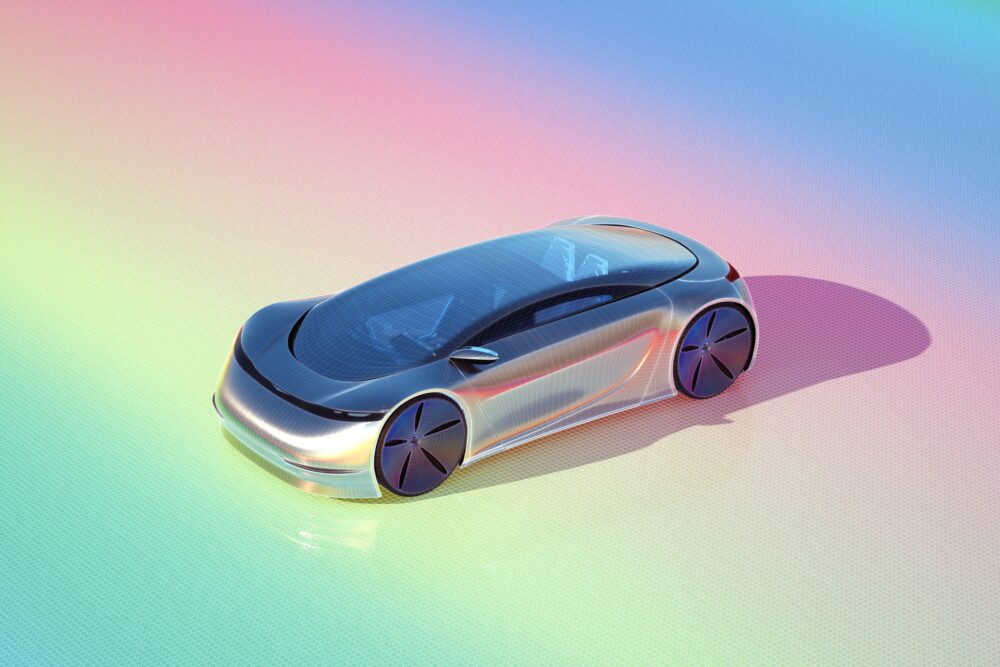
Digital generated image of futuristic car standing on multicolored digital reflective surface.|||| Dealer

News

What is a concept car?

While many designs make it to the road, some are only destined for exhibition halls and marketing materials. But the concept car still has an important role to play in the automotive market. Autovista24 special content editor Phil Curry examines their purpose. Over the decades, carmakers have used innovative model design to stand out from the competition. Design must also allow for regulations, with safety features and sustainability requirements needing to be considered. However, a concept car allows these shackles to be removed as designers illustrate their unique ideas. These prototype vehicles are developed to highlight new trends in both design and technology. However, they are not created to be sold, but provide a glimpse of what could be possible in the future. https://youtu.be/svm77DpP1RQ These models can feature advanced aerodynamics, futuristic user interfaces, innovative powertrains or advanced technology. Concept cars allow brands to push the limits of design without the need to worry about production or budgets. These concept cars can also reveal the findings of studies, help develop and implement new technologies, or visualise new production models. Concept car design Concept cars were once a mainstay of motor shows. Brands looking to attract attention to their stands unveiled what they believed would be the car of the future. Some had a basis, while others were more experimental. But these cars attracted audiences and inspired belief in the future of mobility. The basis for a concept car was to highlight future design trends. The first model developed as a concept was the Buick Y-Job in 1938. This came at a time when many cars featured large vertical grills, separate headlights and little design sculpting. Source: General Motors But the Y-Job, created by US designer Harley J. Earl, created a different profile that fed into upcoming models. This included the 1949 Buick Roadmaster and the 1953 Buick Skylark. The grill design is still seen in Buick models today. Since then, brands have used concept cars for a variety of purposes. Some have highlighted design trends that have carried into their production models. Meanwhile, others focused on vehicles which could inspire future trends. Journey of the concept car Renault has taken concept car ideas through to production on several occasions. This means it developed an outlandish future concept, then a realistic opportunity, followed by a production model. One example is the Renault EZ-Ultimo, a model presented at the Paris Motor Show in 2018. At the time, autonomous vehicle technology was a hot topic of discussion, so the carmaker revealed a trio of ‘robo-vehicles’. The EZ-Ultimo was a mobile lounge, showing what would be possible with driverless vehicles. Not only did it serve a purpose of suggesting future design trends in an unrestricted environment, but it also drew crowds to Renault’s stand. Source: Renault Moving forward to 2024, Renault presented the Embleme. This model presented the potential of an alternative powertrain system. It featured dual-energy electric and hydrogen technology to reduce CO2 emissions over the entire lifecycle of the vehicle. In 2021, the carmaker unveiled the Renault 5 Prototype. It forged a connection with the carmaker’s former model that was discontinued in 1996. The concept acted as a precursor for the Renault 5 E-Tech, which was launched in 2024. The carmaker carried many of its design features into the production model, which is now on sale. Digital concepts Interest in traditional motor show concepts began to wane in the late 2010s. The COVID-19 pandemic saw many brands switch to online launches. This meant fewer design restrictions in the development of concept cars. Rather than produce a physical model, designers could dig into the digital world. Brands showcased their concept drawings and videos to show what was possible. Fast forward to 2025, and this digital mindset has stuck around. One example is the Ferrari F76, a digital hyper car created in the form of an NFT. It combines Ferrari’s racing tradition with generative design and digital technologies. Source: Ferrari Designed for clients of the Hyperclub programme, the F76 was created to support the 499P competing at Le Mans and in the World Endurance Championship. While the development of a concept car has changed, its role remains the same. They are created to inspire both designers and consumers. They also create discussions and allow brands to build on their reputations to lead ideas around future technologies. Either digital or physical, concept cars remain a standout part of automotive development.
Abstract background with blue sound wave lines on dark. Technology audio concept. For music wave poster design. Dealer

News

The Automotive Update: Chinese carmakers excel in UK and emissions talks continue

Which Chinese carmakers are excelling in the UK? What is the latest on the EU emissions targets for 2035? What upcoming events should you know about? Tom Geggus, editor of Autovista24, discusses the week’s news in The Automotive Update podcast. In this episode, Autovista24 explores how Chinese brands are making their mark in the UK. Then, as discussions continue around the EU’s CO2 emissions plans for 2035, what are industry associations saying? Finally, find out about two exclusive Autovista Group events that are just around the corner. Subscribe to the Autovista24 podcast and listen to previous episodes on Spotify, Apple and Amazon Music. Chinese brands prove strong September saw a strong result for the UK’s new-car market, with a 13.7% year-on-year improvement in volumes. Of the 312,891 cars delivered, 12.4% came from Chinese brands. These carmakers are establishing a foothold in the UK. New entrants are building their customer base, providing alternatives to well-established marques, and challenging their market positions. BYD had its best-ever month in September, with registrations up 880.1% year on year. In total, it delivered 11,271 new cars, according to data from the SMMT. This places it close to brands such as Volvo, Peugeot and Vauxhall. The Seal U DM-i was its most popular model in the month, accounting for 66.8% of BYD’s total. This makes it the UK’s best-selling plug-in hybrid (PHEV) model in the year to date, according to the carmaker. Omoda and Jaecoo, brands from the Chinese manufacturer Chery, also had a very strong month, with 10,812 combined registrations. This comes just over a year after the launch of Omoda, with its petrol-powered 5, and all-electric E5. It is also around eight months after the Jaecoo J7 PHEV made it to market. Jaecoo was the more popular brand, with 6,489 registrations, while Omoda picked up 4,323 deliveries. MG, owned by SAIC Motor, had its best September on record. In total, it secured 14,577 registrations, making it the UK’s eighth-most-successful brand, ahead of established marques such as Nissan, Peugeot, Skoda, Vauxhall and Renault. The carmaker attributed this success to its hybrid lineup, including the HS, ZS and MG3. Discussions on emissions Discussions around the EU’s CO2 emissions targets for 2035 are ongoing. ACEA has proposed that the Commission consider easing its rules for cars, vans and trucks. According to Reuters, the industry body recommended longer compliance periods, as well as greater acceptance of hybrids and alternative fuels. ACEA highlighted the difficulties of cutting vehicle CO2 emissions by 100% come 2035, particularly with lower demand and a lack of EV charging infrastructure. The association recommended that the 2030 targets be set on an average between 2028 and 2032. It suggested small EVs be given a super credit, while PHEVs and range-extended electric vehicles play a bigger role.  However, Transport and Environment calculated that suggested loopholes to the EU’s CO2 rules would halve the bloc’s ambition of selling only zero-emission cars in 2035. Meanwhile, German Chancellor Friedrich Merz held discussions with industry bodies and trade unions to discuss the country’s automotive sector. These talks covered the competitive and adaptive pressures on carmakers, including electrification, digitalisation and international competition.  While committing to German and European climate targets, there was also support for alternative fuels as well as a flexible and realistic frameworks.  Residual value trends Autovista Group’s latest webinar: The road ahead: Residual value trends and the next market shift, will air on 14 October at 09.30 BST / 10.30 CEST. Autovista24 journalist Tom hooker will discuss major used-car market valuation trends with a panel of Autovista Group experts. This includes Dr Anne Lange, product director, valuation apps, Robert Madas, regional head of valuations, and Javier Salgado, director of valuations and forecast experts. Register now for The road ahead: Residual value trends and the next market shift. It will begin at 09.30 BST / 10.30 CEST on 14 October 2025. Also, the winners of the Residual Value Award will be announced on 15 October. The honours recognise cars with leading value retention rates across eight categories, using Autovista Group data from 17 European countries.
Futuristic red sports SUV illuminated by neon light in a dark studio.|||||||||||| Dealer

News

What IAA Mobility 2025 revealed about new design languages

One of the major themes from this year’s IAA Mobility was design language. Some brands presented this through concepts, while others used production-ready models. So, how are design philosophies changing, and why now? Autovista24 journalist Tom Hooker investigates. IAA Mobility 2025 played host to many world premieres and concept reveals, highlighting new design languages and philosophies. With the event held in Munich, German brands used the opportunity to full effect. This included BMW’s Neue Klasse platform, Audi’s simplified design philosophy, Mercedes-Benz’s new grille element, and Volkswagen’s (VW’s) small car offensive. So, why did German manufacturers decide now was the time to change? Adding perceived value ‘The conference is in Munich every two years, and the German brands perhaps know that their home territory is the logical place to do this,’ Car Design Research director Sam Livingstone told Autovista24. ‘My view is that the external pressures that are incurred on these brands in terms of their general commercial performance, profitability, and sales are such that internally, there would have been a lot of people being asked the question, “What can you do?”,’ he outlined. These famous marques may seem to take very different design paths. However, their overall approaches to design are more alike than they appear. ‘I think design must deliver more. I sense that what the designers are doing for these three or four German brands is seeking to increase the perceived value. Mercedes-Benz is the one that does it the most obviously, setting out with their new but harking back to the past grille element,’ Livingstone highlighted. Source: Mercedes-Benz ‘That is going to sit on the front of the GLC and other vehicles going forward, making a much stronger statement about being a vehicle that is upper premium. I think they are all pushing hard to add perceived value,’ Livingstone said. ‘I think they are all seeking to reframe their brand specificity in a more distinct manner. Mercedes-Benz and Audi are obviously doing that, I think clearly the BMW is too, and maybe to a lesser extent VW,’ he commented. Heritage-inspired design Two other German brands are also using their heritage to further distinguish themselves and add perceived value as a result. Firstly, Audi brought its Concept C to Munich, a two-seater electric hardtop convertible. The prototype displays the carmaker's new design philosophy. Source: Tom Hooker, Autovista24 ‘We have worked collaboratively within the design team initially to try to understand what the values and the elements are that make an Audi an Audi. What is the DNA? That is why we looked at our heritage to move forward,’ Audi chief creative officer Massimo Frascella explained to Autovista24. ‘This was fundamental, understanding throughout the evolution of Audi what the most distinctive and unmistakably Audi identities are. We found that the Audi Type C, the Audi Type D, and the Audi A6 were the models with the verticality that were very Audi,’ he added. Source: Tom Hooker, Autovista24 The model previews a production car slated for release in 2026. while other upcoming models will be influenced by the Concept C’s design. ‘What I really like about this car is that it is unmistakably Audi; it cannot be anything else. We are so fortunate as a company to have a wonderful heritage. That is not something that all the brands have, so for us it is a huge asset,’ he said. Designing a new generation BMW also took inspiration from its past with its new ‘Neue Klasse’ platform. This is a deliberate reference to the brand's transformation in the 1960s. The new BMW iX3’s design conveys this, while being a visual signal of a new generation of models. Most notably, the model has new illuminated ‘kidneys’ replacing the previous chrome design. Source: Tom Hooker, Autovista24 ‘One step is not enough. We need to take two steps. Then, the design team said, if you do such a bold step in everything, we need to make it obvious to the customer that this is something new. It is a bold leap,’ BMW iX3 product manager Mark Berger told Autovista24. Meanwhile, VW continued the legacy of its Polo and Polo GTI models at IAA Mobility, bringing them into the electric era. The brand's attempt to keep the hatchback’s essence on a new powertrain and platform was helped by small design details. Source: Tom Hooker, Autovista24 ‘In the traditional GTI, you have this golf ball shifter. Now, in the electric one, you do not have a shifter anymore. So, we bought it back in the centre cap of the wheels, now we have a golf ball pattern. You can bring it back, this GTI feeling,’ head of VW design Andreas Mindt told Autovista24. This was combined with modern details, including ‘whisky glasses’. These made up part of the rear lights on the ID.Polo and ID.Cross concept. Source: Tom Hooker, Autovista24 ‘It looks like a thick glass, not like a champagne glass that breaks immediately. It is giving you the impression that it is unbreakable. This is how a VW should look,’ he stated. Concept cars remain important Mindt also discussed the importance of concept cars, even if models resemble their production variant. For brands, this is an opportunity to gauge consumer opinion. ‘In this case, we are very close to production already, but you get feedback. For us, it is important, almost like a customer survey. We are going to have comments, and we really read them. I am very interested in the opinion of the people,’ said Mindt. ‘We need to have this dialogue with customers. When you present a show car, you get a feel of what is good and what is bad. Of course, you have a lot of haters. But you also have very valid, interesting opinions. We want to know and we want to learn, as maybe we bake it into the next project,’ he said. Berger shared a similar viewpoint, as the BMW iX3’s design resembled the Vision Neue Klasse X presented earlier this year. With a new generation, the brand had the opportunity to test a striking new design. Source: Tom Hooker, Autovista24 ‘Since we did not have a direct predecessor, we could go down this route, test the reaction on the design, and make people already a bit familiar with it. That is a bit of a pity now, because sometimes people say, it is not that new. The surprise is gone as the Vision car has already taken a lot of the credit,’ Berger noted. ‘We thought the step was so big, we did not have to exaggerate that much. Because the design jump was already so high from all the other BMWs, showing more or less the serious design made for a very good concept car already,’ he commented. China’s design perspective The increasing number of Chinese brands at IAA Mobility was noticeable. This ranged from luxury all-electric SUVs to European-focused hatchbacks. But with many announcing international expansion plans, are design philosophies also evolving? ‘I think most of the Chinese brands do not have sufficient distinction for them to be able to actually enter this new market for them, in Europe, to be able to set out that they are who they are clearly,’ commented Livingstone. Source: Tom Hooker, Autovista24 ‘I suppose historically that is not so different from the Japanese and the Korean playbook, which is to come in with vehicles that are ostensibly akin to European offers and are quite generic. But they have a competitive offer of features and technical content versus price ratio,’ he pointed out. ‘So, you could argue that it is consistent with what came before. However, in terms of actually creating an individual brand and setting out its purpose in a very distinct offer, having a bland or generic design approach just will not work,’ Livingstone added. Deeper cultural differences However, the reason behind this apparent lack of distinguishability between Chinese brands may not just be strategic. It could also highlight a significant cultural difference between the two regions and their respective automotive markets. ‘I think there is just a cultural distinction that in the Western mindset, we consider without even thinking, how design is out there to seek to appeal to you. As a consumer, you look for a design that you want to have,’ said Livingstone. ‘I would suggest that in China, it is much more likely that a design is there to ensure that you do not create something that people do not want. It would be wrong to suggest that Chinese brands are naive, but there is also a bare truth that the market is less mature,’ he said. ‘So, I think design is there to provide a decent-looking car that is akin to other cars of this ilk and be subtly different in some respects. That is the extent of the design remit in the Chinese market,’ Livingstone continued. ‘Whereas, in the more mature Western market, there is more recognition from both a brand and customer side that there is an opportunity, an expectation, and a need to assert some greater level of brand specificity,’ he explained. Korea’s contemporary design philosophy So, where do brands from other regions fit into the automotive design landscape? For example, Hyundai and Kia do not necessarily conform to broader design philosophies seen in Europe and China. Source: Tom Hooker, Autovista24 ‘Kia is more consistent in its offer, and Hyundai is more divergent. Overall, I do not believe they are conforming to the generic offer that we have seen from China. Nor are they like the German brands, leveraging elements of heritage to add perceived value. I think they are taking a different path,’ outlined Livingstone. Specifically, Hyundai did take inspiration from its heritage when creating the Concept Three, a compact EV from its Ioniq sub-brand. However, unlike other brands, this vision came from outside the automotive world. Source: Tom Hooker, Autovista24 ‘There are several inspirations. First, the desire to go back to designing hatchbacks, not only SUVs. But also, the inspiration of our own heritage with steel,’ head of department of exterior design at Hyundai Motor Europe, Nicola Danza, told Autovista24. ‘We produced our own steel. So, we wanted to celebrate steel by expressing it in its super simple form, and you see these three big surfaces. The bonnet, the shoulders with the doors, and the rear wrapping around the tailgate to express this metal feel,’ explained Danza. ‘We wanted to create something that is simple, pure and easy to understand. Sometimes cars are too heavy in terms of design features, and we wanted to simplify to the max,’ he added. ‘Every concept we do, especially the exterior, is a hint of what is coming next. This is the first time we have shown this design language, so it is very important for us to express it. Also, it is important not to overpromise. Sometimes you go so far away with the concept cars that I suppose you overpromise, and then the reality is different,’ he added. Livingstone also commented on how the two Korean brands are exceedingly international in their orientation. While their domestic market is a focus point, they see Europe as a major market, alongside China, to some extent. ‘I think it would be wrong to say that it is a Korean thing, because their design leadership and designers are not Korean nationals. It is an interesting perspective compared to the two core tranches of Europe and China,’ he concluded.
IAA Mobility 2025 logo graphic||||||||||||||||||||| Dealer

News

The Automotive Update: New EVs and concepts revealed at IAA Mobility 2025

The 2025 IAA Mobility trade fair in Munich provided a glimpse of the latest models and concepts coming from carmakers. Tom Hooker, Autovista24 journalist, reviews the event. This year’s IAA Mobility saw a strong presence from manufacturers. They spread themselves across the Messe München and the various ‘open space’ locations in the Bavarian capital. Source: Tom Hooker, Autovista24 Brands used the show to highlight their latest mobility developments and future plans. The event achieved a record 57% share of foreign exhibitors, while 40% of all exhibitors were first-time participants. Over 350 world premieres and product innovations were unveiled at this year’s IAA Mobility. This spanned city cars to large SUVs, and production-ready models to bold experimental concepts. But what were some of the standout highlights and announcements? Subscribe to the Autovista24 podcast and listen to previous episodes on Spotify, Apple and Amazon Music. A new era for German brands Domestic brands took centre stage at the event, including BMW, Volkswagen (VW), Mercedes-Benz, and Audi. A unified theme was clear. IAA Mobility marked new eras,  new directions, and new design languages. Source: Tom Hooker, Autovista24 BMW used the event as a launchpad for its Neue Klasse. The vehicle platform will underpin more than 40 new or updated models by 2027, regardless of powertrain. The first of these is the all-electric iX3. The D-segment SUV features a distinct new design language that replaces chrome ‘kidneys’ with a light signature. The iX3 will be the first to use BMW’s sixth-generation eDrive technology built on 800-volt architecture with bi-directional charging. The SUV houses new electronics and software underpinnings, including four ‘superbrain’ high-performance computers. https://www.youtube.com/watch?v=D7aVxrTejlU BMW has refreshed the iX3 with a clean interior and its new Panoramic Vision heads-up display. The SUV is scheduled to arrive in Europe in spring 2026. An all-electric i3, the second Neue Klasse model, will also be revealed early next year. Source: BMW Group Meanwhile, BMW Group brand Mini presented two concept models. These cars were created from a collaboration between Mini’s John Cooper Works sports division and lifestyle brand Deus Ex Machina. VW’s compact EV offensive VW presented its new direction at the IAA Mobility, inspired by the phrase ‘True Volkswagen’. It focused on four new electric vehicles (EVs). Source: Tom Hooker, Autovista24 Firstly, the ID.Polo and ID.Polo GTI were presented in camouflage. Both will be based on the MEB+ platform and will use advanced driver assistance systems (ADAS) from bigger VW models. The ID.Polo and ID.Polo GTI will have world premieres in May 2026 and summer 2026, respectively. The models mark the start of VW’s new naming strategy, where established vehicle names will be transferred to EVs. VW also revealed the ID.Cross Concept, a compact electric SUV. The near-production model is also based on the MEB+ platform and highlights the brand's new ‘Pure Positive’ design language. Source: Tom Hooker, Autovista24 Meanwhile, the ID.Every1 concept showcased a new entry-level EV from VW. The production version will be launched in Europe from 2027. Away from its EV range, VW displayed the next generation of the T-Roc. The B-segment SUV uses ADAS from larger VW models and features an updated interior. It is offered in petrol-powered mild-hybrid or full-hybrid powertrains. Source: Tom Hooker, Autovista24 Mercedes-Benz begins model offensive The new all-electric GLC spearheaded Mercedes-Benz’s presence at the IAA Mobility. Like BMW, the brand used its latest SUV to showcase a new design language. A redesigned, illuminated chrome front grille dominates the car’s visual presence. An AI-driven MB.OS ‘superbrain’ will control every aspect of the new GLC, from infotainment to automated driving. It also features an MBUX ‘hyperscreen’, first seen at CES 2021, and the largest screen ever in a Mercedes-Benz vehicle. Source: Mercedes-Benz Like the BMW iX3, the GLC uses an 800-volt system and offers bi-directional charging. The SUV’s production is scheduled to start in the first quarter of 2026. This will then lead a product offensive of more than 40 vehicles over the next three years. Mercedes-Benz also premiered its CLA, with a new hybrid powertrain and an all-electric shooting brake estate version. Furthermore, the Concept AMG GT XX made its show debut, highlighting the upcoming AMG.EA high-performance architecture. The model recently completed a record-breaking ‘round the world’ distance challenge, travelling 40,075km in just eight days. Source: Tom Hooker, Autovista24 Mercedes-Benz also presented an electric VLE prototype, providing a glimpse of its future grand limousine models. Meanwhile, Smart confirmed plans to present the #2, an all-electric two-seater city car in Europe as early as autumn 2026. Audi’s future direction Audi showcased its Concept C at the IAA Mobility. The two-seater convertible sports car represents the marque's new design philosophy and the future direction of Audi. The brand also debuted its Q3 Sportback at the show. Source: Tom Hooker, Autovista24 Elsewhere from the VW Group, Porsche premiered its 911 Turbo S, featuring hybrid technology. It also showcased its new wireless charging system for cars. This will first be available for the all-electric Cayenne, with the model’s world premiere planned for the end of this year. Source: Tom Hooker, Autovista24 European models at IAA Mobility Renault unveiled the sixth-generation Clio at the show. The hatchback will be available with a full-hybrid petrol or liquified-petroleum gas (LPG) powertrain in some markets. Orders will open before the end of 2025. https://www.youtube.com/watch?v=ljutjMlCVBg Opel presented its Mokka GSE at the event. This is the fastest all-electric Opel to date, according to the carmaker. It was joined by the Corsa GSE Vision Gran Turismo concept car, which previewed upcoming all-electric GSE models. The Opel Grandland Electric AWD also made its public debut in Munich. Skoda presented its Epiq show car at the IAA Mobility, previewing the carmaker’s upcoming all-electric compact SUV crossover. It is the first model to fully adopt Skoda’s Modern Solid design language and is scheduled for production in 2026. Source: Škoda The manufacturer also presented its Skoda Vision O in Munich. The new electric model features a redesigned interior with an AI-driven personal assistant. Source: Škoda Fellow VW Group brand Cupra presented its upcoming Raval electric city car in camouflage, which will be launched in 2026. It will use the VW Group’s MEB+ platform. Source: SEAT S.A Furthermore, Cupra revealed its Tindaya concept. The model displays the brand’s future design language. Cupra also revealed plans to potentially enter the Middle East region in the future. Source: Tom Hooker, Autovista24 After beginning life as a concept in 2020, the Polestar 5 was revealed in Munich. The grand tourer offers two trim versions built on an 800-volt framework. Source: Polestar IAA Mobility concepts from Korea Hyundai presented its Concept Three at the IAA Mobility. This was the first compact EV concept from its Ioniq sub-brand. https://www.youtube.com/watch?v=8rVaDSIq9WQ The carmaker also used the event to outline its electrification roadmap. It plans to offer an electrified version of every model in Europe by 2027 and introduce 21 EV models globally by 2030. Kia brought four premieres to Munich, including the EV2 concept. The B-segment SUV was a preview of a production model set to launch in 2026. Source: Tom Hooker, Autovista24 Another upcoming model displayed was the EV5. The C-segment SUV offers bi-directional charging, with a launch expected before the end of 2025. Chinese models impress at IAA Mobility A total of 116 exhibitors in Munich came from China. Carmakers from the country combined new model unveilings with announcements. BYD’s presence was led by the Seal DM-i Touring plug-in hybrid (PHEV), which made its public debut. The brand also confirmed that its Dolphin Surf city car will be its first passenger car to be built in Europe, at BYD’s plant in Hungary. The site is on track to start production by the end of 2025. BYD announced that its Flash Charging system will come to Europe, with at least 200 stations planned by the second quarter of 2026. The technology can reach 400km of range after five minutes of charging. The manufacturer also confirmed the launch of its new approved used scheme for its models. In the exhibition centre, Leapmotor held the world premiere of its B05 C-segment electric hatchback. Source: Stellantis Additionally, the brand showed off its B10 electric SUV, built on its new Leap3.5 architecture and offered with two battery sizes. The model began deliveries during the IAA Mobility and will be available in over 30 countries. Expansion plans revealed Xpeng celebrated the European premiere of its P7, an all-electric sports sedan. The P7+ was also displayed at the show, alongside the G6 SUV coupé and G9 SUV. Source: Tom Hooker, Autovista24 Changan confirmed a new battery-electric vehicle (BEV) SUV coming to Europe, the S05. Its Avatr sub-brand was also in Munich, debuting its Vision Xpectra concept. The carmaker plans to enter over 50 countries and regions worldwide. Source: Tom Hooker, Autovista24 Meanwhile, GAC presented six vehicles at IAA Mobility. One of these was the Aion V, a BEV SUV, which will be the brand’s first model sold in Europe. The carmaker plans to enter Poland, Portugal, Finland and other countries from September 2025. GAC then wants to achieve full European market coverage by 2028. Hongqi unveiled plans to offer up to 15 models in the European market, covering BEVs and hybrids in the A-segment to the E-segment. It aims to establish over 200 sales and service outlets across the continent. The EHS5 is the first model under the strategy, a premium all-electric SUV. The event also marked the global expansion of another Chinese brand, Aito. It launched specialised variants of three SUVs, the Aito 9, Aito 7 and Aito 5, to enter the Middle Eastern market. These models offer BEV and range-extended electric vehicle (EREV) powertrains. America and Türkiye bring new models Turkish manufacturer Togg held the world premiere of its production-ready T10F sedan. Along with its existing T10X SUV, the brand announced its entrance into the German market. Both models will be available to order through its in-house service and ordering platform Trumore. Togg also unveiled Can.AI, an agentic AI platform developed in collaboration with Microsoft Türkiye. Meanwhile, US marque Lucid also announced its European market debut at the IAA Mobility. This will be with its Gravity model, a three-row SUV. The premium BEV will initially be available to order in Germany, the Netherlands, Switzerland and Norway, with deliveries expected to begin in early 2026. Ford was also in Munich and hosted the world premiere of its Ranger PHEV MS-RT. The motorsport-inspired version of the pick-up was joined by the E-Tourneo Custom MS-RT, a sporty electric passenger transporter.
Dealer

News

The Automotive Update: Rare earth restrictions and the European used-car landscape

How have rare earth restrictions impacted automotive manufacturing? What happened to European used car residual values (RVs) in May? What is the German government’s latest strategy for supporting carmakers? Autovista24 editor Tom Geggus breaks down the latest industry trends in The Automotive Update podcast. In this week’s episode, a look at the wider implications of recent rare earth material restrictions. Also, a deep dive into the fortunes of the European used-car market and the impact on RVs. Plus, an exploration of Germany’s new-car market performance, and what new tax breaks could mean for companies’ electrification. China’s rare earth element restrictions China's new export restrictions on seven rare earth elements are significantly impacting the global automotive sector. Controlling over 90% of the world's processing capacity for these essential materials, Beijing now requires export licenses, Reuters reports. This stems from the ongoing trade dispute with the US. These events have sparked urgent diplomatic activity, according to Reuters. Supplier production lines have suffered down due to these restrictions, Reuters states. Further impact is expected as inventories become further depleted. Components critical to both internal-combustion engine (ICE) and electric vehicles (EVs) are affected. Ford temporarily halted production of the US-based Explorer SUV in Chicago, and Suzuki paused output due to component shortages. Meanwhile, BMW confirmed some supplier impact, and Mercedes-Benz is reportedly advising its suppliers to stockpile rare earths as a precaution. Bosch and ZF both said bottlenecks were affecting its suppliers. Meanwhile, Autoliv has set up a task force to deal with the restrictions, but does not expect a halt to production in the coming weeks. Used-car demand drops in Europe Used-car demand fell sharply across major European markets in May, reversing gains seen in April and putting pressure on RVs. Germany, Spain, France, Switzerland, Italy, and Austria all recorded month-on-month drops in dealership sales of two-to-four-year-old vehicles. Most markets also experienced significant year-on-year declines. The UK was the only major country to avoid a monthly fall in its sales volume index (SVI). Year-on-year used-car demand in Spain saw the biggest drop according to the SVI, while Germany experienced a significant decline. These figures highlight growing pressure in the used-car market, with a weakening trend likely to continue, weighing on RVs. German new-car market upswing Germany's new-car market showed a modest recovery in May, with registrations up 1.2% year-on-year. This marks the first upswing since October 2024. Amid positive private and commercial sales, battery-electric vehicles (BEVs) drove growth. This helped push the combined EV market to a 27.5% share in the year to date. ICE vehicles continued to lose market share in May, with both petrol and diesel models experiencing further declines. In contrast, hybrid powertrains, made up of full and mild hybrids, performed strongly, recording their best month of the year so far. To support further electrification, the German government has introduced new tax incentives, which have been welcomed by the country’s industry bodies. Despite this, there have been calls for broader reforms, including lower charging-related taxes, and the expansion of charging infrastructure.
Dealer

News

The Automotive Update: Big week for BYD

BYD has a big week, Nvidia reveals its latest autonomous technology developments, and many model updates. Autovista24 editor Tom Geggus presents the latest stories in The Automotive Update podcast. This week, carmakers confirmed new artificial intelligence (AI) applications. Europcar revealed plans to address electric vehicle (EV) price parity. Renault unveiled a sporty version of its new Renault 5, and MG gave one of its most popular models a facelift. Subscribe to the Autovista24 podcast and listen to previous episodes on Spotify, Apple and Amazon Music. BYD’s game-changing platform BYD has unveiled its ‘Super e-Platform’. The EV technology could be capable of charging at speeds of 1,000kW Reuters reported. This means the system could deliver 400km of range after five minutes of charge. The new BYD Han L sedan, and Tang L SUV, will be the first models fitted with the technology. The news sent the carmaker’s stock soaring, according to the Wall Street Journal. However, it was not all good news last week. The Financial Times (FT) reported that BYD faces a European Commission investigation. The probe is exploring whether China provided unfair subsidies for its EV plant in Hungary. If the European Commission finds the company has benefited from unfair state aid, penalties may be imposed. The FT also drew attention to a delay in the approval of a BYD plant in Mexico. Meanwhile, the carmaker’s executive vice president, Stella Li, told Autocar there are no plans for BYD plants in Germany or the UK. However, she did confirm to the Independent that the UK will be home to a new research and development centre. Nvidia unveils autonomous developments At its GTC AI conference, technology company Nvidia revealed its latest autonomous and AI-based developments. The business confirmed the launch of Halos, a full-stack safety system. It brings together its hardware and software solutions for autonomous vehicles. It also unveiled an open-source data set to help developers with physical AI projects. Data focused on developing autonomous vehicles will be made available. This includes 20-second clips of traffic scenarios from over 1,000 US cities as well as two dozen European countries. Nvidia also announced some major collaborations at the event, including a tie-up with General Motors (GM). The companies will work together to build custom systems to train AI manufacturing models. GM will also use Nvidia’s Drive AGX for future advanced driver-assistance systems (ADAS) and enhanced safety experiences.  Carmakers increase use of AI Volvo Cars has revealed it will use realistic, AI-generated virtual worlds to develop its safety software, including ADAS. The carmaker can work with incident data gathered from sensors in its new cars. This will allow it to reconstruct and explore how incidents could be avoided. Mercedes-Benz confirmed the deployment of AI features at its Berlin-Marienfelde site. This includes humanoid robots, advanced chatbots and virtual assistants. The site will also soon produce high-performance electric axial-flux motors. EV market developments Japanese carmaker Mazda has outlined a ‘lean asset strategy’ when it comes to electrification. The brand will reduce investment in batteries, production, and EV development, through collaborations and partnerships. It will focus on existing resources as well as more efficient development and manufacturing methods. Meanwhile, Foxconn and Mitsubishi are reportedly close to an EV production deal. According to people familiar with the matter, an announcement is expected in the coming weeks. The FT reports that any venture will allow Mitsubishi to expand its line-up of models at a lower cost. Europcar Mobility Group UK is aiming to bring electric vehicle price parity to its rental offering. As of April, business customers will be able to rent EVs for the same price as an internal-combustion engine counterpart. ‘We understand that cost is a significant factor for businesses considering electric vehicles,’ commented Tom Middleditch, head of electric mobility at Europcar Mobility Group UK. ‘The Europcar EV barometer for 2024 revealed that the cost of purchasing and maintaining an EV is a barrier for around 40% of fleets.’ New EV’s from Renault Renault has revealed an electric reboot of the Renault 5 Turbo and Turbo 2. The Renault 5 Turbo 3E has been built for rallying, drift and track performance, but adapted for the road. The highly customisable model will feature an 800-volt architecture. This means it will be capable of going from 15% to 80% battery in 15 minutes at a 350kw DC charging point. It will arrive in showrooms in 2027, with a limited production of 1,980 units. The carmaker also unveiled the new Renault Espace. The full hybrid vehicle features a redesigned front and rear, new light signatures and body colour. Passenger comfort is enhanced, with new front seats and upholstery, as well as improved soundproofing. Fresh-faced models MG revealed a redesigned MG4. electrive reports that the BEV has been elongated by 11cm and features redesigned styling with softer curves. It also has new EV hardware, including a smaller motor. Aito unveiled revised versions of its M5 and M9 models, both of which have undergone facelifts, electrive wrote. The online platform also reported that Xpeng has launched the latest editions of its G6 and G9 electric SUVs. Both models will get new battery packs with faster charging capabilities and will be available in Europe and China. In the UK, Leapmotor has opened its order books for its affordable T03 and C10 electric vehicles. T03 prices start at £15,995 (€19,090), while the C10 is priced at just £36,500. BYD is also setting its sights on the UK’s small and affordable EV segment with the BYD Dolphin Surf. Known as the Seagull in China, the model is expected to cost below £20,000 in the UK, according to Autocar. BYD has also made the Atto 2 available in Germany according to electrive.
Dealer

News

The Automotive Update: Northvolt files for bankruptcy

Northvolt files for bankruptcy, Nissan chief steps down, and Ford invests in loss-making German subsidiary. Autovista24 journalist Tom Hooker explores the week’s biggest automotive news stories. Tesla shares fall by almost half, and Nissan completes autonomous driving research project. In supplier news, ZF receives Germany-wide Level 4 test permit from the KBA for autonomous driving, plus Bridgestone and Michelin test puncture-free tyres. Listen to these stories in the latest edition of The Automotive Update from Autovista24. Subscribe to the Autovista24 podcast and listen to previous episodes on Spotify, Apple and Amazon Music. Northvolt files for bankruptcy Electric vehicle (EV) battery manufacturer Northvolt has filed for bankruptcy in Sweden. In a statement, the startup cited rising capital costs, geopolitical instability, supply chain disruptions, market demand shifts and production struggles. It marks the end of a downward spiral for the company. Northvolt was once seen as Europe’s best hope for EV battery production in an industry dominated by China. Since 2016, the business received backing from Volkswagen, Goldman Sachs and BlackRock, attracting more than $15 billion (€13.8 billion) of corporate and government investment, according to the Financial Times.  ‘This is an incredibly difficult day for everyone at Northvolt,’ commented Tom Johnstone, Interim chairman of Northvolt’s board of directors. ‘We set out to build something groundbreaking, to drive real change in the battery, EVs and wider European industry and accelerate the transition to a green and sustainable future.’  Nissan chief steps down Nissan CEO Makoto Uchida has stepped down from his position as part of a significant restructuring within the company’s senior leadership team. Ivan Espinosa, currently the chief planning officer, has been appointed as his successor. The changes are focused on achieving Nissan’s short and mid-term objectives, while positioning it for long-term growth, as outlined in a statement. The news comes following the collapse of merger talks with Honda. Uchida stated in a press conference that the company’s board requested he step down. This was following internal and external questions over his role Nissan’s poor performance, as reported by the Financial Times. Uchida had previously advocated for a deal with Honda, and was against a takeover by Taiwanese company Foxconn. However, several board members, and people close to the discussion, had increased pressure on the former CEO to step down in recent weeks. Espinosa will be expected to swiftly execute a turnaround plan, including 9,000 job cuts and slashing 20% of production capacity. Automotive production news Ford is restructuring its debt-laden German arm, Ford-Werke, with €4.4 billion of new capital. This move addresses a €5.8 billion debt obtained amid Europe's challenging automotive market, stoked by high costs, weak demand, and Asian competition. Vice chair of Ford Motor Company, John Lawler, said the carmaker will not pull out of its European business. He called on Brussels and Germany to do more to accelerate the transition to EVs. Additionally, Lawler highlighted a need lower costs to compete against Chinese rivals. Furthermore, the company stated it would end a commitment which has been in place since 2006 to bear any losses its Ford-Werke subsidiary made, the Financial Times reported. Porsche has announced that it will cut 4,000 jobs, according to The Times. This move to reduce its workforce by 10% is in response to declining sales. The brand has promised investors a ‘comprehensive recalibration’ of the business after profits slumped. Porsche bosses also raised concerns about US trade tensions, and warned that this year’s earnings will be impacted by growing domestic competition in China. Volkswagen (VW) Group software subsidiary Cariad wants to cut 1,600 jobs by the end of the year. This amounts to just over 27% of its total workforce. Automobilwoche reported that the cuts will be carried out through severance payments and early retirement programmes. VW announced that its upcoming ID. Every1 will be built in Portugal. The hatchback, unveiled as the ID.1 prototype, is scheduled to begin production in 2027, according to DPA International. VW brand boss Thomas Schäfer highlighted that the plant in Portugal is one of the most cost-efficient in the company. Tesla turbulence Tesla CEO Elon Musk has stated he wants to double US production within two years. Posting on his online platform X, Musk sees this move as ‘support of the policies of President Donald Trump and confidence in the future of the United States.’ The company’s stock dropped by nearly half in three months, as reported by Reuters. Tesla’s market cap fell 45% from its $1.5 trillion peak on December 17, reversing gains linked to CEO Elon Musk's support of Trump's presidential campaign. Tesla's current valuation largely relies on projected robotaxi and robot development. However, these products are not yet in production. Reuters reports that Tesla's EV business generates nearly all revenue, but represents less than a quarter of its stock market value. The company's total worth exceeds the combined value of the next nine most valuable carmakers. Autonomous driving developments Nissan has completed what it claims to be the UK’s most rigorous autonomous driving research project, evolvAD. More than 16,000 autonomous miles were covered across the country's roads, with no accidents reported. The conclusion of evolvAD, which was partly funded by the UK government, marks the start of the next phase of autonomous driving deployment. This will assess the readiness of cities and regions across the UK for the future introduction of autonomous driving systems and services. Meanwhile, ZF has received a Germany-wide Level 4 test permit from the KBA, to test autonomous driving. The permit covers urban and regional public transport areas. Roads with a maximum speed limit of more than 100kphare excluded from the permit, which is valid until the end of 2026 and can be extended until the end of 2028. In an attempt to smooth the path for self-driving vehicles, Bridgestone and Michelin are testing advances in puncture-free tyres. These versions are air-free, and can support a one-tonne vehicle driving at 60kph. The invention is being trialled on shuttle buses and tourist vehicles. The tyres could mean lower maintenance costs and reduced liability risk from autonomous driving accidents caused by punctures.

Displaying 12 of 16 insights