Insights

Tagged:
Clear filters
Industry
Topic
Segment
A german road representing the new car market

News

Are private buyers driving Germany’s new-car market forward? 

With another month of new-car registrations growth in Germany, one force appears to be driving the market forward. But how are powertrains and brands performing in the country? Tom Hooker, Autovista24 journalist, explores the figures.  Deliveries of new cars in Germany rose by 2.7% year on year in April, reaching 249,163 units. According to KBA data, private buyers helped drive this growth. Registrations in this sector climbed by 8.2% to 88,182 units.   However, private buyers […]
|

News

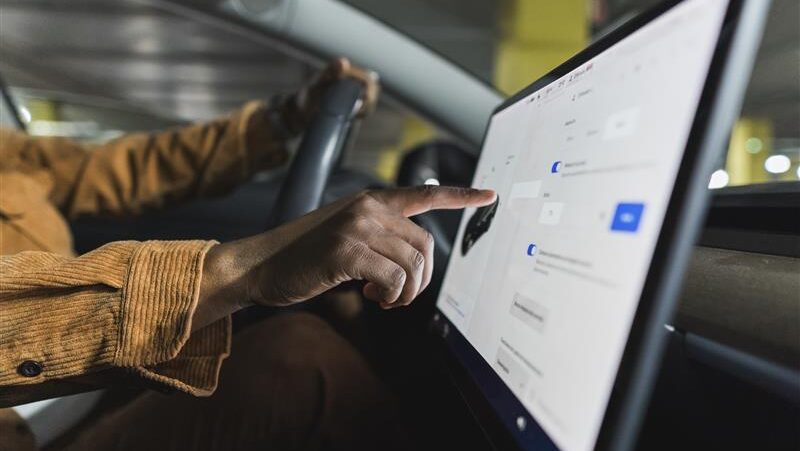
What is an infotainment system?

Technological advances have rendered older in-car entertainment systems effectively obsolete. Now, carmakers combine entertainment and information as a central point of interior design. Autovista24 special content editor Phil Curry examines the rise of the infotainment system. The rapid development of technology has replaced in-vehicle cassette and CD players with new systems. While music streaming meant losing bulky radio units, the need to display more driver information required bigger screens.   By combining information and entertainment, the infotainment system has been a step forward for interior vehicle design and functionality. These systems are now a staple of modern cars, but some developments have been a cause for concern.  https://youtu.be/yVLCP0bfm-0 Growth of the infotainment system  With the development of touchscreen technology, integrating displays into vehicles for data and control access is a logical step. These screens provide more than just music playback. They also offer access to a wide range of systems.  These displays can provide navigation, views from external-facing cameras, as well as battery charge and health in electric vehicles (EVs). Many also feature Bluetooth connection for calls and smartphone integration. This allows users to bring their own music, apps and personal settings into the car.   Meanwhile, the infotainment system can act as a control location for certain vehicle functions. Menus and sub-menus provide detailed access to advanced driver-assistance systems (ADAS), vehicle customisation, driver profiles, and more.  Some carmakers have even opted to reduce or remove physical buttons for certain systems. This produces a cleaner and sleeker interior design, but can also lead to potential safety issues.  Are screens a distraction?  The ability of an infotainment system to house various vehicle controls can free up space inside a car. However, with some controls buried in sub-menus, out of easy reach of the driver, there are concerns around distraction.  Climate control, driving profiles, heated seats, and regenerative braking levels in EVs can be reduced from physical to digital buttons. But searching for these settings on a touchscreen can mean less focus on the road.   Research published by  TRL, on behalf of safety charity IAM Roadsmart in 2020, highlighted these concerns. Findings showed that driving performance was more negatively impacted when using touch controls compared with voice control.   Study participants were able to keep their eyes on the road more when using voice control than touch control. They were also more likely to identify stimuli that required attention. Despite this, most participants in the study reported using touch rather than voice control in their real-world driving.  Ensuring infotainment system safety  The concerns over driver distraction have led to Euro NCAP making a button-based request of carmakers for 2026. The safety body is asking manufacturers to either offer physical controls or dedicate a fixed portion of the cabin display to primary driving functions. This includes the horn, indicators, hazard lights, windscreen wipers and headlights.   So, the road ahead looks to be a matter of balance when it comes to infotainment systems. The technology will still need to support an increasing number of vehicle capabilities while also meeting higher consumer expectations. However, this will need to be levelled with control accessibility and driver attention.   
Radio microphone on black background. 3d illustration|

News

The Automotive Update: The changing fortunes of Chinese and European EV markets

How did the Chinese and European electric vehicle (EV) markets perform at the start of 2026? Plus, which manufacturers are speeding up plug-in vehicle charging? Tom Hooker, Autovista24 journalist, presents the latest episode of the Automotive Update. In this episode, Autovista24 looks at the varying performances of the Chinese and European EV markets. Plus, how are carmakers speeding up EV charging? Also, an insight into which manufacturers are turning to robotics and AI for use in their production lines. Subscribe to the Autovista24 podcast and listen to previous episodes on Spotify, Apple and Amazon Music. China sees EV struggles China’s EV market recorded a decline of 27.1% in January, according to the latest data from EV Volumes. Both the plug-in hybrid (PHEV) and battery-electric vehicle (BEV) sectors saw sales decline year on year. The results were reflected in the best-seller tables, where mainstream models struggled. The Xiaomi YU7 was the leading BEV in January, with a dominant display. It  was some way ahead of the second-placed Nio ES8. The Tesla Model Y finished third. Meanwhile, the PHEV table saw BYD dominance slip away. Leading the charge was the Fang Chen Bao Tai 7, a BYD sub-brand and model. It was ahead of the Aito M7, while the BYD Song Pro finished third in the month. Europe’s EV market on a high Conversely, Europe’s EV sales grew, according to EV Volumes data. Sales were up 19.2% overall in January, with both BEVs and PHEVs seeing increases. PHEVs posted a 33.5% rise, while BEV deliveries increased by 12.7%. The Skoda Elroq was Europe’s best-selling BEV in January. It was followed by the combined results of the Renault 5 and Alpine A290, with the Tesla Model Y in third. In the PHEV market, two Chinese models led the way. The BYD Seal U came first, ahead of the Jaecoo J7. Both PHEVs were well ahead of the Volvo XC60 in third place. Even faster battery charging The Denza Z9GT, a model from BYD’s premium marque, is set to arrive in Europe later this year. It could enable quicker charging times of up to 12 minutes. According to Denza, the Z9GT delivers a 10% to 70% charge in only five minutes, and a 10% to 97% refill in just nine minutes. The carmaker also quoted a 20% to 97% recharge in 12 minutes, even in temperatures around -30°C. Meanwhile, Chery has revealed its all-solid-state battery that can achieve a range of over 1,500km, Electrek reported. A robotic future? Renault is using an AI-trained humanoid robot, called Calvin, to help it build cars. It was developed by French robotic firm Wandercraft. Renault plans to roll out a further 350 humanoid robots over the next 18 months, according to Auto Express. This comes as carmakers increasingly identify automation and robotics investment as a key response to rising costs and competitive pressures. A recent survey by ABB robotics revealed that 31% of vehicle manufacturers and suppliers felt this way.
|

News

The Automotive Update: What does China’s slowing EV market mean for global sales?

What is happening in China’s electric vehicle (EV) market? How much is Uber investing in autonomous vehicle charging hubs? Can Europe build its own EV batteries? Tom Geggus, Autovista24 editor, discusses these points in The Automotive Update podcast. In this episode, Autovista24 analyses China’s slowing EV market and reveals the best-selling models in the country. Plus, how has Tesla avoided suspension of its dealer and manufacturer licence in the US? Subscribe to the Autovista24 podcast and listen to previous episodes on Spotify, Apple and Amazon Music. China’s slowing EV market Globally, China accounts for 59.1% of battery-electric vehicle (BEV) sales and 70.3% of plug-in hybrid (PHEV) deliveries. But despite dominating the figures, the country saw its total EV numbers struggle in December. Figures rose by just 0.5%, according to the latest data from EV Volumes. Despite total plug-in sales increasing between January and December last year, this was not helped by the country’s PHEV market. It experienced a run of monthly declines from July onwards. One reason for this poor performance was the decline of BYD. The brand accounted for 33.3% of total EV sales in China during 2025 and dominated the PHEV market. Yet its sales were down 9.9% across the year. However, with new players entering the PHEV market, 2026 will see more brand diversification. This could help boost figures, while new BYD models will also help impress buyers. BEV sales rose by just 4% in December 2025 following a run of double-digit improvements. China’s carmakers will be hoping this is not the start of a new trend, especially if the PHEV market continues to struggle. Tesla avoids suspension Tesla has avoided a 30-day suspension of its dealer and manufacturer license in California. This follows the brand halting its use of the term ‘Autopilot’ in its vehicle marketing in the state. The Department of Motor Vehicles adopted a decision that the use of the term is ‘misleading and violates state law’. This is linked to Tesla’s use of Autopilot to describe its advanced driver-assistance systems. Uber invests in autonomous charging Uber Technologies will invest more than $100 million (€84.9 million) into autonomous vehicle charging hubs, according to Reuters. The company will deploy DC fast charging stations at its fleet depots and other locations throughout priority cities. This is expected to begin in the Los Angeles Bay Area as well as Dallas, before hitting other hubs. Uber will also work with charge point operators to establish ‘utilisation guarantee agreements’. This will support the rollout of hundreds of new chargers in cities across the world. EV charging offer in the Netherlands Leasing provider, Ayvens, has launched a new EV charging offering. Ayvens Power promises customers in the Netherlands access to over one million charging points across Europe, spanning different operators. Drivers will get real-time availability and pricing details before arrival. Meanwhile, a fleet portal will provide charging insights, cost visibility and reporting tools. The solution is due to roll out in France, Germany, Italy, Belgium, and the UK later in 2026. Can Europe build EV batteries? Yann Vincent, CEO of the Automotive Cells Company (ACC), has questioned who will make batteries for Europe’s domestic carmakers. ‘One crucial question remains: who will manufacture the batteries for European cars?’ Vincent asked. ‘Asian players, particularly Chinese giants, as is already the case for 99% of them? At the risk of putting the strategic independence of European car manufacturers solely in the hands of BYD, CATL, LG, etc?’. The CEO also confirmed that the ramp-up of ACC’s gigafactory in Hauts-de-France is taking longer and costing more than expected. This is weakening the company’s financial position. He also stated the goal of building the factory was ‘too close to give up on.’
A professional studio microphone illuminated by atmospheric green lighting against a dark background. A sleek and modern setup for podcasting

News

The Automotive Update: Carmakers accelerate AI applications at CES 2026

Which carmakers and technology companies are betting big on artificial intelligence (AI), and how do they plan to use it? Autovista24 editor Tom Geggus picks out key talking points from this year’s CES in The Automotive Update podcast. Major automotive companies are integrating AI into their vehicles. This means technology companies such as Nvidia are becoming integral partners in this seismic industry shift. However, they are not alone, as automotive suppliers are looking to keep up. Subscribe to the Autovista24 podcast and listen to previous episodes on Spotify, Apple and Amazon Music. Mercedes-Benz leans into AI with Nvidia Mercedes-Benz used CES 2026 to confirm that the new CLA will feature the AI-powered Mercedes-Benz Operating System (MB.OS). This advanced driver-assistance(ADAS) technology is powered by Nvidia’s full-stack drive software, AI infrastructure and compute power. This could assist over-the-air updates (OTA), including planned upgrades to the MB.Drive drive-assistance technology. This is aimed at enabling advanced SAE Level 2 capabilities in complex urban settings.  https://www.youtube.com/watch?v=_tJMYyVaOSw Mercedes-Benz confirmed its electric GLC will utilise MB.OS, as well as AI from Microsoft and Google in its infotainment system. The model is set to arrive in the US in the second half of this year.  ‘As the automotive industry embraces physical AI, Nvidia is the intelligence backbone that makes every vehicle programmable, updatable and perpetually improving through data and software,’ said Ali Kani, vice president of automotive at Nvidia. Nvidia is also working on a collection of open-source AI models called Alpamayo family, designed to accelerate autonomous vehicle development. Plus, the company announced that its Drive Hyperion ecosystem will expand to include more automotive companies. This comes as it embraces advanced SAE Level 4 and full self-driving technology.  Afeela and AI assistants Sony Honda Mobility brought a new vehicle to CES 2026, the Afeela Prototype 2026. A production version of the model could launch in the US in 2028. Its predecessor, the Afeela 1, has been available for reservations in California since January 2025. https://www.youtube.com/watch?v=tMkmiZS0brQ Delivery hubs are set to open this spring in the US state. Arizona will see sales in 2027, with Japan due to see deliveries in the first half of that year. Sony Honda Mobility also unveiled the Afeela personal agent, an interactive, conversational AI. It will use Microsoft Azure OpenAI to provide personalised dialogue.  BMW gave a demo of its AI-powered personal assistant. Built on Amazon’s Alexa+ technology, the assistant was presented within the Neue Klasse debut model, the BMW iX3.  Users can interact with the car’s large language model to control in-vehicle operations. The assistant also has access to information beyond the car, allowing it to answer a broad range of questions. This technology will be gradually rolled out in Germany and the US in the second half of 2026.   https://www.youtube.com/watch?v=3JQu-H-iJqg Ford also announced it will roll out an intelligent assistant. It will be available on users’ phones before it reaches their cars. The Ford and Lincoln apps will support the technology beginning in the first half of this year. The carmaker said it plans to reach up to eight million customers.  The Ford AI Assistant promises to be capable of providing contextually useful information, such as vehicle storage capacity. This technology looks set to arrive in Ford and Lincoln vehicles by 2027.    Source: Ford Architecture and autonomy Geely brought its full-domain AI 2.0 to CES 2026. This unified vehicle-wide architecture utilises a central intelligence engine, capable of operating all vehicle functions. The autonomous driving system, Geely Afari Smart Driving, uses AI and large-scale real-world driving data. It features high-performance sensors, plus hardware for confident and safe driving.  ‘AI is reshaping the automotive industry in many ways, from powertrains and components to a systematic reconstruction of mobility ecosystems and lifestyles,’ said Jerry Gan, CEO of Geely Auto Group. Lucid confirmed a union with Uber and physical-AI company Nuro to produce vehicles for a global robotaxi service. Autonomous on-road testing began in December, ahead of an expected launch in the San Francisco Bay Area later this year. Source: Lucid Suppliers starring at CES Bosch showcased an all-in-one, personalised, AI-based cockpit. Life-like communication appears possible via large language model. Meanwhile, a visual language model can interpret what is happening inside and outside the vehicle.  Qualcomm confirmed it is working with ZF to deliver scalable ADAS solutions. Leapmotor’s D19 will use Qualcomm’s Snapdragon Elite platform. It combines cockpit, driver assistance, body control and connectivity into one system. The supplier also plans to expand its collaboration with Google to develop software-defined vehicles while accelerating in-vehicle, agentic AI technology.   ‘As the automotive industry rapidly evolves into an AI-powered, software-defined future, our continued collaboration is more critical than ever,’ said Patrick Brady, vice president, engineering at Google. LG’s Mobility Display Solution turns the windshield into an intelligent interface. The Automotive Vision Solution enhances safety and delivers context-aware information via Vision AI.  The In-Vehicle Entertainment Solution provides personalised content recommendations, memory-based media, plusreal-time translation.  ‘We are bringing our future mobility vision to life by embedding AI across our solutions – many of which, including in-cabin sensing, are already in production with global OEMs,’ said Eun Seok-hyun, president of the LG Vehicle Solution Company. ‘By accelerating these innovations to market, we aim to pioneer the era of AI-driven vehicles in the years ahead.’

Displaying 12 of 37 insights