Insights

Tagged:
Clear filters
Industry
Topic
Segment
Human hand opening a car door with abstract city lights creating a colorful bokeh background Aftermarket

News

The Automotive Update: Used Vehicle Retail Summit and regional EV sales

What are the big takeaways from the Used Vehicle Retail Summit? Which electric vehicle (EV) markets stood out in the latest EV Volumes data? Tom Geggus, Autovista24 editor, investigates in the Automotive Update podcast. In this episode, Autovista24 unpacks the Used Vehicle Retail Summit, with insights from journalist Tom Hooker. Plus, analysis of global EV sales results from China, Europe and Australia. Subscribe to the Autovista24 podcast and listen to previous episodes on Spotify, Apple and Amazon Music. Exploring used vehicle retail This year’s Used Vehicle Retail Summit explored the past, present, and future state of the retail sector. The event focused on EVs and how an influx of plug-in vehicles entering the used-car market can be handled. Key topics included EV adoption trends and changing consumer expectations, plus retail’s digital acceleration. Other important considerations included operational optimisation, plus building confidence in battery-electric vehicle (BEV) resale. New dealer strategies, cross-border sales and battery state of health (SoH) reports all emerged as keenly discussed issues. EV retail focus Surging used EV sales were a major talking point. Speakers highlighted the significance of dealers cementing their EV strategy as soon as possible. This includes calming consumers’ EV concerns with SoH data and exploring battery repair instead of replacement. For consumers, the average car-buying journey is shortening. This may be a result of more online-based purchasing processes and an increase in AI-powered research. Used-vehicle buyers are also demonstrating higher brand switching behaviour than new-car buyers, speakers revealed.  Overall, a mix of online and in-person channels is now the preferred buying process. Information gathering is now largely digital, yet viewing the vehicle still needs to be in-person for many. Speakers identified opportunities to improve the buying journey, as technology can be used to help. However, personal relationships still play a critical role. Easing retail consumer concerns Within an evolving buying process for consumers, dealers, and certified pre-owned portals, more battery health data is now available. To make this easy to understand for buyers, some portals are recalculating vehicle range using SoH reports. Meanwhile, cross-border sales are a notable opportunity to boost dealer profitability, something which is particularly apparent for BEVs. One speaker highlighted that all-electric cars could see significant fluctuations, with cycles as short as 60 days in one market. Declining EV sales According to data from EV Volumes, BEV and plug-in hybrid (PHEV) sales declined across major new-car markets in February. China was a major influencer of this trend as it saw EV sales fall year on year. Nearly half of all new EV sales took place in the country across the first two months of 2026. The US new EV market also fell between January and February. Conversely, some European countries, such as Germany and the UK, saw BEV and PHEV sales increase. Meanwhile, the Australian new EV market continued to grow.
| Aftermarket

News

The Automotive Update: Hope for Europe’s new and used-car markets?

How will new-car markets transform over the course of 2026? Plus, what is happening with used-car supply and demand in Europe? Autovista24 editor Tom Geggus finds out in the latest Automotive Update podcast. In this episode, Autovista24 reviews the latest JD Power webinar, which explored Europe’s new-car outlook. Plus, a look into the latest residual value (RV) trends in the continent’s used-car market. Subscribe to the Autovista24 podcast and listen to previous episodes on Spotify, Apple and Amazon Music. Outlook for European automotive markets This week, JD Power hosted its latest webinar: Europe’s Auto Forecast 2026: Technology, Policy, and EV Adoption. The session covered Europe’s new-car market outlook from 2026 to 2040 across multiple powertrains. Panellists also delved into the bloc’s diverging electric vehicle (EV) adoption and the factors behind it. Plus, the webinar reviewed upcoming technologies and emerging brands expanding across the continent. Attendees were asked how much they thought Europe’s new-car market would grow, or shrink, by the end of this year. 40% of respondents expected a year-on-year improvement between 0% and 2% compared to 2025. This matched the latest EV Volumes forecast, which projected a 0.2% increase in its March update. However, this was reduced from the 1.5% growth forecast in its December report. The March update also projected overall growth for European light-vehicle sales, which includes new cars and light-commercial vehicles. In 2026, a year-on-year increase of 0.1% is forecast, down from 1.7% in the previous report. The panel also discussed varying EV adoption rates in the bloc. They identified key structural differences that are either limiting or assisting plug-in uptake. Furthermore, the experts showed how, in some instances, EVs are closing the price gap to internal-combustion engine models. This comes as the choice of small EVs on the new-car market continues to widen. Positivity for used-car markets? JD Power experts forecast year-on-year RV declines across European used-car markets in the latest Monthly Market Update. In Austria, France, Germany, Italy, Spain, Switzerland and the UK, values are expected to decline by the end of 2026. However, these drops are expected to be slight. A drop is also projected across all observed markets in 2027. This is the case in 2028 as well, except for Italy, with marginal growth forecasted. RVs became inflated during the COVID-19 pandemic when supply was low, but demand was high. As these drivers balanced out, values underwent a period of normalisation. In March 2026, the active-market volume index (AMVI) for 24-to-48-month-old used cars showed year-on-year growth in every observed market. When compared to February 2026, only the UK suffered a marginal downturn, with a slight 1.1% dip in supply. The sales-volume index (SVI) of 24-to-48-month-old cars also increased compared with March 2025. This trend occurred in six of the seven observed markets, except for Italy, which recorded a 1.1% decline. Month-on-month results were more mixed, as single-digit drops were recorded in France, Italy and the UK. If supply continues to outpace demand, RVs will face increased pressure, with more units available and fewer potential buyers.
Aftermarket

News

How did Europe’s major used-car markets perform in 2025?

With mixed fortunes in new-car registrations, did used-car transactions in Europe’s big five automotive markets provide some relief last year? Autovista24 special content editor, Phil Curry, examines the latest data. Used-car transactions in Spain, Italy, the UK, France, and Germany all saw growth in 2025, just at varying rates. Some markets may be more concerned than others, however, as 2026 progresses. The results suggest that buyer demand remains high. Volumes continued to outpace those in the respective new-car markets. However, for three of the five countries, used-car growth was lower than registration results. Where reported, the figures also show internal-combustion engines (ICE) continue to dominate, contrasting with new-car market trends. Buyers appear to be turning to used cars, as supplies into new channels dwindle. Spain leads used-car growth Just like its new-car market, the used-car sector in Spain was the fastest growing in Europe’s big five last year. The country saw 2,163,260 transactions across 2025, according to Autovista24 calculations based on monthly data from GANVAM. This was an increase of 4.4% compared to figures from 2024. Spain’s used-car market did not have as smooth a 2025 as its new-car sector, however. Declines in April, May and November pulled figures back. However, the year finished strong, giving the country a good starting point for 2026. The fourth quarter of the year saw 614,872 transactions, a rise of 4.5% compared to the same period in 2024. October saw a 4.4% rise, with 210,332 used cars changing hands, according to Autovista24 analysis. However, November’s sales dipped by 1.1% to 187,208 transactions. But the market bounced back in December, as 217,332 used cars made their way to customers. This was the best monthly volume of the year and represented a 9.9% year-on-year rise. With November’s decline, the only low point in the last half, transactions increased by 5.8% to 1,125,521 sales. A problem with age According to GANVAM, fleet renewal remains a challenge. Sales of three-to-five-year-old models increased by 8.8% across 2025. Transactions of models over 10 years old improved at a slower rate of 4.6% between January and December. Yet they accounted for 57.3% of Spain’s used-car total. This means that the average age of a used car sold in the country was 11 years old. Therefore, GANVAM and fellow Spanish industry body Falconauto are calling for an effective scrappage incentive strategy. This would help remove older, more polluting models from Spanish roads. By tying scrappage into the activation of subsidies for the purchase of new electric vehicles (EVs), this process could be accelerated. Diesel remains on top Diesel transactions fell by 0.8% across 2025, according to GANVAM. However, it was still the most popular powertrain in the used-car market, making up 49.9% of transactions. Petrol was responsible for 36.3% of sales, with volumes increasing by 2.3%. The volume of hybrids, plug-in hybrids (PHEVs) and battery-electric vehicles (BEVs) only accounted for a small percentage of the market. However, these transactions increased rapidly. BEVs saw an improvement of 53.3% year on year, making up 1.3% of total transactions. By age, newer models were the best-sellers when it came to BEV transactions. Those models less than a year old represented 26% of all-electric sales in the year. Models between one and three years of age accounted for 32.1% of those sold. Meanwhile, PHEVs saw growth of 43.7% compared to 2024, with a 2% market share. Used-car market stronger in Italy Italy’s used-car market ended 2025 as the second-fastest growing of Europe’s big five. This was contrasted with its new-car market, which struggled throughout the year. According to industry association ANFIA, a total of 5,648,961 transactions took place between January and December. This was up 3.3% compared to 2024, equating to an extra 181,029 sales, according to Autovista24 calculations. Only one month in the year saw a decline in used-car transactions, with May recording a dip of 3.9%. This was not enough to dent the market’s progress, with September’s 10.5% jump. The fourth quarter of the year proved steady, with a 1.6% rise in cars changing hands. A total of 1,505,900 transactions took place between October and December. This meant a better-performing second half of 2025, with a 3.6% rise in sales. October saw 552,410 deliveries, an increase of 1.8% compared to the same period in 2024. November was the second-worst performing month of the year, with 470,157 transactions resulting in a 0.3% increase. December saw 483,333 used-car sales take place. This was good enough for a 2.7% rise compared to 12 months prior. Further growth for UK The UK’s used-car market ended 2025 with a flourish, as figures improved for the third consecutive year. In total, 7,807,872 used cars changed hands between January and December, an increase of 2.2% compared to 2024. The latest figures from the SMMT show growth in each quarter of the year, as buyers continued to turn to older cars to meet their needs. Just February and November saw dips, down 0.3% and 0.2% respectively. These results did little to impact the overall market, however. A total of 1,769,501 transactions took place between October and December, a year-on-year rise of 1.3%. October was the strongest month of the three in terms of volume, with 674,801 sales and a 0.8% increase. November saw a 0.2% decline as 606,182 models changed hands. While representing the lowest transactions of the year, December’s 488,518 total was a rise of 4.1%. This was the second-largest volume increase after March’s 6.9% rise. These results meant the second half of the year saw an improvement of 2.1%, just 0.1pp lower than the result between January and June. Petrol leads the way Petrol increased its transaction volume in 2025, with 1.5% more sales taking place. In total, 4,430,901 units changed hands in the 12-month period. This gave the powertrain a 56.7% market share. Meanwhile, diesel fell 3.3% year on year to 2,586,279 transactions. The fuel type represented 33.1% of total sales in 2025. This performance came in stark contrast to the new-car market, where diesel registrations fell 15.6% with just 103,906 deliveries taking place. This could be due to a decline in the availability of diesel cars, rather than demand. As supply into the used-car market falls, the high used-diesel sales may be contributing to the country’s ageing car parc. The figures show that interest in the internal-combustion engine (ICE) market is far from over. In total, 89.9% of transactions in 2025 were petrol or diesel-powered models. EVs increase their presence However, the strongest growth came from full-hybrid (HEV) and BEV powertrains. With more supply into the used-car market, electrified deliveries are continuing to improve. HEVs saw 407,531 units sold in 2025, a rise of 33.1%. They gained a 5.2% market share in the 12-month period. Meanwhile, BEVs saw 274,815 models changing hands, a rise of 45.9% year on year. This was good enough for a 3.5% share of total used-car transactions in the year. PHEVs, however, declined by 4.4%, with just 88,032 transactions, making up 1.1% of sales. Electrified drives accounted for 9.9% of total sales in 2025. It is likely this growth will continue throughout 2026. More models will become available from the new-car market, increasing supply into used-car channels. France falls flat After a strong start in January, the French used-car market experienced a steady year in 2025, according to information from AAA Data. The high 7.7% year-on-year increase in the first month of the year was not beaten, although December’s 6% surge came closest. Overall, results middled, with the market experiencing a small, 0.8% increase across the 12-month period. The fourth quarter saw a similar rise of 0.8%, as December’s strong result was reined in by declines in October and November. In October, 483,743 used cars changed hands, resulting in a decline of 1.1%. This was followed by a 2% drop in November, with 423,704 transactions. December’s 6% rise was thanks to 452,149 sales. This was enough to help used-car transactions in France limp over the line with growth. This was in contrast to the country’s new-car market, which fell by 6.1% last year. According to AAA Data, the used-car market has been characterised by a shortage of newer models since the COVID-19 pandemic. Transactions of used cars under five years old declined by 7% in 2025, impacted by drops in new-car registrations. In total, 1,552,835 models in this age range changed hands. However, cars over 10 years old saw sales jump by 6%, likely adding to the country’s increasing average car parc age. With 2,644,957 transactions, they made up the majority of used-car deliveries. Meanwhile, models aged between five and 10 years record 1,198,640 transactions, a 1% increase year on year. ICE domination continues While the electrification of the French used-car market continued, ICE models still dominated sales in 2025. According to AAA Data, diesel transactions fell by 4%, making up 45% of total deliveries in the year. Meanwhile, petrol models recorded a 3% decline in the year, taking a 39% market share. This means ICE cars accounted for 84% of the country’s used-car total in 2025. Used electric cars accounted for 3% of the market between January and December, with volumes rising 30%. Meanwhile, hybrid deliveries took 12% of the total. Germany sees stable demand Germany’s used-car market remained stable in 2025, helped by a strong result in December. This came after two months of decline that threatened to push the sector into a year-on-year loss. In total, 6,512,427 used-car transactions took place in the year, according to the KBA. This was a rise of just 0.5% compared to 2024. Much like the country’s new-car market, transactions of used cars saw a rollercoaster year, with a equal number of monthly declines and increases. The fourth quarter of 2025 saw sales rise by just 0.4%, with 1,560,389 transactions taking place according to Autovista24 calculations. The quarter started with a 2.8% decline in October, as 558,790 passenger cars were sold. November also saw a drop in volumes of 3.2%. However, the market bounced back in December, with an 8.8% rise proving to be the strongest growth of the year. This was thanks to 485,953 transactions. This boosted the second half of 2025 to an improvement of 0.7%, meaning Germany’s used-car market finished the year growing. However, the country will be hoping for more stability in transactions during 2026.
Aerial view of stockpiled used cars| Aftermarket

News

Which European used-car markets are performing the best so far in 2025? 

At the end of the third quarter, all of Europe’s big five automotive markets saw used-car transactions grow. However, two countries are in danger of seeing growth turn to decline. Autovista24 special content editor Phil Curry examines the latest data.   Used-car transactions in Spain, Italy, the UK, Germany and France all saw growth in the third quarter of the year. As the big-five European markets report mixed fortunes in the new-car market, their used-car sectors performed more solidly.  The results also highlight that there is still demand for new petrol and diesel models. This is despite both powertrains suffering widespread declines in new-car markets. Where powertrain breakdowns were available, internal-combustion engine (ICE) transactions continued to dominate.  Between January and September, all the big five used-car markets were up year on year. However, while some are coasting towards a full-year improvement, others are seeing results balanced on a knife-edge. For France and Germany, a poor fourth quarter could result in used-car transactions dropping across the whole of 2025.  Spain bounces back  Spain’s used-car market bounced back in the third quarter. Transactions were up by 7.4% according to Autovista24 calculations based on available data from GANVAM.   July saw 193,933 sales, resulting in an 8.6% improvement based on analysis of available data. Like other major used-car markets, August was Spain’s weakest month, with 144,228 transactions taking place, which was up by 1.7%. September proved to be the best month of the quarter, with 182,488 used cars changing hands, an 11.1% rise.  Spain is currently the best-performing of Europe’s big five new and used-car markets. After a poor second quarter, July to September provided a strong performance to further boost year-to-date totals.  In that period, used-car transactions improved by 4.4%, based on Autovista24 analysis. In total, 1,548,388 sales took place. While volumes were lower, year-on-year growth was the best of the big five.   Diesel dominates the market  Diesel remained the most popular used powertrain in Spain, according to GANVAM. In the first nine months of 2025, 810,120 transactions for the fuel type took place, a decrease of 0.2%.   Petrol was the second-best performing fuel type. In total, 582,426 used units were sold, a rise of 4.5%.   In terms of market share, diesel held 52.3% of Spain’s used-car market between January and September, according to Autovista24 calculations. Petrol was some way behind, accounting for 37.6% of transactions. Together, ICE models dominated, with 89.9% of the market.  However, battery-electric vehicle (BEV) sales have improved rapidly, with a 50.5% growth in the first nine months of the year, according to GANVAM. In total, 20,169 sales took place in the period, equating to a share of 1.3%.  ‘The data demonstrates that the used-car market is an effective way for consumers to embrace electromobility; a trend that would accelerate by including electric vehicles up to 36 months old in demand incentive programs,’ GANVAM stated.  Older cars pose a problem  GANVAM’s data shows that cars aged between one and three years accounted for a quarter of sales in September. These volumes rose by 16% in the month. Meanwhile, models over 15 years old saw their growth rate slow to 6%. However, they represented four out of every 10 transactions.   ‘The prevalence of these models, over 15 years old, in the used-car market demonstrates the urgent need to implement a scrappage incentive program to accelerate progress toward decarbonisation goals,’ GANVAM stated.   ‘Industry associations argue that focusing the decarbonisation strategy solely on electrification, without accompanying it with realistic solutions for removing the oldest and most polluting vehicles, is ineffective, especially considering that 25% of the current vehicle fleet is over 20 years old,’ the association concluded.  Italy looks to used cars  While Italy’s new-car market is struggling, its used-car sector has been strong across the first nine months of 2025. The third quarter proved to be the best so far for the market in terms of growth.  According to data from ANFIA, 1,295,898 transactions took place between July and September. This represented a 6.2% improvement.   July was the highest volume month, with 504,837 units changing hands. This was a 5.5% rise year on year. August was more stable, with a 0.8% improvement, as 302,501 transactions took place.   In terms of growth, September was the best month of the year so far. With 488,560 sales, volumes were up by 10.6%, according to ANFIA data. This was a jump of 46,743 passenger cars compared to the same month in 2024.  Between January and September, 4,144,412 cars changed hands, a 4% rise year on year. In contrast, the country’s new-car market experienced a 2.9% decline in the same period.  UK remains largest used-car market  The UK’s used-car market grew by 2.8% in the third quarter of 2025, as 2,021,265 models changed hands. This gave it the highest quarterly volume total of the European big five.  The latest figures from the SMMT suggest the July to September period was the best third quarter since 2021. It also marked an 11th consecutive quarter of growth, as a healthy new-car market has enabled strong supply.  July proved to be the best month, with 693,512 transactions, a 3.7% rise year on year. In total, 24,622 more cars changed hands in the period. August saw a 1.4% increase in sales, with 678,945 transactions.   Despite being a plate-change month in the new-car market, September continued the trend of being the lowest-volume used-car month of the quarter. Only 648,808 units changed hands in the month. However, this was still up 3.4% year on year.  Overall, the third quarter was the strongest of the year so far. Between January and September, 6,038,371 transactions took place, a rise of 2.4%.   Petrol remains on top  Petrol remained the best-selling powertrain in the used-car market during the quarter. 1,145,148 units were sold, a rise of 1.9% compared to the same period in 2024.  Diesel transactions fell 2.8% between July and September, with 658,664 sales. Despite this fall, the figures suggest there is still an appetite for the fuel type. The result is in stark contrast to the new-car market, where just 24,934 units were registered in the quarter, a 20.7% decline.   This registration decline is likely due to limited offerings from carmakers as the technology continues to fall out of favour. While enabling longer distance driving, many drivers look to the used-car market for their diesel models.  However, the supply of newer models to the used-car market has dropped as registration numbers have fallen. Therefore, many of these transactions are likely coming from older vehicles. This will increase the UK’s car parc age, which currently stands at 9.5 years on average. This has risen from an average of eight years old in 2019.  In total, 89.2% of all used cars changing hands in the third quarter were powered purely by ICE. This was down slightly year on year.   Records for EVs  Full hybrids saw a 30% rise year on year. With 107,727 transactions, the technology increased its used-car market share to 5.3% of the total. Plug-in hybrids (PHEVs) also had a good quarter, with a 2% rise to 23,480 units and a 1.2% market share.  However, BEVs were the fastest-growing powertrain. It was the fourth best-selling powertrain in the UK used-car market with 80,614 transactions. This was up 44.4% year on year, with one in 25 buyers going all electric, meaning a 4% market share.  While this is a record figure for BEVs, the low share highlights early market penetration. Buyers may be interested in new models, but older all-electric vehicles are struggling to inspire. With early battery technology, shorter ranges and possibly depleted energy storage, used BEVs must make a good value-for-money proposition.   Germany finds stability  Germany’s used-car market has been on a rollercoaster ride in 2025, much like the country’s new-car registrations. A 1% increase in the third quarter meant that transactions remained stable in the first nine months of the year.  In the three-month period, 1,678,257 used cars changed hands. This was the strongest quarter of 2025 so far, in terms of both volume and growth. It will likely provide a boost going into the final stretch of the year.  According to data from the KBA, July was the strongest volume month in the quarter. In total, 603,736 cars were sold, a 1.9% rise compared to July 2024.   However, August’s 4.4% drop illustrated the country’s automotive struggles. The 514,422 transactions also marked a low point in the year and were down 23,892 units on the same month last year.   September provided a rebound, with 560,399 sales helping towards a 5.6% improvement in volumes. The 29,594-unit growth helped to eliminate the deficit from August.   The result meant that between January and September, 4,952,038 used cars changed hands. This was a 0.5% improvement compared to the same period last year. This stability was mirrored in the country’s new-car market, which experienced a small 0.3% decline in the same nine months.  France finds stability in used-car market  Like Germany, the French used-car market is in a precarious position. However, recent results suggest the market could have a better end to 2025.   According to AAA Data, 1,319,676 used-car transactions took place between July and September. This was a 0.6% improvement on the same period in 2024.   The third quarter is historically the lowest-volume quarter of the year, incorporating the slower summer month of August. Yet the performance provided some positivity for the country’s struggling automotive market.   July was the worst-performing month of the period, with 489,174 transactions equating to a 3.2% decline year on year. This was the second-worst monthly performance of 2025, after June, with a loss of 16,350 units year on year. However, August saw the market stabilise with a 0.2% improvement and 373,988 sales.   September helped pull the used-car sector back into growth for the quarter. Volumes rose by 5.3% thanks to 456,514 transactions. This was a difference of 22,810 units, helping to overcome July’s deficit.   New-car registrations fell by 1.8% in the third quarter, the smallest quarterly decline of the year. Having endured a run of poor results, both August and September saw the country’s market return to growth.  Across the first three quarters of 2025, the French used-car sector was up by 0.8%, with 4,036,917 transactions taking place.   Ageing used-car sector  AAA Data attributes the strong September performance to a rise in the popularity of models over 10 years of age. Transactions in this age group were up by 11%, according to the association.   This partially covers the shortage of younger used cars. The supply of newer models has been impacted by a struggling new-car market in four of the last five years.  This was highlighted in the July and August figures from AAA Data. Models less than five years old recorded declines of 15% and 8% respectively. Conversely, sales of cars over 10 years old were up 6% in July and 7% in August.   It is unlikely that supply will increase anytime soon. From January to September, the country’s new-car market dropped by 6.3%.  BEV acceleration but diesel dominates  Another trend in France is the acceleration of used BEV transactions. Transaction volumes of the powertrain improved by 27% in August, according to AAA Data. This increased to a 44% rise in September. Its market share jumped to 4%, up by one percentage point month on month.   However, diesel still dominated France’s used-car sector. It captured44% of transactions in August, while petrol took a 40% market share.   In May, the French parliament voted to abolish low-emission zones. However, this is yet to be approved, with both houses of Parliament required to pass the law. In addition, it must also be validated by the Constitutional Council.  This may help the continued dominance of petrol and diesel models. With no requirement to switch to a low, or zero-emission model for urban driving, buyers have more freedom of choice. This means less incentive to switch to a more environmentally-friendly model.  

Studio microphone with neon lighting and futuristic ambiance Aftermarket

News

The Automotive Update: Residual value winners and European used-car outlook

Which vehicles triumphed at this year’s Residual Value Awards? Can European used-car markets improve in 2026? Are automotive industry supply chains starting to strain? Autovista24 editor Tom Geggus reviews the week’s headlines in The Automotive Update podcast. In this episode, Autovista24 reveals the 2025 Residual Value Award winners. Then, as economic pressure builds, a new webinar explored the outlook for the European used-car market. Finally, a look at how concerns are building around semiconductor and rare earth metal supply chains. Subscribe to the Autovista24 podcast and listen to previous episodes on Spotify, Apple and Amazon Music. European residual value winners The winners of the 2025 Residual Value Awards were announced this week. Champions of the eight categories were calculated using Autovista Group analysis and insights, powered by data from across 17 markets. German premium brands performed especially well this year, with many marques from the country collecting awards. BMW Group took home three titles, with two awarded to Mini models and one to a car from BMW. Mercedes-Benz celebrated two wins, while Audi and Porsche were victorious in one category each. The only non-German carmaker to enjoy success was Dacia. European used-car market outlook This week, Autovista Group hosted a webinar titled The road ahead: Residual value trends and the next market shift. The panel discussed Europe’s uncertain economic environment. Inflation is rising due to geopolitical tensions and conflicts, while the consumer price index is still increasing. This environment has negatively impacted the automotive industry.  Stagnating economies have triggered affordability issues and reduced investment. Ongoing tariff negotiations have also caused delays in investment and supply. Meanwhile, a massive electric vehicle (EV) push is putting pressure on manufacturers to become more profitable. Pressure on residual values (RVs), expressed as a percentage of the new-car list price (%RVs), are forecast to persist across Europe’s major used-car markets. In most of these locations, 36-month-old cars are expected to suffer up to a 1.5% fall in %RVs by the end of 2026. However, these declines would represent a slowdown compared to this year, where %RVs have fallen at a sharper rate. Passenger cars aged 36 months or older are expected to be affected more than younger vehicles. This matches 2025 trends, where market pressure on three-to-four-year-old models continued to build. Looking at EV powertrains, the RVs of battery-electric vehicles (BEVs) are still struggling. Meanwhile, plug-in hybrids (PHEVs) are performing much better. European supply chain in crisis? Automotive industry bodies have raised concerns over supply chains. ACEA highlighted the potential problems that could arise from an interruption of Nexperia semiconductor provisions. Without them, European vehicle suppliers could see production grind to a halt. The industry has access to the same chips from other suppliers. However, homologating new suppliers for specific components and building up production could take several months, ACEA said. Current stocks of Nexperia chips are only expected to last for a few weeks. Elsewhere, ANFIA flagged fears over rare earth metal exports from China, as reported by Reuters. The industry body said that restrictions on these materials could have a big impact on the European automotive industry.
Aftermarket

News

How have Europe’s biggest used-car markets performed in the first half of 2025?

Europe’s big five automotive markets are experiencing a rollercoaster ride with new-car registrations. But have used-car transactions faced similar struggles in the first half of 2025? Autovista24 special content editor Phil Curry examines the data. Used-car markets in the UK, Germany, Italy, France, and Spain recorded mixed results in the second quarter of 2025. This reflects ongoing uncertainty in the new-car sector. Two markets remained stable, with marginal declines, while one experienced a drop in contrast to its new-car market. Two others improved, with one market returning to pre-COVID-19 levels. Between January and June, all of these used markets were up compared to the first half of 2024. However, with poorer performances compared to the first quarter of 2025, there were mixed volumes across the six months. UK used-car market grows back In the second quarter of 2025, the UK’s used-car market registered a year-on-year improvement of 1.7%. In total, 1,996,116 transactions took place, according to data from the SMMT. This was slightly below the total from the first three months of the year. However, the figures marked the 10th consecutive quarterly growth for the country’s market. This has been bolstered by an ongoing recovery in new-car registrations, which have boosted the supply of used vehicles. The second quarter got off to a slow start, with a 0.4% improvement in April, with 672,145 transactions. May saw 689,196 units change hands, equating to growth of 2.5%. This was the best result in the three months. June saw 634,775 transactions, a 2.1% rise on the same period in 2024. Petrol remained the best-selling fuel type between April and June, with transactions up 1.5% to over 1,134,387 units. Diesel declined 4.3% to 664,644 used sales. However, this is better than the 12.9% decline in the new diesel market, suggesting there is still appetite for the powertrain. Combined, internal-combustion engine (ICE) models made up 90.1% of all used-car transactions in the second quarter. However, this was down by 2 percentage points (pp), with a rise in electrified vehicle sales eroding this share. Electric on the rise According to the SMMT, 9.7% of transactions in the second quarter came from full hybrids (HEVs), plug-in hybrids (PHEVs) and battery-electric vehicles (BEVs). BEVs showed the strongest growth, up 40% with 68,721 all-electric models sold, taking a 3.4% market share. HEVs saw sales increase by 27.7% to 100,127 units. This gave the powertrain a 5% share of the UK used-car market. PHEV transactions improved by 10.3% with 24,370 units changing hands, leaving them with a 1.2% share of all used sales. Close to pre-COVID-19 levels In the first half of the year, the UK’s used-car market was up by 2.2%, with 4,017,106 transactions. Compared to 2019, this was down by just 0.9%. The first quarter of the year saw sales increase only marginally, while the second quarter slumped 1.9%. This is the closest the market has been to 2019 levels since COVID-19. ‘Surpassing the four million half-year milestone for the first time since 2019 shows the UK’s used-car market is building back momentum,’ commented SMMT chief executive Mike Hawes. ‘That is good news for the industry and for motorists who benefit from more choice and affordability across a range of higher tech, cleaner vehicles, notably in the emerging electric vehicle sector,’ he added. ‘To maintain this trajectory, a thriving new-car market must be delivered across the segments, along with accelerated investment into the charging network to give every driver the ability to switch,’ Hawes commented. The country’s used-car market is operating in contrast to the new-car sector. The first half of the year saw increases and decreases. In the second quarter, registrations were up by just 0.1%. However, a strong March result and decent deliveries in June meant new-car registrations were up by 3.5% in the first half. Germany levels out Germany’s used-car market has remained roughly stable across the year so far. In the second quarter, transactions declined by just 0.1%. 1,637,191 used models changed hands in the month, according to figures from the KBA.  Sales have been on a rollercoaster ride, with three months of growth and three of declines so far this year. The second quarter started off with a 1.8% drop in April, as 570,882 cars were traded. A 3% improvement followed in May, as 544,683 transactions took place. However, June saw figures drop by 1.2%, with 521,626 cars sold. This meant that in the first half of 2025, Germany’s used-car sector was up by just 0.3%, with 3,273,781 transactions. This was a difference of just 8,985 units in the six months. However, the country’s new-car market is experiencing a very different performance. Registrations in the second quarter were down by 5%, with the country seeing deliveries in the first half dropping 4.7%. Italian used-car disparity Italy experienced the second-biggest disparity between new and used-car market fortunes across the first half of 2025. In the second quarter, used-car transactions increased by 1.7%, with 1,371,835 passenger cars changing hands, according to ANFIA. April was the best month of the quarter in terms of both volume and growth. 472,999 transactions took place, up 5.7% year on year. With 463,273 transactions, a 3.9% decline in May brought a run of eight consecutive months of improvements to an end. June saw a 3.9% improvement, although the 435,563 transactions were not enough to balance the volume decline from May. The country’s used-car market ended the first half of 2025 with an improvement of 3.1%. In total, 2,849,751 transactions took place between January and June. This indicates that the Italian public is still drawn to the used-car market. This was in contrast with the country’s new-car market. It saw a 5.6% fall in the second quarter of 2025, with only April providing any improvement. This meant the first half of the year ended down 3.5%. France remains stable As the French new-car market appears to be struggling, transactions of used cars remained stable in the second quarter. According to Autovista24 calculations of figures from AAA Data, 1,353,506 models changed hands between April and June. This was a 0.3% decline compared to the same period last year. Following a 2% improvement in the first quarter, this suggests the market has stalled. April was the best month of the second quarter, with 478,129 transactions taking place. This was a 3.1% improvement year on year. May remained stable, with a small 0.3% increase, but June proved damaging, with a 4.1% decline. So, in the first six months of 2025, three months saw growth and three experienced declines. 2,717,241 transactions took place between January and June, up by 0.9% year on year. Changes ahead? In May, the French parliament voted to abolish low-emission zones. However, this is yet to be approved, with both houses of Parliament required to pass the law. In addition, it must also be validated by the Constitutional Council. According to AAA Data, this has yet to have an impact on vehicles displaying a ‘Crit’Air 3’ sticker or above. These vehicles are restricted from entering certain urban areas, which has hampered their sales in the used-car market. However, ‘Crit’Air 3’ transactions were down by 7% in June. This may change should the potential abolition come into effect. June also highlighted powertrain trends in France’s used-car market. HEVs achieved the greatest growth, up by 43% in the month, while mild hybrids (MHEVs) saw a 19% improvement. BEV transactions also grew, up by 15%. Diesel remained the most sought-after fuel type, accounting for 45.7% of all used sales. However, its transactions fell 8%, as did petrol. Combined, ICE vehicles made up 83.6% of the market. Electrified vehicles, made up of HEVs, PHEVs and BEVs, accounted for 11.1%. The used-car market is in direct contrast to the new-car sector. France has been the worst-performing market of Europe’s big five so far in 2025. It recorded no growth at all in the first six months of the year. Registrations were down by 8.1% in the second quarter, after declining by 7.9% in the first half of 2025. Spain’s used-car struggles Unlike France, Spain’s new-car market has flourished so far this year. However, he country’s used-car sector paints a different picture. In the second quarter, transactions fell by 2.2%, as 511,067 cars changed hands, according to Autovista24’s analysis of GANVAM’s figures. A 12% decline in April and a 4.1% downturn in May undid much of the improvement achieved in the first quarter. The results were saved from further decline by a strong performance in June, with sales up by 11.8%. According to GANVAM, a total of 163,202 transactions took place in April, with 174,198 sales in May, and 173,667 used cars changing hands in June. This meant 1,027,739 units were sold, up 3% year on year, according to Autovista24 calculations. The industry association states that sales of passenger cars up to five years old improved by 7% in the first half. This meant they accounted for 26% of the market. Models between eight and 10 years old registered a 13.5% increase through June. However, the bulk of used-car transactions seem concentrated in models over 15 years of age, accounting for over 41% of sales. This segment saw a 4.6% rise in transactions over the first six months of the year. Such performances are only increasing Spain’s average car parc age. Diesel leads the way Diesel vehicles remained the most popular powertrain, with 51.1% of the market, according to GANVAM. However, the total volume was down 0.2% between January and June. Petrol car transactions increased by 3.8% in the first half, representing 36.4% of the total market. Sales of used BEVs continued their upward trend in the first six months, increasing by 51.9% compared to the same period last year, representing 1.2% of the total market. Sales of used PHEVs also increased by 41.5% in the period. Spain’s used-car results were vastly different from its new-car market figures. Registrations were up 13.8% in the second quarter of the year, with a 13.9% rise in the first six months of 2025. Exceptional circumstances have buoyed Spain’s new-car market this year. Government financial aid has supported drivers in the Valencia region. They have been replacing vehicles damaged by severe storms and flooding. More significantly, the recent reinstatement of the MOVES III incentive scheme has turned around the country’s EV market. Aimed at BEV and PHEV purchases, this scheme provides subsidies up to €7,000.
Car on a European road Aftermarket

News

How have Europe’s biggest used-car markets performed so far in 2025?

Used-car transactions grew across Europe’s biggest markets in the first quarter of 2025. But does this positivity mask potential struggles ahead? Autovista24 special content editor Phil Curry examines the numbers. Some of Europe’s big five markets have struggled with new-car registrations in the first quarter of 2025. However, used-car transactions have improved across all regions. France, Germany and Italy saw new-car declines in the first three months of the year. Meanwhile, Spain and the UK recorded registration growth. Yet, each country’s used-car market saw improvements, as more customers choose an older model as their next car. This is the second consecutive year all five markets recorded growth between January and March. However, France, Germany and the UK all saw at least one monthly decline in this period. So, used-car markets may not be as stable as last year. Used-car improvement in France The French new-car market saw the biggest decline of the big five in the first quarter of the year. Registrations were down 7.8%, with a large decline in petrol deliveries hampering the sector. However, its used-car market grew in the same period, according to AAA Data. A total of 1.36 million transactions took place between January and March, up 2% year on year. Yet the country’s used-car market is not in a completely stable position. January saw transactions improve by 7.7%. But February saw sales fall by 1%, followed by a 0.2% decline in March. So, used-car transactions look to have slowed since the start of the year. Compared with January 2024, 32,750 more units changed hands in the first month of this year. This may help to sustain the market for a few more months, in case of any more minimal declines. Precarious position According to AAA Data, sales between individuals are the most dynamic, up 12% in the first quarter of the year. Diesel remained the most popular choice in the used-car market, representing 45% of transactions in March. Yet, mirroring the new-car market, diesel transactions fell by 7% in the month. Petrol also saw a drop of 4%. Electrified powertrains, including mild hybrids, full hybrids (HEVs), plug-in hybrids (PHEVs) and battery-electric vehicles (BEVs), held a market share of less than 15% in March. There has been a balancing act in France in recent years. The used-car market declined in 2023, while new-car registrations improved. The situation was reversed in 2024, with used-car transactions up while registrations fell. The country’s new-car performance so far in 2025 suggests a struggle this year. So, the industry will be looking for a good performance in the used-car sector. With two consecutive monthly drops, however, the market may not be as stable as hoped. With the small decline in March, the industry will hope that it can maintain consistent growth in the second quarter. Spain leads the way Spain emerged as the strongest new-car market in the first quarter of the year, with registrations up 14.1%. This performance has been mirrored in the country’s used-car market as well. Transactions between January and March were up 8.6% according to Autovista24 calculations, with 516,672 units changing hands in the period. Each month saw improvement, with January’s figures up 7.7%, while February saw an increase of 5.4%. March was the strongest month of the quarter, as sales surged 12.7%, equating to an improvement of 20,231 units. According to industry association GANVAM, models aged eight to 10 years saw the greatest growth over the first quarter, up by around 29%. These models were the focus of import transactions, which the industry body stated is the reason for this increase. However, these older models only account for 6.3% of the used-car market. Sales of models between 10 and 15 years of age increased by 4.5% in the quarter. However, with Spain looking to reduce the average age of its car parc, the fact that models over 15 years old saw an increase of 8.5% between January and March will not be welcome. This age group made up more than 40% of sales in the quarter. BEVs improve The country has re-established its MOVES III incentive scheme for new electric vehicles (EVs). This is encouraging for buyers looking to scrap older models. The scheme will look to accelerate EV uptake while removing older models from Spanish roads. BEV registrations have improved rapidly in the country during the first quarter, and this was mirrored in the used-car market. According to GANVAM, transactions of all-electric models increased by 53.2% between January and March, reaching 6,079 units and representing 1.2% of the total market. Meanwhile, sales of PHEVs improved by 62.4%, reaching a total of 9,073 units. Diesel remained the most popular fuel type in Spain’s used-car market, representing 50.8% of transactions in the first quarter. Petrol made up 36.7% of sales, while all other powertrains made up just 12.5% of passenger cars that changed hands. Modest used-car rise in Germany Germany’s used-car market registered a modest increase in the first quarter of the year, as its new-car market declined. In the first three months of 2025, transactions increased by 0.6%, according to data from the KBA. This equated to 1.64 million units. In the same period, the country’s new-car registrations fell by 4.3%. The figures were driven by a strong January, as used-car sales increased 6.9%, with 36,281 more units changing hands. However, the country struggled in February, with a 5.2% drop in the new-car market. This was a 28,671-unit difference. March saw a return to growth, albeit by just 0.5%. Therefore, in the first quarter, German transactions improved by just 10,361 units. However, the KBA does not dissect transactions by powertrain, making it difficult to see how each technology is performing. Good used-car performance in Italy The Italian used-car market improved by 4.7% in the first quarter of 2025, as 1.47 million units changed hands. This contrasts with the country’s new-car market, which during the first three months of the year saw a 1.6% decline. According to industry association ANFIA, transactions in Italy improved by 3.7% in January. February saw numbers increase by 4.6%, while March was the used-car market’s strongest month, as sales grew by 5.8%. UK continues its growth streak The UK’s used-car market was the largest in terms of volume during the first quarter of the year. According to the SMMT, a total of 2.02 million units changed hands in the period. This was the first time since before the COVID-19 pandemic that the sector has seen more than two million transactions. This represented a 2.7% increase compared to the same period last year. It also marked the ninth consecutive quarter of improvement in the country. In the same period, the country’s new-car market achieved growth of 6.4%, thanks to a very strong result in March. This offset two months of decline in January and February. The used-car market got off to a slow start, with a 1.4% improvement in January. In February, transactions fell by 0.3%, but March saw a strong bounce, with sales up 6.9%. This meant 45,833 more units changed hands in the last month of the quarter. Petrol remained the best-selling fuel type, rising 2.1% to 1.15 million units, while diesel experienced a 3.1% decline to 679,739 units. This meant that internal-combustion engine cars made up 90.5% of all used transactions in the quarter. However, their combined market share fell 2.4 percentage points compared to Q1 2024, as more buyers opted for electrified options. Growth in EVs HEVs attracted record numbers of transactions in the quarter, with registrations up 30.2% to 98,830 units, according to the SMMT. A total of 23,540 PHEVs changed hands, up 14% year on year. BEVs recorded the highest growth in the country, with a 58.5% rise to 65,850 sales. This gave the technology a record 3.3% share of all used-car transactions. Smaller cars remained the largest segment in terms of demand, with superminis again the best-selling, accounting for 32.4% of all used-car transactions. They were followed by lower-medium cars with a 27% market share. Dual-purpose models were also popular, accounting for 16.8% of sales. Combined, these segments represented 76.2% of all transactions in the period. ‘The used car market has enjoyed its strongest start to a year since before the pandemic, with supply fuelled by a recovering new car market,’ commented SMMT chief executive Mike Hawes. ‘Critically, more second-hand buyers are opting for electric vehicles, with greater choice and affordability enabling more people and businesses to switch. ‘Sustaining and expanding this growth, however, depends on a healthy supply of EVs from the new car market – which in turn requires fiscal incentives alongside a nationally accessible and affordable charge point network so that everyone, whatever their budget or driving needs, can benefit from zero-emission motoring,’ he concluded.
Aftermarket

News

European used-car markets end 2024 on a high

Europe’s big five used-car markets ended 2024 with growth across the year. While the fourth quarter results for four markets remained strong, one country saw a worrying trend develop. Autovista24 special content editor Phil Curry examines the data. The strength in these European used-car markets is in stark contrast to the performance of the new-car sector. Only two markets saw growth in this area during 2024. It appears drivers are continuing to turn to older models as supply increases. With new-car markets struggling, supply into the used-car sector could be limited. Additionally, there were fewer cars sold between 2020 and 2022, due to the COVID-19 pandemic and supply-chain crisis. This means there may be fewer models currently available. Used cars falter in France In France, the used-car market saw a slight decline in the fourth quarter of 2024. With 1.35 million transactions, figures were down by 0.3%, according to industry association AAA Data. While October saw a 3.5% improvement with 489,253 transactions, figures in November declined by 2% to 432,542 sales. This was followed by a 2.8% drop in December as 426,485 cars changed hands, according to Autovista24 calculations. This made the three-month period the worst of the year for the country. The result meant the French used-car market ended 2024 up by 3%, thanks to 5.35 million sales. The third quarter of the year proved to be the most successful for the country, with a 6.3% increase in transactions. This helped the figures from the second half of 2024 rise 2.8% compared to the same period in 2023. Yet, this 3% growth was the smallest of the big five European markets. While the country’s new-car figures struggled throughout 2024, the used-car sector bounced back, following a difficult 2023. The French automotive sector will be hoping that 2025 can bring stability to both markets. BEV used-car building While registrations of new battery-electric vehicles (BEVs) fell 2.6% in France last year, transactions of used BEVs soared. Vehicles adhering to the country’s ‘Crit’Air 0’ sticker, made up of zero-emission models, saw sales rise 54% across the year. This gave the category a 2.5% market share. This improvement could continue. Social leasing potentially being extended to used BEVs and ‘Crit’Air 3’ models could be banned from certain city centres. Drivers may therefore turn to the technology, finding it financially and environmentally beneficial for daily use. In 2024, it was models adhering to the ‘Crit’Air 1’ sticker that led the used-car market in France. This covers petrol cars registered since 2011. The segment saw transactions improve 18% over the year, with a share of 36%. Next came the ‘Crit'Air 2’ models, covering petrol from 2006 to 2010, and diesel from 2011, with a 34% share. However, sales of these vehicles declined by 1% in the year. ‘Crit’Air 3’ models, made up of petrol cars registered from 1997 to 2005, and diesel from 2006 to 2010, represented 19% of transactions. This was, however, down by 8% year on year. The results meant the average age of a passenger car in the French car parc increased to 12 years in 2024. With the turbulence in the new-car market, drivers are turning towards older models, keeping them in circulation for longer. Used car gains in Germany Germany’s used-car market also saw growth in the fourth quarter of 2024. While the country’s new-car market struggled, with a 0.7% decline between October and December, transactions of used cars improved by 5%. This means that 1.55 million sales took place, according to data from the KBA. October was the strongest month of the period, with transactions improving by 10.9% to 574,700 units. November saw stability, with 532,667 sales equating to a 0.3% improvement. December’s figures were up 3.5%, with 446,675 cars changing hands. The second half of the year saw a 6.3% improvement overall, following an 8.6% rise in the first six months of 2024. This meant that across the full year, the German used-car market increased by 7.4%, with almost 6.48 million transactions. Only March and June saw sales fall, each recording a 1.5% decline. The best month for growth was April, with figures bouncing back after the early Easter, and transactions rising 27.5%. The results are in stark contrast to the country’s new-car market, which declined 1% in 2024. The fourth quarter of the year saw registrations fall 0.7%, while figures in the last half of the year declined 7%. Spain soars ahead Spain’s used-car market met its forecast in 2024, as the fourth quarter provided the best growth of the year. According to figures provided by industry body GANVAM, and analysed by Autovista24, Spanish transactions rose 12.3% between October and December. In total 558,445 units changed hands. October was the best month of the quarter, with 201,460 units producing an 18.6% improvement. This was followed by a 12.7% rise in November, with 189,290 units sold. Then came a 6.1% rise in December, as 197,695 units changed hands. The country recorded an overall improvement in 2024 of 9.6%, with 2.07 million transactions. Like Germany, the market only recorded two drops in the year. March saw figures fall by 10.9%, and June registering a 5.5% decline. According to GANVAM, the country’s used-car market was led by diesel powertrains. The fuel type captured 52.5% of sales, with petrol the second most popular powertrain, representing 37% of transactions. Meanwhile, BEVs took a 0.9% market share, with sales increasing 54.7% in the year.  Plug-in hybrids (PHEVs), which accounted for 0.9% of 2024’s total, grew by 82.4% by the end of the year. The average age of used cars sold in Spain in 2024 was 11.2 years, remaining stable on 2023. GANVAM suggests this highlights the economic difficulties that the average citizen has in accessing efficient mobility solutions. The body is advocating for young used vehicles to be included in incentive plans,  guaranteeing affordable zero and low-emission mobility. UK remains positive Across the last three months of last year, the UK used-car market grew 4%, according to data from the SMMT. October recorded a 6.9% rise with 669,319 transactions, while November saw figures improve by 3.6% with 607,483 sales. However, there was a slowdown in December, with transactions up just 0.6% as 469,249 cars changed hands. In total, there were almost 1.75 million sales in the three-month period. The fourth quarter was the weakest of the year. However, this is a traditional slow point in the country’s market. The last six months of 2024 saw growth of 4.2%. The results meant the UK used-car sector ended 2024 up by 5.5%, as 7.64 million models changed hands. The country was the only one of Europe’s big five to see growth in each month of the year. BEV demand rises Demand for used BEVs rose 57.4% last year, achieving a record 188,382 units. This gave the technology its highest-ever used-car market share, of 2.5%. This was up from 1.6% in 2024 and is 13 times higher than the figure recorded in 2019. The used-BEV market may grow even quicker in 2025 with Vehicle Excise Duty being added to new models. Many models may also be affected by the Expensive Car Supplement (ECS). This will increase ownership costs for the first six years of a vehicle’s use. So, drivers who want a BEV will turn to older models, which are exempt from the ECS. Sales of plug-in hybrids (PHEVs) also grew, improving by 32.2% with 92,120 units. Meanwhile, full hybrids (HEVs) surged by 39.3%, reaching 306,114 units. Combined, the number of used electrified vehicles changing hands increased by 43.6% on 2023. More than half a million of these models accounted for 7.7% of sales. Meanwhile, petrol and diesel cars accounted for 92.1% of all used car transactions, down slightly from 94.4% last year. Petrol remained dominant, up 7% to represent 57.1% of the market. Diesel transactions dropped by 2.7%, accounting for 35% of sales. Increases in Italy Italy’s used-car market also achieved a successful finish in 2024, with an 8.1% improvement in the fourth quarter. This is according to the latest data from industry body ANFIA. Out of the big five, the three-month period was second only to Spain in terms of growth, with a total of just over 1.48 million transactions. October was the strongest month in the period, with a 10.5% improvement, thanks to 543,265 sales. November saw figures struggle, albeit recording growth of 0.6% with 469,313 transactions. However, the year ended strongly, with 471,225 cars changing hands in December, up 13.7%. This performance helped Italy to an 8.1% rise in used-car transactions across the year. A total of almost 5.47 million sales were recorded in the country. Like Spain and Germany, the market saw only two months of declines in the year, with March down 2%, and August dropping 1.9%. This performance is again in contrast to the country’s new-car market, which struggled towards the end of 2024. A run of five consecutive declines meant registrations finished 0.5% down year on year. The figures across each of the big five markets suggest that the used-car sector is more robust than that of new cars. Growth in transactions from France, Germany, Spain, the UK and Italy all outpaced new-car registrations. Supply into these channels is likely to increase thanks to the new-car recovery of late 2022 and 2023, meaning further growth could be expected this year.
|| Aftermarket

News

Autovista Group’s 2025 residual value outlook

After a tumultuous 2024, what will happen to automotive residual values (RVs) in Europe this year? In a new webinar, Autovista Group experts outline their outlook for 2025 with Autovista24 editor Tom Geggus. How did Europe’s used-car market conclude 2024, and what trends were established across the 12 months? Will values follow a similar course in 2025? What will this mean for certain segments, brands and powertrains, such as battery-electric vehicles (BEVs)? A panel of Autovista Group experts set out to answer these questions in a new webinar. This included Autovista Group’s chief economist Dr Christof Engelskirchen, director of research and innovation, Dr Anne Lange, regional head of valuations for Southwest Europe and Poland, Ana Azofra, and regional head of valuations of DACH and CEE regions, Robert Madas. https://youtu.be/WLbybJ-yL9g?si=PiMn9ihyewiWlArg The current market Engelskirchen outlined four key factors that defined Europe’s used-car market in 2024. Firstly, many new-car markets grew across the region last year. Secondly, this volume is entering the market via short-cycle channels, which is worse for the used-car market. Third, while consumer confidence remains at a similar level to 2023, it remains below levels recorded in 2019. Finally, there has been subdued economic growth across many European economies. These wider market trends saw RVs continue to fall in 2024. ‘This does not mean that residual values are below pre-pandemic levels. We are still in a situation where used cars sell at higher prices than in 2019,’ Engelskirchen explained. Azofra pointed out that residual values were hugely inflated between 2021 and 2022. Then, new-car availability improved in 2023, meaning greater stabilisation and used-car stock levels. ‘Since 2023, prices have started to readjust as the balance between supply and demand has improved,’ she said. ‘On average, we are still above pre-pandemic transaction prices, and we see all these movements as part of a market normalisation process.’ The 2025 outlook Autovista Group expects RVs of three-year-old cars at 60,000km to fall by 2.5% on average across observed European markets. Azofra pointed out that this ranges from a 0.7% year-on-year drop in the Netherlands to a 4% fall in Belgium. ‘Several factors will influence residual values and explain this negative outlook. On the one hand, the depreciation of BEVs and then of course the impact of CAFE regulation,’ she explained. On the other hand, the macroeconomic conditions and price pressure from new competitors will also play a role,’ she outlined. This decline is expected to ease in 2026. Countries like Sweden, Finland and the Netherlands are even forecast to record positive figures next year. In 2027, European RVs are expected to decline by around 1% on average. Powertrain outlook Madas confirmed that BEV RVs experienced a difficult 2024, particularly in countries like Italy and France. Austria, Switzerland and Germany were also affected. Meanwhile, Spain and the UK saw slightly more stability. This overall negative trend is expected to continue across Europe into 2025. The outlook for 2026 is similar, only with slightly smaller adjustments. So, what is the reason for this? Madas explained that CO2 targets are putting pressure on OEMs as they look to avoid penalties. This prompts discounting on the new-car market, which puts pressure on RVs. This trend has already been observed in some European countries. ‘Another interesting effect comes from the supply side,’ he noted. ‘We have talked about the supply being quite low compared to previous years, but for BEVs, the supply actually increased in recent years.’ In 2021 and 2022, BEVs took a greater share of European new-car markets. These models are now entering the used-car market. This increased supply has been met with weak demand. In comparison, internal-combustion engine (ICE) powered models recorded far more stable RVs on average. However, they did still see a slightly negative decline across 2024. ‘ICE models generally perform better when it comes to RVs for three-year-old vehicles or even older vehicles,’ Madas explained. Indicators versus outlook So, how does Autovista Group track the market’s behaviour when constructing these outlooks? Lange revealed market observation data, covering the age, stock days and price changes of vehicles sold by dealerships. These indicators can be used as early warning signs for future trends. ‘The average car age has risen over time,’ Lange stated. ‘That goes very much in line with what Anna and Robert have been saying about supply shortage. There have not been very many young cars coming into the market over the last years.’ The BEVs on offer have also been far younger than the petrol and diesel-powered models. However, the amount of time all-electric vehicles spent in stock has been climbing as the used-car market saw the supply of this powertrain increase. Lange also explored the price change count, which notes how often a price needs to be adjusted before a sale is achieved. ‘There was quite a lot of price adjustment for battery-electric vehicles over the last two years,’ she highlighted. This means it is much more difficult for BEVs to be sold compared to ICE models. Combining stock days and price changes, it becomes clear how much work is needed to sell these models. During the webinar, the panel also discussed Spain’s exceptional automotive performance and the impact of weaker registration years. Azofra considered the complexity of BEV forecasting, Madas explored the performance of small cars, and Engelskirchen analysed the impact of new-brand strategies. These insights, as well as a question-and-answer session, are available in the webinar recording. Enjoyed Autovista Group’s 2025 residual value outlook? Then sign up for the next webinar: Transition to EVs – Has Europe already peaked? It will take place on 12 March 2025 at 9.30am GMT / 10.30am CET. Find out more and register for your place today.
Dealer

News

Discussing design at the 2024 Paris Motor Show

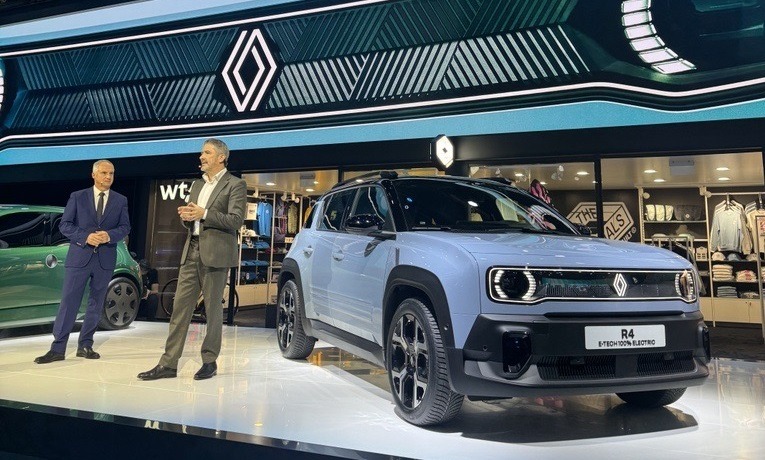
This year’s Paris Motor Show had plenty of world premieres and European debuts. But what did carmakers attending the event have to say? In the latest Autovista24 podcast, journalist Tom Hooker speaks with industry leaders about their design languages. The 90th anniversary of the Paris Motor Show attracted carmakers from across the globe. Speaking with Autovista24, industry experts gave exclusive insights into the design, technology and ambitions behind their newest vehicles. Subscribe to the Autovista24 podcast and listen to previous episodes on Spotify, Apple and Amazon Music. Show Notes Highlights from the 2024 Paris Motor Show What to look out for at the 2024 Paris Motor Show French brands fascinate One brand with a large presence at the event was Renault, as it revealed the new Renault 4. The highly anticipated B-segment battery-electric vehicle (BEV) takes strong design cues from its 1960s predecessor. The brand also unveiled the Renault Emblème, a concept car aiming to tackle carbon emissions throughout its lifecycle. The model features a dual-energy electric powertrain, combining a rechargeable battery for everyday use with a hydrogen fuel cell for longer journeys. Renault’s domestic rival, Citroën, had a large presence at the event too. The manufacturer premiered its C5 Aircross Concept. The model showcases a future C-segment SUV, which will be built on the Stellantis STLA Medium platform. Also on the brand’s stand was the newly revealed C4 and C4 X, with both vehicles due to arrive in dealerships early next year. Leaping into Europe After forming a joint venture with Stellantis and recently launching operations in Europe, Leapmotor was also at the event. The carmaker attracted a large crowd during its press conference, which included Stellantis CEO Carlos Tavares. The brand hosted the global debut of the B10, a C-segment SUV and the first model in its B-series. Other Leapmotor models on display included the C16 mid-size SUV and T03 city car. Peugeot showcased its new e-408. The C-segment BEV follows the release of a plug-in hybrid version in 2022. The new long-range e-3008 and e-5008 models were also on show, offering an electric range of 435 miles (700km) and 415 miles (668km) respectively. BYD made headlines with its new Sealion 7. This Tesla Model Y rival is the eighth electric vehicle (EV) to be launched by the manufacturer in Europe. Additionally, BYD said it is still committed to building two local production facilities in Europe as tariff talks continue. Dacia’s big surprise Dacia revealed the new Bigster. This is yet another C-segment SUV, with three mild-hybrid powertrains and one full-hybrid option on offer. Kia used the event to display its EV3, a compact electric B-segment SUV with high-tech features. It has a range of 375 miles (604km) when opting for its bigger battery. One of its competitors will be the Skoda Elroq. The EV has a 560km range and prices start at around €33,000. It marks the beginning of six BEV Skoda model launches over the coming years. Meanwhile, the Volkswagen Tayron made its public debut. The model is a seven-seat SUV that sits above the Tiguan. Cadillac also made waves, with its new Lyriq and Optiq electric SUVs. One stand that drew a lot of attention was Xpeng, with the unveiling of the P7+. The fastback sedan’s advanced driver-assistance systems feature as standard. More reveals Mini had two global debuts at the event, the John Cooper Works Electric and the John Cooper Works Aceman. The latter provides a range of 355km while the former can reach 371km on one charge. Another world premiere was the Audi Q6 Sportback e-Tron. The midsize SUV has a range of 656km and is built on the premium platform electric or PPE. Alpine also had a sporty reveal for visitors at the show. The A390_β is a precursor to the brand’s future BEV fastback sportscar. BMW showcased its Neue Klasse and Neue Klasse X in Paris. Both provide an outlook on the brand’s future model portfolio, with the former a sporty electric sedan while the Neue Klasse X is an electric SUV.

Displaying 10 of 10 insights