Insights

Tagged:
Clear filters
Content Type
Topic
Industry
Segment
|

Insights

The Automotive Update: Hope for Europe’s new and used-car markets?

How will new-car markets transform over the course of 2026? Plus, what is happening with used-car supply and demand in Europe? Autovista24 editor Tom Geggus finds out in the latest Automotive Update podcast. In this episode, Autovista24 reviews the latest JD Power webinar, which explored Europe’s new-car outlook. Plus, a look into the latest residual value (RV) trends in the continent’s used-car market. Subscribe to the Autovista24 podcast and listen to previous episodes on Spotify, Apple and Amazon Music. Outlook for European automotive markets This week, JD Power hosted its latest webinar: Europe’s Auto Forecast 2026: Technology, Policy, and EV Adoption. The session covered Europe’s new-car market outlook from 2026 to 2040 across multiple powertrains. Panellists also delved into the bloc’s diverging electric vehicle (EV) adoption and the factors behind it. Plus, the webinar reviewed upcoming technologies and emerging brands expanding across the continent. Attendees were asked how much they thought Europe’s new-car market would grow, or shrink, by the end of this year. 40% of respondents expected a year-on-year improvement between 0% and 2% compared to 2025. This matched the latest EV Volumes forecast, which projected a 0.2% increase in its March update. However, this was reduced from the 1.5% growth forecast in its December report. The March update also projected overall growth for European light-vehicle sales, which includes new cars and light-commercial vehicles. In 2026, a year-on-year increase of 0.1% is forecast, down from 1.7% in the previous report. The panel also discussed varying EV adoption rates in the bloc. They identified key structural differences that are either limiting or assisting plug-in uptake. Furthermore, the experts showed how, in some instances, EVs are closing the price gap to internal-combustion engine models. This comes as the choice of small EVs on the new-car market continues to widen. Positivity for used-car markets? JD Power experts forecast year-on-year RV declines across European used-car markets in the latest Monthly Market Update. In Austria, France, Germany, Italy, Spain, Switzerland and the UK, values are expected to decline by the end of 2026. However, these drops are expected to be slight. A drop is also projected across all observed markets in 2027. This is the case in 2028 as well, except for Italy, with marginal growth forecasted. RVs became inflated during the COVID-19 pandemic when supply was low, but demand was high. As these drivers balanced out, values underwent a period of normalisation. In March 2026, the active-market volume index (AMVI) for 24-to-48-month-old used cars showed year-on-year growth in every observed market. When compared to February 2026, only the UK suffered a marginal downturn, with a slight 1.1% dip in supply. The sales-volume index (SVI) of 24-to-48-month-old cars also increased compared with March 2025. This trend occurred in six of the seven observed markets, except for Italy, which recorded a 1.1% decline. Month-on-month results were more mixed, as single-digit drops were recorded in France, Italy and the UK. If supply continues to outpace demand, RVs will face increased pressure, with more units available and fewer potential buyers.
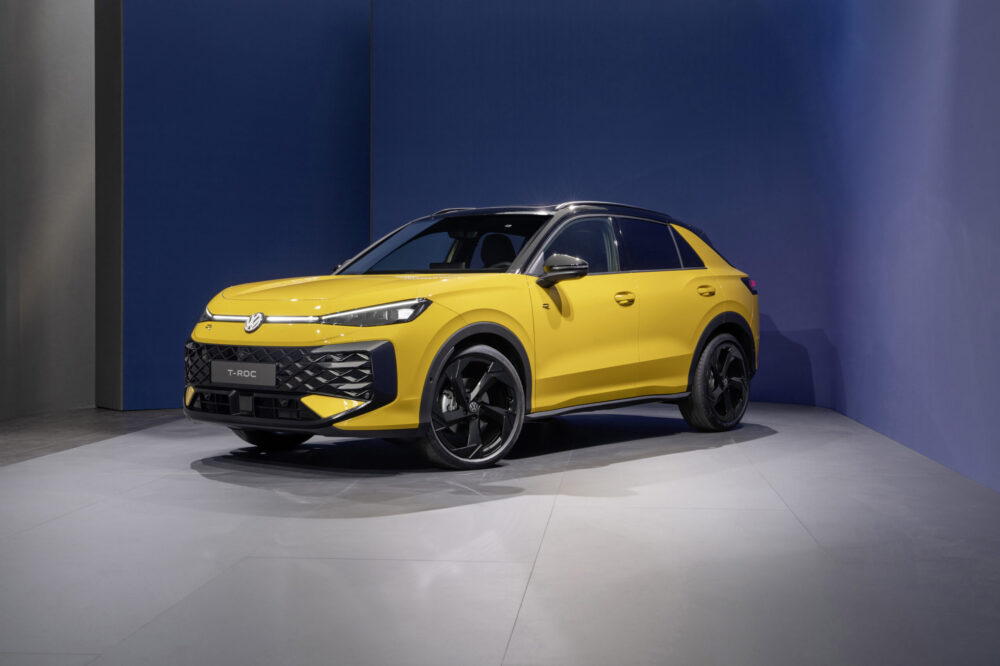
Image of a yellow Volkswagen T-Roc||||||||||

Insights

Launch Report: Latest VW T-Roc provides a new yet familiar feel

The second generation of the Volkswagen (VW) T-Roc has been long-awaited. But do improvements to the SUV make it more appealing? Autovista24 special content editor Phil Curry reviews the model alongside regional experts. The VW T-Roc sits between the Tiguan and the T-Cross in the carmaker’s SUV lineup. Now the second generation aims to maintain the momentum of the first. To do this, the manufacturer appears to have listened to drivers. VW has updated what already worked and changed what did not in the first generation. In doing this, they have created a new model that is expected to appeal instantly. Click here to open the interactive dashboard Autovista24’s latest Launch Report benchmarks the VW T-Roc against its key competitors in Austria, France, Germany, Spain and the UK. Regional experts also provide a breakdown of the car’s strengths, weaknesses, opportunities and threats. Evolution of the T-Roc VW has adopted an evolutionary design philosophy for the new T-Roc. However, it is bold enough to work. Sometimes transitional styling options can make a new model feel old or unappealing. Yet the carmaker has created something which stands out, making it attractive to new and old buyers. The new T-Roc links into VW’s current design language. It features a lower grill and a sweeping LED light bar across the front end, between the narrow headlights. There is also an illuminated badge to show the branding even at night. This does make it look reminiscent of the ID. range, but with no battery-electric option, this could prove polarising. Source: VW Press UK Source: VW Press UK Source: VW Press UK The rear also features a full-length light bar and an illuminated badge. With a sweeping diffuser, its angular look provides a dynamic profile. The R-Line model leans into its sporty design credentials, with bigger wheels and a bigger grill. It also gets a floating roof, to add to the dynamism. But the new design also provides the new VW T-Roc with larger dimensions than its predecessor. On the outside, this makes it look bigger and safer, giving it a larger stance. Inside, this means more room for occupants. A quality interior While the exterior styling is evolutionary, VW has taken the interior to another level. Inside, the previous generation was rather safe and unassuming. In the new generation, a lot of thought has gone into providing a comfortable, high-quality feel. Yet it is also not a bold design. A large centre console runs down the middle, separating the driver and passenger while giving a sense of comfortable confinement. The steering wheel is practical, with numerous physical buttons for various vehicle systems. VW has moved away from the ‘slider’ buttons, which proved divisive on other models. Source: VW Press UK Source: VW Press UK Source: VW Press UK A display behind the steering wheel provides plenty of driver information, while the 12.9-inch infotainment screen is responsive and clear. The lowest-trim model has a 10.3-inch screen, but it is still a decent size. The dashboard is large, but the materials used provide a sense of quality. This does not feel like a cheap car. Instead, it feels more premium moving through VW’s SUV range to the top-level Tiguan. Rear-seat passengers also get plenty of legroom, and headroom is good too. There are plenty of storage areas, while the 475-litre boot provides ample space. T-Roc on the road The new T-Roc comes with a complement of 1.5-litre petrol mild-hybrid powertrains, in either 110hp or 150hp offerings. Further engine specs are planned for a future launch, as well as hybrid options. However, there is no pure battery-electric variant currently available. The carmaker has developed the T-Roc well. It provides a smooth driving experience, with precise steering and effective brakes. However, the ride can get a little bumpy on more imperfect roads. This is particularly pronounced in models with the larger specification alloy wheels. Source: VW Press UK Acceleration is effortless and is aided by a dual-clutch system, allowing the seven-speed automatic gearbox to change seamlessly. It all adds up to make driving the T-Roc easy, despite its size. Overall, VW has re-engineered the T-Roc into a car that drivers want. It provides a quality feel and a better design than its predecessor. However, it has not strayed too far from the popular first model. In a continually growing automotive segment, with many new players appearing, the T-Roc achieves something different. It does not stand out because it is new, but because it is familiar. View the interactive dashboard, which benchmarks the VW T-Roc in Austria, France, Germany, Spain and the UK. The interactive dashboard presents new prices, forecast RVs, and SWOT (strengths, weaknesses, opportunities, and threats) analysis.
Curve of the highway to the destination. Concept of enjoying the trip and the beauty of the landscape|

Insights

Spain’s new-car market remains strong as new incentives take shape

February provided plenty of positives for Spain’s new-car market. But as the nation’s market continues to grow, is electrification progressing as planned? Autovista24 web editor James Roberts examines the latest numbers.  February saw a second consecutive month of growth for the buoyant Spanish new-car market. In total, 97,082 new vehicles took to the country’s roads, 6,755 more than 12 months prior. This ensured a 7.5% year-on-year increase, according to the latest ANFAC data. With only December 2025 blotting an unbroken streak of year-on-year gains for Spain’s new-car market, February resumed a familiar trend. Industry body ANFAC highlighted that all channels achieved growth in the month, particularly the rental sector, which saw a 22.6% uptick. ‘After a hesitant start in January, February is once again a positive month for vehicle sales,’ stated Félix García, director of communication and marketing at ANFAC.‘Last month, the rental car channel was the one that grew the most, accounting for almost one in five sales of passenger cars. It is a logical increase to renew the fleet for the Easter period. Without these sales, the growth of individuals and companies is flatter compared to February 2025.’ This ‘good pace,’ as highlighted by ANFAC, prevailed when assessing the first two months of 2026. Combined January and February totals amounted to 170,185 passenger cars. This ensured a unit upswing of 7,542 compared with the same period in 2025, a healthy 4.6% boost. Hybrids remain top new-car choice Hybrids, made up of both full and mild hybrid powertrains, remained the top seller in February. In total, 46,592 new hybrids joined Spain’s car parc in the month, according to ANFAC. This robust total returned a 17.1% year-on-year increase and a 48% market share. This was just 0.6 percentage points (pp) down on January’s record, suggesting hybrid popularity is not ebbing. It was even up by 3.9pp year on year. Spanning the opening two months of 2026, hybrid cars held a dominant 48.3% market share, up 3.7pp year on year. Across January and February, 82,189 new hybrids made their way to customers in Spain. Spain’s BEV market share issue Amid this preference for hybrids, ANFAC highlighted that EVs, including battery-electric vehicles (BEVs) and plug-in hybrid vehicles (PHEVs), continue to be a ‘key segment.’ However, is this consistently strong sector in danger of stagnating, especially when it comes to BEV uptake?   February saw 8,889 new BEVs take to Spain’s roads. This equated to a 45.4% volume increase, carving out a 9.2% market share, up 2.4pp. After two months of the year, the BEV market share stood at 9%, 2.2pp up year on year. This comes as volumes reached 15,361 units, establishing a 38.1% year-on-year upswing. One reason for new-BEV buying reticence could be uncertainty. Spain’s relatively successful trend of EV adoption had been enabled by a long-standing incentive framework, the MOVES plan. This was introduced in 2019, funded by the EU’s NextGenerationEU recovery funds, and managed in conjunction with Spain’s regional governments.  The issue with incentives The last iteration, MOVES III, came to an end on 31 December 2025. Its replacement, the Auto 2030 Plan (Auto+), announced at the beginning of December, aims to centralise and simplify EV incentives. It will mobilise up to €400 million in public and private investment between 2026 and 2030 to increase electrification in Spain. It will offer varying discounts on BEVs and PHEVs, spanning direct purchases, leasing and renting arrangements. The subsidies will be applied retroactively to vehicles purchased since 1 January in Spain. However, the government website has not yet confirmed publication. According to Carwow, Full implementation of the Auto 2030 Plan is not expected until at least May this year.  In late January, the Ministry of Economy, Trade and Business proposed amendments to the Auto 2030 Plan, according to La Tribuna. Addressing industry concerns, the change reportedly re-centres the scheme around cars manufactured within the EU. This would make the plan more closely aligned with the system used in France, as reported by electrive. One result of the amendments could be the discouragement of some models made in China from eligibility. This could bring additional uncertainty into the market. An added complication relates to Chinese carmakers investing in Spanish manufacturing, such as Chery and BYD. Spain’s need for clarity ‘Although the Auto+ plan has already been announced, and there are brands that have committed to bringing forward the discounts, there is no doubt that the official publication of clear and agile regulatory bases is essential to increase confidence,’ stated Tania Puche, GANVAM’s director of communication. Raúl Morales, communications director of FACONAUTO, added: ‘For another month, electrification has driven the market, once again exceeding 20% ​​market share in new registrations. This is partly due to the announcement of the retroactive application of the Auto+ Plan, which provides aid to electric vehicles. ‘What we need now is for the regulatory framework for this plan to be published as soon as possible, so that buyers continue to have certainty and electrification can continue to increase its registration numbers,’ he continued. Whatever the outcome, industry bodies are urging further clarity around electrification uptake measures to boost sales in the country. ‘It is urgent to reactivate the tax deduction in personal income tax for the purchase of electric vehicles and the bonus for the installation of charging points, measures that have been overturned in congress for the second time in two months,’ Puche stated. PHEVs still proving popular As BEV uptake looks to push through to new heights, PHEV popularity has helped lift Spain’s overall plug-in sector. Since a notable triple-digit percentage volume surge in May 2025, the powertrain has continued to sell well. In February, 12,092 new PHEVs left forecourts in Spain, equating to a 75.2% year-on-year increase. Across the first two months of this year, PHEVs have seen 20,832 registrations and a 71.6% volume lift. This has ensured a 12.2% market share, up 4.7pp year on year. This strong start to 2026 and the enduring appeal of the powertrain have boosted overall plug-in deliveries. Spanning January and February, combined BEV and PHEV registrations reached 36,193 units. This marked a significant year-on-year climb of 55.6%. This also brought some meaningful market share capture, with the powertrains accounting for 21.3% of overall registrations, up 7.2pp. The combination of electrified registrations, including hybrids, BEVs and PHEVs, took the dominant slice of the Spanish new-car market. Across the opening two months of 2026, a total of 118,382 new electrified vehicles were registered in the country. This 23.7% upswing ensured a market share of 69.6%, a new high, and a 10.7pp increase. Petrol remains a key player With many headlines surrounding EV volume growth, it is easy to ignore the prevailing appeal of petrol within Spain. At first glance, sales have taken a year-on-year nosedive. Fewer new petrol-powered options are available as the industry moves towards net-zero. However, when it comes to market share, the fuel type is clinging on in Spain. In February, 22,534 new petrol vehicles reached customers, a 19.5% year-on-year dip. Although this continued the trend of double-digit monthly declines, the reality is more nuanced. Combining January and February’s new-car registration totals, petrol accounted for 23% of the market, with 39,067 registrations. Although volumes were down 20.8% year on year, the fuel type commanded the second-highest market share after hybrids. Petrol was 14pp higher than BEVs, and 10.8pp above PHEVs. While petrol retained influence in Spain’s new-car market, diesel continued its descent. The fuel type saw just 7,226 new vehicles registered across January and February. This underlined a significant 28.6% year-on-year drop and a meagre 4.2% market share, down 2pp. Total internal-combustion engine (ICE) new-vehicle registrations, including petrol and diesel, totalled 46,293 in January and February. This provided a 27.2% market share, down 9.3pp year on year, but still 5.9pp above EVs. One of the big questions now is whether plug-in sales will overtake ICE volumes in Spain this year.

The all-new Mercedes-Benz CLA: exterior: AMG Line

Insights

Launch Report: Award-winning Mercedes-Benz CLA impresses with range

As an award-winning car, the Mercedes-Benz CLA is already proving itself on the European stage. But how does this translate into expected residual value (RV) performance? Autovista24 special content editor, Phil Curry, reviews the model alongside regional experts. The new Mercedes-Benz CLA battery-electric vehicle (BEV) is providing the German carmaker with headlines. At the Brussels Motor Show, the model was presented with the European Car of the Year title for 2026. The success of the model, voted for by motoring journalists across Europe, highlights the prowess of the CLA. With an impressive design, comfortable handling and strong driving range, it offers much to buyers. Click here to open the interactive dashboard Autovista24’s latest Launch Report benchmarks the Mercedes-Benz CLA against its key competitors in Austria, France, Germany, Italy, Spain and the UK. Regional experts also provide a breakdown of the car’s strengths, weaknesses, opportunities and threats. A bright start for design The new model cuts an impressive figure in either a coupé or shooting-brake body style. This gives the CLA sleek lines and a low profile that provides a premium look. Although this comes at the cost of practicality. Source: Mercedes-Benz At the front, the false grill features 142 stars, which illuminate at night, providing a striking visual component. This is not the only use of the three-pointed star. Alongside the traditional Mercedes-Benz logo, the pattern is used in the headlights. The LED light bar extends across the front above the grill, continuing a trend seen on other Mercedes-Benz electric models. However, it looks slightly out of place, sitting high up above the grill, impacting the clean lines. On the plus side, the bar does provide increased visibility at night. The sweeping side profile and simple rear styling provide a sporty look but remain reminiscent of internal-combustion engine (ICE) models. Carmakers can develop BEVs with an outlandish design, but this runs the risk of alienating some buyers. In this guise, the CLA will appeal to a broader range of drivers. Inside the Mercedes-Benz CLA Inside, the Mercedes-Benz CLA is comfortable, with a low seating position up front contributing to the sporty feeling. For the most part, material quality is good, although some hard plastics point away from the overall premium feel. The new CLA utilises the Mercedes-Benz Operating System (MB.OS). This provides an AI-enhanced experience, capable of adapting to the driver’s mood and providing quicker responses to queries. The infotainment system is also quick and intuitive. On-board navigation uses Google data, providing accurate information on travel and road conditions. Source: Mercedes-Benz Sweeping around the dashboard are a pair of screens, including the central 14-inch touchscreen, which houses the infotainment system. Behind the steering wheel is a 10.25-inch driver display. The carmaker offers the MBUX Superscreen setup, which places a third, 14-inch screen in front of the passenger. This allows them to stream videos and have their own display separate from the driver. Questionable controls The German carmaker has embraced the touchscreen control culture that others are starting to pedal back on. Many of the basic controls in the CLA are found within the infotainment system’s menus, rather than on physical buttons. These are easier to find than in some other models, but could prove distracting. This includes the window demisters and heated seating controls. Drivers will also have to find the option to switch the window buttons from front to rear, with only two physical controls for these. Source: Mercedes-Benz Additionally, while the steering wheel is high quality, the touch-sensitive buttons can prove troublesome. These have been switched for physical components in other vehicles, but Mercedes-Benz has stayed the course. Another questionable control option is the location of the regenerative braking settings. The CLA does not feature paddles behind the steering wheel. Instead, the driver flicks the gear selector lever located behind the steering wheel, making the control more awkward. Source: Mercedes-Benz The new CLA also struggles with practicality. While there is plenty of space in the front, rear-seat passengers are affected by the coupé-style roofline and high floor. Boot space is also at a premium, with just 405 litres available. However, the CLA does offer a 101-litre frunk, providing an alternative storage location. Impressive range from Mercedes-Benz CLA The new CLA features an 85kWh battery and a single 272hp electric motor. This provides an impressive 483-mile (777km) range. While the BMW iX3 offers 500 miles, it has a much larger battery. Built on the new Mercedes-Benz Modular Architecture (MMA) platform, designed for both BEV and hybrid powertrains. The CLA also uses an 800-volt system. This allows the battery to charge at up to 320kW. This allows for over 190 miles of range to be added in 10 minutes. However, the current system requires either rapid chargers or DC charging at home, and will not work with other charging systems. An optional convertor is planned for future models, according to Auto Express. In terms of driving, the suspension is smooth and soaks up road imperfections. Braking is also precise, with the regenerative braking and one-pedal driving working well to put energy back into the battery. The steering is light enough to make the CLA easy to use in town, but also holds its own on motorways. All of this combines to make the model fun to drive over its long range. The Mercedes-Benz CLA has some small failings. Yet the impressive range, together with clear and smooth styling, comfort and premium feel, takes the focus away from these. Overall, the car offers plenty for the driver, and those who aspire to the German brand will not be disappointed. The car is worthy of its European Car of the Year title. View the interactive dashboard, which benchmarks the Mercedes-Benz CLA in Austria, France, Germany, Italy, Spain and the UK. The interactive dashboard presents new prices, forecast RVs, and SWOT (strengths, weaknesses, opportunities, and threats) analysis.
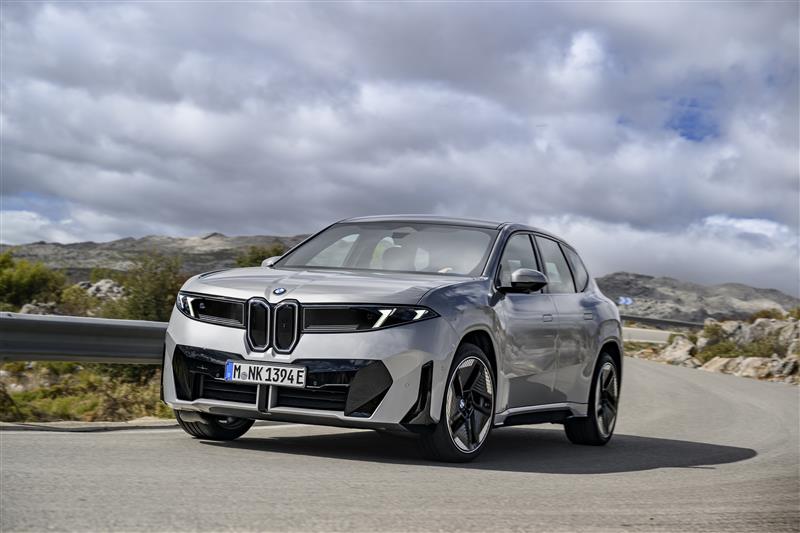
The BMW iX3 in silver|||

Insights

Launch Report: BMW iX3 brings the Neue Klasse platform to the road

BMW’s Neue Klasse platform is finally here, as the new iX3 goes on sale. But will the model prove to be a hit, and establish a good grounding for the much-anticipated technology? Autovista24 special content editor, Phil Curry, reviews the model alongside regional experts. With bold new designs and cutting-edge technology, the new BMW iX3 is the first of the brand’s Neue Klasse platform. It is the first in a new family of battery-electric vehicles (BEVs) built around the philosophy, pioneering the concept on the road. The iX3 is, therefore, one of the most important models the carmaker has ever launched. With effectively a blank canvas, defying other BMW brand styling designs and philosophies, the new iX3 can forge its own path. The good news for the carmaker is that it seems to have succeeded, providing a good base for the Neue Klasse to grow from. Click here to open the interactive dashboard Autovista24’s latest Launch Report benchmarks the BMW iX3 against its key competitors in Austria, France, Germany and the UK. Regional experts also provide a breakdown of the car’s strengths, weaknesses, opportunities and threats. Bold design for new iX3 BMW has kept some of its design cues from its Neue Klasse concepts on the new iX3. This includes the illuminated kidney grill, which is smaller, features more angles, but still sits proudly in the centre of the car. These angles translate across the front, with an upward sweeping grill into the LED lighting, symbolising movement. Source: BMW These angles continue across the car, giving it a boxy, yet dynamic look. The rear features large LED lights that echo the layout at the front. This helps provide a sense of symmetry.   The design also gives a sense of size. The iX3 looks like a large SUV, when in reality, it is similar in length to the BMW 3-series. Technology rich Stepping into the BMW iX3 feels like a departure from the brand’s other models. It has been completely redesigned, providing a feeling of space. The incorporated technology helps make the driving experiencve much easier. BMW has incorporated its new Panoramic iDrive system, with a glass screen stretching below the windscreen. This projects all driver instruments, and places them in the eyeline, making it easier to focus on the information provided. Source: BMW This screen is also customisable, with the central and passenger side elements able to house various apps. This can also be used to extend the driver information. Below this, a 17.9-inch infotainment screen sits with and angled look, again embracing the futuristic designs that are integral to the Neue Klasse concept. This houses many of the vehicle’s systems, with few physical controls inside. It does, however, provide a number of shortcuts to get to certain vehicle-critical areas. The Panoramic iDrive has allowed BMW to modify the steering wheel design, and the carmaker has landed on a four-spoke look, incorporating the angles featured throughout the interior. It houses several buttons, although the placing of these does make them difficult to reach, especially for those with smaller hands. Practically perfect BMW has used a number of recycled and sustainable materials in the new iX3. For example, the carmaker states that 30% of the secondary raw material used for the engine compartment cover and the frunk is recycled maritime plastic. Secondary aluminium accounts for 80% of the wheel carriers and swivel bearings, as well as 70% of the cast aluminium wheels. There are some recycled materials inside as well. Together with hard plastics around some surfaces, this belies the high-quality feel that is expected from BMW models. However, this is not to say the interior feels substandard, with a modern look and comfortable surroundings for both front and rear passengers. Source: BMW The flat floor helps with rear legroom, while a central passenger can be carried with ease. Thanks to the high roofline, headroom is good, even without the optional panoramic sunroof. There are plenty of storage options inside as well. The boot space is also very generous, at 510-litres. The iX3 also features a 58-litre frunk for additional load carrying or cable storage. Driving dynamics for new iX3 One area where BMW models traditionally stand out is their driving dynamics. This is a key test for the Neue Klasse, with a new battery and electric motor layout which could impact the feel on the road. Thankfully, it does not. The new iX3 feels balanced on the road, even with its two-tonne weight. There is little body roll, with the suspension absorbing most of the movement. Steering is precise, and agile in urban environments. Source: BMW BMW has also incorporated Soft Stop, which removes the hard and sharp stopping motion when braking is applied. This works whether it is the driver, or onboard systems, that have slowed the car. The iX3 also features regenerative braking to feed energy into the battery, although this is controlled via touchscreen, with no physical buttons or paddles. The carmaker states the new iX3 will achieve 500 miles (804km) of range, according to WLTP testing. The model comes with a 112kWh battery, powering a dual motor layout. It comes complete with an 800-volt electric system, that allows for ultra-rapid chargers up to 400kW to feed energy into the storage unit. It is also smart-energy ready, allowing it to support bi-directional charging. Overall, the new BMW iX3 sets a good course for the Neue Klasse. It is well designed with some clever technological advances. Additionally, it provides good driver and passenger comfort, strong driving dynamics, and effortless practicality. View the interactive dashboard, which benchmarks the BMW iX3 in Austria, France, Germany and the UK. The interactive dashboard presents new prices, forecast residual values, and SWOT (strengths, weaknesses, opportunities, and threats) analysis.
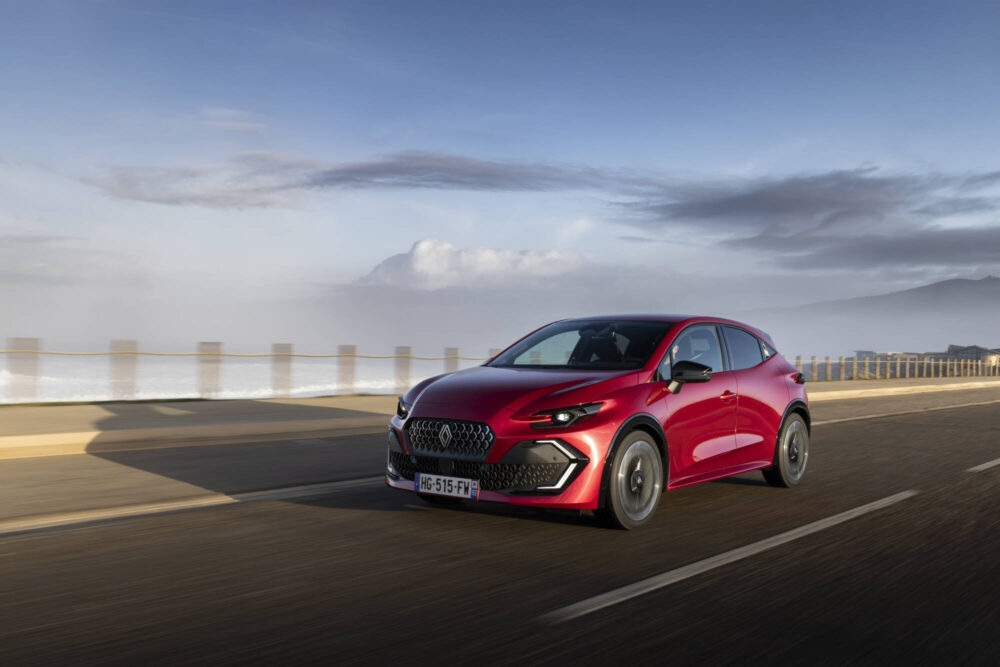
Image of a red Renault Clio E-tech on a road||||||||||||||||||||||

Insights

Launch Report: New Renault Clio looks to forge its own path

The new Renault Clio is not just fighting the competition for buyers, but also other models in the carmaker’s portfolio. Does it have what it takes to enhance the reputation of the Clio name? Autovista24 special content editor, Phil Curry, reviews the model alongside regional experts. The Renault Clio has been a mainstay of the automotive market for decades. It has built a reputation as a fun and reliable hatchback, which has stood the test of time while others have faded from view. With the European small-car market growing once again, Renault recently unveiled its sixth-generation Clio. The new model offers more than just a facelift,  complete with a refreshed design philosophy,  and backed up by a new powertrain lineup. However, with competition coming from the all-electric Renault 5 and Renault 4, can the Clio utilise its previous success to draw in buyers? Autovista24’s latest Launch Report benchmarks the Renault Clio against its key competitors in Austria, France, Germany and Spain. Regional experts also provide a breakdown of the car’s strengths, weaknesses, opportunities and threats. Click here to open the interactive dashboard Renault Clio goes bold Renault is not playing it safe with its sixth-generation of the Clio. This new model possesses a whole new exterior design, with a bold look that differs from the ‘retro’ philosophy of the Renault 5 and Renault 4. Instead, the Clio features a drooping front end, with a pronounced central bonnet section flowing down into the front grill. The narrow headlights are subtly blended within the design, while the big, angular running lights provide a strong visual impact. Source: Clément CHOULOT/DPPI Source: Clément CHOULOT/DPPI Source: Clément CHOULOT/DPPI Source: Clément CHOULOT/DPPI The rest of the car is more conservative, a sloping roofline flows into a lipped rear end, while the split light profile sits in a recess that comes out to highlight the Renault badge. Overall, the design is sporty and modern, but perhaps not as clean as its predecessors, or plug-in stablemates. Familiar feel Inside, however, the carmaker has kept things in the family. The new Clio features the same dual-screen and a similar two-level dashboard layout as the Renault 5. The pair of 10-inch screens sit in a V shape, with one displaying driver information, and the other for the infotainment system. This system features Google integration, with Google Maps built in, and Google Assistant. It will also integrate Gemini AI via an update, which will provide many more capabilities. For front occupants, the longer dimensions of the new Clio provide ample room. However, with no addition made to the width of the car, it can still feel cramped. This is especially noticeable for rear-seat passengers, with no dividing central tunnel to buffer against. Rear headroom is also limited, although this is to be expected in a small hatchback. Source: Clément CHOULOT/DPPI Source: Clément CHOULOT/DPPI Source: Clément CHOULOT/DPPI Source: Clément CHOULOT/DPPI There are plenty of storage options in the centre console and door pockets, which make the new Renault Clio very practical. This is also backed up by the boot space. The petrol version gets 391-litres of capacity, while the  full-hybrid (HEV) model gets 309, due to the space needed for the battery. However, the boot does not feature a flat floor. The loading bay lip could, therefore, make it difficult when loading large or heavy items. Differentiation for the Renault Clio Some may question the relevance of the Clio, especially as the Renault 5, is proving popular in the same segment. However, the carmaker has chosen to diversify its powertrain portfolio between the two cars, a move that could pay dividends for both. The new Clio is offered with either a 1.2-litre petrol, or a 1.8-litre HEV powertrain. There is no battery-electric version, meaning the Renault 5 maintains its position for electric-vehicle buyers, while the Clio offers an internal-combustion engine (ICE) alternative. With UK sales expected to start in 2027, this choice is a reason for the new model’s delay into that market. The EU ban on new petrol, diesel and hybrid models was due to begin in 2035, although this has now shifted to 2040. However, the UK is starting its internal-combustion engine phase out in 2030. The carmaker is waiting to see how the political landscape around the motoring market in the UK changes, leading to the delay. On the road While the petrol-only version produces around 114hp, the HEV model features 158hp, up by 15hp on the current Renault E-Tech HEV powertrain. This gives a 0.62mph time of 8.3 seconds, and provides smooth power delivery, with smooth automatic gear chances from the four-speed box. Source: Clément CHOULOT/DPPI Source: Clément CHOULOT/DPPI Source: Clément CHOULOT/DPPI The Renault Clio offers a comfortable ride. Power delivery in the HEV model is adequate, if a little sedentary. The model features an intuitive B-mode that increases the regenerative energy from braking back into the battery. While not providing the ‘one-pedal’ feel of battery-electric vehicles, it does add to the braking, while increasing electrical assistance. There is also a ‘Smart’ drive mode, which can automatically change from Eco, Comfort or Sport depending on how the vehicle is being driven, improving efficiency without input from the driver. Overall, the new Renault Clio offers something different from its stablemates. While the Renault 5 has attracted attention with its retro characteristics and funky design, the Clio provides a nameplate that can be relied upon. By setting it out to cover the petrol and HEV markets, the carmaker is spreading its powertrain potential. The familiar Clio name will have to ensure it can hold the demand for ICE-based models in the B-segment. View the interactive dashboard, which benchmarks the Renault Clio in Austria, France, Germany and Spain. The interactive dashboard presents new prices, forecast residual values, and SWOT (strengths, weaknesses, opportunities, and threats) analysis.
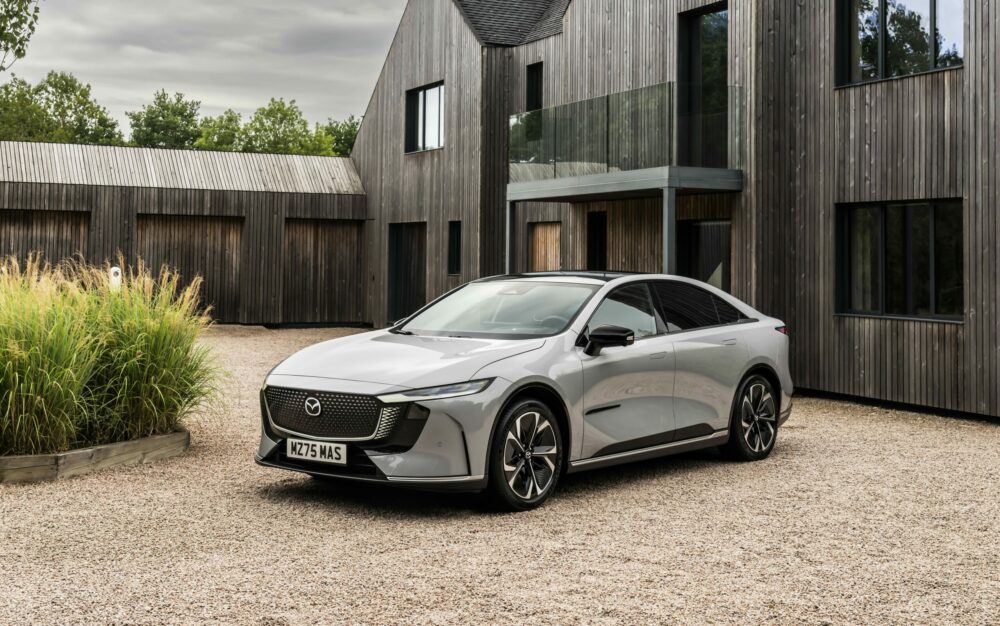
Photo of a light grey Mazda e6 in front of a house in a gravel driveway.||

Insights

Launch Report: Mazda 6e introduces BEV technology to traditional design

The Mazda 6e is the first battery-electric vehicle (BEV) from the Japanese carmaker. On the outside, it has kept to its roots with a sporty design. But does this mask something entirely different? Phil Curry, Autovista24 special content editor, reviews the model alongside regional experts in this latest Launch Report. Mazda may be more widely known for its roadster and coupé models. Now, the Japanese carmaker has delivered a sleek and sporty fastback, merging practicality and design with an all-electric powertrain. But does Mazda’s first BEV provide something different for drivers? In an increasingly crowded marketplace, how can it stand out against the competition? Autovista24’s latest Launch Report benchmarks the Mazda 6e against its key competitors in Austria, Germany and Spain. Regional experts also provide a breakdown of the car’s strengths, weaknesses, opportunities and threats. Click here to open the interactive dashboard Bold design for Mazda 6e The Mazda 6e has an impressive appearance. The carmaker has incorporated its ‘Kodo’ design philosophy into the model. This ‘soul of motion’ concept provides flowing lines and a strong look, representing movement even when the car is standing still. From the front, the grill area features integrated lighting, providing a 3D style on the flat surface. While some BEV models have moved to a no-grill design, Mazda has continued the look. This breaks up the front end of the 6e, giving it a defined, yet subtle stance. Source: Mazda Source: Mazda Source: Mazda The side profile clearly demonstrates Mazda’s design philosophy. The hatchback features coupé-esque lines and a dramatically sloped rear that encapsulates the sportiness of the brand’s other models. At the rear, this sloping roof provides a longer look. Meanwhile, the indented boot lid arrows the car forward, highlighting the soul of motion. Therefore, the Mazda 6e has a premium look that belies its pricing points. This should add to its appeal, especially among newcomers to the brand. A different approach Inside, the 6e provides a premium feel. The high-backed seats and long central section work to cocoon the driver and front passenger. A floating channel between the front seats also provides plenty of storage space, with drink holders and wireless phone charging. The dashboard is rather sparse. Behind the steering wheel with its flat base is a 10.2-inch screen for driver information. Central on the dashboard is a larger 14.6-inch screen, while the rest of the cockpit narrows and wraps around to the door cards. The 6e has been developed in partnership with the Chinese carmaker Changan. The vehicle controls demonstrate this arrangement most of all, as there are no physical buttons in the Mazda 6e. Source: Mazda Source: Mazda Source: Mazda Source: Mazda Instead, all settings are accessed via the touchscreen, a common feature in models hailing from China. For the Japanese carmaker, this feels like a departure, with previous models featuring an array of buttons and knobs for easy access. While the interior offers a clean and minimalist design, the controls are tricky to access. There is a permanent toolbar at the bottom of the screen, which grants users access to the climate controls. In the back, the sloping roofline does hamper headroom for taller occupants, while a higher floor does hinder comfort. However, there is plenty of legroom for all, thanks to the model’s size. The 330-litre boot space is ample. The Mazda 6e also comes with a 70-litre frunk, for cable storage and additional practicality. Options in the Mazda 6e Mazda is offering the 6e with a choice of two batteries. The shorter-range model comes with a 68.8kWh LFP battery unit, while the longer-range version has an 80kWh NCM power cell. According to the carmaker, the smaller battery provides a range of up to 300 miles (482km). Meanwhile, the larger unit offers 345 miles of range. However, it is the LFP that provides better charging times, going from 10% to 80% in 22 minutes. It also provides the electric motor with a 0-62mph performance of 7.6 seconds. The NCM unit is limited to a maximum charging rate of 90kW. This means a 10% to 80% refresh takes 45 minutes, while it achieves 0-62mph in 7.6 seconds. With a difference of just 45 miles between the two options, buyers will need to consider which is more important: distance or charging time. A new ride The acceleration can occasionally feel sluggish, especially at higher speeds. The Mazda 6e does not perform at the level of other BEV models in this regard. Steering is smooth, but it can feel disconnected, while there is very little body roll. Source: Mazda Source: Mazda Source: Mazda Braking is also good, but there is no option for one-pedal driving, as seen in some other all-electric models. Mazda offers four regen braking modes in the 6e, but these are accessed via the touchscreen, instead of on the steering wheel. This means some drivers may leave the standard braking levels for convenience and miss out on the extra energy. Overall, the Mazda 6e is an elegant and well-designed car to look at. The driver and passengers will feel comfortable in a car that belies its status. However, the model is a departure for the carmaker. As its first BEV, some of the traditional Mazda elements, such as performance and interactivity, have been lost. Yet for newer drivers who do not have these views of the brand, the Mazda 6e should appeal. View the interactive dashboard, which benchmarks the Mazda 6e in Austria, Germany and Spain. The interactive dashboard presents new prices, forecast residual values, and SWOT (strengths, weaknesses, opportunities, and threats) analysis.
Abstract digital sound wave|

Insights

The Automotive Update: Residual value pressures and global forecast revealed

Which powertrain sees the greatest value depreciation across European used-car markets? What is forecast to happen with global light vehicle sales by the end of 2025? Plus, the latest cybersecurity news. Autovista24 editor Tom Geggus explores this and more in the Automotive Update podcast. In this week’s episode, a look at residual value (RV) trends in key European markets, with a focus on powertrains. Additionally, the latest forecasts from EV Volumes, how Hertz is selling cars and how hacks have hit carmakers. Subscribe to the Autovista24 podcast and listen to previous episodes on Spotify, Apple and Amazon Music. BEV RVs forecast to fall RVs, expressed as a percentage of new car list price (%RV), fell year on year across European markets in September. However, for Austria, France, Italy, Germany, Spain, Switzerland and the UK, this was more of a normalisation. Values had already experienced exceptional increases during the COVID-19 pandemic. Battery-electric vehicles (BEVs) saw the lowest value retention rates of any major powertrain across all seven markets. As the latest all-electric cars feature improved ranges and technologies, used models age more quickly in comparison. Affordable BEVs from new market entrants also make older vehicles less attractive. Additionally, carmakers and governments want to drive uptake of the powertrain. However, incentives can put additional pressure on RVs. Therefore, by the end of the year, BEVs are expected to see their %RVs take a sharper fall than the market average across most of the observed markets. Global forecast improves In its latest global light-vehicle forecast, EV Volumes expects sales to increase by 3.6% year on year to 92.3 million units.  Resilient demand in China and the non-Triad region is a major component of this more positive outlook. However, there are still many negative influences that the forecast accounted for. This includes political instability, conflicts, energy prices, inflation, and US automotive tariffs. Meanwhile, global EV sales are expected to grow by 24.5% by the end of this year. This equates to 22.1 million units. The growth comes despite governments phasing out purchase incentives and tax breaks amid mounting national debt, particularly in Europe. Hack hits Renault customers Renault Group customers in the UK are being warned after a third-party data company was hacked, Autocar reports.  According to the outlet, the personal data of some customers was stolen. This is reported to include names, addresses, dates of birth, genders, phone numbers, and vehicle details. However, Renault UK said that no passwords or financial data were taken. The carmaker did not say how many people had been affected ‘for ongoing security reasons’, the BBC stated. However, no wider implications are anticipated, as none of Renault's own systems had been hacked.  Meanwhile, JLR’s phased restart of its production is ongoing, as it takes steps to recover from a cyber-attack.  ‘We continue to work around the clock alongside cybersecurity specialists, the UK Government’s NCSC and law enforcement to ensure our restart is done in a safe and secure manner,’ the carmaker stated. VW presses pause Volkswagen (VW) is expected to pause production at two of its factories in Germany due to weak demand for electric cars, according to the Guardian. Both Dresden and Zwickau will see work suspended for a week this month. Meanwhile, the carmaker’s Osnabrück site in Lower Saxony is also slated to see its working week reduced by a day. Closure days are also being considered at VW’s Emden plant.  Retail plans for Hertz Hertz is launching an online car buying experience. Customers can now browse, finance, trade-in and purchase vehicles digitally. ‘By enhancing our digital capabilities, we are meeting customers where they are and giving them greater visibility into our inventory, easier purchasing processes, and broader access to quality Hertz vehicles,’ said Gil West, CEO of Hertz. Over the past year, Hertz has pushed its retail offerings. This includes an expansion of its Rent2Buy program, as well as collaborating with Amazon.   Zeekr expands in Europe Geely subsidiary Zeekr is expanding its efforts in Southeast Europe, electrive has reported. The brand has now launched in Romania, Slovenia, Croatia and Bulgaria. Orders are scheduled to start in October, with the first vehicles arriving by the end of 2025.  The brand will work with the Southeast Europe Automotive Group to distribute the Zeekr X, the Zeekr 7X and the Zeekr 001 models.
Chinese flag with a headlight of a car||||

Insights

How are Chinese companies entering the European automotive sector?

Currently, one of the major talking points in Europe’s automotive market is the entrance and expansion of Chinese companies. Autovista24 journalist Tom Hooker explores their plans and strategies in the region. A total of 116 exhibitors at this year’s IAA Mobility in Munich came from China. This was up from 70 in 2023, which in turn was more than double the figure in 2021. Chinese companies at the event ranged from high-volume car brands, battery producers, luxury marques and intelligent mobility solution providers. Cars made in China accounted for 6% of sales in the EU in the first half of the year. This was up from 5% in the first half of 2024, according to ACEA. Some of this share is the result of European brands manufacturing in the country, such as Cupra. However, China’s automotive expansion into Europe is undeniable. Marques including BYD, Xpeng and Hongqi have recently announced production plans, research centres or regional hubs in Europe. So, how are these companies entering the continent? What are the main challenges? Additionally, how important are events like IAA Mobility in increasing consumer awareness? High-volume Chinese brand Between January and July, Xpeng sold 234,374 electric vehicles (EVs) across the world, according to data from EV Volumes. While the majority were delivered in China, 4.2% were sold in Europe. Autovista24 asked Xpeng G9 product manager Chloe Ding how the brand plans to increase its sales in the region. Source: Xpeng ‘Of course, every company wants to give a very big sales volume in the European market, that is no doubt. For our products, we actually said, we are more concerned about how we choose to satisfy our users, because if we cannot satisfy them, we cannot be eager for big sales,’ Ding explained. ‘Sales is just a number target. Our target is in the product itself and how to make it better.’ She highlighted how Xpeng can learn something from Kia and Hyundai. The two non-European brands have created a foothold in the market. Ding then acknowledged how over-the-air updates and aftersales services are vital to customer satisfaction and trust. Dealer network importance ‘We have a plan for how to make our network in Europe bigger. There is no doubt that we would ask for more dealers to join our network,’ Ding outlined. ‘Also, we would provide aftersales services. We want to hear from our users, what they say we can improve, and what help they need. Most of our product details come from when we hear from our users.’ Christoph Ruhland, director of business development at Autovista Group, recently highlighted the differences in consumer habits between Europe and China. In Cracking the code: Chinese EV brands entering Europe, he recognised the importance of establishing a dealership network. ‘A few brands started with flagship stores, big stores in major European cities. This approach does not work in Europe; it works in China.’ With longer working weeks in China, consumers are more likely to buy a car in a mall on a day off. ‘Europeans, they want to buy cars at dealers. It is also important to have a strong dealer network for aftersales. So do not only think about sales, also think about aftersales,’ he added. Chinese brands' market positioning One major challenge for Chinese brands entering Europe is deciding how to position themselves. Some carmakers may focus on their cost-to-quality ratio, technology features, or luxury status. So, where does Xpeng sit? Source: Xpeng ‘We cannot have the same level of luxury brands like Audi and BMW. So, this car may be focused on the mass or mainstream market. But we believe that one day we will have many more customers, and our reputation will be established. So, one day we may have cars which will be seen as luxury,’ Xpeng P7+ product manager Eva Han told Autovista24. Attracting more customers can be achieved by appealing to different demographics and, in turn, different vehicle segments. ‘We have a rich car line for the Xpeng brand. In China, we have three different platforms, which run from high to low. Because the European market is one of the biggest markets worldwide, we will add more and more cars,’ commented Han. ‘The P7+ will be launched on the European markets in February 2026. This car only offers a two-wheel drive for the Chinese market. But, for the European market, we will add four-wheel drive,’ she stated. Chinese supplier growth Understanding the differences between Chinese and European consumer preferences is not only vital for carmakers but also for automotive suppliers and mobility solution providers. One such company is Desay SV. https://www.youtube.com/watch?v=BsqbZEVbRkQ The company presented many of its products at IAA Mobility. This included an AI-powered intelligent cabin platform, display solutions and full-stack advanced driver-assistance systems (ADAS) technologies. ‘I think the average age of users of vehicles in China is younger than in Europe. So, I think the Chinese consumers are more used to the smartphone-like digitalisation, and the digitalised features of the vehicles,’ head of Desay SV Europe Yang Yong told Autovista24. ‘European customers' demands are, to my understanding, more diversified, because of a longer automotive culture and history, and the long-lasting culture of horsepower, engine performance, braking and suspension.’ ‘So, I guess these are still more important to the European customers. But I believe digitalisation and intelligence will still be welcomed,’ Yong noted. These differences can mean that products are adapted for different regions. For example, in China, settings and vehicle information are largely accessed on the display. But Yong highlighted that users still want to have some mechanical buttons in Europe. Localising production The company recently celebrated the structural completion of its factory in Spain, joining other Chinese companies which have built foundations in Europe. Source: Desay SV ‘I think the requirement for localised production started from the COVID-19 period. Every OEM was talking about supply chain security, to make sure that if something happens in some regions, you will continue production in other regions,’ said Yong ‘For us, it is very important to show the customer and the people that we are very committed here, we are not a short-term business. We really want to be part of the industry and the ecosystem that we want to develop together,’ he added. The ‘China speed’ advantage One of the biggest advantages that Chinese companies can use to aid their European growth is fast development speeds. During Autovista Group’s recent webinar, Ruhland compared the BEV development speed in different regions, when the platform is already completed. ‘Europeans and Japanese need the longest, between 42 and 60 months. The US can do it a bit quicker, and Koreans can do it within three or four years. But Chinese OEMs can do it between 18 and 24 months. 18 months is now more or less the average,’ he said. Yong also highlighted this development speed when talking about Desay SV’s cabin display solutions. ‘I think everybody right now is talking about the so-called China speed, right? In this market, we have to cater to the ever-evolving requests from users and customers. We have to implement all these new requirements the quickest, with the best quality and cost, so that we can meet the requirements of the customers,’ he outlined. Can Chinese brands become memorable? One hurdle Chinese carmakers face is building a memorable brand. However, many marques are entering Europe using number-based naming conventions. This includes Avatr, a premium EV brand owned by Chinese OEM Changan. So, can they still stand out? ‘It is a tricky question. It can polarise opinion. In my opinion, Avatr is the brand, and it should be the bigger name and needs to be remembered,’ Avatr advanced senior exterior designer Pedro Ruperto Mallosto das Chagas told Autovista24 at IAA Mobility. https://www.youtube.com/watch?v=VCbzFmbWMu4 ‘All the cars are part of a family that needs to be consistent. The numbers are more like a quote to define the Avatr products in the range. So, the brand is more important than each specific car,’ he stated. Ruhland highlighted that unique selling points (USPs) can be a vital factor in building brand awareness. ‘Every Chinese OEM that wants to be successful in Europe needs to answer the question “why should a European car buyer that can already pick among 40 existing European brands, why should they buy a Chinese car?” If this European car buyer goes for a Chinese car, why then should they pick your brand?’ he asked. ‘The brand needs to have a core USP that is easy to remember and easy to communicate. I always recommend looking at how Hyundai and Kia did it 20 years ago when they started their very successful journey in Europe. ‘They came up with very long warranties,’ Ruhland said. ‘This could be a strong USP for a Chinese brand. Imagine a Chinese brand would say “our cars have a 10-year warranty, including battery.”’ ‘This would be a very strong message. This would boost residual values, and could really help create awareness,’ he commented. Designed to stand out One way to create a USP is through design. With a strong and consistent design language, customers can easily recognise a brand and its models. Source: Tom Hooker, Autovista24 ‘I think colour, material and finish (CMF) design is the big difference compared to other Chinese brands. We really lead the design with CMF; it is not just applied afterwards. When you look at the car, you can easily remember the design and intention,’ Avatr senior CMF designer Maud Balmisse told Autovista24. Chagas added that through the front fascia and light signature present on Avatr models, they are recognisable in China. The latter can be used as a clear way to distinguish your brand from others. ‘Light signatures are increasingly recognised or used in some respects. They are perhaps the most easily identifiable singular thing, but I would not say that they are necessarily the most important,’ Car Design Research director Sam Livingstone told Autovista24.
Image of a red Fiat Panda Grande from the front with a building behind.||||||||||||Rear quarter of the new Fiat Grande Panda in red.|

Insights

Launch Report: Can the retro-inspired Fiat Grande Panda shake up the market?

Fiat has evoked the past with its Grande Panda. But are retro design elements and an appeal to urban buyers enough to warrant success? Autovista24 special content editor, Phil Curry, reviews the model with Autovista Group experts. With the Grande Panda, Fiat has taken a leaf from its back catalogue. Alongside the likes of the Renault 5, the car aims to inspire interest and sales with a familiar design which harks back to the past. Only this time, the Italian brand has increased the Panda’s size, making it a compact SUV for today’s market. The car offers a small, boxy and modern take on a classic, with interesting design nods to Fiat’s past. It is available as a battery-electric vehicle (BEV) or a mild-hybrid (MHEV). Autovista24’s latest Launch Report benchmarks the Fiat Grande Panda against its key competitors in Austria, Germany, Italy and the UK. Autovista Group experts also provide a breakdown of the car’s strengths, weaknesses, opportunities and threats. Click here to open the interactive dashboard Design flair for Grande Panda The Fiat Grande Panda has a distinctly square appearance. This harks back to the original angular model, which featured few curves. Today, it would not look out of place in an off-road environment, despite being built for urban use. Fiat has kept the design of the BEV and MHEV variants similar, with both featuring the same body style. The smooth lighting panel features an array of cube LED lights across the grill. Fiat states this represents windows of the carmaker’s iconic Lingotto building in Turin. The lights also provide a different headlight silhouette, with the main beam in an X pattern. Source: Stellantis Source: Stellantis Source: Stellantis On the BEV variant, the Fiat badge pops open to reveal the charging plug. An integrated AC cable is also available as an optional extra to aid convenience. Another retro-design touch is the Panda name stamped across the lower portion of the doors. This gives the car a robust look, making the doors appear thick and heavy. The side profile highlights the boxy look of the model, with sharp lines throughout. The plastic wheel arches break up the body-colour flow, also giving the model a rugged look. The rear of the car features a high window and cubed lights in a cross formation. Additionally, its high stance helps make it look bigger than it actually is. A sustainable interior Fiat continued its retro design cues inside the Grande Panda. The oval dashboard and centre console are designed in the shape of the Lingotto building’s rooftop test track. The model features a 10.25-inch touchscreen and a smaller screen for the driver display. The steering wheel is quite chunky and ergonomic, with the increasingly popular flat bottom and top, to aid driver legroom. The interior features plenty of physical buttons, especially those for the climate control system. They are surrounded by some inexpensive-looking plastics, however. Source: Stellantis Source: Stellantis Source: Stellantis Fiat has highlighted its use of sustainable materials. Each Grande Panda contains the recycled material from 140 drinks cartons. The carmaker has also introduced Bambox in the top-range La Prima version. 33% of this fabric is made from pure bamboo fibres, which is used to wrap the dashboard. The seating is comfortable in both the front and rear of the vehicle. Back-seat passengers do get more legroom in the MHEV version. Meanwhile, the high roof line provides plenty of headroom, even in such a small car. The model is also very practical, with ample door pockets in the front and rear. However, there is no floating element to the centre console, reducing the potential storage up front. The boot size is good for the class, with 361 litres in the BEV version, expanding to 412 litres in the MHEV. Power and performance Due to its size, the Fiat Grande Panda is suited to city and urban use. The steering provides good feedback and invokes confidence, while not being especially dynamic. With a higher ride height, the car rides over bumps and road imperfections well, without being too soft. However, it feels planted, even in quick changes of direction, making it fun to drive. The electric powertrain comes with a 44kWh battery. This delivers 199 miles (320km) of driving range through the 83kW motor, according to WLTP figures. The model has a top speed of 82mph and can accelerate from 0-62mph in around 11 seconds. Source: Stellantis Source: Stellantis The front charging port can charge at up to 7kW, providing a 20% to 80% boost in four hours and 20 minutes. However, another charge port at the rear allows for DC rapid charging up to 100kW, completing a charge in 27 minutes. The MHEV version sees a 48-volt system mated with a 1.2-litre three-cylinder turbocharged engine. The model also features a 23kW e-motor through the six-speed dual-clutch transmission. The additional electric power helps the model achieve an estimated CO2 output of just 117g/km. Overall, the Fiat Grande Panda will certainly stand out on the road. It is likely to appeal to buyers who favour looks over practicality, but they will not be disappointed by the model’s performance. While competitors may have an advantage in certain areas, the Grande Panda provides an exciting retro design change. View the Autovista Group dashboard, which benchmarks the Grande Panda in Austria, Germany, Italy and the UK. The interactive dashboard presents new prices, forecast residual values, and SWOT (strengths, weaknesses, opportunities, and threats) analysis.

Insights

The Automotive Update: Tariffs, global forecasts and European residual values

Breaking down the impact of tariffs on global light-vehicle forecasts. Unpacking used-car value trends in Europe, and watching Volkswagen Financial Services (VWFS) bring down the curtain on Heycar. Autovista24 editor Tom Geggus explores the week’s news in The Automotive Update podcast. This week’s episode dives into how tariffs on automotive imports into the US have shaken the industry. Also, Autovista24 journalist Tom Hooker outlines key trends from April’s European used-car market. Lastly, find out about VWFS’s Heycar decision. Subscribe to the Autovista24 podcast and listen to previous episodes on Spotify, Apple and Amazon Music. Tariffs breed global uncertainty The global automotive industry faces a turbulent 2025, driven by shifting tariffs and economic uncertainty. A 25% US tariff on imported vehicles and parts introduced in March, sparked industry concern. However, President Donald Trump’s executive orders have since eased the impact. Carmakers will now be able to offset some costs and avoid layered duties. Major manufacturers welcomed the president’s move. The American Automotive Policy Council, representing Ford, GM, and Stellantis, welcome the news. Still, global forecasts have dimmed. EV Volumes cut its 2025 light-vehicle sales growth projection to 1.2%, down from 1.9% in March. Northern America’s outlook dropped to 17.67 million units, amid fears of reduced EV incentives. Rising vehicle prices, which are expected to climb 5% this year in the US, may further weaken demand. Europe is expected to see growth of just 0.15%, while China’s volumes are forecast to rise by 2.7%. European used car values continue to fall Used-car residual values (RVs) continued to decline across Europe in April. Three-year-old vehicles at 60,000km held on to a smaller percentage of their list price compared with March. This trend was recorded in Austria, France, Germany, Italy, Spain, Switzerland, and the UK. Values also dropped year-on-year, with Italy seeing the steepest fall, down 4.6 percentage points (pp) compared to April 2024. Plug-in hybrids in particular struggled across Europe. However, the UK remained relatively stable, with RVs falling only 1pp. Battery-electric vehicles and full hybrids even posted modest gains of 1.3pp and 0.7pp respectively. End of the road for Heycar? VWFS is winding down its Heycar marketplace division, as reported by Fleet Europe. As its majority shareholder, VWFS will absorb the platform's technology and expertise into a newly formed subsidiary. Heycar was launched in 2017, with backing from VWFS, Daimler Mobility, and Volkswagen (VW). The latter is believed to have invested around €300 million in the division since its launch. The platform entered the UK in 2019, positioning itself as a competitor to established players. In 2023, Heycar underwent significant restructuring in the pursuit of profitability. That same year, Daimler decided to sell its shares in the company. Initially launched as a classified marketplace, Heycar later introduced e-commerce options for customers. It sought to evolve within the automotive digital space before its closure. VWFS has not yet specified the exact closure date. However, AM Online reported that Heycar’s operations will be wrapped up before the end of the summer.
|

Insights

The Automotive Update: Europe’s leading BEV market, emissions pooling and CES 2025

Early January 2025 has seen a flurry of major automotive news stories, from emissions pooling to CES. Autovista24 journalist Tom Hooker discusses the week’s biggest headlines. Which European market sold the most battery-electric vehicles (BEVs) in 2024? The UK reconfirms its phase-out date for the sale of new petrol and diesel cars. Carmakers are pooling their emissions figures to navigate CO2 targets. CES 2025 featured some important new automotive technology. Which model announcements made waves this week? Xpeng and Volkswagen announce a new joint charging network in China. Rolls Royce confirms the expansion of a UK production facility. Subscribe to the Autovista24 podcast and listen to previous episodes on Spotify, Apple and Amazon Music. The BEV battle The 2024 registration results for Germany and the UK have been released. The UK recorded growth across the year while deliveries in Germany declined. This drop was largely due to a slump in the BEV sector, which fell by 27.4%. This meant the country lost its title as Europe’s best-selling BEV market. The UK took the mantle instead, thanks to a 56.8% BEV surge in December. Meanwhile, the UK government confirmed it will bring the sales ban on new petrol and diesel models back to 2030. This deadline has changed on multiple occasions over the past few years. It was first announced in 2017, with a target date of 2040. In 2020 this was brought forward to 2030, before its push back to 2035, which was confirmed in 2023. Carmakers are ‘pooling’ CO2 emissions with Tesla and Polestar to meet the EU’s 2025 targets. This means manufacturers with lower electric vehicle (EV) sales can buy emissions credits from other brands that are comfortably meeting targets. Stellantis, Ford, Toyota and Mazda are set to pool with BEV manufacturer Tesla. Meanwhile, Polestar, Volvo Cars, Mercedes-Benz and Smart will pool their emissions together. CES 2025 and new models At CES 2025, Sony Honda Mobility confirmed it is now accepting online reservations for its Afeela model. However, the company is currently only accepting orders from customers in California. Honda presented a world premiere of two prototype models from its 0 Series. BMW also revealed new in-cabin technology to improve the user experience. These systems will appear in new models, including the Neue Klasse, from the end of this year. Elsewhere, Skoda unveiled its new Enyaq on Wednesday. Renault revealed the interior of its Twingo E-Tech prototype at the Brussels Motor Show. BYD also introduced the BYD Atto 2 to its European lineup. Toyota confirmed its new Urban Cruiser will be rolled out in late summer 2025. Genesis took the covers off its redesigned GV60 crossover SUV, with more details expected in the first quarter of this year. Xpeng and Volkswagen (VW) announced plans to jointly build one of the largest super-fast charging networks in China. With a target of over 20,000 charging piles operated by the carmakers across 420 cities, both Xpeng and VW customers will be able to access the services. Rolls Royce revealed expansion plans for its production facility in the UK on Wednesday. More than £300 million (€358 million) will be invested into its Goodwood site. This is the largest financial commitment made to the location since it opened in 2003.

Displaying 12 of 12 insights