Insights

Tagged:
Clear filters
Industry
Topic
Segment
Insurance

Event Webinar

Residual Value Outlook 2026: What’s Next for Europe’s Used Vehicle Markets?

For the last few years, used-car markets across Europe have been under pressure, and the second half of 2026 is shaping up to be just as unpredictable. However, in this webinar, you’ll get a clear, data-backed view of where residual values are heading, and why. What’s Driving Europe’s Residual Value Movements in the Second Half of the Year? Behind every shift in used-car pricing is a web of macroeconomic pressures, supply-demand imbalances, and powertrain-level dynamics that are constantly evolving. In 2026, that complexity has only deepened.  Meanwhile, the UK used-car market, one of Europe’s largest and most distinctive, is following its own trajectory.  In this session, our valuations experts will walk you through the latest residual value forecasts, the macro forces behind the numbers, and what it all means for vehicle value retention across the markets you operate in.  Register for the webinar  Join us on 16 July at 10:30 BST / 11:30 CEST,  for a live session covering the latest used-car market forecasts, depreciation trends, and key industry questions for the second half of 2026. SIGN UP NOW Questions we will answer How are macroeconomic trends influencing the automotive market right now? What is happening in used-car markets as we head into the second half of 2026? What do the latest forecasts reveal, and what should you prepare for today? Meet our experts Hear directly from our specialists with hands-on experience across European used-car markets, residual value modelling, and automotive pricing forecasts Who This Webinar Is For This session is designed for automotive industry professionals whose work is directly shaped by used-car values, vehicle depreciation, and market pricing dynamics: Finance, insurance, and risk analysts Fleet, leasing, and residual value managers OEMs Pricing and product managers Portfolio and remarketing managers Industry executives and business analysts What You Will Gain A clear view of the European used-car market conditions: Understand depreciation pressures, supply dynamics, and demand signals determining vehicle value retention across key European markets. The latest residual value forecasts, straight from the source: Get the most up-to-date RV projections and used-car pricing outlook, explained by the experts. A focused look at the UK used-car market: Dig into one of Europe’s largest and most unique automotive markets, its depreciation trends, pricing dynamics, and what they signal for the broader region. The market will remain uncertain for some. Yet, by attending this webinar, you can gain a sharper understanding of the forces shaping residual values and used-car price movements in the second half of 2026, and what they mean for the decisions you’re making right now.  Got questions? We’ll answer them live Submit your questions to [email protected], and if we don’t get to them on the day, one of our experts will follow up directly. Register now, and if you miss the live session, a recording of the webinar will be available.  
| Aftermarket

News

The Automotive Update: Hope for Europe’s new and used-car markets?

How will new-car markets transform over the course of 2026? Plus, what is happening with used-car supply and demand in Europe? Autovista24 editor Tom Geggus finds out in the latest Automotive Update podcast. In this episode, Autovista24 reviews the latest JD Power webinar, which explored Europe’s new-car outlook. Plus, a look into the latest residual value (RV) trends in the continent’s used-car market. Subscribe to the Autovista24 podcast and listen to previous episodes on Spotify, Apple and Amazon Music. Outlook for European automotive markets This week, JD Power hosted its latest webinar: Europe’s Auto Forecast 2026: Technology, Policy, and EV Adoption. The session covered Europe’s new-car market outlook from 2026 to 2040 across multiple powertrains. Panellists also delved into the bloc’s diverging electric vehicle (EV) adoption and the factors behind it. Plus, the webinar reviewed upcoming technologies and emerging brands expanding across the continent. Attendees were asked how much they thought Europe’s new-car market would grow, or shrink, by the end of this year. 40% of respondents expected a year-on-year improvement between 0% and 2% compared to 2025. This matched the latest EV Volumes forecast, which projected a 0.2% increase in its March update. However, this was reduced from the 1.5% growth forecast in its December report. The March update also projected overall growth for European light-vehicle sales, which includes new cars and light-commercial vehicles. In 2026, a year-on-year increase of 0.1% is forecast, down from 1.7% in the previous report. The panel also discussed varying EV adoption rates in the bloc. They identified key structural differences that are either limiting or assisting plug-in uptake. Furthermore, the experts showed how, in some instances, EVs are closing the price gap to internal-combustion engine models. This comes as the choice of small EVs on the new-car market continues to widen. Positivity for used-car markets? JD Power experts forecast year-on-year RV declines across European used-car markets in the latest Monthly Market Update. In Austria, France, Germany, Italy, Spain, Switzerland and the UK, values are expected to decline by the end of 2026. However, these drops are expected to be slight. A drop is also projected across all observed markets in 2027. This is the case in 2028 as well, except for Italy, with marginal growth forecasted. RVs became inflated during the COVID-19 pandemic when supply was low, but demand was high. As these drivers balanced out, values underwent a period of normalisation. In March 2026, the active-market volume index (AMVI) for 24-to-48-month-old used cars showed year-on-year growth in every observed market. When compared to February 2026, only the UK suffered a marginal downturn, with a slight 1.1% dip in supply. The sales-volume index (SVI) of 24-to-48-month-old cars also increased compared with March 2025. This trend occurred in six of the seven observed markets, except for Italy, which recorded a 1.1% decline. Month-on-month results were more mixed, as single-digit drops were recorded in France, Italy and the UK. If supply continues to outpace demand, RVs will face increased pressure, with more units available and fewer potential buyers.
| Dealer

News

What is an infotainment system?

Technological advances have rendered older in-car entertainment systems effectively obsolete. Now, carmakers combine entertainment and information as a central point of interior design. Autovista24 special content editor Phil Curry examines the rise of the infotainment system. The rapid development of technology has replaced in-vehicle cassette and CD players with new systems. While music streaming meant losing bulky radio units, the need to display more driver information required bigger screens.   By combining information and entertainment, the infotainment system has been a step forward for interior vehicle design and functionality. These systems are now a staple of modern cars, but some developments have been a cause for concern.  https://youtu.be/yVLCP0bfm-0 Growth of the infotainment system  With the development of touchscreen technology, integrating displays into vehicles for data and control access is a logical step. These screens provide more than just music playback. They also offer access to a wide range of systems.  These displays can provide navigation, views from external-facing cameras, as well as battery charge and health in electric vehicles (EVs). Many also feature Bluetooth connection for calls and smartphone integration. This allows users to bring their own music, apps and personal settings into the car.   Meanwhile, the infotainment system can act as a control location for certain vehicle functions. Menus and sub-menus provide detailed access to advanced driver-assistance systems (ADAS), vehicle customisation, driver profiles, and more.  Some carmakers have even opted to reduce or remove physical buttons for certain systems. This produces a cleaner and sleeker interior design, but can also lead to potential safety issues.  Are screens a distraction?  The ability of an infotainment system to house various vehicle controls can free up space inside a car. However, with some controls buried in sub-menus, out of easy reach of the driver, there are concerns around distraction.  Climate control, driving profiles, heated seats, and regenerative braking levels in EVs can be reduced from physical to digital buttons. But searching for these settings on a touchscreen can mean less focus on the road.   Research published by  TRL, on behalf of safety charity IAM Roadsmart in 2020, highlighted these concerns. Findings showed that driving performance was more negatively impacted when using touch controls compared with voice control.   Study participants were able to keep their eyes on the road more when using voice control than touch control. They were also more likely to identify stimuli that required attention. Despite this, most participants in the study reported using touch rather than voice control in their real-world driving.  Ensuring infotainment system safety  The concerns over driver distraction have led to Euro NCAP making a button-based request of carmakers for 2026. The safety body is asking manufacturers to either offer physical controls or dedicate a fixed portion of the cabin display to primary driving functions. This includes the horn, indicators, hazard lights, windscreen wipers and headlights.   So, the road ahead looks to be a matter of balance when it comes to infotainment systems. The technology will still need to support an increasing number of vehicle capabilities while also meeting higher consumer expectations. However, this will need to be levelled with control accessibility and driver attention.   
Radio microphone on black background. 3d illustration| Dealer

News

The Automotive Update: The changing fortunes of Chinese and European EV markets

How did the Chinese and European electric vehicle (EV) markets perform at the start of 2026? Plus, which manufacturers are speeding up plug-in vehicle charging? Tom Hooker, Autovista24 journalist, presents the latest episode of the Automotive Update. In this episode, Autovista24 looks at the varying performances of the Chinese and European EV markets. Plus, how are carmakers speeding up EV charging? Also, an insight into which manufacturers are turning to robotics and AI for use in their production lines. Subscribe to the Autovista24 podcast and listen to previous episodes on Spotify, Apple and Amazon Music. China sees EV struggles China’s EV market recorded a decline of 27.1% in January, according to the latest data from EV Volumes. Both the plug-in hybrid (PHEV) and battery-electric vehicle (BEV) sectors saw sales decline year on year. The results were reflected in the best-seller tables, where mainstream models struggled. The Xiaomi YU7 was the leading BEV in January, with a dominant display. It  was some way ahead of the second-placed Nio ES8. The Tesla Model Y finished third. Meanwhile, the PHEV table saw BYD dominance slip away. Leading the charge was the Fang Chen Bao Tai 7, a BYD sub-brand and model. It was ahead of the Aito M7, while the BYD Song Pro finished third in the month. Europe’s EV market on a high Conversely, Europe’s EV sales grew, according to EV Volumes data. Sales were up 19.2% overall in January, with both BEVs and PHEVs seeing increases. PHEVs posted a 33.5% rise, while BEV deliveries increased by 12.7%. The Skoda Elroq was Europe’s best-selling BEV in January. It was followed by the combined results of the Renault 5 and Alpine A290, with the Tesla Model Y in third. In the PHEV market, two Chinese models led the way. The BYD Seal U came first, ahead of the Jaecoo J7. Both PHEVs were well ahead of the Volvo XC60 in third place. Even faster battery charging The Denza Z9GT, a model from BYD’s premium marque, is set to arrive in Europe later this year. It could enable quicker charging times of up to 12 minutes. According to Denza, the Z9GT delivers a 10% to 70% charge in only five minutes, and a 10% to 97% refill in just nine minutes. The carmaker also quoted a 20% to 97% recharge in 12 minutes, even in temperatures around -30°C. Meanwhile, Chery has revealed its all-solid-state battery that can achieve a range of over 1,500km, Electrek reported. A robotic future? Renault is using an AI-trained humanoid robot, called Calvin, to help it build cars. It was developed by French robotic firm Wandercraft. Renault plans to roll out a further 350 humanoid robots over the next 18 months, according to Auto Express. This comes as carmakers increasingly identify automation and robotics investment as a key response to rising costs and competitive pressures. A recent survey by ABB robotics revealed that 31% of vehicle manufacturers and suppliers felt this way.
| Dealer

News

The Automotive Update: What does China’s slowing EV market mean for global sales?

What is happening in China’s electric vehicle (EV) market? How much is Uber investing in autonomous vehicle charging hubs? Can Europe build its own EV batteries? Tom Geggus, Autovista24 editor, discusses these points in The Automotive Update podcast. In this episode, Autovista24 analyses China’s slowing EV market and reveals the best-selling models in the country. Plus, how has Tesla avoided suspension of its dealer and manufacturer licence in the US? Subscribe to the Autovista24 podcast and listen to previous episodes on Spotify, Apple and Amazon Music. China’s slowing EV market Globally, China accounts for 59.1% of battery-electric vehicle (BEV) sales and 70.3% of plug-in hybrid (PHEV) deliveries. But despite dominating the figures, the country saw its total EV numbers struggle in December. Figures rose by just 0.5%, according to the latest data from EV Volumes. Despite total plug-in sales increasing between January and December last year, this was not helped by the country’s PHEV market. It experienced a run of monthly declines from July onwards. One reason for this poor performance was the decline of BYD. The brand accounted for 33.3% of total EV sales in China during 2025 and dominated the PHEV market. Yet its sales were down 9.9% across the year. However, with new players entering the PHEV market, 2026 will see more brand diversification. This could help boost figures, while new BYD models will also help impress buyers. BEV sales rose by just 4% in December 2025 following a run of double-digit improvements. China’s carmakers will be hoping this is not the start of a new trend, especially if the PHEV market continues to struggle. Tesla avoids suspension Tesla has avoided a 30-day suspension of its dealer and manufacturer license in California. This follows the brand halting its use of the term ‘Autopilot’ in its vehicle marketing in the state. The Department of Motor Vehicles adopted a decision that the use of the term is ‘misleading and violates state law’. This is linked to Tesla’s use of Autopilot to describe its advanced driver-assistance systems. Uber invests in autonomous charging Uber Technologies will invest more than $100 million (€84.9 million) into autonomous vehicle charging hubs, according to Reuters. The company will deploy DC fast charging stations at its fleet depots and other locations throughout priority cities. This is expected to begin in the Los Angeles Bay Area as well as Dallas, before hitting other hubs. Uber will also work with charge point operators to establish ‘utilisation guarantee agreements’. This will support the rollout of hundreds of new chargers in cities across the world. EV charging offer in the Netherlands Leasing provider, Ayvens, has launched a new EV charging offering. Ayvens Power promises customers in the Netherlands access to over one million charging points across Europe, spanning different operators. Drivers will get real-time availability and pricing details before arrival. Meanwhile, a fleet portal will provide charging insights, cost visibility and reporting tools. The solution is due to roll out in France, Germany, Italy, Belgium, and the UK later in 2026. Can Europe build EV batteries? Yann Vincent, CEO of the Automotive Cells Company (ACC), has questioned who will make batteries for Europe’s domestic carmakers. ‘One crucial question remains: who will manufacture the batteries for European cars?’ Vincent asked. ‘Asian players, particularly Chinese giants, as is already the case for 99% of them? At the risk of putting the strategic independence of European car manufacturers solely in the hands of BYD, CATL, LG, etc?’. The CEO also confirmed that the ramp-up of ACC’s gigafactory in Hauts-de-France is taking longer and costing more than expected. This is weakening the company’s financial position. He also stated the goal of building the factory was ‘too close to give up on.’
Car of the Year at the Brussels Motor Show 2026 Leasing

News

Key highlights from the Brussels Motor Show 2026

With model debuts and the European Car of the Year award, the Brussels Motor Show is an important automotive event. Autovista24 special content editor Phil Curry presents highlights from this year’s show. The Brussels Motor Show has grown in stature in recent years. Since the doors closed on the Geneva International Motor Show (GIMS) in Switzerland, automotive brands have shifted their focus to the Belgian event. As the first automotive event of 2026, the Brussels Motor Show also provided a look at potential upcoming market trends. Talks of fresh partnerships, new brands, plus continued fleet electrification highlighted Europe’s developing automotive market. Autovista24 looks at a selection of new models and interviews the winners of the European Car of the Year 2026.  https://www.youtube.com/watch?v=IJhAc0V5cTI Plenty to see at Brussels Motor Show The halls at the Brussels Expo were packed with carmakers, many bringing new or refreshed models to display. This included the Kia EV2, a new battery-electric vehicle (BEV) which completes the Korean brand’s EV line-up. By adding a small city-car model to its range, the company can cater to many different drivers. Kia also introduced an expanded GT model range, including the EV3 GT, EV4 Hatchback GT and EV5 GT. Opel used the show to reveal the new Astra, with an improved ‘Vizor’ headlight profile. This features an illuminated badge sitting central to new lighting strips. The Stellantis Brand also redesigned the interior to make it more comfortable. Subaru arrived at the event with two BEVs, the e-Outback and the Uncharted. Both cars feature all-wheel drive, keeping the brand’s offroad credentials intact. Mitsubishi used the show to highlight its new range, as it makes a European comeback. Models included the ASX, the Eclipse Cross, the Grandis and the Outlander PHEV. With the brand working in partnership with Renault, it will be hoping to re-establish a foothold in the European market. Another brand that will be working with Renault is Ford, which confirmed two new small cars will arrive in 2028. The carmaker brought its Ranger plug-in hybrid (PHEV), alongside a mix of passenger cars and light-commercial vehicles. Central to this was a remote-control car racing track, with drivers able to race using simulation rigs. Who won European Car of the Year 2026? The Brussels Motor Show is also the new home of the European Car of the Year awards. A shortlist of seven new models was judged by automotive journalists from across Europe, with points awarded to each. This year, the Citroen e-C5 Aircross, Dacia Bigster, Fiat Grande Panda, Kia EV4, Mercedes-Benz CLA, Renault 4 and Skoda Elroq made the shortlist. Of these, judges awarded the Mercedes-Benz CLA the most points, giving it the 2026 title. This was the first time the German carmaker won European Car of the Year since 1974. The result also broke a two-year winning streak for Renault. It saw its Scenic take the title in 2023, and the Renault 5 in 2024. ‘It really means a lot to me, and also the Mercedes-Benz team, many hundreds and thousands of people who worked to make this car happen. It is a great reward to get this trophy from journalists across the whole of Europe, especially with many countries voting the CLA in first place,’ Oliver Löcher, vice president, overall vehicle integration at Mercedes-Benz, told Autovista24. ‘In some aspects, the CLA is a pivotal car. It is the first on our new compact platform, on which we will now roll out derivatives, like the GLB, which we launched at Brussels. It is also the first car with our latest generation e-drive, featuring 800-volt, high-efficiency fast charging. It is also the platform for our new MBO operating system. The CLA is, therefore, the frontrunner of a new generation of Mercedes-Benz cars,’ he added. ‘This year will see a lot of new-car launches from ourselves, making it a very exciting and busy year. But for now, we have the CLA, and I am very happy to see it win the European Car of the Year,’ Löcher concluded. Awards come to Brussels Motor Show The European Car of the Year award continues to be coveted by carmakers. This was clear in the reaction of the Mercedes-Benz team, with celebrations continuing throughout the event. ‘Even though the European Car of the Year award has been running since 1964, it is still very relevant. For consumers, today they face a lot of new technologies, and even new brands that were not heard of some years ago,’ commented Søren W. Rasmussen, president of the jury at the European Car of the Year. ‘This means they need guidance, and the Award winner, and its finalists, all help guide consumers directly to the best cars in the market. It is, therefore, very important for carmakers to have this prize,’ he added. The European Car of the Year award was a staple of the Geneva International Motor Show. But moving to the Brussels Motor Show has allowed the award to provide a full year of benefits for the winner and the finalists. Yet while the Mercedes-Benz team celebrate winning the 2026 prize, attention has already turned to the 2027 award. ‘We now start looking into the cars which can be candidate cars for the prize next year. As we walk around this exhibition, we can see already now there are some very good cars which will be definitely on the long list, and may make the shortlist for the end of 2026,’ concluded Rasmussen.
A professional studio microphone illuminated by atmospheric green lighting against a dark background. A sleek and modern setup for podcasting Dealer

News

The Automotive Update: Carmakers accelerate AI applications at CES 2026

Which carmakers and technology companies are betting big on artificial intelligence (AI), and how do they plan to use it? Autovista24 editor Tom Geggus picks out key talking points from this year’s CES in The Automotive Update podcast. Major automotive companies are integrating AI into their vehicles. This means technology companies such as Nvidia are becoming integral partners in this seismic industry shift. However, they are not alone, as automotive suppliers are looking to keep up. Subscribe to the Autovista24 podcast and listen to previous episodes on Spotify, Apple and Amazon Music. Mercedes-Benz leans into AI with Nvidia Mercedes-Benz used CES 2026 to confirm that the new CLA will feature the AI-powered Mercedes-Benz Operating System (MB.OS). This advanced driver-assistance(ADAS) technology is powered by Nvidia’s full-stack drive software, AI infrastructure and compute power. This could assist over-the-air updates (OTA), including planned upgrades to the MB.Drive drive-assistance technology. This is aimed at enabling advanced SAE Level 2 capabilities in complex urban settings.  https://www.youtube.com/watch?v=_tJMYyVaOSw Mercedes-Benz confirmed its electric GLC will utilise MB.OS, as well as AI from Microsoft and Google in its infotainment system. The model is set to arrive in the US in the second half of this year.  ‘As the automotive industry embraces physical AI, Nvidia is the intelligence backbone that makes every vehicle programmable, updatable and perpetually improving through data and software,’ said Ali Kani, vice president of automotive at Nvidia. Nvidia is also working on a collection of open-source AI models called Alpamayo family, designed to accelerate autonomous vehicle development. Plus, the company announced that its Drive Hyperion ecosystem will expand to include more automotive companies. This comes as it embraces advanced SAE Level 4 and full self-driving technology.  Afeela and AI assistants Sony Honda Mobility brought a new vehicle to CES 2026, the Afeela Prototype 2026. A production version of the model could launch in the US in 2028. Its predecessor, the Afeela 1, has been available for reservations in California since January 2025. https://www.youtube.com/watch?v=tMkmiZS0brQ Delivery hubs are set to open this spring in the US state. Arizona will see sales in 2027, with Japan due to see deliveries in the first half of that year. Sony Honda Mobility also unveiled the Afeela personal agent, an interactive, conversational AI. It will use Microsoft Azure OpenAI to provide personalised dialogue.  BMW gave a demo of its AI-powered personal assistant. Built on Amazon’s Alexa+ technology, the assistant was presented within the Neue Klasse debut model, the BMW iX3.  Users can interact with the car’s large language model to control in-vehicle operations. The assistant also has access to information beyond the car, allowing it to answer a broad range of questions. This technology will be gradually rolled out in Germany and the US in the second half of 2026.   https://www.youtube.com/watch?v=3JQu-H-iJqg Ford also announced it will roll out an intelligent assistant. It will be available on users’ phones before it reaches their cars. The Ford and Lincoln apps will support the technology beginning in the first half of this year. The carmaker said it plans to reach up to eight million customers.  The Ford AI Assistant promises to be capable of providing contextually useful information, such as vehicle storage capacity. This technology looks set to arrive in Ford and Lincoln vehicles by 2027.    Source: Ford Architecture and autonomy Geely brought its full-domain AI 2.0 to CES 2026. This unified vehicle-wide architecture utilises a central intelligence engine, capable of operating all vehicle functions. The autonomous driving system, Geely Afari Smart Driving, uses AI and large-scale real-world driving data. It features high-performance sensors, plus hardware for confident and safe driving.  ‘AI is reshaping the automotive industry in many ways, from powertrains and components to a systematic reconstruction of mobility ecosystems and lifestyles,’ said Jerry Gan, CEO of Geely Auto Group. Lucid confirmed a union with Uber and physical-AI company Nuro to produce vehicles for a global robotaxi service. Autonomous on-road testing began in December, ahead of an expected launch in the San Francisco Bay Area later this year. Source: Lucid Suppliers starring at CES Bosch showcased an all-in-one, personalised, AI-based cockpit. Life-like communication appears possible via large language model. Meanwhile, a visual language model can interpret what is happening inside and outside the vehicle.  Qualcomm confirmed it is working with ZF to deliver scalable ADAS solutions. Leapmotor’s D19 will use Qualcomm’s Snapdragon Elite platform. It combines cockpit, driver assistance, body control and connectivity into one system. The supplier also plans to expand its collaboration with Google to develop software-defined vehicles while accelerating in-vehicle, agentic AI technology.   ‘As the automotive industry rapidly evolves into an AI-powered, software-defined future, our continued collaboration is more critical than ever,’ said Patrick Brady, vice president, engineering at Google. LG’s Mobility Display Solution turns the windshield into an intelligent interface. The Automotive Vision Solution enhances safety and delivers context-aware information via Vision AI.  The In-Vehicle Entertainment Solution provides personalised content recommendations, memory-based media, plusreal-time translation.  ‘We are bringing our future mobility vision to life by embedding AI across our solutions – many of which, including in-cabin sensing, are already in production with global OEMs,’ said Eun Seok-hyun, president of the LG Vehicle Solution Company. ‘By accelerating these innovations to market, we aim to pioneer the era of AI-driven vehicles in the years ahead.’
An aerial view directly above rows of newly built cars in the automobile industry on a commercial dock ready to be loaded for export and import with VAT and tariffs Dealer

News

Can carmakers steer towards a successful 2026?

What has defined 2025 for carmakers? Will these trends continue into 2026? Enterprise sales director Thomas Luxenburger considers the upsides and downsides with Autovista24 editor Tom Geggus. What do you think the big trends have been for OEMs in 2025? We need to distinguish between the established OEMs and the newer players, including those trying to strengthen their position. Established carmakers are struggling with declining margins as they lose market share, particularly in former emerging markets. In China, there is fierce competition between importers and domestic brands, which means lots of pressure on margins. Established brands have been losing local market share, resulting in smaller margins. This means these companies have less money to invest back into development. The timing could not be worse, as these brands need to put money into the electric vehicle (EV) transition. Carmakers are also at the forefront of more protectionist politics and policies, such as tariffs. There has also been increased supply chain tension this year, impacting chips and rare earth metals. To remain competitive, companies are looking to balance the books elsewhere. This can include experimenting with direct sales models or monetising software and services. They have also looked to cut staffing and production costs, with manufacturing moved to more affordable locations. Carmaker competition So, new-car markets have seen increased competition this year. How has this impacted pricing, operational strategies and future products? In terms of development, established players have historically needed up to seven years to bring a new model to market. Meanwhile, new players can develop their cars much faster. Software-defined vehicles take far less time to launch and often cost less. This is pushing established OEMs to accelerate their development process and bring more affordable vehicles to the market. Think just about earlier generations of battery-electric vehicles (BEVs), established brands offered these at a higher price point. These models have now entered the used-car market and have changed hands once or even twice. But their residual values (RVs) are under pressure from a higher cost-new price. But now, established brands are under more pressure to increase new-car sales volumes, which means investing in more affordable cars. This means a lower list price between €20,000 and €30,000. Direct sales model hype? You mentioned direct sales models earlier. What have carmakers learnt about these systems in 2025? Following the COVID-19 pandemic, there was a lot of hype for carmakers to do everything by themselves. Some set up a flagship store in a big city and thought brand awareness would secure the business. But now perspectives on that approach have changed. Previously, I was surprised that a country like Germany did not see larger dealer groups investing in the market from abroad. However, nowadays there is a very different landscape with much larger groups acquiring medium-sized dealers. Additionally, dealers are quite open to new logos and Chinese brands. This is a totally different situation with larger dealer groups becoming increasingly important and having even greater influence. Meanwhile, new brands are battling each other to acquire their interest. In this landscape with margins under pressure, direct sales are being considered as an opportunity for OEMs. Premium brands could run direct sales models, but mass market ones might struggle more. For these carmakers, having dealer groups in the field and closer to the customer is more advantageous. This is because the risk is carried by the dealer, not the carmaker. If the current socioeconomic situation were more stable, the direct sales model would probably be more advanced. Affordable all-electric cars Carmakers have been looking to affordable BEVs to stay competitive. Do you think this trend will continue? The benefit of my job is getting to see cars at an early stage, so we know what is coming down the pipe. There is obviously an appetite to bring more affordable cars into the market. Also, battery chemistries and technologies are advancing, making it possible to reach target groups at a lower price point. In the coming years, we will see more affordable cars for commuting in urban areas. Even so, carmakers still need to earn money to justify the investment in affordable models, and only volume will cover this. To reach optimum volumes, there must be marketing, with advertising to reveal this new generation of cars. The price point for mobility is the key. Consumers will need to ask themselves what they really need in the day to day. Is a 500km BEV necessary for urban commuting, or would a solar panel and a home charger make more sense? But the used-car market is going to play an important role in the future. In the future, internal-combustion engine cars and affordable BEVs will compete in this space in terms of price attractiveness. I think OEMs need to think about a second or a third used cycle. This means supporting dealerships with the likes of a subscription model for used BEVs. Away from the new car market, this would be a new approach for the powertrain. This would certainly help while registrations continue to recover from a turbulent few years. Commercial vehicle connection What about the light-commercial vehicle (LCV) sector, where the electric transition seems far slower. Could 2026 be the year this changes? I would hope so. You know me, I am LCV addicted. I spoke with some of our colleagues to get their electric LCV adoption forecast, and it will take time. We will not see a significant move in 2026. Change will maybe start in 2027 until the end of the decade. I think it will take much more time beyond 2030 for potential customers to become fully aware of the powertrain. But I do know OEMs that have not previously offered electric LCVs and are now investigating the technology. Elsewhere, the hydrogen discussion has become a bit stuck for LCVs. For heavy trucks, it could be a solution in the future, but I would not expect that personally. I think OEMs will invest in electric LCVs. With the legislation and regulations in the EU, I think this technology will be the way forward. It will take a bit of time, but it will become more important, particularly for the total cost of ownership. Carmakers and supply chains You mentioned advancing automotive technology several times. The need for more advanced parts, like chips, has increased accordingly. But how can OEMs protect themselves when supply chains for these parts become disrupted? It will remain a real challenge. I think OEMs have responded by increasing inventory buffers. We saw this with the disruption of Nexperia chips, where many carmakers tried to fast-track alternatives. It also depends on the contracts and the supply in general. But OEMs are now seeing more reason to spread their risk. Just counting on one supplier can result in quite a mess. Companies may invest in long-term contracts to ensure supply, as well as buffers and alternatives. Some carmakers may even look to get rid of some technology. I think development will now emphasise reducing the number of control units a car needs. Less technology means less reliance on these supply chains. These countermeasures may help OEMs ride the waves of supply chain disruption, but they cannot stop the geopolitical storm. International tensions have a huge impact on the automotive industry, and that is unlikely to change in the short term. The opportunities and challenges With all that in mind, what are the biggest challenges and the greatest opportunities for OEMs in 2026? We can start with opportunities. It is generally hard to say, because I do not have a crystal ball here on my desk. However, I believe that the key lies in the used-car business. This can help support decreasing new-car sales margins. With the right pricing, taking care of RV development could be a pillar for securing the business or covering decreasing margins. A well-established, certified pre-owned programme could also help. It is about developing, coaching, and teaching in the established dealer landscape and taking care of these programmes. They could support a stable value of the cars in the market. Yet, I think the greatest opportunity is to make faster development cycles. The market requires that we move faster technologically. However, this must be done purposefully, not randomly or sporadically. A well-thought-out transition to a new technology will take time. I think 2026 will be another year of transition. Established brands will need to reduce costs, optimise their workflows and strengthen their value chains. Newcomers wanting to make an impact in Europe will look to acquire dealer groups and bring volume into the market. This increased competition will likely be reflected in pricing strategies. New brands will be able to quickly gain ground by utilising customer trust in known dealer groups. So, I am not sure whether all OEMs will survive to the end of the decade. There may be another wave of consolidation on the horizon.
Abstract image of headphones and a microphone Dealer

News

The Automotive Update: Renault and Ford collaboration plus global EV enthusiasm cools 

What has drawn two automotive giants to collaborate on future vehicles? How are delays impacting the EU emissions target discussions? Autovista24 special content editor Phil Curry discusses the week’s biggest stories in The Automotive Update podcast. In the latest episode, further details on the seismic collaboration between Renault and Ford. Also, a look at what the automotive industry wants to see in the delayed EU discussions on 2035 CO2 targets. Plus, is electric vehicle (EV) interest cooling, and what could renewed negotiations between China and the EU mean for Chinese Built EVs. Subscribe to the Autovista24 podcast and listen to previous episodes on Spotify, Apple and Amazon Music. Renault and Ford join forces on EVs Ford is to partner with Renault on development of battery-electric vehicles (BEVs) and all-electric vans. The agreement will see the development of two Ford-branded EVs based on the Ampere platform that underpins the Renault 5 and Renault 4. These vehicles will be produced at Renault’s ElectriCity manufacturing plant in the north of France.  Designed by Ford, and developed with Renault Group, the two cars will feature distinctive driving dynamics, authentic Ford-brand DNA and intuitive experiences. The first of the two vehicles is expected in showrooms in early 2028.  The RAC has predicted that the partnership could signal a return for the Ford Fiesta. The model was discontinued in 2023, as the carmaker focused on larger vehicles. However, a revival in the small car market could see the popular vehicle return, with the underpinnings of the Renault 5.    EU emissions target delay The European Commission has delayed discussions of a new proposal to potentially revise the EU’s 2035 ban on the sale of new CO₂-emitting cars and vans. According to Reuters, talks are now expected to happen on 16 December. The postponement comes as policymakers and industry leaders call for adjustments to the current strategy. ACEA director general Sigrid de Vries recently highlighted the industry’s slow post-COVID-19 recovery and limited investment in EV charging infrastructure. She also argued that the 2030 and 2035 emissions targets are no longer realistic. De Vries offered five recommendations, including stronger consumer incentives , and greater technological neutrality. Environmental groups oppose the easing of restrictions. Lucien Mathieu, cars director at Transport & Environment, warned against permitting biofuels and plug-in hybrids (PHEVs) beyond 2035. ’[The new proposals]’may give them short-term comfort, but strategically it is a mistake that risks pushing the European industry into a dead end,’ he stated. Chinese EV tariff talks resume China's commerce ministry has stated that negotiations with the EU over a minimum price plan for Chinese-built electric vehicles have restarted, Reuters has reported. The ministry has also urged the bloc not to talk independently with manufacturers. The EU approved tariffs of up to 45.3% in October 2024. This followed a European Commission investigation into whether Chinese carmakers were benefiting from unfair subsidies that could impact competition in Europe. China insists its manufacturers are simply more competitive than their European counterparts. As a result, Beijing has urged Brussels to accept a minimum price plan in place of tariffs.  Study reveals a return to ICE A new study by EY has revealed that many global car buyers are shifting back from EVs to internal combustion (ICE) models.  The EY Mobility Consumer Index shows that 50% of global car buyers intend to purchase an internal combustion engine vehicle in the next 24 months. This is an increase of 13 percentage points (pp) from 2024. In addition, battery-electric vehicle preference has fallen to 14pp, a drop of 10pp. Meanwhile hybrids preference had declined to 16%, down five percentage points. Range anxiety appears to continue to be one of the top barriers for consumers choosing EVs. According to the report, 29% of respondents cited this as their top concern, while 28% pointed to the lack of EV charging infrastructure.  New autonomous partnerships Mercedes-Benz and Momenta are ushering in the next stage of automated driving with the launch of an SAE Level 4 robotaxi service. The carmaker, together with its advanced driver assistance systems partner for China, is announcing this driverless shuttle service based on the new Mercedes-Benz S-Class.  Following an initial test phase in Abu Dhabi, the partners intend to roll out the service more broadly to other locations and markets.  Meanwhile Stellantis and mobility platform Bolt have entered a partnership. They will jointly explore the development and deployment of Level 4 autonomous vehicles for commercial operations across Europe. Automotive AI investment decline? By 2029, only 5% of carmakers will maintain strong, AI investment growth, a decline from over 95% today. That is the forecast from business and technology insights company, Gartner.  The firm predicts that only a handful of automotive companies will maintain ambitious AI initiatives after the next five years. Organisations with strong software foundations, technology awareness in its leadership, and a consistent very long-term focus on AI will pull ahead from the rest, creating a competitive AI divide.  Gartner predicts that by 2030, at least one manufacturer will achieve fully automated vehicle assembly, marking a historic shift in the automotive sector. 
Colorful sound waves lights effect. Music round background or voice control wave.|Glowing red neon audio speaker volume on line art icons for apps and websites. Dealer

News

The Automotive Update: New EV incentives in Spain and tariff hope for VW Group

Spain launches a new national electric vehicle (EV) incentive framework. The EU reviews tariffs on Volkswagen (VW) Group’s countervailing duties. Also, a look into Zipcar’s potential UK exit. Autovista24 editor Tom Geggus goes behind the headlines in The Automotive Update podcast. In this week’s episode, Autovista24 is joined by Autovista Group’s regional head of valuation and insights, Ana Azofra. She offers her thoughts on Spain’s bold new EV incentive plans, and what they mean for the country’s new-car market. Also, a look into how the European Commission is reviewing tariffs on a made-in-China battery-electric vehicle (BEV) from VW Group. Finally, Zipcar looks to cease its UK operations. Subscribe to the Autovista24 podcast and listen to previous episodes on Spotify, Apple and Amazon Music. Spain’s revamped EV inventive plan This week saw the formal unveiling of Spain’s new approach to EV incentives. Dubbed the Auto 2030 Plan, the scheme will replace the current MOVES funding framework, which ends on 31 December. The plan will allocate €400 million to aid direct purchases of electric cars. It will be rolled out from 1 January 2026, according to Motor.es. Under the Auto 2030 Plan, regional administrations will no longer control and allocate funds. Instead, the process will be directed by the central government. Another key change includes providing incentives at the point of purchase, as reported by EFE. The Auto 2030 Plan will direct €580 million from an EU-funded scheme to support industrial development. Additionally, €300 million will be made available to expand the country’s EV charging infrastructure. EU review of tariffs The European Commission is reviewing its tariffs on VW Group BEVs made in China. This follows VW Anhui, producer of the Cupra Tavascan, and SEAT, importer of the model, proposing a price undertaking. Since the EU implemented tariffs on BEVs made in China last year, the model has seen countervailing duties of 20.7%. This is on top of the existing 10% import duty. SEAT confirmed with Autovista24 that its proposal includes an annual import quota and a minimum import price. ‘If accepted, this would result in the non-application of countervailing duties on the Cupra Tavascan. The exemption will take effect once the European Commission accepts the undertaking and adopts the corresponding regulation,’ a spokesperson said. The process can be expected to take a few months. A spokesperson for the European Commission told Autovista24 that: ‘the door remains open for other companies to submit price undertaking offers, either jointly by groups of companies or by individual companies, as long as they adequately address the issue of Chinese subsidies.’ End of the road for Zipcar in the UK Zipcar, the car-sharing platform, looks set to close its UK operations by the end of this year. The Avis Budget-owned company has updated its UK site with a message for customers. ‘Zipcar proposes to cease operations in the UK, subject to formal consultation with affected employees. During this period, we will not be accepting new member applications,’ it reads.   Vehicles can still be booked and used up until 31 December 2025. Any new bookings are temporarily suspended beyond this date, pending the employee consultation. Zipcar operations in the US are not affected by this proposal, according to the company’s FAQs.
Microphone with Transparent Glass Panel in Front of Neon Lights| Dealer

News

The Automotive Update: Significant EV tax changes in UK and 2026 new-car market forecast

How will the UK’s Autumn budget impact the country’s electric vehicle (EV) industry? What can be expected from the global new-car market in 2026? Plus, the latest key EV battery production announcements. Autovista24 journalist Tom Hooker presents The Automotive Update podcast. In this week’s episode, a look at what the UK government’s budget means for drivers of EVs. Also, an expert-led webinar focused on new-car markets. Finally, the latest EV battery production news, unpacked. Subscribe to the Autovista24 podcast and listen to previous episodes on Spotify, Apple and Amazon Music. UK EV drivers face revamped tax framework The UK government has announced plans for a pay-per-mile tax on battery-electric vehicles (BEVs) and plug-in hybrid vehicles (PHEVs). The latest budget outlined that BEVs will be charged 3p per mile, while PHEVs will pay 1.5p per mile, from 2028 onwards. Dubbed the Electric Vehicle Excise Duty (eVED), it will sit alongside the usual annual Vehicle Excise Duty (VED). EV owners will pay both the standard tax and the mileage-based charge. Drivers look to be required to input their annual mileage when renewing their vehicle tax. They can either pay the full amount in advance or spread payments across the year. At the end of the period, they will report their actual mileage. While some have welcomed changes to VED, there is dissent. Critics of the new plans warn that the additional charge could make EVs less appealing and may slow adoption rates. What to expect for new-car markets in 2026 Autovista Group’s latest webinar, Global new-car market outlook 2026, explored some key new-car market forecasts. https://www.youtube.com/watch?v=i-C26zAOiUU An expert panel discussed whether economic headwinds and supply-chain challenges could prevail into 2026. While gross domestic product is expected to fall in many markets as inflation remains mostly flat, EV adoption will continue. Additionally, the demand for electric powertrains is driving battery innovation. In particular, lithium iron phosphate (LFP) batteries can be expected to feature in a greater number of new electrified vehicles. The webinar also assessed the potential success of Chinese carmakers in the European market. Affordability and build quality emerged as key factors in dictating potential prosperity. These new brands look set to capture a greater share of the European EV market in 2026. The question is which ones will have the staying power to succeed. EV battery production developments CATL revealed it will train up to 4,000 workers to operate its €4.1 billion battery plant in Spain. According to Reuters, the site will begin production in late 2026, supplying batteries to Stellantis. It marks China’s biggest investment in Spain and is also backed by €300 million in EU funds. The project will be Spain’s biggest battery production facility when it is completed. Three more Spanish battery plants are planned, including projects by Envision AESC, Volkswagen’s (VW) PowerCo and Inobat. LG Chem and Sinopec announced a partnership to develop key materials for sodium-ion batteries, electrive reported. The two companies said the batteries produced would be used for applications in China and globally, including ‘low-speed’ EVs. Foxconn will expand its own battery production, according to electrive. The contract manufacturer plans to produce battery cells for EVs at its Taiwan facility. Finally, Panasonic Energy will supply batteries to Zoox, Amazon’s self-driving unit, Reuters reported. Deliveries will begin in early 2026 under a multi-year agreement. 
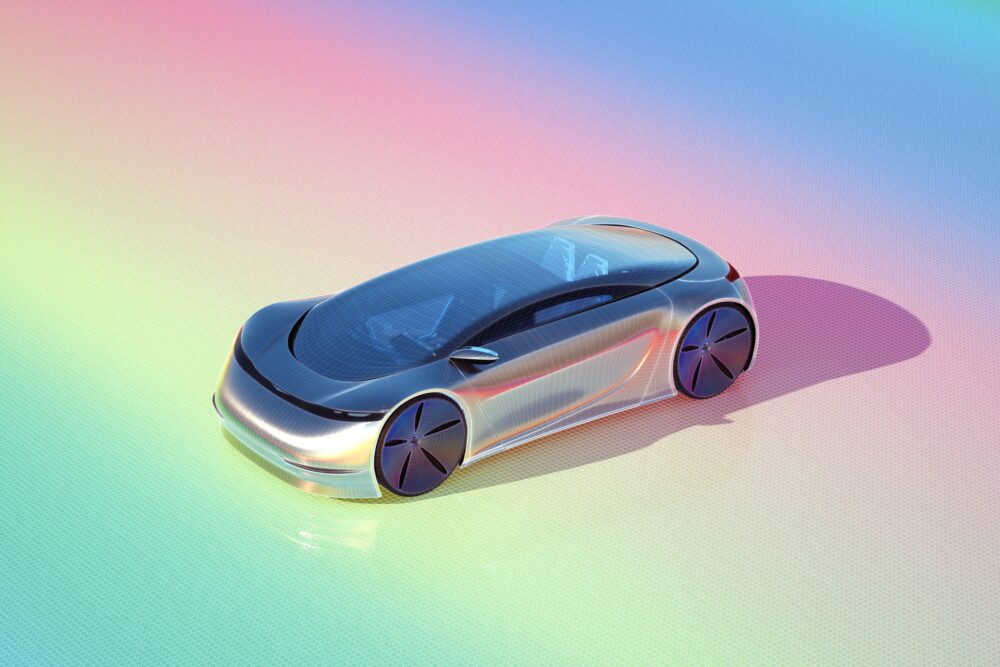
Digital generated image of futuristic car standing on multicolored digital reflective surface.|||| Dealer

News

What is a concept car?

While many designs make it to the road, some are only destined for exhibition halls and marketing materials. But the concept car still has an important role to play in the automotive market. Autovista24 special content editor Phil Curry examines their purpose. Over the decades, carmakers have used innovative model design to stand out from the competition. Design must also allow for regulations, with safety features and sustainability requirements needing to be considered. However, a concept car allows these shackles to be removed as designers illustrate their unique ideas. These prototype vehicles are developed to highlight new trends in both design and technology. However, they are not created to be sold, but provide a glimpse of what could be possible in the future. https://youtu.be/svm77DpP1RQ These models can feature advanced aerodynamics, futuristic user interfaces, innovative powertrains or advanced technology. Concept cars allow brands to push the limits of design without the need to worry about production or budgets. These concept cars can also reveal the findings of studies, help develop and implement new technologies, or visualise new production models. Concept car design Concept cars were once a mainstay of motor shows. Brands looking to attract attention to their stands unveiled what they believed would be the car of the future. Some had a basis, while others were more experimental. But these cars attracted audiences and inspired belief in the future of mobility. The basis for a concept car was to highlight future design trends. The first model developed as a concept was the Buick Y-Job in 1938. This came at a time when many cars featured large vertical grills, separate headlights and little design sculpting. Source: General Motors But the Y-Job, created by US designer Harley J. Earl, created a different profile that fed into upcoming models. This included the 1949 Buick Roadmaster and the 1953 Buick Skylark. The grill design is still seen in Buick models today. Since then, brands have used concept cars for a variety of purposes. Some have highlighted design trends that have carried into their production models. Meanwhile, others focused on vehicles which could inspire future trends. Journey of the concept car Renault has taken concept car ideas through to production on several occasions. This means it developed an outlandish future concept, then a realistic opportunity, followed by a production model. One example is the Renault EZ-Ultimo, a model presented at the Paris Motor Show in 2018. At the time, autonomous vehicle technology was a hot topic of discussion, so the carmaker revealed a trio of ‘robo-vehicles’. The EZ-Ultimo was a mobile lounge, showing what would be possible with driverless vehicles. Not only did it serve a purpose of suggesting future design trends in an unrestricted environment, but it also drew crowds to Renault’s stand. Source: Renault Moving forward to 2024, Renault presented the Embleme. This model presented the potential of an alternative powertrain system. It featured dual-energy electric and hydrogen technology to reduce CO2 emissions over the entire lifecycle of the vehicle. In 2021, the carmaker unveiled the Renault 5 Prototype. It forged a connection with the carmaker’s former model that was discontinued in 1996. The concept acted as a precursor for the Renault 5 E-Tech, which was launched in 2024. The carmaker carried many of its design features into the production model, which is now on sale. Digital concepts Interest in traditional motor show concepts began to wane in the late 2010s. The COVID-19 pandemic saw many brands switch to online launches. This meant fewer design restrictions in the development of concept cars. Rather than produce a physical model, designers could dig into the digital world. Brands showcased their concept drawings and videos to show what was possible. Fast forward to 2025, and this digital mindset has stuck around. One example is the Ferrari F76, a digital hyper car created in the form of an NFT. It combines Ferrari’s racing tradition with generative design and digital technologies. Source: Ferrari Designed for clients of the Hyperclub programme, the F76 was created to support the 499P competing at Le Mans and in the World Endurance Championship. While the development of a concept car has changed, its role remains the same. They are created to inspire both designers and consumers. They also create discussions and allow brands to build on their reputations to lead ideas around future technologies. Either digital or physical, concept cars remain a standout part of automotive development.

Displaying 12 of 32 insights