Insights

Tagged:
Clear filters
Industry
Topic
Segment
Insurance

Event Webinar

Residual Value Outlook 2026: What’s Next for Europe’s Used Vehicle Markets?

For the last few years, used-car markets across Europe have been under pressure, and the second half of 2026 is shaping up to be just as unpredictable. However, in this webinar, you’ll get a clear, data-backed view of where residual values are heading, and why. What’s Driving Europe’s Residual Value Movements in the Second Half of the Year? Behind every shift in used-car pricing is a web of macroeconomic pressures, supply-demand imbalances, and powertrain-level dynamics that are constantly evolving. In 2026, that complexity has only deepened.  Meanwhile, the UK used-car market, one of Europe’s largest and most distinctive, is following its own trajectory.  In this session, our valuations experts will walk you through the latest residual value forecasts, the macro forces behind the numbers, and what it all means for vehicle value retention across the markets you operate in.  Register for the webinar  Join us on 16 July at 10:30 BST / 11:30 CEST,  for a live session covering the latest used-car market forecasts, depreciation trends, and key industry questions for the second half of 2026. SIGN UP NOW Questions we will answer How are macroeconomic trends influencing the automotive market right now? What is happening in used-car markets as we head into the second half of 2026? What do the latest forecasts reveal, and what should you prepare for today? Meet our experts Hear directly from our specialists with hands-on experience across European used-car markets, residual value modelling, and automotive pricing forecasts Who This Webinar Is For This session is designed for automotive industry professionals whose work is directly shaped by used-car values, vehicle depreciation, and market pricing dynamics: Finance, insurance, and risk analysts Fleet, leasing, and residual value managers OEMs Pricing and product managers Portfolio and remarketing managers Industry executives and business analysts What You Will Gain A clear view of the European used-car market conditions: Understand depreciation pressures, supply dynamics, and demand signals determining vehicle value retention across key European markets. The latest residual value forecasts, straight from the source: Get the most up-to-date RV projections and used-car pricing outlook, explained by the experts. A focused look at the UK used-car market: Dig into one of Europe’s largest and most unique automotive markets, its depreciation trends, pricing dynamics, and what they signal for the broader region. The market will remain uncertain for some. Yet, by attending this webinar, you can gain a sharper understanding of the forces shaping residual values and used-car price movements in the second half of 2026, and what they mean for the decisions you’re making right now.  Got questions? We’ll answer them live Submit your questions to [email protected], and if we don’t get to them on the day, one of our experts will follow up directly. Register now, and if you miss the live session, a recording of the webinar will be available.  
| Aftermarket

News

The Automotive Update: Hope for Europe’s new and used-car markets?

How will new-car markets transform over the course of 2026? Plus, what is happening with used-car supply and demand in Europe? Autovista24 editor Tom Geggus finds out in the latest Automotive Update podcast. In this episode, Autovista24 reviews the latest JD Power webinar, which explored Europe’s new-car outlook. Plus, a look into the latest residual value (RV) trends in the continent’s used-car market. Subscribe to the Autovista24 podcast and listen to previous episodes on Spotify, Apple and Amazon Music. Outlook for European automotive markets This week, JD Power hosted its latest webinar: Europe’s Auto Forecast 2026: Technology, Policy, and EV Adoption. The session covered Europe’s new-car market outlook from 2026 to 2040 across multiple powertrains. Panellists also delved into the bloc’s diverging electric vehicle (EV) adoption and the factors behind it. Plus, the webinar reviewed upcoming technologies and emerging brands expanding across the continent. Attendees were asked how much they thought Europe’s new-car market would grow, or shrink, by the end of this year. 40% of respondents expected a year-on-year improvement between 0% and 2% compared to 2025. This matched the latest EV Volumes forecast, which projected a 0.2% increase in its March update. However, this was reduced from the 1.5% growth forecast in its December report. The March update also projected overall growth for European light-vehicle sales, which includes new cars and light-commercial vehicles. In 2026, a year-on-year increase of 0.1% is forecast, down from 1.7% in the previous report. The panel also discussed varying EV adoption rates in the bloc. They identified key structural differences that are either limiting or assisting plug-in uptake. Furthermore, the experts showed how, in some instances, EVs are closing the price gap to internal-combustion engine models. This comes as the choice of small EVs on the new-car market continues to widen. Positivity for used-car markets? JD Power experts forecast year-on-year RV declines across European used-car markets in the latest Monthly Market Update. In Austria, France, Germany, Italy, Spain, Switzerland and the UK, values are expected to decline by the end of 2026. However, these drops are expected to be slight. A drop is also projected across all observed markets in 2027. This is the case in 2028 as well, except for Italy, with marginal growth forecasted. RVs became inflated during the COVID-19 pandemic when supply was low, but demand was high. As these drivers balanced out, values underwent a period of normalisation. In March 2026, the active-market volume index (AMVI) for 24-to-48-month-old used cars showed year-on-year growth in every observed market. When compared to February 2026, only the UK suffered a marginal downturn, with a slight 1.1% dip in supply. The sales-volume index (SVI) of 24-to-48-month-old cars also increased compared with March 2025. This trend occurred in six of the seven observed markets, except for Italy, which recorded a 1.1% decline. Month-on-month results were more mixed, as single-digit drops were recorded in France, Italy and the UK. If supply continues to outpace demand, RVs will face increased pressure, with more units available and fewer potential buyers.
| Dealer

News

The Automotive Update: What does China’s slowing EV market mean for global sales?

What is happening in China’s electric vehicle (EV) market? How much is Uber investing in autonomous vehicle charging hubs? Can Europe build its own EV batteries? Tom Geggus, Autovista24 editor, discusses these points in The Automotive Update podcast. In this episode, Autovista24 analyses China’s slowing EV market and reveals the best-selling models in the country. Plus, how has Tesla avoided suspension of its dealer and manufacturer licence in the US? Subscribe to the Autovista24 podcast and listen to previous episodes on Spotify, Apple and Amazon Music. China’s slowing EV market Globally, China accounts for 59.1% of battery-electric vehicle (BEV) sales and 70.3% of plug-in hybrid (PHEV) deliveries. But despite dominating the figures, the country saw its total EV numbers struggle in December. Figures rose by just 0.5%, according to the latest data from EV Volumes. Despite total plug-in sales increasing between January and December last year, this was not helped by the country’s PHEV market. It experienced a run of monthly declines from July onwards. One reason for this poor performance was the decline of BYD. The brand accounted for 33.3% of total EV sales in China during 2025 and dominated the PHEV market. Yet its sales were down 9.9% across the year. However, with new players entering the PHEV market, 2026 will see more brand diversification. This could help boost figures, while new BYD models will also help impress buyers. BEV sales rose by just 4% in December 2025 following a run of double-digit improvements. China’s carmakers will be hoping this is not the start of a new trend, especially if the PHEV market continues to struggle. Tesla avoids suspension Tesla has avoided a 30-day suspension of its dealer and manufacturer license in California. This follows the brand halting its use of the term ‘Autopilot’ in its vehicle marketing in the state. The Department of Motor Vehicles adopted a decision that the use of the term is ‘misleading and violates state law’. This is linked to Tesla’s use of Autopilot to describe its advanced driver-assistance systems. Uber invests in autonomous charging Uber Technologies will invest more than $100 million (€84.9 million) into autonomous vehicle charging hubs, according to Reuters. The company will deploy DC fast charging stations at its fleet depots and other locations throughout priority cities. This is expected to begin in the Los Angeles Bay Area as well as Dallas, before hitting other hubs. Uber will also work with charge point operators to establish ‘utilisation guarantee agreements’. This will support the rollout of hundreds of new chargers in cities across the world. EV charging offer in the Netherlands Leasing provider, Ayvens, has launched a new EV charging offering. Ayvens Power promises customers in the Netherlands access to over one million charging points across Europe, spanning different operators. Drivers will get real-time availability and pricing details before arrival. Meanwhile, a fleet portal will provide charging insights, cost visibility and reporting tools. The solution is due to roll out in France, Germany, Italy, Belgium, and the UK later in 2026. Can Europe build EV batteries? Yann Vincent, CEO of the Automotive Cells Company (ACC), has questioned who will make batteries for Europe’s domestic carmakers. ‘One crucial question remains: who will manufacture the batteries for European cars?’ Vincent asked. ‘Asian players, particularly Chinese giants, as is already the case for 99% of them? At the risk of putting the strategic independence of European car manufacturers solely in the hands of BYD, CATL, LG, etc?’. The CEO also confirmed that the ramp-up of ACC’s gigafactory in Hauts-de-France is taking longer and costing more than expected. This is weakening the company’s financial position. He also stated the goal of building the factory was ‘too close to give up on.’
Car of the Year at the Brussels Motor Show 2026 Leasing

News

Key highlights from the Brussels Motor Show 2026

With model debuts and the European Car of the Year award, the Brussels Motor Show is an important automotive event. Autovista24 special content editor Phil Curry presents highlights from this year’s show. The Brussels Motor Show has grown in stature in recent years. Since the doors closed on the Geneva International Motor Show (GIMS) in Switzerland, automotive brands have shifted their focus to the Belgian event. As the first automotive event of 2026, the Brussels Motor Show also provided a look at potential upcoming market trends. Talks of fresh partnerships, new brands, plus continued fleet electrification highlighted Europe’s developing automotive market. Autovista24 looks at a selection of new models and interviews the winners of the European Car of the Year 2026.  https://www.youtube.com/watch?v=IJhAc0V5cTI Plenty to see at Brussels Motor Show The halls at the Brussels Expo were packed with carmakers, many bringing new or refreshed models to display. This included the Kia EV2, a new battery-electric vehicle (BEV) which completes the Korean brand’s EV line-up. By adding a small city-car model to its range, the company can cater to many different drivers. Kia also introduced an expanded GT model range, including the EV3 GT, EV4 Hatchback GT and EV5 GT. Opel used the show to reveal the new Astra, with an improved ‘Vizor’ headlight profile. This features an illuminated badge sitting central to new lighting strips. The Stellantis Brand also redesigned the interior to make it more comfortable. Subaru arrived at the event with two BEVs, the e-Outback and the Uncharted. Both cars feature all-wheel drive, keeping the brand’s offroad credentials intact. Mitsubishi used the show to highlight its new range, as it makes a European comeback. Models included the ASX, the Eclipse Cross, the Grandis and the Outlander PHEV. With the brand working in partnership with Renault, it will be hoping to re-establish a foothold in the European market. Another brand that will be working with Renault is Ford, which confirmed two new small cars will arrive in 2028. The carmaker brought its Ranger plug-in hybrid (PHEV), alongside a mix of passenger cars and light-commercial vehicles. Central to this was a remote-control car racing track, with drivers able to race using simulation rigs. Who won European Car of the Year 2026? The Brussels Motor Show is also the new home of the European Car of the Year awards. A shortlist of seven new models was judged by automotive journalists from across Europe, with points awarded to each. This year, the Citroen e-C5 Aircross, Dacia Bigster, Fiat Grande Panda, Kia EV4, Mercedes-Benz CLA, Renault 4 and Skoda Elroq made the shortlist. Of these, judges awarded the Mercedes-Benz CLA the most points, giving it the 2026 title. This was the first time the German carmaker won European Car of the Year since 1974. The result also broke a two-year winning streak for Renault. It saw its Scenic take the title in 2023, and the Renault 5 in 2024. ‘It really means a lot to me, and also the Mercedes-Benz team, many hundreds and thousands of people who worked to make this car happen. It is a great reward to get this trophy from journalists across the whole of Europe, especially with many countries voting the CLA in first place,’ Oliver Löcher, vice president, overall vehicle integration at Mercedes-Benz, told Autovista24. ‘In some aspects, the CLA is a pivotal car. It is the first on our new compact platform, on which we will now roll out derivatives, like the GLB, which we launched at Brussels. It is also the first car with our latest generation e-drive, featuring 800-volt, high-efficiency fast charging. It is also the platform for our new MBO operating system. The CLA is, therefore, the frontrunner of a new generation of Mercedes-Benz cars,’ he added. ‘This year will see a lot of new-car launches from ourselves, making it a very exciting and busy year. But for now, we have the CLA, and I am very happy to see it win the European Car of the Year,’ Löcher concluded. Awards come to Brussels Motor Show The European Car of the Year award continues to be coveted by carmakers. This was clear in the reaction of the Mercedes-Benz team, with celebrations continuing throughout the event. ‘Even though the European Car of the Year award has been running since 1964, it is still very relevant. For consumers, today they face a lot of new technologies, and even new brands that were not heard of some years ago,’ commented Søren W. Rasmussen, president of the jury at the European Car of the Year. ‘This means they need guidance, and the Award winner, and its finalists, all help guide consumers directly to the best cars in the market. It is, therefore, very important for carmakers to have this prize,’ he added. The European Car of the Year award was a staple of the Geneva International Motor Show. But moving to the Brussels Motor Show has allowed the award to provide a full year of benefits for the winner and the finalists. Yet while the Mercedes-Benz team celebrate winning the 2026 prize, attention has already turned to the 2027 award. ‘We now start looking into the cars which can be candidate cars for the prize next year. As we walk around this exhibition, we can see already now there are some very good cars which will be definitely on the long list, and may make the shortlist for the end of 2026,’ concluded Rasmussen.
Wide Highway Long Exposure Photo at Dusk| Insurance

News

Monthly Market Update: Plotting used car RV development in Europe

With many European used-car markets observing residual value (RV) declines during August, what comes next? Autovista Group editors plot their expectations with Autovista24 editor Tom Geggus. RV developments trended towards stagnation and decline across many European used-car markets during August. On average, the absolute trade value of a 36-month-old car at 36,000km fell month on month in Austria, France, Italy, Switzerland and the UK. The only markets to avoid this fate were Spain and Germany. They saw stagnation at 0% and 0.1% growth, respectively. Compared with August 2024, absolute RVs saw an improved performance, with only Italy, Switzerland, and the UK recording declines. These markets also saw the three lowest levels of year-on-year new-car list price growth. As the cost of a new car increases, more consumers may turn to the used-car market as an alternative. This increase in demand stokes absolute RVs, with more money exchanged for models. However, when presented as a percentage of new-car list price (%RV), values saw a steeper and more consistent decline. Compared with July, values fell across all recorded markets apart from Spain, which saw a marginal increase from 55.8% to 56%. Year on year, %RVs fell across all observed markets. This ranged from a short drop of 1.8 percentage points (pp) in Germany to a 5pp tumble in Switzerland. So, will these year-on-year decreases continue towards the end of 2025, and on into 2026 and 2027? Autovista Group editors outline their regional expectations. Slight RV decline in Austria ‘The sales-volume index (SVI) in Austria rose notably in August, increasing by 7.2% compared to July. However, it still recorded a 2.6% decline year-on-year, indicating lingering market challenges,’ commented Robert Madas, Autovista Group’s regional head of valuations. The active-market volume index (AMVI) for two-to-four-year-old passenger cars followed a downward trend. It fell by 3.6% month-on-month and 9.4% compared to August 2024. This suggests a continued contraction in supply within this age bracket. The average time to sell a used car decreased slightly by 0.4 days to 66.8 days. Full hybrids (HEVs) showed a significant improvement, making them the fastest-selling powertrain, taking 56.9 days to sell on average. This was followed by diesel vehicles at 60.2 days, petrol vehicles at 66.4 days, and by plug-in hybrids (PHEVs) at 78.1 days. Battery-electric vehicles (BEVs) continued to take the longest time to sell at 79.3 days. The %RVs of a 36-month-old car at 60,000km declined slightly to 48.1% in August. This marks a 0.3pp drop from July and a 2.2pp decrease year-on-year. HEVs retained the highest trade value at 52.8%, followed by petrol cars at 50.4%. Then came diesel models with 48.5% and PHEVs with 45.6%. BEVs held the lowest %RV once again, at 38.4%. ‘Looking ahead, %RVs are expected to stabilise gradually until the end of the year,’ Madas said. ‘Forecasts suggest a 0.9% increase by the end of 2025 compared to December 2024, followed by a 0.7% decline in 2026, and a 0.6% decrease in 2027.’ France feels RV fall ‘France saw RVs begin to fall slightly in August. Higher list prices and lower absolute trade rates weighed on value retention,’ highlighted Ludovic Percier, Autovista Group’s senior RV analyst for France. Since the beginning of 2025, average days to sell have remained stable across all powertrains. Compared to August 2024, it now takes less time to sell a used car. The summer usually sees a more active market, especially during June and July, with August being slightly quieter. Absolute petrol RVs increased marginally in the 30 days to 6 August, defying a much larger trend. These vehicles are still in demand on the used-car market, even though smaller new volumes are being sold. Diesel values fell slightly, while stock days were shorter compared with July’s report. The Hyundai Tucson was the fastest-selling model across the entire used-car market, as well as within the diesel and HEV categories. HEVs remain the fastest-selling used powertrain in France. However, the powertrain’s absolute RVs dropped compared to July, as the technology features in more expensive models. However, these cars do not hold their value as well as their more affordable stablemates. More suffering for PHEVs PHEVs have continued to suffer. Used-car buyers are not willing to pay the comparatively higher prices. Now, as the range of these cars grows, list prices have increased across almost all brands. The supply and demand of these models is still imbalanced. Previously, many PHEVs were sold to fleets on the back of fiscal advantages. However, private used-car buyers are not interested in paying a higher price for these models. The SVI for PHEVs dropped by 14.2% month on month and 7.7% year on year. Compared with 12 months ago, the powertrain’s list prices increased by €5,101. However, absolute values remained stable, while %RVs fell by 4.3pp. BEVs continue to see the lowest %RVs at 36.1%, down from last month and last year. Tesla had the two fastest-selling used BEVs with the Model Y and Model 3. These cars are now relatively cheap considering their range and segment. Both the new and used-car markets are suffering from overcrowding. Registrations of new cars will see a push from fiscal incentives for fleets, while internal-combustion engines are penalised. ‘This will mean even more models will hit the used-car market, increasing oversupply,’ Percier explained. ‘Social leasing will only exacerbate this situation further when it is reintroduced in September.’ Germany sees RV stability Following a decline in July, used-car demand in Germany increased significantly in August. The SVI increased by 14% month on month. This indicates a modest recovery in market activity despite a year-on-year decrease of 12.4%. The AMVI for two-to-four-year-old passenger cars grew slightly. The metric rose by 2% month on month but still reflects a 6.5% decline from one year prior. The average number of days needed to sell a used car in August was 59.1 days. This was a slight improvement of 0.5 days compared to July, but 1.2 days longer than in August 2024. PHEVs sold the fastest at 56 days, closely followed by HEVs at 56.4 days. Diesel models took slightly longer to sell at 58.8 days, followed by petrol cars at 59.5 days. BEVs took the longest amount of time to leave dealerships at 61.5 days. %RVs of 36-month-old cars at 60,000km remained unchanged from July, with a %RV of 48.3%, down 1.8pp year on year. Petrol cars led the market with a %RV of 49.9%. Then came diesel cars at 49.3% and HEVs at 48.9%, followed by PHEVs at 43.3%. BEVs again retained the lowest level of value at 37%. ‘Although RVs have recently stabilised in Germany, the level is significantly lower than in previous years, and demand remains weak. Therefore, RVs can be expected to remain under pressure,’ stated Madas. By the end of 2025, %RVs are forecast to decrease by 2.7% when compared with December 2024. Pressure will probably ease in 2026, with RVs forecasted to suffer a smaller decline of 1.4%. Less price pressure in Spain Far from slowing down during the summer season, the Spanish new-car market continued to grow in July. Registrations were up 17.1% year on year, translating to a 14.3% increase in the year to date. Aided by the Reinicia Auto + plan, sales of new electric vehicles (EVs), including BEVs and PHEVs, have grown. The powertrain grouping saw registrations increase by 154.9% year on year in July. In the year-to-date, EVs made up 17.4% of Spain’s new-car market. ‘The used-car market also continued to grow, just not to the same extent as the new-car market,’ said Ana Azofra, Autovista Group’s head of valuations and insights, Spain. Year on year, transactions increased by 5.8% in July and 5.2% in the year to date. There was more positive news as a significant number of younger used models changed hands. Sales of models less than 12 months old increased by 16% in July. Meanwhile, those between 12 and 36 months saw transactions climb by 15.7%. This rejuvenation of supply has a positive effect on fleet sustainability. It also benefits the professional domain, which accounts for most of the transactions involving cars of this age. ‘This supply boosts the used-car market,’ Azofra highlighted. With an offer volume 42.3% lower than in August 2024, stock days fell, and prices felt less pressure. So, absolute RVs remained stable, still 2.1% higher than one year ago. A typical used petrol car at 36 months and 60,000km, sold between professionals for an average of €17,728 in August. It was also an encouraging month for diesel vehicles, which still account for over half of all used-car sales. The powertrain’s stock days fell compared with July, and its absolute RVs improved month on month and year on year. Supply slump in Switzerland ‘After a marginal decline in July, used-car demand in Switzerland fell more sharply in August,’ Madas outlined. The SVI dropped by 8.7% compared to July. Yet, year-on-year, the SVI was up by 7.4%. The AMVI declined by 1.6% compared to July, indicating a cooling in used car supply. The supply volume of passenger cars in the 24-to-48-month-old age bracket slumped by 9.3% compared to August 2024. ‘The average RV of a 36-month-old car at 60,000km remained stable at 42.4%, unchanged from July,’ he added. ‘This was also down from the 47.4% recorded in August 2024.’ HEVs retained the most value in August by far at 47%. Then came petrol cars at 43.9%, diesel models at 41.8% and PHEVs at 39.9%. BEVs continued to be the worst-performing powertrain in terms of value retention. All-electric cars held only 36% of their original list price after 36 months and 60,000km. The average number of days needed to sell a used car improved in August, falling to 73.5 days. This was 3.7 days faster than July and 5.2 days quicker than one year ago. Diesel cars sold fastest at 70.9 days, followed by petrol models at 71.6 days, HEVs at 76.2 days and BEVs at 76.5 days. Meanwhile, PHEVs needed the most time to sell at 83 days on average. A trend of relatively stable supply and low demand will continue as various uncertainties shroud 2025. Therefore, %RVs are expected to decrease in the coming years, but at a slower pace. By the end of 2025, %RVs are expected to decrease by 5% compared to December 2024. In 2026, a lower year-on-year drop of 1.5% is expected. RV drop recorded in the UK According to August’s Monthly Market Dashboard, the average absolute RV for a 36-month-old car in the UK dipped slightly to £15,187. This was down 1.8% month-on-month and 0.7% year-on-year. ‘%RVs also declined to 48%, reflecting a 2.4pp drop compared to August 2024,’ stated Jayson Whittington, Autovista Group’s regional head of valuations, UK. ‘Conversely, the average list price rose to £31,652, representing a 4.3% increase year-on-year.’ Market activity showed positive momentum, with the SVI indicating that 10.6% more cars were sold in August than in July. Meanwhile, the AMVI displayed a 4% uptick in the number of cars advertised by dealers. Interestingly, 26.7% more cars were available compared to August 2024. Cars sold at a faster rate in August, with average days to sell falling to 35.9 days, 1.4 days faster than in July. This was perhaps due to the increased level of stock on offer, with consumers gaining access to a wider range of cars. All fuel types benefited from this faster sales rate. BEVs led the way, selling 4.1 days faster than in July, at an impressive 33.7 days. ‘Overall, it appears that retail activity shows resilience. Dealers will be pleased that stock availability is reasonably positive. Although RVs declined by a modest amount, there is plenty to be optimistic about as the end of summer approaches,’ concluded Whittington.
Insurance

News

Monthly Market Update: BEV value retention troubles continue

Battery-electric vehicles (BEVs) continued to see the lowest value retention across Europe in February. Experts from Autovista Group analyse the value retention trends with Autovista24 editor Tom Geggus. Compared with February 2024, Austria, Germany, Italy, Spain, Switzerland and the UK all saw residual values (RVs) drop all last month. RVs presented as a percentage of original list price (%RV) are undergoing normalisation following exceptional growth during the COVID-19 pandemic. When demand drags behind persistent supply levels, RVs will continue to come under pressure. However, this trend of falling %RVs can be expected to even out in the next couple of years. Value descent for BEVs One of the most pressing issues facing the automotive market is the performance of BEVs. The powertrain’s %RVs continue to trail behind the wider market average in all seven of Autovista Groups’ observed markets. This poor value performance is the result of compounded market effects on all-electric cars. Firstly, BEVs are still developing at pace, with improved ranges and enhanced technological capabilities. This is making older used models age more quickly as they appear comparatively far less capable. New brands are also entering Europe, offering advanced all-electric vehicles with lower price tags. In turn, this is making used models age more quickly as they become a worse value-for-money proposition. Carmakers in Europe are rushing to meet CO2 targets as well. Where the new-car market sees flagging demand in the absence of incentives, some brands will end up discounting BEV stock. This will only work to erode the value of models already in the market. Stock days increase in Austria Following a decrease in December and January, Austria’s sales-volume index (SVI) increased significantly in February. The number of observed sales increased by a healthy 54.1% compared to the previous month. However, the SVI indicated a slight year-on-year decline of 4.6%. Meanwhile, the active-market volume index (AMVI) of two-to-four-year-old passenger cars remained relatively stable in February compared to January. However, the supply volume of passenger cars in this age bracket slumped by 7.6% compared to the previous year. ‘At 74.2 days, the average amount of time needed to sell a used car increased significantly in February. On average, this was 4.6 days slower than in January,’ explained Robert Madas, Autovista Group’s regional head of valuations. Diesel vehicles continued to be the fastest-selling powertrain, averaging 68.2 stock days last month. This was followed by petrol vehicles at 76.1 days, full hybrids (HEVs) at 78.9 days and BEVs at 80.4 days. Plug-in hybrids (PHEVs) took the longest amount of time to sell at 82.2 days. On average across the market, %RVs of 36-month-old cars at 60,000km increased to 48.8% in February. This was a 0.5 percentage point (pp) increase compared to January but a 3.4pp decrease year-on-year. HEVs retained the greatest amount of trade value in January at 52.5%, followed by petrol cars at 50.6%. Then came diesel models with 48.7% and PHEVs with 46.1%. BEVs again retained the lowest amount of value, at 43.9%, but with an improving trend up 2.3pp compared to the previous month. %RVs are expected to decrease in the coming years but at a slower pace. This is due to weakening demand and unwavering supply. By the end of 2025, %RVs are expected to decrease by 1.5%. In 2026, a slight year-on-year drop of 1.1% is expected. Value stability in France ‘RVs remained stable in France during February. Some powertrains saw a slight increase compared with January when a drop occurred. However, values remained stable compared with December 2024,’ outlined Ludovic Percier, Autovista Group’s senior RV analyst for France. Petrol-powered cars saw %RVs fall in February. Yet, list prices and absolute RVs increased compared with January. The petrol vehicle market proved quite stable until December last year. However, values remained strong overall. After a drop in January, diesel-powered cars returned to %RV levels last recorded in December. There is still demand for the fuel type on the used-car market. Despite this, there are smaller volumes and model ranges on offer compared to previous years. Diesel cars are among the fastest-selling powertrains, evidencing how much demand they are in. The absolute value of HEVs saw a small decline in February following January’s drop. However, this allowed the technology to record comparatively faster selling times. HEVs are still appreciated in France, so %RVs have remained stable overall. The powertrain is currently the best compromise between pure internal-combustion engines and BEVs. A major bonus is that there is no need to plug the car in. Additionally, some HEVs are becoming more affordable. PHEVs slow to sell PHEVs were the second slowest-selling powertrain in France during February as oversupply continued. However, the introduction of newer models has helped keep RVs roughly stable. While values did increase compared with January, figures have only returned to the levels recorded in December. List prices on the new-car market remain high, explaining the powertrain’s larger value loss. BEVs spent the second-longest amount of time in stock but also recorded the lowest RVs. Values did fall considerably in previous months, but January and February saw marginal increases. The technology appears to be stagnating, as brands are pushed by governments to sell an increasing number of new BEVs. This means the used-car market is becoming crowded with models, but too few buyers. While Tesla enjoyed some of the fastest selling times on the used-car market, other brands struggled to find customers. As of December 2023, BEV purchase incentives became dependent on lifetime carbon emissions. This meant some brands and models were no longer eligible. Therefore, used models are still too expensive, causing prices to drop month after month. Where demand does not meet supply, the market sees a strong RV drop and lower prices. Overall, small cars are the fastest sellers, including the affordable Toyota Aygo and Dacia Duster. Demand struggles against supply in Germany Following a significant decrease in January, Germany’s SVI showed a steep increase in February. Month on month, this metric was up by 53.1%. However, this was a 14.3% decrease year-on-year. Meanwhile, the AMVI of two-to-four-year-old passenger cars remained stable compared to January. There was only a slight decrease of 1.1%. However, the supply volume of passenger cars in this age bracket dropped by 24.1% compared to the previous year. The average number of days needed to sell a used car increased to 64 days in February. PHEVs sold the fastest at 56.2 days, followed by BEVs at 59.3 days. Then came diesel after 60.7 days, HEVs after 68.6 days and petrol cars after 68.7 days. %RVs of 36-month-old cars at 60,000km remained stable in February. On average, models held on to 47.7% of their original list price in Germany during the month. Petrol models led the market with a %RV of 49.5%. Then came HEVs and diesel cars both at 48.9%, followed by PHEVs at 44.2%. BEVs retained the smallest amount of value at 37%. ‘As demand remains weak and supply persists, RVs can be expected to come under even more pressure,’ Madas said. ‘In 2025, %RVs are forecast to decrease, down 2.6% when compared with December 2024. Pressure will probably ease in 2026, and RVs will show a declining trend of 1.4%.’ Value decline in Italy The average %RV of three-year-old cars fell in Italy last month. Levels dropped to 49.6% in February from 50.2% in January. ‘This progressive decline shows no sign of stopping, with %RVs now a way off the 54.2% recorded in February 2024,’ highlighted Marco Pasquetti, Autovista Group’s head of valuations for Italy. This is due to an increasingly marked difference between continually falling absolute RVs and ever-growing list prices. The former was down 4.2% year on year, while the latter was up 4.8%. Sales volumes recorded on major online marketplaces were also down 14.2% year-on-year. There were no major surprises in powertrain trends established over recent months. Petrol and diesel-powered models continue to sit at the heart of the Italian used-car market. This means their declining %RVs are in line with the wider market’s declining trend. Meanwhile, compressed natural gas (CNG), liquid petroleum gas (LPG) and HEVs performed slightly better. However, they also saw %RVs fall compared with February 2024. The Italian government decided not to renew EV incentives for 2025. Despite this, BEVs and PHEVs continued to lose value much faster than other powertrains. All-electric cars saw %RVs drop from 37% 12 months ago to 31.6%. Meanwhile, PHEVs fell from 52.3% to 44.7%. Both technologies are also seeing very high stock times. Looking at online marketplaces, BEVs needed 84.5 days to sell on average, while PHEVs needed 80.3 days. This is far higher than the market average of 63.8 days. Favourable economic conditions in Spain ‘Spain’s automotive market continued to see a positive streak in February. New-car sales kept growing, particularly in the private channel,’ said Ana Azofra, Autovista Group’s head of valuations and insights, Spain. A major contributor to this trend was the favourable economic conditions, as well as the interest rate cut. This will make financing more affordable, meaning a sales boost can be expected in the coming months. The MOVES plan, which incentivises BEV and PHEV sales, was in limbo for several weeks. However, the government expects the scheme to be approved soon, with the potential for retroactive application. This prevented BEVs and PHEVs from stalling, with electric vehicles (EVs) taking a 14.2% market share during January. However, this is still a far cry from other European markets. Marginal EV share While their presence has increased compared to previous years, EVs still account for a marginal share of Spain’s used-car market. For example, BEVs barely made up 1% of the transactions at the start of this year. However, this is continuing to support the stability of used-vehicle prices. However, Autovista Group’s key market indicators point towards a negative trend, especially the average turnover rate. Average days in stock have continued to increase for BEVs, reaching just shy of 120 days. This was nearly double the amount of time needed to sell a HEV. Petrol and diesel models also spent fewer days in stock on average, at 75.7 and 78.4 days respectively. For this reason, 2025’s negative residual value forecast for BEVs remains unchanged. The outlook is much better for other powertrains, including PHEVs. The technology continues to gain popularity, becoming a strong transition option in Spain. Last month, PHEVs took less time to sell compared to January. A large portion of the accumulated stock from 2024 has already been cleared. This shift toward plug-in hybrids is also slightly reducing the prominence of full hybrids. The powertrain is now starting to plateau after a year of significant increases in average transaction prices. Nevertheless, HEVs continued to lead turnover rankings in February. The Toyota C-HR was on top again, followed by the DS DS7 and the Toyota Corolla. Switzerland’s value slope Following a decrease in December and January, the SVI in Switzerland increased significantly in February. The number of observed sales increased by a sizeable 36% compared to the previous month. Year-on-year the SVI was up by 2.6%. Meanwhile, the AMVI of two-to-four-year-old passenger cars remained rather stable in February compared to January. However, the supply volume of passenger cars in this age bracket slumped by 10.2% compared to the previous year. Influenced by constant supply, RVs of 36-month-old cars at 60,000km dropped last month. Presented as a percentage of retained new list price, values fell to 44.7% in February from 45.9% in January. However, the year-on-year drop was more severe, down 3.4pp from the values recorded 12 months ago. HEVs retained the most value in January by far at 49.5%. Then came petrol cars (46%), diesel models (43.2%) and PHEVs with 42.1%. BEVs were once again the worst-performing powertrain. All-electric cars retained only 39.4% of their original list price after three years and 60,000km. ‘February saw two-to-four-year-old passenger cars sell slightly quicker than in January. On average, vehicles spent 81.2 days in stock,’ Madas pointed out. Diesel cars sold fastest at 73.8 days, followed by petrol models at 79.3 days and HEVs at 79.8 days. PHEVs took 86.7 days, showing a significant year-on-year decrease of 14.4 days. Meanwhile, BEVs needed the most time to sell at 96.8 days on average. A trend of relatively stable supply and low demand will continue as various uncertainties shroud 2025. Therefore, %RVs are expected to decrease in the coming years, but at a slower pace. By the end of 2025, %RVs are expected to decrease by 3%. In 2026, a slight year-on-year drop of 1.5% is expected. UK sees value dip ‘The UK saw the average RV of a three-year-old car fall in February. List price retention hit 51.9%, down 0.8pp month on month,’ highlighted Jayson Whittington, Autovista Group’s regional head of valuations, UK. All powertrains saw values decline month on month except for HEVs, which saw %RVs increase by 0.7pp to 56.3%. There were no major improvements for PHEVs, with values dropping by 1.6pp. Diesel fell by 1pp and petrol decreased by 0.8pp. Battery-electric vehicles remained broadly stable, down 0.1pp. As expected, retail activity in the preceding 30 days to 12 February was significantly stronger than over the festive period. According to the SVI, sales increased by 35.6% month on month. Consequently, the AMVI highlighted a fall in available stock, down by 11.4%. It took 45.1 days on average for a dealer to sell a car to a retail customer, in line with January’s report. It is perhaps unexpected for stock days to remain level in a month when the sales rate increased. However, February’s abnormality occurred because stock remained unsold over the festive period. BEVs were the fastest-selling powertrain at 36.9 days on average. This was eight days quicker than the market’s average and underlines how popular used BEVs have become. That said, RVs remain sensitive to even the smallest increases in volume. The wholesale market was reasonably buoyant throughout February. There was a noticeable reduction in supply, which is common in the run-up to the plate change in March. Dealers will be hoping that the month provides a big increase in fresh stock. It will be interesting to see whether this has any effect on auction hammer prices.
| Insurance

News

Monthly Market Update: Decisive decline in European used-car demand

Demand for used cars appears to be in decline across Europe, but how does this balance with supply? Autovista Group experts explore used-car market trends across Europe with Autovista24 editor Tom Geggus. Major European used-car markets reported double-digit drops in demand during January. The sales-volume index (SVI) for two-to-four-year-old cars declined both month on month and year on year. The SVI indicates that compared with December 2024, Spanish dealerships saw the greatest drop in demand, down 53.5%. This was followed by Germany (down 28.6%), Austria (27.2%), Italy (down 26.7%), Switzerland (down 24.1%), and the UK (down 19.7%). This decline could be considered a seasonal effect, but these markets also saw the SVI fall compared to January 2024. The SVI dropped by 45% in Spain, the UK by 37.9%, and Germany by 26.6%. Italy followed, falling by 18.7%, Switzerland by 11.2% and Austria by 10.7%. Many of these countries saw the SVI decline in previous months. However, January’s decline marks a more dramatic and consistent cross-market trend. The SVI was far from the only market indicator to flash red in January, however. Supply also fell compared to December 2024 according to the active-market volume index (AMVI). Spain reported a year-on-year decline of 40.3%, Germany of 25.5%, and Italy of 24.1%. Used-car adverts declined by 13.1% in the UK, 12.3% in Switzerland, and 9.3% in Austria. So, many of these markets are seeing supply and demand decline at relatively equal rates. This will mean no additional pressure on residual values (RVs), which are already forecast to decline across many European markets in the next three years. Austria sees demand decline The Austrian SVI continued to fall in January after declining in December. The number of sales observed sharply decreased by  27.2% compared to the previous month. The SVI indicated a year-on-year decline of 10.7%. Meanwhile, the AMVI of two-to-four-year-old passenger cars remained stable in January compared to December. However, the supply volume of passenger cars in this age bracket slumped by 9.3% compared to the previous year. ‘At 65.8 days, the average amount of time needed to sell a used car decreased significantly in January,’ highlighted Robert Madas, Eurotax regional head of valuations, Austria and Switzerland. ‘This was around four days faster than in December.’ Diesel vehicles continued to be the fastest-selling powertrain, averaging 60.1 days. This was followed by full hybrids (HEVs) at 64.3 days, plug-in hybrids (PHEVs) at 63.8 days and petrol vehicles at 67.5 days. Battery-electric vehicles (BEVs) took the longest amount of time to sell at 85.7 days. RVs of 36-month-old cars at 60,000km presented as a percentage of the original list price (%RV), increased to 48.3% on average in January. This was a 0.9 percentage point (pp) increase compared to December but a 4.7pp decrease year-on-year. HEVs retained the greatest trade value in January at 52.2%, followed by petrol cars at 50.5%. Then came diesel models with 48.1% and PHEVs with 45.8%. BEVs again retained the lowest amount of value, at 41.6%. In the coming years, %RVs are expected to decrease but at a slower pace. This is due to weakening demand and unwavering supply. By the end of 2025, %RVs are expected to decrease by 2.2%. In 2026, a slight year-on-year drop of 1.1% is expected. SVI falls in Germany ‘Following a slight increase in December, Germany’s SVI showed a significant decrease in January,’ said Madas. ‘Month on month, this metric was down by 28.6%, year on year, there was a 26.6% drop.’ The AMVI of two-to-four-year-old passenger cars remained stable compared to December. The metric fell slightly by 2.6%. However, the supply volume of passenger cars in this age bracket dropped by 25.5% year on year. The average number of days needed to sell a used car decreased to 58.7 days in January. BEVs sold the fastest, taking just 52.7 days. However, analysis has revealed that BEV adverts had significantly more price changes than other powertrains. BEVs were followed by PHEVs at 55.1 days. Then came diesel after 56.7 days, followed by petrol cars after 62.1 days and HEVs after 62.4 days. Absolute RVs of 36-month-old cars at 60,000km remained stable in January. However, the %RV decreased due to a methodological effect. Higher new-car prices from 2022 are now being used to calculate the rate of RV retention. These greater prices are resulting in lower %RVs. In January, models held an average %RV of 47.7%. Petrol cars led the market with a %RV of 49.5%. HEVs hit 49.4%, diesel models 48.6% and PHEVs 44.2%. BEVs retained the lowest amount of new-car list price of 37%. As demand remains rather weak and supply persists, RVs can be expected to come under even more pressure. By the end of this year, %RVs are forecast to decrease, down 2.6% when compared with December 2024. Pressure will probably ease in 2026, and RVs will follow a declining trend of 1.4%. Value decline expected in Italy ‘Last year, %RVs followed a downward trend in Italy,’ explained Marco Pasquetti, head of valuations, Autovista Group Italy. ‘In January, these values provided a surprise, as %RVs reached 50.2%, up from 48.7% in December 2024.’ However, this cannot be interpreted as a reversing trend. Instead, it is a symptom of seasonality, with a significant decline in values expected in the coming months. This year will present some significant challenges, which could drastically change the market scenario. This includes the implementation of new CO2 emissions targets and competition with new manufacturers that have undergone consolidation. There may also be new policies designed to protect local production. However, %RVs on the Italian used-car market are currently expected to end the year down 3.7% year on year. On average, used cars sold within 63.4 days, 1.6 days more than in December 2024, but 5.1 days fewer than a year ago. The fastest-selling powertrains were compressed natural gas (CNG) and liquid petroleum gas (LPG) at 42.9 and 44 days respectively. HEVs also performed well, spending 59 days in stock. PHEVs and BEVs were well above the market average at 73.8 and 82.2 days respectively. January’s fastest-selling models included the Dacia Sandero, the Dacia Duster and the Toyota Yaris Cross. Also making an appearance was the DR 4.0, a model marketed by local carmaker DR Automobiles. The brand is probably still little known outside Italy, but it holds a significant share of the local market. Price resilience in Spain Spain began 2025 in a good macroeconomic situation, with demand stimulated and optimism for much of the automotive sector. Accordingly, new-car sales grew in 2024, setting the country apart from other major European markets. Last year’s figures were largely driven by Spain’s rental sector. This increased the supply of young used cars considerably and raised stock levels across all age groups. Young used cars sell more quickly due to higher demand. However, the oversupply also means greater pressure on transaction prices, which have fallen considerably. ‘Despite spending more time in stock, three-year-old used vehicles showed great price resilience,’ said Ana Azofra, Autovista Group head of valuations and insights, Spain. The average price of a three-year-old car reached €19,621 in January, €266 more than in December. It took 80.5 days on average to sell these models. This was 8.2 days more than a month earlier and 6.5 days longer than January 2024.  The Renault Arkana sold in less than half this time at 37 days. This made it the fastest-selling model on the Spanish used-car market in January. It was followed by the Kia Sportage and the Toyota Yaris, a regular model in the ranking.  So, despite increasing stock days, January saw a very good RV performance. This came after a positive trend at the end of the year. The performance was also influenced by policies at the beginning of 2025. This lifted pressure on dealer networks to achieve targets and rebates. Switzerland’s SVI decline The SVI in Switzerland dropped significantly in January after only a slight decrease in December. The number of sales observed decreased by 24.1% compared to the previous month. Year-on-year, the SVI dropped by 11.2%. ‘Meanwhile, the AMVI for two-to-four-year-old passenger cars decreased slightly by 1.8% from December to January. Compared to 12 months ago, this indicator slumped by 12.3%,’ said Madas. Influenced by constant supply but declining demand, RVs of 36-month-old cars at 60,000km dropped slightly in January. Last month, %RVs fell to 45.9% from 46.4% in December. However, the year-on-year drop was more severe, down 3.1pp from the values recorded 12 months ago. HEVs retained the most value in January by far at 50.6%. Then came petrol cars (47.1%), diesel models (44.5%) and PHEVs with 43.5%. BEVs were once again the worst-performing powertrain. All-electric cars retained only 40.3% of their original list price after three years and 60,000km. ‘January saw two-to-four-year-old passenger cars sell slightly more quickly than in December. These vehicles spent 80.3 days in stock on average,’ Madas pointed out. Diesel cars sold fastest at 76.2 days, followed by HEVs at 78.2 days and petrol models at 78.4 days. BEVs took 84.7 days, showing a significant year-on-year decrease of 7.4 days. Meanwhile, PHEVs needed the most time to sell at 93.5 days on average. A trend of relatively stable supply and low demand will continue as various uncertainties shroud 2025. Therefore, %RVs are expected to decrease in the next years, but at a slower pace. By the end of 2025, %RVs are expected to decrease by 3.7%. In 2026, a slight year-on-year drop of 1.5% is expected. No decline in supply for UK The average three-year-old car retained 52.7% of its list price in the UK during January 2025. This was 1.7pp higher than in December 2024. However, it is important to remember that the ‘plate effect’ plays a part. Nevertheless, comparing the RV development of last month with January 2024, there was only a 0.6 pp fall. A year earlier, there was a drop over 10pp, indicating that the used car market has become far more settled. The SVI shows a fall in retail sales of 19.7% compared to December’s report. This covers the 30 days to 8 January, a period when big-ticket purchases tend to be less popular. However, looking back on 12 months ago reveals a more positive retail sales result. ‘As is often the case when the SVI shows a negative position, the AMVI shows an increased level of advertised models,’ explained Jayson Whittington, Glass’s chief editor, cars and leisure vehicles. ‘In January, there were 5.4% more cars up for sale on dealer forecourts.’ Reasonably strong wholesale activity was reported in January. However, auction hammer prices declined throughout the month and RVs are expected to follow suit. A balanced supply and demand dynamic is forecast this year. This means significant RV drops, like the ones seen in recent years, are not expected. Values are currently expected to fall by approximately 3% by the end of this year.
| Insurance

News

Monthly Market Update: What happened to used-car values at the end of 2024?

How did residual values (RVs) perform at the end of last year, and what used-car market factors drove their development? Autovista24 editor Tom Geggus explores 2024’s final figures with Autovista Group experts. Many of Europe’s major used-car markets saw residual values follow a declining trend across 2024. In December, Austria, Germany, Italy, Spain and Switzerland all hit new lows for 2024. Only the UK saw RVs, presented as a percentage of retained new-car list price (%RVs), bounce back, albeit only slightly. The %RV of a three-year-old car at 60,000km hit 46.4% in Switzerland in December, down from 49.5% a year ago. Austria’s values sat at 47.7%, down by 5.3 percentage points (pp) year on year. Italy’s values fell by 4pp to 48.7%. Values in Germany were only slightly higher at 49.6%, down from 54.1% recorded in the same month of 2023. Meanwhile, the UK saw %RVs reach 51% at the end of 2024. This was up from a low of 50.1% in July, but down from 55.6% in December the previous year. Three-year-old used cars retained 53.9% of their original list price in France last month. Spain recorded one of the highest %RV levels at 58.7%. However, this was down by 2.6pp year on year. Values under pressure in 2024 Under normal circumstances, such a downward trend might be cause for concern. However, the conditions under which European used-car markets have operated in recent years have been far from normal. Supply and demand have been at odds amid challenging global events. The COVID-19 pandemic prevented the production of new units, prompting consumers and businesses to hold onto their current vehicles. Supply to the used-car market dried up, while demand for personal transportation continued to rise. Many European markets saw residual values inflated to extraordinary levels between 2021 and 2022. It was not until 2023 that RVs began to show signs of stabilising. As the world emerged from lockdown and new cars became available, the used-car market started to see more stock. As the scales of supply and demand moved yet again, RVs began to deflate. Therefore, the current downward trend can be thought of as market normalisation. However, this process is far from over as values as still relatively high. %RVs in Italy were 8.9pp higher last month than in December 2020. Spain saw a similar result with levels up 8.4pp. Germany was up by 7.3pp, Switzerland and France were up by 5.9pp. The UK and Austria saw higher levels by 4.6pp and 4.3pp respectively. So, what does 2025 hold for RVs? With global political upheaval, international conflicts, as well as the transition to cleaner and smarter mobility, there are many influencing factors. Slower drop expected in Austria Following an increase in November, Austria’s sales-volume index (SVI) dropped in December. The number of observed sales fell by 6.6% month on month. However, the SVI was 6.2% higher year on year. Meanwhile, the active-market volume index (AMVI) of two-to-four-year-old passenger cars remained almost stable in December compared to November. However, this means that the supply volume of passenger cars in this age bracket slumped by 10.9% compared to the previous year. ‘At 70.5 days, the average amount of time needed to sell a used car increased in December. This was around two days longer than November,’ said Robert Madas, Eurotax regional head of valuations, Austria and Switzerland. Diesel vehicles continued to be the fastest-selling powertrain, averaging 60.1 days last month. This was followed by plug-in hybrids (PHEVs) at 73 days, petrol vehicles at 76.6 days and full hybrids (HEVs) at 82.3 days. Battery-electric vehicles (BEVs) took the longest amount of time to sell at 84.2 days. The average %RV of a 36-month-old car at 60,000km in Austria decreased slightly to 47.4% in December. This was a 0.3pp drop compared to the previous month and a 5.3pp drop year on year. HEVs retained the greatest amount of trade value in November at 51.7%, followed by petrol cars (50.1%). Then came diesel models (46.9%) and PHEVs (44.6%). BEVs again retained the lowest amount of value, at 41.2%. In the coming years, %RVs are expected to fall, but at a slower pace. This is due to weakening demand and unwavering supply. By the end of 2025, %RVs are expected to decrease by 2.2%. In 2026, a slight year-on-year drop of 1.1% is expected. Stability for values in France ‘RVs remained quite stable in France during December. Some powertrains saw slight value increases, mainly due to the higher list prices of observed vehicles,’ explained Ludovic Percier, Autovista Group residual value and market analyst for France. Petrol %RVs fell in the month, although values were relatively stable in November. Diesel was also stable in December, with some models enjoying marginal increases in RVs. Used demand has remained for the fuel type, as volume and model offerings have shrunk on the new-car market. This has cemented diesel’s position as the fastest-selling powertrain on the French used-car market. HEV values were consistent in December, with the time needed to sell a used model falling by almost four days. The powertrain is still appreciated in the new and used-car markets, providing stable RVs. ‘The technology is currently the best compromise between full internal-combustion engine (ICE) models and BEVs. There is no need to plug in, and some small HEVs are becoming more affordable,’ added Percier. Slower selling powertrains PHEVs were the second slowest-selling powertrain. However, greater ranges on newer models may help bolster RVs. There is still an oversupply of PHEVs on the used-car market, as high new-list prices explain the poor value retention. With their values taking the greatest drop compared to November, BEVs saw the lowest RVs. The powertrain also took the longest amount of time to sell. Tesla had the fastest-selling all-electric cars, while other brands struggled to find customers. The powertrain is stagnating in the new-car market, even as brands are pushed by the government to sell more BEVs. However, the used-car market is becoming saturated, with not enough potential buyers.  In December 2023, BEV purchase incentives became dependent on lifetime carbon emissions, making some vehicles ineligible. However, used models were still too expensive, causing prices to drop month after month. Where demand does not meet supply, RVs fall and prices slump. Building pressure on values in Germany Following a slight decrease in October and November, Germany’s SVI increased in December. Compared to the previous month, this metric was up 2.8%. However, levels were still down 9.1% year-on-year. The AMVI, covering two-to-four-year-old passenger cars, increased by 5% compared to November. The supply volume of passenger cars in this age bracket dropped by 27.6% compared to the previous year. The average number of days needed to sell a used car increased to 61 days in December. PHEVs sold the fastest at 56.9 days, followed by diesel at 58 days. Then came BEVs after 59.9 days. They were followed by HEVs after 62.6 days and petrol cars after 64.3 days. Following weak demand, the RV of a 36-month-old car at 60,000km fell slightly in December. Models retained an average of 49.6% of their original list price, a drop of 0.4pp on November. This equated to a considerable decline of 4.5pp year-on-year, showing that pressure on RVs is increasing. ‘HEVs led the market with a %RV of 52.2%,’ highlighted Madas. ‘Then came petrol cars at 51.5%, diesel models at 50.2% and PHEVs at 45%. BEVs retained the lowest level of value at 38.2%.’ As demand drags and supply persists, values can be expected to come under even more pressure. In 2025, %RVs are forecast to decrease, down 2.6% when compared with December 2024. Pressure is expected to ease in 2026, and RVs will show a declining trend of 1.4%. Italian values down ‘December held no surprises for the Italian used-car market,’ said Marco Pasquetti, head of valuations, Autovista Group Italy. ‘A trend observed throughout 2024 was confirmed, namely, all powertrains saw a sharp drop in RVs.’ Last month, the average %RV hit 48.7%. This was down from the 52.7% recorded in December 2023. BEVs suffered the greatest year-on-year drop of 5pp, hitting 30.5% on average. Average absolute values fell by €1,525, down 10.1%. PHEVs also saw a significant drop in %RVs, down to 44.3% from 51% a year ago. This demonstrates how much the powertrain is struggling to gain a foothold in Italy. The country’s new-car market is also struggling to integrate BEVs. Across 2024, ANFIA data shows that all-electric models made up 4.2% of registrations, exactly the same as in 2023. Meanwhile, PHEV’s share shrank from 4.4% in 2023 to 3.3% last year. In 2025, RVs can be expected to keep falling, albeit at a slower pace than in 2024. Values will likely drop by 3.7% on average. However, much could change depending on the EU’s emission targets which are set at an average of 93.6 grams of CO2 per km across a carmaker’s fleet this year. To avoid being fined, some carmakers might produce and sell fewer cars ICE-powered models. The used-car market could see demand increase as a result, which will in turn support RVs. ‘It is still too early to tell what will happen next,’ Pasquetti said. ‘Any incoming support for new-car sales could have the opposite effect. Therefore, the market will be under close observation in the coming months.’ Spain above the million mark Spain saw its new-car market achieve over 100,000 registrations in December according to industry association ANFAC. This pushed the 2024 total above the one million mark for the first time since the COVID-19 pandemic. The country’s automotive industry will be hoping this momentum can be maintained throughout 2025. The rental channel was undoubtedly the primary driver of growth, with sales up 119.4% in December and 36.8% across 2024. Additionally, the final quarter of the year saw companies prepare their fleets for the upcoming emission regulations. ‘Deliveries to private buyers only increased slightly,’ noted Ana Azofra, Autovista Group head of valuations and insights, Spain. ‘However, a portion of last month’s growth resulted from the devastating floods in Valencia. ‘As more than 120,000 cars were destroyed, some consumers were left with no choice but to replace their cars. Assistance plans from brands and the state remain in effect in the affected communities,’ Azofra added. Lastly, the electrification of the Spanish market remains slow. According to ANFAC, 11.4% of new-car deliveries were BEVs and PHEVs last year, down from 12% in 2023. So, this year is likely to be a challenging one. For one thing, the industry will be trying to comply with the 25% share target under the Corporate Average Fuel Economy (CAFE) regulations. A consistent ratio for Spain The official 2024 figures for Spain’s used-car market are still pending. However, these are expected to exceed 10% growth compared with 2023. This will mean there were double the number of used-car transactions compared to new registrations. Therefore, the ratio will remain roughly the same, with 2.1 used vehicles sold for every new car delivered. ‘The task at hand is to reshape the country’s used-car market,’ Azofra said. ‘This means moving younger, safer and more sustainable models, with greater guarantees in the hands of professionals.’ Spain has seen some of the most resilient transaction prices, not only in the last quarter but across 2024. December even saw a slight price increase from November, with ICE-powered models enjoying an upswing. Meanwhile, other powertrains experienced slightly negative adjustments due to a considerable rise in electric stock. In 2025, ICE models can be expected to see a more negative trend. This will be mirrored slightly by BEVs and PHEVs, while hybrid transaction prices remain stable. Supply falls again in Switzerland ‘Used-car supply had returned to the pre-COVID-19 level in Switzerland, but incoming stock is now falling again. Increased living costs have also come down from 2023. However, new-car registrations continue to be very weak, unable to bounce back,’ said Madas. The AMVI decreased significantly by 6.6% from November to December 2024. Compared to 12 months ago, this indicator slumped by 13.4%. The SVI also fell by 1.6% month on month and 1.5% year-on-year. Influenced by constant supply and declining demand, RVs of 36-month-old cars at 60,000km dropped again. %RVs values fell to 46.4% in December from 46.8% in November. However, the year-on-year drop was more severe, down 3.1pp from values recorded 12 months ago. HEVs retained the most value in December by far with a %RV of 51.1%. Then came petrol cars (47.6%), diesel models (45.1%) and PHEVs with 43.8%. BEVs were once again the worst-performing powertrain, retaining only 40.7% of their original list price. December saw two-to-four-year-old passenger cars sell slightly quicker than in November, spending 81.9 days in stock on average. Hybrid cars sold fastest at 68.1 days, followed by petrol cars at 77.6 days and diesel cars at 79.3 days. PHEVs took 94.2 days, while BEVs needed the most time to sell with 98.9 days on average. This represented a significant year-on-year decrease of 6.9 days. ‘In 2024, the values of three-year-old cars kept falling, down by 6.3% year on year. This was still from a relatively high starting point at the end of 2023,’ Madas explained. By the end of the year 2025, used-car values are expected to decline again by 3.7%. A trend of relatively stable supply and low demand will continue as various uncertainties shroud 2025. For 2026, a lower year-on-year drop of 1.5% is expected. Values remain relatively high in UK ‘The average %RV of a three-year-old car fell to 51% in the UK during December 2024,’ highlighted Jayson Whittington, Glass’s chief editor, cars and leisure vehicles. ‘This was down from 55.6%, recorded 12 months prior.’ However, a reasonable proportion of the fall occurred in January, following poor trading conditions at the close of 2023. From December 2023 to January 2024, %RVs fell by 2.3pp. This came in a month when values would normally be expected to rise by 2pp due to the plate-change effect. The UK used-car market improved throughout the first six months of 2024. By the end of June %RVs had only fallen a further 1.8pp from January, hitting 51.5%. The summer months are often lacklustre for car retailers as customers turn their attention to the holiday season. However, this year was different. Retail activity was reportedly strong, with dealers needing to replenish stock more frequently. As a result, auction activity was buoyant, so hammer prices did not suffer the usual large summer swings. This gave dealers the confidence to buy for stock, instead of just replenishing what was sold. This coincided with a noticeable drop-off in fresh stock hitting auction centres, a hangover from when new-car supply was constrained three years earlier. This led to a stabilisation in values with less depreciation than usual. Between July and December, RVs actually increased by 0.9pp. Overall, values have fallen over the past two years. %RVs dropped by 6.2pp year on year in 2023 and 4.6pp this year. However, figures remain ahead of the average RV in December 2020, just before values rose sharply. At 51%, the current average %RV of a three-year-old car still exceeds the 46.4% recorded in December 2020.

Dealer

News

Discussing design at the 2024 Paris Motor Show

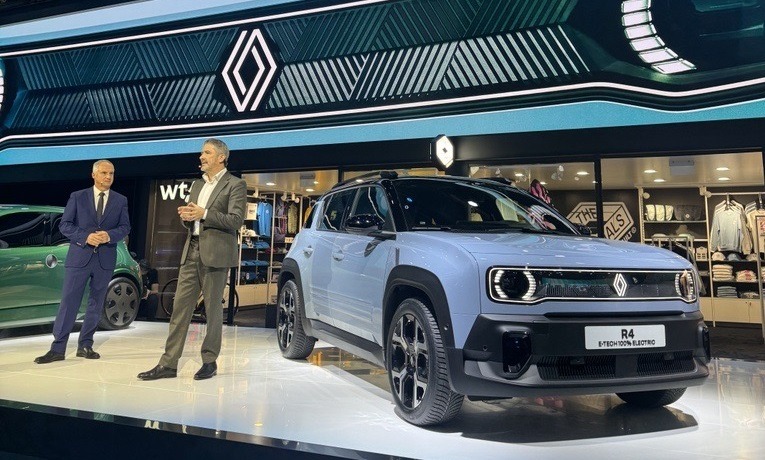
This year’s Paris Motor Show had plenty of world premieres and European debuts. But what did carmakers attending the event have to say? In the latest Autovista24 podcast, journalist Tom Hooker speaks with industry leaders about their design languages. The 90th anniversary of the Paris Motor Show attracted carmakers from across the globe. Speaking with Autovista24, industry experts gave exclusive insights into the design, technology and ambitions behind their newest vehicles. Subscribe to the Autovista24 podcast and listen to previous episodes on Spotify, Apple and Amazon Music. Show Notes Highlights from the 2024 Paris Motor Show What to look out for at the 2024 Paris Motor Show French brands fascinate One brand with a large presence at the event was Renault, as it revealed the new Renault 4. The highly anticipated B-segment battery-electric vehicle (BEV) takes strong design cues from its 1960s predecessor. The brand also unveiled the Renault Emblème, a concept car aiming to tackle carbon emissions throughout its lifecycle. The model features a dual-energy electric powertrain, combining a rechargeable battery for everyday use with a hydrogen fuel cell for longer journeys. Renault’s domestic rival, Citroën, had a large presence at the event too. The manufacturer premiered its C5 Aircross Concept. The model showcases a future C-segment SUV, which will be built on the Stellantis STLA Medium platform. Also on the brand’s stand was the newly revealed C4 and C4 X, with both vehicles due to arrive in dealerships early next year. Leaping into Europe After forming a joint venture with Stellantis and recently launching operations in Europe, Leapmotor was also at the event. The carmaker attracted a large crowd during its press conference, which included Stellantis CEO Carlos Tavares. The brand hosted the global debut of the B10, a C-segment SUV and the first model in its B-series. Other Leapmotor models on display included the C16 mid-size SUV and T03 city car. Peugeot showcased its new e-408. The C-segment BEV follows the release of a plug-in hybrid version in 2022. The new long-range e-3008 and e-5008 models were also on show, offering an electric range of 435 miles (700km) and 415 miles (668km) respectively. BYD made headlines with its new Sealion 7. This Tesla Model Y rival is the eighth electric vehicle (EV) to be launched by the manufacturer in Europe. Additionally, BYD said it is still committed to building two local production facilities in Europe as tariff talks continue. Dacia’s big surprise Dacia revealed the new Bigster. This is yet another C-segment SUV, with three mild-hybrid powertrains and one full-hybrid option on offer. Kia used the event to display its EV3, a compact electric B-segment SUV with high-tech features. It has a range of 375 miles (604km) when opting for its bigger battery. One of its competitors will be the Skoda Elroq. The EV has a 560km range and prices start at around €33,000. It marks the beginning of six BEV Skoda model launches over the coming years. Meanwhile, the Volkswagen Tayron made its public debut. The model is a seven-seat SUV that sits above the Tiguan. Cadillac also made waves, with its new Lyriq and Optiq electric SUVs. One stand that drew a lot of attention was Xpeng, with the unveiling of the P7+. The fastback sedan’s advanced driver-assistance systems feature as standard. More reveals Mini had two global debuts at the event, the John Cooper Works Electric and the John Cooper Works Aceman. The latter provides a range of 355km while the former can reach 371km on one charge. Another world premiere was the Audi Q6 Sportback e-Tron. The midsize SUV has a range of 656km and is built on the premium platform electric or PPE. Alpine also had a sporty reveal for visitors at the show. The A390_β is a precursor to the brand’s future BEV fastback sportscar. BMW showcased its Neue Klasse and Neue Klasse X in Paris. Both provide an outlook on the brand’s future model portfolio, with the former a sporty electric sedan while the Neue Klasse X is an electric SUV.

Displaying 9 of 9 insights