Insights

Tagged:
Clear filters
Content Type
Topic
Industry
Segment
A german road representing the new car market

Insights

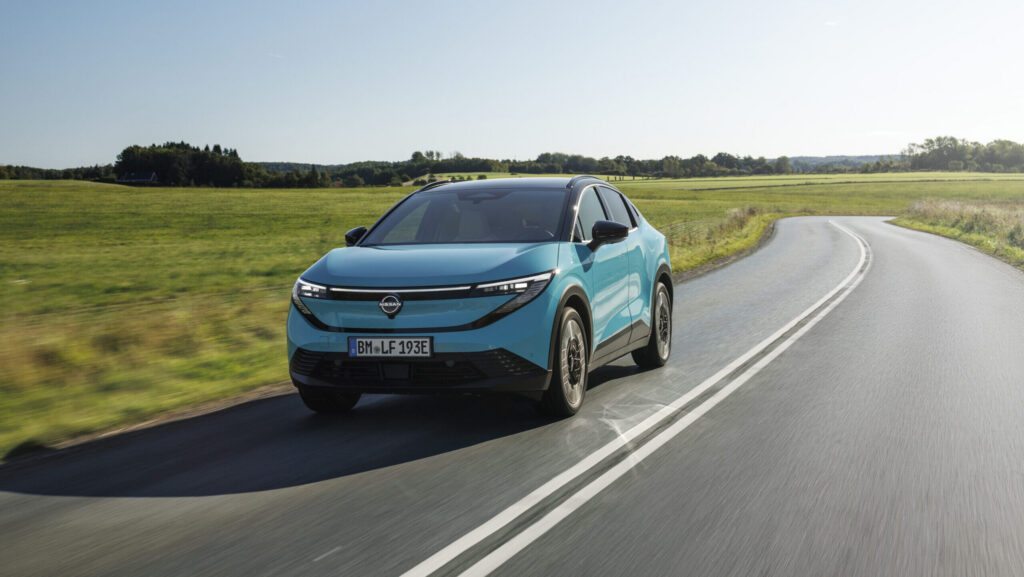
Are private buyers driving Germany’s new-car market forward? 

With another month of new-car registrations growth in Germany, one force appears to be driving the market forward. But how are powertrains and brands performing in the country? Tom Hooker, Autovista24 journalist, explores the figures.  Deliveries of new cars in Germany rose by 2.7% year on year in April, reaching 249,163 units. According to KBA data, private buyers helped drive this growth. Registrations in this sector climbed by 8.2% to 88,182 units.   However, private buyers […]
Car lights inside of a tunnel.|

Insights

The road ahead: Residual value trends and the next market shift

A tense and uncertain economic environment is increasing pressure on Europe’s automotive market. But how will this affect residual values (RVs)? In a new webinar, Autovista Group experts discussed emerging trends and used-car impacts with Autovista24 journalist, Tom Hooker. RVs across Europe have continued to decline in 2025, amid falling used-car prices and an unstable economic environment. Meanwhile, powertrains are seeing varied performances, with one particular technology providing a surprise. But is this decline expected to continue into 2026? Autovista Group’s latest webinar, The road ahead: Residual value trends and the next market shift, answered this questions. The panel featured Dr Anne Lange, product director, valuation apps at Autovista Group, Robert Madas, regional head of valuations (DACH and CEE)​ at Autovista Group and Javier Salgado, director of valuations and forecast experts at Autovista Group. https://www.youtube.com/watch?v=o9ZEJQtcbHk European market faces uncertainty In the first half of 2025, Europe’s economy appeared to be stabilising after a period of stagnation. However, Lange showed how both inflation and the consumer price index have risen. This is mainly due to ongoing geopolitical tensions and conflicts. These trends have hurt the automotive industry. Stagnating economies have led to affordability issues and reduced investment. Additionally, ongoing tariff negotiations have caused delays in investment and supply. There has also been a market push for more affordable battery-electric vehicles (BEVs). Meanwhile, the market has seen battery technology become cheaper and more efficient. ‘We are in a phase of a lot of technological challenges. We have a massive electric vehicle (EV) push that is putting pressure on manufacturers to become more profitable,’ Lange noted. Furthermore, used-car prices are still dropping, albeit at a slower rate. This is despite an apparent stabilising trend in the first half of 2025. Yet, the uncertain economic environment was just one factor affecting this decline. Residual value decline expected RVs presented as a percentage of new list price (%RV) in most of Europe’s major used-car markets have continually fallen. However, the pace of this descent has now slowed compared to previous years. Madas explained that this year, %RVs remain well under 2024 levels. They are also under those recorded in 2023, 2022 and 2021 when %RVs were greatly inflated. This can be seen as a continuous market normalisation following the COVID-19 pandemic and the supply crisis. Specifically, there is growing pressure on three-to four-year-old vehicles. This age group has seen an increasing number of stock days and price changes over the last few months across all powertrains. BEVs still sell the slowest and record the highest amount of price changes in this age group, followed by plug-in hybrids (PHEVs). Overall, pressure on %RVs is forecast to remain across Europe’s major used-car markets in 2026. In particular, passenger cars at 36 months of age and above will be affected more than younger vehicles. ‘The market outlook for 2026 is still negative. We expect some more adjustments, but at a slower pace,’ Madas stated. Increasing market pressure Madas then showed how %RVs for vehicle age groups have developed differently over the last four years. The youngest used vehicles have seen %RVs reach 2021 levels in many markets. This has been caused by supply exceeding demand. Meanwhile, %RVs of cars aged 36 months and above are still relatively high. There is significant room for correction, as supply levels are expected to return in this age group. This is due to recovering new-car registrations in 2023, following particularly weak years in 2021 and 2022. Madas broke %RVs down by powertrain, where he noted that BEVs have struggled. Meanwhile, PHEVs have performed significantly better. In some markets, such as Germany, younger PHEVs have developed better than BEVs, causing the gap between the two technologies to widen. This overarching trend in Europe is caused by differences in supply. PHEVs have considerably smaller volumes in the used-car market and can be better absorbed by current demand than BEVs. Finding the fleet recipe However, Salgado pointed out that these trends do not necessarily translate directly into individual fleets. ‘Most market changes are already included in our forecast values. Ideally, reforecasts should stay quite stable, which would show that our assumptions were accurate when we first forecasted the value of the vehicle,’ Salgado commented. With most leases in Europe lasting around three and a half years, the first forecast is completed long before the car reaches the used market. When conditions change, such as demand or stock levels, forecasts are updated to include those new elements. Salgado then presented two artificial fleets of around 10,000 vehicles in Spain and Germany, with analysis completed in each quarter. The %RV of both fleets remained stable over the last year. The Spanish fleet saw the biggest change, with a small 0.5 percentage point decline. He highlighted that every fleet is unique. Even in one country, results can change depending on the powertrain or brand perception. Salgado also showed that while PHEV %RVs have provided a surprise, they are evolving similarly to petrol and diesel models in some fleets. Moreover, in this artificial fleet, full-hybrid values saw a comparatively larger drop at the end of the lease contract. This is despite the technology maintaining the highest %RVs of any powertrain in Europe. Enjoyed The road ahead: Residual value trends and the next market shift? Then sign up for Autovista Group’s next webinar: Global new-car market outlook 2026. It will take place on 25 November 2025 at 09:30 BST / 10:30 CET. Register for your place today.
Chinese flag with a headlight of a car||||

Insights

How are Chinese companies entering the European automotive sector?

Currently, one of the major talking points in Europe’s automotive market is the entrance and expansion of Chinese companies. Autovista24 journalist Tom Hooker explores their plans and strategies in the region. A total of 116 exhibitors at this year’s IAA Mobility in Munich came from China. This was up from 70 in 2023, which in turn was more than double the figure in 2021. Chinese companies at the event ranged from high-volume car brands, battery producers, luxury marques and intelligent mobility solution providers. Cars made in China accounted for 6% of sales in the EU in the first half of the year. This was up from 5% in the first half of 2024, according to ACEA. Some of this share is the result of European brands manufacturing in the country, such as Cupra. However, China’s automotive expansion into Europe is undeniable. Marques including BYD, Xpeng and Hongqi have recently announced production plans, research centres or regional hubs in Europe. So, how are these companies entering the continent? What are the main challenges? Additionally, how important are events like IAA Mobility in increasing consumer awareness? High-volume Chinese brand Between January and July, Xpeng sold 234,374 electric vehicles (EVs) across the world, according to data from EV Volumes. While the majority were delivered in China, 4.2% were sold in Europe. Autovista24 asked Xpeng G9 product manager Chloe Ding how the brand plans to increase its sales in the region. Source: Xpeng ‘Of course, every company wants to give a very big sales volume in the European market, that is no doubt. For our products, we actually said, we are more concerned about how we choose to satisfy our users, because if we cannot satisfy them, we cannot be eager for big sales,’ Ding explained. ‘Sales is just a number target. Our target is in the product itself and how to make it better.’ She highlighted how Xpeng can learn something from Kia and Hyundai. The two non-European brands have created a foothold in the market. Ding then acknowledged how over-the-air updates and aftersales services are vital to customer satisfaction and trust. Dealer network importance ‘We have a plan for how to make our network in Europe bigger. There is no doubt that we would ask for more dealers to join our network,’ Ding outlined. ‘Also, we would provide aftersales services. We want to hear from our users, what they say we can improve, and what help they need. Most of our product details come from when we hear from our users.’ Christoph Ruhland, director of business development at Autovista Group, recently highlighted the differences in consumer habits between Europe and China. In Cracking the code: Chinese EV brands entering Europe, he recognised the importance of establishing a dealership network. ‘A few brands started with flagship stores, big stores in major European cities. This approach does not work in Europe; it works in China.’ With longer working weeks in China, consumers are more likely to buy a car in a mall on a day off. ‘Europeans, they want to buy cars at dealers. It is also important to have a strong dealer network for aftersales. So do not only think about sales, also think about aftersales,’ he added. Chinese brands' market positioning One major challenge for Chinese brands entering Europe is deciding how to position themselves. Some carmakers may focus on their cost-to-quality ratio, technology features, or luxury status. So, where does Xpeng sit? Source: Xpeng ‘We cannot have the same level of luxury brands like Audi and BMW. So, this car may be focused on the mass or mainstream market. But we believe that one day we will have many more customers, and our reputation will be established. So, one day we may have cars which will be seen as luxury,’ Xpeng P7+ product manager Eva Han told Autovista24. Attracting more customers can be achieved by appealing to different demographics and, in turn, different vehicle segments. ‘We have a rich car line for the Xpeng brand. In China, we have three different platforms, which run from high to low. Because the European market is one of the biggest markets worldwide, we will add more and more cars,’ commented Han. ‘The P7+ will be launched on the European markets in February 2026. This car only offers a two-wheel drive for the Chinese market. But, for the European market, we will add four-wheel drive,’ she stated. Chinese supplier growth Understanding the differences between Chinese and European consumer preferences is not only vital for carmakers but also for automotive suppliers and mobility solution providers. One such company is Desay SV. https://www.youtube.com/watch?v=BsqbZEVbRkQ The company presented many of its products at IAA Mobility. This included an AI-powered intelligent cabin platform, display solutions and full-stack advanced driver-assistance systems (ADAS) technologies. ‘I think the average age of users of vehicles in China is younger than in Europe. So, I think the Chinese consumers are more used to the smartphone-like digitalisation, and the digitalised features of the vehicles,’ head of Desay SV Europe Yang Yong told Autovista24. ‘European customers' demands are, to my understanding, more diversified, because of a longer automotive culture and history, and the long-lasting culture of horsepower, engine performance, braking and suspension.’ ‘So, I guess these are still more important to the European customers. But I believe digitalisation and intelligence will still be welcomed,’ Yong noted. These differences can mean that products are adapted for different regions. For example, in China, settings and vehicle information are largely accessed on the display. But Yong highlighted that users still want to have some mechanical buttons in Europe. Localising production The company recently celebrated the structural completion of its factory in Spain, joining other Chinese companies which have built foundations in Europe. Source: Desay SV ‘I think the requirement for localised production started from the COVID-19 period. Every OEM was talking about supply chain security, to make sure that if something happens in some regions, you will continue production in other regions,’ said Yong ‘For us, it is very important to show the customer and the people that we are very committed here, we are not a short-term business. We really want to be part of the industry and the ecosystem that we want to develop together,’ he added. The ‘China speed’ advantage One of the biggest advantages that Chinese companies can use to aid their European growth is fast development speeds. During Autovista Group’s recent webinar, Ruhland compared the BEV development speed in different regions, when the platform is already completed. ‘Europeans and Japanese need the longest, between 42 and 60 months. The US can do it a bit quicker, and Koreans can do it within three or four years. But Chinese OEMs can do it between 18 and 24 months. 18 months is now more or less the average,’ he said. Yong also highlighted this development speed when talking about Desay SV’s cabin display solutions. ‘I think everybody right now is talking about the so-called China speed, right? In this market, we have to cater to the ever-evolving requests from users and customers. We have to implement all these new requirements the quickest, with the best quality and cost, so that we can meet the requirements of the customers,’ he outlined. Can Chinese brands become memorable? One hurdle Chinese carmakers face is building a memorable brand. However, many marques are entering Europe using number-based naming conventions. This includes Avatr, a premium EV brand owned by Chinese OEM Changan. So, can they still stand out? ‘It is a tricky question. It can polarise opinion. In my opinion, Avatr is the brand, and it should be the bigger name and needs to be remembered,’ Avatr advanced senior exterior designer Pedro Ruperto Mallosto das Chagas told Autovista24 at IAA Mobility. https://www.youtube.com/watch?v=VCbzFmbWMu4 ‘All the cars are part of a family that needs to be consistent. The numbers are more like a quote to define the Avatr products in the range. So, the brand is more important than each specific car,’ he stated. Ruhland highlighted that unique selling points (USPs) can be a vital factor in building brand awareness. ‘Every Chinese OEM that wants to be successful in Europe needs to answer the question “why should a European car buyer that can already pick among 40 existing European brands, why should they buy a Chinese car?” If this European car buyer goes for a Chinese car, why then should they pick your brand?’ he asked. ‘The brand needs to have a core USP that is easy to remember and easy to communicate. I always recommend looking at how Hyundai and Kia did it 20 years ago when they started their very successful journey in Europe. ‘They came up with very long warranties,’ Ruhland said. ‘This could be a strong USP for a Chinese brand. Imagine a Chinese brand would say “our cars have a 10-year warranty, including battery.”’ ‘This would be a very strong message. This would boost residual values, and could really help create awareness,’ he commented. Designed to stand out One way to create a USP is through design. With a strong and consistent design language, customers can easily recognise a brand and its models. Source: Tom Hooker, Autovista24 ‘I think colour, material and finish (CMF) design is the big difference compared to other Chinese brands. We really lead the design with CMF; it is not just applied afterwards. When you look at the car, you can easily remember the design and intention,’ Avatr senior CMF designer Maud Balmisse told Autovista24. Chagas added that through the front fascia and light signature present on Avatr models, they are recognisable in China. The latter can be used as a clear way to distinguish your brand from others. ‘Light signatures are increasingly recognised or used in some respects. They are perhaps the most easily identifiable singular thing, but I would not say that they are necessarily the most important,’ Car Design Research director Sam Livingstone told Autovista24.

Graphic showing vehicle depreciation|

Insights

What is depreciation?

Vehicle depreciation affects every part of the automotive industry, providing clarity on profitability and financial risk. But how can this be used to benefit both companies and consumers? Tom Hooker, Autovista24 journalist, explains. From manufacturers planning models, to customers collecting a car, and businesses devising fleet strategies, depreciation is central to understanding value. It means buyers and sellers can get to grips with how much money a vehicle may lose. How is it calculated, where does it tie into residual values (RVs), and what makes depreciation such a crucial topic? https://www.youtube.com/watch?v=DEp0a1BfOI4&feature=youtu.be Understanding depreciation Depreciation is the amount of value a car loses over time. This can be calculated by subtracting the absolute RV from the new list price. The absolute RV represents the car's monetary value after a defined time and mileage. For example, a car may cost €40,000 brand new. After three years and 60,000km it might see an absolute RV of €18,000. This means a depreciation rate of €22,000, or 55% of its list price. Importantly, the rate of a car’s depreciation is not linear. Cars lose value more rapidly in the years following registration. This rate of decline then slows over time. However, depreciation is not the same for all cars. Factors such as age, mileage, powertrain, competitors, condition, design, service history, reliability, warranty length, fuel economy, owners, and volume can all affect depreciation. Understanding depreciation is beneficial for sellers and buyers. Sellers can better calculate financial risks. Fleet, leasing, and finance companies can decode the biggest points of depreciation and try to minimise their losses. Meanwhile, buyers who focus on cars with lower depreciation rates will take on less financial risk. This can mean getting more money back at the point of resale. Mainstream versus premium For example, comparing two compact crossover SUVs, one premium and the other mainstream, reveals the different rates of depreciation. The exemplar premium model has a list price of €55,900. After two years and 40,000km, it holds on to 58.4% of its list price, or €32,650 in absolute terms. Meanwhile, the mainstream model has a much lower list price of €43,050. However, it also retains less value at 49.8% or €21,450. While the premium model loses €23,250 after two years, the mainstream model loses €21,600. So, even with the premium car’s higher percentage and absolute RVs, its depreciation is still comparatively higher. However, if the mainstream model had a worse rate of value retention, it could indicate a desirability issue. How is depreciation used? Carmakers can compare the depreciation of one of their more luxurious models to a compact car or a direct competitor. However, this does not provide the full picture, as the two vehicles may have vastly different production costs. Understanding depreciation is also vital for fleet and leasing companies. It helps these businesses compose their fleets, with lower levels of depreciation meaning less loss. Finance companies and banks also use this metric. With accurate depreciation forecasts enabling risk and price assessment, they can manage interest rates and risk premiums accordingly. In summary, depreciation is the counterpart to residual values. It gives another lens into used-car performance, depending on the strategic focus of the company or individual.
Waves of the equalizer. Audio wave talking. Voice speaking music sound line levels|Audio wave microphone icon. Voice recording podcast mic microphone button icon on black background.

Insights

The Automotive Update: The future of used-car retail and new model announcements

What is shaping the future of used-vehicle retail? Could residual values (RVs) bounce back by the end of 2025? Which model announcements were made this week? Tom Geggus, Autovista24 editor, explores these topics in The Automotive Update podcast. This week, what impact will trade tension, increased battery-electric vehicle (BEV) volumes, and artificial intelligence (AI) have on used-car retail? Did RVs stabilise in June, and what role did new-car list prices and supply have? Plus, what major new model announcements made the headlines this week? Subscribe to the Autovista24 podcast and listen to previous episodes on Spotify, Apple and Amazon Music. Residual values impact retail Remarketing experts and industry insiders gathered in Frankfurt at the end of June for the Used Vehicle Retail Summit. As covered by Autovista24 journalist Tom Hooker, one of the biggest talking points at the event was RVs. EV Volumes director of content, Christian Schneider, outlined how values have fallen over the last two years. This followed a surge during the COVID-19 pandemic. Currently, supply and demand are gradually balancing. However, due to considerable economic pressure and struggling economies, the pressure on RVs is unlikely to let up in the immediate future. He went on to explore the additional RV impact of tariffs on the European used-car market. Schneider also talked about used BEVs, which are recording an increasing number of sales. However, the all-electric models are also seeing RVs fall at a steeper rate than the overall market. Can AI benefit retail? AI emerged as a key topic at the summit. McKinsey & Company partner Peter Cholewinski believes ‘a highly disruptive change is coming.’ This follows the release of an increasing number of large language models (LLMs). Agentic AI proved a key talking point. These models are designed to autonomously make decisions and act. However, very few companies can capture the value of this new technology due to its difficulty. McKinsey & Company project manager Dr Lisa Schrewentigges showed how an AI tool is helping an unnamed German dealer group. The product can tailor and personalise messages for customers and online leads. The tool was developed within six weeks and helped the dealer group record a 20% increase in conversion rates. Each sales representative also saw an additional 15 to 25 vehicle sales annually on average. Will RV declines continue? Despite a year-on-year %RV declines across seven European used-car markets, June’s Monthly Market Update revealed value stabilisation in some countries. Three key markets witnessed an uptick in RVs compared to May. However, four nations saw %RVs continue their decline. One factor which may have influenced this was a notable rise in new-car list prices. In June, six out of the seven markets saw list prices rise compared to 12 months ago. New model announcements The Polestar 7, a premium compact SUV, will be launched in 2028. Meanwhile, Geely launched its BEV SUV, the EX5, in Greece at an event in Athens. Ferrari revealed the new Amalfi, which replaces the Ferrari Roma. On 10 July, Mazda will unveil the third generation of the CX-5. Elsewhere, the next iteration of the Skoda Octavia will be launched at this year's IAA show in Munich, according to Car Magazine. Finally, Lancia will reprise the Delta HF Integrale next year, according to Autocar.

Displaying 12 of 13 insights