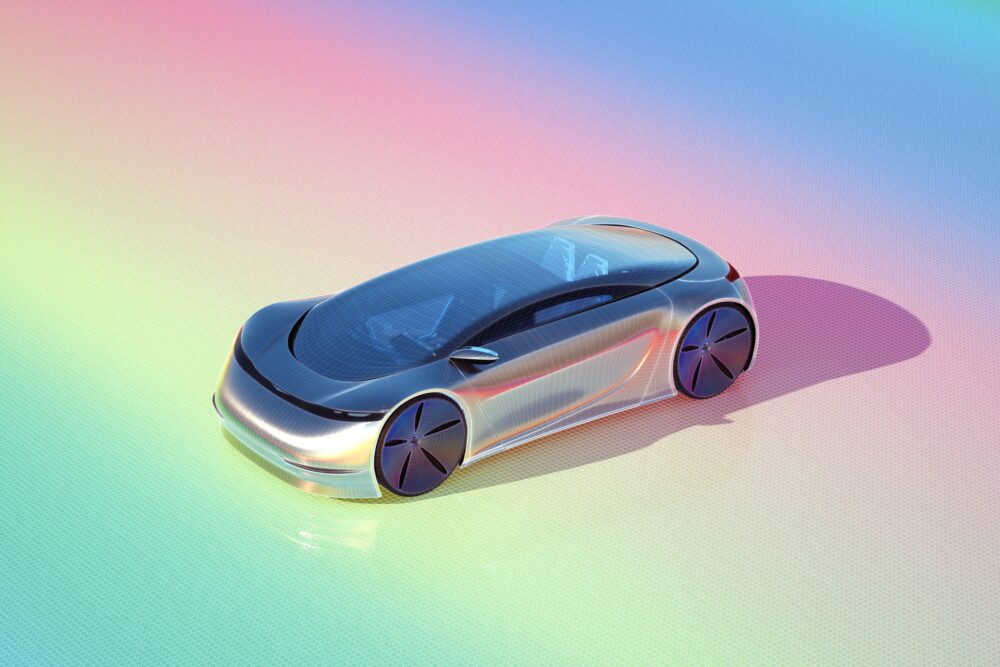
While many designs make it to the road, some are only destined for exhibition halls and marketing materials. But the concept car still has an important role to play in the automotive market. Autovista24 special content editor Phil Curry examines their purpose.
Over the decades, carmakers have used innovative model design to stand out from the competition. Design must also allow for regulations, with safety features and sustainability requirements needing to be considered.
However, a concept car allows these shackles to be removed as designers illustrate their unique ideas. These prototype vehicles are developed to highlight new trends in both design and technology. However, they are not created to be sold, but provide a glimpse of what could be possible in the future.
These models can feature advanced aerodynamics, futuristic user interfaces, innovative powertrains or advanced technology. Concept cars allow brands to push the limits of design without the need to worry about production or budgets.
These concept cars can also reveal the findings of studies, help develop and implement new technologies, or visualise new production models.
Concept car design
Concept cars were once a mainstay of motor shows. Brands looking to attract attention to their stands unveiled what they believed would be the car of the future. Some had a basis, while others were more experimental. But these cars attracted audiences and inspired belief in the future of mobility.
The basis for a concept car was to highlight future design trends. The first model developed as a concept was the Buick Y-Job in 1938. This came at a time when many cars featured large vertical grills, separate headlights and little design sculpting.
Source: General Motors
But the Y-Job, created by US designer Harley J. Earl, created a different profile that fed into upcoming models. This included the 1949 Buick Roadmaster and the 1953 Buick Skylark. The grill design is still seen in Buick models today.
Since then, brands have used concept cars for a variety of purposes. Some have highlighted design trends that have carried into their production models. Meanwhile, others focused on vehicles which could inspire future trends.
Journey of the concept car
Renault has taken concept car ideas through to production on several occasions. This means it developed an outlandish future concept, then a realistic opportunity, followed by a production model.
One example is the Renault EZ-Ultimo, a model presented at the Paris Motor Show in 2018. At the time, autonomous vehicle technology was a hot topic of discussion, so the carmaker revealed a trio of ‘robo-vehicles’.
The EZ-Ultimo was a mobile lounge, showing what would be possible with driverless vehicles. Not only did it serve a purpose of suggesting future design trends in an unrestricted environment, but it also drew crowds to Renault’s stand.
Source: Renault
Moving forward to 2024, Renault presented the Embleme. This model presented the potential of an alternative powertrain system. It featured dual-energy electric and hydrogen technology to reduce CO2 emissions over the entire lifecycle of the vehicle.
In 2021, the carmaker unveiled the Renault 5 Prototype. It forged a connection with the carmaker’s former model that was discontinued in 1996. The concept acted as a precursor for the Renault 5 E-Tech, which was launched in 2024. The carmaker carried many of its design features into the production model, which is now on sale.
Digital concepts
Interest in traditional motor show concepts began to wane in the late 2010s. The COVID-19 pandemic saw many brands switch to online launches. This meant fewer design restrictions in the development of concept cars.
Rather than produce a physical model, designers could dig into the digital world. Brands showcased their concept drawings and videos to show what was possible. Fast forward to 2025, and this digital mindset has stuck around.
One example is the Ferrari F76, a digital hyper car created in the form of an NFT. It combines Ferrari’s racing tradition with generative design and digital technologies.
Source: Ferrari
Designed for clients of the Hyperclub programme, the F76 was created to support the 499P competing at Le Mans and in the World Endurance Championship.
While the development of a concept car has changed, its role remains the same. They are created to inspire both designers and consumers. They also create discussions and allow brands to build on their reputations to lead ideas around future technologies. Either digital or physical, concept cars remain a standout part of automotive development.
Currently, one of the major talking points in Europe’s automotive market is the entrance and expansion of Chinese companies. Autovista24 journalist Tom Hooker explores their plans and strategies in the region.
A total of 116 exhibitors at this year’s IAA Mobility in Munich came from China. This was up from 70 in 2023, which in turn was more than double the figure in 2021. Chinese companies at the event ranged from high-volume car brands, battery producers, luxury marques and intelligent mobility solution providers.
Cars made in China accounted for 6% of sales in the EU in the first half of the year. This was up from 5% in the first half of 2024, according to ACEA. Some of this share is the result of European brands manufacturing in the country, such as Cupra. However, China’s automotive expansion into Europe is undeniable.
Marques including BYD, Xpeng and Hongqi have recently announced production plans, research centres or regional hubs in Europe. So, how are these companies entering the continent? What are the main challenges? Additionally, how important are events like IAA Mobility in increasing consumer awareness?
High-volume Chinese brand
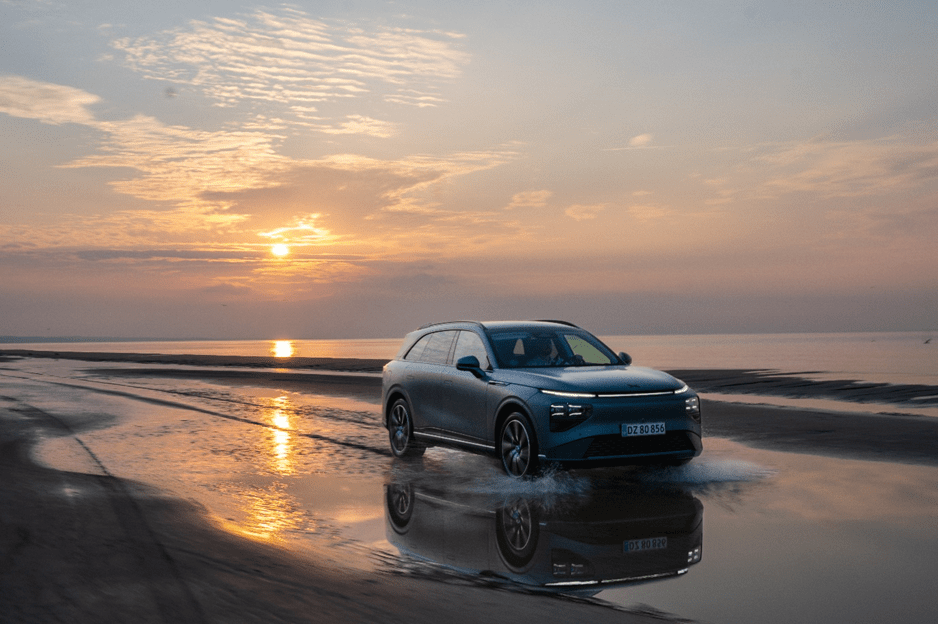
Between January and July, Xpeng sold 234,374 electric vehicles (EVs) across the world, according to data from EV Volumes. While the majority were delivered in China, 4.2% were sold in Europe. Autovista24 asked Xpeng G9 product manager Chloe Ding how the brand plans to increase its sales in the region.
Source: Xpeng
‘Of course, every company wants to give a very big sales volume in the European market, that is no doubt. For our products, we actually said, we are more concerned about how we choose to satisfy our users, because if we cannot satisfy them, we cannot be eager for big sales,’ Ding explained. ‘Sales is just a number target. Our target is in the product itself and how to make it better.’
She highlighted how Xpeng can learn something from Kia and Hyundai. The two non-European brands have created a foothold in the market. Ding then acknowledged how over-the-air updates and aftersales services are vital to customer satisfaction and trust.
Dealer network importance
‘We have a plan for how to make our network in Europe bigger. There is no doubt that we would ask for more dealers to join our network,’ Ding outlined.
‘Also, we would provide aftersales services. We want to hear from our users, what they say we can improve, and what help they need. Most of our product details come from when we hear from our users.’
Christoph Ruhland, director of business development at Autovista Group, recently highlighted the differences in consumer habits between Europe and China. In Cracking the code: Chinese EV brands entering Europe, he recognised the importance of establishing a dealership network.
‘A few brands started with flagship stores, big stores in major European cities. This approach does not work in Europe; it works in China.’ With longer working weeks in China, consumers are more likely to buy a car in a mall on a day off.
‘Europeans, they want to buy cars at dealers. It is also important to have a strong dealer network for aftersales. So do not only think about sales, also think about aftersales,’ he added.
Chinese brands’ market positioning
One major challenge for Chinese brands entering Europe is deciding how to position themselves. Some carmakers may focus on their cost-to-quality ratio, technology features, or luxury status. So, where does Xpeng sit?
Source: Xpeng
‘We cannot have the same level of luxury brands like Audi and BMW. So, this car may be focused on the mass or mainstream market. But we believe that one day we will have many more customers, and our reputation will be established. So, one day we may have cars which will be seen as luxury,’ Xpeng P7+ product manager Eva Han told Autovista24.
Attracting more customers can be achieved by appealing to different demographics and, in turn, different vehicle segments.
‘We have a rich car line for the Xpeng brand. In China, we have three different platforms, which run from high to low. Because the European market is one of the biggest markets worldwide, we will add more and more cars,’ commented Han.
‘The P7+ will be launched on the European markets in February 2026. This car only offers a two-wheel drive for the Chinese market. But, for the European market, we will add four-wheel drive,’ she stated.
Chinese supplier growth
Understanding the differences between Chinese and European consumer preferences is not only vital for carmakers but also for automotive suppliers and mobility solution providers. One such company is Desay SV.
The company presented many of its products at IAA Mobility. This included an AI-powered intelligent cabin platform, display solutions and full-stack advanced driver-assistance systems (ADAS) technologies.
‘I think the average age of users of vehicles in China is younger than in Europe. So, I think the Chinese consumers are more used to the smartphone-like digitalisation, and the digitalised features of the vehicles,’ head of Desay SV Europe Yang Yong told Autovista24.
‘European customers’ demands are, to my understanding, more diversified, because of a longer automotive culture and history, and the long-lasting culture of horsepower, engine performance, braking and suspension.’
‘So, I guess these are still more important to the European customers. But I believe digitalisation and intelligence will still be welcomed,’ Yong noted.
These differences can mean that products are adapted for different regions. For example, in China, settings and vehicle information are largely accessed on the display. But Yong highlighted that users still want to have some mechanical buttons in Europe.
Localising production
The company recently celebrated the structural completion of its factory in Spain, joining other Chinese companies which have built foundations in Europe.
Source: Desay SV
‘I think the requirement for localised production started from the COVID-19 period. Every OEM was talking about supply chain security, to make sure that if something happens in some regions, you will continue production in other regions,’ said Yong
‘For us, it is very important to show the customer and the people that we are very committed here, we are not a short-term business. We really want to be part of the industry and the ecosystem that we want to develop together,’ he added.
The ‘China speed’ advantage
One of the biggest advantages that Chinese companies can use to aid their European growth is fast development speeds. During Autovista Group’s recent webinar, Ruhland compared the BEV development speed in different regions, when the platform is already completed.
‘Europeans and Japanese need the longest, between 42 and 60 months. The US can do it a bit quicker, and Koreans can do it within three or four years. But Chinese OEMs can do it between 18 and 24 months. 18 months is now more or less the average,’ he said.
Yong also highlighted this development speed when talking about Desay SV’s cabin display solutions.
‘I think everybody right now is talking about the so-called China speed, right? In this market, we have to cater to the ever-evolving requests from users and customers. We have to implement all these new requirements the quickest, with the best quality and cost, so that we can meet the requirements of the customers,’ he outlined.
Can Chinese brands become memorable?
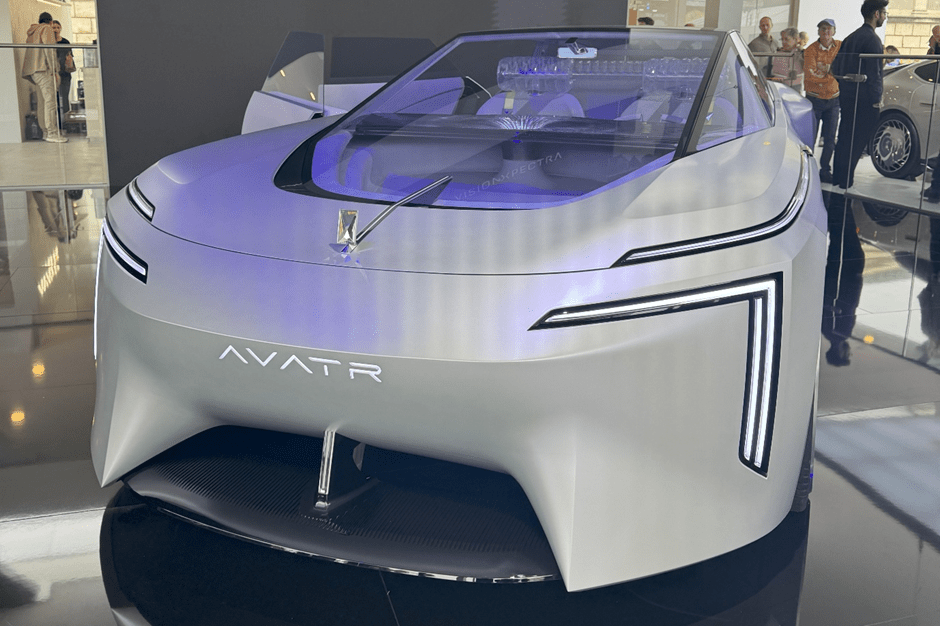
One hurdle Chinese carmakers face is building a memorable brand. However, many marques are entering Europe using number-based naming conventions. This includes Avatr, a premium EV brand owned by Chinese OEM Changan. So, can they still stand out?
‘It is a tricky question. It can polarise opinion. In my opinion, Avatr is the brand, and it should be the bigger name and needs to be remembered,’ Avatr advanced senior exterior designer Pedro Ruperto Mallosto das Chagas told Autovista24 at IAA Mobility.
‘All the cars are part of a family that needs to be consistent. The numbers are more like a quote to define the Avatr products in the range. So, the brand is more important than each specific car,’ he stated.
Ruhland highlighted that unique selling points (USPs) can be a vital factor in building brand awareness.
‘Every Chinese OEM that wants to be successful in Europe needs to answer the question “why should a European car buyer that can already pick among 40 existing European brands, why should they buy a Chinese car?” If this European car buyer goes for a Chinese car, why then should they pick your brand?’ he asked.
‘The brand needs to have a core USP that is easy to remember and easy to communicate. I always recommend looking at how Hyundai and Kia did it 20 years ago when they started their very successful journey in Europe.
‘They came up with very long warranties,’ Ruhland said. ‘This could be a strong USP for a Chinese brand. Imagine a Chinese brand would say “our cars have a 10-year warranty, including battery.”’
‘This would be a very strong message. This would boost residual values, and could really help create awareness,’ he commented.
Designed to stand out
One way to create a USP is through design. With a strong and consistent design language, customers can easily recognise a brand and its models.
Source: Tom Hooker, Autovista24
‘I think colour, material and finish (CMF) design is the big difference compared to other Chinese brands. We really lead the design with CMF; it is not just applied afterwards. When you look at the car, you can easily remember the design and intention,’ Avatr senior CMF designer Maud Balmisse told Autovista24.
Chagas added that through the front fascia and light signature present on Avatr models, they are recognisable in China. The latter can be used as a clear way to distinguish your brand from others.
‘Light signatures are increasingly recognised or used in some respects. They are perhaps the most easily identifiable singular thing, but I would not say that they are necessarily the most important,’ Car Design Research director Sam Livingstone told Autovista24.
One of the major themes from this year’s IAA Mobility was design language. Some brands presented this through concepts, while others used production-ready models. So, how are design philosophies changing, and why now? Autovista24 journalist Tom Hooker investigates.
IAA Mobility 2025 played host to many world premieres and concept reveals, highlighting new design languages and philosophies. With the event held in Munich, German brands used the opportunity to full effect.
This included BMW’s Neue Klasse platform, Audi’s simplified design philosophy, Mercedes-Benz’s new grille element, and Volkswagen’s (VW’s) small car offensive. So, why did German manufacturers decide now was the time to change?
Adding perceived value
‘The conference is in Munich every two years, and the German brands perhaps know that their home territory is the logical place to do this,’ Car Design Research director Sam Livingstone told Autovista24.
‘My view is that the external pressures that are incurred on these brands in terms of their general commercial performance, profitability, and sales are such that internally, there would have been a lot of people being asked the question, “What can you do?”,’ he outlined.
These famous marques may seem to take very different design paths. However, their overall approaches to design are more alike than they appear.
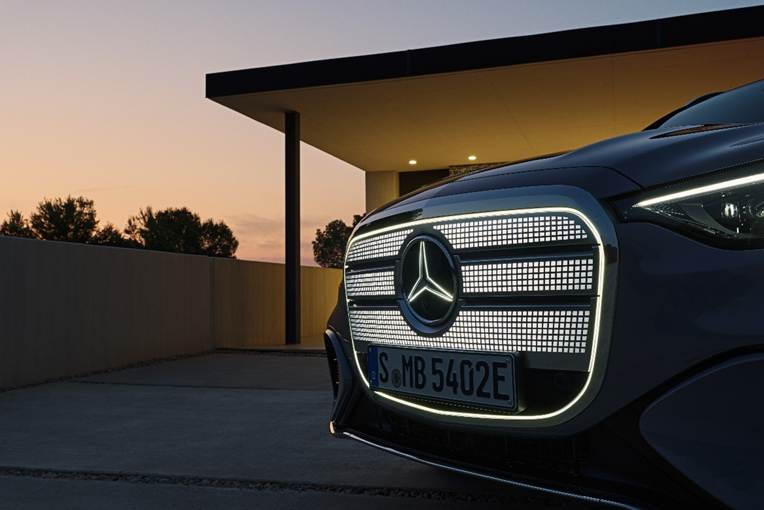
‘I think design must deliver more. I sense that what the designers are doing for these three or four German brands is seeking to increase the perceived value. Mercedes-Benz is the one that does it the most obviously, setting out with their new but harking back to the past grille element,’ Livingstone highlighted.
Source: Mercedes-Benz
‘That is going to sit on the front of the GLC and other vehicles going forward, making a much stronger statement about being a vehicle that is upper premium. I think they are all pushing hard to add perceived value,’ Livingstone said.
‘I think they are all seeking to reframe their brand specificity in a more distinct manner. Mercedes-Benz and Audi are obviously doing that, I think clearly the BMW is too, and maybe to a lesser extent VW,’ he commented.
Heritage-inspired design
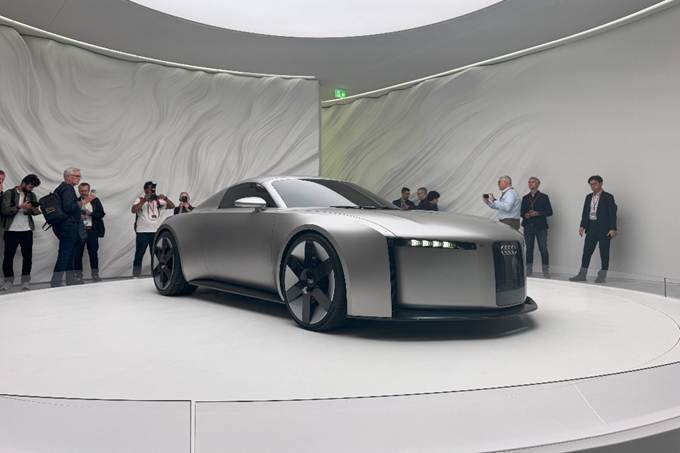
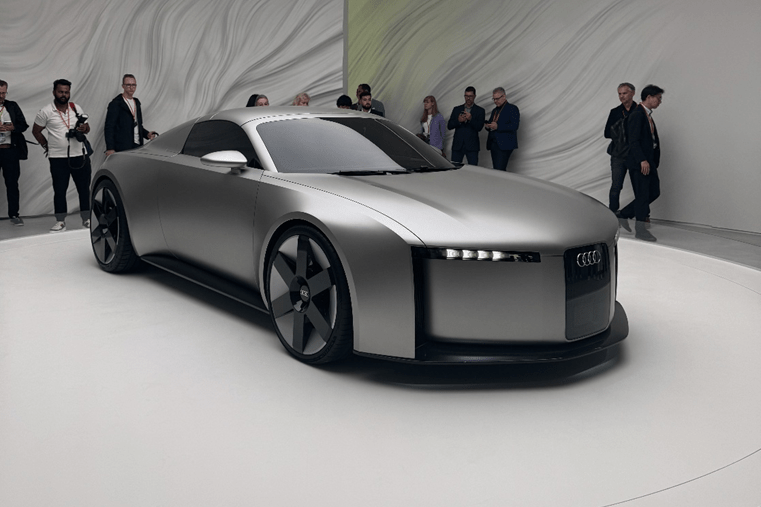
Two other German brands are also using their heritage to further distinguish themselves and add perceived value as a result. Firstly, Audi brought its Concept C to Munich, a two-seater electric hardtop convertible. The prototype displays the carmaker’s new design philosophy.
Source: Tom Hooker, Autovista24
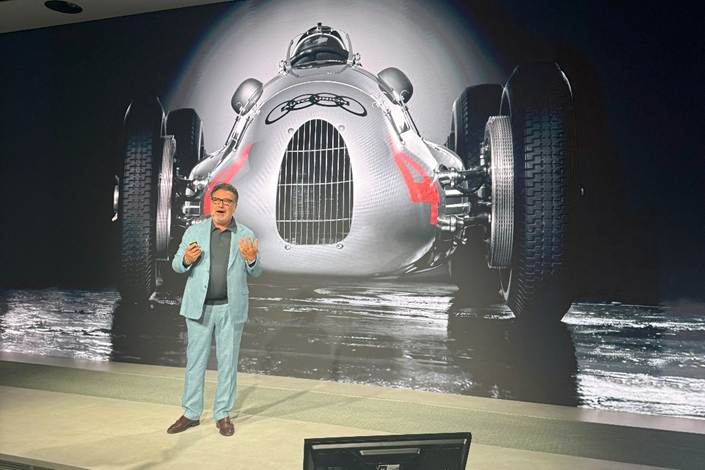
‘We have worked collaboratively within the design team initially to try to understand what the values and the elements are that make an Audi an Audi. What is the DNA? That is why we looked at our heritage to move forward,’ Audi chief creative officer Massimo Frascella explained to Autovista24.
‘This was fundamental, understanding throughout the evolution of Audi what the most distinctive and unmistakably Audi identities are. We found that the Audi Type C, the Audi Type D, and the Audi A6 were the models with the verticality that were very Audi,’ he added.
Source: Tom Hooker, Autovista24
The model previews a production car slated for release in 2026. while other upcoming models will be influenced by the Concept C’s design.
‘What I really like about this car is that it is unmistakably Audi; it cannot be anything else. We are so fortunate as a company to have a wonderful heritage. That is not something that all the brands have, so for us it is a huge asset,’ he said.
Designing a new generation
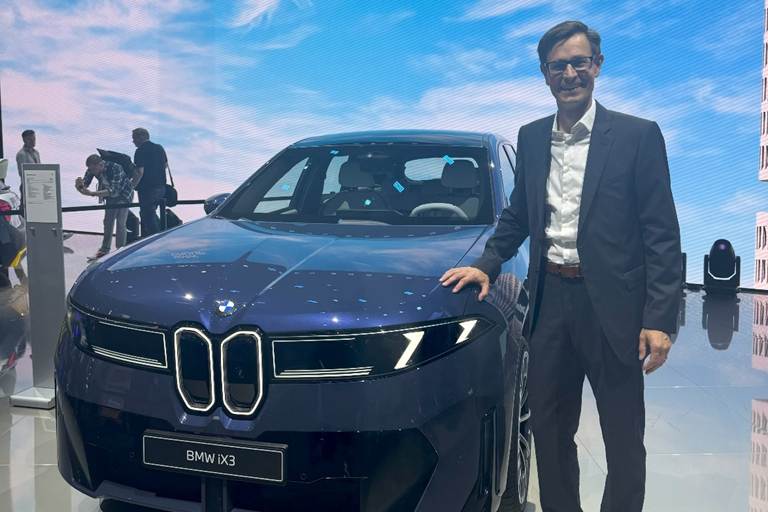
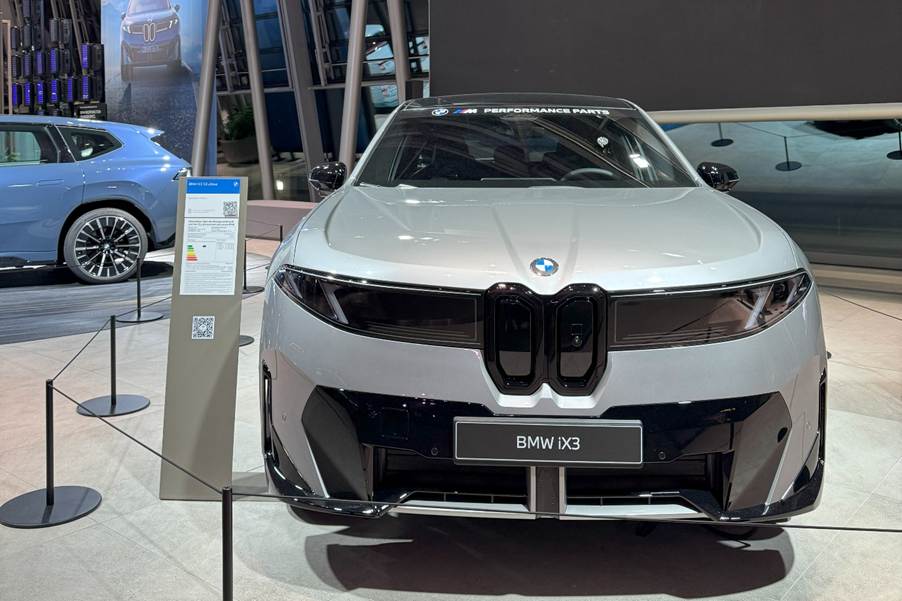
BMW also took inspiration from its past with its new ‘Neue Klasse’ platform. This is a deliberate reference to the brand’s transformation in the 1960s. The new BMW iX3’s design conveys this, while being a visual signal of a new generation of models. Most notably, the model has new illuminated ‘kidneys’ replacing the previous chrome design.
Source: Tom Hooker, Autovista24
‘One step is not enough. We need to take two steps. Then, the design team said, if you do such a bold step in everything, we need to make it obvious to the customer that this is something new. It is a bold leap,’ BMW iX3 product manager Mark Berger told Autovista24.
Meanwhile, VW continued the legacy of its Polo and Polo GTI models at IAA Mobility, bringing them into the electric era. The brand’s attempt to keep the hatchback’s essence on a new powertrain and platform was helped by small design details.
Source: Tom Hooker, Autovista24
‘In the traditional GTI, you have this golf ball shifter. Now, in the electric one, you do not have a shifter anymore. So, we bought it back in the centre cap of the wheels, now we have a golf ball pattern. You can bring it back, this GTI feeling,’ head of VW design Andreas Mindt told Autovista24.
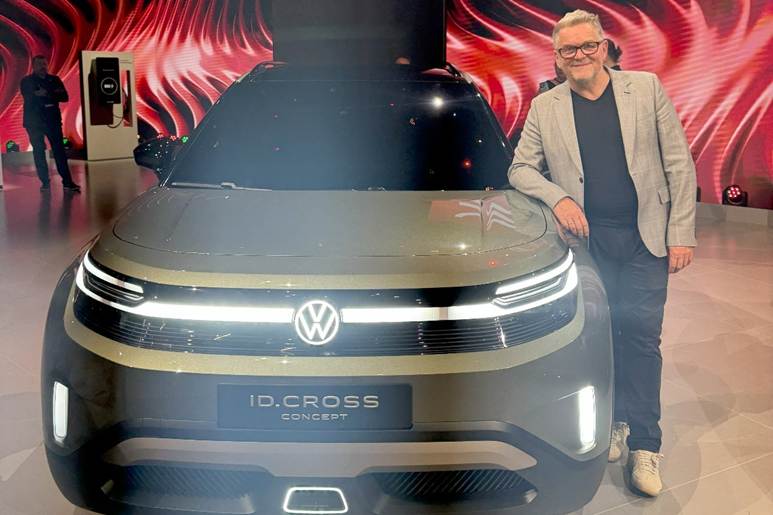
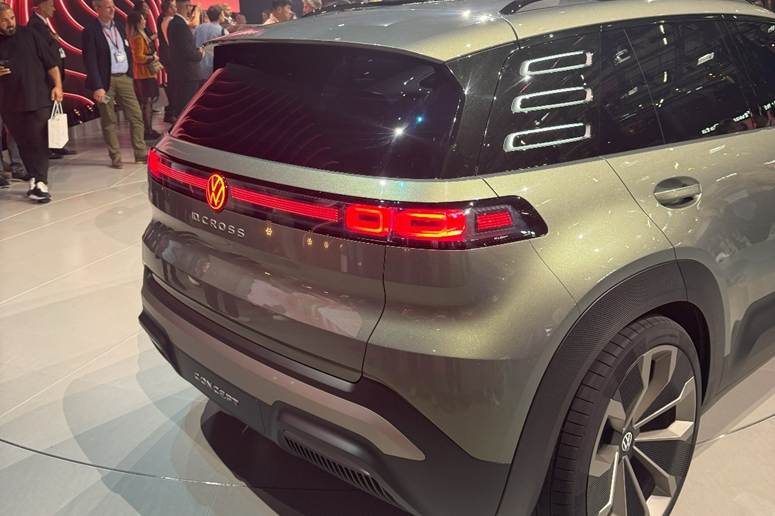
This was combined with modern details, including ‘whisky glasses’. These made up part of the rear lights on the ID.Polo and ID.Cross concept.
Source: Tom Hooker, Autovista24
‘It looks like a thick glass, not like a champagne glass that breaks immediately. It is giving you the impression that it is unbreakable. This is how a VW should look,’ he stated.
Concept cars remain important
Mindt also discussed the importance of concept cars, even if models resemble their production variant. For brands, this is an opportunity to gauge consumer opinion.
‘In this case, we are very close to production already, but you get feedback. For us, it is important, almost like a customer survey. We are going to have comments, and we really read them. I am very interested in the opinion of the people,’ said Mindt.
‘We need to have this dialogue with customers. When you present a show car, you get a feel of what is good and what is bad. Of course, you have a lot of haters. But you also have very valid, interesting opinions. We want to know and we want to learn, as maybe we bake it into the next project,’ he said.
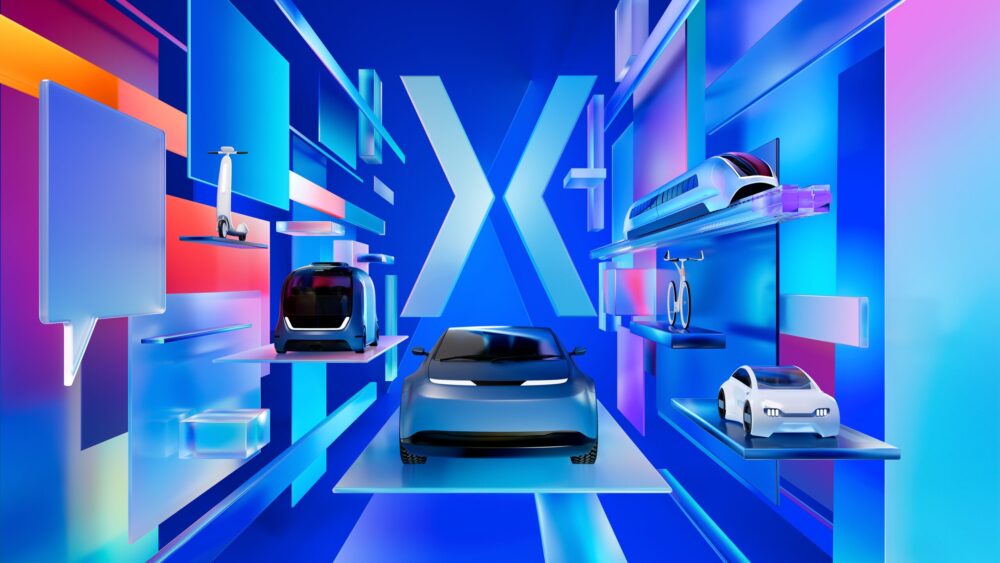
Berger shared a similar viewpoint, as the BMW iX3’s design resembled the Vision Neue Klasse X presented earlier this year. With a new generation, the brand had the opportunity to test a striking new design.
Source: Tom Hooker, Autovista24
‘Since we did not have a direct predecessor, we could go down this route, test the reaction on the design, and make people already a bit familiar with it. That is a bit of a pity now, because sometimes people say, it is not that new. The surprise is gone as the Vision car has already taken a lot of the credit,’ Berger noted.
‘We thought the step was so big, we did not have to exaggerate that much. Because the design jump was already so high from all the other BMWs, showing more or less the serious design made for a very good concept car already,’ he commented.
China’s design perspective
The increasing number of Chinese brands at IAA Mobility was noticeable. This ranged from luxury all-electric SUVs to European-focused hatchbacks. But with many announcing international expansion plans, are design philosophies also evolving?
‘I think most of the Chinese brands do not have sufficient distinction for them to be able to actually enter this new market for them, in Europe, to be able to set out that they are who they are clearly,’ commented Livingstone.
Source: Tom Hooker, Autovista24
‘I suppose historically that is not so different from the Japanese and the Korean playbook, which is to come in with vehicles that are ostensibly akin to European offers and are quite generic. But they have a competitive offer of features and technical content versus price ratio,’ he pointed out.
‘So, you could argue that it is consistent with what came before. However, in terms of actually creating an individual brand and setting out its purpose in a very distinct offer, having a bland or generic design approach just will not work,’ Livingstone added.
Deeper cultural differences
However, the reason behind this apparent lack of distinguishability between Chinese brands may not just be strategic. It could also highlight a significant cultural difference between the two regions and their respective automotive markets.
‘I think there is just a cultural distinction that in the Western mindset, we consider without even thinking, how design is out there to seek to appeal to you. As a consumer, you look for a design that you want to have,’ said Livingstone.
‘I would suggest that in China, it is much more likely that a design is there to ensure that you do not create something that people do not want. It would be wrong to suggest that Chinese brands are naive, but there is also a bare truth that the market is less mature,’ he said.
‘So, I think design is there to provide a decent-looking car that is akin to other cars of this ilk and be subtly different in some respects. That is the extent of the design remit in the Chinese market,’ Livingstone continued.
‘Whereas, in the more mature Western market, there is more recognition from both a brand and customer side that there is an opportunity, an expectation, and a need to assert some greater level of brand specificity,’ he explained.
Korea’s contemporary design philosophy
So, where do brands from other regions fit into the automotive design landscape? For example, Hyundai and Kia do not necessarily conform to broader design philosophies seen in Europe and China.
Source: Tom Hooker, Autovista24
‘Kia is more consistent in its offer, and Hyundai is more divergent. Overall, I do not believe they are conforming to the generic offer that we have seen from China. Nor are they like the German brands, leveraging elements of heritage to add perceived value. I think they are taking a different path,’ outlined Livingstone.
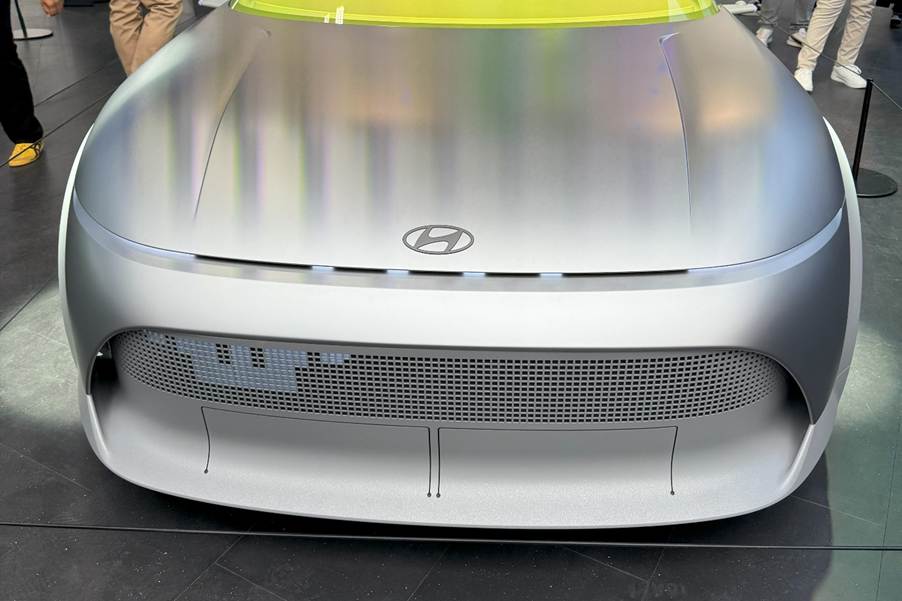
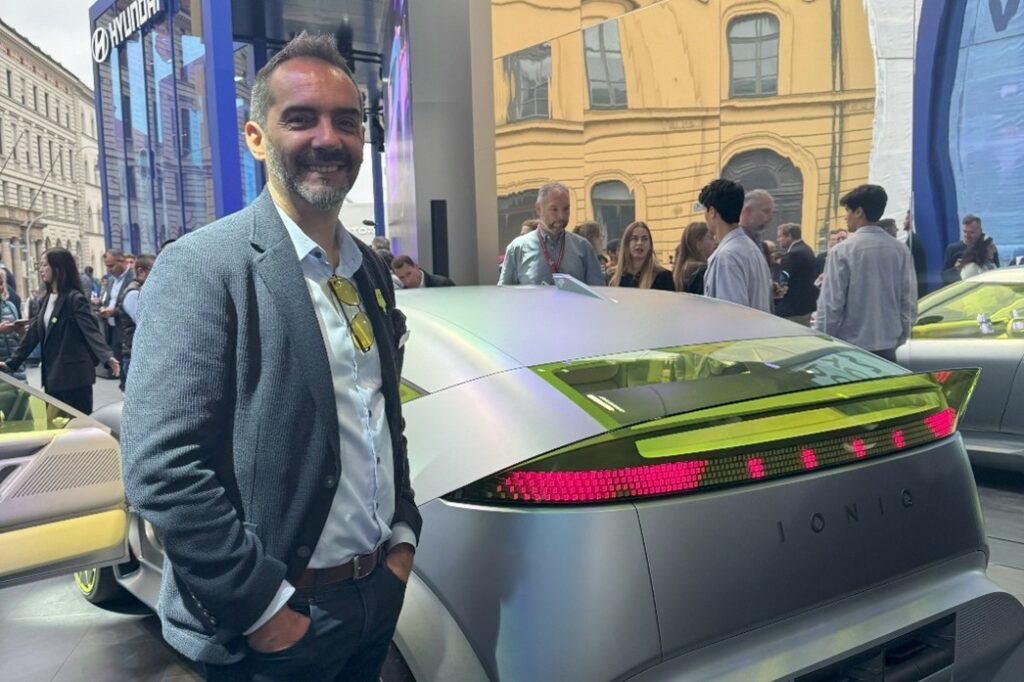
Specifically, Hyundai did take inspiration from its heritage when creating the Concept Three, a compact EV from its Ioniq sub-brand. However, unlike other brands, this vision came from outside the automotive world.
Source: Tom Hooker, Autovista24
‘There are several inspirations. First, the desire to go back to designing hatchbacks, not only SUVs. But also, the inspiration of our own heritage with steel,’ head of department of exterior design at Hyundai Motor Europe, Nicola Danza, told Autovista24.
‘We produced our own steel. So, we wanted to celebrate steel by expressing it in its super simple form, and you see these three big surfaces. The bonnet, the shoulders with the doors, and the rear wrapping around the tailgate to express this metal feel,’ explained Danza.
‘We wanted to create something that is simple, pure and easy to understand. Sometimes cars are too heavy in terms of design features, and we wanted to simplify to the max,’ he added.
‘Every concept we do, especially the exterior, is a hint of what is coming next. This is the first time we have shown this design language, so it is very important for us to express it. Also, it is important not to overpromise. Sometimes you go so far away with the concept cars that I suppose you overpromise, and then the reality is different,’ he added.
Livingstone also commented on how the two Korean brands are exceedingly international in their orientation. While their domestic market is a focus point, they see Europe as a major market, alongside China, to some extent.
‘I think it would be wrong to say that it is a Korean thing, because their design leadership and designers are not Korean nationals. It is an interesting perspective compared to the two core tranches of Europe and China,’ he concluded.
The 2025 IAA Mobility trade fair in Munich provided a glimpse of the latest models and concepts coming from carmakers. Tom Hooker, Autovista24 journalist, reviews the event.
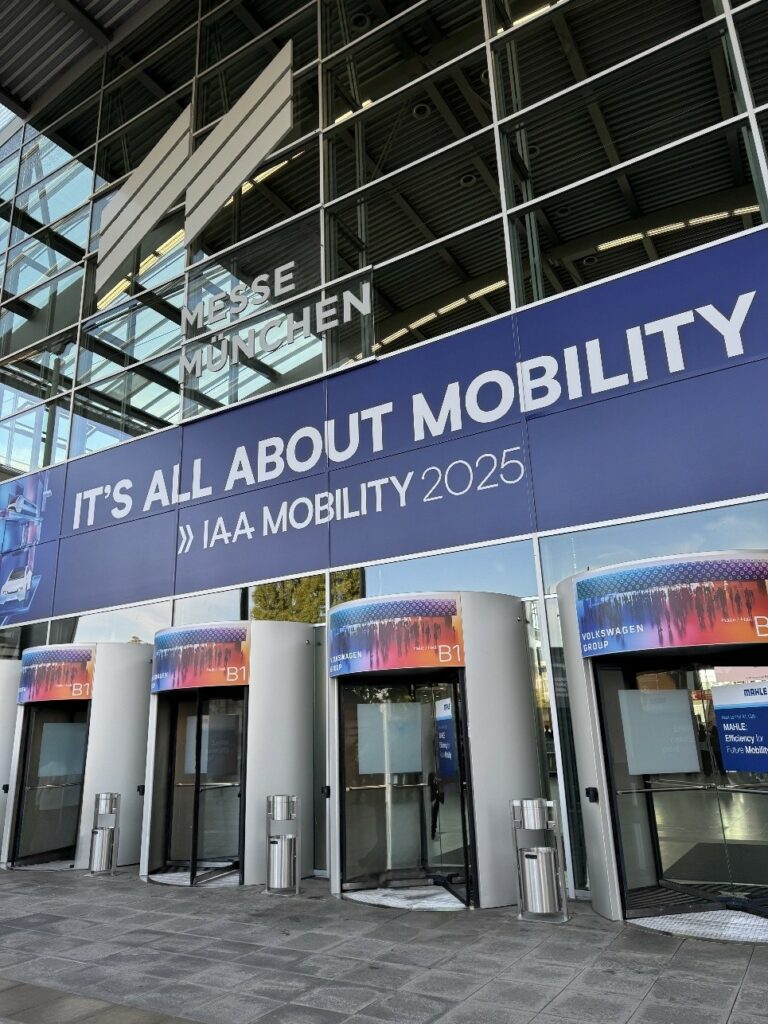
This year’s IAA Mobility saw a strong presence from manufacturers. They spread themselves across the Messe München and the various ‘open space’ locations in the Bavarian capital.
Source: Tom Hooker, Autovista24
Brands used the show to highlight their latest mobility developments and future plans. The event achieved a record 57% share of foreign exhibitors, while 40% of all exhibitors were first-time participants.
Over 350 world premieres and product innovations were unveiled at this year’s IAA Mobility. This spanned city cars to large SUVs, and production-ready models to bold experimental concepts. But what were some of the standout highlights and announcements?
Domestic brands took centre stage at the event, including BMW, Volkswagen (VW), Mercedes-Benz, and Audi. A unified theme was clear. IAA Mobility marked new eras, new directions, and new design languages.
Source: Tom Hooker, Autovista24
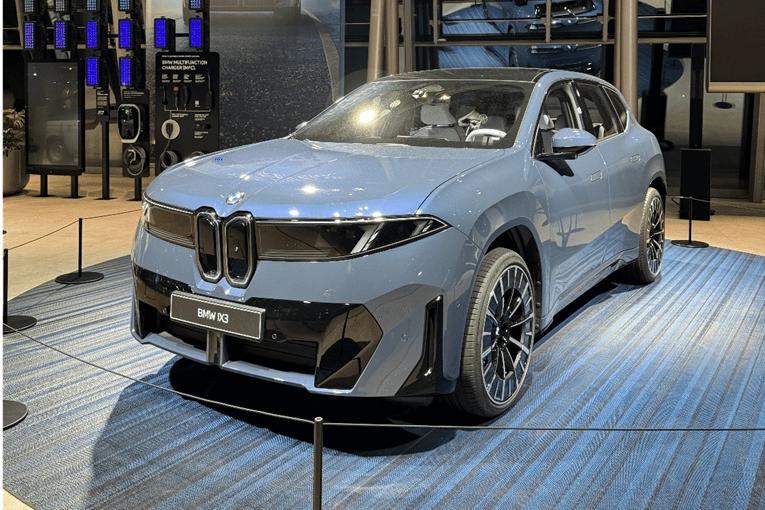
BMW used the event as a launchpad for its Neue Klasse. The vehicle platform will underpin more than 40 new or updated models by 2027, regardless of powertrain. The first of these is the all-electric iX3. The D-segment SUV features a distinct new design language that replaces chrome ‘kidneys’ with a light signature.
The iX3 will be the first to use BMW’s sixth-generation eDrive technology built on 800-volt architecture with bi-directional charging. The SUV houses new electronics and software underpinnings, including four ‘superbrain’ high-performance computers.
BMW has refreshed the iX3 with a clean interior and its new Panoramic Vision heads-up display. The SUV is scheduled to arrive in Europe in spring 2026. An all-electric i3, the second Neue Klasse model, will also be revealed early next year.
Source: BMW Group
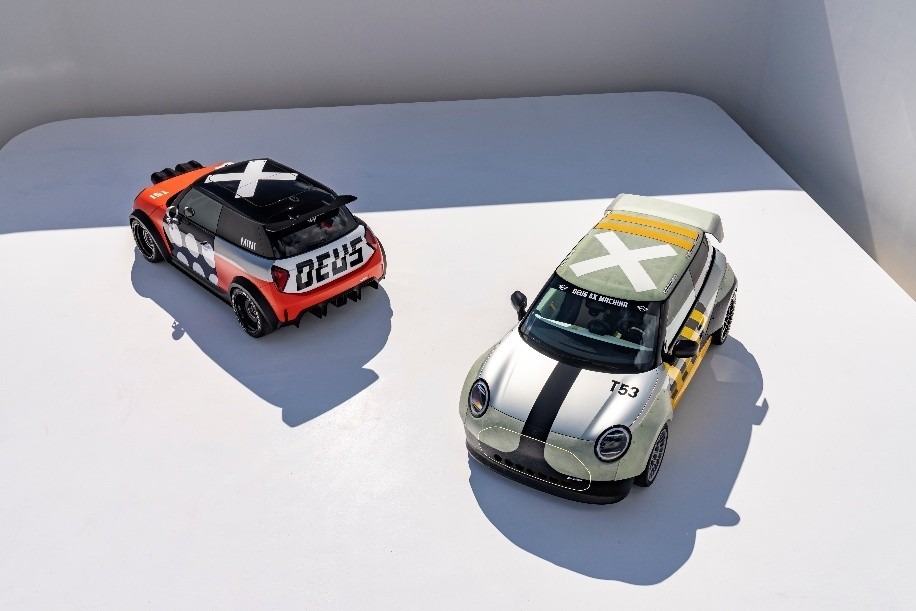
Meanwhile, BMW Group brand Mini presented two concept models. These cars were created from a collaboration between Mini’s John Cooper Works sports division and lifestyle brand Deus Ex Machina.
VW’s compact EV offensive
VW presented its new direction at the IAA Mobility, inspired by the phrase ‘True Volkswagen’. It focused on four new electric vehicles (EVs).
Source: Tom Hooker, Autovista24
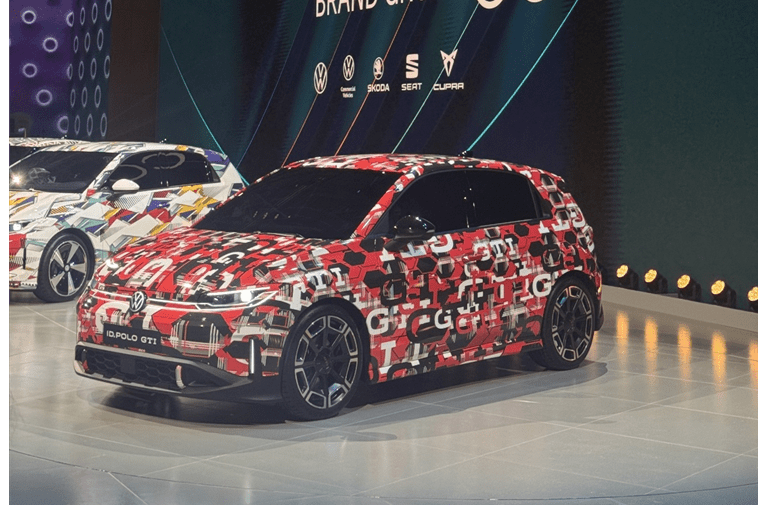
Firstly, the ID.Polo and ID.Polo GTI were presented in camouflage. Both will be based on the MEB+ platform and will use advanced driver assistance systems (ADAS) from bigger VW models. The ID.Polo and ID.Polo GTI will have world premieres in May 2026 and summer 2026, respectively.
The models mark the start of VW’s new naming strategy, where established vehicle names will be transferred to EVs.
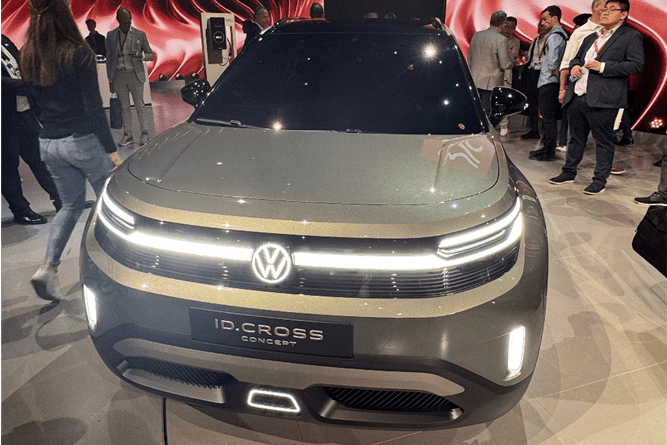
VW also revealed the ID.Cross Concept, a compact electric SUV. The near-production model is also based on the MEB+ platform and highlights the brand’s new ‘Pure Positive’ design language.
Source: Tom Hooker, Autovista24
Meanwhile, the ID.Every1 concept showcased a new entry-level EV from VW. The production version will be launched in Europe from 2027.
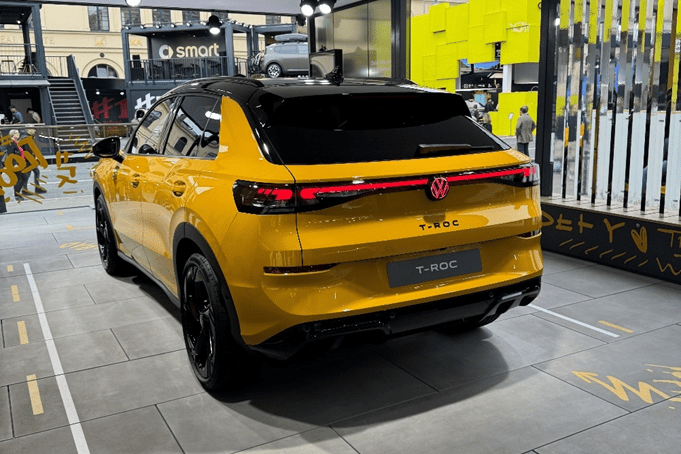
Away from its EV range, VW displayed the next generation of the T-Roc. The B-segment SUV uses ADAS from larger VW models and features an updated interior. It is offered in petrol-powered mild-hybrid or full-hybrid powertrains.
Source: Tom Hooker, Autovista24
Mercedes-Benz begins model offensive
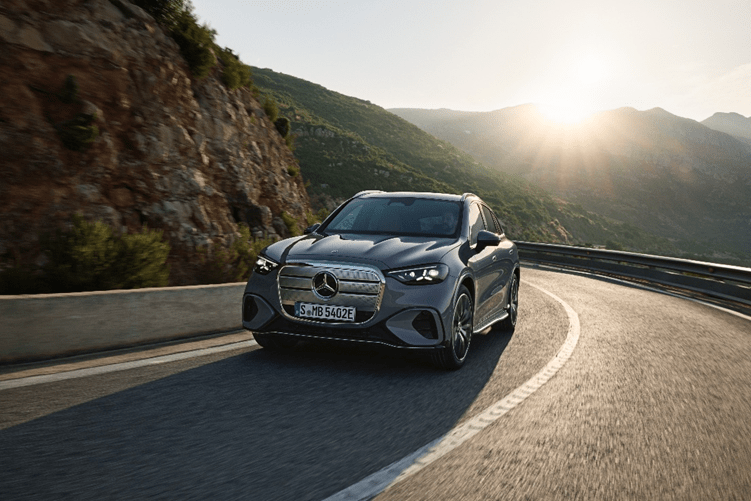
The new all-electric GLC spearheaded Mercedes-Benz’s presence at the IAA Mobility. Like BMW, the brand used its latest SUV to showcase a new design language. A redesigned, illuminated chrome front grille dominates the car’s visual presence.
An AI-driven MB.OS ‘superbrain’ will control every aspect of the new GLC, from infotainment to automated driving. It also features an MBUX ‘hyperscreen’, first seen at CES 2021, and the largest screen ever in a Mercedes-Benz vehicle.
Source: Mercedes-Benz
Like the BMW iX3, the GLC uses an 800-volt system and offers bi-directional charging. The SUV’s production is scheduled to start in the first quarter of 2026. This will then lead a product offensive of more than 40 vehicles over the next three years.
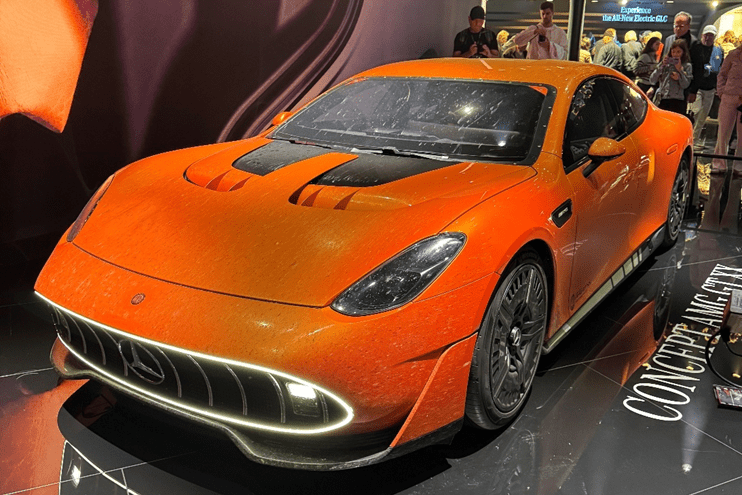
Mercedes-Benz also premiered its CLA, with a new hybrid powertrain and an all-electric shooting brake estate version. Furthermore, the Concept AMG GT XX made its show debut, highlighting the upcoming AMG.EA high-performance architecture.
The model recently completed a record-breaking ‘round the world’ distance challenge, travelling 40,075km in just eight days.
Source: Tom Hooker, Autovista24
Mercedes-Benz also presented an electric VLE prototype, providing a glimpse of its future grand limousine models. Meanwhile, Smart confirmed plans to present the #2, an all-electric two-seater city car in Europe as early as autumn 2026.
Audi’s future direction
Audi showcased its Concept C at the IAA Mobility. The two-seater convertible sports car represents the marque’s new design philosophy and the future direction of Audi. The brand also debuted its Q3 Sportback at the show.
Source: Tom Hooker, Autovista24
Elsewhere from the VW Group, Porsche premiered its 911 Turbo S, featuring hybrid technology. It also showcased its new wireless charging system for cars. This will first be available for the all-electric Cayenne, with the model’s world premiere planned for the end of this year.
Source: Tom Hooker, Autovista24
European models at IAA Mobility
Renault unveiled the sixth-generation Clio at the show. The hatchback will be available with a full-hybrid petrol or liquified-petroleum gas (LPG) powertrain in some markets. Orders will open before the end of 2025.
Opel presented its Mokka GSE at the event. This is the fastest all-electric Opel to date, according to the carmaker. It was joined by the Corsa GSE Vision Gran Turismo concept car, which previewed upcoming all-electric GSE models. The Opel Grandland Electric AWD also made its public debut in Munich.
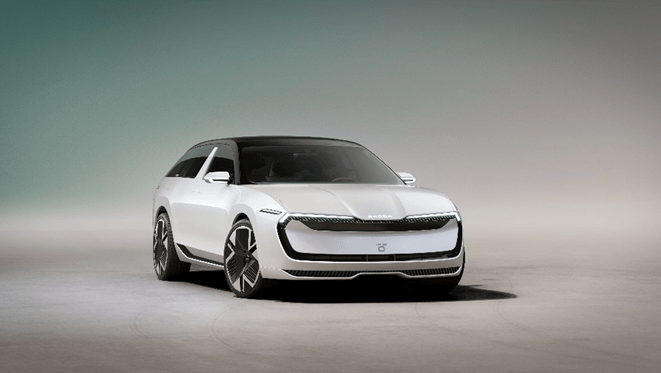
Skoda presented its Epiq show car at the IAA Mobility, previewing the carmaker’s upcoming all-electric compact SUV crossover. It is the first model to fully adopt Skoda’s Modern Solid design language and is scheduled for production in 2026.
Source: Škoda
The manufacturer also presented its Skoda Vision O in Munich. The new electric model features a redesigned interior with an AI-driven personal assistant.
Source: Škoda
Fellow VW Group brand Cupra presented its upcoming Raval electric city car in camouflage, which will be launched in 2026. It will use the VW Group’s MEB+ platform.
Source: SEAT S.A
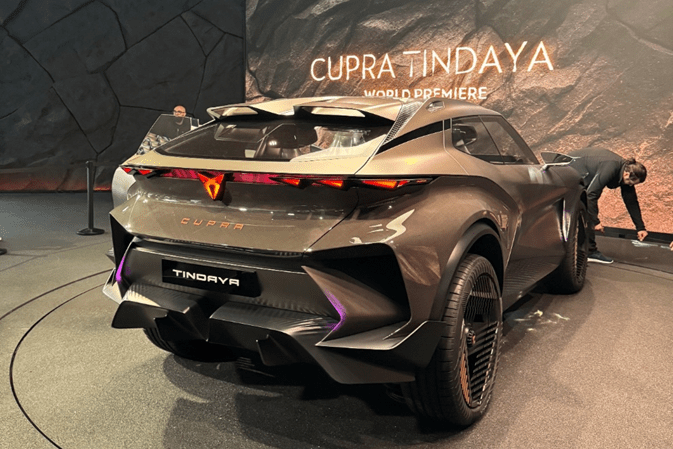
Furthermore, Cupra revealed its Tindaya concept. The model displays the brand’s future design language. Cupra also revealed plans to potentially enter the Middle East region in the future.
Source: Tom Hooker, Autovista24
After beginning life as a concept in 2020, the Polestar 5 was revealed in Munich. The grand tourer offers two trim versions built on an 800-volt framework.
Source: Polestar
IAA Mobility concepts from Korea
Hyundai presented its Concept Three at the IAA Mobility. This was the first compact EV concept from its Ioniq sub-brand.
The carmaker also used the event to outline its electrification roadmap. It plans to offer an electrified version of every model in Europe by 2027 and introduce 21 EV models globally by 2030.
Kia brought four premieres to Munich, including the EV2 concept. The B-segment SUV was a preview of a production model set to launch in 2026.
Source: Tom Hooker, Autovista24
Another upcoming model displayed was the EV5. The C-segment SUV offers bi-directional charging, with a launch expected before the end of 2025.
Chinese models impress at IAA Mobility
A total of 116 exhibitors in Munich came from China. Carmakers from the country combined new model unveilings with announcements.
BYD’s presence was led by the Seal DM-i Touring plug-in hybrid (PHEV), which made its public debut. The brand also confirmed that its Dolphin Surf city car will be its first passenger car to be built in Europe, at BYD’s plant in Hungary. The site is on track to start production by the end of 2025.
BYD announced that its Flash Charging system will come to Europe, with at least 200 stations planned by the second quarter of 2026. The technology can reach 400km of range after five minutes of charging. The manufacturer also confirmed the launch of its new approved used scheme for its models.
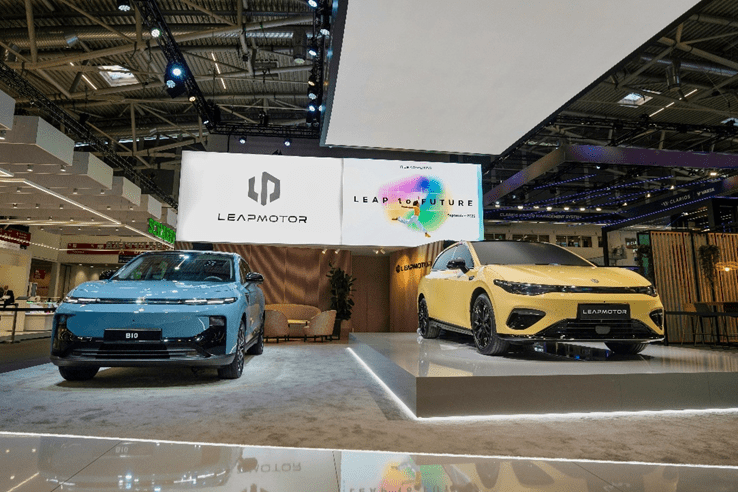
In the exhibition centre, Leapmotor held the world premiere of its B05 C-segment electric hatchback.
Source: Stellantis
Additionally, the brand showed off its B10 electric SUV, built on its new Leap3.5 architecture and offered with two battery sizes. The model began deliveries during the IAA Mobility and will be available in over 30 countries.
Expansion plans revealed
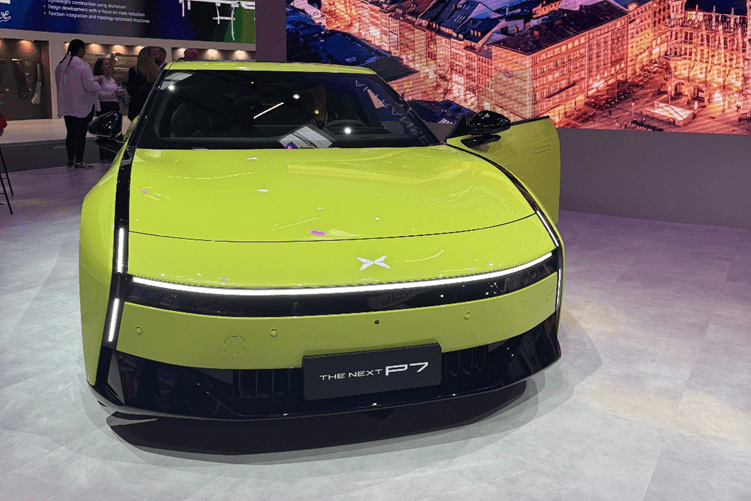
Xpeng celebrated the European premiere of its P7, an all-electric sports sedan. The P7+ was also displayed at the show, alongside the G6 SUV coupé and G9 SUV.
Source: Tom Hooker, Autovista24
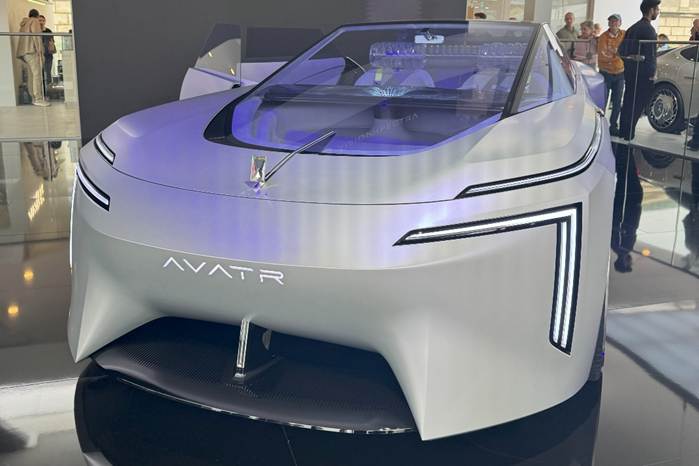
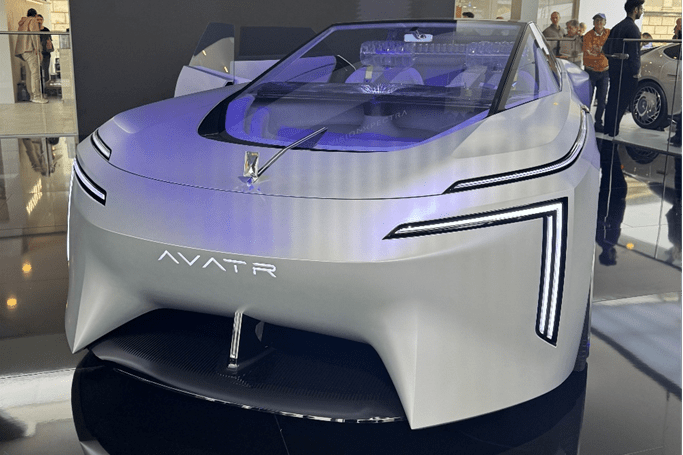
Changan confirmed a new battery-electric vehicle (BEV) SUV coming to Europe, the S05. Its Avatr sub-brand was also in Munich, debuting its Vision Xpectra concept. The carmaker plans to enter over 50 countries and regions worldwide.
Source: Tom Hooker, Autovista24
Meanwhile, GAC presented six vehicles at IAA Mobility. One of these was the Aion V, a BEV SUV, which will be the brand’s first model sold in Europe. The carmaker plans to enter Poland, Portugal, Finland and other countries from September 2025. GAC then wants to achieve full European market coverage by 2028.
Hongqi unveiled plans to offer up to 15 models in the European market, covering BEVs and hybrids in the A-segment to the E-segment. It aims to establish over 200 sales and service outlets across the continent. The EHS5 is the first model under the strategy, a premium all-electric SUV.
The event also marked the global expansion of another Chinese brand, Aito. It launched specialised variants of three SUVs, the Aito 9, Aito 7 and Aito 5, to enter the Middle Eastern market. These models offer BEV and range-extended electric vehicle (EREV) powertrains.
America and Türkiye bring new models
Turkish manufacturer Togg held the world premiere of its production-ready T10F sedan. Along with its existing T10X SUV, the brand announced its entrance into the German market. Both models will be available to order through its in-house service and ordering platform Trumore.
Togg also unveiled Can.AI, an agentic AI platform developed in collaboration with Microsoft Türkiye.
Meanwhile, US marque Lucid also announced its European market debut at the IAA Mobility. This will be with its Gravity model, a three-row SUV. The premium BEV will initially be available to order in Germany, the Netherlands, Switzerland and Norway, with deliveries expected to begin in early 2026.
Ford was also in Munich and hosted the world premiere of its Ranger PHEV MS-RT. The motorsport-inspired version of the pick-up was joined by the E-Tourneo Custom MS-RT, a sporty electric passenger transporter.
What is shaping the future of used-vehicle retail? Could residual values (RVs) bounce back by the end of 2025? Which model announcements were made this week? Tom Geggus, Autovista24 editor, explores these topics in The Automotive Update podcast.
This week, what impact will trade tension, increased battery-electric vehicle (BEV) volumes, and artificial intelligence (AI) have on used-car retail? Did RVs stabilise in June, and what role did new-car list prices and supply have? Plus, what major new model announcements made the headlines this week?
Remarketing experts and industry insiders gathered in Frankfurt at the end of June for the Used Vehicle Retail Summit. As covered by Autovista24 journalist Tom Hooker, one of the biggest talking points at the event was RVs.
EV Volumes director of content, Christian Schneider, outlined how values have fallen over the last two years. This followed a surge during the COVID-19 pandemic.
Currently, supply and demand are gradually balancing. However, due to considerable economic pressure and struggling economies, the pressure on RVs is unlikely to let up in the immediate future.
He went on to explore the additional RV impact of tariffs on the European used-car market. Schneider also talked about used BEVs, which are recording an increasing number of sales. However, the all-electric models are also seeing RVs fall at a steeper rate than the overall market.
Can AI benefit retail?
AI emerged as a key topic at the summit. McKinsey & Company partner Peter Cholewinski believes ‘a highly disruptive change is coming.’ This follows the release of an increasing number of large language models (LLMs).
Agentic AI proved a key talking point. These models are designed to autonomously make decisions and act. However, very few companies can capture the value of this new technology due to its difficulty.
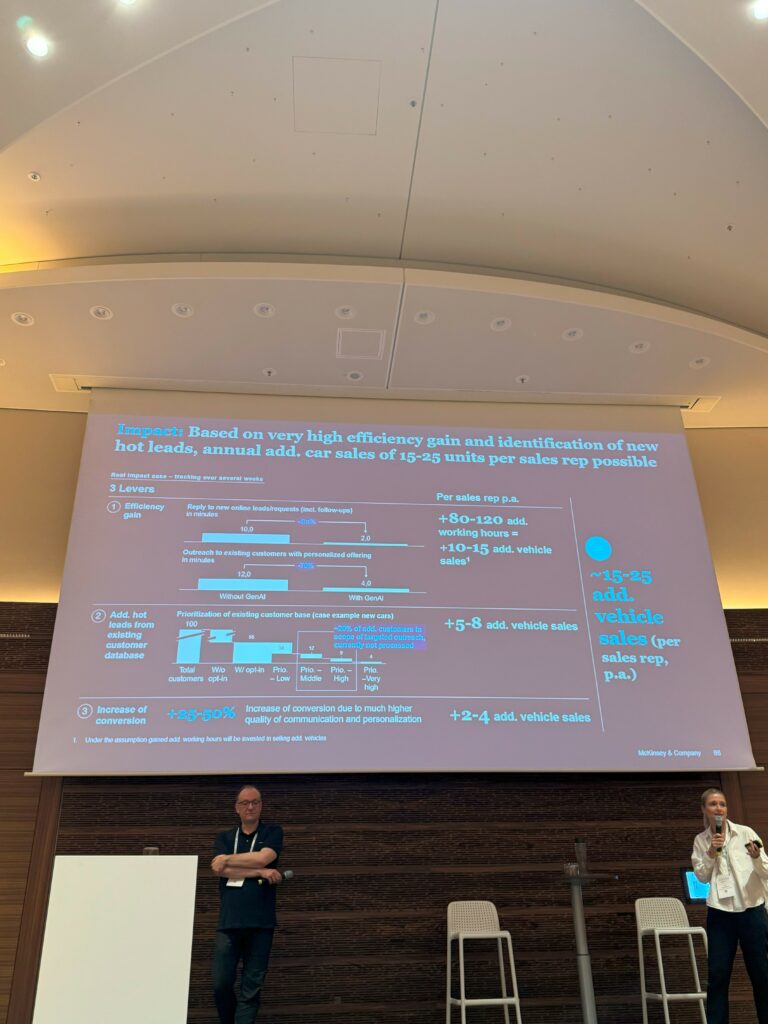
McKinsey & Company project manager Dr Lisa Schrewentigges showed how an AI tool is helping an unnamed German dealer group. The product can tailor and personalise messages for customers and online leads.
The tool was developed within six weeks and helped the dealer group record a 20% increase in conversion rates. Each sales representative also saw an additional 15 to 25 vehicle sales annually on average.
Will RV declines continue?
Despite a year-on-year %RV declines across seven European used-car markets, June’s Monthly Market Update revealed value stabilisation in some countries.
Three key markets witnessed an uptick in RVs compared to May. However, four nations saw %RVs continue their decline.
One factor which may have influenced this was a notable rise in new-car list prices. In June, six out of the seven markets saw list prices rise compared to 12 months ago.
New model announcements
The Polestar 7, a premium compact SUV, will be launched in 2028. Meanwhile, Geely launched its BEV SUV, the EX5, in Greece at an event in Athens.
Ferrari revealed the new Amalfi, which replaces the Ferrari Roma. On 10 July, Mazda will unveil the third generation of the CX-5.
Elsewhere, the next iteration of the Skoda Octavia will be launched at this year’s IAA show in Munich, according to Car Magazine. Finally, Lancia will reprise the Delta HF Integrale next year, according to Autocar.
This year has seen a surge in artificial intelligence (AI) advances. But what impact has this technology made on the used-car retail industry, and what is yet to come? Autovista24 journalist Tom Hooker takes a deep dive into the subject.
Through the likes of ChatGPT, Google Gemini and Microsoft Copilot, AI has transformed the way we work. Forbes reported that the technology will reach a market revenue of $1.33 billion (€1.18 billion) by 2030. Meanwhile, 64% of businesses believe that artificial intelligence will help increase their overall productivity.
Within the automotive sector, AI is already embedded in manufacturing and quality control, such as BMW’s ‘Factory Genius’ assistant. It is also being used to improve connected car experiences. Volvo Cars is using AI to enhance advanced driver-assistance systems (ADAS).
How would the technology work in the world of used-car retail? It could give customers a more personal and efficient experience. But how does this translate into realistic sales and revenue growth for dealerships?
AI and disruption
Answering this question means stepping back to look at the AI industry and the anticipated changes just around the corner.
‘Now we see what we believe to be also a highly disruptive change coming up with artificial intelligence,’ stated McKinsey & Company partner Peter Cholewinski at the Used Vehicle Retail Summit.
From left to right: Peter Cholewinski, McKinsey & Company partner. Dr Lisa Schrewentigges, McKinsey & Company project manager
‘The topic is not new. AI has been around for many years. However, with the introduction of ChatGPT, this has arrived in our daily lives and in the lives of companies. The speed of progress is just amazing,’ he added.
ChatGPT is an example of a generative large language learning model (LLM). This means it can create content such as text and images in response to a person’s prompt or request.
To do this, it relies on using machine frameworks known as deep learning models. These algorithms simulate the human brain’s learning and decision-making processes.
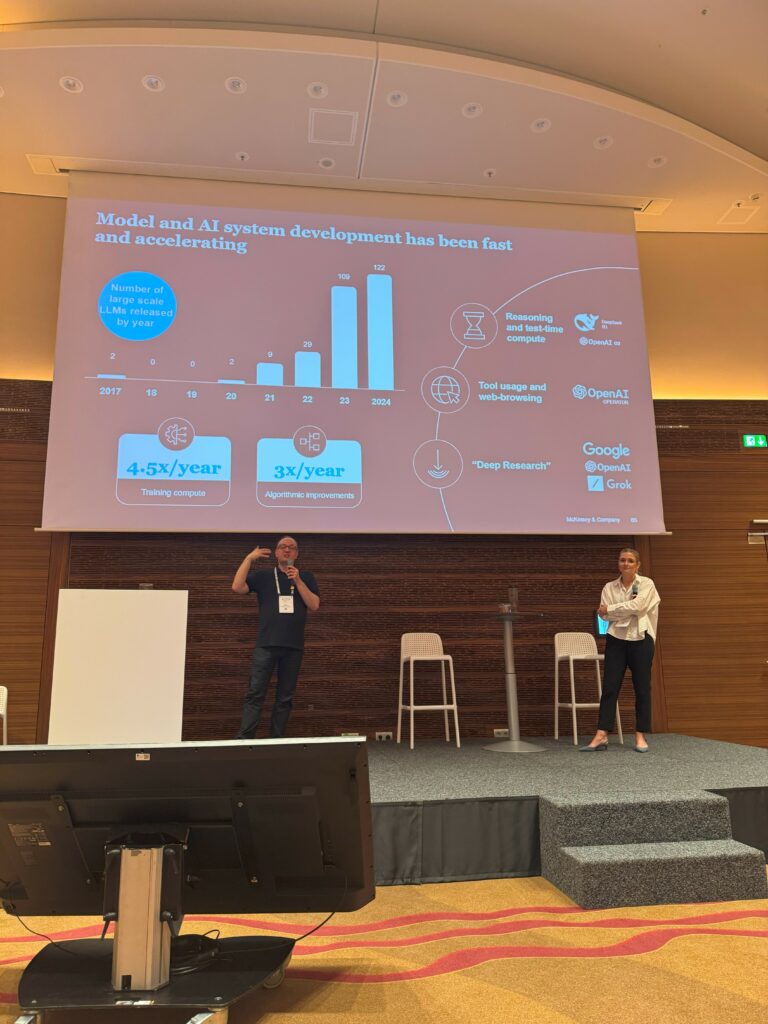
Cholewinski showed the growing number of LLM releases. In 2024, 122 new models entered the market. This was up from the 109 LLMs launched in 2023 and a significant increase from 29 releases in 2022.
From left to right: Peter Cholewinski, McKinsey & Company partner. Dr Lisa Schrewentigges, McKinsey & Company project manager
‘In 2025, you have many models out there, and those models are becoming smarter. We are now not talking about large language models, but about reasoning models. Additional tools are also coming out, like deep research. The machine can go on its own onto the internet and figure a lot of information out by itself,’ Cholewinski explained.
Agentic AI can capture value
While generative AI LLMs depend on users’ prompts and requests, agentic AI LLM models are designed to autonomously make decisions and act, with the ability to pursue complex goals with limited supervision, IBM wrote. This combines the flexibility of LLMs with the accuracy of traditional programming.
‘This year, everybody is talking about agentic AI. When you take those models with reasoning capabilities, they can plan and think about what they need to do to achieve a goal. You can also have several of them working together, exchanging basic information, reviewing each other, and trying to solve a problem on their own.
‘So, it is not only about one chatbot that you talk to, but end-to-end processes and how several agents can achieve something useful and valuable.
‘Agentic machines can tap into different workflow steps and coordinate across those workers. This means we have more automation possibilities across workflows. This is where most of the value will be captured, especially as they become smaller,’ commented Cholewinski.
The first fully autonomous agentic LLM model, Manus, was released in March 2025, as written by Forbes.
AI transformation troubles
‘Everybody is trying it out, but only a very small number can say we invested something, and we actually captured something. This is because it is very difficult,’ said Cholewinski.
‘You need to have the technology, but you also need to have the right talent to understand how to use that technology and an operating model that will drive the change management to scale and adopt this technology,’ he added.
From left to right: Peter Cholewinski, McKinsey & Company partner. Dr Lisa Schrewentigges, McKinsey & Company project manager
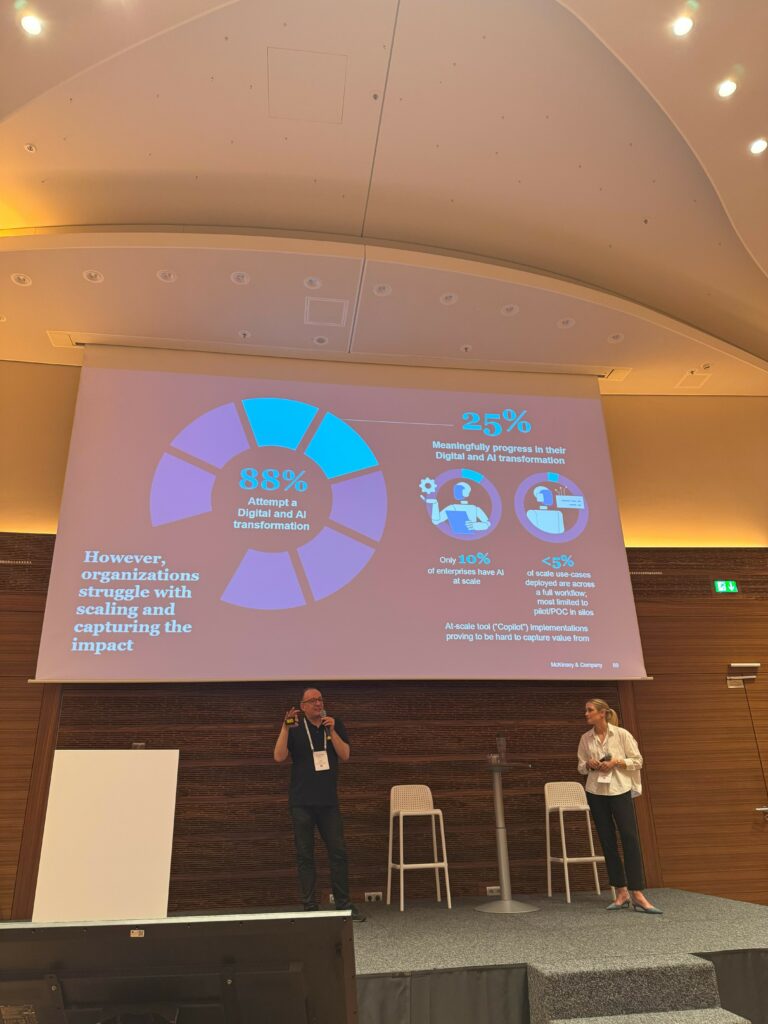
Cholewinski showed that 88% of companies attempt a digital and AI transformation. However, just 25% meaningfully progress in their digital and AI transformation. Furthermore, just 10% of enterprises have AI at scale, and under 5% of scale use-cases deployed are active across full workflows.
‘In the cases where we are seeing value being captured, they are thinking about several use cases together and in an agentic fashion,’ he highlighted.
AI assists dealership leads
So, what real-world use cases are already being implemented in the automotive retail sector, and what impact is this having?
One example is a generative AI-based tool that can tailor and personalise messages for customers and online leads. The unnamed product was built for one of the largest German dealer groups. This means covering 200 different dealerships and a database of over 500,000 existing customers from vehicle sales.
From left to right: Peter Cholewinski, McKinsey & Company partner. Dr Lisa Schrewentigges, McKinsey & Company project manager
‘What they struggled with is looking into the lead management and how to have a very structured approach in contacting existing customers in a very fast way, which is also very tailored,’ explained McKinsey & Company project manager Dr Lisa Schrewentigges.
In her presentation, she showed that the dealer group previously spent around five to 10 minutes on every customer outreach. They also struggled with how to respond to incoming website leads and how to personalise this interaction.
Fast development times
‘What we have done together with them is, within six weeks, develop a generative AI tool, which allowed them to identify the most promising leads. Secondly, tailor the messages towards those leads and be fast in answering those leads,’ she outlined.
‘With generative AI and agentic AI, you can implement those kinds of solutions very fast because you do not need to train the AI anymore. These models are so powerful that you can actually use them off the shelf,’ noted Cholewinski.
‘This is also where the potential lies. You can think about your end-to-end processes, where there is a lot of manual work that you could improve. Then, think about the several use cases that make sense to improve productivity or sales with this technology,’ he added.
The sales agent journey
Schrewentigges walked through the typical sales agent journey. This starts with selecting a customer and thinking about which promotion to send. Then, interacting with the customer, and in the end, moving this customer towards a decision.
‘Where we helped here was bringing together the customer information that they already have on the system, matching it with third-party data and different website data,’ she said.
From left to right: Peter Cholewinski, McKinsey & Company partner. Dr Lisa Schrewentigges, McKinsey & Company project manager
‘Then you have a full, enriched customer profile, identifying the most promising leads and personalising communications with a specific customer, which helps the sales agent convert them to a sale,’ Schrewentigges said.
A dashboard then enables the sales agent to see a full customer overview. It can prioritise the customer based on a lead score and suggest specific email campaigns. The dashboard also displays different customer groups, such as existing customers, website leads, and follow-ups.
She then showed the typical outcome of this personalised messaging. Various data points can be used by the generative AI to create an individualised email to the customer.
‘They were able to not only send out emails, but also very personalised phone calls based on the information that we put together. This, in the end, led to much faster reply times from website leads, because we had a very standardised approach in answering typical emails, but also it led to much more personalised communication,’ Schrewentigges said.
An instant impact?
‘We had a lot of impact regarding the speed of answers, personalised communication, but also in the end, this will ultimately sell cars much faster,’ she stated.
The dealer group recorded an increase of more than 20% in conversion rates. Each sales representative recorded an additional 15 to 25 vehicle sales annually on average.
This was made possible through a 70% to 80% efficiency gain, which meant more time to sell cars. Furthermore, 10 to 15 times more customers were approached with relevant sales campaigns. However, there were still significant challenges and concerns for the tool to overcome.
From left to right: Peter Cholewinski, McKinsey & Company partner. Dr Lisa Schrewentigges, McKinsey & Company project manager
‘You always need to drive a balance between not using too much information because once you go into too many details that the AI might know, it becomes very creepy,’ commented Cholewinski.
Additionally, as AI becomes more powerful, could this put jobs in dealerships at risk in the future?
‘Even though generative AI solutions will help with emails, there will always be a personalised component in contacting the dealership, having a phone call, and visiting the car,’ said Schrewentigges.
‘I think it will, in a certain part, probably affect how vehicles will be sold, but we always need this component. People come to the dealership and want to see and feel a vehicle,’ she explained.
Virtual assistants for retailers
Elsewhere, Novaco AI provides virtual assistants that can be used on automotive retailer websites. By connecting to their data, the assistants are designed to improve dealership efficiency, automate conversations, and optimise customer interactions.
‘It is connected to inventory, virtual planning, digital work orders, but also your lead management system,’ outlined Novaco AI CEO Maarten Bekkers.
The assistant started with Google AI in 2019. After LLMs were released, the tool began utilising them. It is now beginning to use agentic AI models and is bringing its assistant to WhatsApp.
The company also provides a virtual assistant for dealership employees to increase their efficiency and find information quickly. The AI companion is also connected to pricing information.
‘So, if somebody calls and asks, “what would it cost to replace my clutch for the car with that number plate?”, you just fill in the question to the companion and it will generate the answer within a few seconds. ‘It is a real virtual employee that works for you,’ said Bekkers.
From left to right: Johan Verbois, Co-founder MA5 Used Vehicle Consulting group. Jan-Willem Seeder, CEO JP.cars. Maarten Bekkers, CEO Novaco AI. Nicolas Daive, chief of staff Lizy. Paweł Samczyk, COO Exacto Holding Automotive
The assistants can also help dealerships with common queries, freeing up time for employees.
‘Complaint number one at dealerships is that the phone keeps on ringing with the same questions every day. The majority of people who book a service call the dealer. It is the most expensive resource of the dealer is actually booking the service, it is crazy,’ he commented.
‘So, you should turn it around. If people really want to call, they can still call. But in the near future, a virtual assistant will be on the phone, having the same conversation as a human and making a booking,’ Bekkers added.
AI’s organisational prowess
‘AI has been instrumental for our success,’ said Lizy’s chief of staff, Nicolas Daive, as he began his presentation. The company is an online B2B car leasing platform offering used vehicles to companies.
‘Used cars are more operationally complex and messy than new cars. Despite that, because you have lower asset value, lower leasing prices and longer holding periods, you can be extremely efficient. With AI, we were able to transform this messy product into a very simple operation,’ highlighted Daive.
‘To make sure we have the best possible offering, we source vehicles all over Europe, across more than 100 suppliers. This means that we have more than 100 data formats, data types, processes, and ways of working.
‘In the past, working with this number of suppliers would have meant you needed four or five full-time employees due to the complexity it brings. With AI, we were able to do this with half a full-time employee,’ he commented.
Daive explained the process of buying cars from a supplier, with a PDF containing data. An employee then forwards the PDF to their AI agent with a few instructions. This includes scheduling a pickup time for the vehicles and pre-pricing them.
‘All that is done from the click of a button. In the past, we probably would have had a full-time employee that is doing a lot of copy and pasting, getting the right data into the right fields, and talking to a lot of departments,’ he noted.
‘Automation is nothing new. Commission is something we have been doing for almost four decades. What is new is that AI allows us to automate chaos. It can take unstructured data, structure it, then send it to the right places,’ concluded Daive.
Residual value (RV) pressure, emerging Chinese brands, growing profitability and the importance of battery-electric vehicle (BEV) sales. Autovista24 journalist Tom Hooker analyses how and why the landscape of used-vehicle retail is changing.
Industry associations, automotive experts, and carmaker representatives gathered in Frankfurt for the Used Vehicle Retail Summit. The event covered various used-car market topics, including current RV trends, building consumer trust and the sale of BEVs.
Europe’s residual value development
EV Volumes director of content, Christian Schneider, explained how RVs have changed in Europe over the last few years. ‘During the pandemic, because of all the supply shortages, a lot of people were happy that RVs were growing through the roof,’ he explained.
‘But over the last two years, we have seen that across all fuel types, across most countries in Europe, RVs are dropping. They are coming back slightly to a pre-pandemic level, but we still see RVs across various parts of Europe that are above pre-pandemic levels.
‘We see supply and demand balancing a little bit more at the moment. We also see that there is a lot of economic pressure and economies are struggling. So, of course, that has an impact on RVs. For 2025 and 2026, we do not expect the pressure on RVs to get better,’ stated Schneider.
Increased prices
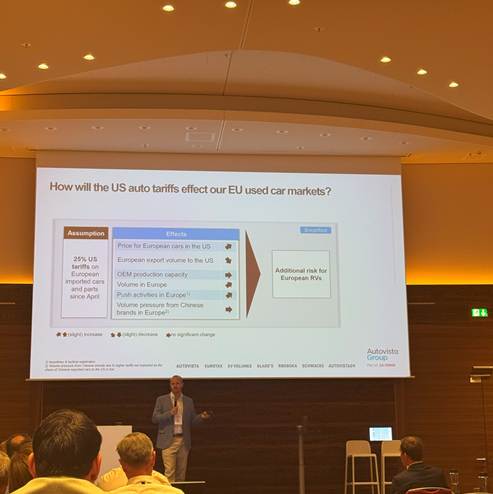
He also noted the impact US tariffs could have on the European used-car market. ‘What we are expecting, if the 25% automotive tariffs stay in place after July, is that the prices for European cars in the US will grow. That also will mean that European export volume to the US will shrink.’
EV Volumes director of content, Christian Schneider
‘But for OEMs, they are producing cars, and they must be sold somewhere. So that means in Europe, you will see increasing volume in our European brands over the next months and maybe even years. This is not a big thing for electric vehicles (EVs), because electrification in the US is not advanced.’
He highlighted that the bigger impact will be on internal-combustion engine (ICE) vehicles. Overall, if higher US tariffs remain after July, there will be additional risk to RVs. EV Volumes is also observing an increasing number of used BEV sales. However, RVs are dropping at an even steeper rate than the overall market.
This is because more BEVs are entering the market than before. However, most of this volume is not coming from private buyers. Instead, it is being pushed through fleet channels.
Furthermore, a lot of the incentives offered in European countries are only offered on the new-car market. These factors are generating an artificial oversupply for used-car markets.
China’s growing influence
Chinese BEV volumes are forecast to continue to grow in Europe over the next few years. Carmakers from China held a 7% share of the European new-car market in 2024. EV Volumes expects this to grow to 10% this year.
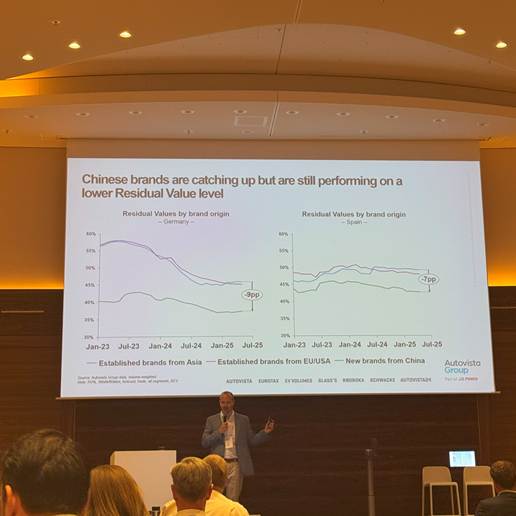
Despite this, RVs of these models still trail behind BEVs originating from other regions. ‘In Germany, Chinese brands are performing nine percentage points (pp) lower than those from established Asian, European or US brands,’ highlighted Schneider.
EV Volumes director of content, Christian Schneider
‘But we saw over time that this is getting smaller. Around one year ago, there was approximately a 14pp or 15pp difference between the brands. So, they are closing the gap, but we still see that the brand reputation takes significant time to fill up, especially for used-car buyers.’
In Spain, this gap is smaller, as the country’s domestic brands are not as strong compared to those in Germany.
Used-car retail
With overall BEV RVs struggling compared to other powertrains, and an increasing number of all-electric models entering the used-car market, how can dealerships survive?
As AECDR secretary general Friedrich Trosse explained, a more effective dealership and communication strategy is needed to keep used-car buyers engaged.
‘The used-car market is going to be the low-income segment of BEVs, because we are never going to have something like a Volkswagen Beetle ever again that is affordable and has modern technology,’ he commented.
For retailers, planning their overall used-car market strategy is also becoming more important, especially when compared to their new-car business.
Left to right: Johan Verbois, Co-founder MA5 Used Vehicle Consulting group. Friedrich Trosse, Secretary General AECDR. Luis-Maria Perez-Serano, Chairman of the Board at CARA. Rodrigo Ferreira da Silva, Vice President and Chairman of CECRA
‘I think that used cars, for retailers and dealers, are an amazing opportunity. In some mature markets, the used-car business is double the size of the new-car business,’ outlined CARA board chairman Luis-Maria Perez-Serano.
‘You can achieve more money and higher margins. Many retailers are now earning more money from used cars than new cars. What is maybe even more important is that used cars are essential for customer retention. They play a major role as the first entry point for buyers,’ he said.
However, Serano added that the used-car market is a complex business. Having a good digital interface is essential for dealers, and he believes more can be done to make the customer’s digital journey easier. This includes showing EV battery health checks online.
Serano also discussed cross-border sales in Europe, and that despite the EU being considered as a single economic market, this is not yet the case for the used-car market. However, improving the facilitation of these sales could create opportunities for retailers who could maximise revenue by moving vehicles to other countries.
Additionally, he stated that there is still a lot to do in terms of educating and training staff in used-car sales and remarketing.
Missed opportunities in retail
‘I still see a lot of missed opportunities in every country. I know most markets have evolved into a more balanced ratio between using new and used cars, but the profitability has not been in the new cars as it has been over the past years,’ explained vice president and chairman of CECRA, Rodrigo Ferreira da Silva.
He also highlighted the importance of the customer having access to accurate in-vehicle data. He advocated for the implementation of a car pass at a European level.
This is a vehicle diagnostic report that provides a certificate to buyers at the time of sale, verifying the vehicle’s mileage accuracy. It has been designed to fight against odometer tampering in the used car market. However, the service is currently only offered in Belgium and the Netherlands.
Driven by a desire for efficiency and safety, more cars on sale today feature advanced driver-assistance systems (ADAS). But what does this term mean? Autovista24 special content editor Phil Curry explores the technology.
When it comes to today’s automotive market, safety and efficiency are paramount. Vehicle manufacturers are incorporating a range of systems designed to make driving easier, more comfortable, and safer. These systems come under the umbrella term, ADAS.
Some of these systems are designed to improve the driving experience. Others have been included due to regulations, such as the EU’s General Safety Regulation. There is also an increasing demand from drivers who want technology to help them on their everyday journeys.
ADAS is rapidly becoming widespread in the automotive market. According to ADAS developer Valeo, this technology will feature in 90% of all vehicles sold worldwide by 2030.
There are many systems that help to keep drivers and other road users safe. These can be split roughly into three areas: safety, parking, and driving.
ADAS keeps you safe
Systems that work within the safety category help to improve a driver’s ability to react to hazards on the road. They also work to keep other road users and pedestrians safe.
This is achieved through advanced detection sensors and early warnings. These combine to alert drivers, either through lights or audible warnings, indicating that action needs to be taken.
For example, intelligent speed assistance detects a road’s speed limit. Should a vehicle go too fast, an alert will sound, indicating the driver should reduce the speed. Driver drowsiness detection utilises a sensor behind the steering wheel to scan a driver’s eyeline. An alert sounds should this deviate away from the road. If this continues, the vehicle can suggest pulling over for a rest.
Safety systems can also take control in extreme circumstances. Anti-lock braking will reduce pressure on wheels, avoiding skidding. Meanwhile, collision avoidance systems will automatically apply the brakes, potentially preventing a collision.
Parking developments
Parking ADAS provides convenience and safety. Originally, this technology relied on parking sensors fitted into a vehicle bumper. However, modern cars feature an array of cameras around the vehicle, which provide a live feed to the infotainment screen.
Vehicle systems can also stitch these images together to provide a 360-degree birds-eye view of the car. This can help the driver avoid obstacles, as well as pedestrians, cyclists, or anything else in the vehicle’s path.
More autonomous technology also allows vehicles to park themselves, using park assist features. When activated, a car will scan for a space big enough, and then manoeuvre the vehicle into it. Some carmakers offer remote options. This allows parking to be completed while the driver is outside the car, accessing the service via an app.
Driving comfort
ADAS can help a driver feel more comfortable in the car, enabling a more efficient use of the vehicle. Driving ADAS can automate and adapt vehicle usage, with or without driver input.
One of the most well-known systems is adaptive cruise control. This helps control the speed of the vehicle, relative to the car in front. When a certain distance limit is reached, brakes are applied, and the gap is maintained. Other systems, such as lane-change assist, can help the vehicle switch lanes when the indicator is applied.
Sensing ahead
ADAS uses a series of cameras and sensors placed around a vehicle. The most common detection sensors include ultrasonic, radar cameras, and light detection and ranging (LiDAR). These feed information to the systems for processing, allowing the technology to assess the next best action.
Many sensors are located in the front of the vehicle. A camera is often placed behind a rear-view mirror and behind a smooth panel in the grill. Additional cameras can be placed around the vehicle to aid parking, while more units can be placed in bumpers to provide more information.
This makes a car more complex, especially when it comes to repair and maintenance. Should a panel or windscreen need replacing, or a vehicle’s wheel alignment adjusting, a full ADAS calibration is often needed. This is essential to ensure systems function correctly with the right data being gathered.
Tariffs on automotive imports into the US have shaken the industry, but how will electric vehicle (EV) forecasts be affected? Neil King, head of forecasting at EV Volumes, sets out his expectations with Autovista24 editor Tom Geggus.
Since taking office in January, US President Donald Trump has imposed import tariffs on countries around the world. The subjects of these duties have been broad, with rates subject to change.
Most recently, Trump signed orders easing pressure on carmakers by introducing a mix of credits and relief from duties. Accordingly, these companies will be able to offset a portion of tariff costs on imported parts.
Until 30 April 2026, carmakers can claim 3.75% of the manufacturer’s suggested retail price on vehicles built in the US. From 1 May 2026 to 30 April 2027, this rate will drop to 2.5% and then be phased out.
Furthermore, carmakers will not be subjected to stacked tariffs, meaning no cumulative effects from multiple vehicle-related duties. Companies will instead be subject to the highest import rate. So, a carmaker would pay a component’s 25% import duty, but not the on the part’s steel and aluminium as well.
How have all these tariff changes impacted global EV expectations? EV Volumes’ latest forecast highlights the impact on the global light-vehicle market, covering passenger cars and light-commercial vehicles.
Shake up for global forecasts
By the end of 2025, light-vehicle volumes are now expected to grow by 1.2% year on year. This is down from the 1.9% growth outlined in its March forecast. In volume terms, the reduction equates to 600,000 fewer units in 2025 and one million units in 2026.
The downgrade is due to the added economic uncertainty in the wake of the new US goods tariffs and a spiralling trade war with China. There is also the expected earlier withdrawal of the Inflation Reduction Act (IRA) in the US.
However, the global EV share forecast for 2025 has been increased to 23.6%, compared to 22.7% in the March update. An upgraded outlook in China compensated for the reduction in Northern America and adjustments in Europe and the non-Triad region.
rn
EV sales are forecast to grow by 19.2% year-on-year, up from 16% predicted in March. The latest forecast of 21.32 million EV sales globally in 2025 is 700,000 units higher than EV Volumes predicted previously. EVs are forecast to account for 43% of global light-vehicle sales in 2030, rising to a 65.3% share in 2035, and 84.1% in 2040.
Uncertainty in Northern America
Light vehicle sales in Northern America, including the US and Canada, increased by 2.9% year on year in 2024. This followed 12.4% growth in 2023. The EV share rose to 10.3% in 2024, up from 9.4% in 2023.
On 26 March, the US announced a 25% import duty on vehicles. This did come with an adjustment for US parts in vehicles produced in Canada or Mexico. However, even US-built vehicles do not escape unscathed as a 25% tariff applies on the non-US parts.
OEMs cannot fully pass on these new tariffs through higher prices without incurring large sales declines. However, this has not happened in Europe since import duties were increased for EVs built in China.
According to J.D. Power analysis, the average price of new vehicles in the US is expected to increase by 5% by the end of 2025. This translates to an 8% reduction in the sales rate.
However, a ‘pre-tariff bump’ to sales is expected in the second quarter, a trend already recorded in March and April. Prices are then predicted to rise by between 3% and 5% on average in the third quarter. Then the ‘new normal’ of 5% higher prices is expected to take effect from the fourth quarter.
Alongside automotive and goods tariffs, EV Volumes has factored another upcoming hurdle into its forecast. It assumes the IRA, which provides EV tax credits, will be withdrawn in the second half of 2025.
Forecasts lowered
EV Volumes has lowered its 2025 light-vehicle sales forecast for Northern America to 17.67 million units. This equates to a 0.9% year-on-year decline. The long-term outlook has also been reduced due to the lower base.
rn
The EV share of light-vehicle sales in Northern America is now predicted to reach 11.1% in 2025. This is down from the 12% forecast in March. In 2030, this is expected to reach 27.4%, growing to a 45.2% share in 2035, and then 64.1% in 2040.
BEVs are expected to account for 76.7% of EV sales in 2025. This share is projected to rise to 79.5% in 2026, then reaching 89.7% in 2030, 92.9% in 2035, and 94.2% in 2040.
Europe under pressure
Europe’s light-vehicle market grew by a modest 1.7% year-on-year in 2024. This followed the 14% registrations growth in 2023. There is uncertainty surrounding the new US goods tariffs and Europe’s response.
This is in addition to existing regional stresses such as the war in Ukraine. However, EV Volumes does assume a greater risk of rising inflation and energy costs. This may lead to higher interest rates and taxes across the region and downgraded gross-domestic product forecasts.
EV Volumes forecasts that light-vehicle sales in Europe, covering Western and Central regions, will grow by 0.15% this year. This is lower than the 0.65% growth predicted in its March forecast. At just under 15 million units, this outlook falls far short of the 18 million light vehicles registered in Europe in 2019. Additionally, the European market is not expected to return to this level during the current forecast horizon to 2040.
European EV deliveries fell by 2.2% year on year to 3.07 million units in 2024, representing a 20.5% market share. This is compared to 21.3% in 2023. This was mostly because of changes in EV subsidies. This includes shifts in France, Germany and Ireland. Incentives also fell during the year, especially for PHEVs. Even EV-friendly Norway ended its VAT exemption.
Most legacy OEMs could stay safely below their CO2 limits without selling more EVs. There was even a clear year-end push on ICE vehicles in many markets. This was so the models would not count towards the lower average emissions targets from 2025.
Positively, more affordable BEVs such as the Citroen e-C3 are rolling out. BYD also has regional expansion plans, as do other Chinese OEMs. Furthermore, Germany is considering a possible reintroduction of BEV incentives. However, this may not be implemented given the current socio-economic climate.
BEV growth to continue
Considering the latest changes to the EU CO2 emissions targets, EV Volumes forecast that European EV sales will increase by 14.3% this year. Therefore, 3.51 million units will likely be sold by the end of 2025, equating to 23.4% of all light-vehicle sales. This is higher than the 20.5% share achieved in 2024 and the 21.3% gained in 2023.
rn
BEV volumes are forecast to grow by 20% this year, accounting for 71.8% of EV sales. Meanwhile, PHEV deliveries are only expected to increase by 2.8%. The rollout of new EVs and the EU’s latest CO2 emissions targets will also influence market developments.
EV Volumes foresees EVs capturing 26.4% of European light-vehicle sales in 2026. By 2027, these powertrains are forecast to account for one in three new vehicle registrations.
Economic stimulation in China
China’s EV growth continued last year, supported by greater price competitiveness. A scrappage scheme was introduced in April 2024, encouraging vehicle replacements through higher incentives. This programme has been extended to 2025, meaning there is continued support for EVs in China.
The country is currently facing a challenging economic situation. So, the government is attempting to stimulate domestic consumption while addressing deflation and the BEV price war. State-owned OEMs are seeing considerable support as a result.
The spiralling trade war with the US has also compounded the challenge. There are concerns about the country reaching its growth target of 5% this year. EV Volumes now expects the country’s light-vehicle market to reach 26.69 million units in 2025. This equates to 2.7% year-on-year growth.
Chinese OEMs will continue to roll out countless new PHEVs and extended-range electric vehicles, exacerbating their appeal. EV Volumes forecasts these powertrains will capture a 44.5% share of the EV mix in 2025. However, BEVs are expected to gain ground from 2026 onwards.
In the medium and long term, EV Volumes’ China forecast is not restricted by target shares or capacity limitation. EVs are forecast to account for 52.6% of light-vehicle sales in 2025, and 73.8% in 2030. Come 2035, they are expected to make up 89.3% and 96.5% in 2040.
rn
Growth rates could suggest even faster electrification, but EV Volumes remains cautious because of regulatory and economic uncertainties. This forecast for China shows retail sales, not wholesale, for historic and forward volumes. This excludes exported units and inventory build-up.
Non-Triad region to see growth
Light-vehicle volumes in the non-Triad markets rose for the fourth consecutive year in 2024. EV demand is increasingly supported by a wider availability of products, higher incentives, and lower import duties in some countries.
EV sales reached 1.34 million units last year, representing a year-on-year growth of 32.6%. In 2024, the EV share increased to 4.4%, bolstered by EV incentives in countries such as India, Malaysia, Thailand, and Colombia.
The region is feeling added economic uncertainty stemming from the new US tariffs, and government responses. EV Volumes has therefore lowered its growth forecast for light-vehicle sales in 2025 to 1.7%. This is down from the 2.3% assumed in March.
A strong performance is still anticipated in the first half of 2025. However, an even greater slowdown is now expected in the second half. There is a greater risk if tariffs are applied at the elevated levels in place before the 90-day grace period took effect on 9 April. The 2025 EV share forecast for the non-Triad countries sits at 5.85%, translating to 1.8 million EV sales.
Additionally, countries like South Korea and Japan continue to offer financial support for PHEVs. South Korea has even reduced subsidies for BEVs and increased support for hydrogen fuel-cell models. However, incentives and tax breaks could be in jeopardy if governments need to introduce measures to counter an economic downturn.
rn
The EV share of non-Triad light-vehicle sales is predicted to rise to 16.8% in 2030, 41.6% in 2035, and 76.7% in 2040. This trails global EV adoption by five to six years. Many developing countries impose high tariffs on vehicle imports. Unless EVs are exempted, these countries will need to develop their own EV industry to catch up with more mature markets.
BYD has a big week, Nvidia reveals its latest autonomous technology developments, and many model updates. Autovista24 editor Tom Geggus presents the latest stories in The Automotive Update podcast.
This week, carmakers confirmed new artificial intelligence (AI) applications. Europcar revealed plans to address electric vehicle (EV) price parity. Renault unveiled a sporty version of its new Renault 5, and MG gave one of its most popular models a facelift.
BYD has unveiled its ‘Super e-Platform’. The EV technology could be capable of charging at speeds of 1,000kW Reuters reported. This means the system could deliver 400km of range after five minutes of charge.
The new BYD Han L sedan, and Tang L SUV, will be the first models fitted with the technology. The news sent the carmaker’s stock soaring, according to the Wall Street Journal.
However, it was not all good news last week. The Financial Times (FT) reported that BYD faces a European Commission investigation. The probe is exploring whether China provided unfair subsidies for its EV plant in Hungary. If the European Commission finds the company has benefited from unfair state aid, penalties may be imposed.
The FT also drew attention to a delay in the approval of a BYD plant in Mexico. Meanwhile, the carmaker’s executive vice president, Stella Li, told Autocar there are no plans for BYD plants in Germany or the UK. However, she did confirm to the Independent that the UK will be home to a new research and development centre.
Nvidia unveils autonomous developments
At its GTC AI conference, technology company Nvidia revealed its latest autonomous and AI-based developments. The business confirmed the launch of Halos, a full-stack safety system. It brings together its hardware and software solutions for autonomous vehicles.
It also unveiled an open-source data set to help developers with physical AI projects. Data focused on developing autonomous vehicles will be made available. This includes 20-second clips of traffic scenarios from over 1,000 US cities as well as two dozen European countries.
Nvidia also announced some major collaborations at the event, including a tie-up with General Motors (GM). The companies will work together to build custom systems to train AI manufacturing models.
GM will also use Nvidia’s Drive AGX for future advanced driver-assistance systems (ADAS) and enhanced safety experiences.
Carmakers increase use of AI
Volvo Cars has revealed it will use realistic, AI-generated virtual worlds to develop its safety software, including ADAS. The carmaker can work with incident data gathered from sensors in its new cars. This will allow it to reconstruct and explore how incidents could be avoided.
Mercedes-Benz confirmed the deployment of AI features at its Berlin-Marienfelde site. This includes humanoid robots, advanced chatbots and virtual assistants. The site will also soon produce high-performance electric axial-flux motors.
EV market developments
Japanese carmaker Mazda has outlined a ‘lean asset strategy’ when it comes to electrification.
The brand will reduce investment in batteries, production, and EV development, through collaborations and partnerships. It will focus on existing resources as well as more efficient development and manufacturing methods.
Meanwhile, Foxconn and Mitsubishi are reportedly close to an EV production deal. According to people familiar with the matter, an announcement is expected in the coming weeks. The FT reports that any venture will allow Mitsubishi to expand its line-up of models at a lower cost.
Europcar Mobility Group UK is aiming to bring electric vehicle price parity to its rental offering. As of April, business customers will be able to rent EVs for the same price as an internal-combustion engine counterpart.
‘We understand that cost is a significant factor for businesses considering electric vehicles,’ commented Tom Middleditch, head of electric mobility at Europcar Mobility Group UK. ‘The Europcar EV barometer for 2024 revealed that the cost of purchasing and maintaining an EV is a barrier for around 40% of fleets.’
New EV’s from Renault
Renault has revealed an electric reboot of the Renault 5 Turbo and Turbo 2. The Renault 5 Turbo 3E has been built for rallying, drift and track performance, but adapted for the road.
The highly customisable model will feature an 800-volt architecture. This means it will be capable of going from 15% to 80% battery in 15 minutes at a 350kw DC charging point. It will arrive in showrooms in 2027, with a limited production of 1,980 units.
The carmaker also unveiled the new Renault Espace. The full hybrid vehicle features a redesigned front and rear, new light signatures and body colour. Passenger comfort is enhanced, with new front seats and upholstery, as well as improved soundproofing.
Fresh-faced models
MG revealed a redesigned MG4. electrive reports that the BEV has been elongated by 11cm and features redesigned styling with softer curves. It also has new EV hardware, including a smaller motor.
Aito unveiled revised versions of its M5 and M9 models, both of which have undergone facelifts, electrive wrote. The online platform also reported that Xpeng has launched the latest editions of its G6 and G9 electric SUVs. Both models will get new battery packs with faster charging capabilities and will be available in Europe and China.
In the UK, Leapmotor has opened its order books for its affordable T03 and C10 electric vehicles. T03 prices start at £15,995 (€19,090), while the C10 is priced at just £36,500.
BYD is also setting its sights on the UK’s small and affordable EV segment with the BYD Dolphin Surf. Known as the Seagull in China, the model is expected to cost below £20,000 in the UK, according to Autocar. BYD has also made the Atto 2 available in Germany according to electrive.
Northvolt files for bankruptcy, Nissan chief steps down, and Ford invests in loss-making German subsidiary. Autovista24 journalist Tom Hooker explores the week’s biggest automotive news stories.
Tesla shares fall by almost half, and Nissan completes autonomous driving research project. In supplier news, ZF receives Germany-wide Level 4 test permit from the KBA for autonomous driving, plus Bridgestone and Michelin test puncture-free tyres. Listen to these stories in the latest edition of The Automotive Update from Autovista24.
Electric vehicle (EV) battery manufacturer Northvolt has filed for bankruptcy in Sweden. In a statement, the startup cited rising capital costs, geopolitical instability, supply chain disruptions, market demand shifts and production struggles.
It marks the end of a downward spiral for the company. Northvolt was once seen as Europe’s best hope for EV battery production in an industry dominated by China. Since 2016, the business received backing from Volkswagen, Goldman Sachs and BlackRock, attracting more than $15 billion (€13.8 billion) of corporate and government investment, according to the Financial Times.
‘This is an incredibly difficult day for everyone at Northvolt,’ commented Tom Johnstone, Interim chairman of Northvolt’s board of directors. ‘We set out to build something groundbreaking, to drive real change in the battery, EVs and wider European industry and accelerate the transition to a green and sustainable future.’
Nissan chief steps down
Nissan CEO Makoto Uchida has stepped down from his position as part of a significant restructuring within the company’s senior leadership team. Ivan Espinosa, currently the chief planning officer, has been appointed as his successor. The changes are focused on achieving Nissan’s short and mid-term objectives, while positioning it for long-term growth, as outlined in a statement.
The news comes following the collapse of merger talks with Honda. Uchida stated in a press conference that the company’s board requested he step down. This was following internal and external questions over his role Nissan’s poor performance, as reported by the Financial Times.
Uchida had previously advocated for a deal with Honda, and was against a takeover by Taiwanese company Foxconn. However, several board members, and people close to the discussion, had increased pressure on the former CEO to step down in recent weeks.
Espinosa will be expected to swiftly execute a turnaround plan, including 9,000 job cuts and slashing 20% of production capacity.
Automotive production news
Ford is restructuring its debt-laden German arm, Ford-Werke, with €4.4 billion of new capital.
This move addresses a €5.8 billion debt obtained amid Europe’s challenging automotive market, stoked by high costs, weak demand, and Asian competition.
Vice chair of Ford Motor Company, John Lawler, said the carmaker will not pull out of its European business. He called on Brussels and Germany to do more to accelerate the transition to EVs. Additionally, Lawler highlighted a need lower costs to compete against Chinese rivals.
Furthermore, the company stated it would end a commitment which has been in place since 2006 to bear any losses its Ford-Werke subsidiary made, the Financial Times reported.
Porsche has announced that it will cut 4,000 jobs, according to The Times. This move to reduce its workforce by 10% is in response to declining sales.
The brand has promised investors a ‘comprehensive recalibration’ of the business after profits slumped. Porsche bosses also raised concerns about US trade tensions, and warned that this year’s earnings will be impacted by growing domestic competition in China.
Volkswagen (VW) Group software subsidiary Cariad wants to cut 1,600 jobs by the end of the year. This amounts to just over 27% of its total workforce. Automobilwoche reported that the cuts will be carried out through severance payments and early retirement programmes.
VW announced that its upcoming ID. Every1 will be built in Portugal. The hatchback, unveiled as the ID.1 prototype, is scheduled to begin production in 2027, according to DPA International. VW brand boss Thomas Schäfer highlighted that the plant in Portugal is one of the most cost-efficient in the company.
Tesla turbulence
Tesla CEO Elon Musk has stated he wants to double US production within two years. Posting on his online platform X, Musk sees this move as ‘support of the policies of President Donald Trump and confidence in the future of the United States.’
The company’s stock dropped by nearly half in three months, as reported by Reuters. Tesla’s market cap fell 45% from its $1.5 trillion peak on December 17, reversing gains linked to CEO Elon Musk’s support of Trump’s presidential campaign.
Tesla’s current valuation largely relies on projected robotaxi and robot development. However, these products are not yet in production. Reuters reports that Tesla’s EV business generates nearly all revenue, but represents less than a quarter of its stock market value. The company’s total worth exceeds the combined value of the next nine most valuable carmakers.
Autonomous driving developments
Nissan has completed what it claims to be the UK’s most rigorous autonomous driving research project, evolvAD. More than 16,000 autonomous miles were covered across the country’s roads, with no accidents reported.
The conclusion of evolvAD, which was partly funded by the UK government, marks the start of the next phase of autonomous driving deployment. This will assess the readiness of cities and regions across the UK for the future introduction of autonomous driving systems and services.
Meanwhile, ZF has received a Germany-wide Level 4 test permit from the KBA, to test autonomous driving. The permit covers urban and regional public transport areas. Roads with a maximum speed limit of more than 100kphare excluded from the permit, which is valid until the end of 2026 and can be extended until the end of 2028.
In an attempt to smooth the path for self-driving vehicles, Bridgestone and Michelin are testing advances in puncture-free tyres.
These versions are air-free, and can support a one-tonne vehicle driving at 60kph. The invention is being trialled on shuttle buses and tourist vehicles. The tyres could mean lower maintenance costs and reduced liability risk from autonomous driving accidents caused by punctures.
As the electric vehicle (EV) market continues to develop, so too must the charging infrastructure. But what are the different charge point types, and how do they work to keep EVs running? Autovista24 special content editor Phil Curry explains.
Each year, more and more EVs are added to Europe’s roads. As their numbers grow, the charging network needed to power their batteries must also develop. Without a large public and domestic infrastructure, these new models would grind to a halt.
As the technology continues to develop, so too must this infrastructure. In the early days of EV ownership, a slow charger may have been enough. However, today’s drivers demand more from their vehicles. Manufacturers are developing bigger batteries, and more efficient systems.
This means the infrastructure has needed to grow, both in the number of points available, and in the power they are able to deliver. There are now many different forms of charging, giving drivers more convenience. This also aids the lifespan of the vehicle and its batteries.
Growth across Europe
At the end of the first quarter of 2024, there were 818,819 public charging points available across Europe, according to the European Alternative Fuels Observatory. However, these were not spread out evenly.
The Netherlands had the highest number of publicly available charging points, with 154,219 locations for EVs to energize. This reporesents 18.8% of Europe’s total network. Germany follows with 130,828 charging points, making up 16%, and France placed third with 127,530 locations, a 15.6% share.
However, despite the strong presence of charging points in these countries, the numbers in other, smaller markets, are not as good. The top five countries, including the Netherlands, Germany, France, the United Kingdom, and Belgium, make up 66% of Europe’s EV infrastructure. The remaining 34% is split across the remaining 28 countries across the continent.
Yet Eastern European countries, while having fewer charging points, have a higher total power output. The EAFO report suggests that these countries demonstrate the effectiveness of focusing on high-power charging points. This strategy can be beneficial for regions with lower overall EV adoption but needing efficient and quick charging solutions.
Meanwhile Western European countries showcase the importance of a widespread charging network to support a larger EV fleet. This approach ensures accessibility and convenience, crucial for encouraging EV adoption.
Types of charging infrastructure
EV batteries can only store direct current (DC) energy. Therefore, any charging point that uses alternating current (AC) will provide a slower charge, as the energy needs to be converted by the vehicle.
There are four types of charger available to drivers, with slow, fast, rapid and ultra-rapid options available.
Slow chargers deliver charge rates between 3.6kW and 6kW. These are usually based around traditional domestic wall plugs with a converter. However, in recent years these types of chargers have been installed in existing street furniture, such as lamp posts or bollards. This is a quick way of providing charging locations to drivers who may be parked on the street for a significant period of time.
Fast chargers deliver 7kW or 22kW AC. This type of charger is commonly found in supermarket or retail park car parks. They are also often used as the domestic charging unit for drivers with off-street parking.
Rapid chargers provide DC energy at around 50kW, giving a faster charge time. Meanwhile, ultra-rapid chargers can provide 100 kilowatts or more DC energy. Both these charger types are usually found in car parks or service stations, owing to the high-power requirements making them difficult to install on streets.
The time taken to achieve a full charge depends on the energy being delivered, and the size of the battery, as well as the vehicle’s battery protection systems.
A fast charger may fully charge a vehicle in around four hours, while a rapid charger could take an hour, and an ultra-rapid charger as little as 30 minutes. However, the larger the battery size, the longer it will take to complete a full charge. Many EVs will also reduce the energy input once the battery hits 80% to protect its lifespan.
Plug-in options
There have been many different types of charging plugs over the years, however, efforts have been made to reduce this to just two for the majority of vehicles.
Most EVs today will come with a socket that is able to accept two types of plug, depending on the infrastructure used. This also helps to simplify charging point design, based on the leads required.
A type 2 connection is a seven-pin plug, suitable for both slow and fast chargers, as it can handle up to 22kW AC charging. It is, therefore, often used with slow and fast chargers, and is unsuitable for high-power energy delivery.
A combined charging system (CCS) plug is used for rapid and ultra-rapid chargers. It combines AC and DC charging into one plug, with an additional two pins at the base of the unit delivering the direct current.
There are also two types of charging point, untethered and tethered. Many slow and fast charging points will be untethered, with no lead built directly into the unit. This means the charging cable supplied with the EV, usually with a Type 2 plug, must be used.
A tethered point, commonly a rapid or ultra-rapid charger, will have a built-in cable, as it has to handle higher energy outputs.