Which carmakers are considering partnerships? What are the fastest-selling used cars across Europe? How might the EU’s automotive package impact battery-electric vehicle (BEV) sales? Autovista24 editor Tom Geggus reveals all in The Automotive Update podcast.
In this episode, an update on a potential partnership between major automotive manufacturers. Plus, a look at how used-car markets performed across European countries during January. Finally, what are the latest views on the EU’s automotive package?
Ford and Geely are in partnership talks, according to a number of people familiar with the matter, Reuters has reported.
Discussions are apparently advancing, particularly around manufacturing locations. Geely may be able to use Ford’s factory in Spain to produce vehicles for the region, navigating import tariffs.
Sources close to the matter also revealed a possible framework for exploring autonomous driving and other technologies. This could help curb costs at a time when development is steering decision making.
Separately, Renault is expected to build a small electric vehicle engine with parts from Shanghai e-drive, as reported by L’Argus. The entry-level drive component will be built at the carmaker’s site in Cléon, Northern France. It will also be used in Dacia and Mitsubishi models.
A new production line is anticipated in early 2027 and is set to produce 120,000 units annually. Renault currently imports Shanghai e-drive components for its Twingo model, according to Reuters.
Fastest-selling used cars
European used-car markets could soon see increased demand, as revealed in the latest Monthly Market update. Consumer price indices appear resolutely high as affordability remains a sticking point.
Meanwhile, new-car list prices continued to climb in Europe last month. Austria, France, Germany, Italy, Spain, Switzerland and the UK all recorded year-on-year increases. Some used models are already seeing quick selling times.
Austria saw the fastest model-selling time of the observed markets with the Audi Q3. In Switzerland and the UK, the Tesla Model Y sold the fastest. The Toyota Yaris moved quickly in France, while its stablemate, the Toyota Corolla, saw fast sales in Spain. Meanwhile, the Volvo XC40 spent the least amount of time on dealership forecourts in Germany.
Automotive package update concerns
Sustainable mobility group, Transport and Environment (T&E), has released a position paper citing potential results of changes to emissions targets.
In mid-December last year, the European Commission published its automotive package proposal. This outlined possible changes to the current new-car emissions targets. Key to this was the possibility of internal-combustion engine (ICE) vehicle sales in the EU after 2035.
T&E claim that moving the 2035 CO2 reduction target from 100% to 90% will reduce the expected BEV share from 100% to 85%. It also believes the package will introduce greater uncertainty. The paper outlined that BEV sales could fall by between 50% and 95%, depending on the powertrain strategy.
Additionally, adopting an average target between 2030 and 2032 is also expected to have a negative impact. T&E forecast a 10-percentage point reduction in the BEV share in 2030, down to 47%
Join our list!
To get the latest insights, announcements, and industry intelligence from our JD Power experts delivered right to your inbox, we invite you to sign up for the mailing lists that are critical to your role:
In Europe, new-car list prices continued to rise as consumer price indices (CPIs) stuck close to record levels. As affordability pressures increase, used-car demand could grow in 2026. Against this backdrop, which models are already selling quickly this year? Tom Hooker, Autovista24 journalist, investigates.
Major European automotive markets entered 2026 following elevated CPI results in 2025. In December, the EU was 12 basis points (one basis point equals 0.01%) off a record high, Trading Economics reports.
The UK’s Office for National Statistics saw its CPI index continue to climb compared with 2015. Switzerland stood out as an exception, with inflation remaining stable year-on-year in December, according to Trading Economics.
Meanwhile, new-car list prices continued to climb compared to 12 months ago across all observed markets. Austria, France, Germany, Italy, Spain, Switzerland and the UK all recorded year-on-year increases in January. Spain saw the biggest new-car list price increase with 8.9%, followed by Austria at 8.4%.
At the same time, major used-car markets have recorded growing sales volumes. As new-car prices and CPIs climb upwards, the used-car market may present a more affordable option for consumers. With this in mind, what used models are already selling quickly this year?
Fastest-selling used cars in 2026
Across observed markets in January, the fastest-selling two-to-four-year-old used car was seen in Austria. The Audi Q3 took an average of just 27.7 days to leave forecourts. However, the average was recorded across just 15 units in the month.
In the UK, the Tesla Model Y led the fastest-sellers chart. It posted an average turnover rate of 29.6 days from 458 units. The battery-electric vehicle (BEV) placed ahead of the MG ZS, which was the country’s fastest-selling used petrol car.
The Tesla Model Y was also Switzerland’s fastest-selling two-to-four-year-old used car, taking 34.4 days to change hands. Yet, this was based on a much lower sales total of 25 units.
In Italy, the Dacia Sandero topped the chart, shifting 229 units in an average of 33.3 days. It was also the country’s fastest-selling compressed natural gas (CNG) model. Its sibling, the Dacia Duster, secured second place overall while leading the diesel chart.
Toyota Yaris’ speedy turnover
Roughly half a day separated the top two fastest-selling models in France during January. The Toyota Yaris led the leaderboard, moving 1,360 units in an average of 38 days. The Hyundai Tucson trailed with a much smaller transaction total of 288 units, recording a turnaround rate of 38.6 days.
Volvo’s XC40 was the fastest-selling model in Germany. The SUV took 39.6 days to leave dealer forecourts, with 242 sales recorded. Close behind was the Mercedes-Benz EQA with a 40.2-day turnover rate on average.
In Spain, Toyota took four of the five fastest-selling model positions. The Corolla led the pack, moving 63 units in an average of 42.3 days. The C-HR came second, while the Yaris took third. This meant that out of all observed markets, the hatchback appeared in the top five fastest sellers table in three different countries.
The only non-Toyota in Spain’s fastest-sellers list was the Peugeot 5008 in fourth. The model also topped the standalone diesel standings. Fifth went to the Toyota Yaris Cross.
Seasonal effects in Austria
‘Austria’s sales-volume index (SVI) for two-to-four-year-old passenger cars weakened sharply in January due to seasonal effects. Compared to December, the SVI dropped by 28.7%, reflecting a pronounced seasonal slowdown at the start of the year,’ outlined Robert Madas, regional head of valuations.
‘Yet, the index declined only by 5.5% year on year. This underlined that demand was just a bit softer than a year ago, despite some stabilisation in prices,’ he commented.
The active-market volume index (AMVI) also eased slightly month on month, falling by 1.2% compared to December. However, supply was 1.1% higher year on year. This indicated that stock levels remain relatively well balanced and slightly above last year’s level.
The average time needed to sell a used car increased further in January, rising to 69.6 days. This represented an increase of around one day compared to December and a nearly three-day deterioration year on year. Compared to the beginning of 2025, this signalled slower turnover and weaker buyer activity.
Among powertrains, full hybrids (HEVs) took the lead in turnover speed, taking an average of 62.7 days to sell. This was followed by diesel-powered cars, which took an average of 63.2 days to sell. Then came petrol-powered models at 69.6 days and plug-in hybrids (PHEVs) at 71.8 days.
BEVs showed significantly worse turnover speed compared to the previous month and one year prior. The technology continued to take the longest time to sell at 89.8 days.
Short-term price support
The residual value (RV) of 36-month-old cars at 60,000km, expressed as a percentage of original list price (%RV), was 47.8% in January.
‘This marked a 0.5 percentage-point (pp) increase compared to December. However, it also equated to a 0.4pp decline year on year. This suggests short-term price support despite a structurally softer market,’ highlighted Madas.
In absolute terms, the absolute trade RV rose to €22,742.9. This was up 2.5% month on month and 7.4% higher than a year earlier. The increase was partly driven by higher list prices, which climbed to an average of €47,573. This was up 8.4% year on year.
HEVs retained the highest trade value at 50.2%, followed by petrol cars at 49.9%. Then came diesel models with 48.6% and PHEVs with 45.4%. BEVs held the lowest %RV once again, at 38.6%. However, this was a slight improvement of 0.1pp month on month.
Looking ahead, %RVs are expected to decline slightly in the next few years. In December 2026, a 0.7% decline compared to December 2025 is forecasted. A 0.6% decrease is expected to follow in 2027.
Declining residual values in France
%RVs decreased slightly in France during January, while list prices remained stable. Overall, used-car volumes are always lower in January than in December, with the former being a historically quiet month.
Compared to December 2025, all powertrains took longer to sell on average. This was except for BEVs, which already took 90 days on average.
Petrol-powered cars followed the general trend of the month, while the RVs of diesel-powered vehicles were slightly less impacted. Used diesel models are still in demand in France as the volume of new internal-combustion engine (ICE) cars shrinks.
‘HEV %RVs decreased year-on-year. This marked a departure from the recent trend over the last few months, where the technology held value relatively well. This is also linked to the increasing number of HEV models offered in France. Most of these new entrants are from mainstream brands,’ said Ludovic Percier, senior RV analyst for France.
‘These cars do not hold RVs as well as Toyota’s HEVs, with the carmaker being the pioneer of this technology. In fact, three of the top five fastest-selling HEVs came from Toyota,’ he noted.
Overall, used HEVs are in demand in France, but carmakers cannot risk adding big price premiums to these models. This would jeopardise the powertrain’s RVs.
Are used PHEVs struggling?
PHEVs saw some worse results, with used-car buyers not accepting the powertrain’s higher prices. As a result, stock days increased compared to last year, reaching 71.2 days on average.
‘Many brands have seen list prices increase, as some PHEVs now feature longer ranges. In turn, this has impacted all PHEVs, with vehicles offering an electric-only range of below 60km most affected. PHEV demand and supply remain unbalanced. In previous years, many vehicles were sold to fleets on the back of fiscal advantages,’ said Percier.
‘However, private used-car buyers have no interest in paying such a high price for the technology. Year on year, the powertrain saw the SVI fall by 10%. Smaller and cheaper PHEVs in the C-SUV segment were the easiest to sell,’ he highlighted.
At 35.4%, BEVs retained the lowest percentage of their original list price after 36 months and 60,000km. Fleet users have seen high tax rate increases for all vehicles except for BEVs. These models only experienced a very slight increase, provided that they met France’s environmental score criteria.
This is helping keep the technology’s new-car volumes stable compared to last year, when social leasing was supporting volumes. This scheme will increase BEV volumes on the used car market in the future.
Reinforced fiscal BEV advantages for fleets will also help to push registrations forward. Overall, the new and used BEV markets continue to be crowded.
Conversely, ICE-powered models have faced heavier penalties and declining registrations since the beginning of 2025 in the new-car market.
Alongside increasing all-electric volumes, these two trends will likely accelerate the flow of BEVs into an already oversupplied used-car market. Social leasing will only exacerbate this situation when it is reintroduced.
Germany’s weakening used car demand
Following a solid end to 2025, used-car demand in Germany weakened noticeably in January. This reflected a seasonal slowdown at the start of the year. The SVI fell sharply to 71.6, down 28.4% month on month. Yet, on a year-on-year basis, demand only declined by 1%.
‘In contrast, supply conditions continued to improve, with the AMVI rising by 2% month on month. Compared to January last year, the AMVI surged by 18.8%. This confirmed a sustained recovery in used-car stock availability, particularly within the core age brackets,’ stated Madas.
The average number of days needed to sell a used car increased to 61.7 days in January. This marked around a one-day rise month on month and an increase of two days year on year. Benchmarked against the end of 2025, this signalled a slight slowdown in market liquidity.
Tesla and Volvo’s fast-selling BEVs
The average turnover speed of BEVs decreased slightly month on month. However, the technology was again the fastest-selling of any powertrain, taking just 55.3 days to leave forecourts. This was driven in part by bestsellers like the Tesla Model Y and the Volvo XC40.
Then came PHEVs at 56.1 days. Diesel-powered cars followed at 61.9 days, while HEVs took 63.6 days to sell. Petrol-powered cars sold the slowest, at 64.7 days.
Elsewhere, RVs came under renewed pressure. %RVs declined to 46.9% on average, down 1.2pp month on month and 0.8pp year on year. However, in absolute terms, trade RVs increased marginally to €21,617.6, supported by rising list prices. This translated to a 0.2% rise month on month and a 2.3% uptick year on year.
Petrol-powered cars led the market with a %RV of 48.3%, closely followed by diesel-powered models at 48.2%. HEVs were also not far behind, holding an average %RV of 47.9%. Meanwhile, PHEVs were a bit further back at 44%. BEV values decreased slightly and again retained the lowest %RVs at 36.8%.
‘Looking ahead, RVs are expected to remain under pressure, in line with previous forecasts. By the end of 2026, %RVs are projected to decline by 1.4% compared with December 2025 levels. Pressure is predicted to ease somewhat in 2027, with a smaller decline of 0.7% expected,’ forecasted Madas.
Italy’s continued residual value drops
In January, the dashboard displayed an increase in some metrics compared to December. Despite this, 2026 clearly carried on an RV trend observed at the end of 2025.
‘The rise recorded in January is a recurring pattern in the Italian market. This should be interpreted mainly as a seasonal effect. For an accurate reading, it is essential to compare RVs with those of last January,’ outlined Marco Pasquetti, cluster head of forecasting for Spain and Italy.
%RVs declined by 4pp year-on-year, corresponding to absolute values falling by €1,405 year on year.
At this stage, the market moved exactly as expected, following a trajectory of progressive RV declines that are expected to continue throughout 2026. Current forecasts for the end of the year point to a decrease of around 5.2%. This trend is likely to persist into 2027 before stabilising by 2028.
‘January’s %RV decline was broadly uniform across all powertrains. This was except for HEVs and PHEVs, which both showed a more pronounced contraction of 5.2pp. In contrast, LPG‑powered vehicles displayed remarkable stability, with a very modest reduction of just 0.6pp,’ noted Pasquetti.
BEVs continue to retain the lowest %RV of all powertrains. After three years and 60,000km, the powertrain retained only 29.5% of its original list price. This confirmed that the technology remains the most affected by current market dynamics.
Used cars show strength in Spain
Even in a month when operations tend to slow down, Spain started 2026 showing the same strength observed throughout 2025.
After intense activity at the end of 2025, promotional pressure eased in January as prices continued to rise. This was especially true for diesel-powered models, which saw absolute RVs increase by 1.9% compared to December and 9.7% year on year. Overall, used-car demand remains high.
HEVs were the only powertrain to not experience an increase in absolute trade RVs during January. Compared to December, this metric dropped by 0.5%.
Used hybrids in high demand
‘However, this effect is more closely linked to changes in the data basket. It should not be seen as a genuine deterioration of HEVs in the used-car market. Instead, the decline was more of a representation of new brands and models entering the mix with weaker RV performance,’ explained Ana Azofra, head of valuations and insights for Spain.
‘In fact, HEVs remained the most in-demand technology in Spain, with a positive RV outlook in the years ahead. The powertrain’s average turnover rate was just under 55 days in January, around 19 days faster than the market average,’ she stated.
Moreover, the average HEV selling pace was almost half the time it takes to sell a BEV. The all-electric technology experienced slightly higher sales and RV pressure at the start of the year.
In line with current trends, three Toyota models topped the January ranking for the fastest turnover performance. This was the Toyota Corolla, the Toyota C-HR and the Toyota Yaris.
Switzerland’s seasonal slowdown
After a lacklustre finish to 2025, used-car demand in Switzerland weakened further in January. The SVI fell sharply by 33.3% month on month, reflecting a pronounced seasonal slowdown at the start of the year.
Compared to January 2025, the SVI was 5.4% lower. This confirmed that demand remained under pressure despite some stabilisation seen late last year.
In contrast, the AMVI improved in January. Supply increased by 4.6% compared to December, while the AMVI rose by 6.1% year on year. This indicated that stock availability improved notably and was clearly above last year’s level.
‘Meanwhile, %RVs showed a modest recovery month on month. The average %RV of 36-month-old cars at 60,000km stood at 42.5%. This was up 0.1pp compared to December,’ said Madas.
‘However, compared to January 2025, %RVs were 3.4pp lower, underlining the ongoing depreciation pressure in the Swiss used car market,’ he commented.
Weaker used car pricing power
In absolute terms, trade RVs increased to CHF 26,736, rising by 1.4% month on month. Year on year, however, values were 1.1% lower, reflecting weaker pricing power despite higher list prices.
HEVs retained the most value of any powertrain in November by far at 47.1%. Then came petrol-powered cars at 44%, diesel-powered models at 42.3% and PHEVs at 40.2%. BEVs continued to be the worst-performing powertrain. Despite a slight month-on-month recovery, the powertrain retained 36.2% of its original list price.
The average number of days to sell a used car improved slightly in January. At 76.7 days, turnaround times shortened by around one day compared to December and improved significantly by nearly five days year on year.
BEVs continued to improve and sold fastest at 69.8 days, driven by bestsellers like the Polestar 2 and Tesla Model Y. This was followed by petrol-powered models at 74.9 days and HEVs at 75 days. Then came PHEVs, which took 81.8 days to leave forecourts, followed by diesel-powered models at 84.2 days.
Looking ahead, %RVs are forecast to decrease further in the coming years, but at a slower pace. By the end of 2026, %RVs are expected to fall by 1.3% compared to December 2025. A further 0.4% drop is anticipated in 2027.
UK’s deceptive residual value result
‘The average three-year-old car in the UK retained 49.9% of its original cost-new price in January 2026. This represented a slight month-on-month uplift of 0.4pp,’ highlighted Jayson Whittington, regional head of valuations for the UK.
‘However, this was the result of a new plate effect. A like-for-like comparison with January 2025 shows that values have declined by 2.8pp,’ he explained.
All powertrains recorded modest increases over December. This was except for PHEVs, which saw a marginal decline of 0.2pp. Petrol-powered cars and HEVs both rose by 0.4pp, as values of diesel-powered vehicles increased by 1pp. Meanwhile, BEVs led the market with a notable 1.9-point improvement.
Retail dynamics in January’s dashboard reflected typical seasonal trends. The average number of days it took dealers to sell a used car increased by nearly five days compared with December’s dashboard.
‘This is not unusual, as the 30 days measured in this report cover the festive period, where demand usually slows. However, a comparison with a year earlier shows that cars were sold around three days faster,’ stated Whittington.
Used car sales volumes slip
Sales volumes also slowed, with 10.7% fewer used cars sold. Diesel demand dropped by 8.1% while petrol-powered cars suffered a 11.2% fall. PHEVs saw the SVI decline by 12.6% and HEVs by 18.5%. BEVs were the only powertrain to record growth, albeit marginally, rising by 0.2%.
‘Overall, used-car supply is not expected to exceed demand throughout 2026. Consequently, RVs should remain broadly stable. A slight decline in average RVs of around 1% is forecast in December 2026 compared to 12 months prior,’ projected Whittington.
‘Meanwhile, BEVs continue to differ from the general market. Undoubtedly, used BEVs are increasing in popularity. They continue to be the fastest-selling powertrain, and quite clearly, dealers are feeling more comfortable stocking them,’ he commented.
Compared to twelve months ago, the AMVI rose by 38.8%. However, BEV RVs are expected to fall slightly more than other powertrains. By the end of 2026, a year-on-year drop of 2% is forecasted.
Join our list!
To get the latest insights, announcements, and industry intelligence from our JD Power experts delivered right to your inbox, we invite you to sign up for the mailing lists that are critical to your role:
Which powertrain helped grow the EU’s new-car market last year? How has the automotive industry reacted to a major new international trade deal? Plus, Tesla halts production of two models. Autovista24 special content editor Phil Curry analyses the biggest stories in The Automotive Update podcast.
In the latest episode, a look into which powertrains soared, and which ones stalled in the EU new-car market last year. Also, details of a major new trade deal between the EU and India. Plus, are electric vehicle (EV) sales in Spain on shaky ground?
Also in this week’s episode, Tesla plans to stop production of two models. Plus a look at Chinese carmaker Chery’s plans to manufacture vehicles in the UK.
The EU new-car market ended 2025 on a positive note, with registrations up 1.8 % year-on-year across the 27 EU member states. This result was helped by six-straight months of volume increases to close out the year.
Figures from ACEA show EVs, made up of battery-electric vehicles (BEVs) and plug-in hybrids (PHEVs), play an increasingly important role. Across the full year, almost 2.9 million plug-in models took to EU roads, claiming around 27% of the market.
BEVs alone accounted for 17.4% of total deliveries in the year. However, new petrol models still accounted for a significant portion of registrations, taking over a quarter of the whole EU new-car market.
Hybrids, made up of both full and mild hybrids, dominated the EU’s new-car market in 2025. It ended the year as the most popular choice amongst buyers for the first time.
Spain stood out with double-digit new-car growth, helped by strong sales of EVs, boosted by incentives. Germany, the EU’s largest market, also saw a modest return to growth. Conversely, France and Italy both saw declines in new-car registrations for the year.
Problems for Spain’s new EV incentive framework?
In December, the Spanish government announced the ‘PlanAuto+’, otherwise known as Auto 2030 Plan, would replace the country’s long-standing MOVES incentive scheme for EVs. The new plan was set to begin at the start of 2026, however, the funding criteria has yet to be published.
This has sparked fears a funding vacuum could be created, with potential market stagnation.
Under the new framework, subsidies were set to be managed by the central government rather than autonomous regions. The new plan is set to provide €400 million in direct purchase subsidies for EVs in 2026. This would align the annual budget with previous MOVES funding allocations.
However, according to electrive, the release is being blocked by the country’s Ministry of Economic Affairs. This aim is to follow a path similar to France, where incentives are linked to a vehicle’s total CO2 footprint.
Initially, the Auto 2030 Plan was intended to prioritise EVs manufactured in the EU without excluding other models. However, the criteria are now set to be tightened further.
EU carmakers upbeat about India trade deal
ACEA has welcomed the conclusion of negotiations for a free trade agreement between the EU and India.
According to the automotive industry body, the deal will greatly help European automobile exports enter a market of four million passenger cars circumnavigating prohibitively high import tariffs of up to 110%.
The agreement does feature important restrictions such as quota limitations and residual tariffs that will limit the potential benefit to some extent. A full assessment of the detailed terms of the deal will begin in the coming weeks.
Meanwhile, India has become a top priority for Renault. This is due to the market’s potential for growth. The carmaker also sees increasing accessibility for EU firms after the trade deal, the French carmaker’s chief growth officer has said.
Tesla to pivot towards AI and scrap two models
Tesla is planning to scrap two models as the brand looks to accelerate a charge into robotics and artificial intelligence (AI).
The announcements came as Tesla’s fourth-quarter results highlighted the damage to the carmaker across the year
The Financial Times reported that Tesla is to end production of the premium Model S and Model X in the next quarter. Plans are also afoot to convert its California factory into a manufacturing hub for its Optimus robots. The company plans to invest $2 billion (€1.7 billion), in Elon Musk’s xAI business.
Chinese EV-maker Chery to enter UK
Chinese carmaker Chery could use a UK plant, owned by JLR, to manufacture cars in the country, according to the Financial Times.
The proposals would see Chery use an existing manufacturing facility to build its EVs in Britain, according to two people familiar with the discussions.
The UK has been actively courting Chery to make its vehicles in the country for the last few years, three people close to the talks added.
Chery’s Omoda and Jaecoo models are the fastest-growing Chinese brands in the UK. The country has attracted an influx of affordable vehicles from BYD and other Chinese carmakers in recent years. Many are discouraged by higher tariffs imposed by the EU on China-built EVs.
Chery recently entered the UK market itself, with the Tiggo 7, Tiggo 8 and Tiggo 9 models.
Join our list!
To get the latest insights, announcements, and industry intelligence from our JD Power experts delivered right to your inbox, we invite you to sign up for the mailing lists that are critical to your role:
China’s plug-in hybrid (PHEV) market experienced its first monthly decline for some time as the sector’s slowdown continued. But are battery-electric vehicles (BEVs) also experiencing troubles? Autovista24 special content editor Phil Curry examines the figures.
November 2025 saw China’s PHEV market suffer its first decline in monthly sales since June 2020. BEV growth also slowed, although overall volumes remained high, according to the latest data from EV Volumes.
PHEV deliveries declined by 3.4% in November, with 527,751 units sold during the month. The country has experienced a dramatic slowdown in deliveries since July. Results are being compared with increased demand in 2024 and a decline in sales of popular BYD models.
Meanwhile, BEV sales increased by 11.9% in the month. With 852,945 deliveries, this was the second-highest volume of the year.
PHEV slowdown impacting results
Between January and November, PHEV deliveries grew by 15.9%. In total, 4,971,816 units were delivered in the timeframe. In the first half of 2025, PHEV sales in China increased by 35.7%. However, in the five months between July and November, deliveries only increased by 1.5%.
The PHEV market saw increased competition across the first 11 months of 2025. While BYD continued to dominate, unit totals for a number of its models were down year on year. Meanwhile, other brands, such as Galaxy, Aito and Fang Cheng Bao impressed. This indicated the potential of a more diverse market, albeit one with fewer sales.
The BEV market continued its strong growth. It recorded 7,454,241 sales equating to a rise of 33.4% in the 11-month period.
BYD leads but others impress
The BYD Qin Plus ended November as the best-selling PHEV in China. The model amassed 33,000 sales, equating to a 21.7% year-on-year rise. With a 6% market share, it increased its hold by 0.9 percentage points (pp) on November 2024.
Continuing an impressive run in only its fourth month on the market, the Fang Cheng Bao Tai 7 placed second in November. With 24,019 deliveries, it was not far behind the leading BYD model. The PHEV achieved a 4.4% market share in the month.
Taking third was the Aito M7, which bounced back with strong results in both October and November. It achieved 22,892 deliveries in the 11th month of the year, an improvement of 70.6%. This total helped the M7 secure 4.2% of total PHEV sales in the month, up by 1.7pp.
A dominant run
BYD managed to secure fourth, fifth, sixth and ninth spots to keep its top 10 domination intact. The first model in this run was new to the market. The BYD Seal 5 achieved 21,002 sales in its first month, hinting at a strong future for the model. The total was enough for a 3.8% market share.
The BYD Seal 6 followed after suffering a 49.4% drop in volumes year on year. Its 14,901-unit total was enough for a 2.7% market share, down 2.9pp. The Seal 06 has struggled in recent months when compared with its initial popularity.
Sixth went to the BYD Song Pro. With 12,973 deliveries in November, its sales fell by 37.1% compared to the volume recorded a year prior. This was enough for a 2.4% market share, dropping by 1.5pp year on year.
Galaxy’s PHEV making a mark
Chinese brand Galaxy secured seventh and eighth in November’s PHEV market. The new Galaxy A7 took the higher of the two positions in its sixth month on the market. With 12,899 units hitting Chinese roads, it held 2.4% of the market and was just 74 units away from the BYD Song Pro.
The Galaxy Starship 7, which started the year strongly, ended November in eighth. With 12,001 deliveries, the model achieved a 2.2% market share.
The last BYD in the top 10, the Song L, saw a 54.3% drop compared to the previous year, with 11,029 sales. The 2% hold of the PHEV total was down by 2.6pp, highlighting the carmakers’ uneven market performance.
Galaxy secured the final spot in the top 10 with its M9 model. It achieved 10,639 sales in its fourth month on the market, with a 1.9% share of the total.
BYD holds firm
The cumulative top 10 table for 2025 remained mostly unchanged between October and November. Despite various models struggling, BYD’s market dominance was still apparent, as it held the top five spots and seven of the 10 placings.
Continuing to lead the pack after 11 months was the BYD Qin Plus, with 251,509 units and a 5.1% market share. This was followed by the BYD Seal 06, with 190,478 deliveries and a 3.8% hold of the PHEV total.
Following this was the BYD Song Plus, with 177,377 sales and a 3.6% market share. This is thanks to a strong start to 2025, with deliveries stagnating across the year. Between August and November 2025, the model only appeared in the monthly top 10 chart once.
Fourth went to the BYD Song Pro with 166,974 units, and a 3.4% share of the PHEV total. Rounding out the top five was the BYD Qin L, with 158,380 sales and a 3.2% hold. This is despite the model not featuring in November’s top 10.
Early results matter
Another model that relying on earlier 2025 results was the Li Auto L6. After a slower October and November, its 153,840 sales kept it in sixth after 11 months of 2025. This was enough for a 3.1% market share.
Seventh went to the BYD Song L, with 133,058 sales between January and November, it took a 2.7% hold. Following it was the Aito M8 which did not feature in November’s charts. With 131,811 sales, it secured a 2.7% share of the PHEV market after 11 months of 2025.
The Galaxy Starship 7 jumped one place to ninth after November’s results with 122,156 deliveries and a 2.5% share. This was at the expense of the BYD Destroyer 05, which rounded out the top 10 thanks to 116,767 sales, and a 2.3% hold of total PHEV volumes.
Wuling comeback continues
For the third month in a row, the Wuling Mini topped the BEV monthly table, continuing a comeback after a period of slower sales. The model achieved 56,756 deliveries in November, a 63.2% year-on-year improvement. Its 6.7% market share in the month was an increase of 2.1pp.
For the first time in 2025, the Tesla Model Y experienced growth outside of an ‘end-of-quarter’ month. November saw the US car achieve 47,132 sales, a 5.7% rise. However, with increased competition, its market share declined by 0.3pp.
The Geely Geome Xingyuan ended the month in third with 42,038 deliveries. This was a rise of 109.8%, although November 2024 represented the model’s third month on sale. Its market share climbed by 2.3pp to 4.9%.
Taking fourth was the Xiaomi YU7. In its sixth month on sale, it achieved 33,729 deliveries. This meant it took a 4% share of the market.
Meanwhile, in fifth was the Tesla Model 3. With 26,013 deliveries in China, it saw a 10% decline in volumes compared to November 2024. This was enough for a 3% hold of BEV totals, a drop of 0.8pp compared to 12 months prior.
BYD ups its pace
BYD’s place in China’s BEV market continued to grow in November. The brand secured four spots in the monthly top 10, with a run between sixth and eighth. Topping the BYD model placings in sixth was the Sea Lion 6 with 22,093 sales. This was good enough for a 2.6% share of total BEV deliveries in November.
Following this was the BYD Seagull, with 21,807 deliveries in the month. This was another steep decline for the model, with volumes down by 61.2% compared to the same period in 2024. Its 2.6% share was a drop of 4.8pp, as increased internal competition played a part.
In eighth was the BYD Yuan Up, with 20,628 models taking to Chinese roads, a drop of 3.6%. Its market share fell slightly, from 2.8% in November 2024 to 2.4%.
The Wuling Bingo S continued an impressive show of form. The model entered the top 10 in October, its first month on sale in China. In November, it remained in the chart, taking ninth with 17,959 sales and a 2.1% market share.
Rounding out the top 10 was the BYD Dolphin. It saw 17,320 deliveries, a 3.8% year-on-year rise. However, with increased competition, its 2% share of the BEV total was down by 0.2pp.
Geely leads as gap closes
After 11 months of 2025, the Geely Geome Xingyuan still held the lead in the cumulative top 10 table. With 429,791 deliveries, it had a market share of 5.8%. However, the competition gained ground.
Following its impressive run of results, the Wuling Mini sat second. It recorded 404,876 units and a 5.4% share of the BEV total between January and November. This meant its gap to first place sat at 24,924 units.
In third was the Tesla Model Y, with 359,463 sales in the 11-month period. This was good enough for a 4.8% market share.
Despite its struggles, the BYD Seagull held fourth place in the cumulative table, with 304,547 deliveries in China. The model took 4.1% of the BEV market. Following in fifth was the Xiaomi SU7, despite not having appeared in monthly charts since September. With 247,041 units taking to Chinese roads, it held 3.3% of the market.
Ups and downs
The BYD Yuan Up held sixth after 11 months of 2025. It recorded 199,048 deliveries, equating to a 2.7% hold of the BEV total.
Taking seventh was the Tesla Model 3, with 172,392 sales and a 2.3% market share between January and November. This was at the cost of the Xpeng M03, which has not made a monthly top 10 chart since August. The Chinese model achieved 163,082 sales in the first 11 months of 2025, equating to a 2.2% hold of the BEV total.
Ninth went to the Geely Panda Mini, which leapt one position despite not featuring in November’s top 10. However, 11th place in November was enough to secure a boost over the 10th-place Changan Lumin. The Geely model sold 157,735 units for a 2.1% market share between January and November. Meanwhile, the Lumin saw 153,907 deliveries, and a similar 2.1% share.
Join our list!
To get the latest insights, announcements, and industry intelligence from our JD Power experts delivered right to your inbox, we invite you to sign up for the mailing lists that are critical to your role:
Purchase incentives for new electric vehicles (EVs) have been announced in Germany. But how will they work, and what are the implications for the used-car market? Tom Hooker, Autovista24 journalist, discusses the topic with Autovista Group experts.
For the first time since December 2023, government-funded EV incentives will become available in Germany. However, unlike previous subsidies, the new scheme will be income-dependent. Battery-electric vehicles (BEVs), plug-in hybrids (PHEVs) and extended-range electric vehicles (EREVs) are eligible for the incentives.
The subsidy scheme comes as EVs recorded 49.6% registrations growth in 2025. This was a significant improvement from a 18.2% decline in 2024, the year after incentives ended.
Funding applications can be submitted through an online portal, expected to open in May 2026. Incentives can be applied retroactively from 1 January 2026. A total of €3 billion has been allocated to the scheme. The government projects this will allow for around 800,000 vehicles to receive subsidies between 2026 and 2029.
The incentive will be available for both buying and leasing applicable models, regardless of list price. All vehicles receiving the subsidy must be kept for at least 36 months.
So, how is the announcement expected to affect Germany’s automotive market? Will it impact specific segments more than others? Could it influence residual values (RVs)?
Scaling incentives
The subsidy is expected to scale with taxable household income and family size. It is also dependent on the vehicle’s powertrain.
For households with an annual income between €60,001 and €80,000, a BEV subsidy of up to €3,000 will be offered. This increases to €4,000 for households earning between €45,001 and €60,000. €5,000 will be made available for households with a yearly income of up to €45,000.
BEV buyers can also benefit from an additional subsidy worth €500 per child, up to a total of €1,000. However, these amounts are lower for PHEVs. For example, those with a household income between €60,001 and €80,000 will only receive a base subsidy worth €1,500.
Additionally, households with an income between €80,001 and €85,000 will only be allocated funds if they have at least one child. At least two children per household are required to receive subsidies if annual earnings sit between €85,001 and €90,000.
Therefore, the full €6,000 support will only be available for households below a taxable income of €45,000, or €22,500 per person for couples. On top of this, they must have two children and be purchasing a BEV.
This means that only a small share of German new‑car buyers will qualify for the maximum amount, especially in the BEV-relevant price classes.
Lower incomes not supported?
‘The new German incentive scheme is unlikely to support citizens with lower incomes,’ said Christian Schneider, director of valuations at Autovista Group.
‘Even if BEVs reach price parity with new internal-combustion engine (ICE) vehicles, prices for all powertrains have been rising significantly. This means that most people from this income class cannot afford a new vehicle,’ he explained.
‘Additionally, this new scheme is creating pressure on BEV RVs. In turn, leasing rates will also not fully benefit from this incentive.
‘There would have been smarter ways to invest this money. A more effective implementation could increase electrification, stimulate new and used-car demand, and support a wider range of citizens. For example, the funds could have been used to invest in charging infrastructure or incentivise charging prices,’ commented Schneider.
Incentives impact residual values
Autovista Group experts forecast that the strongest negative RV impact from the incentives will be faced by BEVs. This forecast is accordingly adapted to experts’ observations of new-car sales and incentives.
In December 2025, a decline of 1.9% in BEV RVs expressed as a percentage of retained list price (%RV) was predicted in 2026.
This will be driven by two effects. First, the powertrain is projected to experience pressure on prices in the short term. As new-car list prices drop due to the incentives, this can lead to lower used-car prices as the market adjusts. Second, Autovista Group experts forecast that there may be an oversupply of BEVs in the medium term.
Subsidised new registrations typically create a wave of used BEVs returning to the market simultaneously after two to four years. This can cause longer stock days and declining RVs when vehicles enter the used-car market. Some European countries with early, aggressive subsidies have already felt the impact of this trend.
Additional BEV effects
Vehicles in the €30,000 to €45,000 price band will likely be most affected by the subsidies. This price range includes many compact crossovers and other BEVs aimed at the mass market. In this bracket, Autovista Group experts project that the incentives will significantly alter price positioning.
The scheme may also only provide a limited uplift to BEV demand. This is because households earning below €45,000 are unlikely buyers of new BEVs, or indeed any new car. Buyers in this demographic would be more likely to consider smaller or inexpensive models.
Additionally, it is more likely that households in this income bracket will opt for used vehicles. Even then, they can be expected to choose older models.
The reintroduction of state support may prompt OEMs and dealers to reconsider their discounting strategies. After the previous BEV subsidies expired in December 2023, discounts increased. In turn, this could further moderate the real purchase incentive felt by buyers.
However, this may help regulate short-term pressure on BEV RVs. This is despite the powertrain likely being the most affected by the incentives.
Other powertrains influenced?
Autovista Group experts also project that PHEVs will see a slight RV impact. It will likely be more moderate than the effect on BEVs. This is because the technology will receive lower subsidies while holding a smaller market share. It also has a lower future oversupply risk than all-electric models.
The ICE market, which includes petrol and diesel models, is forecast to see a limited but varied incentive impact. In the short term, young used ICE cars may see a slight downward pressure on RVs. This will be caused by BEVs becoming temporarily more competitive.
In the medium-to-long term, structural supply shortages may appear in the used market. This could cause stable or even rising RVs for ICE models. Moreover, declining petrol and diesel registrations and tightening emissions rules could support ICE RVs structurally. Reduced model availability could also encourage this trend.
Join our list!
To get the latest insights, announcements, and industry intelligence from our JD Power experts delivered right to your inbox, we invite you to sign up for the mailing lists that are critical to your role:
Do minimum import prices signal the end of EU tariffs for automotive imports? What is the potential impact on regional competition? Plus, which new small models are making waves in the European battery-electric vehicle (BEV) market? Autovista24 journalist Tom Hooker investigates in The Automotive Update podcast.
In this week’s episode, the EU and China appear to have made a breakthrough in trade negotiations. But what exactly are the pieces of this complex jigsaw? Could it shake up tariffs on BEVs entering the bloc? Also, a wider look at the European EV market, featuring the rise of two all-electric vehicles.
The European Commission has published guidance for companies looking to export BEVs made in China into the EU. Manufacturers can make an ‘undertaking offer’ including a limit on the price of their vehicles, known as a minimum import price.
The document states that: ‘the undertaking offer must be adequate to eliminate the injurious effects of the subsidies and provide equivalent effect to duties; be practicable; mitigate the risk of cross-compensation; and be in accordance with general policy considerations.’
In October 2024, the EU confirmed countervailing duties of up to 35.3% on BEVs made in China. Rates were set according to the findings of an investigation into state subsidisation. These tariffs were added on top of the standard 10% import duty.
The latest set of guidelines looks to offer an WTO-compatible alternative via a minimum import price. The guidelines state this must be high enough to offset any detrimental impact from subsidisation. They must also be set for each model and configuration option.
Additionally, risks including cross-compensation and broad product ranges have been highlighted as potential disruptors which could undermine undertakings. Complex sales channels will not help any undertaking.
Offers must also be technically feasible. This means the Commission should be able to verify that the exporter continues to be compliant with the undertaking. Future investments in the EU BEV-related industries will also be considered within the offer.
New models rise in European BEV standings
The latest data from EV Volumes revealed that two small all-electric models have made waves in the European EV market.
Firstly, combined deliveries of the Renault 5 and Alpine A290 topped Europe’s BEV market in November. The small BEVs have built on a consistently strong year. They took third in the cumulative BEV standings from January to November.
The second BEV to turn heads in November was a relative newcomer. The BYD Dolphin Surf made its maiden top-10 appearance in the month. With this strong performance, the hatchback has established itself as a major small BEV contender.
Other small BEVs featured in the cumulative rankings moved up the order between January and November. The Kia EV3 entered the top 10 for the first time in ninth. The Volvo EX30 and Citroën ë-C3 joined the top 20 best-selling BEV list in Europe in the same time frame.
Join our list!
To get the latest insights, announcements, and industry intelligence from our JD Power experts delivered right to your inbox, we invite you to sign up for the mailing lists that are critical to your role:
Which macroeconomic factors influenced European used-car markets in 2025? What is the 2026 residual value (RV) outlook? How are trends developing in Eastern Europe? A new Autovista Group webinar answers these questions.
RVs presented as a percentage of retained new-car list price (%RV) continued to fall through 2025. This followed a normalisation trend observed in the years after the COVID-19 pandemic, when values were greatly inflated.
But what other influencing factors have been at play, and will they persist this year? How will this shape value retention over the rest of 2026? Will Central and Eastern Europe (CEE) see different %RV developments compared to Western Europe?
This included Ana Azofra, regional head of valuations for Southwest Europe, Robert Madas, regional head of valuations for Central and Eastern Europe, and Ulmis Horchidan, cluster head of valuations for Romania, Slovenia, Croatia, Slovakia, Czechia and Hungary.
Macroeconomic outlook
According to the OECD’s December outlook, global GDP growth has been resilient, up 3.2% in 2025. However, this is expected to slow to 2.9% in 2026 before improving again in 2027, up to 3.1%. China is the key contributor to growth, ahead of the US and the Euro area.
Inflation in the EU is coming down slowly but remains above pre-COVID-19 pandemic levels. From a point of 2.1% in 2025, headline inflation is expected to fall to 1.9% in 2026 and 1.8% in 2027.
This left the consumer price index to reach an all-time high in October last year. Households had to spend more money, which effectively limits larger purchasing decisions. All of this means continued pressure on the automotive market.
This is despite some cautious stabilisation, with demand showing positive signs. Used-car demand has also stabilised with no significant changes recorded in 2025 or expected in 2026.
‘If we look at new-car registrations, we had a slight increase compared to 2024 of approximately 1.5% overall. So, the steep declines of the post-COVID years are over, but it is not a spectacular recovery,’ Madas said.
Meanwhile, tariff risks have eased in some areas, while becoming more challenging in others. For example, negotiations between China and Europe could result in minimum import prices for battery-electric vehicles (BEVs).
Increased emission target flexibility is expected in Europe from the Automotive Package, while electrification continues to progress. But new brands, regulations, and rising costs have increased profitability pressures.
Residual value outlook
RVs continued to fall in 2025. However, this was at a slower pace than in 2024. Only France and the UK saw marginal increases in the final quarter of last year, but values remain under pressure. The market has been undergoing normalisation following the RV inflation between 2021 and 2023.
With used vehicles spending an increasing number of days in stock before sales, there are signs of market saturation. For two-to-four-year-old vehicles, this trend is observed across all powertrains. BEVs still take the longest amount of time to sell, followed by plug-in hybrids (PHEVs).
Price change development reveals price management and the desirability of vehicles. Electric vehicles (EVs), including BEVs and PHEVs, require more price management from dealers than other powertrains. So, what does all this mean for RVs in 2026?
‘Forecasts remain stable and on a path towards normalisation,’ said Azofra.’ This is because the most significant adjustments have already taken place over the past two years. This is the good news.’
RV outlooks for vehicles at 36 months and 60,000km have been maintained for 2026, with only minor adjustments. Spain is the only market which has seen forecasts improve thanks to its greater resilience in 2025.
Austria, France, Spain and the UK can all be expected to see %RVs decline by 1% at most by the end of 2026. While Germany is not far off with a 1.4% decline forecast, Italy’s outlook is the most negative. The market saw a severe downturn in 2025 and is predicted to see a 5.2% decline this year.
Understanding Eastern Europe
Most economies in the CEE region have been growing more quickly than their Western counterparts. GDP has been elevated by integration in the single market, foreign direct investment, supply-chain participation, rising wages and EU funds. This catch-up effect will continue, just at a slower pace than in the 2000’s.
There is reliance on used-car imports across the region, with Germany a primary source for the markets. This influences local pricing and RVs, but has a direct effect on older cars, aged 10 years and older. So, how have %RVs evolved?
‘We see different behaviour when analysing each country from the CEE region. For example, Poland had ample room for adjustments coming from the high values in 2022 caused by the supply crisis,’ said Horchidan.
‘Hungary and Slovakia recorded a steeper depreciation in the last two years, while Romania and the Czechia recovered quite fast after the peak in the pandemic once supply started to catch up with demand,’ he added.
This year, the CEE %RV outlook is unchanged. Declines are expected to continue, just at a slightly more moderate pace. Croatia, Czechia, Slovenia and Romania are forecast to see %RVs fall by between 2% to 2.3%. Meanwhile, Poland, Hungary and Slovakia will see a lower impact, not exceeding 1.6%.
Enjoyed 2026 residual value outlook: Regional shifts and trends? Then register for Autovista Group’s next webinar, Europe’s auto forecast 2026: Technology, policy, and EV adoption. It will take place on 1 April 2026 at 09:30 GMT, so make sure you sign up now.
Join our list!
To get the latest insights, announcements, and industry intelligence from our JD Power experts delivered right to your inbox, we invite you to sign up for the mailing lists that are critical to your role:
Across most of 2025, Tesla and Skoda topped Europe’s monthly battery-electric vehicle (BEV) standings. In November, a new leader emerged in the region. Autovista24 journalist Tom Hooker reveals the results.
While Europe’s electric vehicle (EV) market had a new leader in November, the continent’s growth trajectory remained unchanged.
EV sales, including BEVs and plug-in hybrids (PHEVs), enjoyed year-on-year growth of 29.3% from January to November 2025. A total of 3,442,316 new models were delivered in this timeframe, according to EV Volumes.
In November alone, sales were up 36.3% to 367,617 units. This was nearly identical to October’s year-on-year improvement of 36.6%. This relatively stable period for EV demand helped propel the market further forward.
Deliveries were up 23.8% across the first half of 2025. However, the same consistency cannot be seen when looking at BEV and PHEV performances separately.
Contrasting EV momentum
In November, BEVs enjoyed their biggest monthly sales increase since January 2025, with volumes surging by 37% to 253,865 units. The powertrain’s cumulative figure sat at 2,286,225 deliveries, up 27.3% compared to the same period in 2024. This represented a gradual rise from its growth of 24.9% during the first half of 2025.
On the other hand, the extraordinary PHEV growth seemed to slow. Sales improved by 34.9% in November to 113,752 units, the powertrain’s lowest monthly growth rate since April. This was above PHEVs’ cumulative increase of 33.6% from January to November, with 1,156,091 deliveries.
Europe’s new EV leader
Combined deliveries of the Renault 5 and Alpine A290 claimed Europe’s monthly EV best-sellers title in November. This was despite stiff competition from Tesla and Skoda, which dominated in 2025.
Deliveries soared by 169.1%, with 11,338 new models sold in the month, the duo’s highest-ever monthly sales total.
The Renault 5 and Alpine A290 narrowly bested a resurgent Tesla Model 3, which landed just 130 units behind. The more affordable version of the sedan, called the Model 3 Standard, was recently introduced to Europe. This may help to boost demand in the coming months.
A further 55 units back was the Skoda Elroq, which topped Europe’s EV market in October. With 12 months of recorded sales, the compact SUV’s delivery ramp-up appears to have plateaued. From September to November, its monthly sales figures did not exceed 11,395.
Fourth was the Tesla Model Y. This marked the first time since October 2022 that the crossover finished behind its smaller sibling. While the Model 3 enjoyed a double-digit improvement year-on-year, its big brother suffered a 38.1% drop to 10,989 units.
Even so, the Model Y was still not far from victory. Just 349 units separated first and fourth place in November’s best-selling BEV table.
VW Group’s BEV competition
Some distance behind, the Volkswagen (VW) ID.7 was embroiled in its own battle. It posted a 41.1% improvement to 7,343 sales, the all-electric models’ highest monthly total since March 2025. A further 227 units behind was the Skoda Enyaq in sixth. Unlike its fellow VW Group model, the SUV endured a 30.2% drop to 7,116 units.
The VW ID.4 placed seventh, with a 6.6% increase to 6,483 sales. Hot on its tail was its sibling, the ID.3. The hatchback posted 6,312 deliveries in November, translating to a 35.3% improvement year-on-year.
This meant that half of November’s top 10 was filled by VW Group models. Covering a variety of segments and body types, just under 5,000 units separated the BEVs.
Dolphin diving into the top 10
BMW’s iX1 claimed ninth, only 15 units behind the VW ID.3. However, it saw even greater growth compared to 12 months prior, with volumes up 41.9%.
Rounding out the top 10 was the BYD Dolphin Surf, with 5,972 units. This was the first time the hatchback featured in Europe’s monthly BEV top 10, after deliveries began in May 2025.
The Dolphin Surf’s volumes took a significant step up in November, meaning it may not have reached its full potential in Europe. If the model’s sales continue to rise, it could feature in the continent’s top 10 bestseller list by the end of 2026.
Yet, with November’s performance, the hatchback has established itself as a strong contender as a small BEV in Europe. It faces plenty of competition, including the Renault 5 and the Alpine A290. The Kia EV3, the Citroën ë-C3 and the Volvo EX30 are also popular small BEVs.
Additionally, more new models will enter the fray in 2026. This includes the Kia EV2 and BYD Atto 2 DM-i, which were presented at the Brussels Motor Show.
Tesla remains in control
After 11 months of 2025, the Tesla Model Y looked assured to win the title of Europe’s best-selling EV. The crossover’s 126,702 sales were 45,093 units ahead of its closest rival, the Skoda Elroq. This gap is likely to grow, with the Model Y expected to experience its usual end-of-quarter delivery peak in December.
Meanwhile, the second-place SUV was relatively safe from the chasing pack, with 81,609 sales between January and November.
However, the Renault 5 and the Alpine A290 could potentially benefit from a last-minute slip-up, presuming their momentum is maintained. The duo sat third with a combined total of 78,787 units.
Moving up the table
Moving up two places to fourth was the Tesla Model 3, after a strong November. With 74,974 sales, it could challenge for third, considering its quarterly delivery cycle.
Fifth was occupied by the Skoda Enyaq. The SUV recorded 70,985 sales in the first 11 months of 2025. Just 481 units behind was the VW ID.3, which fell two positions to sixth. Its sibling, the ID.4, claimed seventh with 69,426 units, after finishing ahead of the ID.3 in November.
The VW ID.7 landed in eighth thanks to 68,080 sales. It placed ahead of the ID.3 and ID.4 in November, meaning these three positions could change in the full-year standings. Kia’s EV3 secured ninth with 61,197 units, while the BMW iX1 landed 10th, posting 59,091 deliveries.
BYD’s PHEV success
BYD’s European PHEV success continued in November. The carmaker’s Seal U topped the standings during the month, with 5,682 new models delivered. This represented a 263.5% volume increase compared to 12 months prior.
Two other SUVs followed behind: the VW Tiguan and the Volvo XC60. Both models are competing against the Seal U for the 2025 PHEV best-seller title. The former recorded 4,927 sales in November, up 27% year on year. Conversely, the XC60 endured a 23.6% delivery decline, with 4,312 new models taking to European roads.
The Mercedes-Benz GLC was just 54 units behind in fourth. The SUV enjoyed a sales boost of 25.9% compared to November 2024. Then came the MG eHS with 3,607 deliveries, equating a year-on-year surge of 100.5%. Sixth was taken by the Ford Kuga, however, it faced a 1.5% drop in sales to 3,457 units.
The first non-SUV in November’s PHEV top 10 was the Audi A3. The model posted its highest monthly delivery figure since March 2024, with 3,271 deliveries. Compared to November 2024, this was a jump of 938.4%.
The Jaecoo J7 made its third consecutive top 10 appearance after only beginning to record significant volumes in February 2025. During November, the SUV posted 2,976 sales, putting it in eighth.
BMW’s X3 trailed the Jaecoo J7 by just 87 units. The German model recorded 2,889 deliveries in the month. This brought the total of SUVs featured in the month’s top 10 best-selling models to eight. The VW Golf finished in 10th. The hatchback recorded 2,858 sales, up 121% year-on-year.
All set for PHEV glory?
From January to November, the BYD Seal U sat at the top of the European PHEV market. With its November triumph, the model extended its lead, bringing its cumulative total to 57,949 units.
Its closest challenger was the VW Tiguan. The PHEV trailed the top spot by 2,271 units. This left the Tiguan with a mountain to climb to take full-year victory. The Volvo XC60 was third with 53,057 sales. Despite being in the fight for the title throughout the year, its chance of victory heading into December appears slim.
Fourth went to the Ford Kuga, which has remained consistent in 2025. Its 41,818-unit total was comfortably ahead of the BMW X1 in fifth. After narrowly missing out on November’s top 10, it recorded 36,257 units after 11 months of the year. The Mercedes-Benz GLC followed in sixth, with 34,839 deliveries.
MG’s eHS secured seventh in the cumulative standings, thanks to 33,383 sales. Not far behind was the Toyota C-HR, taking eighth with 32,149 units.
Fighting for a top 10 finish
Multiple models are fighting for a 2025 top 10 finish in the PHEV table. At the end of November, the Cupra Formentor held ninth with 26,695 deliveries. Just 99 units behind was the VW Golf, which entered the top 10.
However, both models are far from safe. The two most likely candidates to cause a last-minute shock are the BMW 5-Series and the Jaecoo J7. The models posted 26,588 and 26,194 units between January and November, respectively. In particular, the Jaecoo J7 was well positioned to enter the top 10 after a strong run of monthly results.
The Toyota RAV4, BMW X3, and Hyundai Tucson also have an outside chance of squeezing in. The three SUVs recorded 25,880, 25,550 and 25,116 units, respectively.
Join our list!
To get the latest insights, announcements, and industry intelligence from our JD Power experts delivered right to your inbox, we invite you to sign up for the mailing lists that are critical to your role:
The global electric vehicle (EV) market will crown two models as 2025 market leaders. While a Tesla battery-electric vehicle (BEV) charged ahead, BYD led the plug-in hybrid (PHEV) race. Tom Geggus, Autovista24 editor, unpacks the latest data from EV Volumes.
November saw overall new EV sales slow dramatically. Deliveries of BEVs and PHEVs recorded their lowest monthly year-on-year growth rates in 2025 so far.
In total, 1,338,699 all-electric vehicles were delivered, up by 11.8%. This is a far cry from the 56.5% increase recorded in February. It also marked the slowest BEV growth since August 2024, when the market improved by 5.1%. November’s result brought the 2025 cumulative increase to 30.1%, with 12,468,696 units sold.
PHEVs, including extended-range electric vehicles, saw growth slow even more severely, with volumes up by 1.5% to 705,624 units.
The market has been slowing from a high point in May 2025, when sales grew by 44.3%. November’s figures meant 6,901,957 PHEVs have been delivered globally in the first 11 months of the year, up by 20%.
Tesla Model Y leads again
The Tesla Model Y reclaimed the monthly BEV lead in November. However, its total of 97,667 units was down by 10.5% year on year. This meant its market share fell by 1.8 percentage points (pp) to 7.3%.
Meanwhile, the Wuling Mini continued to see growth in second place, with its sales up by 63.2% to 56,785 units. This meant it represented 4.2% of all BEV shares, up from 2.9% in November 2024.
Third went to the Tesla Model 3, which saw a 7.7% dip in deliveries to 51,211 units. Its share dropped by 0.8pp to 3.8%. Fourth went to the Geely Geome Xingyuan, also known as the EX2 in some markets. It recorded the greatest volume growth in the top 10 at 114%. The BEV’s 42,873 sales equated to 3.2% of the market, up from its 1.7% share recorded 12 months ago.
The BYD seagull, also known as the Dolphin Surf, came in fifth. Its sales dropped by 31.3% to 40,746 units, taking its share down by 2pp to 3%. Sixth went to the Xiaomi YU7, which first recorded sales in June 2025. It recorded 33,778 deliveries, taking 2.5% of the global BEV market.
The BYD Yuan Up, also known as the Atto 2, landed seventh. It recorded sales growth of 8.7% to 23,889 units, keeping its share at 1.8%. Eighth went to the BYD Sea Lion 06, even though it only began posting significant sales midway through 2025. It captured 1.7% of the market in November with 22,093 sales.
Due to strong competition, the BYD Dolphin placed ninth as its market share slipped by 0.2pp to 1.6%. This was the result of 21,491 deliveries, up by 0.9%. The Wuling Bingo S secured 10th in only its second month on sale. It managed 17,959 deliveries for a 1.3% market share.
Tesla Model Y safe at the top
The Tesla Model Y appeared safe at the top of the global BEV leaderboard 11 months into 2025. Between January and November, the crossover saw 959,904 sales and made up for 7.7% of overall volumes. This put it 4.1pp ahead of its sibling, the Model 3, which captured a 3.6% share thanks to 443,125 deliveries.
The Geely Geome Xingyuan was close behind. The BEV achieved a 3.5% share between January and November and moved 430,676 units. The Wuling Mini came fourth with a volume of 405,006 units, capturing a 3.2% share. Only 0.1pp behind was the BYD Seagull, recording 386,400 sales.
With a 2% market share and 247,614 deliveries, the Xiaomi SU7 came sixth. It was followed by the BYD Yuan Up, which moved up a place to seventh. It accounted for 1.8% of all BEVs sold in the first 11 months of 2025, with 220,590 sales.
This meant it knocked its sibling, the BYD Yuan Plus, also known as the Atto 3, down a place to eighth. The all-electric model took a 1.7% share with 211,421 deliveries. Hot on its tail was the BYD Dolphin, with 206,703 units and a 1.7% share. Then came the Xpeng M03, representing 1.3% of the overall market and recording 163,082 deliveries.
BYD PHEV gains ground in November
November saw BYD gain ground in the global PHEV market. The brand occupied seven of the 10 top slots, up from five in October. The BYD Qin Plus led the way with 33,800 units sold, up by 21.9%, pushing its market share up by 0.8pp to 4.8%.
BYD’s Fang Cheng Bao Tai 7 came second after its sales kicked off in August. Its 24,019 deliveries gave it a share of 3.4%. This was 0.2pp ahead of the Aito M7 in third, which saw sales rocket by 70.6% to 22,892 units.
Meanwhile, the BYD Song Plus, also known as the Seal U, recorded a delivery drop of 40.1% to 21,858 units. This meant it claimed 3.1% of the market, down 2.2pp. With 21,002 deliveries, the BYD Seal 5 came fifth in its first month on the market, securing a 3% share.
The BYD Seal 6 saw its sales decline by 45.2% to 16,627 units. Its grip on the market weakened form 4.4% in November 2024 to 2.4% a year later. The BYD Song Pro finished in seventh, following a delivery decline of 35.8% to 16,416 units. This meant its share slid by 1.4pp to 2.3%.
The Galaxy Starship 7, also known as the Starray, came eighth with 13,593 deliveries. It accounted for a 1.9% of all PHEV sales. The Galaxy A7 was ninth after first recording sales in June. It claimed a 1.8% share with 12,899 sales. The BYD Song L was 10th as its sales fell by 54.1% to 11,092 units. This meant its share hit 1.6%, down by 1.9pp.
BYD at the top
With no signs of movement, BYD took seven of the 10 top spots in the first 11 months of 2025. Even with its monthly decline in November, the BYD Song Plus looked set to hold on to first place. The PHEV recorded 317,180 sales and a 4.6% market share between January and November.
This put it 0.8pp ahead of its second-place stablemate, the BYD Qin Plus, with 3.8% of the market. It recorded 262,315 sales between January and November. Third went to the BYD Song Pro with 210,961sales and a 3.1% share.
Not far behind was the BYD Seal with 3% and 205,251 deliveries. The BYD Qin L finished fifth with a 2.3% grip on the market and 158,380 sales. The Li Auto L6 was the first non-BYD model in the table. It was only 0.1pp behind in sixth, with 2.2% a share and 154,489 sales.
The close race continued with just 0.2pp separating seventh from 10th. The BYD Destroyer 05 came seventh with a 2% hold on the market and 137,930 units moved. The BYD Song L was eighth with a 1.9% share and 133,622 sales.
The Aito M8 saw 131,811 sales, meaning a 1.9% grip on the market. Then came the Galaxy Starship 7 in 10th, accounting for 1.8% of all PHEV sales and 124,291 units moved.
Join our list!
To get the latest insights, announcements, and industry intelligence from our JD Power experts delivered right to your inbox, we invite you to sign up for the mailing lists that are critical to your role:
Concept cars remain a unique way to peek into future design languages and technological trends. But how has the premise surrounding them changed? Autovista24 special content editor Phil Curry examined the new ideas on display at the Brussels Motor Show.
The concept car is not a new idea, but in recent years, examples have been sparse. However, carmakers are bringing these standout designs back, with some basing their stands at motoring events around them.
The Brussels Motor Show saw the return of the concept car as a key focal point on some stands. But just how important are these models, and why are carmakers returning to the concept design philosophy?
An adaptable concept car
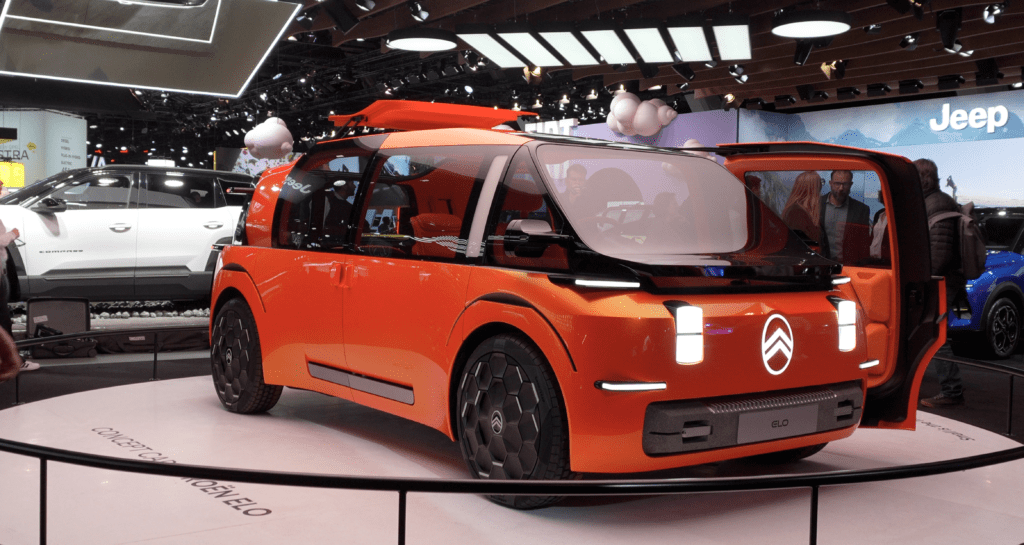
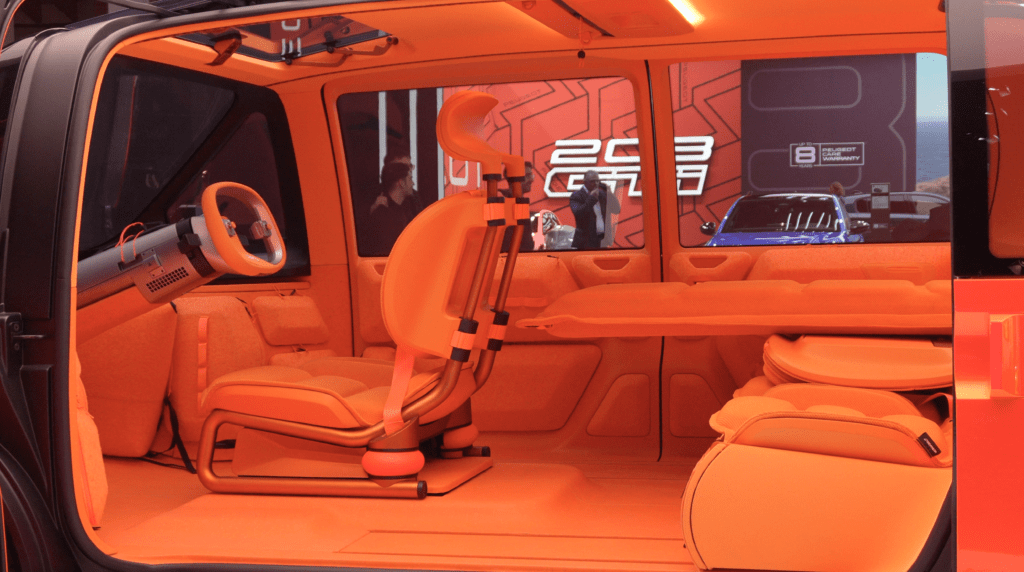
Citroën debuted its ELO concept car at the Brussels Motor Show. The model generated a lot of interest, especially with its prominent placement at the front of the brand’s stand.
Visitors were treated to a vibrant coloured car that matched its surroundings, as Citroën focused on the future. The brand has worked with Goodyear and Decathlon on the model. It integrated new technologies and designs to make the concept as practical as possible.
This means the ELO is not as far removed from reality as some concept cars of the past. It featured no autonomous driving functionality and steered away from impractical design elements. Instead, the 4.1-metre model brought practicality, both in its usefulness and build.
Citroën said: ‘fully in tune with the times, ELO is more than just a means of transport.’ It facilitates all aspects of life on the move, with work, leisure and relaxation its core themes.
The interior’s bold design may divide opinion, but behind the central driving position is a cabin that is highly adaptable. By positioning the driver in the middle of the cockpit, the ELO is ideal for both left and right-hand drive markets, while also freeing up space in the rest of the car.
The driver’s seat can be rotated to allow for interaction with passengers when parked. Additional seating can be deployed to transport up to six people. These seats can be transformed into a sleeping space for two as well. Plus, a power supply allows the ELO to be used as a home away from home.
Sustainability at the core
The ELO also features a sustainable element. Citroën has changed the treatment process for materials such as polypropylene, boosting recyclability. By reimagining components already in use by Decathlon, Citroën further cut the ELO’s production costs and reduced its overall carbon footprint.
Furthermore, the model also allows drivers to save money on parts, with identical front and rear bumpers. This results in fewer new parts being manufactured, helping cut insurance costs and potentially lowering the total cost of ownership.
From concept car to reality
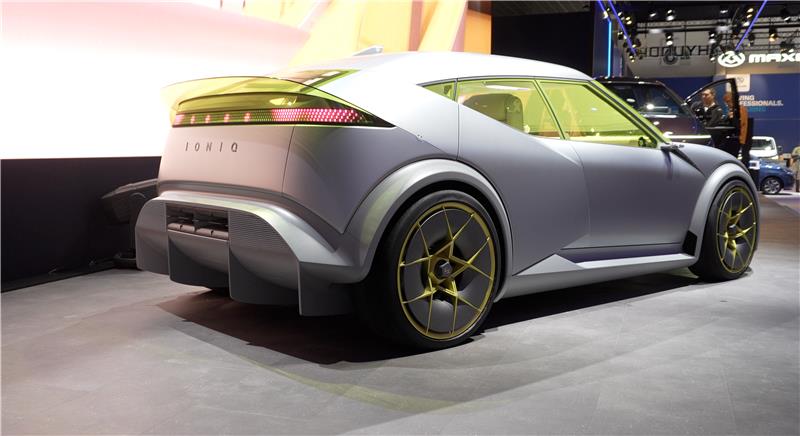
Hyundai unveiled its Concept Three at the IAA Mobility in 2025. At the Brussels Motor Show, the brand announced that the concept would become reality. It will form the basis of the new Ioniq 3, scheduled for launch later in 2026.
The new model is unlikely to carry over all of the features of the Concept Three. Its front grill and tinted windows will likely change, while its interior lacks real-world practicality. However, there are elements and designs that could be included.
The shape and size of the model will translate into the Ioniq 3. It features several ideas that make it stand out to the next generation of drivers. Its Parametric Pixel lighting is expressive, with its Mr Pix character integrated throughout to offer ‘playful storytelling’ and interactive elements.
Powerful stance
Among the many models from Volkswagen (VW) Group at the Brussels Motor Show was the Audi Concept C. This all-electric two-seater sports highlights the brand’s new design philosophy. This is another important area that concept cars help to envisage.
The simplistic looks, wide stance, and front end that points to the grill, help it stand out. The light signature is expected to carry over into future Audi designs. The model’s stance and titanium colour present strength and power.
The Concept C comes at an important time for Audi. With the marque entering Formula 1 in 2026 as a constructor and engine builder, it is pushing its performance credentials.
Small but functional
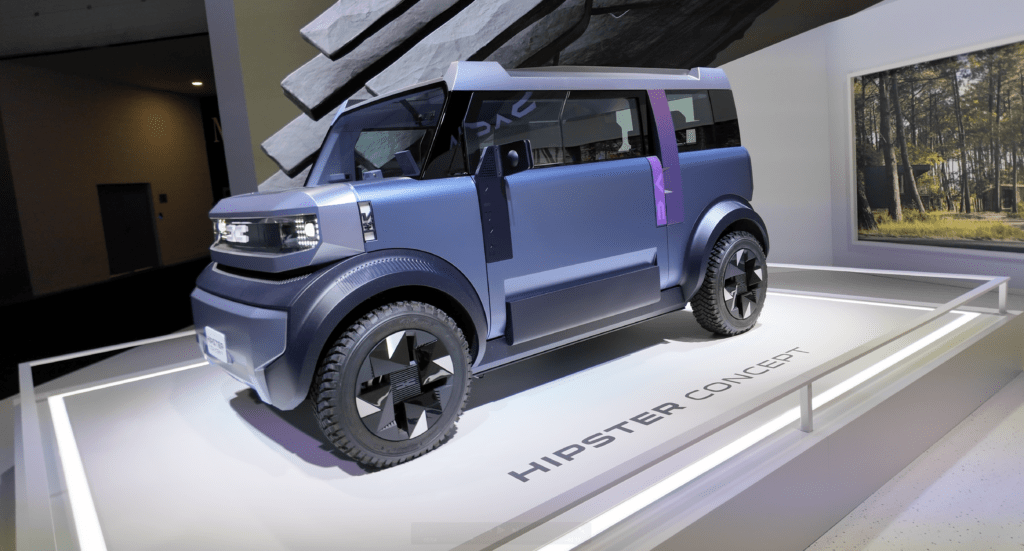
Dacia brought its Hipster Concept to the halls of the Brussels Motor Show. The concept was another to be afforded a prominent placement on the brand’s stand. It attracted attention for its practicality and functionality.
Measuring just three metres in length, the small car looks as though it could soon go into production. It uses a seating layout that is already on offer in the Dacia Sandero. The concept has been designed to reduce both weight and costs.
The interior can be customised with owners purchasing add-on items, with YouClip anchor points allowing for additions.
The Hipster is a simplistic model that can be styled to the driver’s preference. Rather than a built-in infotainment system, a smartphone dock allows users to rely on their own devices. Audio is played through a portable Bluetooth speaker that is compatible with the YouClip system.
A different concept
The Citroën ELO, Hyundai Concept Three, Audi Concept C and Dacia Hipster Concept encapsulate the philosophy of today’s concept car. No longer is the future a standout design, which is impractical for everyday life. Today, concepts could easily go into production with a few amendments.
This may make them more attractive to motor show visitors. There is no thought of what could be, but instead a feeling of what they could own. The Concept Three, for example, joins the Renault 5 in moving from a design vision into reality. It draws potential buyers in by revealing what the finished product will likely resemble.
The gaming aspect
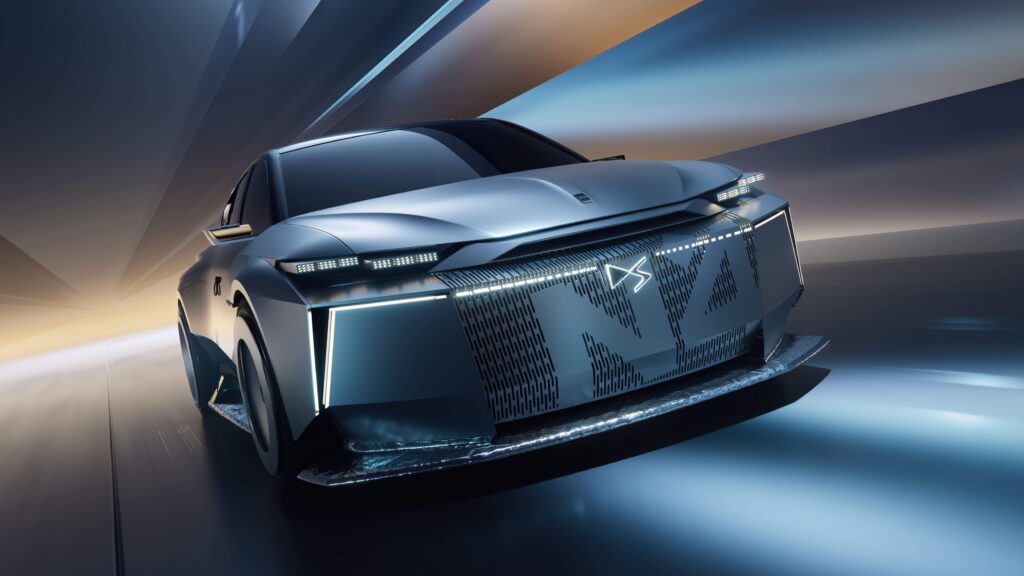
DS Automobiles presented the Taylor made No.4 Concept at the Brussels Motor Show. Its name is a nod to Formula E driver Taylor Barnard, who joined the DS Penske team for the 2025-2026 season.
Source: DS Automobiles
The concept is based on the No.4 model and was created to showcase the DS Performance Line. The model is inspired by Barnard’s preferences, with the colour, materials and finish modelled through his input. Inspired by gaming, with its contrasting shades and widebody stance, it created an imposing presence on the stand.
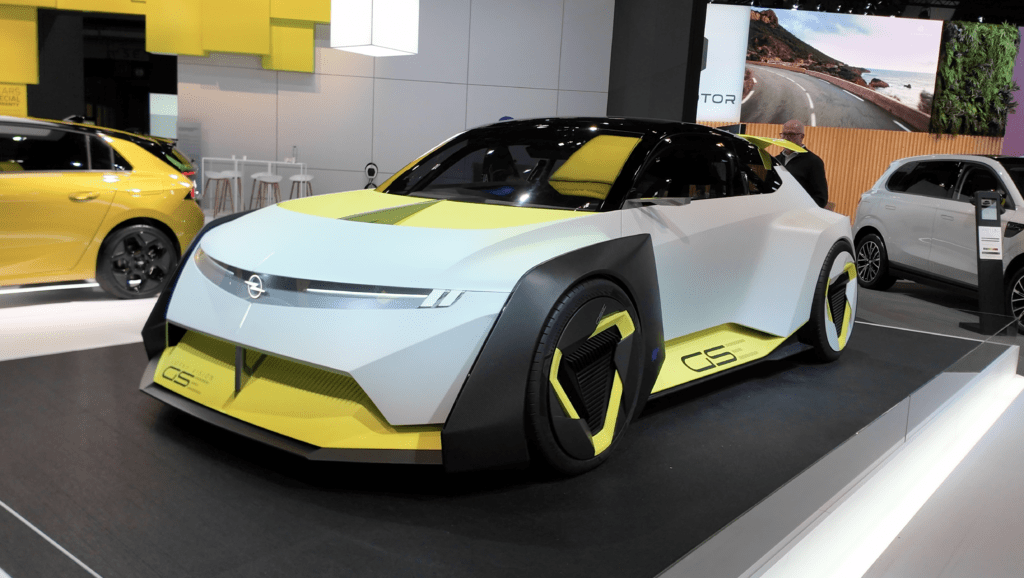
Opel brought its Corsa GSE Vision Gran Turismo concept to the show. This is not a new model, but it held a significant place on the carmaker’s stand. Elements of the design made their way to the new Opel Astra, which was unveiled in Brussels.
Opel states that the concept represents the future of the GSE high-performance label. It also signifies the brand’s commitment to the small car sector, which is growing in popularity once again.
Merging the physical and gaming worlds, the model’s name is a nod to its inclusion in Gran Turismo 7. Players can experience the GSE Vision in the racing simulator, increasing the carmaker’s exposure.
The Brussels Motor Show highlighted that the experience of the concept car is continuing to change. No longer do they show what might be in the future. Now they present the potential of models today, either in the real world or in video games.
Join our list!
To get the latest insights, announcements, and industry intelligence from our JD Power experts delivered right to your inbox, we invite you to sign up for the mailing lists that are critical to your role:
What were the standout premieres at the 2026 Brussels Motor Show? Which model won the Car of the Year award? Autovista24 journalist Tom Hooker explores the show’s highlights with editor Tom Geggus in The Automotive Update podcast.
Many new models premiered at the Brussels Motor Show. Meanwhile, one of the automotive industry’s biggest accolades went to a historic carmaker. Additionally, Autovista24 explores the show’s importance for Belgium’s new-car market.
The Tesla Model 3 Standard was one of many European premieres. Following suit were the BYD Atto 2 DM-i, the MG S6 and the Leapmotor B03X. Numerous concept cars were also displayed at the Brussels Motor Show. This included the Citroën ELO and Hyundai Concept Three, which the carmaker confirmed would become the Ioniq 3.
A historic victory
One of the highlights from the Brussels Motor Show was the European Car of the Year award. This year’s winner was the Mercedes-Benz CLA. It was only the second time the brand had been presented with the accolade in the awards’ 62-year history.
The panel of 59 senior motoring journalists across 23 countries made their votes based on various criteria. Aspects such as design, comfort, safety and economy were considered. In the judging process, technical innovation and value for money are particularly important factors.
A shortlist of seven models is created from the year’s new arrivals. Jury members are allotted 25 points to apportion to at least five cars, with up to 10 points for each.
The Mercedes-Benz CLA came first with 320 points. The Skoda Elroq came second with 220, followed by the Kia EV4 with 208. The Citroën C5 Aircross came fourth with 207, and fifth was the Fiat Grande Panda with 200. Rounding out the finalists was the Dacia Bigster in sixth with 170, and the Renault 4 in seventh with 150.
Brussels Motor Show drives sales
The Brussels Motor Show has gained increased international attention over the last few years. However, it remains a significant sales event for Belgium’s new-car market. January and February, which are commonly lower-volume months in Europe’s other new-car markets, see high sales activity in Belgium.
During this period, leads are generated from the event, which are passed on to local dealers. Meanwhile, customers can browse models at the show without feeling the commercial pressure of having to buy a car immediately. Prospective buyers can also benefit from seasonal discounts and promotions around the motor show period.
The fleet channel holds a majority share of the Belgian new-car market. Yet, most sales that follow the event are from the private channel. In this segment, there remains a healthy appetite for petrol and diesel-powered models, as well as full and mild-hybrids. This means carmakers are heavily incentivised to show a wide range of models and powertrains at the show.
Join our list!
To get the latest insights, announcements, and industry intelligence from our JD Power experts delivered right to your inbox, we invite you to sign up for the mailing lists that are critical to your role:
The Brussels Motor Show is intrinsically linked to the Belgian new-car market. But with the event now gaining international attention, can it continue to drive leads and sales? Autovista24 journalist Tom Hooker discusses the topic.
Over its 102 editions, the Brussels Motor Show has remained a hotbed of sales activity for local dealers. As a result, every year the Belgian new-car market experiences a unique seasonal effect in January and February. According to Autovista24 calculations of FEBIAC data, registrations peaked in the first quarter of 2025.
‘The Brussels Motor Show is always very important for the Belgian market. This is where more than one-third of the sales in the full year are made. So, you must start well at the Brussels Motor Show if you want to have a great year in Belgium,’ Stéphane Cesareo, communications director for Stellantis Europe, USA and China, told Autovista24.
Stéphane Cesareo, communications director for Stellantis Europe, USA and China. Source: Autovista24.
In turn, this performance helps carmakers justify their attendance from a financial viewpoint, instead of a standalone marketing exercise.
‘Brussels traditionally was a sales show. That is something we want to keep. It pays off for the importers of the brands to be here. It is not just investing money, it is also a return,’ FEBIAC CEO Frank van Gool told Autovista24.
Providing sales reach
This seasonal sales spike is not just caused by the Brussels Motor Show. Brands use the period of heightened activity to present attractive discounts and promotions. In turn, it has influenced a local car-buying mindset.
‘It is the only time of the year when you can reach most of the Belgian people looking for a new car. Everyone has been waiting since the summer for the Brussels Motor Show to find a good deal,’ Julien Libioul, communication and public affairs manager at Ford Motor Company Belux, told Autovista24 at this year’s event.
Julien Libioul, communication and public affairs manager at Ford Motor Company Belux. Source: Autovista24.
‘It is known in the Belgian culture that if you want to buy a new car, wait for the Brussels Motor Show. You will have an extra incentive to find a good price,’ he highlighted.
New international focus
Overshadowed by international events such as Geneva, Detroit and CES, the Brussels Motor Show used to hold a lower profile.
Speaking to Autovista24, Raf Van Nuffel, vice president of product at Hyundai Motor Europe, commented: ‘In the end, you still find many customers who really like to see cars physically.
‘But some other motor shows are not what they used to be. So, the Brussels Motor Show is benefiting from that and getting a bit more international attention,’ he commented.
Source: FEBIAC
Hyundai held the world premiere of its Staria electric vehicle (EV) at the event. The model formed part of a long list of global, European and Belgian debuts at the Brussels Expo.
‘We really reinforced the international flavour this year. That is important because the local sales companies or importers do not always have the financial means to fully support these shows. They also need some support from their headquarters,’ noted van Gool.
‘We have never had so many brands at the show as we have today. We have 67 different brands and over 400 models on display. Almost all the brands that are commercialised here in Belgium and Europe are present at the show. Last year we had 300,000 visitors, and we are aiming for almost 350,000 visitors this year,’ he outlined.
A bigger sales opportunity?
While the event has enjoyed record attendance, the Belgian new-car market suffered a decline from January to December. According to FEBIAC, deliveries dropped by 7.5% year on year to 414,770 units. So, could the show’s international traction help the market to bounce back, or cause more struggles in 2026?
Source: FEBIAC
‘I do not think both aspects are threatening each other. I think we can keep up that approach without the risk that the local sales aspect would disappear,’ stated van Gool.
Kristof Winckelmans, PR manager at Astara Western Europe, added: ‘The importance of the Brussels Motor Show on the calendar is growing, not only because there are sales behind it, but also because there are not many shows left. That is beneficial for us as an importer and for the Belgian automotive industry as a whole.’
Private sales focus
Despite the fleet channel driving the Belgian new-car market, the event typically generates more sales from the private channel.
‘Belgium is quite an atypical market. We have approximately 60% of professional fleet customers and 40% approximately private customers. Within these private customers, we have to do 50% of our yearly volume during January and February,’ commented Olivier Van Hoorebeke, PR manager at Audi, Seat and Cupra, when speaking to Autovista24.
Olivier Van Hoorebeke, PR Manager at Audi, Seat and Cupra. Source: Autovista24.
Yet, the nature of this sales process has changed along with the growth of the show. In the past, visitors could buy their new car directly at the event. Now, Brussels provides a chance to generate highly detailed leads, which are passed on to the relevant dealership. In turn, this presents an interesting benefit.
‘You could say people inform themselves on the internet, and they will go to their local dealership. But a lot of people are under pressure when they go into a showroom, and they do not feel at ease. Here at the motor show, customers can freely compare things without this commercial pressure of having to buy a car immediately,’ stated van Gool.
Private buyer preferences
As emissions standards tighten in the EU, carmakers are increasingly directing their focus to electric vehicles (EVs). Consequently, this is reflected in some of their show displays.
Source: FEBIAC
However, with Brussels’ unique position as a centre for private sales, carmakers are incentivised to show their full model range. This includes full and mild hybrids as well as internal-combustion engine (ICE) models, alongside the latest EVs. For example, Alpine presented its full range for the first time at the event.
‘The visitors, in general, are private consumers. So, it is vital that brands do not just show fleet cars. In Belgium, the fleet market is largely EVs. However, our hybrid model range is particularly important here,’ Ellen De Wilde, PR manager at Toyota and Lexus BeLux, told Autovista24.
Are sales the new success formula?
With its 2026 edition, it is safe to say that Brussels now carries an international stature. Its size could be compared to the Paris Motor Show and the IAA Munich.
New-car registrations declined heavily in France, even after the Paris event in 2024. Meanwhile, Germany saw marginal growth after being rooted in a decline for the majority of 2025. So, could Brussels’ mix of commercial and international flavour be a recipe for future motor show and new-car market success?
Source: FEBIAC
‘I do not know if it is a copy and paste to do this in other countries. I think it is also a very Belgian thing to have this show at the beginning of the year and the commercial aspect that goes with it,’ commented van Gool.
‘If there are dramatic changes in the way we use cars or if autonomous driving is really moving forward, then we will have to see if the concept of this motor show is still relevant or if we have to change or if it will disappear,’ he concluded.
Join our list!
To get the latest insights, announcements, and industry intelligence from our JD Power experts delivered right to your inbox, we invite you to sign up for the mailing lists that are critical to your role: